East Village Opera Company

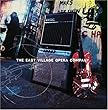
I recently discovered the East Village Opera Company, a band who takes classic opera and transforms the music into rock songs. Steering this discovery on topic for the purposes of this blog is the lead singer, Tyley Ross, who starred as Tommy in the Canadian production of Tommy. A browse through the material on their official website shows that when they’re at their best, they certainly are brilliant – even earning a Grammy nomination for their 2008 album, Olde School. For example, here is their version of “La Donna È Mobile”, from their first album La Donna:

It’s fascinating and fantastic! I hope you enjoy them as much as I do – and perhaps pick up one of their albums if you like what you see!

Purchases from Amazon.com

FROM LEFT TO RIGHT: 1. The East Village Opera Company CD. 2. Olde School CD.

Posted in Classical Music, Grammy Awards, Musicals, YouTube | Tagged , , , , , , | 5 Comments

2010 Tony Awards: Rulings Report #1

It’s time for the rulings of the Tony Awards committee to begin causing the controversy they often do. The first reports on Playbill (see here and here) say that most rulings for 2010 have been “consistent with the opening night credits” and list the few exceptions to that principle.

Of course, now that the “Special Theatrical Event” category has been discontinued, we get great decisions like this one: Burn the Floor will be considered eligible in the “Best Musical” category. How nice. Now it can duke it out with Sondheim on Sondheim for a nomination or a win – only problem is, neither show should be in that category to begin with.

Posted in Uncategorized | Leave a comment

“I Know Him So Well”, featuring Susan Boyle

Here’s a “treat”: Elaine Paige singing “I Know Him So Well” with Susan Boyle.

It’s an absolute feast of poor enunciation, bad timing and absent harmonies!

Posted in Musicals, Performances | Tagged , , , | 3 Comments

Natalie Portman in CABARET

Here’s a really funny clip of Natalie Portman in Cabaret at summer camp:

Watch out for the big mistake in this number – it’s too hysterical!

Posted in Musicals, Performances | Tagged , , , | 1 Comment

A LITTLE NIGHT MUSIC coverage in USA TODAY

USA Today seems to have had a fair bit of coverage of A Little Night Music, including interviews with Catherine Zeta-Jones, Angela Lansbury and Stephen Sondheim himself.

The first article I saw was an interview with Zeta-Jones, some of which was ported over to BroadwayWorld. Says Zeta-Jones:

I want to do a straight play next. And one of my biggest dreams is to do a one-woman show, with dancing and singing. I just have to figure out the concept.

I wonder what play, or kind of play, she’s thinking of and what kind of material she’d perform in her one-woman show. Anyway, it took me ages to find the original article on USA Today and was surprised (kinda, but not deeply, I suppose) that BroadwayWorld had left out the stuff that deals specifically with the rehearsals for A Little Night Music, for example:

I pretty much spoke (“Send in the Clowns”) in rehearsals. You can’t compete with all the great voices that have sung it…. it isn’t a song you should belt. It’s more of an acting piece.

But better yet is this great interview with Lansbury and Sondheim: “Side by Side: Stephen Sondheim and Angela Lansbury on a lifetime in theater” Some of the best bits:

Angela Lansbury: I began my professional career in cabaret—in a Russian nightclub in Montreal called the Samovar. I sang a lot of Noël Coward, and an arrangement of “I Went to a Marvelous Party” with coloratura, contralto, mock German. I had ideas of singing, but it was always a character singing, never straight singing.

Stephen Sondheim: Angie came over one afternoon while we were in rehearsal and said, “Cora is a cartoon, and I don’t know how to play a cartoon. I’m not that kind of performer.” I said, not bluntly, “You read the script and you knew she was a kind of Kay Thompson substitute—the whole idea is that her heartlessness and banality would be reflected in my heartless, jazzy nightclub numbers.” She had trouble with that—I’m putting words in your mouth, Angie—because there was no there there. I didn’t know what I could do about that, but then she added, “And Lee [Remick, the other female lead] has five songs while I have four.” I said: “That I can solve.”

The new song he wrote was “A Parade in Town”! And then this little exchange wraps up the Anyone Can Whistle segment:

Jesse Green: She’d been through the London Blitz—she’s a trouper.
Stephen Sondheim: And she’d been through Arthur.

That might be the best thing I’ve read all week. There are many other anecdotes about Gypsy, Sweeney Todd and A Little Night Music. It’s a very enjoyable conversation to read. I only wish it was longer!

Stephen Sondheim and Angela Lansbury

Posted in Broadway, Musicals | Tagged , , , , , , , , , | 5 Comments

A LITTLE NIGHT MUSIC Broadway Revival Reviews

Time for the reviews of A Little Night Music to start rolling in….

Raves

Scott Brown at New York Theatre: Trevor Nunn’s stunning, twilit, devastatingly good new production… Lansbury, who capsizes the theater with every roll of those outsize eyes, hurls mots from her throne like thunderbolts – not a single line lands askew…. Zeta-Jones – a tremendous presence here, in great voice – mates up with Hanson perfectly: they play Desiree and Frederik as extremely magnetic, fabulously charming, utterly empty people.

Roma Torre at NY1: Angela Lansbury’s performance as Madame Armfeldt is magnificent. She nails her lines with the precision and killer timing that’s likely to make her a contender for a sixth Tony Award. She also captures in Sondheim’s music and Hugh Wheeler’s book the overriding tone of the work – a profound sense of longing, regret and sensuality. She is well-matched by Zeta-Jones, making a flawless Broadway debut with a performance that is also destined for a Tony nod. She tackles this difficult role with a natural gusto that in effect seduces the audience. She’s warm, funny and captivatingly sensuous…. Trevor Nunn’s direction cut right to the soul of this work meticulously casting great voices all equally adept as actors. The complex material is well served by all of them. Other standouts include Aaron Lazar as the blustery Count Malcolm, and Ramona Mallory, playing Egerman’s much too young wife.

Positive

Erik Haagensen at Backstage: Nunn delivers… a persuasive and entertaining account of a great American musical…. The generally excellent company is led by three top-flight performances…. Zeta-Jones zeroes in on the fun Desiree and Fredrik had with each other during their affair. It makes for a unique and memorable creation, leading to a terrific “Send in the Clowns” notable not for its rue but for its self-laceration…. Hanson is every inch her equal…. Lansbury is…. more refined and less acerbic than the divine Hermione Gingold but no less authoritative and just as funny… and her final scene is deeply moving…. Nunn makes two missteps. His direction of Erin Davie…. (and) Hunter Ryan Herdlicka. David Farley’s simple unit set of blond paneling and antique mirrors that accommodate projections serves Nunn’s vision nicely, as do Farley’s monochromatic but stylish costumes.

Elysa Gardner at USA Today: Madame Armfeldt has aged beyond the latter concerns but enjoys reflecting on her experience… and Lansbury, in an incandescent performance, lets us savor her haughty wit and see the fading but still defiant life force behind it…. Zeta-Jones brings great warmth and vitality to the role and makes it easier to see why Desiree’s old lover, Fredrik — the male lead, played with suave brio by Alexander Hanson — would vie with a blustering dragoon for her affections. Zeta-Jones is less effective, though, at suggesting Desiree’s weary, rueful edges…. This might owe something to Nunn’s direction, as other performances here flirt with overzealousness.

Thom Geier at Entertainment Weekly: Zeta-Jones’ Hollywood glam buttresses the role’s necessary off-puttingness. And the actress pulls off the challenge, comfortably commanding the stage…. Her second-act rendition of ”Send in the Clowns” is an emotional tour de force not to be missed. Likewise, Angela Lansbury offers a master class in character acting as Desiree’s ancient mother, Madame Armfeldt, wringing out every poignant beat and punchline…. The energy tends to flag a bit whenever they’re not on stage.

David Finkle at Theatremania: In Trevor Nunn’s mostly effective Broadway revival…. (Catherine Zeta-Jones) does well by the play’s pathos and wit…. The reemergence of the tuner as a chamber musical… is a smart notion, well realized. Farley’s single-set unit… is sufficient, if perhaps a trifle colorless. Lansbury provides a depiction of a woman elegantly withdrawing from life that is a master class in characterization. So is her tragciomic rendition of the brilliant solo “Liaisons.” Indeed, no one should be surprised if the five-time Tony winner carries off that sixth spinning medallion next year.

Michael Sommers at New Jersey News Room: Catherine Zeta-Jones makes a smashing Broadway debut…. Staged more as a rueful comedy with music, this show unfolds quietly against a flexible setting of duskily mirrored panels that later opens to disclose a modest view of birch trees…. Zeta-Jones is handsomely partnered by Hanson…. Not everyone will enjoy the deliberate moodiness of this revival.

Mixed

Robert Gannon at Hollywood Reporter: This uneven but welcome revival of Sondheim’s classic musical features a triumphant Broadway debut by Catherine Zeta-Jones…. Nunn’s minimalist approach contrasts sharply with Prince’s original opulent staging, with mixed results. There will be many who bemoan the visually drab sets… and monochromatic costumes…. On the other hand, this intimate version does a wonderful job of accentuating the emotional complexities and endlessly witty dialogue of Hugh Wheeler’s book… Lansbury uses her well-honed theatrical instincts to perfect effect as Madame Armfeldt, generating huge laughs with her expert delivery of the character’s piercing comic barbs.

David Rooney at Variety: Trevor Nunn brings a blunt, heavy hand where a glissando touch is required, but the wit and sophistication of the material are sufficient to withstand even this phlegmatic staging…. Bewitching, confident and utterly natural, [Catherine Zeta-Jones] breathes a refreshing earthiness and warm-blooded sensuality into [Desiree]…. But the production’s real jewel is Angela Lansbury as her worldly mother…. Hanson’s warm playfulness with Zeta-Jones gives real body to the central relationship…. What’s remarkable, given its unsatisfying elements, is that this Night Music still seduces…. The choice to refocus the show into a chamber piece was a smart one. But a director with a more intuitive feel for intimacy and subtlety would have made more sense.

Ben Brantley at The New York Times: An elegiac darkness infuses this production…. Mr. Wheeler’s book has always had a coarse side at odds with the intricacy and delicacy of Mr. Sondheim’s score…. Ms. Zeta-Jones brings a decent voice, a supple dancer’s body and a vulpine self-possession to her first appearance on Broadway…. Her Desirée, to be honest, is much like her Velma: earthy, eager and a tad vulgar, though without the homicidal rage and jealousy…. Such traits lend a not always appropriate edge of desperation to the droll Desirée…. Leigh Ann Larkin, as the earthy maid Petra, oversells the 11 o’clock number “The Miller’s Son,” a hymn to sex as a life force, with autoerotic gestures that suggest an audition for a pole-dancing position…. But there is only one moment in this production when all its elements cohere perfectly. That moment, halfway through the first act, belongs to Ms. Lansbury….

Matthew Murray at Talkin’ Broadway: Catherine Zeta-Jones, as the famed actress Desirée Armfeldt, and Angela Lansbury, as Desirée’s mother, instinctively understand and project what Nunn and most of the rest of his cast do not: This show is not a turgid, angry tragedy, but a saucy lark that’s all about celebrating, as someone sensibly sings, “everything passing by”…. If Zeta-Jones makes [Desiree] seem younger and cagier than the norm, she’s also quicker to hurt… “Send in the Clowns,” is darker and smokier than most renditions, but retains its power because it signals the heretofore ageless Desirée’s final, unwanted, and potentially disastrous descent into middle age…. Hanson, who originated Fredrik in this production in London, is so stodgy and unappealing…. Herdlicka is consistently whiny hissy-fitty…. Mallory is shrill on her lines…. Lazar and Davie should be in the show’s most unbreakable roles, but derive only a fraction of the characters’ laughs and musical pleasures…. One suspects that Nunn is downplaying the show’s musical values in order to amplify its intimacy… But contemplation of this molasses-in-Siberia sort goes against the very spirit of A Little Night Music.

Negative

John Simon at Bloomberg: The show is based on one of Ingmar Bergman’s masterpieces… but the libretto that Hugh Wheeler adapted from it is little more than hack work. There is, though, Sondheim’s great score to balance things out…. Lansbury is commanding as always, making Madame’s words, spoken and sung, resonate with multiple meanings. Epigrammatic crispness comes across not in the least recherche, as the wisdom of age seamlessly blends with ageless nostalgia. Zeta-Jones, on the other hand, is all artifice…. Words are delivered in a stilted rubato, oozing self-satisfaction, with affected facial expressions that are smug and patronizing…. What the set lacks, Nunn tries to make up for with business. Not so much stage movement as general heartiness, frolicsomeness, primping and posturing, inordinate onstage laughter and whatever it takes to goose elegant comedy into rude farce.

Michael Kuchwara at Associated Press: There are some lovely moments, most of them supplied by Angela Lansbury, but too much of this adult, sophisticated show… seems forced, boisterous and a little crude…. As Desiree’s mother, the luminous Lansbury is a wonder. She is just about perfect as the worldly wise Madame Armfeldt, a woman who has tasted all that life has to offer and still enjoys the remembrances – and cynicism – that goes with it. The 84-year-old actress does something extraordinary, too: her Madame Armfeldt progressively gets more frail as the evening progresses, subtly commenting on one of the musical’s more profound themes – the mortality of all, no matter what their station in life. The aging process has never been more eloquently put on display…. One of the joys in A Little Night Music always has been a quintet of singers who serve as a kind of melodic Greek chorus to the action. Dressed in black, they swirl elegantly across the shallow Kerr stage, adding a welcome sense of movement to a story that doesn’t require much choreography. Unfortunately, that sense of style is only fitfully present in this disappointing revival of A Little Night Music.

As expected, an ambiguous set of responses to the production. And even in the negative reviews, Angela Lansbury is singled out as being uniformly excellent. I’m pleased about that.

Posted in Broadway, Musicals, Review Roundup | Tagged , , , , , , , | Leave a comment

O/T: THE MIRACLE WORKER Controversy

While this topic isn’t specifically related to musical theatre, I think it does have ramifications for theatre in general and is thus worth reflection.

The casting of Abigail Breslin in The Miracle Worker has sparked a huge controversy, upsetting advocates for blind and deaf actors in the arts. Earlier this year, the controversy was brought to light in a report by Patrick Healy in The New York Times:

Sharon Jensen, executive director of the Alliance for Inclusion in the Arts, an advocacy group for blind and deaf actors, among others, said… “We do not think it’s O.K. for reputable producers to cast this lead role without seriously considering an actress from our community… I understand how difficult it is to capitalize a new production on Broadway, but that to me is not the issue. There are other, larger human and artistic issues at stake here.

The Alliance‘s argument is framed with the attitude that casting a blind or deaf actor in the role would be more “artistic”, which of course is nonsense. And even if you chuck artistry out the window, would it automatically make for a show that is more compelling? This is precisely my problem with this particular criticism from the Alliance, who according to their mission statement deal with the inclusion of ‘artists who are African American, Asian Pacific American, Caribbean Black, South Asian, Latino, Arab American, Persian American, Native American, Deaf and hard of hearing, blind and low vision, artists who have mobility, physical, developmental or intellectual disabilities’.

By the standard they’re setting, gay roles should be played by gay actors. Straight roles should be played by straight actors. Cross-gendered casting should never occur and, perhaps, most ironically, neither could any non-traditional racial casting of a role. I mean, where do you draw the line? How can an organisation like this say that they’re consistent in promoting even the selective list of causes they promote if they aren’t objecting to every single casting or appointment that is out of line with their mission statement, or at the very least being more high profile in their campaigns to include the list of minorities they choose to promote? That kind of inconsistency makes it appear as if this is all for the sake of political correctness rather than for the sake of inclusivity, which I think is an inappropriate message to be send out by an organisation such as this.

An article from the Broad Street Review by Jim Rutter beautifully puts this all into perspective:

This whole assumption that “shared experience” informs a role rests on a narrow view of performance — a warped understanding of method acting. Perhaps more important, it leads to a counterintuitive result.

Subsequently, the producers of the revival have hired a visually impaired actress to understudy Abigail Breslin in the role of Helen Keller, as reported once again by Healy in The New York Times:

After an injury when she was 9, Miss Siegel, who will become one of the few disabled actresses working in a major Broadway production this season, can see only shapes and colors out of her right eye, she said in an interview by e-mail. She can see well out of her left eye.

So does that mean that everyone is satisfied now?

Posted in General News, Theatremaking, Theory and Practice | Tagged , , , , , , | 3 Comments

NPR Interviews Ramona Mallory

NPR is running a story about Ramona Mallory (Anne in the revival of A Little Night Music). Dealing mostly with her heritage, there are interviews with Victoria Mallory and Mark Lambert as well as with Ramona herself, as well as clips of “Soon” and “Every Day a Little Death”. In the interview, Mallory says:

Having my family not only be a part of the theater, but part of this wonderful show, means that it’s literally in my blood, which is why it’s so wonderful that I’m making my Broadway debut in it.

There’s also a lovely picture accompanying the interview, which doesn’t seem to have appeared anywhere else yet:

Ramona Mallory in A Little Night Music

Enjoy!

Posted in Broadway, Musicals | Tagged , , , , , , | Leave a comment

A LITTLE NIGHT MUSIC Revival Opens

Opening night is here. I can’t wait to see the reviews!

Posted in Broadway, Musicals | Tagged , | Leave a comment

THE MIRACLE WORKER’s Broadway Controversy

The casting of Abigail Breslin in The Miracle Worker has sparked a huge controversy, upsetting advocates for blind and deaf actors in the arts. From The New York Times:

Sharon Jensen, executive director of the Alliance for Inclusion in the Arts, an advocacy group for blind and deaf actors, among others, said… “We do not think it’s O.K. for reputable producers to cast this lead role without seriously considering an actress from our community… I understand how difficult it is to capitalize a new production on Broadway, but that to me is not the issue. There are other, larger human and artistic issues at stake here.

The Alliance‘s argument is framed by the attitude that casting a blind or deaf actor in the role would be more “artistic”, which of course is nonsense. And even if you chuck artistry out the window, would it automatically make for a show that is more compelling? This is precisely my problem with this particular criticism from the Alliance, who according to their mission statement deal with the inclusion of “artists who are African American, Asian Pacific American, Caribbean Black, South Asian, Latino, Arab American, Persian American, Native American, Deaf and hard of hearing, blind and low vision, artists who have mobility, physical, developmental or intellectual disabilities”.

By the standard they’re setting, all gay roles should only be played by gay actors. Straight roles should only be played by straight actors. Cross-gendered casting should never occur and, perhaps, most ironically, neither could any non-traditional racial casting of a role. I mean, where do you draw the line? How can an organisation like this say that they’re consistent in promoting even the selective list of causes they promote if they aren’t objecting to every single casting or appointment that is out of line with their mission statement, or at the very least being more high profile in their campaigns to include the list of minorities they choose to promote? That kind of inconsistency makes it appear as if this is all for the sake of political correctness rather than for the sake of inclusivity, which I think is an inappropriate message to be send out by an organisation such as this.

An article by Jim Rutter from the Broad Street Review beautifully puts this all into perspective:

This whole assumption that “shared experience” informs a role rests on a narrow view of performance— a warped understanding of method acting. Perhaps more important, it leads to a counterintuitive result.

Subsequently, the producers of the revival have hired a visually impaired actress to understudy Abigail Breslin in the role of Helen Keller. From The New York Times:

After an injury when she was 9, Miss Siegel, who will become one of the few disabled actresses working in a major Broadway production this season, can see only shapes and colors out of her right eye, she said in an interview by e-mail. She can see well out of her left eye.

So does that mean that everyone is satisfied now?

Posted in Broadway, Plays | Tagged , , | Leave a comment