
| Music | Andrew Lloyd Webber |
| Lyrics | Ben Elton |
| Book | Ben Elton |
| Premiere | West End: 26 September 2000 (391 performances) Direction: Robert Carsen Choreography: Meryl Tankard |
| Adaptations | 2008 Adaptation (as The Boys in the Photograph) |
| Licensing | Andrew Lloyd Webber Show Licensing |
The Beautiful Game, with music by Andrew Lloyd Webber and book and lyrics by Ben Elton, opened in the West End in 2000. Set in Belfast during the early years of the Troubles, it follows a group of young footballers whose friendships, romances and ambitions are gradually fractured by sectarian violence. The show uses the football team to explore how political conflict enters private lives, transforming youthful optimism into fear, grief and radicalisation. Although the original production was praised for its ambition, energetic staging and often striking score, its reception was mixed. Critics frequently admired Lloyd Webber’s music while questioning Elton’s book and, especially, his lyrics. The musical was later revised as The Boys in the Photograph, with new songs, altered scenes and a more hopeful ending. The revisions improved some aspects of the piece but did not fully resolve its structural and lyrical problems. Even so, it remains one of Lloyd Webber’s most unusual and serious-minded musicals.
Synopsis and Musical Numbers
Act I
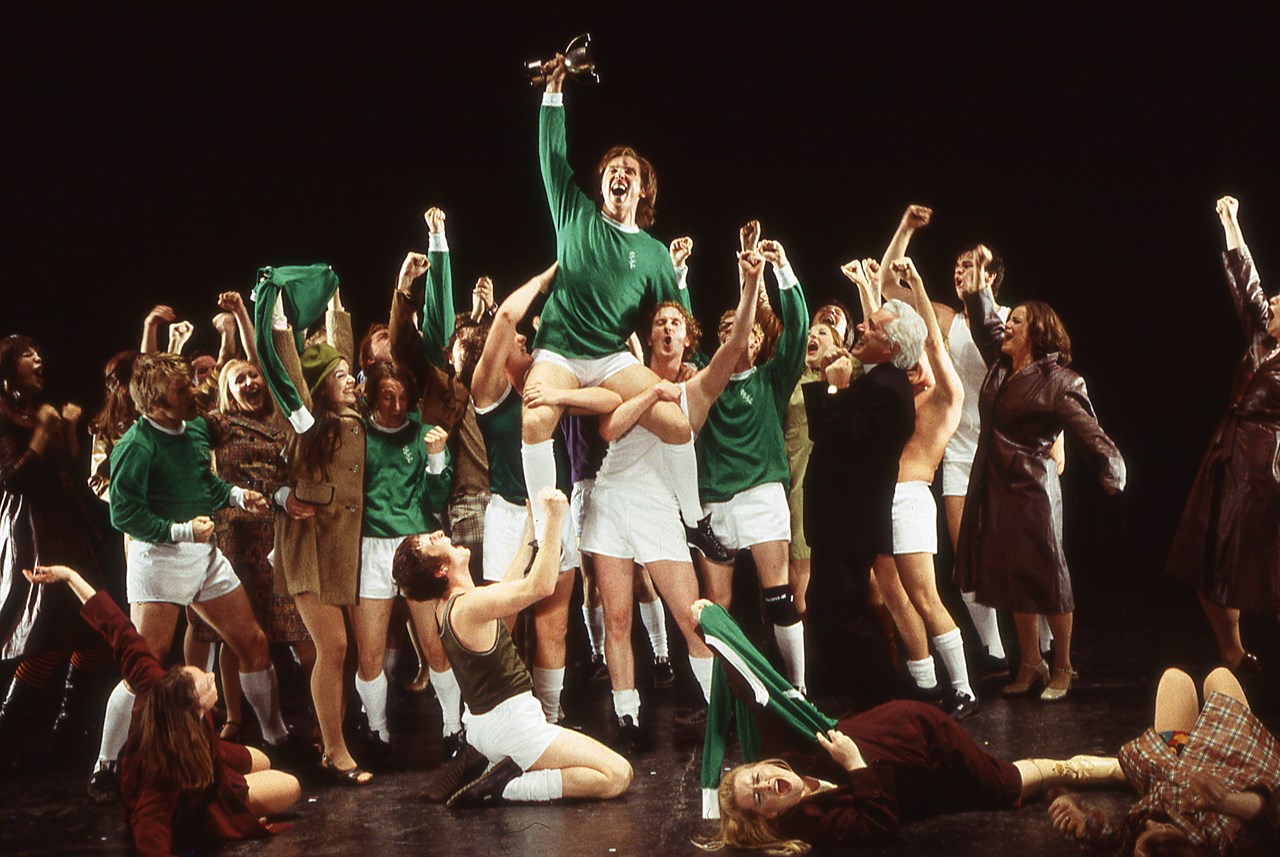
The Beautiful Game opens on an empty, black stage. A group of boys come onto the stage, kicking a can around (“Overture”). The girls watch them; these teenagers live for football (“The Beautiful Game”).
In the revised version of the show, the setting is identified specifically as Belfast in 1969. The opening image of the boys kicking a can around on an empty, black stage is replaced by a football training session involving a predominantly Catholic team, watched by their friends and families.
Father O’Donnell, the Catholic team coach, arrives to talk to his players. In particular, he admonishes John, the team’s star striker, for spending too much time watching Mary and orders him to clean the kit as punishment.
A new title song, “The Boys in the Photograph”, is added after Father O’Donnell addresses the team in the revised version of the show. The players pose for a team photograph, which becomes an important symbol of their shared youth and of the lives that will later be changed by the conflict.
Another player, Del, has his eye on Christine; the problem is that he is a Protestant. On one side of the lockers, Thomas and his cronies intimidate Del so he will quit the team. They threaten to harm him if he should ever return. Alone in the changing room after the others have left, John dreams of becoming a professional footballer (“Clean the Kit”).
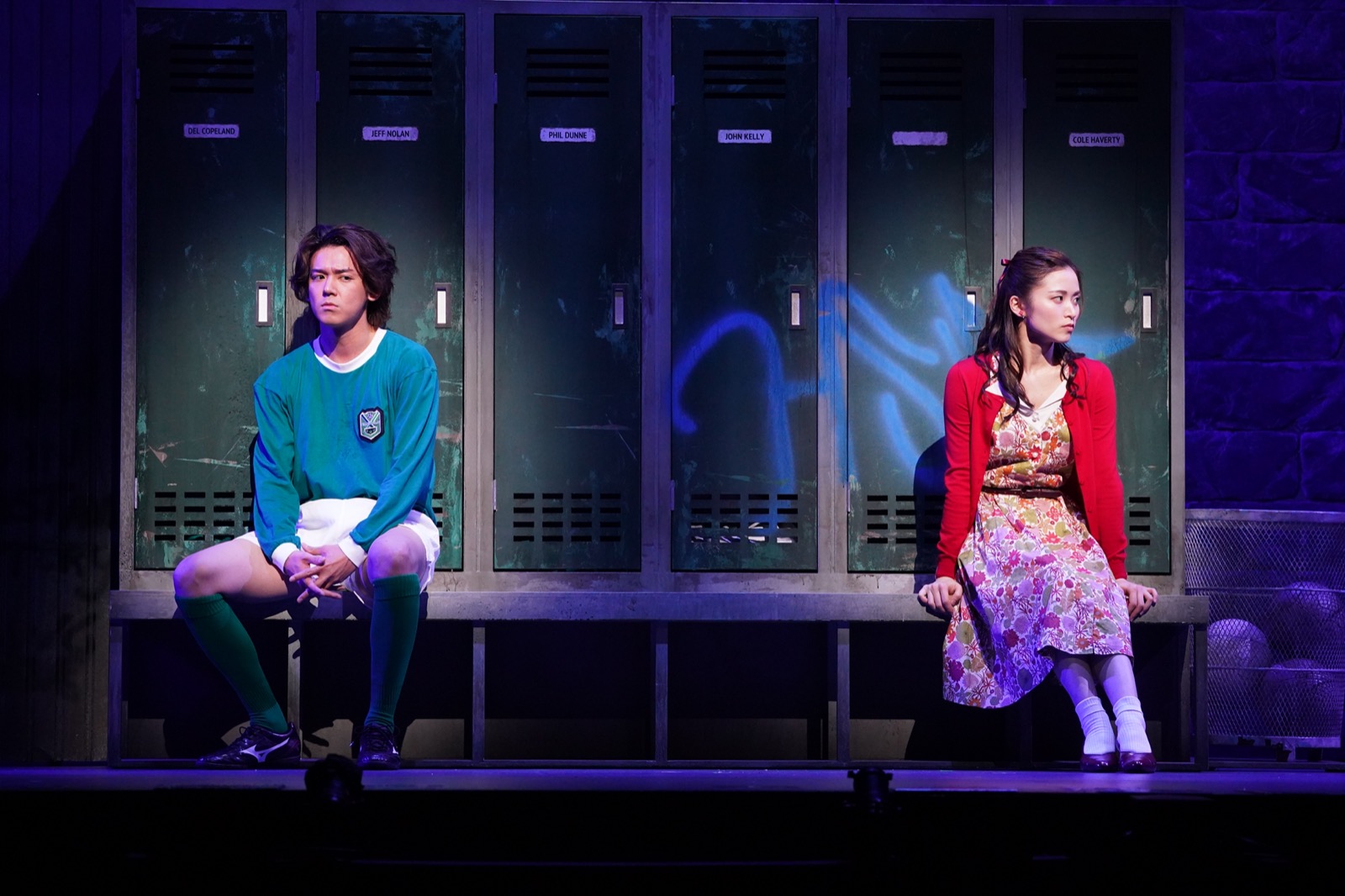
Mary comes into the changing room and overhears John. She tells him that he is just deluding himself and that he will never amount to anything. They argue and, despite themselves, realise that they do like each other after all (“Don’t Like You”). A few months later, Daniel is chased into the changing room by a few of his teammates. He has missed a match because he was busy stealing a car radio. He offers to buy them all a drink to make up for it. John decides to break his promise to go to a protest march with Mary so that he can drink with his friends. After an argument with Mary, he leaves. Mary thinks about her love for Ireland even though they are living through terrible times (“God’s Own Country”). Her thoughts are echoed by a young Protestant girl. John changes his mind and returns, leaving with Mary to attend the march.
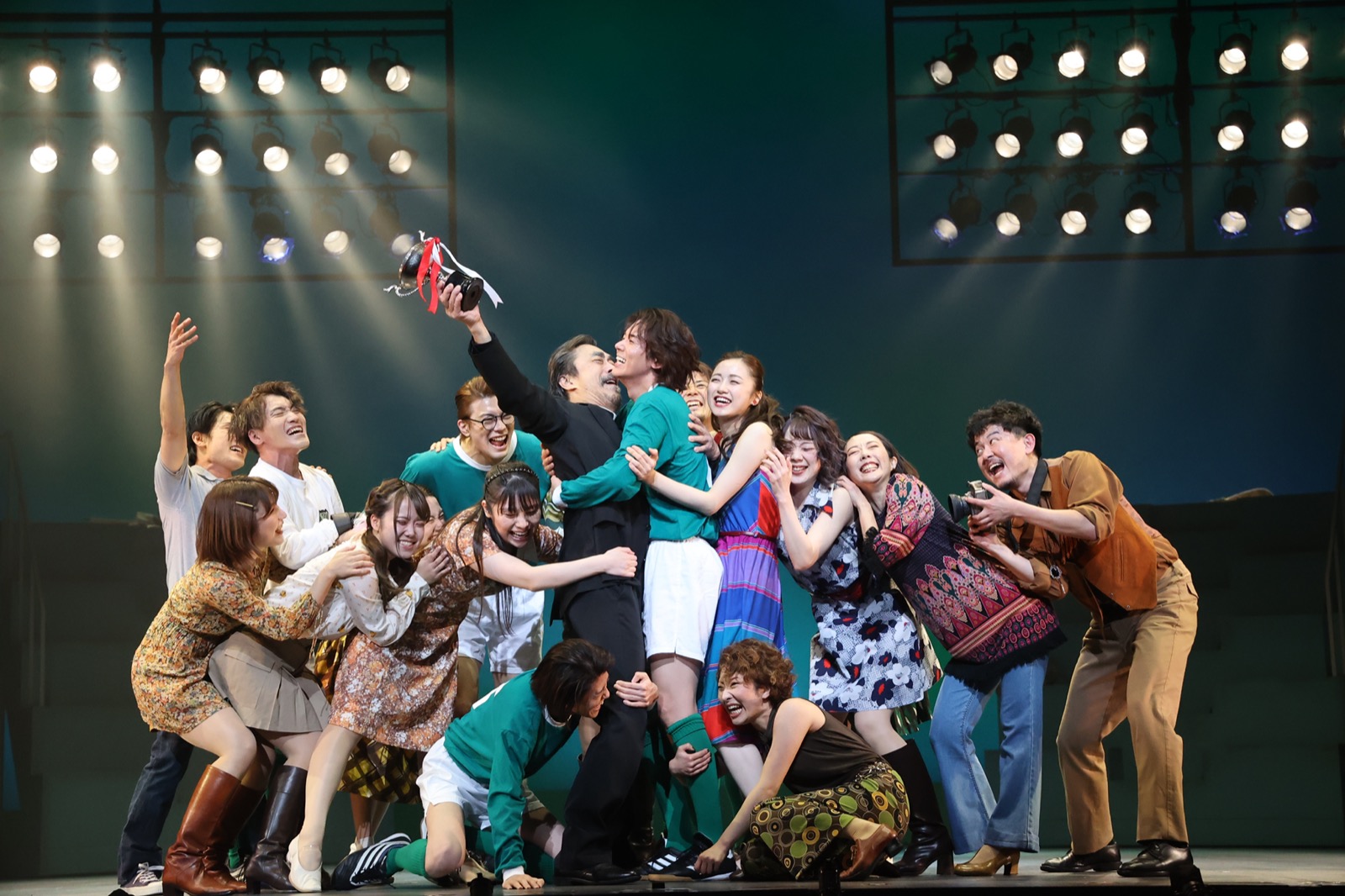
The Catholic team qualifies for the final. As they celebrate in the changing room, they hear drums in the distance and, knowing that the Protestant marchers are nearby, flee. The Protestants arrive, throwing sticks and stones (“God’s Own Country (Protestant March)”). They wreck the changing room and blow up the wall before leaving. After the chaos subsides, Christine and Del dream of a day when they can be together in peace (“Let Us Love in Peace”).
The sequence originally called “God’s Own Country (Protestant March)” is reworked as “Prod’s Own Country”. Instead of leaving together to attend the protest march, John and Mary hear the approaching Protestant marchers after John returns to her. The destruction of the changing room is replaced by a broader street riot between the communities. Afterwards, Christine and Del emerge from a broken-down car in which they have been making love. Their duet, “Let Us Love in Peace”, is replaced by a new song, “Born in Belfast”, in which they express their disillusionment with the possibility of finding happiness in Belfast.
The team wins the final (“The Final (A Game of Two Halves)”) and goes off to celebrate (“Off to the Party”/”The Craic”). At the party, Del is threatened and then thrown out by Thomas and his friends. Bernadette and Ginger get together (“Don’t Like You (Reprise)”). However, on his way home from the party, Ginger is viciously attacked.
In the revised version of the show, “Let Us Love in Peace” is moved to the party scene and reassigned to Bernadette and Ginger. It replaces the reprise of “Don’t Like You” that originally accompanied their romantic encounter. Following the party, Ginger and Daniel walk home singing a reprise of “The Beautiful Game,” after which Ginger’s attack is given its own musical sequence, “The Mugging.”
The next day, Christine visits Mary and talks about her relationship with Del (“Our Kind of Love”).
Christine’s “Our Kind of Love” is cut from the revised version of the show. The scene now includes a reprise of “The Boys in the Photograph” for Mary, Christine and Bernadette.
John, Thomas and Daniel arrive to tell them that Ginger is dead. Thomas wants to avenge his death, but Father O’Donnell and the others convince him that more violence is not the answer to this situation. They all attend Ginger’s funeral (“Let Us Love in Peace (Reprise)”).
Act II
Some time later, Mary and John are married (“The Happiest Day of Our Lives”/”To Have and to Hold”). The wedding night comes complete with the usual jitters (“The First Time”), but the couple affirm their love for one another.
In the revised version of the show, “To Have and to Hold” is cut from the wedding sequence and replaced by “All the Love I Have”. The song is therefore introduced much earlier in the show and becomes a recurring musical expression of John and Mary’s relationship. A reprise of “Don’t Like You” is added before “The First Time”, while a reprise of “All the Love I Have” follows the wedding-night scene.
Their happiness is soon shattered by a phone call. Thomas has joined the IRA and is on the run. He needs John’s help to get to safety. John argues with Mary about whether he should go, then leaves to help Thomas. Thomas explains his philosophy to John (“I’d Rather Die on My Feet Than Live on My Knees”).
A few months later, John and Daniel have the opportunity to try out for Everton Football Club. John and Mary are hopeful, as John has a good chance of being selected. On her way to watch the trials, Mary says goodbye to Christine and Del, who are moving to New York to escape the situation there. Mary figures she and John will go to England if he is selected, and they all talk about leaving their home (“God’s Own Country (Reprise)”).
Del and Christine’s departure also includes a reprise of “The Boys in the Photograph” in the revised version of the show.
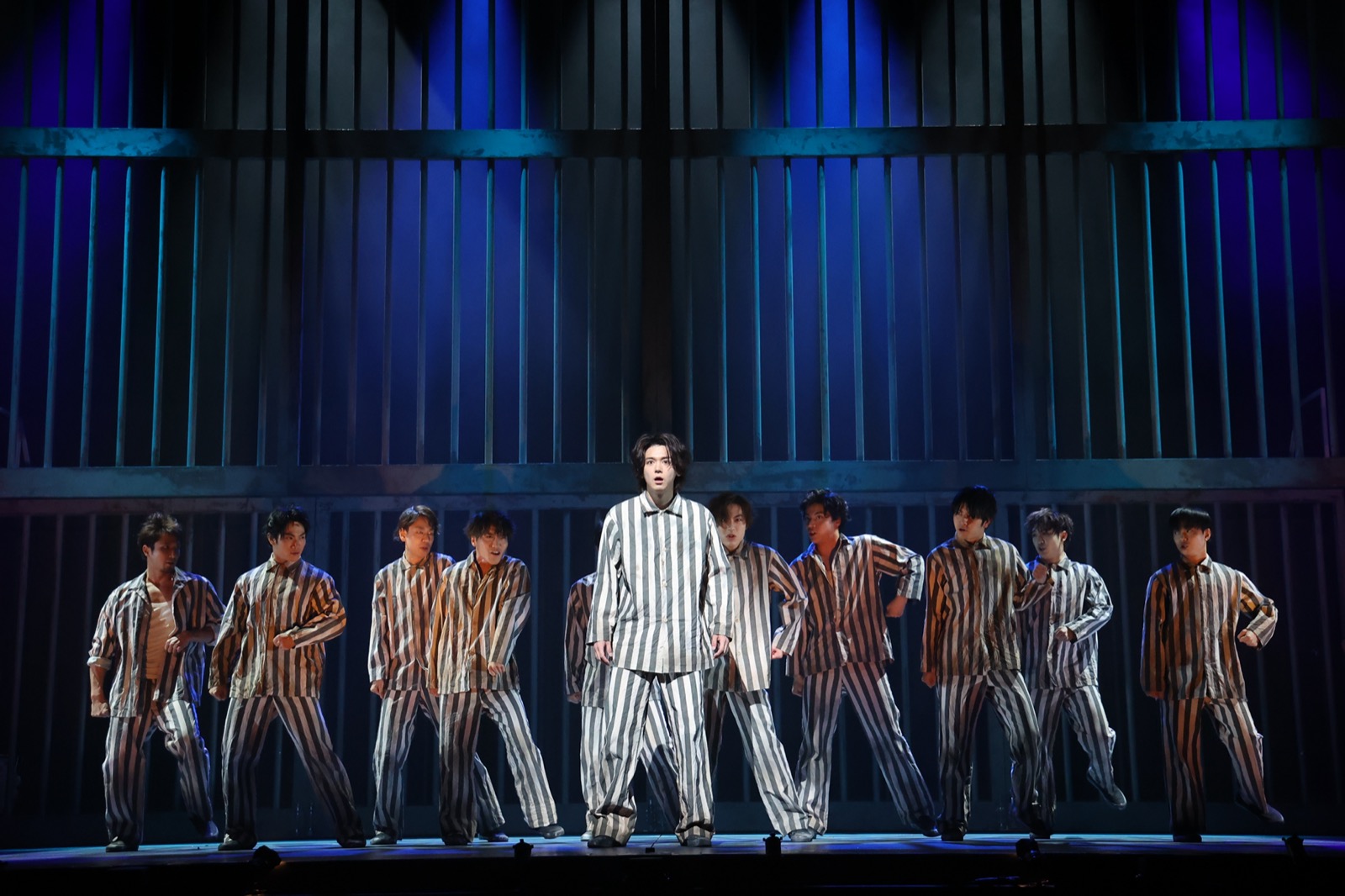
Mary has another reason to be happy: she has discovered that she is pregnant, although she has not yet found the right time to tell John. Their joy is short-lived when, instead of being selected for Everton, John is arrested for helping Thomas escape (“The Selection”) and sent to an internment camp (“Dead Zone”).
In the revised version of the show, John’s imprisonment is expanded through the additional sequence, “John in Prison”.
Mary has her baby, Sean, while John is imprisoned. Daniel visits them and is tracked down by a group of terrorists, one of whom Mary recognises as Thomas. They charge Daniel with treason, accusing him of turning John in to the authorities. They shoot him in the knee, crippling him for life. Mary is horrified (“If This is What We’re Fighting For”). When John is released, he meets up with Thomas and explains his theory about how he landed in the internment camp. He believes that Thomas betrayed him and that Daniel was innocent. John kills Thomas and then leaves to join the IRA.
The revised version of the show includes several revisions and refinements here. When John is released from prison, he meets Mary to tell her he will be going to England, which is followed by a reprise of “All the Love I Have”. This is followed by the scene in which Thomas openly confirms that he informed on John, which includes a new song, “This Will Never End”, that emphasises the continuing cycle of political violence. John’s murder of Thomas is cut. Instead, Thomas is shot by members of the IRA because his identity and activities have been exposed. This means that John has not yet become a killer when he considers joining the organisation.
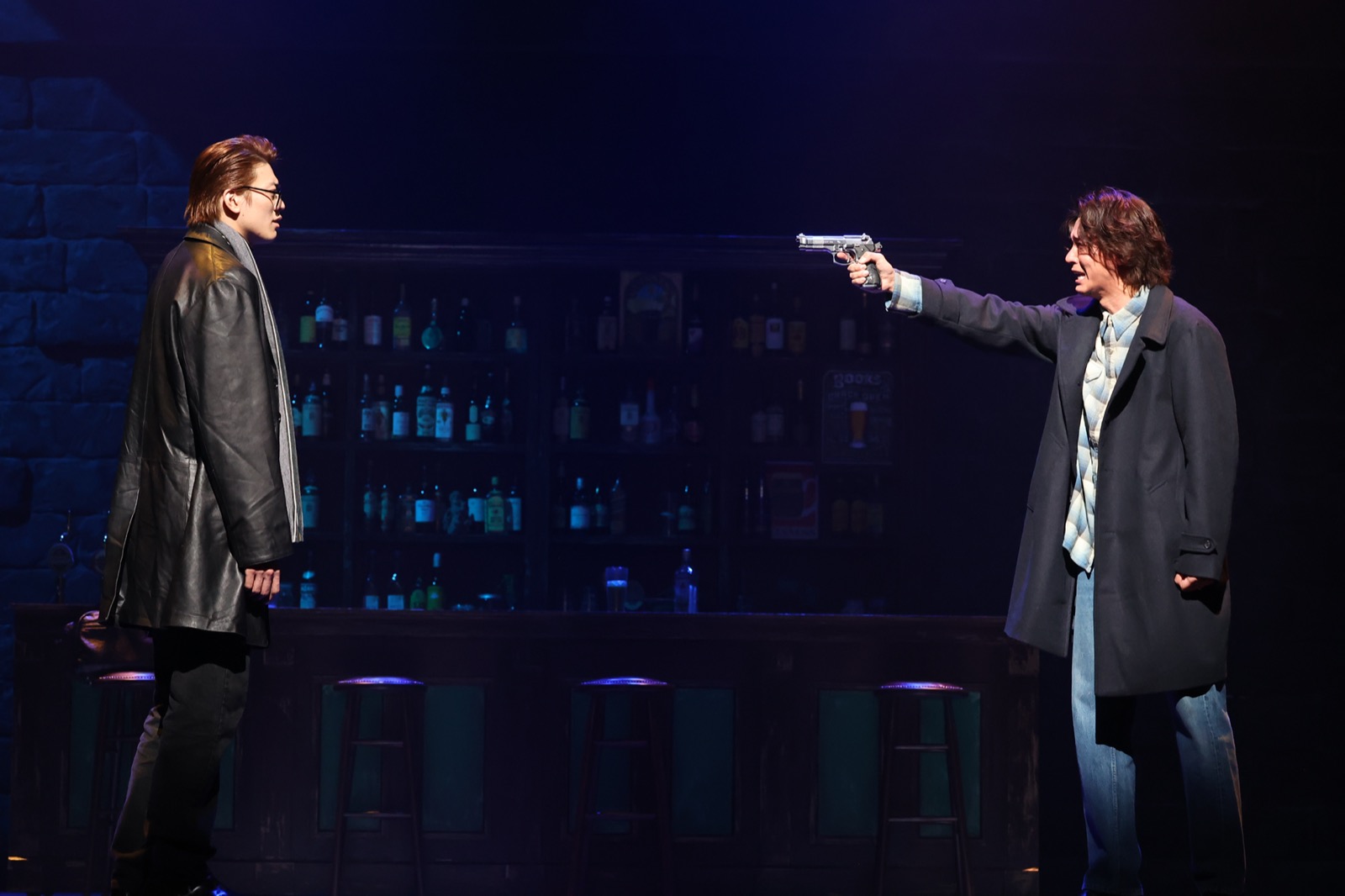
Before he goes, he gives Mary a present for his son: his old football and football shirt (“All the Love I Have”). Ten years later, Sean is a keen footballer. Mary hopes that the future will be brighter for her son and his team than it was for the team she once knew (“Finale”).
In the revised version of the show, the farewell between John and Mary is reworked. Mary produces the team photograph and argues that John’s true self will become his first victim if he joins the IRA, which is the catalyst for a more hopeful ending. After a reprise of “The Boys in the Photograph”, John remembers who he once was and returns to Mary and Sean instead of joining the IRA. The original ten-year time jump, in which Sean has become a keen young footballer, is cut. The show also ends with a reworked “Finale”, in which John chooses his family rather than perpetuating the conflict.
Characters
Principal Roles
Father O’Donnell. The Catholic football team’s coach and moral guide. He attempts to keep his young players focused on football rather than sectarian hatred and argues against retaliation after Ginger’s death. Must be able to hold a tune.
John Kelly. Late teens. The team’s talented star striker, who dreams of becoming a professional footballer. Confident, impulsive and deeply in love with Mary, he is gradually hardened by imprisonment and drawn towards political violence. Tenor.
Mary Maguire. Late teens. Intelligent, forthright and politically conscious. She challenges John’s ambitions and decisions but remains devoted to him as their relationship develops into marriage and parenthood. Soprano.
Thomas Malloy. Late teens. A fervently nationalist Catholic player whose sectarianism leads him to intimidate Del and later join the IRA. Passionate, uncompromising and increasingly radicalised. Tenor.
Daniel Gillen. Late teens. One of John’s closest friends and teammates. A lively, mischievous young man whose petty criminal behaviour masks his loyalty to the group. He is later falsely accused of betraying John and is violently punished. Baritone or tenor.
Bernadette. Late teens. One of the girls associated with the football team. Warm, spirited and romantically involved with Ginger, whose death brings the political violence directly into her life. Soprano.
Gregory “Ginger” O’Shaughnessy. Late teens. A member of the football team and Bernadette’s romantic interest. His good humour and youthful optimism are cut short when he is killed in a sectarian attack. Baritone or tenor.
Derek “Del” Copeland. Late teens. A Protestant player on the predominantly Catholic team. He faces intimidation from Thomas and his friends, but forms a loving relationship with Christine. Baritone or tenor.
Christine Warner. Late teens. A Protestant girl who falls in love with Del. Practical and clear-eyed about the dangers surrounding their relationship, she longs to escape Belfast’s cycle of hatred and violence. Mezzo-soprano.
Ensemble Roles
Football Players. Five boys with strong singing and dancing experience; all vocal ranges are required, extending to a top A. Five additional boys should be strong dancers with singing experience and a confident contemporary performance style.
Girls. Four primarily movement-based roles, appearing as friends, supporters and members of the young Belfast community.
Men and Women of Belfast. Approximately 22 ensemble performers, including two older men and two older women, representing the Catholic and Protestant communities, football supporters, wedding guests, marchers, mourners, prisoners and other inhabitants of Belfast. Additional roles include News Announcers, Referee, two Unpleasant-looking Women, two Policemen, Prison Guard and Prison Inmates. All vocal ranges are required.
Cast Recording

If you’d like to read more about the cast recording of The Beautiful Game, check out our track-by-track breakdown of the album.
Scripts and Scores

The vocal selections book for The Beautiful Game features nine songs from the musical.
Commentary
If you like West Side Story, then you might find much to interest you in The Beautiful Game. Both musicals deal with two communities in conflict, explore a romance shaped by that division and use dance to represent both youthful energy and communal violence. The Beautiful Game also attempts to find a theatrical equivalent for football, just as West Side Story transforms street fighting into dance. The aspirations are certainly there, even if the execution is less successful. The musical has never had a visionary director-choreographer like Jerome Robbins to help it achieve the complete synthesis of movement, music and drama to which it aspires.
Set against the sensitive backdrop of the Troubles in Northern Ireland, the musical uses a teenage football team to explore the impact of sectarian conflict on young people. Football initially offers the characters a shared identity. It brings players, friends and families together and provides John Kelly with dreams of a life beyond Belfast. Yet the divisions outside the team gradually invade that supposedly protected space. Del is driven away because he is Protestant; Ginger becomes a victim of sectarian violence; Thomas is radicalised; Daniel is punished for a betrayal he did not commit; and John’s ambitions are destroyed through his association with Thomas.
The overarching narrative demonstrates noble intentions on the creators’ part. Rather than treating the Troubles simply as a historical backdrop, the show explores the way political violence infiltrates friendships, romances and families. John’s transformation from political ambivalence to anger and potential activism gives the musical its central dramatic trajectory. His relationship with Mary develops alongside this change, beginning as an “enemies to lovers” romance before becoming a marriage tested by imprisonment, parenthood and radicalisation.
Ben Elton’s book is unusually extensive for an Andrew Lloyd Webber musical. In that respect, it sometimes resembles the serious-minded dramatic books of Oscar Hammerstein II more than the sung-through or spectacle-driven works normally associated with Lloyd Webber. The characters are required to make political and moral choices, and the consequences of those choices are often severe. The musical faces up to real-life issues, death and history rather than retreating into fantasy.
Good intentions, however, are not enough to make a musical successful. The merits of the show must ultimately be judged according to what appears on stage rather than the worthiness of its subject. Although The Beautiful Game grapples with serious issues and difficult themes, it does not always succeed in integrating its private relationships with its public conflict. The first act generally moves between the two with confidence, as football, romance and sectarian tension become increasingly intertwined. In the second act, the plotting grows more melodramatic, while the characters’ transformations sometimes feel imposed by the story’s needs rather than developing organically.
The revised version, The Boys in the Photograph, attempts to address some of these problems. The team photograph provides a stronger central image, preserving a moment of youthful fellowship before the players’ lives are separated by violence. Several scenes are expanded, new musical material is added and some characters are given clearer futures. Most significantly, the conclusion is changed so that John rejects the IRA and returns to Mary and Sean.
That revised ending is more hopeful, but not necessarily more dramatically convincing. The original conclusion, in which John joins the IRA and Mary looks towards a better future for their son, is bleak but consistent with the show’s depiction of a cycle that consumes one generation after another. In The Boys in the Photograph, Mary’s intervention recalls John to his former self and prevents him from perpetuating that cycle. The idea is emotionally appealing and gives the photograph a clear dramatic purpose, but John’s last-minute reversal feels somewhat artificially imposed. The musical appears to want the emotional impact of tragedy without finally accepting its consequences.
The score is more consistently successful than the dramatic construction. There is some genuinely interesting compositional work from Lloyd Webber, who incorporates Irish folk influences, football chants, romantic ballads and harsher contemporary sounds. The score is theatrical and highly listenable, moving between public numbers and intimate expressions of hope, love and disillusionment.
“God’s Own Country” is one of the show’s most effective musical moments. Its melody expresses love for Ireland, but it is also appropriated by opposing communities, revealing how the same sense of national or cultural belonging can become both comforting and dangerous. “Clean the Kit” combines John’s footballing aspirations with the social hierarchy of his football team, while “Let Us Love in Peace” articulates the young characters’ longing for a life beyond inherited hatred. “If This Is What We’re Fighting For” is particularly striking because it forces Mary to confront the moral corruption of a cause that can justify brutalising an innocent man.
“All the Love I Have” supplies the score with its central romantic statement, particularly in the revised version, where it becomes a recurring expression of John and Mary’s relationship. The original score also included “Our Kind of Love”, perhaps the best incarnation of a melody that was always intended for a sequel to The Phantom of the Opera. After an earlier Phantom sequel was abandoned, the song became a centrepiece of The Beautiful Game. When Love Never Dies was eventually created, the melody returned to the world of The Phantom with new lyrics.
The weakest link in the show is Elton’s lyric-writing. His attempt to create a realistic, contemporary vernacular is understandable and, in principle, appropriate to the characters. These teenagers should not necessarily express themselves with the polish of sophisticated Broadway lyricists. Yet colloquial writing still requires precision. Too often, the rhymes are predictable, awkward or accidentally comic, distracting attention from the dramatic situation rather than sharpening it.
There is, of course, more to a lyric than perfect rhyme. Musical theatre contains many songs that rhyme impeccably but communicate very little dramatic significance. Songs that exist solely for the sake of wordplay can be as destructive to meaning as an imperfect rhyme that jars on the ear. This distinction may be especially important to a contemporary ear, which is often more tolerant of imperfect rhyme than of elaborate wordplay that obscures dramatic meaning. The best dramatic lyrics marry verbal craftsmanship with character, situation and emotional progression. Elton frequently has a clear sense of what a song should accomplish, but his execution does not always match that understanding. Those weaknesses have continued to shape the musical’s reputation, even after its revision as The Boys in the Photograph.
“The First Time” remains the most obvious example. Elton’s reasoning behind the number is not without merit. The deliberately ungainly lyric is intended to clash comically with Lloyd Webber’s lush, Aspects of Love-style music, keeping the mood buoyant before the story enters its darkest stretch. The song is therefore not simply present to fill space: it has a clear structural purpose.
Nevertheless, the choice does not work. Instead of making John and Mary more endearing or providing a useful release of tension, the lyric undermines a pivotal moment in their relationship. Given the tragedies that follow the wedding, the scene would be stronger if it embraced its romanticism. Allowing the audience to invest fully in the couple’s happiness would make its destruction more painful and lend greater emotional weight to the revised ending. In the final analysis, “The First Time” is the one number in the score that feels truly unsalvageable: the musical would be stronger if it were cut or entirely rewritten.
That said, almost every lyric in the show has something to commend it. A body of work that is half bad is also half good, and Elton’s lyrics are better described as uneven or mediocre than entirely without merit. At their best, they communicate anger, idealism and the frustration of young people trapped within a conflict they did not create. At their worst, their conspicuous rhymes and blunt phrasing compromise Lloyd Webber’s melodies and weaken moments that should be emotionally compelling.
The most frustrating aspect of Elton’s work is that many of its weaknesses are not fundamental to the musical’s conception. A more meticulous revision of the lyrics, including tightening the rhymes and allowing the characters’ emotional situations to dictate the tone, could resolve a significant proportion of the score’s problems. The show does not necessarily require an entirely different lyrical approach; it requires a more disciplined execution of the approach Elton has chosen.
This tension between Lloyd Webber’s romanticism and Elton’s abrasive realism lies at the heart of the musical. Sometimes the contrast is productive: the expansive melodies reveal aspirations that the characters cannot express in ordinary speech. At other times, the two styles appear to belong to different shows. Lloyd Webber’s yearning music reaches towards emotional transcendence while Elton’s lyrics insist on earthy jokes, colloquial awkwardness and deliberate bathos.
The production context also makes The Beautiful Game an interesting work within Lloyd Webber’s repertoire. He is one of the relatively few theatre-makers developing original work for an intensely commercial arena rather than within the lower-cost environment of fringe theatre, where greater experimentation may be possible. A musical about football, the Troubles, internment, sectarian murder and political radicalisation was hardly the safest possible West End project. The show deserves credit for taking that risk, even if ambition and noble intentions cannot excuse its faults.
The relationship between artistic risk and commercial success is, however, more complicated than simply demanding that artists always choose the most challenging or innovative project. Commercially successful work can create the freedom to undertake less immediately viable material, just as Harold Prince’s involvement in The Phantom of the Opera helped offset losses incurred on his more artistically adventurous productions. Theatre-makers also have careers, companies and livelihoods to sustain. In the end, Lloyd Webber should have the space to create work that satisfies his own needs as an artist, whether critics and audiences approve of each individual choice or not.
Even so, The Beautiful Game appears to have been more characteristically Elton’s project than Lloyd Webber’s. Its political subject, contemporary vernacular and focus on ordinary young people suggest that Elton was the principal driving force behind the musical, even if Lloyd Webber responded with a score that is often more emotionally persuasive than the words surrounding it. Indeed, Elton reportedly later worked on Love Never Dies partly in exchange for Lloyd Webber returning to The Beautiful Game and helping to reshape it as The Boys in the Photograph. If so, this further reinforces the impression that Elton remained more deeply invested in the project and in finding a form in which it might finally fulfil its potential.
The original production met with an appropriately divided response. Some critics regarded it as among Lloyd Webber’s finest and bravest pieces of musical theatre, praising its score, youthful company, choreography and stark staging. Others admired its ambition while identifying weaknesses in the plotting and lyrics. The harshest responses argued that Elton’s clichés and awkward romantic writing prevented the musical from doing justice to its political subject. The revised version received somewhat more positive notices, though hardly an unequivocal set of raves.
Ultimately, The Beautiful Game hits the post rather than scoring a goal. It is a noble, ambitious project with real heart, a highly listenable score and several moments of considerable theatrical power. Yet neither the original nor revised version fully achieves the total effect of its potential. The structural problems, tonal clashes and uneven lyrics prevent it from reaching the level of West Side Story, the musical with which its aspirations invite comparison.
Even so, it remains worth hearing and studying. Its imperfections make it particularly revealing for anyone interested in the craft and discipline of lyric-writing, since it is sometimes easier to understand a principle when the mistakes are obvious. More importantly, the show continues the musical-theatre tradition of engaging with serious social and political issues. It may be one of the weaker musicals in Lloyd Webber’s repertoire, but it is also one of his most intriguing.

