The Saturday List: The Marvin Hamlisch Musicals Countdown

Sharon Spiegel-Wagner and Jonathan Roxmouth in I'M PLAYING YOUR SONG

Sharon Spiegel-Wagner and Jonathan Roxmouth
in I’M PLAYING YOUR SONG

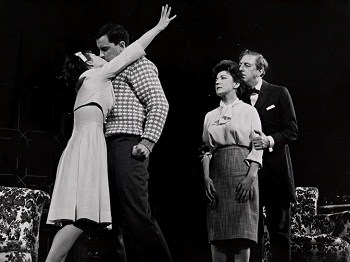
The Marvin Hamlisch story is the subject of a brand new show, I’m Playing Your Song, which will be performed during the festive season and through the new year at Montecasino and Theatre on the Bay in Johannesburg and Cape Town, South Africa, respectively. Written by Jonathan Roxmouth and directed by Alan Swerdlow, the production stars Roxmouth alongside Sharon Spiegel-Wagner. Hamlisch is lauded as being one of the greatest songwriters of his time, an EGOT winner who has written tunes that have delighted theatre audiences, moviegoers and radio listeners for the past fifty years. In today’s “Saturday List”, Musical Cyberspace takes celebrates the first performances of I’m Playing Your Song with a look at Hamlisch’s five greatest musicals, with a brief look at their best songs, major productions and some suggestions for South African revivals of each of them. So without further ado, let the countdown begin!

5. The Goodbye Girl

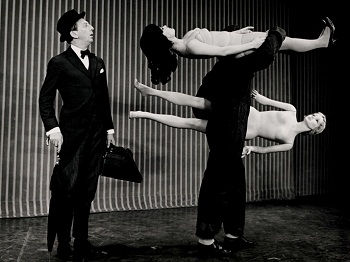
When Hamlisch joined forces with Neil Simon and David Zippel to adapt Simon’s film The Goodbye Girl into a stage musical, expectations of what they would deliver must have been pretty high. With Bernadette Peters and Martin Short leading the cast, as incompatible roommates that fall in love over the course of the show, in a staging by Michael Kidd’s, the pedigree of the show was second to none. Imagine everyone’s disappointment when the show shuttered on Broadway after five months in 1993. A revised version of the show opened in Illinois the following year and a production with even further revisions – including new lyrics by Don Black – opened in 1997. With Black’s lyrics – perhaps typically – landing with a dull thud, the licensed version of the show remains the 1994 iteration of the material. Listening to the original cast album of the Hamlisch-Zippel version of the score offers some insight to the mixed reception the show had in its first run. The score is overwhelmingly bombastic at times, particularly in its ballads, but there’s some fun to be had in numbers like “Elliot Garfield Grant,” “Good News, Bad News” and “Don’t Follow in my Footsteps”. In fact, trimmed of its fat, The Goodbye Girl could probably make a snappy one-act musical comedy. Although a major South African production of the show seems unlikely, although it could be a great vehicle to pair up Bianca le Grange and Sne Dladla, who could certainly sell audiences on the material. Maybe their Blood Brothers and Orpheus in Africa director, David Kramer, could head up the show.


4. Smile

A 48-performance flop, Smile was the result of Hamlisch’s collaboration with Howard Ashman, who had had great success with Little Shop of Horrors. Chronicling the search for the ideal Young American Miss, the only record of Smile was a demo recording made for Samuel French to use in promoting the show to potential producers. This recording reflected some changes that had been made to the Broadway version of the show, some of which were reinstatements of earlier drafts of the material. Some of the songs – “Disneyland,” “Smile,” “In Our Hands,” and “Maria’s Song” surfaced in the Unsung Musicals recordings, with the first of those songs finding particular favour in the hands of original cast member, Jodi Benson. Songs from the musical also appear on the recording Howard Sings Ashman, where the composer and lyricist perform their own material. Although Smile has developed something of a minor cult following since its premiere, no major South African production of the musical has been produced. Perhaps Mixing Bowl Productions, who have been working hard to market the “new musical theatre” brand in their revues and concerts, could tackle this one. While Smile is certainly not recent enough to typically be considered “new musical theatre”, the approach is there in the material, and it is time for this fledgling company to start dealing with the complexities of narrative in musical theatre storytelling.


3. Sweet Smell of Success

Although Sweet Smell of Success only ran for 109 performances on Broadway in 2002, the show still represents Hamlisch’s best work for the stage since A Chorus Line in 1976. While critics at the time were less than complimentary about the Bob Crowley’s design, Christopher Wheeldon’s choreography and Nicholas Hytner’s direction, Hamlish and the lyricist who crafted a literate set of lyrics for the show, Craig Carnelia, were nominated for a Tony Award and separate Drama Desk Awards for their score. John Guare also received a nomination for his book, which told the tale of 1950s Broadway gossip columnist, J. J. Hunsecker, who uses his influence, with the help of a struggling press agent, to interfere with his sister’s relationship with a hot young piano player. The cast recording is a testament to a score that is by turns jazzy, witty and touching, including the expository “The Column”, the soul-searching “At The Fountain”, the tender “Don’t Know Where You Leave Off” and the sharp-as-nails “One Track Mind”. There are plenty of other rewards to be had to upon listening to this recording. In fact, with another round of revisions and a different production team, I am convinced that Sweet Smell of Success could truly hit its stride as a first class musical comedy. With no South African production having taken place, the man to head up the job would have to be Steven Stead, whose KickstArt Theatre Company has seen him helm productions like Sweeney Todd, Shrek and Cabaret. Add the unstoppable Roxmouth himself into the mix as the struggling press agent, put him alongside his Sunset Boulevard co-star Bethany Dickson as the woman around whom the entire plot revolves, cast her Singin’ in the Rain leading man, Grant Almirall, as her lover and put his fellow Chicago cast member, Craig Urbani, in the role of J. J. Hunsecker, and you’d be all set for a killer night’s entertainment.


2. They’re Playing Our Song

Hamlisch collaborated with legendary pop lyricist Carole Bayer Sager to create They’re Playing Our Song, which was based on their own romantic relationship, bringing to life at the same time the dynamics in the relationship between a composer and lyricist. Although the score failed to nab a Tony Award nomination, Hamlisch was nominated for the Outstanding Music Drama Desk Award. Highlights of the score includes a couple of toe-tapping numbers in the title song and “Working It Out”, but also more tender pieces for each of the lead characters, namely “Fallin’” (for him) and “I Still Believe in Love” (for her). Following a 1978 world premiere in Los Angeles, They’re Playing Our Song opened on Broadway the following year and transferred to London in 1980, with a UK revival being staged in 2008. Joan Brickhill and Louis Burke produced the South African premiere of the show in 1980, with Mike Huff and Marloe Scott-Wilson playing the two leads. I wonder what Janice Honeyman could do with a revival of this show. How about putting her at the helm of a revival with Toni Jean Erasmus, who was a wonderful Sister Mary Robert in Honeyman’s production of Sister Act this year, and Dean Balie, who is currently one of the featured actors in Orpheus in Africa? It could be a fantastic prospect for Honeyman and her often-time Joburg Theatre producer, Bernard Jay.


1. A Chorus Line

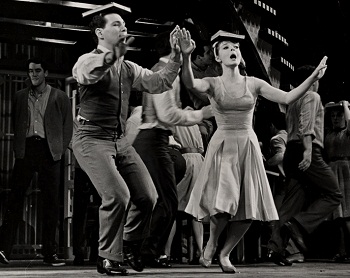
Hamlisch’s most enduring stage work is the Pulitzer Prize-winning musical, A Chorus Line. Following a stint of 101 performances Off-Broadway in 1975, the show transferred to Broadway where it ran for a record-breaking 6,137 performances. Marvin Hamlisch won (along with the show’s lyricist, Edward Kleban) the Tony Award for Best Original Score as well as the Drama Desk Award for Outstanding Music for the show. The score features several unforgettable numbers, including the haunting “At the Ballet”, which Hamlisch described as the song that set the shape and color of the entire musical. There’s also the catchy “I Can Do That”, the hilarious “Dance: Ten; Looks: Three” and the thrilling “The Music and the Mirror; each is a number that brilliantly delineates the character that sings the song. The masterful “Montage” juxtaposes the teenage experiences of all 17 dancers on the line. And that’s not even mentioning the show’s two biggest takeaway numbers, “One” and “What I Did for Love”, or the extensive underscoring that pulsates throughout the show. At present, the sixth longest-running Broadway show ever, A Chorus Line opened in the West End in 1976 and was adapted into an almost universally disliked film in 1985 before being revived in New York in 2006 (the casting for the revival being the subject of a documentary, Every Little Step) and in London in 2013. In between, A Chorus Line had its South African premiere in Cape Town in 1992, with Troy Garza restaging the original direction and choreography. Maybe when Pieter Toerien Productions is done with Singin’ in the Rain, the theatre mogul can cast a thought towards reviving this classic piece of musical theatre with our current generation of musical theatre performers – but only if it means we get to see Michael Bennett’s unbeatable original staging of the work.


Besides these five musicals, Hamlisch has also composed scores for the musicals Jean Seberg (1983, featuring the beautiful song, “Dreamers”) and The Nutty Professor (2012), as well as the many hit songs he wrote for films like The Way We Were (1973), The Spy Who Loved Me (1977) and The Mirror Has Two Faces (1996). If you’d like to hear which of Hamlisch’s songs Roxmouth and Spiegel-Wagner sing in I’m Playing Your Song, book your tickets for the show at Montecasino (where it runs until 10 January) or Theatre on the Bay (where it runs from 13 January – 6 February). Bookings are through Computicket.
Posted in The Saturday List | Tagged , , , , , , , , , , , , , , , , , , , , , , , , , , , , , , , , , , , , , , , , , , , , , , , , , , , , , , , , , , , , | Leave a comment

Monday Meditation: I am Not Over the Old Masters

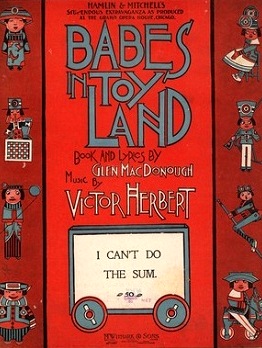
Sheet music from Victor Herbert's BABES IN TOYLAND

Sheet music from Victor Herbert’s BABES IN TOYLAND

Hamilton may be breaking new ground in musical theatre, with Lin-Manuel Miranda consolidating breakthroughs in mainstream musical theatre production that may or may not redefine the form, but while I enjoy keeping up to date with new developments in musical theatre, I find myself continually returning to the works of the book-writers, lyricists and composers who laid the foundations of the form as it know it today. Sometimes its easy to forget just how far musicals have come; it’s also easy to dismiss how much the ground-breakers were doing at the time.

I don’t know why I have such an intense obsession with musical theatre history. I guess I like to see the origins of things and to imagine what making and seeing theatre might have been like prior to the 1930s.

What was it like to hear Cole Porter’s “Let’s Do It, Let’s Fall in Love” for the first time in 1928? What must it have been like for Herbert Fields, Richard Rodgers and Lorenz Hart to create Dearest Enemy in 1925? How do the “new” Gershwin musicals really compare with the their originals? When Irving Berlin saw his debut musical, Watch Your Step, staged, did the audiences of 1914 anticipate a full score by the writer of “Alexander’s Ragtime Band” the same way that the audiences of today anticipate the full score of Waitress from “Love Song” songwriter Sara Bareilles? How much do Disney’s new fairy-tale musicals on stage owe to Victor Herbert and Glen MacDonough’s Babes in Toyland and The Wizard of Oz, with its The Lion King-like – in length – list of contributors.

There were of course many more – including Jerome Kern, Oscar Hammerstein II and others who came before them – who crafted and influenced the musical in its formative years and some of these theatre-makers were still making musicals decades later, reacting to later developments in the form and – in some cases – innovating these developments themselves. When you’re downloading Hamilton later this week, why not pick up a recording of Fifty Million Frenchmen, Oh, Kay!, The Red Mill or Sunny and see what you think?

In the meantime, tell us who your favourite “old master” of musical theatre is in the comment block below. Any recommendations of recordings or books to read would be great too!

This post is inspired by and a response to “I Am Not Over the Founding Fathers” in Shirley MacLaine’s I’m Over All That and Other Confessions.

Posted in Monday Meditation | Tagged , , , , , , , , , , , , , , , , , , , , , , , | Leave a comment

Musical Theatre Sunday School: In Pandora’s Box, There Was Also Hope…

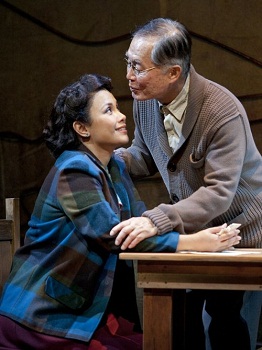
Lea Salonga and George Takei in ALLEGIANCE. Photo credit: Henry DiRocco

Lea Salonga and George Takei in ALLEGIANCE. Photo credit: Henry DiRocco

Many of us are familiar with the Greek myth of Pandora, a woman who opened a container holding all of the evils that would become manifest in the world. (Why does mythology place always slander women by placing the burden of sin in their hands? Eve too received what some might call a bum rap.) At the bottom of the box or jar, was hope. And while the situation surrounding The New York Gilbert and Sullivan Players’ now-cancelled production of W.S. Gilbert and Arthur Sullivan’s The Mikado is just one sign of the insidious prejudices that still lurk in our midst, still there is hope.

One recent article I read that is a testament to that hope appeared in The New York Times on 10 September: “This Broadway Season, Diversity Is Front and Center”. The article discusses productions like On Your Feet!, Allegiance, The Color Purple, Amazing Grace, Shuffle Along, Hamilton, The Gin Game, Hughie, School of Rock and Spring Awakening, which give voice to Latin American, Japanese American, African American, Caucasian and Deaf narratives.

In the article, Lea Salonga – the first Asian woman to win a Tony Award – is quoted as saying:

Whether it’s providential, coincidence, or meant to be, the fact is what’s happening on Broadway is so diverse it’s almost utopian. It shows how many stories are out there that should be told, and can be told — so many experiences that make America what it is.

The telling of diverse stories is, of course, not only a challenge for Americans, but also one that faces us all. So, if you’re the kind of person who’d like to share your story with us, what do you do to encourage diversity in the arts in your community? Maybe your groundbreaking work will inspire us all.

Posted in Musical Theatre Sunday School | Tagged , , , , , , , , , , , , , , , , , | Leave a comment

The Saturday List: 10 Reprehensible Responses to the NYGASP “MIKADO” Fiasco

George Grossmith made up as Ko-Ko in THE MIKADO

George Grossmith made up as Ko-Ko in THE MIKADO

Yesterday, in Musical Cyberspace’s Forgotten Musicals Friday column, I discussed the situation that surrounded the The New York Gilbert and Sullivan Players’ planned production of W.S. Gilbert and Arthur Sullivan’s The Mikado, a controversy that has been widely covered on theatre websites like Playbill and BroadwayWorld. With the announcement yesterday that the production had been cancelled, indignant responses that criticised the Asian American community’s response to the production’s marketing materials, which featured Caucasian actors representing Japanese characters, and the fact the inclusion of Pan-Asian actors and actors of Asian descent in the production was embarrassingly minimal. Reading through some of these responses left me bewildered. In what world are these people living? Alongside which people? Why are they missing the point?

My Saturday List would normally consist of a light-hearted collection of observations about musical theatre, but after reading some of the reprehensible responses to the fiasco surrounding the The New York Gilbert and Sullivan Players’ cancelled production of The Mikado, I felt that I had to address these in some way. One could select ten similar responses to these on almost any social media platform that engages with musical theatre or opera, but I thought it useful to respond to a set of responses in one place: the Gilbert and Sullivan Society of Facebook, a public group on Facebook where people volunteer their opinions in an open forum. In fact, these responses are all to be found in a single thread, started by group member Anthony Garcia, who describes the entire affair as a ‘how-de-do’, a phrase taken from one of the songs in The Mikado.

Right. A deep breath. And here we go.

Rutland Barrington as Pooh Bah in THE MIKADO

Rutland Barrington as Pooh Bah in THE MIKADO

1. One belief, held by many and put forward in this thread by Mathias Kayser, is that The Mikado is a parody of Britain in the 19th century, therefore casting white actors is not problematic. It’s true that Gilbert and Sullivan were presenting a satire of the politics and institutions of Victorian England. But here’s the thing: we are not living in Victorian England or one of its colonies. The society that is being put under the spotlight existed 130 years ago. The satirical aspects of The Mikado are largely no longer valid unless we assume that the British have remained stagnant as a society for that period of time. Britain’s “imperial century” is over. Many countries continue to deal with post-colonial trauma following the United Kingdom’s process of decolonisation and decline. The defense that The Mikado remains relevant as a satire is a pretense. The world in which The Mikado was written has been dismantled; the conventions around the casting of white actors in this comic opera should be too.

2. Cathy Bulfin offers the view that critics of productions that cast white actors in The Mikado ‘don’t get it at all’. What is it, exactly, that we don’t get? Racism perpetuated in the name of art? That white men have suppressed opportunities for people of colour in every industry over time, including the entertainment industry? That there is such a thing called restorative justice, which is a valid and necessary process? Because those are some of the things that Ms Bulfin and her peers seem to fail to understand.

1885 poster art for THE MIKADO

1885 poster art for THE MIKADO

3. You get some folks who only read the headlines and who get lost in their own gut reaction. Like Robert Watson, who considers anyone who might take offence at the use of white actors to represent Japanese people in 2015 to be ‘blind inartistic trouble-makers’. He should consider the grace that actress and writer, Erin Quill, extends to Gilbert and Sullivan about the intentions of their piece before offering any sort of criticism of The Mikado. Only then does Quill say, ‘We, the Asian Americans, do not want to ‘take away’ your precious Mikado – we want you to do better. We want you to stop constantly mocking us and telling us by your actions and deeds that Yellowface remains part of your theatrical lexicon. We want you to make any production of it, smarter, less full of stereotypes – more full of the respect G&S were trying for.’ Somehow, Mr Watson and his ilk interpret this as persons suffering from ‘white guilt and bigoted Asians’ simply attempting to ‘wreck the whole story’ of The Mikado – an inconceivable point of view for any rational person.

4. Mr Watson voices another popular response to situations like these: ‘These are simply PC troublemakers who want to censor art.’ It is not the denotation of political correctness with which Mr Watson is concerned, namely ‘the avoidance of forms of expression or action that are perceived to exclude, marginalize, or insult groups of people who are socially disadvantaged or discriminated against’, but some connotation of the word whereby the noble intentions of political correctitude is stripped of its integrity. Is it really censorship to suggest that an established practice should be interrogated? And when did art become a free platform for bigotry?

Gilbert’s own illustration of “A More Humane Mikado”, one of the numbers in THE MIKADO

5. There is something wrong when white communities are denied access to a potential theatre production when roles representing members of any suppressed ethnicity cannot be played by white actors, is Ian Bond’s summary of the situation. His suggestion? That it is ‘time to start fighting back’ to preserve the tradition of yellowface performance in productions of The Mikado and of blackface performance in productions like Show Boat! The world of which Mr Bond dreams is one where white performers can dress up as Japanese people, Chinese people, African people, Indian people, Middle Eastern people or Native American people for the diversion of white audiences, no matter whether this compromises the dignity of the people being represented or not. The solution is very simple, though no doubt a difficult one for Mr Bond and his cohorts to hear: if the show cannot be cast appropriately, the show should not be produced. Somewhere, someone will value the great sacrifice made by white audiences in this regard.

6. Because it was done in the past, that makes it acceptable today. So thinks Mr Bond, and Helen Booker, who herself performed in blackface in Show Boat in 1985, agrees. ‘It wasn’t considered racist then,’ she protests, ‘and I can’t understand why it should be now.’ Just because something wasn’t considered racist doesn’t mean that it wasn’t. Injustices are always perpetuated and justified by those who reap the benefits.

J. Hassal's THE MIKADO illustration

J. Hassal’s THE MIKADO illustration for a theatre poster for the show

7. Mr Garcia returned to the thread he started to propose that avoiding the trappings of yellowface – buck teeth, slanted eyes and so on – fixes everything. The thing is, representation is about more than make-up, whether this may be full yellowface, some variation of Geisha makeup, or any variation of generic Orientalism. An assimilation of an entire culture has to take place.

8. Mr Bond returns to the fold to posit that because the satire is about the British, there are no Japanese stereotypes in The Mikado. I never knew that the use of baby-talk (Pitti-Sing, Yum-Yum Pooh-Bah, Pish-Tush, Nanki-Poo and Ko-Ko) as a substitution for Japanese names, the Westernised depiction of the Japanese Emperor or the invention of national traditions could be considered free of prejudice. There’s also something in the viewing of an entire culture – no matter how tasteful the intentions for its portrayal might be – as nothing more than a vehicle for exploring the concerns of another.

9. Offence is in the eye of the beholder, claims Sarah-Jane Hall, who says ‘there is a conscious choice on the part of the offended to feel that way’. It follows, then, that ‘the offended’ should have no opinion on the way they are portrayed in the arts or whether, indeed, they should have the first option to represent not themselves, but their cultural background. Worst of all, it means that being offended by an insulting depiction of your culture is an adopted posture, an academic position that has no basis in public historical practice or personal emotional resonance. What a degrading view to have of the genuine suffering of ‘the offended’, a mendacity constructed to preserve one’s own supposed superiority.

A 1926 costume design for Ko-Ko by Charles Ricketts

A 1926 costume design for Ko-Ko by Charles Ricketts

10. The issue of race in productions like The Mikado is an American issue brought about by the American mindset. As far as AJ Ua Néill is concerned, ‘the rest of the world isn’t obsessed with race’. Well, if there are Americans who are working to counteract the effects of centuries of racism, they should be applauded. But they are not the only ones. People in countries around the world are engaging with these issues. Sometimes without elegance. Sometimes at the cost of human life. Sometimes taking small steps forward. Sometimes making huge strides that take them into the future. Perhaps it is time for Mr Ua Néill and his cronies to be present in the world in which we live, where – to cite just one example – economic wars fought over resources in central Africa have everything to do with serving the technological whims of people around the world. It must be comfortable to pretend that race is not an equation in contexts like these, but that’s yet another reality willfully ignored by those who benefit from, in this case, war caused by corporate competition. The issue of racial representation in the arts may seem like small fry in comparison, but the same attitudes inform both situations.

While this tenth item brings my Saturday List to a close, the thread from which these statements are taken continues to flourish and so does, one hopes, the discussions that push us forward in this renegotiation of generations of rehearsed practices that continue to flourish in contemporary performance practice. Feel free to join the discussion using the comments section below, or visit the the Gilbert and Sullivan Society of Facebook to enrich the discussion of these points there. This is one of those things about which we need to talk, so that tomorrow can be a better day.

Posted in The Saturday List | Tagged , , , , , , , , , , , , , , , , , | 9 Comments

Forgotten Musicals Friday: THE MIKADO

The image that caused all the trouble: promotional photography used to promote the New York Gilbert and Sullivan Players' production of THE MIKADO

The image that caused all the trouble: promotional photography used to promote the New York Gilbert & Sullivan Players’ production of THE MIKADO

All right. It’s hardly forgotten – and, strictly speaking, it’s not a musical either. But The Mikado has been placed under the spotlight once again this week, so I thought I would feature W. S. Gilbert and Arthur Sullivan’s classic comic opera in this column to reflect upon some of the issues raised in the controversy around the The New York Gilbert and Sullivan Players’ planned production of the piece, which was announced as having been cancelled earlier today.

The Mikado; or, The Town of Titipu debuted in 1885, the ninth collaboration by the widely popular Gilbert and Sullivan. A satire of Victorian England, looking both politics and other institutions of the time, librettist Gilbert used the setting of Japan as a disguise for his commentary. Plot-wise, The Mikado tells the tale of Nanki-Poo, the son of the Mikado of Japan who has fled his father’s court to escape marriage to the elderly Katisha. Disguised as a ‘wandering minstrel’, arrives in the town of Titipu, where he falls in love with Yum-Yum, the young ward of Ko-Ko. Complications ensue, but everything works itself out before the final curtain.

The creation of The Mikado was itself the subject of a film, Topsy-Turvy and, if you are unfamiliar with the show, there are many audio and film recordings through which you could familiarise yourself with this much-beloved comic opera, including an adaptation using jazz and swing music (The Hot Mikado) and one set in the Caribbean using rock, reggae, blues and calypso to flavour the score (The Black Mikado).

Caucasian actor Peter Kramer as the Japanese Mikado in the Cape Town Gilbert and Sullivan Society's production.

Caucasian actor Peter Kramer as the Japanese Mikado in the Cape Town Gilbert and Sullivan Society’s production.

I must admit, this is not the first time The Mikado has been on my radar this year. Earlier this year, a local amateur dramatics troupe, the Cape Town Gilbert and Sullivan Society, mounted a production, which included many – mostly – Caucasian actors in both principle roles and the chorus. Back then, I had had problems with the fact that nobody seemed to bat an eyelid at this casting and the production company’s silence on how it would enable its mostly white cast to represent Japanese people in the production – given that cultural appropriation was a trending topic on many South African social media accounts at the time and that South Africa is a country which has its history and present tied up in tensions around race adn ethnicity. That The Cape Town Gilbert and Sullivan Society and its production of The Mikado escaped any kind of scrutiny whatsoever, barring two tweets where I tried to start a conversation about the issue, is – at the very least – surprising to me.

But let’s get back to the issue at hand.

An etching of Gilbert and Sullivan

An etching of Gilbert and Sullivan

On Wednesday, Playbill reported that a flyer sent out by The New York Gilbert and Sullivan Players about their upcoming production of The Mikado had offended members of the Asian American community. The flyer featured four white actors playing Japanese characters from the play. When it was reported that the company barely featured any cast members of Asian descent and that the company’s previous production of the comic opera was historically inaccurate and culturally insensitive, things worsened. Speaking to Playbill, actress and writer, Erin Quill said that a character named “The Axe Coolie” had been added to that production, “coolie” being a slur used to describe Chinese workers, while another character ran around the stage shouting the stereotypical exclamation, “High ya!” She added that:

(Some actors were) just in a costume and doing their track, others were taking special delight and making a large effort to use stereotypical behavior. There was pulling of the eyes, there was shuffling of feet, there were exaggerated gestures in many regards, but when one cast member both pulled his eyes and gnashed his teeth — it was clear that this production had nothing to do with Gilbert and Sullivan any longer, it was an excuse to indulge in caricature that was degrading and hurtful.

With a precedent like that, is it any wonder that Quill and others who spoke out against this new production feared that The New York Gilbert and Sullivan Players would once again mount a production of The Mikado ‘for cheap laughs at the expense of Japanese Heritage.’

J. Hassal's THE MIKADO illustration

J. Hassal’s THE MIKADO illustration

The New York Gilbert and Sullivan Players, of course, claimed the opposite, choosing to focus on the fact that – in a statement released to Playbill – the production would have avoided the practice of Yellowface, the use of make-up to appear Asian, that – on their Tumblr page – the production was simply in line with the original intent of The Mikado as a vehicle to satirise Victorian England. There’s almost a sense of surprise in Exective Director David Wannen’s statement, “I really believe that the issue is a larger issue, obviously, than who is Asian and who isn’t.”

Of course there are larger issues at play! One only has to take a look at the responses on social media sites about this situation to see that. Today’s column is getting a little long, so I’ll share some of the shocking attitudes reflected in social media statements about this situation in tomorrow’s Saturday List – statements that point to some of those larger issues.

But to close off for today, I’ll share a final quotation from Quill:

No Asian American disputes that The Mikado is a staple of the G&S canon, nor that the music is lovely. The Mikado, in mocking British mores of the time, says many things about being an individual, about standing up against petty tyrannies, that love will find a way no matter what age you are, and that ultimately if you speak your truth to power, reason will prevail. (Yes, there are large amounts of ‘poo’ references in the names of characters and the town itself. At the time, it was funny, now it is a bit of a ‘groaner.’) We, the Asian Americans, do not want to ‘take away’ your precious Mikado – we want you to do better. We want you to stop constantly mocking us and telling us by your actions and deeds that Yellowface remains part of your theatrical lexicon. We want you to make any production of it, smarter, less full of stereotypes – more full of the respect G&S were trying for.

I think these words offer an incredible gesture of grace towards Gilbert and Sullivan’s intentions, with a reasonable request for a shift in the way that a piece like The Mikado is handled today. I hope that people are listening.

Posted in Forgotten Musicals Friday | Tagged , , , , , , , , , , , , , , | 3 Comments

Monday Meditation: I’m Over the Closing Night Blues

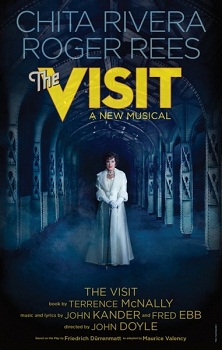
The Official Poster for THE VISIT

The Official Poster for THE VISIT

The Visit closed last night. The adaptation by Terrence McNally, Fred Ebb and John Kander of Friedrich Dürrenmatt’s classic play shuttered after two months of performances, garnering a handful of Tony Award nominations without winning any. A sense of sombre regret hangs in the air, and musical theatre fans are posting on Facebook, Twitter and message boards about how much they will miss the show.

I wonder how I would have reacted to this closing five or ten years ago. I think I might have been genuinely angry to see a show that has something complex to communicate close so quickly, especially when The Visit appears to do this in a manner that doesn’t shy away from its complexities and achieves a remarkable level a musical theatre technique to boot. I may have lamented the latest victim in a world where simplistic musicals, with arid technique evident in lazy books and sloppy lyrics, crawl on into thousands of performances.

I guess it would be untrue to say that there aren’t echoes of that attitude wrapped up in my feelings about The Visit closing and, of course, there are sad practicalities like people being out of work each and every time a show curtain lowers for the final time.

But here’s the thing. Endings are part of a full life experience, no matter how difficult they are to bear. It’s a clichéd observation, but endings and beginnings are one and the same. Closing nights are a part of the natural order of things. A run in excess of 11 000 performances doesn’t indicate a show’s worth; it’s simply a reflection of the capitalist culture in which a show finds itself produced. We all know from our own high school experiences that the most popular kid isn’t always the one with the most integrity, although sometimes that can be the case. “Nice is different than good,” Stephen Sondheim wrote – and so it is in the theatre as it is in life.

What does a closing night mean for a musical? It can mean a new life. Theatre, after all, is an ephemeral transaction. Without closing on Broadway, The Color Purple wouldn’t be returning this year following what many are calling a production that goes beyond what its original staging achieved. And it was only after many closing nights that La Cage aux Folles found a similarly successful revisionist staging in the 2008 London revival.

Sure, we have yet to see a staging top the respective original excursions of West Side Story or Follies. Even in instances where, say, the former is criticised for not speaking to contemporary sensibilities, I’m unconvinced that there’s someone who can match what Jerome Robbins achieved along with his assistant, Peter Gennaro. Watching “Love and Love Alone” was such a beautiful reminder of the potential power of dance within the context of musical theatre and there don’t seem to be many prominent musical theatre choreographers like Graciela Daniele, who work in such detail to create a communicative language of physical expression on stage. Athleticism too often trumps storytelling.

So while I think it is appropriate to salute The Visit as it passes on, survived by video footage, photographs and its upcoming cast recording, I don’t feel the need to mourn it. The show will live on for as long as it has something to say. Any show will.


This post is inspired by and a response to “I’m Over Being Concerned About What I Shouldn’t Do” in Shirley MacLaine’s
I’m Over All That and Other Confessions.

Posted in Monday Meditation | Tagged , , , , , , , , , , , , , , , , , | Leave a comment

Musical Theatre Sunday School: The Spirit of Art

Sometimes, thinking about the role of art in our lives becomes abstract, so we forget how fundamental art works can be in transforming our lives.

For the ancient Greeks it was simple: catharsis, a process of purifying and purging one’s emotional state of being. As you watched Agamemnon or Antigone or The Trojan Women, you rid yourself of emotions like fear and pity, resulting in the renewal and restoration of your spirit. Of course, other functions of art, such as social criticism and satire, were evident in classical times too, notably in the old comedies by playwrights like Aristophanes or in new comedies my the likes of Menander. So I suppose even back then, things were more complex than one might guess from a high school course in classical Greek theatre.

What made me think about all of this was an article I read, which appeared in New York Magazine earlier this year. Alison Bechdel, whose graphic novel, Fun Home, won the Tony Award for Best Musical last weekend, was asked what seeing her true life story transformed into a musical was like. She responded by writing a comic strip in which she makes some observations that really moved me. Have a read, and see what you think.

Play Therapy

Click on the image above to read Alison Bechdel’s PLAY THERAPY

What does art do for you? Do you have a musical that you find transformative or healing? I know Fun Home feels like that for me, particularly because of the sense of identification it creates within me. I’d love to hear about yours. Head to the comments box below, and let’s chat.

Posted in Musical Theatre Sunday School | Tagged , , , , , , , | Leave a comment

THE SATURDAY LIST: Ten Best Moments at the 69th Tony Awards

Tony Awards 2015

Poster for the 69th Annual Tony Awards

The 69th Annual Tony Awards took place last Sunday, so with almost a week to reflect on how the ceremony landed, it’s time to share my list of the ten best moments at this year’s ceremony. Many of these observations are based on my Facebook updates and Tweets from when I watched the presentation, which didn’t measure up to a couple of others in recent memory, largely due to choices made around the hosting of the show and some choices made about what to include in the televised show and what to leave out. Nonetheless, the Tony Awards still had its highlights – and these were those that spoke most strongly to me.

10. The Curious Incident of the Dog in the Night Time Wins Best Play

It was great to see The Curious Incident of the Dog in the Night Time winning Best Play, in a year that was pretty good to British nominees. It is so difficult to do justice to the Best Play nominees through extracts at the ceremony though. Certainly “The Grand View of the Year in Plays” feature at this year’s Tony Awards‬ didn’t work; neither did the isolated moments that preceded the actual award presentation itself. I personally love the longer clips from years gone by, some of which were showcased in Broadway’s Lost Treasures. And once again, the weird phenomenon that there is actually no distinction, when it comes to plays at the Tony Awards, between the writing and the production of the Best Play, raises its head. (The playwright involved here is Simon Stephens.) Any solutions for the Tony Awards?


9. Alex Sharp wins Best Actor in a Play for The Curious Incident of the Dog in the Night Time

Everyone loves a good acceptance speech. This was quite a night for the recently graduated Alex Sharp. Pure gratitude. (The runner up in the acceptance speech category is Kelli O’Hara, who won for The King and I after years of not winning. A career award, perhaps, but I am glad she won a Tony at last.)


8. The Greys Introducing Fun Home

When Joel Grey opened up about his sexuality earlier in the year, many people asked, “What’s the point?” I didn’t. I think it is always a moment to celebrate, especially since we still live in a world where there is so much uncertainty around gender identity and where people struggle to come to terms with themselves, let alone with how others might treat them. So it was great to see Joel Grey and his daughter, Jennifer, introduce the performance of Fun Homem a show which must have a special resonance in their life. And besides that connection, this was just an introduction that felt genuine and polished and not as though it was trying too hard. (Here’s some red carpet footage of the pair; their introduction in full doesn’t seem to be up on YouTube.)


7. Lisa Kron and Jeanine Tesori win Best Score for Fun Home

A groundbreaking win, with this award enabling two women to win all of the writing awards for musical theatre at the Tony Awards. Kron had just won the award for Best Book, which is why her speech is short and sweet here. It’s a pity these moments were excluded from the televised broadcast.


6. Judith Light

This might seem arbitrary to some, but I am a big Judith Light fan. Every Tony Awards night, I wait for ‪her to appear. And when she does, I am never disappointed. This year we saw some flawless presenting work from this generous and talented woman. (The runner up for the “Hostess with the Mostes‬‬‬'” award is the fabulous Debra Messing.) ‪


5. “Love and Love Alone” from The Visit

“Love and Love Alone” sounds like a classic John Kander and Fred Ebb number: a simple vamp underscoring an intelligent observation about life – with a twist. It was great to see Chita Rivera on stage performing this number with Michelle Veintimilla, with the older and younger versions of Claire dancing opposite each other. There was something about this that was reminiscent of Follies. The segue into the second song felt arbitrary and although the number clearly has the Kander and Ebb stamp on it, I felt that it played weirdly out of context and that the performance would have been stronger showcasing “Love and Love Alone” on its own. The full sequence of that song has a great emotional arc, although its ending isn’t fully satisfying with something unrealised in that moment. Watching this, it also struck how rare it is to see dance as storytelling in a major commercial musical these days. Have people lost faith in the kind of musical theatre dance that characterises, communicates narrative and deepens the storytelling?


4. The Performance from An American in Paris

Sorry, Singin’ in the Rain, but An American In Paris is my favourite 1950s MGM movie musical. The dance in this extract from the new stage adaptation of the film was superb, with incredible fluidity and control. Following the extract from the ballet, “S’Wonderful” and “I Got Rhythm” reminded everyone what a great song it is. Does “I Got Rhythm” ever disappoint, no matter what Gershwin catalogue show it ends up in? And the design is so stylish! It was great to see the show pick up Tony Awards for Best Orchestrations (Christopher Austin, Don Sebesky and Bill Elliot), Best Choreography (Christopher Wheeldon), Best Lighting Design (Natasha Katz) and Best Scenic Design (Bob Crowley and 59 Productions). (There is a part of me that wished that Brandon Uranowitz or Max von Essen picked up the Best Featured Actor prize. I’ve got nothing against Christian Borle, but Something Rotten seems to be a deeply awful show and I kind of resent it winning anything at all.)


3. The Performance from On the Town

The performance from On the Town kicked off with Tony Yazbeck singing a winning “Lucky to Be Me” in his glorious voice. Starting off in the house, he flirted with Josh Groban, gave flowers to ‪Anna Wintour‬ and danced with Chita Rivera and Rita Wilson as he made his way to the stage. One of the first things that I thought was how amazing the score of On the Town is. When Yazbeck arrived on stage, he was joined by his co-stars and the ensemble for “New York, New York” on the gigantic stage at Radio City Music Hall. I loved this. This show is a true classic.‬‬ I was sad the show walked away empty handed and would have loved to see the show win Best Revival of a Musical.


2. Tommy Tune’s Grace

Tommy Tune‬ is all grace. I loved his introduction to the award for Best Directing in a Musical, in which he remained dignified following the Tony Awards basically offering him the worst tribute medley ever after as a compensation for not allowing him to receive his Lifetime Achievement Awards. All television audience were able to see of that moment was a short clip of Tune receiving his award, which launched into three snippets of songs from shows in which he was instrumental in bringing to Broadway: “We’ll Take a Glass Together” (from Grand Hotel), “Our Favorite Son” (from The Will Rogers Follies) and “My One and Only” (from My One and Only). One minute of performance from start to finish. That was no tribute; it was a travesty. A disappointing moment from the Tony Awards saved by an icon’s magnanimity. The clip I’ve chosen to represent this moment is the acceptance speech we all should have seen on the televised show.


1. “Ring of Keys” from Fun Home

The performance of the night, and the best moment of this year’s Tony Awards, was “Ring of Keys” from Fun Home. As the clip was introduced, I thought that the clip might kill me. It slayed me. I was a teary mess by the end of it. Sydney Lucas is phenomenal. This is magnificent stuff. If you haven’t yet discovered this absolute gem of a musical (which took home the Best Musical prize too), do it.

So that’s my list for today. What were your favourite moments at this year’s Tony Awards? I’d love hear about them via the comment box below.

Posted in The Saturday List | Tagged , , , , , , , , , , , , , , , , , , , , , , , , , , , , , , , , , , , , , , , , , , , , | Leave a comment

Forgotten Musicals Friday: ALL AMERICAN

Ray Bolger in ALL AMERICAN

Ray Bolger in ALL AMERICAN

It’s not often that you look back at a forgotten musical, even when it comes to many of the most notorious flops, and can see very clearly why it is has been forgotten, why it flopped – or both. All American is precisely such a musical. Although the original cast recording of the show has been in my CD collection for the better part of two decades, I’d only really listened to it once before hauling it out so that All American could be this Friday’s Forgotten Musical – and now that it’s had a couple of spins, it probably won’t come off the shelf for another listen anytime soon.

My memory from listening to All American all those years ago is that it had great music, but that pretty much everything else was dispensable. Returning to it now, the music by Charles Strouse still seems to be the strongest ingredient of the piece. The lyrics, by Lee Adams, also seem to contribute a great deal to the mix, but there was something about them that made me hesitant. By the time I hit “It’s Fun to Think”, I was convinced that the lyrics weren’t well matched to the narrative. Two tracks later, “Nightlife” left me without the shadow of a doubt that this was the case. The song is sung by Susan, a character that recalls Kim in the Strouse and Adams’s earlier collaboration, Bye Bye Birdie. Both characters want more than the limitations her mundane confinement allows; in Susan’s case, it is because she has been gated for trying to sneaking into the men’s dormitories. Fine. But when Susan starts singing about Cole Porter and wanting the beguine to begin to a tune that might have represented hip theatre music a decade earlier, the piece starts to damn itself as a piece of storytelling within the context of the musical as a whole. A pity, because taken on its own terms, it’s a fine song.

Ray Bolger in ALL AMERICAN

Ray Bolger in ALL AMERICAN

This kind of rift intensifies when the score is paired with what’s going on in the plot. Fashioned by Mel Brooks from Robert Lewis Taylor’s novel Professor Fodorski, the narratives seems to grate up against the score, and everything seems to take a turn for the worse in the second act, for which director Joshua Logan crafted the book. Everyone on the creative team seems to lose track completely of what they are trying to say and the way in which they are trying to say it. What is most peculiar about this inconsistency is that Strouse and Adams were so in step with the milieu in which they were writing just a couple of years earlier that they were able not only to dramatise situations and attitudes contemporary to the time in Bye Bye Birdie, but also to satirise them. In All American, they are are so out of touch that the generation gap between the professors and their college students barely exists. It’s ironic then, that the it was in fact the generation gap between the writers and the director, Josh Logan, that seems to be most commonly attributed to the failure of the show. Strouse comments:

Josh was from a different generation, he looked at America, college, the youth culture in ways that were different from ours. Many times, later on, he told me he felt he had put his finger into the show the wrong way. He had seen it in more of the flesh and blood realities of the characters than we had, and, because of that, their physicality became more important than the satirical point of view we had initially envisioned.

Anita Gillette, Ron Husmann, Eileen Hurlie and Ray Bolger in ALL AMERICAN

Anita Gillette, Ron Husmann, Eileen Hurlie and Ray Bolger in ALL AMERICAN

To backtrack a little, maybe it is worth mentioning the plot of All American at this point. Professor Stanislaus Fodorski is a Hungarian immigrant, recently arrived in the United States to teach in the science faculty at the Southern Baptist Institute of Technology. Fodorski soon marks his mark, teaching engineering by comparing it to football, which in turn benefits from being approached scientifically. Fodorski finds himself attracted to the Dean of the college, Elizabeth Hawkes-Bullock, while the show’s secondary romance follows two of the students, Susan Thompson and Ed Bricker.

The similarities to Bye Bye Birdie are obvious, with two romances – an older couple  and a younger one – built around popular obsessions of the time in both shows. But here, Strouse and Adams found themselves with Brooks and Logan instead of their Bye Bye Birdie collaborators, Michael Stewart and Gower Champion, whose path had diverged from that of their colleagues when they had decided to work with Bob Merrill in Carnival! the previous season. It’s an object lesson if ever there were one about how important it is to find the right collaborators and to do whatever it takes to make sure that everyone is working on the same musical.

Youthful antics in ALL AMERICAN

Youthful antics in ALL AMERICAN

What All American is able to offer, if a cohesive musical is nowhere to be found, is a couple of great songs, notably “We Speak the Same Language”, “Once Upon a Time”, the abovementioned “Nightlife” and “I’ve Just Seen Her”. “What a Country!” uses a distractingly similar hook to “It’s a Scandal! It’s a Outrage!” from Oklahoma!, but the lyrics are still fun. These are all preserved on the cast recording featuring a strained performance by Ray Bolger and the intolerable vocals of Eileen Hurlie om the one hand, and the very agreeable delivery of the Ed and Susan’s songs by Ron Husmann and Anita Gillette on the other. In fact, if nothing else, the cast recording reveals how skewed the balance is between the two plots: Ed and Susan should be more prominent in the score. Consequently, the cast recording is not one that prompts the thought, “What went wrong?” The flaws of All American make themselves felt very clearly on disc. Other thoughts? “Physical Fitness” sounds a bit like something Leonard Bernstein might have chucked out of Wonderful Town and “It’s Fun to Think” seems like something that could slot into a Rodgers and Hart musical from the 1930s. But what can you do?

Ray Bolger in ALL AMERICAN

Ray Bolger in ALL AMERICAN

So the big question: is All American fixable? Well, I think it offers as good a case for a ‘revisal’ as any, and at least the three writers are still with us, even if the youngest of them is 86 years old. If all three were robust enough to take on the task, I don’t see why they shouldn’t. Except, of course, the men who saw youth culture for what it was in the 1960s will see things through different eyes, which might leave us back at square one. Maybe the easiest fix would be to shift the 1960s setting to post-World War II and to tweak things from there. Could All American be reinvented a glorious 1940s-styled period piece? Who knows? I guess only a full production would reveal the answer, and I’d be willing to give it a shot.

To close off, here’s a recording of what most people consider to be the hit song of the show – but which of course was a trunk song from ten years earlier that eventually found its home in All American. On the cast recording, you have to suffer through Bolger and Herlie’s vocals and be able to look past them to find any beauty in the song, so here’s Frank Sinatra crooning “Once Upon a Time” in a way that lets the song speak for itself.

While you’re listening, why not share some of your own thoughts about All American in the comment box below. I’d love to hear your opinions!

Posted in Forgotten Musicals Friday | Tagged , , , , , , , , , , , , , , , , , , , , | 2 Comments

Forgotten Musicals Friday: THE YEARLING

THE YEARLING Artwork

Artwork for THE YEARLING

My choice for today’s “Forgotten Musicals Friday” is a musical that, for no obvious reason, captured my imagination: The Yearling. It has no commercial recording and even though Barbra Streisand was a champion of the score in the early years of her career, one doesn’t really read much about the show in general. Nonetheless, The Yearling is a musical that pops into my head every now and then, so I thought it was time to dedicate a column to it.

Based on The Yearling by Marjorie Kennan Rawlings, the show had a book and lyrics by Herbert Martin and music by Michael Leonard. Martin shared credit for the book with show’s producer, Lore Noto. The original Broadway production of The Yearling opened on 10 December 1965, with the show’s closing for it’s 3-performance run already having been announced. It was directed by Lloyd Richards, with choreography by Ralph Beaumont. Some think that perhaps with a better director, the show itself will have been better; others tell tales of how the show ran out of money and couldn’t afford to run long enough to catch on with audiences. Both stories seem like reasonably valid options.

At the heart of The Yearling is a a twelve-year old boy named Jody, who lives with his struggling family. His parents, Penny and Ora, face their hardships as best they can, even though at the top of the show things are looking particularly difficult for them with a a bear having killed their sow. Jody longs for a pet deer and circumstances eventually line up so that he is able to raise a motherless fawn. A year later, when the fawn eats the family’s new crops, Jody is fold to kill the yearling, an order that brings about the climax of the show.

The original Broadway cast of THE YEARLING

The original Broadway cast of THE YEARLING

When asked, people who saw the show will tell you they liked the score, which I’ve heard described as both lovely, pleasant and even well-crafted. Some complain that the score doesn’t reflect its rural 1870s setting well, but many musicals evoking milieu by filtering songs in popular contemporary forms through arrangements and orchestrations. Maybe, if The Yearling were ever staged in a high profile production again, that might be a fixable problem. A score that features a song that Stephen Sondheim listed as a song he wishes he had written can’t be all bad. If you’re keen to have a listen to that little gem from this score, scroll down to the YouTube playlist at the end of this post, where you can hear it performed in versions by Streisand and, in an even jazzier version, by Greta Matassa. Neither arrangement really reflects the setting of the show, but as neither is being presented in the context of the show itself, I suppose we can’t be too concerned by that here.

My favourite song from the score is one that has become something of a standard, “Why Did I Choose You?”. Although some might try and direct you to Barbara Cook’s performance of the song in concert, for me it doesn’t get better than Streisand singing the song in her first television special. (Both, as well as several other versions of the song are featured in the YouTube playlist below.)

Although there have been rumours flying around the Internet for some time about a full recording of the show being made, the only easy way to hear these songs is in versions recorded by artists who were moved enough by the material to interpret them on their own recordings. Every now and then, a song also turns up on a compilation album like Unsung Musicals II (which includes “Everything in the World I Love”). While there is a live recording done by the producers for a private LP pressing as well as a recording of several songs from the show done for a radio show, these aren’t readily available for ordinary folk like me to hear.

Getting back to the show, those same people who praise the score will also tell you that the book was flawed, even dull, and that, perhaps, the material was not suitable for (what they think should be a good premise for) a musical. I’m more likely to give credence to that former point than to the latter; the musical is such a versatile medium, even more so these days than in the past. Maybe in a post-War Horse world, there’s merit in seeing if the show can be done without a live deer, as in the original production. It might be the key to telling the story in an evocative, contemporary manner that makes the piece compelling in a way that perhaps it wasn’t in 1965.

Keen to share any thoughts or memories about The Yearling? Head to the comment box below. I’d love to hear them!

Posted in Forgotten Musicals Friday | Tagged , , , , , , , , , , , , | 25 Comments