
| Music | Andrew Lloyd Webber |
| Lyrics | Tim Rice |
| Book | Tim Rice |
| Premiere | Broadway: 12 October 1971 (711 performances) Direction: Tom O’Horgan West End: 9 August 1972 (3 358 performances) Direction: Jim Sharman |
| Adaptations | 1973 Film Adaptation 2000 Video Production 2012 Video of UK Arena Tour 2018 Live Television Production |
| Revivals | Broadway: 1977, 2000, 2012 West End: 1996, 2025 |
| Licensing | Andrew Lloyd Webber Show Licensing |

It’s hard to think of another musical that has provoked both passionate devotion and fierce resistance in the way Jesus Christ Superstar has. For some, Tim Rice and Andrew Lloyd Webber’s rock opera is a thrilling and deeply human reimagining of the Passion narrative; for others, particularly those approaching it from more fundamentalist Christian perspectives, its shift away from traditional devotional storytelling remains difficult to accept. While the Bible is clear about the spiritual meaning of Christ’s sacrifice, Jesus Christ Superstar turns its attention to the political, personal and social pressures surrounding the final days of Jesus’ life. By reframing familiar events through the eyes of Judas and the world around him, the musical opens up challenging new layers of meaning in a story audiences think they know. Ironically, the more productions lean into traditional biblical imagery, the more readily the show is often embraced, even though such an approach can soften the subversive edge that made it so radical in the first place. A landmark in the development of the rock opera format, Jesus Christ Superstar remains one of musical theatre’s most compelling, controversial and enduring works.
Synopsis and Musical Numbers
Act I
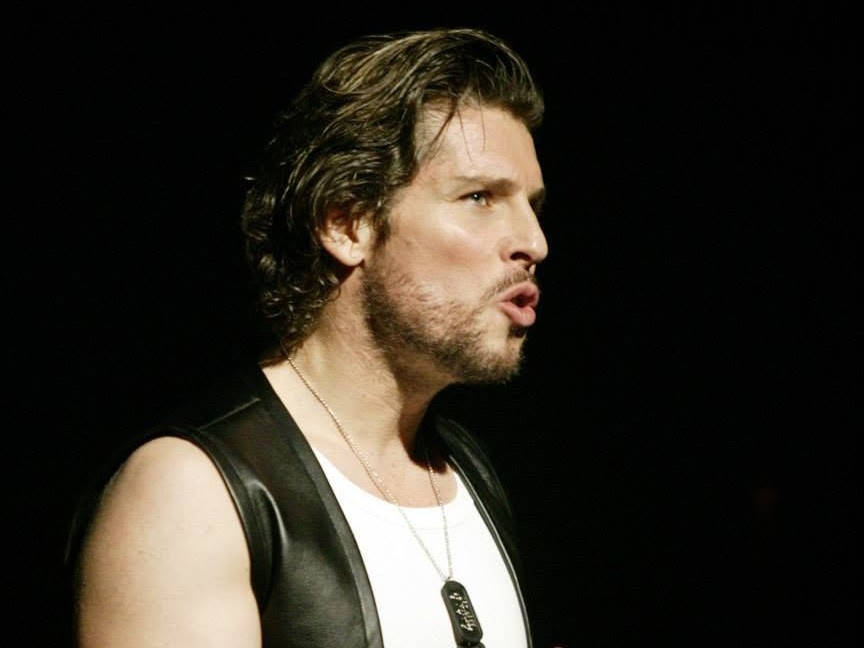
Jesus Christ Superstar opens with Judas Iscariot watching the growing movement around Jesus with increasing alarm. To Judas, Jesus’ message has begun to blur into something more dangerous: public adoration, political attention and the possibility of violent Roman retaliation. He fears that Jesus’ followers are losing sight of the teaching itself and becoming swept up in the dangerous idea of Jesus as a king or revolutionary leader (“Heaven on Their Minds”).
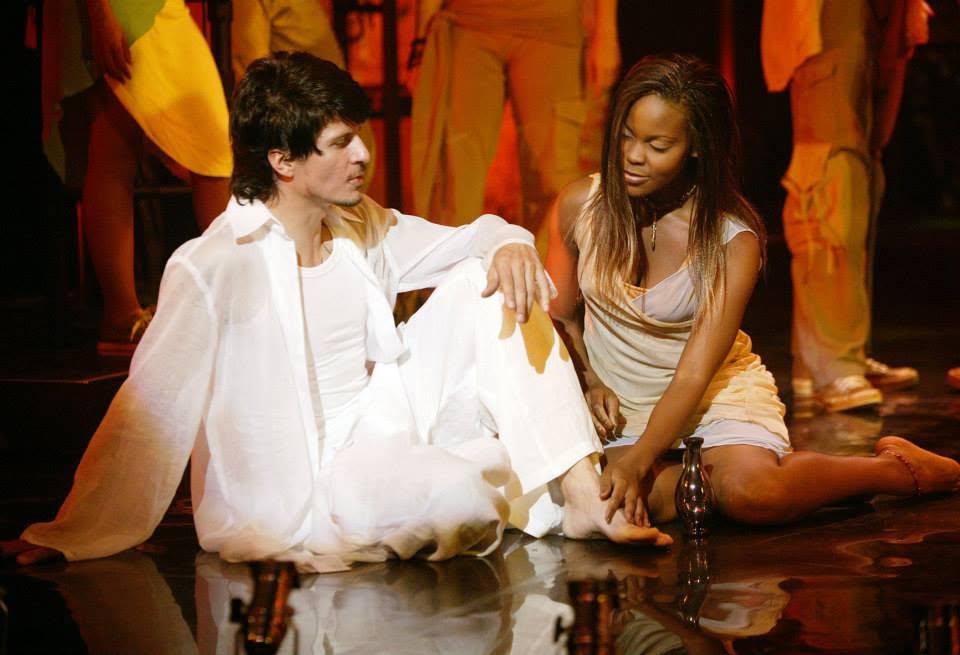
As the apostles look ahead to their arrival in Jerusalem, they ask Jesus what comes next, but he refuses to offer them a clear plan. Mary Magdalene, meanwhile, tries to soothe and support him, sensing his exhaustion more clearly than the others do. Judas is troubled by her closeness to Jesus, warning that her reputation could be used against him and undermine his message. Jesus rebukes Judas for his judgment and, in turn, challenges the apostles for their lack of real understanding or care (“What’s the Buzz/Strange Thing Mystifying”). Mary anoints Jesus with expensive oil, offering him a moment of comfort. Judas objects, arguing that the money could have been better spent on the poor, but Jesus responds with a weary awareness of human limitation: they cannot solve all suffering and the small comforts they have should not be dismissed (“Everything’s Alright”).
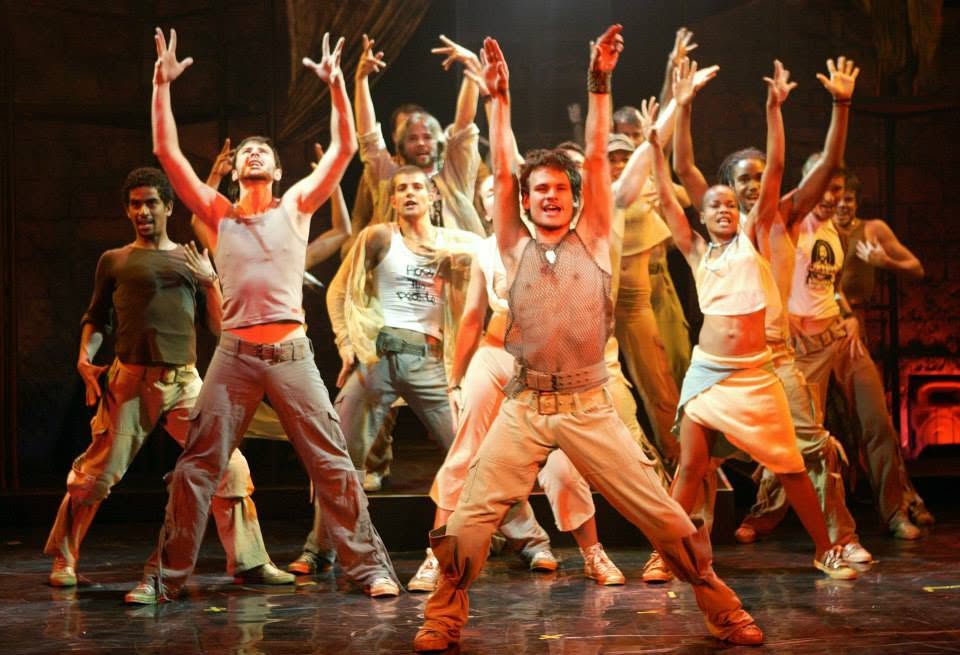
Elsewhere, Caiaphas, Annas and the priests begin to see Jesus as a serious threat. Like Judas, they fear that the movement around him will draw the attention of Rome, but their conclusion is far more ruthless: for the sake of political stability, Jesus must die (“This Jesus Must Die”). When Jesus enters Jerusalem to the ecstatic praise of the crowd, Caiaphas demands that he silence his followers. Jesus instead accepts their welcome (“Hosanna”). The crowd’s excitement quickly takes on a more revolutionary tone. Simon urges Jesus to use his popularity to lead a rebellion against Rome and seize power (“Simon Zealotes”). Jesus rejects this outright, recognising that even his most devoted followers have misunderstood the nature of the power he represents (“Poor Jerusalem”). Meanwhile, Pontius Pilate, the Roman governor of Judea, is haunted by a dream in which he encounters a Galilean man and is later blamed for his violent death (“Pilate’s Dream”).
At the Temple, Jesus is overwhelmed by what he finds: a sacred space turned into a marketplace. He drives out the merchants, only to be surrounded by the sick and suffering, all begging for healing. Their need becomes too much for him to bear, and he breaks under the weight of their demands (“The Temple”). Mary again offers Jesus comfort, singing him to sleep before confronting her own feelings for him. Her love is tender, confusing and frightening because it does not fit easily into anything she has known before (“Everything’s Alright (Reprise)”/“I Don’t Know How to Love Him”). Now fully conflicted, Judas turns to the priests. He believes Jesus has lost control of the situation and convinces himself that helping the authorities arrest him may prevent something worse. When he is offered thirty pieces of silver, Judas initially refuses, but Caiaphas reframes the payment as money that could be used to help the poor. Judas accepts and tells the priests that Jesus can be found on Thursday night in the Garden of Gethsemane (“Damned for All Time/Blood Money”).
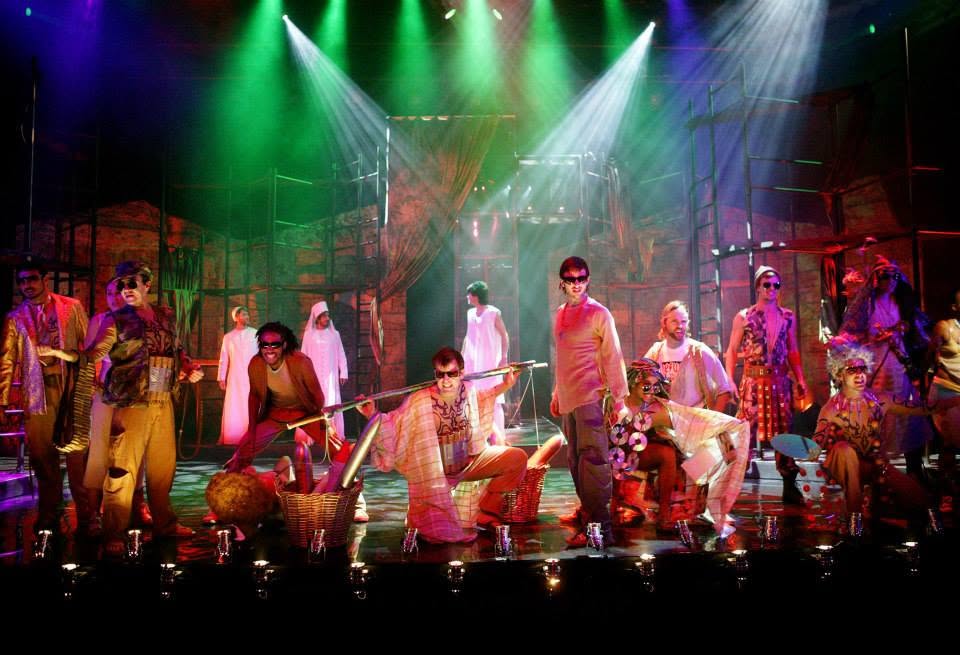
Act II
The second act begins with Jesus sharing a Passover meal with his disciples. While the apostles drink and reminisce, Jesus is painfully aware of how little they understand the moment they are living through. In frustration, he gives new meaning to the bread and wine before asking them to remember him. He predicts that Peter will deny him three times before morning and that one of the others will betray him. Judas admits that he is the betrayer, but still cannot understand why Jesus has allowed events to unfold without a clearer plan (“The Last Supper”). After the apostles fall asleep, Jesus withdraws to Gethsemane and wrestles with the full horror of what lies ahead. Alone, he questions whether his mission has mattered, whether his suffering is necessary and whether there might still be another way. Receiving no answer, he finally submits to the path before him (“Gethsemane (I Only Want to Say)”).
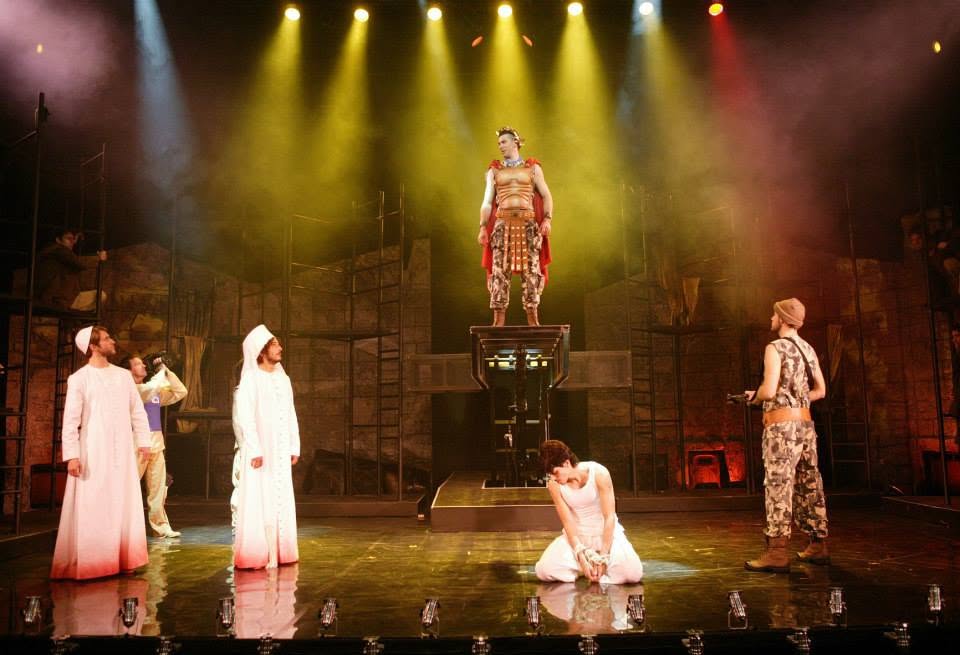
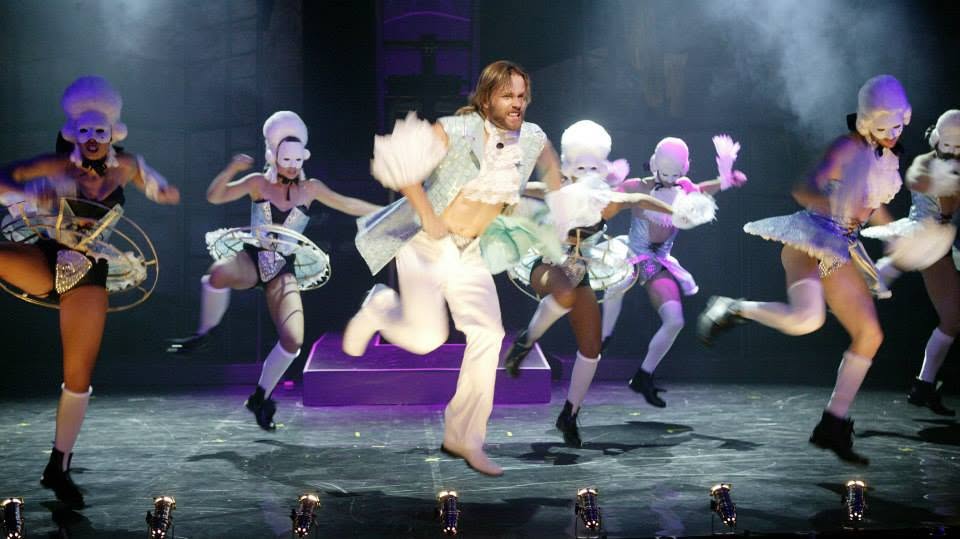
Judas arrives with soldiers and identifies Jesus with a kiss. Jesus is arrested and taken before Caiaphas and the priests, who send him on to Pilate (“The Arrest”). In the chaos that follows, Peter is recognised by three people as one of Jesus’ followers. Each time, he denies knowing him. Mary witnesses the denial and remembers that Jesus had predicted it (“Peter’s Denial”). Pilate questions Jesus, asking whether he is the King of the Jews. Jesus gives him little to work with, and when Pilate learns that Jesus is from Galilee, he sends him to King Herod instead (“Pilate and Christ”). Herod treats Jesus as a spectacle, demanding miracles as proof of his divinity. When Jesus refuses to perform, Herod dismisses him and sends him back to Pilate (“King Herod’s Song”).
As the situation becomes increasingly desperate, Mary, Peter and the apostles look back to the early days of following Jesus, wishing they could return to a simpler time of hope, purpose and possibility (“Could We Start Again, Please?”). Judas, meanwhile, is horrified by the brutality Jesus now faces. He returns to the priests in anguish, realising that history will remember him as a traitor. Caiaphas and Annas insist that he has done what was necessary, but Judas is unable to reconcile his actions with their consequences. He throws away the silver, curses God for the role he has been made to play, and takes his own life (“Judas’ Death”). Back before Pilate, Jesus is placed on trial before an increasingly bloodthirsty crowd. Pilate tries to reason with them, insisting that Jesus has committed no crime worthy of death, but the mob demands crucifixion. Hoping to satisfy them without executing Jesus, Pilate has him flogged. Unsatisfied, the crowd calls for blood. When Jesus refuses to defend himself, Pilate finally gives in, washing his hands of responsibility as he condemns Jesus to die (“Trial Before Pilate”, including “The 39 Lashes”).
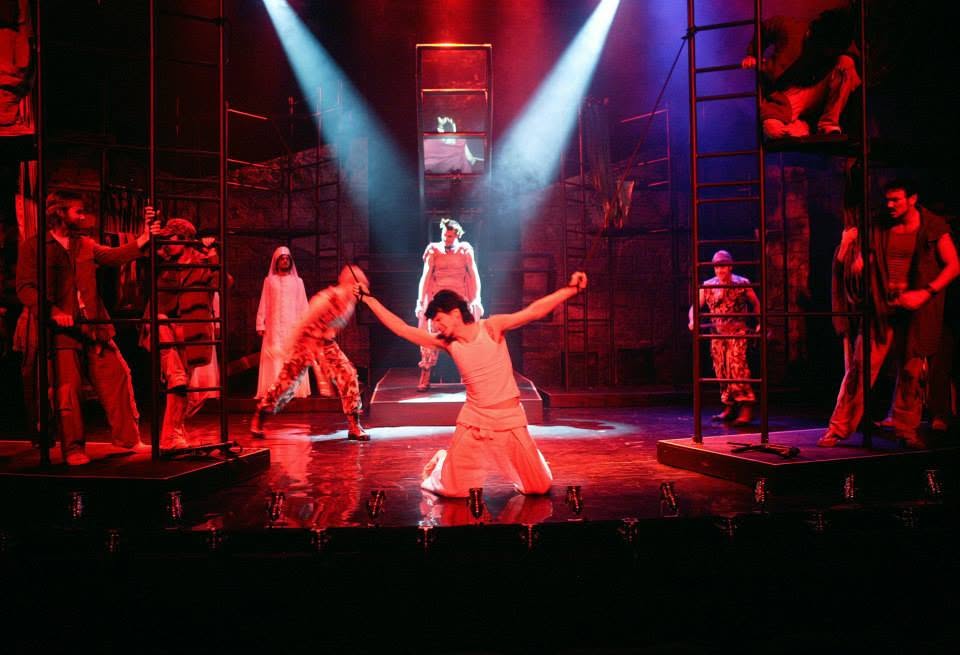
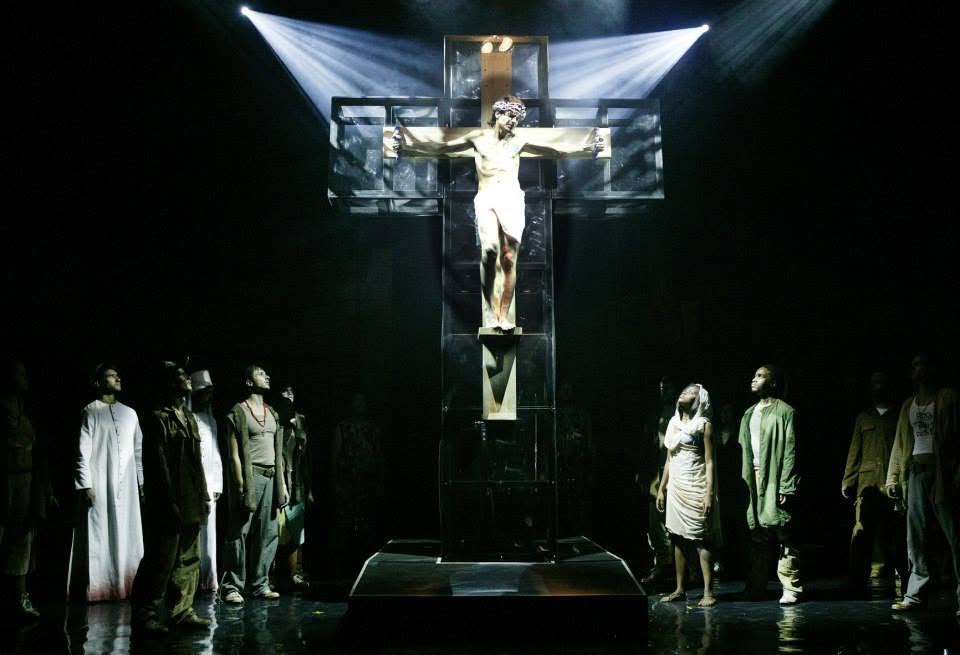
As Jesus awaits crucifixion, Judas returns in a dazzling, unsettling final vision. Now able to see the story from beyond his own lifetime, he questions Jesus about the nature of his mission, his timing and the meaning of the sacrifice demanded of him (“Superstar”). Jesus is crucified. He speaks his final words and dies (“The Crucifixion”). His body is taken down from the cross and buried, leaving the audience not with the Resurrection, but with the silence and mystery of the tomb (“John 19:41”).
Characters
Principal Roles
Jesus. Rock tenor. The charismatic leader at the centre of the story, seen by his followers as the Son of God and hailed by others as the King of the Jews.
Judas Iscariot. Rock tenor. One of Jesus’ twelve apostles, deeply troubled by the growing public movement around Jesus, its political consequences and its apparent neglect of the poor.
Mary Magdalene. Pop/rock belter. A devoted follower of Jesus whose care for him deepens into love, requiring warmth, grace, emotional vulnerability and quiet strength.
Pontius Pilate. Rock baritone. The Roman governor of Judea, haunted by a dream of Jesus’ death before finding himself forced to judge the very man he has foreseen.
King Herod. High baritone. The flamboyant King of Galilee, who treats Jesus as both curiosity and entertainment when he is brought before him for judgement.
Featured Roles
Peter. Tenor. One of Jesus’ twelve apostles, whose loyalty collapses under pressure when he denies knowing Jesus on the night of his arrest.
Simon Zealotes. High baritone. One of Jesus’ twelve apostles, eager to turn the passion of Jesus’ followers into a political uprising against Rome.
Caiaphas. Low bass with strong upper rock notes. The High Priest who sees Jesus as a dangerous threat to the fragile political stability of the nation.
Annas. High baritone. A priest allied with Caiaphas, watchful and calculating as the religious authorities move against Jesus.
Ensemble Roles
Male Ensemble. Strong pop/rock voices. Dynamic performers with strong movement ability and contemporary dance experience, playing apostles, priests, soldiers, merchants and members of the crowd.
Female Ensemble. Strong pop/rock voices. Dynamic performers with strong movement ability and contemporary dance experience, playing followers, crowd members and featured vocalists, including the Soul Girls.
Commentary
One of the reasons Jesus Christ Superstar remains such a fascinating musical is that it resists easy classification. It is a musical, certainly, but it is also been framed as a rock opera, a concept album, a theatrical concert and, in some productions, something resembling a staged Passion play. This blurring of form is central to the work’s identity. Andrew Lloyd Webber and Tim Rice were not simply adapting a familiar biblical story into the conventions of the traditional book musical. They were finding a new theatrical language for it, one shaped by rock music, fragmented points of view and a refusal to offer the audience a single, non-negotiable interpretation.
That refusal is perhaps the musical’s most compelling quality. Jesus Christ Superstar does not retell the final days of Jesus’ life from a purely devotional position, nor does it attempt to replace the biblical narrative with an outright rejection of it. Instead, it opens the story up by allowing marginal, conflicted and politically compromised voices to be heard. Judas is the most obvious of these voices, and his perspective gives the musical much of its dramatic tension. His opening number, “Heaven on Their Minds”, immediately places the audience in a world of uncertainty, anxiety and political danger. This is not the story of the Passion viewed from the safe distance of centuries of doctrine, but from inside the confusion of the moment itself.
Judas is often described as the musical’s antagonist, but the text is more interesting than that. He is cynical, frightened, self-righteous and tragically mistaken, but he is not written simply as a villain. He worries about poverty, about public hysteria and about the possibility that Jesus’ growing fame will provoke a violent response from Rome. The musical therefore bestows upon him a compelling logic. We may reject his choices, but we are asked to understand the pressures that produce them. In doing so, Rice and Lloyd Webber create space for a question that still feels provocative: what happens when the story is viewed not from the certainty of its outcome, but from the fear and confusion of those who were caught inside it?
Jesus, too, is presented in complex terms. He is charismatic and compassionate, but also exhausted, isolated and increasingly aware of the cost of the role he has been called to fulfil. His great moment in “Gethsemane” does not reduce him to doubt, but it does allow doubt to become part of the dramatic and spiritual texture of the piece. This is one of the reasons the musical can be unsettling. It does not deny the larger significance of Jesus’ sacrifice, but it insists on looking at the human, political and emotional circumstances that surround it.
The same multiplicity of viewpoints extends beyond Jesus and Judas. Mary Magdalene offers tenderness and emotional steadiness in a world that is becoming increasingly unstable. Pilate is not merely a Roman official, but a man trapped between instinct, politics and public pressure. Herod turns judgement into entertainment. Caiaphas and the priests see Jesus as a threat to the nation’s fragile political survival. The apostles, meanwhile, often fail to grasp the meaning of the events unfolding around them. Taken together, these voices shift Jesus Christ Superstar away from a simple retelling of sacred history and towards something more theatrically and intellectually restless.
This is where the musical’s subversiveness lies. By ending with the Crucifixion and the burial of Jesus, rather than moving into the Resurrection, the show refuses to resolve the story in the way Christian audiences might expect. It leaves space for belief, but it does not dramatise belief as conclusion. It leaves the audience with silence, ambiguity and the terrible weight of what has happened. For some audience members, this is precisely the problem. For others, it is the source of the musical’s power.
Productions of Jesus Christ Superstar have often negotiated this tension in different ways. When the show leans strongly into traditional biblical imagery, audiences may find it easier to accept because it looks closer to the Passion story they recognise. Yet this approach can also soften the very qualities that made the piece radical in the first place. At its most effective, Jesus Christ Superstar does not merely illustrate the Bible. It interrogates the collision between faith, fame, politics, sacrifice and memory.
That is why the musical continues to matter. Its rock-opera form helped to expand what musical theatre could sound and feel like, while its dramatic structure challenged audiences to revisit one of the most familiar stories in Western culture from an unfamiliar angle. More than fifty years after its first appearance, Jesus Christ Superstar still feels urgent because it asks questions that never really go away: who controls the story, who gets to speak and what happens when myth, politics and human frailty meet?

