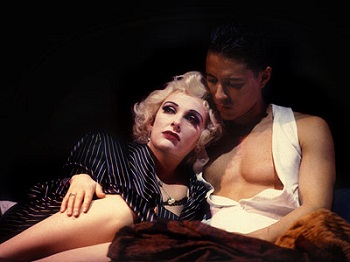
Updates: THE PHANTOM OF THE OPERA

I’m piloting a refreshed look for the show pages here at Musical Cyberspace and I thought I would test things out on The Phantom of the Opera.

What’s New

Still to Come

  • The index will be linked directly to the content once the content is complete.
  • A decision around the inclusion or exclusion of Webring will be taken.
  • An analytic commentary of the show will be added.
  • Reviews of the remaining 2 major English recordings as well as reviews of the film and the 25th anniversary concert video recording will be will be written.

I hope that you are enjoying the changes and the new content. If you have any suggestions, feel free to write them down by commenting on this post. I can’t say that I’ll accommodate everything – for example, I am never going to include the lyrics for the show here, nor will I host an extensive show specific photo gallery because I simply don’t have the space, but I will take what is posted into consideration and take it from there.

Posted in Andrew Lloyd Webber, Charles Hart, Richard Stilgoe | Tagged , , , , | Leave a comment

Single-Song Showstopper: “Beethoven Day”

To purchase the 1999 Broadway Revival Recording of YOU'RE A GOOD MAN, CHARLIE BROWN, click on the image above.

The theme for April 2012 at Musical Cyberspace is “Single-Song Showstoppers”, a series of big numbers sung by a featured characters in a show – typically their only solo, although they might sing minor bits and pieces elsewhere – each of which raise the roof.

Today’s single-song showstopper is “Beethoven Day”, one of the new numbers written by Andrew Lippa for You’re a Good Man, Charlie Brown, a musical comedy by John Gordon and Clark Gesner. The song offers Schroeder a definitive moment in the show that his spots in other numbers in the show didn’t give him. Stanley Wayne Mathis introduced this song to Broadway in the show’s most recent mainstream revival in 1999.

The Setup: Nothing profound here. It is Beethoven’s birthday and a jubilant Schroeder is spreading the word and getting everyone to celebrate the life and music of his idol.

The Song: When Andrew Lippa reworked the score for You’re a Good Man, Charlie Brown, it’s as if he tried to turn every song into a showstopper. This didn’t really work on more modest numbers like “My Blanket and Me” and where it worked best of all was in the two original numbers he wrote for the show, the other of which was featured here earlier this month. That song, “My New Philosophy”, is much better and a tighter piece of character work than “Beethoven Day”, which strays a bit into the generic energy that is typical of Lippa’s shows. But that energy still delivers in spades, certainly here where the number’s skew logic fits fairly well into the world of the Peanuts gang. Stanley Wayne Mathis did quite well by it musically, but – like the song – he perhaps offers more generic energy than sharp characterisation in his performance. As such, his performance simply isn’t definitive in the way that Kristen Chenoweth’s is of “My New Philosophy”, but it’s still pretty entertaining.

I’d love to hear your thoughts on “Beethoven Day”. Click on the comments link at the end of this post and share them with us!

Posted in Andrew Lippa, Clark Gesner, James Goldman, John Gordon, Stephen Sondheim | Tagged , , , , , , | Leave a comment

Single-Song Showstopper: “One More Angel in Heaven”

To purchase the Original Broadway Cast Recording of JOSEPH AND THE AMAZING TECHNICOLOR DREAMCOAT, click on the image above.

The theme for April 2012 at Musical Cyberspace is “Single-Song Showstoppers”, a series of big numbers sung by a featured characters in a show – typically their only solo, although they might sing minor bits and pieces elsewhere – each of which raise the roof.

Today’s single-song showstopper is “One More Angel in Heaven”, from Andrew Lloyd Webber and Tim Rice’s Joseph and the Amazing Technicolor Dreamcoat. Originally sung by a random brother, the song has traditionally become a solo spot for Reuben – a fitting choice, since he is the eldest brother.

The Setup: The brothers, having sold Joseph into slavery have to come up with an explanation for their father, Jacob, that will cover their tracks.

The Song: “One More Angel in Heaven” is a modest song that was upgraded to showstopper status as Joseph and the Amazing Technicolor Dreamcoat was made into a bigger and bigger show. A laid back Western pastiche seems like an odd foundation for a high-energy showstopper, especially considering how serious the situation itself is, but it was when someone had the bright idea of playing into the irony of the situation, that the brothers not at all remorseful for their deeds or saddened by the loss of Joseph, that the idea for a celebratory hoedown was born. It’s that addition of dance that catapults this song into showstopper territory and, depending on how it’s handled in production, this can be an excellent example of how dance is not only be an entertaining diversion, but also a manner in which storytelling can take musicals further than what’s written on the page.

I’d love to hear your thoughts on “One More Angel in Heaven”. Click on the comments link at the end of this post and share them with us!

Posted in Andrew Lloyd Webber, Tim Rice | Tagged , , | Leave a comment

Single-Song Showstopper: “Turn It Off”

To purchase the Original Broadway Cast Recording of THE BOOK OF MORMON, click on the image above.

The theme for April 2012 at Musical Cyberspace is “Single-Song Showstoppers”, a series of big numbers sung by a featured characters in a show – typically their only solo, although they might sing minor bits and pieces elsewhere – each of which raise the roof.

Today’s single-song showstopper is “Turn It Off”, from The Book of Mormon, a musical comedy by Trey Parker, Robert Lopez and Matt Stone. The song is sung by Elder McKinley, a role that was introduced by Rory O’Malley, and Missionaries

The Setup: Elder McKinley is the District Leader of the Mormon Church’s station in Uganda. Secretly gay but in denial of his feelings, “Turn It Off” is philosophy he uses to keep his feelings in check.

The Song: “Turn It Off” is not the funniest song in The Book of Mormon. Nor is it the most technically well-crafted: there are a handful of classic not-quite true rhymes here, like ‘time’/’line’. Some might say that doesn’t matter, but many people tend to knock the skill it takes to craft a song using true rhyme and in a witty comedy song, it’s one of the things that’s simply a must. So it’s clear that “Turn It Off” is probably not, as written, and speaking objectively, one of the best songs in the show. Yet, it is one of my favourites and it is a genuine, character-defining showstopper for Elder McKinley, with his missionary buddies in support. A great deal of that has to do with the phenomenally clever staging of the number. Starting off in a manner that reflects a simple conversation between the Mormon missionaries, the number shifts gear with a tap break that develops into a number with sequin clad waistcoats and clap-controlled light switches. And thus, a piece of charming dramatic writing turns into a moment of sheer theatrical magic! Their rhymes may not be perfect, but those South Park boys, Robert Lopez and director-choreographer Casey Nicholaw know what they’re doing.

I’d love to hear your thoughts on “Turn It Off”. Click on the comments link at the end of this post and share them with us!

Posted in Matt Stone, Robert Lopez, Trey Parker | Tagged , , , , , , | 3 Comments

Single-Song Showstopper: “Song of the King”

To purchase the Original Broadway Cast Recording of JOSEPH AND THE AMAZING TECHNICOLOR DREAMCOAT, click on the image above.

The theme for April 2012 at Musical Cyberspace is “Single-Song Showstoppers”, a series of big numbers sung by a featured characters in a show – typically their only solo, although they might sing minor bits and pieces elsewhere – each of which raise the roof.

Today’s single-song showstopper is “Song of the King”, from Andrew Lloyd Webber and Tim Rice’s Joseph and the Amazing Technicolor Dreamcoat. The song is sung by Pharaoh, a role that has been played by Tim Rice (on the so-called concept recording), Gordon Waller, William Parry, Tom Carder and Robert Torti.

The Setup: Chained and bound, afraid, alone, Joseph is taken to Pharaoh, who wishes to have his dreams interpreted. In the song, Pharaoh explains what’s been keeping him up at night.

The Song: “Song of the King” is a simple, straightforward piece of storytelling that takes the form of a rock ‘n roll pastiche in a tribute to “the King” – Elvis Presley. The Elvis song it recalls most easily to my mind is “Teddy Bear”, which makes me smile and it’s fun to notice how Pharaoh has the reputation of being a fierce and intimidating leader and then turns out to be something of a teddy bear – milder, sweeter and more charming that he might first appear. Only one example typical of Rice’s sloppy, “good enough” craftsmanship rears its head in this song:

Well the thin cows were as thin
As they had ever, ever, ever been
Well this dream has got me baffled
Hey, Joseph, won’t you tell me what it means?

Never mind the plural, the vowel sounds don’t match at all. The same combination repeats itself in the corresponding verse about the corn. Of course, the error appears less obvious in performance than on paper and Pharaohs have been whipping up a frenzy in audiences with “Song of the King”, just as Elvis did, for four decades or so now. After all, a great performance and imaginative staging are what will make this song a solid showstopper in any production of Joseph and the Amazing Technicolor Dreamcoat.

I’d love to hear your thoughts on “Song of the King”. Click on the comments link at the end of this post and share them with us!

Posted in Andrew Lloyd Webber, Tim Rice | Tagged , , , , , , | Leave a comment

Single-Song Showstopper: “He Vas My Boyfriend”

To purchase the Original Broadway Cast Recording of YOUNG FRANKENSTEIN, click on the image above.

The theme for April 2012 at Musical Cyberspace is “Single-Song Showstoppers”, a series of big numbers sung by a featured characters in a show – typically their only solo, although they might sing minor bits and pieces elsewhere – each of which raise the roof.

Today’s single-song showstopper is “He Vas My Boyfriend”, from – to use its full unwieldy title – The New Mel Brooks Musical Young Frankenstein, a musical comedy that Mel Brooks allowed Thomas Meehan some room to assist with the book. The song is sung by Frau Blücher, a role that was played on Broadway by Andrea Martin, after Cloris Leachman, who had played the role on film, was gracelessly ditched by Mel Brooks who thought she wouldn’t do the role justice due to her age. (What would we do without the New York Post to get juicy bits of gossip like that?)

The Setup: Eerie violin music trickles through Castle Frankenstein. Upon inspection, it is discovered that the housekeeper, Frau Blücher, is the fiddler and that she was doing more than mere housekeeping for the late Victor Frankenstein.

The Song: All right, yes, I know. We all know. Young Frankenstein was a disaster and hardly anything in the show was good enough to qualify as a showstopper. So let’s call today’s song a “Single-Song Showstopper Gone Wrong” and try to learn a lesson by seeing where the song fell short. First of all, it’s very difficult to get a single-song showstopper from a relatively modest solo spot like this one. However, with a virtuoso performance of a brilliant piece of writing, it is possible. Look at something like yesterday’s “My New Philosophy”, for example. In “He Vas My Boyfriend”, Andrea Martin gave it all she had, but the music and lyrics by Mel Brooks didn’t support her and that’s where the song falls short. The song is a kind of Kurt Weill meets Lorenz Hart amalgam, a “Surabaya Johnny” spoof in the mode of “To Keep My Love Alive”. For that to work, each new section of lyrics has to top the one it follows and that just doesn’t happen here. After the original joke is stated, the song simply doesn’t go anywhere and the variations on the theme just aren’t funny. The song doesn’t maintain the interest it needs to fulfill its intentions: the clichés and hackneyed jokes pile up and by the end of it all, the audience is in a comatose rather than a rapturous state. Sad, isn’t it? When applause must reward the work and not the effect and the staging has to cover up the weaknesses of the song.

I’d love to hear your thoughts on “He Vas My Boyfriend”. Click on the comments link at the end of this post and share them with us!

Posted in Kurt Weill, Lorenz Hart, Mel Brooks, Thomas Meehan | Tagged , , , , , | Leave a comment

Single-Song Showstopper: “My New Philosophy”

To purchase the 1999 Broadway Revival Recording of YOU'RE A GOOD MAN, CHARLIE BROWN, click on the image above.

The theme for April 2012 at Musical Cyberspace is “Single-Song Showstoppers”, a series of big numbers sung by a featured characters in a show – typically their only solo, although they might sing minor bits and pieces elsewhere – each of which raise the roof.

Today’s single-song showstopper is “My New Philosophy”, one of the new numbers written by Andrew Lippa for You’re a Good Man, Charlie Brown, a musical comedy by John Gordon and Clark Gesner. The song is sung by Sally Brown, a role created in the Broadway revival of the show for Kristen Chenoweth.

The Setup: Sally is angry: her teacher has given her a D on her homework assignment. “Oh, yeah? That’s what you think!” is what she has to say about it and this becomes the first of several philosophies she inflicts upon the nearby Schroeder, who fervently attempts to explain to her what philosophies really are.

The Song: This song may be one of the best things that Andrew Lippa has ever written. A far more successful arranger and songwriter than show composer, Lippa’s original additions for the score of You’re a Good Man, Charlie Brown were strictly composed to fit in with the existing score, probably making this the most focused and disciplined work her has ever done. (See his disappointing attempts at creating full scores for his version of The Wild Party and The Addams Family if you have any doubts about this. His lack of discipline prevents both scores from becoming cohesive depictions of the dramatic world that is being created on stage. But I digress.) “My New Philosophy” is a tightly written little number that knocks off the audience’s socks when delivered by a virtuoso diva-in-disguise. That’s what Kristen Chenoweth managed to achieve and she got herself a Tony Award with this number: therein lies the power of the single-song showstopper.

I’d love to hear your thoughts on “My New Philosophy”. Click on the comments link at the end of this post and share them with us!

Posted in Andrew Lippa, Clark Gesner, John Gordon | Tagged , , , , , , | Leave a comment

Single-Song Showstopper: “Who’s That Woman?”

To purchase the 2011 Broadway Revival Cast Recording of FOLLIES, click on the image above.

The theme for April 2012 at Musical Cyberspace is “Single-Song Showstoppers”, a series of big numbers sung by a featured characters in a show – typically their only solo, although they might sing minor bits and pieces elsewhere – each of which raise the roof.

Today’s single-song showstopper – and most likely not the only one from James Goldman and Stephen Sondheim’s concept musical, Follies, that will rear its head this month – is “Who’s That Woman?” The song is sung by Stella Deems, played in the Broadway productions of the show by Mary McCarty (1971), Carol Woods (2001) and Terri White (2011).

The Setup: At a reunion of past performers of the Weismann Follies, Stella and all of the ex-chorines line up to perform an old number, mirrored by the ghosts of their younger selves.

The Song: When “Who’s That Woman?” starts, it seems like a fun number with a bunch of old broads shaking their hips and then delightfully breaking into a full on hoofing routine. What catapults this number into the extraordinary is when the younger ghosts that represent the women dancing up front appear upstage. Now the concept alone is great, but the execution does make a difference. Michael Bennett’s work on Follies was nothing short of genius. His choreography for what is known as “the mirror number” is thrilling to watch. It builds, section by section, expertly and the spirit within the viewer is similarly enlivened, bit by bit, until there is a well of emotions evoked by the sight of these ladies reliving their memories, the heartbreaking juxtaposition of the performers with their ghosts of their younger selves, the joyous energy with which everyone attacks the number. It’s a complex reaction brought about by complex theatre-making at its best, with Bennett’s choreography drawing everything together. One departs from the original staging at one’s peril, as Kathleen Marshall discovered in the 2001 Broadway revival, in which the number ends up achieving very little other than being a low-key diversion. (To be fair, whoever choreographed the 1990 revival in Los Angeles almost got it right, but pushed the comedy a little hard, disrupting the balance that Bennett achieved perfectly in his staging.)

I’d love to hear your thoughts on “Who’s That Woman?” Click on the comments link at the end of this post and share them with us!

Posted in James Goldman, Stephen Sondheim | Tagged , , , , , , , | Leave a comment

Single-Song Showstopper: “Expressing Yourself”

To purchase the Original London Cast Recording of BILLY ELLIOT, click on the image above.

The theme for April 2012 at Musical Cyberspace is “Single-Song Showstoppers”, a series of big numbers sung by a featured characters in a show – typically their only solo, although they might sing minor bits and pieces elsewhere – each of which raise the roof.

Today’s single-song showstopper is “Expressing Yourself”, from Billy Elliot, a musical play with book and lyrics by Lee Hall and music by Elton John. The song is sung by Billy’s best friend Michael Caffrey, who was played variously by Ryan Longbottom, Ashley Luke Lloyd, Brad Kavanagh, David Bologna and Frank Dolceby in the original West End and Broadway productions.

The Setup: Michael Caffery is a different sort of boy. Like Billy, but in a different way. In this scene, Billy comes to ask Michael’s advice about whether he should go to the audition for the Royal Ballet School and finds his friend dressing up in women’s clothing. And what does Michael have to say about it? That there’s no shame in expressing yourself – even when you find yourself in the midst of a restrictive, inhibited working class community.

The Song: “Expressing Yourself” is loads of fun. I think perhaps what drew me to it was its complete irreverence. How many other musicals can you name where a little boy celebrates the virtues of dressing up in women’s clothing? There’s no baggage here. It’s infectious. You end up with a wide silly grin on your face as the number builds and builds into a fantasy where the two boys are surrounded by over-sized tapping dresses. All right, the tapping dresses might be a bit much, but the number is still great.

I’d love to hear your thoughts on “Expressing Yourself”. Click on the comments link at the end of this post and share them with us!

Posted in Elton John, Lee Hall | Tagged , , , , , , , | Leave a comment

Single-Song Showstopper: “Sit Down You’re Rocking the Boat”

To purchase the Original Broadway Cast Recording of GUYS AND DOLLS, click on the image above.

The theme for April 2012 at Musical Cyberspace is “Single-Song Showstoppers”, a series of big numbers sung by a featured characters in a show – typically their only solo, although they might sing minor bits and pieces elsewhere – each of which raise the roof.

The first single-song showstopper for the month is “Sit Down You’re Rocking the Boat”, from Guys and Dolls, a musical comedy with book by Jo Swerling and Abe Burrows and music and lyrics by Frank Loesser. The song is sung by Nicely-Nicely Johnson, who has been played in various productions by Stubbey Kaye (1950), Ken Page (1976), Walter Bobbie (1992) and Tituss Burgess (2009).

The Setup: Nicely-Nicely sings at other points in the show: he sings a part in the opening trio (“Fugue for Tinhorns”) and even has a duet that happens to be the show’s title tune. However, nothing defines his character like this moment, late in the show, in which Nicely-Nicely delivers his testimony at the Mission’s prayer meeting, spinning a yarn about a dream that showed him the error of his ways and urged him to repent.

The Song: “Sit Down You’re Rocking the Boat” is instantly memorable. In 1950, it was a number that epitomised the big Broadway-style showtune, with Stubby Kaye (who also played the role in the film) selling the song all the way. 1976 was the year in which Guys and Dolls was produced on Broadway with an all African American cast. Ken Page sang the song, which was flavoured with gospel overtones that suited the style of that particular revival, which offered new arrangements for many of the songs. When the 1992 revival played Broadway, the number (performed by Walter Bobbie) did not seem to have the same effect it had achieved in previous productions. Some attributed this to Bobbie’s performance, but let’s face it – sometimes what stopped a show in 1950 is run-of-the-mill forty years later. The creative team responded by creating a new ending with a nod to both the 1976 revival’s gospel flavour and to the composer’s own How to Succeed in Business Without Really Trying by having General Cartwright break out with a top note as the chorus continued singing underneath. This has become my favourite arrangement of the song. The most recent revival tried to top this with a flat-out gospel ending and gimmicky projections – and failed miserably. Titus Burgess’s vocal stylings – impressive as they might have been towards the end of the number – and the new additions for General Cartwright betrayed the characters and the mileau of the show. The number played more like something out of a cheap revue rather than a first class production of a classic Broadway musical. Such a pity.

I’d love to hear your thoughts on “Sit Down You’re Rocking the Boat”. Click on the comments link at the end of this post and share them with us!

Posted in Abe Burrows, Frank Loesser, Jo Swerling | Tagged , , , , , , , | 1 Comment