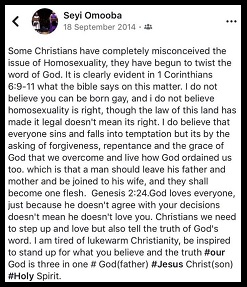
The controversy surrounding Seyi Omooba’s comments about homosexuality and her casting as Celie in The Color Purple at Leicester’s Curve Theatre and the Birmingham Hippodrome has been big news in theatre communities worldwide the past two weeks or so. The calls for her to be removed from playing this role, one that is resonant with the LGBTQ community, have been heard and it was announced last Thursday that Omooba would no longer be playing the role. Many view this as a suitable punishment, but while it might offer a form of poetic justice, I don’t think it’s enough to constitute any kind of justice that is restorative or true.
Indeed, when the discussions around this situation focus exclusively on the removal of an actress from a role whose experience and values she doesn’t share and whether that’s right or not, I fear that we have missed the point. This situation is bigger than that. This situation is yet another example of prejudice at work in our society.
“But these are her own personal views!” people have written in objection to the reaction against Omooba. I can imagine the same thought running through people’s minds as they read this column. They’ll continue, “This isn’t hate speech. It doesn’t incite anyone to violence. Doesn’t she have the right to her own beliefs?”
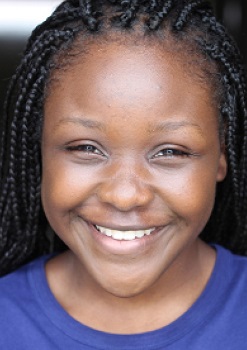
Seyi Omooba
Omooba absolutely has the right to her own beliefs. This does not mean, however, that she is free from the consequences that expressing her opinion may bring, especially when what she believes helps to perpetuate a society where LGBTQ people are oppressed.
Furthermore, while Omooba’s statement isn’t a call to genocide, it lays the foundations of the pyramid of hate that leads society to atrocities of that nature. Microaggressions matter. Microaggressions lead to prejudice, discrimination and ultimately violence. And let’s face it: there is nothing indirect, subtle or unintentional about Omooba’s words about homosexuality. She’s past the stage of microaggression. Comments like hers sustain the world in which the murder of Matthew Shepard was possible. In which the assault, strangulation, torture, and burning of David Olyne was possible. In which accusations of witchcraft, imprisonment and the corrective rape of lesbian teenagers in Cameroon is possible. In which transgender people are killed in countries all over the world. In which the criminalisation of homosexuality with sentences like long-term imprisonment and death is possible.
This last description is the law of the land in Nigeria, the country from which Omooba hails.
Removing Omooba from this role doesn’t address the problem of her prejudice or the problems that prejudice like hers creates. I’m at the point in my life where I won’t support the career of people like Seyi Omooba in any way until not only an apology but also clear restitution is made the perpetuation of an oppressive worldview such as this one.
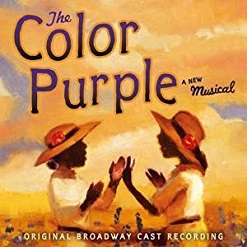
The OBCR of THE COLOR PURPLE
Saying you’re sorry isn’t enough – and let’s be clear, we haven’t even seen the most glancing of apologies from Omooba yet. There have been calls for handling Omooba gently, thus acknowledging her potential to change, but it has been reported that she was given the opportunity to retract her statement or to express any change in her views before the action of removing her from this production of The Color Purple was taken. She did neither. At this time, she has demonstrated no potential to change.
My voice might only be a single one, but my resistance is important. I can’t control this woman’s hateful views, but I can control my response to them. Maybe you’ll join me in not purchasing cast recordings on which she is featured and not supporting any production in which she is cast. Maybe you’ll join me in continuing to address her casting with the production companies that cast her. This is bigger than The Color Purple. And maybe, once Omooba has put in some work to help counteract the oppression of LGBTQ people who are trying to live lives free from discrimination, then we can consider shifting our behaviour towards her and those who support her.
Monday Meditations at Musical Cyberspace are is inspired by Shirley MacLaine’s I’m Over All That and Other Confessions. This post responds in particulate to the chapter titled “I’m Over Being Polite to People with Closed Minds.”
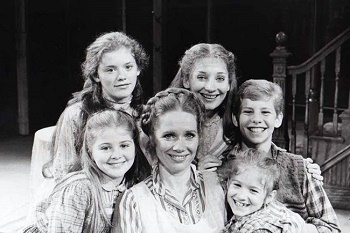
Carrie Horner, Maureen Silliman, Kristen Vigard, Liv Ullmann, George Hearn, Ian Ziering and Tara Kennedy in I REMEMBER MAMA
It’s been almost thirty years since the opening of the last musical that Richard Rodgers composed, I Remember Mama. Running for only 108 performances in 1979, this rather sentimental musical featured a book by Thomas Meehan and lyrics by Martin Charnin and Raymond Jessel. Based on an overwhelmingly successful play by John Van Druten, which was produced by Rodgers and Oscar Hammerstein II in the 1940s, which was in turn based on the Kathryn Forbes’s memoir, Mama’s Bank Account, I Remember Mama tells the tale of a family of Norwegian immigrants living in San Francisco in the early twentieth century.
Chiefly remembered for the (mis-)casting of Liv Ullman in the central role, the original production of I Remember Mama earned itself a spot in Not Since Carrie: Forty Years of Broadway Musical Flops. Such was the initial failure of the show that an original cast album was not recorded. It was not until a 1985 studio album was released that the score became available to the general public in the form of a cast recording. All things considered, this was not the ideal swan song for Rodgers after his auspicious career, was it?
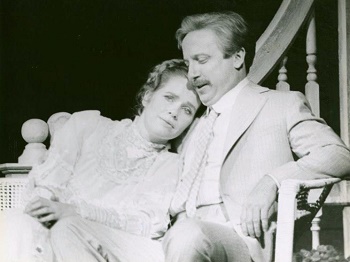
Liv Ullmann and George Hearn in I REMEMBER MAMA
When I Remember Mama surfaces in discussions, as it does in musical theatre forums on social media from time to time, nobody who remembers seeing the show says that it was brilliant – and many say it was an unsalvagable disaster. But those who don’t say it was a complete failure say that it was a sweet show that came along thirty years too late. Listening to the recording, it does rather remind me of Meet Me in St Louis with a little bit of Act One and Little Women thrown in for fun, and it certainly is an old-fashioned show. I think its heart is in the right place, and its certainly easier looking back at it as a nostalgic piece of work now than it must have been in 1979.
In its favour, I Remember Mama has some lovely melodies by Rodgers. I’m rather fond of “You Could Not Please Me More,” which seems to achieve what “An Ordinary Couple” from The Sound of Music set out to do. In fact, I think that it is the better song of the two, even if its lyric could take one on more of a journey. “When?” is also lovely, with the music once again outshining the lyric.
Indeed, the lyrics of I Remember Mama are often pedestrian. A good example of this quality is in evidence in “Ev’ry Day (Comes Something Beautiful), a number which aims to list things in the world that are ineffably beautiful. The very idea of the song seems counter-intuitive: how can one describe imagery that can’t be captured in words, in words? And when the score dips into comic numbers, the results are mostly poor. The two songs written for Uncle Chris are clunkers. Actually, the music of “Easy Come, Easy Go” has a pleasing build, and there’s some glee-inducing counterpoint. It’s the lyrics – cliché after cliché – that let it down. But there’s no such defence for the choruses of the song that introduces him: “Uncle Chris” is a most disagreeable song.
Carrie Horner, Kristen Vigard, Liv Ullmann, Maureen Silliman, Tara Kennedy and Ian Ziering in I REMEMBER MAMA
There are some charming character pieces, including the number that establishes Katrin’s desire to become an author, “A Writer Writes at Night”. The number also helps to establish the relationship between Katrin and her Mama as well as, more importantly, lending some context to the frame story, something that the musical proper could afford to incorporate more often. “Fair Trade,” a second act number that introduces the cameo role of Dame Sybil Fitzgibbons, is great fun, as is its reprise.
When the Toronto Civic Light Opera Company, a community theatre group, produced the Canadian premiere of I Remember Mama in 2006, it was a successful holiday show over that year’s Christmas season. Word is that the company tinkered with the book and score, although there seems to be no record online of what they changed. With a general consensus that the show could have been and should have been better, perhaps this is a show that is a serious candidate for an official, sensitive revision. There are supposed to be many cut songs that might serve as alternative material, and there’s enough source material to use should the book need tweaking. There’s no real reason that this shouldn’t be a reliable seasonal show for families to enjoy.
So what are your memories or thoughts – good or bad – of I Remember Mama? Head on to the comment box and share them with us!
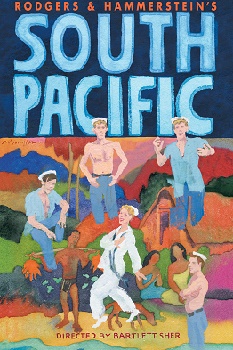
Poster artwork for the Lincoln Center revival of SOUTH PACIFIC
Welcome to the very first #ThursdayThoughts, a new forum for interactive discussion that will take place weekly at Musical Cyberspace from here on out as part of our slow and careful rejuvenation of this site. Each week, we’ll share a quotation about musical theatre that is open for discussion.
Today’s quote is about revivals of musicals on either side of the pond and is taken from Michael Billington’s review of the West End transfer of the Lincoln Center’s production of South Pacific in 2011:
New York has little to teach (London) about resurrecting the Broadway past.
Head on down to the comments and sound off! Although anyone is welcome to share their opinions, please try to treat other readers mindfully and stay on topic as far as possible. Discussions that get out of hand will be moderated.
Simon Bowman and Lea Salonga in the original production of MISS SAIGON
Today in 1989, Miss Saigon had its world premiere in London. Here’s a little quiz to celebrate. I’ve answered the questions in the body of this body, and I’ve love to see yours in the comments! Feel free to copy and paste the questions if you need to.
1. What do you like about this show? Or, if you’re not a fan, what makes it unmemorable for you? I’ve always liked Miss Saigon. I really love the epic feel of it, the sweeping melodrama, the romance at the core of it all. I think it’s all just wonderful. But you have to buy into it at the start – or you never will.
2. Pick your favourite song in the show and tell us why it’s your favourite? “I’d Give My Life for You”. I think the song is simple and direct, a moment where I think you see exactly who Kim is. I think it might be melodramatic and over-the-top in something a little drier, but I think it’s perfect for the kind of musical that Miss Saigon is.
What is your favourite song in Miss Saigon? Easy. “I’d Give My Life for You” is one of the things that really makes Miss Saigon so effective as an emotional experience: it is a beautiful character piece married to a haunting melody. I cannot believe it has not appeared on more favourite lists in this thread
3. What is your favourite lyric? I really like “Sun and Moon”, particularly the line ‘How in the light of one night did we come so far?’ I also really like the verses in “It’s Her or Me”/”Now That I’ve Seen Her”. But see below for more on this….
Jonathan Pryce and Lea Salonga in the original production of MISS SAIGON
4. Got a number you just can’t stand? Tell us why. Where Miss Saigon falls down for me is in the details. There’s not a number as a whole that I can’t stand, but there are lyrics that just don’t work. My least favourite by a long shot was “What is this bug up my ass? You tell me, I don’t know”. Thankfully, that one’s been replaced in the years since the show’s premiere in London. One of the changes I dislike is the rewritten opening of the chorus for “It’s Her or Me”, which became “Now That I’ve Seen Her”. I understand the thinking behind the change, but the change itself is sloppy and doesn’t match the musical phrases of the song.
5. Who’s your favorite character? Kim. I think it’s a fantastic role.
6. Who is your favourite Miss Saigon-related performer? Lea Salonga.
7. Got a favourite production or cast recording? What makes it so special? Nope. But I reckon that anyone who got to see Lea Salonga in the role got to see something pretty special.
8. What do you think of the show as an adaptation of Madama Butterfly? I think it works and I think it works better. The characters are less one-note than in Madama Butterfly. Kim, as I’ve said, I think is fantastically written. Chris is a huge improvement on Pinkerton, a character that holds little appeal and who deserves no sympathy. And I like the other shifts too – Suzuki’s transformation into Mimi, Goro’s retooling as the Engineer, Prince Yamadori’s now politically motivated Thuy. Also, the building up of the Kate Pinkerton role into Ellen gives the piece an added dimension. And the context given to the piece of the war in Viet-Nam works perfectly. Character, situation and narrative come together really well in this adaptation.
Simon Bowman and Lea Salonga as Chris and Kim in the original production of MISS SAIGON
9. A film…. What would you like to see if one was made? I’d love to see a film. I think the only way to cast Kim would be to go the same route that the producers went to find Lea Salonga – to look for a complete unknown who has what it takes to hold the film together. In terms of the screenplay, I’d like to see the fall of Saigon restored to it’s chronological place in the action. Without the act divisions, I think the second act material is strong enough to carry a film through to the ending. And I would like to see “The Sacred Bird” restored. And I think a big budget Hollywood epic would be the only way to do. With Miss Saigon, it has to be all or nothing.
So there you go! Scroll down and send us your answers. Happy birthday, Miss Saigon!
Who doesn’t love a great movie musical? OK, there are loads of people who don’t. But I do, and it’s devastating when one doesn’t live up to its potential. On this week’s Saturday List, I’m taking a look at five upcoming movie musicals to which I’m looking forward. Some of these are nowhere near opening day, but here’s hoping!
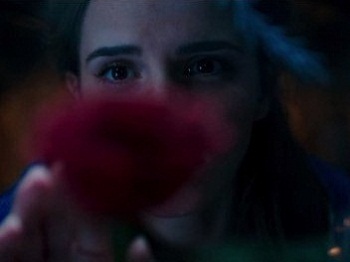
1. Let’s get Beauty and the Beast out of the way first, mainly because it has a release date that is less than a year away. When this live action remake of the 1991 animated classic was first announced, my first reaction was that Disney should have produced a live television special of their stage adaptation rather than trying, once again, to reinvent the wheel. At that point, I think we all presumed that the new film would be an adaptation of the stage show, but it turned out that this was not to be the case. The new film, with a screenplay by Stephen Chbosky, would incorporate songs by Alan Menken and Howard Ashman from the original film and new songs with lyrics by Tim Rice, who augmented Ashman’s lyrics for the stage show, but none of the material from the stage show itself would be used. Although the teaser trailer was something of a non-starter, we’re all waiting in anticipation to see what the film is like, with its cast led by Emma Watson and Dan Stevens.
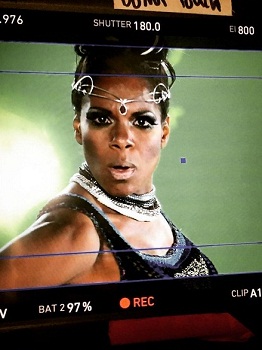
Audra McDonald on set in HELLO AGAIN
2. Nobody who knows me will be surprised that I’ve placed Hello Again second: I’m a huge Michael John LaChiusa fan and make no apologies for it. I’m also a huge fan of the play upon which the musical is based, La Ronde by Arthur Schnitzler, and its various incarnations such as David Hare’s The Blue Room. So when news arrived about a film version of one of my favourite LaChiusa shows starring Audra McDonald (who will get a new song in the film), Cheyenne Jackson, T.R. Knight, Martha Plimpton, I was in seventh heaven. Directed by Tom Gustafson with a screeplay by Cory Krueckeberg, Hello Again is currently being filmed. Everytime LaChiusa posts something on Facebook or the film updates its Instagram or Twitter account, the excitment builds. I simply cannot wait for this one.
Simon Bowman and Lea Salonga in the original production of MISS SAIGON
3. Miss Saigon is a musical I’ve always wanted to see make the jump to the big screen. The popular musical retelling of Madama Butterfly that transfers the action to the fall of Saigon in 1975 is already incredibly cinematic and lends itself to the kind of visual expression that a cinema experience can provide. Back in 2009, I loved hearing industry buzz that ex-United Artists CEO Paula Wagner was gearing up to produce a screen version of Miss Saigon with Lee Daniels at the helm. That film was to be a co-production with Cameron Mackintosh with a 2011 release date. That never happened. Then, in 2012, Les Misérables hit in the big screen. Although both Mackintosh and Daniels hoped that the success of Alain Boublil and Claude-Michel Schönberg’s first musical theatre classic would spur on a film adaptation of their second, it was not until the closing night of the West End revival earlier this year that Mackintosh indicated that things were on track. In March, it was announched that Danny Boyle might direct the film. All along, it has been said that the film will remain faithful to its source material, although I still wonder what changes we’ll see to the show as we know it. No doubt Ellen will get yet another song to try and solve a moment in the show that has never quite gelled. I know I’ve always thought the fall of Saigon – the infamous helicopter scene – could be shifted to its chronological place because the last half of the piece is strong enough both emotionally and dramatically without it. But we’ll have to wait and see, I guess. It took 32 years for Les Misérables to go from its first production as a Parisian spectacular to the premiere of the film. Miss Saigon opened in London in 1989. 1989 + 32 years = 2021. The clock’s ticking, Mr Mackintosh…
Joshua Park as Pippin the the 2006 Goodspeed Opera House’s produciton of PIPPIN
4. Pippin has been in development since 2003 when Miramax acquired the film rights for the musical penned by Stephen Schwartz, Roger O. Hirson and (the uncredited) Bob Fosse. A decade later, The Weinstein Company – who I guess took the rights along when Bob and Harvey Weinstein broke away from Miramax – named James Ponsoldt as a screenwriter for the project, which was subsequently confirmed as Craig Zadan and Neil Meron’s next project. This was around the time of the much-loved Broadway revival of the show, but things have been pretty quiet since then. Perhaps this team is still struggling to find a way to make this very theatrical musical work in the medium of film. Maybe they should recruit Rob Marshall: Pippin seems like the kind of thing that would suit him and his style of musical film-making, one with a framework that offers a plausible excuse for the stylistic features of the genre. Or… why not take inspiration from the anime-inspired hip-hop version that played Los Angeles in 2008? Animation might be an inspired choice of medium for this adaptation.
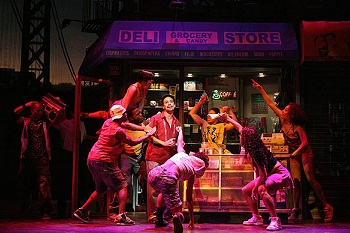
IN THE HEIGHTS as it appeared on Broadway
5. It’s been five long years since Universal withdrew from the production of a film based on Quiara Alegría Hudes and Lin-Manuel Miranda’s In the Heights. Back then Miranda, the show’s original Usnavi, would have been directed by Kenny Ortega, who would have had the opportunity to redeem himself for his tacky work on the High School Musical franchise following the promising work he did in staging the numbers for Newsies. Miranda said that he would try to get another studio interested in making the film, but many – including myself – feared that this stumbling block would be the end of the road for a film adaptation of this show. Last month, The Weinstein Company announced a $15 million production, which would have a new screenwriter working on Marc Klein’s existing treatment of the material. In the wake of the success of Hamilton, Miranda will be involved, but not as Usnavi, as he has aged out of the role.
Honourable Mention
Julie Andrews as Eliza Doolittle in MY FAIR LADY
For all intents and purposes, My Fair Lady is dead in the water. That’s why it’s in last place here, but it did attract enough buzz over its time in development to merit an inclusion – and given the change in circumstances for In the Heights, why not? There are those who have no desire to see a remake of Alan Jay Lerner and Frederick Loewe’s classic musical, believing that the original film is brilliant. While I don’t think a new My Fair Lady film is a necessity, the original film is by no means untouchable. It’s a solid film, and a faithful one, but it’s not perfect. Rex Harrison is fantastic, but…. In any case, new films don’t supplant old ones. Nobody who doesn’t want to watch the remake has to and the old film will always be there for anyone to see whenever they like. The one consistent factor in the saga of bringing a new Eliza Doolittle to the screen: a screenplay by Emma Thompson. At one point, Danny Boyle was on board to direct the remake. I didn’t think it a great loss when he dropped out. Then it was rumoured that Keira Knightly would play Eliza, with Joe Wright, who directed her in the tepid Pride and Prejudice remake and Atonement. Knightly and Wright obviously enjoy working together, but the idea of the two of them and this material seemed to be something of a mismatch and they went on to make Anna Karenina instead. When Knightley backed out, Carey Mulligan’s name was tossed about as an option, with George Clooney and Brad Pitt both being bandied about as potential Higginses. At that point, John Madden also had his eye on the director’s chair. For a while, Sony Pictures tried keep the buzz about the remake going, but Mulligan shattered all hopes of it moving forward in a statement she made at Cannes. Since then, no further information about the project has been forthcoming. Not yet, anyway.
So there you go… My favourite five movie musicals to be. What movie musicals are you anticipating with glee? Head over to the comments section and let’s hear!
With Pieter Toerien Productions and the Really Useful Group presenting a South African revival of Joseph and the Amazing Technicolor Dreamcoat and that revival having had its first performance yesterday in Johannesburg, where it will run until August before transferring to Cape Town, I thought it might be appropriate to run through the famous list of colours that Tim Rice set to Andrew Lloyd Webber’s music to create the first of three Saturday Lists, the following two of which will appear in the next two weeks.
The creative team of this production is headed by Paul Warwick Griffin, who will direct, with musical supervision by Charl-Johan Lingenfelder and musical direction by Louis Zurnamer. Choreography will be by Duane Alexander. Earl Gregory stars as Joseph, with Bianca le Grange as the Narrator and Jonathan Roxmouth as the Pharaoh.
Earl Gregory as Joseph in Joseph and the Amazing Technicolor Dreamcoat
Here’s a list of songs from musicals featuring the colours of “Joseph’s Coat” as per the song’s lyrics. Sometimes, the reference is to the colour itself, but at other times it’s a name or a fruit – or something else completely!
Red
Our first song is “Red and Black” from Les Misérables. This song, with music by Claude-Michel Schönberg and lyrics by Alain Boublil (French) and Herbert Kretzmer (English), is sung at the ABC Café during a political meeting between a group of students preparing for the revolution they are sure will follow once General Lamarque is dead. Red symbolises both ‘the blood of angry men’ and ‘a world about to dawn’ in this song.
Yellow
Next up is “Follow the Yellow Brick Road” from The Wizard of Oz. Harold Arlen and E.Y. “Yip” Harburg’s short number is a prelude to “You’re Off to See the Wizard” and is heard when the Munchkins send Dorothy off to the Emerald City. There are several real-life yellow brick roads, two of which may have inspired Oz author L. Frank Baum. One is at a military academy in New York, and the other is near Holland, Michigan.
Green
“Green Finch and Linnet Bird”, by Stephen Sondheim, comes from Sweeney Todd: The Demon Barber of Fleet Street. This song introduces the character of Johanna, who is kept in seeming captivity by Judge Turpin. “If I cannot fly,” the girl wishes, “let me sing.” European greenfinches are beloved songbirds, commonly bred as pets in Malta, while the common linnet is declining in numbers and is protected as a priority species in the UK.
Brown
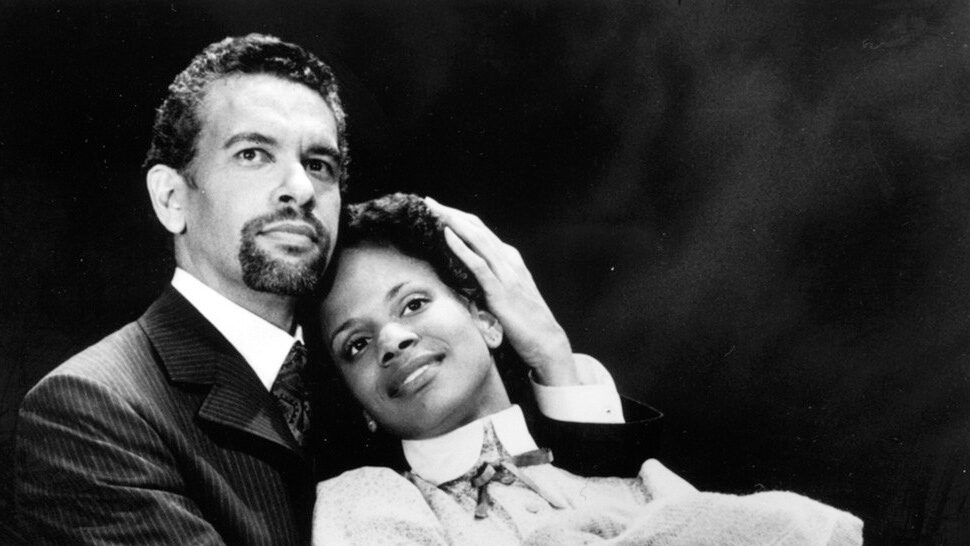
Lynn Ahrens and Stephen Flaherty’s “Sarah Brown Eyes” from Ragtime gives the character mentioned in the song’s title an unexpected appearance in the second act of the show. With Sarah having died at the end of the first act, her beloved, Coalhouse Walker Jr, recalls their first meeting. It’s a tender moment before the musical kicks back into high gear, with Coalhouse planning to blow up J.P. Morgan’s library.
Brian Stokes Mitchell as Coalhouse Walker Jr and Audra McDonald as Sarah in Ragtime (Photo credit: Catherine Ashmore)
Scarlet
Frank Wildhorn and Nan Knighton wrote a title number for The Scarlet Pimpernel, a patter song for Percy Blakeney, Marguerite St Just, Marie, Armand St Just, Lady Digby, Lady Llewellyn and the servants. In the song, they all debate the identity of this eighteenth-century superhero who saved innocents from facing the guillotine during the French Revolution.
Black
In, Hair, James Rado, Gerome Ragni and Galt MacDermot wrote a song for three white women of the tribe to express their love for “Black Boys”. The response? Three African-American women of the tribe explain their love for “White Boys.” While this was an exuberant deconstruction of miscegenation, which had been legally dismantled in the year of the show’s premiere, Hair tackled other issues about race with a more serious intent.
Ochre
Ochre has me stumped. I can’t think of a musical theatre song that mentions this colour in its title.
Peach
No, No Nanette first hit stages in 1924, opening on Broadway and in the West End the year later. Three film adaptations followed, but it was a revival in 1971 that set in stone the legacy of this show and its score, which was penned by Irving Caesar, Otto Harbach and Vincent Youmans. At the top of the second act, Nanette goes to Atlantic City and quickly becomes the most popular girl in town, the “Peach on the Beach.”
Mara Davi as Nanette in No, No, Nanette (Photo credit: Joan Marcus)
Ruby
Some people might consider listing Jerry Leiber and Mike Stoller’s “Ruby Baby” a cheat. But this song comes from one of my favourite revues, Smokey Joe’s Café, and I prefer it to any of the other options. (There aren’t that many.) This song about a girl called Ruby who doesn’t return the singer’s affections has been recorded by, amongst others, The Drifters, The Beach Boys, Bobby Darin, and Michael Park with the original Broadway cast.
Olive
In Kismet‘s “The Olive Tree,” Robert Wright and George Forrest asked, using the music of Alexander Borodin, ‘Why be content with an olive when you could have the tree? / Why be content to be nothing, when there’s nothing you couldn’t be?’ Who would have thought that such profound thoughts could be set to the third-act trio from Prince Igor? They also told us, ‘If you have heard and do not heed / There is a word for what you are / … Fool!’
Violet
I’m glad to include a song by Jeanine Tesori on this list. This one is called “Promise Me Violet” and it has lyrics by Brian Crawley. The situation is this: Monty asks Violet, who is on her way to Tulsa, to meet him when she returns to Fort Smith, where he says he’ll be waiting for her. It’s so seductive. I’d probably succumb. On the other hand, Violet promises no such thing before the bus pulls away. Rats…
Fawn
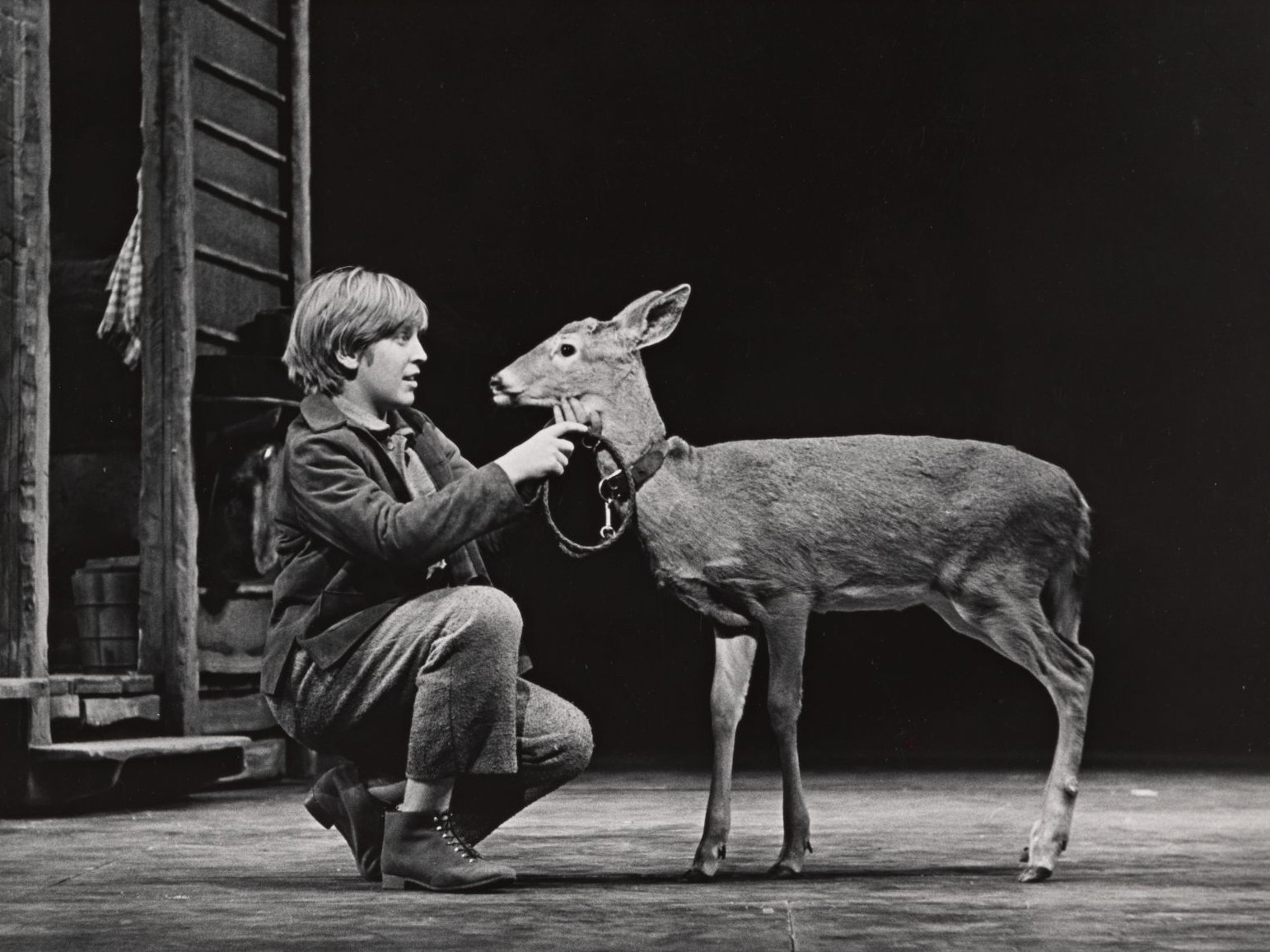
Fawn is another colour that has me stumped. I thought I might find something in The Yearling, but it was not to be…
Steve Sanders as Jody Baxter in The Yearling (Photo credit: Friedman-Abeles)
Lilac
Lilac and nostalgia go hand in hand when it comes to musical theatre, it seems. Whether you listen to Lilac Time or Nunsense, chances are that things are going to turn sentimental. That said, my choice of song is Ivor Novello’s parlour duet from Perchance to Dream, “We’ll Gather Lilacs.” Of course, the best reference to lilac comes from Bea Arthur, quoting Tallulah Bankhead: ‘There’s a touch of homosexual in all of us. It’s not the cock. And it’s not the twat. It’s the eyes, don’t you know, and sometimes, the smell of lilac.’
Gold
“Gold” from Once is soul music. One of the couple of songs not written by Glen Hansard and Markéta Irglová for the show’s score, “Gold” was composed by Fergus O’Farrell. In this song, which closes the first act of the show and is reprised later in a stunning a cappella arrangement, Guy sings about loving a woman and, for the first time, it’s a song all about Girl and not the ex-girlfriend for whom he has been pining throughout the show until that point.
Chocolate
“Chocolate Soldier”, from The Chocolate Soldier, an operetta by Oscar Straus, Rudolf Bernauer and Leopold Jacobson, takes us back to yesteryear. This little charm song plays on the joke that Bumerli, who has arrived in Nadina’s bedroom, uses his ammunition pouch to carry chocolates, which renders his revolver useless. The operetta was based on Arms and the Man by George Bernard Shaw, who famously despised this adaptation of his play.
Mauve
When I read through the list of colours I would tackle, I thought mauve would stump me. It has. Anyone know a show tune with “mauve” in the title?
Edith Bradford as Mascha in The Chocolate Soldier
Cream
There’s only one defendable choice here: “Ice Cream” from Joe Masteroff, Sheldon Harnick and Jerry Bock’s She Loves Me, which is currently enjoying a revival on Broadway and racked up eight Tony Award nominations this past week. At this point in the story, Georg has just visited Amalia, who is ill, and given her a gift of vanilla ice cream. Amalia tries to write a letter to a pen pal with whom she trades romantic letters, who is – unbeknownst to her – also Georg. Instead, she finds herself thinking of Georg, whose kindness towards her represents a clear shift in their real-life relationship.
Crimson
Get ready for your third dose of operetta. Blame crimson, which offers only one option: “The Colonel of the Crimson Hussars” from Sybill by Victor Jacobi, Ferenc Martos and Miksa Bródy. The English-language version, in which the titular singer lost an ‘l’, featured lyrics by Harry Graham. The number is performed by Sybil, the object of Russian officer Petrov’s affections, and a chorus of officers that she, at this point, likes better. Guess what’s different by the time the curtain falls.
Silver
“Look for the Silver Lining” by Jerome Kern and B.G. DeSylva was written for the Zip, Goes a Million, which flopped, and reused in Sally, which didn’t. In the show, the song is sung by Blair Farquar, the son of a millionaire to ‘Sally of the Alley’, a dishwasher in need of some cheering. She cheers up considerably, becoming a star of the Ziegfeld Follies and the wife of an heir to a fortune.
Rose
There is a story told by Stephen Sondheim that Jerome Robbins’s first reaction to “Everything’s Coming Up Roses” was to wonder whether the audiences of Gypsy would be left wondering, “Everything’s coming up Rose’s what?” That story alone is worth the inclusion of the Rose to end all Roses in this list and might leave you rosy-cheeked as you think about the song that Jule Styne wrote with Sondheim to close the first act of the show. Look, I know that this pick is something of a cheat, but did you really want me to pick something dreadful like “Spanish Rose” from Bye Bye Birdie?
Angela Lansbury as Rose in Gypsy
Azure
I can think of plenty of “blue” songs – but nothing that references azure. But why?!!
Lemon
Lemon, it seems, is another colour the musical theatre songbook politely sidesteps. For a form that happily sings about ice cream, ribbons and dreams about angels, it’s odd that citrus never quite makes the cut.
Russet
Russet, like several of the more autumnal shades in Joseph’s coat, never quite makes the leap from fabric swatch to show tune. I wonder why.
Grey
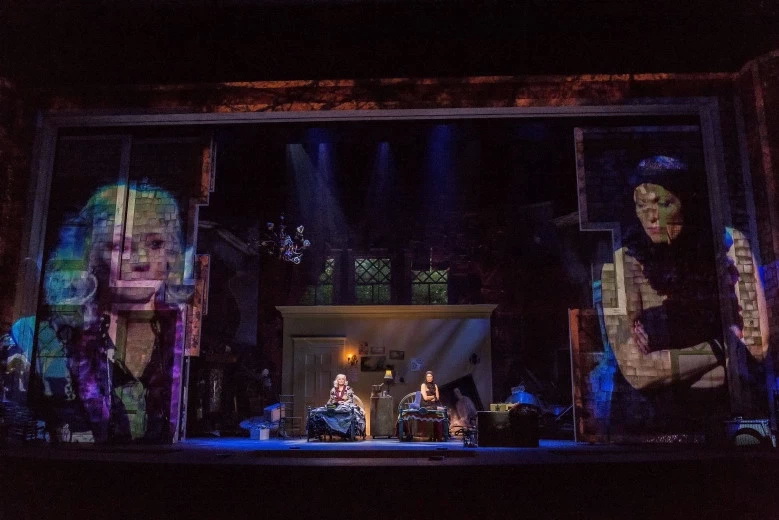
“Entering Grey Gardens” is not a typically jolly showtune, but it captures the atmosphere of the Grey Gardens estate perfectly. Juxtaposing sung lyrics by the ensemble, who comment on ‘the musty smell of feline fur’ and ‘the vermin in the furniture,’ as Big Edie and Little Edie go about their daily rituals and routines, it’s both creepy and incredibly sad. Grey Gardens is such an underrated musical, so it’s great to have an excuse to reference it!
Betty Buckley as Big Edie and Rachel York as Little Edie in Grey Gardens
Purple
There’s an obvious choice here, and that is the title song from The Colour Purple. In this song, purple becomes a symbol of divine attention, representing the idea that noticing beauty is, in itself, a spiritual act. To ignore the colour purple in a field, the song suggests, is to overlook God’s presence in our everyday lives. Colour here is not about status or excess, but about seeing and receiving grace.
White
“White Christmas,” from the stage adaptation of the eponymous 1954 musical film of the same name, is more than just a seasonal standard. This song represents a shared wish for home comforts and uncomplicated joy. When you really tune into the song’s spirit, it feels less like nostalgia and more like a ritual, an annual pause in which we willingly step into a world filled with hope, harmony and a very particular kind of festive magic.
Pink
“Think Pink!” (from the film musical adaptation of Funny Face) is pure and unapologetic fabulousness. The song treats colour as attitude, turning a simple shade into a manifesto of confidence, excess and high-fashion fantasy. Amid this list dominated by showtunes from the stage, this glamorous detour into movie-musical territory feels worthwhile, reminding us that sometimes colour exists purely to dazzle, delight and be fabulous for its own sake.
Orange
“An Orange Grove in California,” by Irving Berlin, treats colour as atmosphere rather than a punchline. Appearing in the third edition of Irving Berlin’s Music Box Revue during the 1920s, the song conjures a sunlit California as a place of ease and possibility. Its gentle imagery proved influential beyond the stage, inspiring Arthur Dove’s 1927 painting Orange Grove in California. Here, orange becomes not spectacle but mood, a soft wash of warmth and promise.
Blue
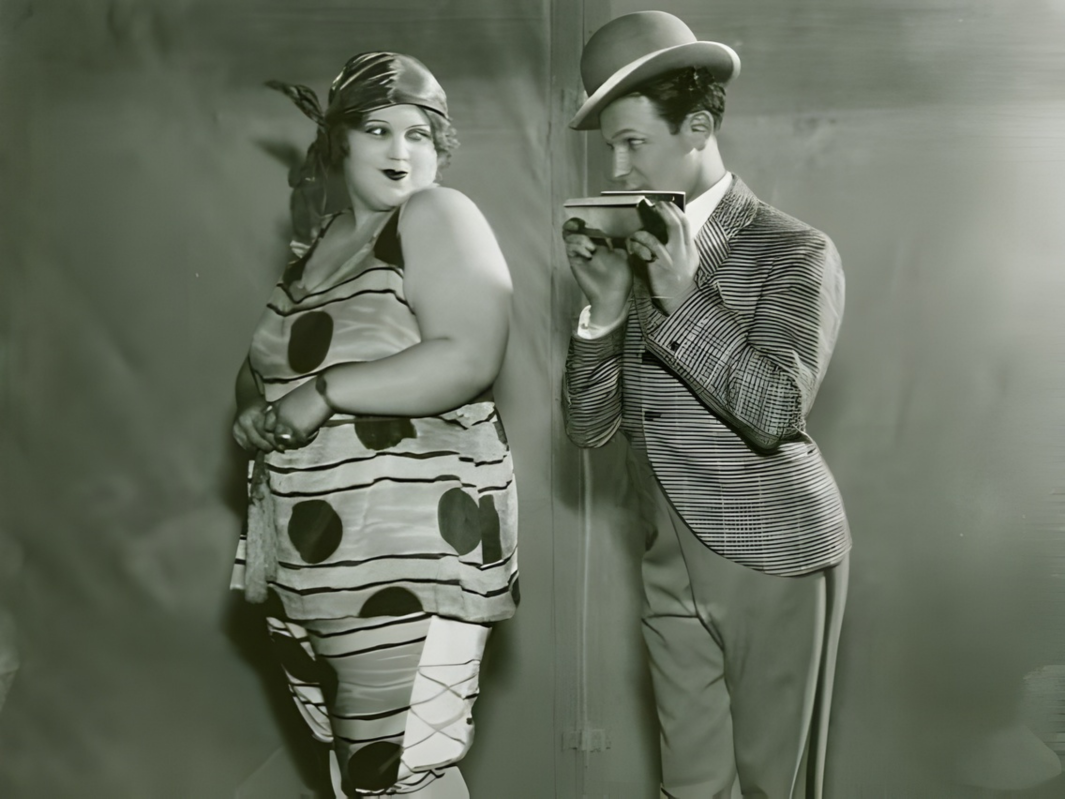
Last, but not least, “Blue Skies,” composed by Irving Berlin in 1926 as a last-minute addition to the musical Betsy by Richard Rodgers and Lorenz Hart, quickly outshone the show that introduced it. Though Betsy ran for just 39 performances, audiences on opening night famously demanded 24 encores of the song from Belle Baker. Set in a minor key that gently shades its optimism, “Blue Skies” captures the musical theatre’s enduring ability to find hope even when certainty wavers. Its final impression is unmistakably affirmative: a promise that brightness can emerge, almost defiantly, from within the blue.
Belle Baker as the title character of Betsy, with Borrah Minevitch
So… what do you think of the list? Which songs would you have picked for these colours? Any suggestions for the ones that stumped us? Head on to the comments section below and let us know!
Tickets for Joseph and the Amazing Technicolor Dreamcoat can be booked through Computicket.
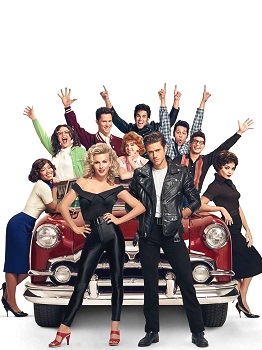
It may be almost a week since the much-hyped Grease: Live hit the small screen, but that’s given the dust (and the fankids) a little time to settle. This week’s Saturday List takes a looks at some of the strengths and weaknesses that have revealed themselves since last Sunday. For those of you who need reminding, Grease: Live was a live television event written by Robert Cary and Jonathan Tolins based on both the stage musical, Grease, and its film adaptation, directed by Thomas Kail and Alex Rudzinski for Fox. Without any further ado, let’s take a look at the five best and five worst things about Grease Live!
Go GREASE(d) Lightnin’
Let’s face it: Sandy is a relatively thankless, yet deceptively difficult, role. Play it too sweet, and everyone’s going to hate you. Too tough, and you lose the arc of the character. I think it’s pretty safe to say that Julianne Hough finds her way in the role, navigating through thin backstory infested waters too. In an adaptation that leans heavily on the film, it’s almost certainly a blessing that Hough didn’t have to adopt Olivia Newton-John’s Australian accent, even she did have to done close reproductions of some of the costumes. Of the leads, Hough best manages not only to make the role her own, but to make her own take on Sandy work.
A huge part of the teenage experience is fantasy. It’s why “Greased Lightnin'” never fails to please: besides the rhythm of the song, the audience is really rooting for those boys because so many of us drove a beat-up old car that we wished was something better. And it’s just one reason that “Freddy My Love” works so well in Grease: Live. It’s one of the few moments in which this adaptation finds its own voice. Imagine what approaching the rest of the score with that same sense of spontaneity might have yielded.
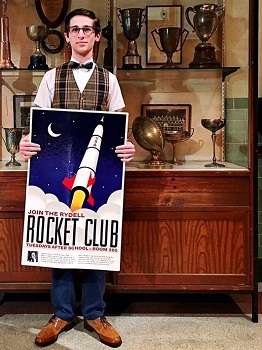
Noah Robbins as Eugene
There are some gems in the supporting cast of Grease: Live, especially Noah Robbins as Eugene and Kether Donohue as Jan. Robbins works well in his expanded role, nailing Eugene’s role in the halls of Rydell. He plays Eugene as a young man on the way up and builds his character scene by scene. When he arrives to help the T-Birds in a key scene added to this adaptation, it doesn’t ring false because Robbins has developed the character scene by scene. His Eugene is more than dispensible comedy relief. It works. Donohue has it easier in a role that is already an audience favourite, but she hits the mark in each of her scenes. It’s a pity she doesn’t get her moment in “Mooning”.
There are two great cameos by Didi Conn and Barry Pearl in Grease: Live. Both starred in the film adaptation of the show. It was especially fun to see Conn play the reverse side of her scenes from the film. (Has anyone made a YouTube clip of Didi as Frenchy opposite Did as Vi yet?) Was there room for more cameo work here or would that have been overkill? Either way, this was the best of the bunch when it came to stunt casting in this adaptation.
Amidst some pretty uneven work as Danny, Aaron Tveit delivers an exemplary “Sandy”. Written by Louis St. Louis and Scott Simon for the film, “the song replaced the clunky “Alone at a Drive-in Movie”. I must admit I’m not a huge fan of Tveit’s; generally I find his performances lacking in colour. But every now and then he brings it home, and he does that here in spades. This was his most riveting performance in the show.
No GREASE(d) Lightnin’
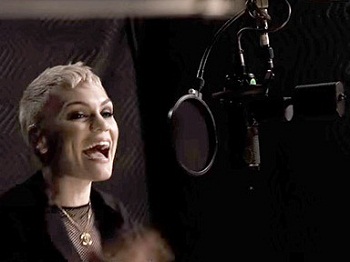
Jessie J records the title song of GREASE
First things first: the opening number. The inclusion of the title song written by Barry Gibb always causes a bit of a debate. It’s too much for the old guard, who saw and loved the original production, to endure. “It’s not a period song!” the proclaim – and they have a point. Given how associated the song has become with the property, including “Grease” is a compromise I can cope with – if the staging of the number works. The golden standard in this regard, as far as I’m concerned, is the 1993 revival, where the staging of the number establishes the various strata of life at Rydell High School. A pop star walking around behind the soundstages and the backlot with the cast joining in here and there is not good enough. Period. To add insult to injury, Jessie J’s delivery of the song wasn’t exactly first rate either.
While some of the supporting cast members are fantastic, others leave a great deal to be desired. The chief offender here is Elle McLemore, who played Patty Simcox. Sure, the character is grating – but McLemore’s Patty is so annoying that she gives the sidekicks on the Disney Channel’s teen sitcoms a run for their money. Don’t get me wrong – The Wizards of Waverly Place has its, well, place, but nobody wants to see Harper Finkle in Downton Abbey. McLemore’s Patty falters in failing to provide a vital foil for both Sandy and Rizzo, which means that the directors of Grease: Live must share some of the blame. In their push for manic energy, everyone seems to have forgotten who Patty is in the world of Rydell High School and why the character is there in the first place. Close on McLemore’s heels is Haneefah Wood in the comparatively minor role of Blanche.
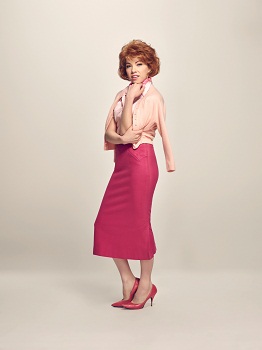
Carly Rae Jepsen as Frenchy
Sometimes a new song adds something to a musical. “I Have Confidence” added a giddy, character-specific transition piece to The Sound of Music. In Cabaret, “Money” helped to communicate that Sally Bowles on film was a different creature in comparison with her stage counterpart, a singer who was capable of far more than performing at dingy cabaret, able to keep her job and who was thus there by choice rather than necessity – get it? Grease: Live added “All I Need Is an Angel” – a generic pop ballad by Tom Kitt and Brian Yorkey. Besides its failure to capture any sense of the show’s period, it fails even in setting up the number it introduces, in which Grease: Live presented a trio of Teen Angels – not just the one that Frenchy repeatedly asks for in this number.
“All I Need Is an Angel” segues neatly to the next big problem with Grease: Live: Boyz II Men. Who thought it would be a good idea to hire a smooth R&B vocal group, known for singing ballads and kick-ass harmonies, to put across a comedy number? Vocal riffs and group singing get in the way of punchlines – and this song is all about its punchlines. This was a textbook case of stunt casting gone wrong.
Finally, a question: what do you do with an iconic musical theatre number that just happens to be the closing of your show? Picture that production meeting where it was suggested that “We Go Together” would involve the cast running from a soundstage, mugging at the camera, hopping onto an elongated golf cart and finally arriving to perform some perfunctory choreography on the backlot. Now picture everyone involved thinking that’s a good idea. It’s pretty tough to imagine, isn’t it? What were they thinking?
That’s all that I’m putting on the list for today. What were your highs and lows of Grease: Live? Share them in the comments box below. It’ll be great to hear what you think as we count the days till the next live television musical.
Sharon Spiegel-Wagner and Jonathan Roxmouth in I’M PLAYING YOUR SONG
The Marvin Hamlisch story is the subject of a brand new show, I’m Playing Your Song, which will be performed during the festive season and through the new year at Montecasino and Theatre on the Bay in Johannesburg and Cape Town, South Africa, respectively. Written by Jonathan Roxmouth and directed by Alan Swerdlow, the production stars Roxmouth alongside Sharon Spiegel-Wagner. Hamlisch is lauded as being one of the greatest songwriters of his time, an EGOT winner who has written tunes that have delighted theatre audiences, moviegoers and radio listeners for the past fifty years. In today’s “Saturday List”, Musical Cyberspace takes celebrates the first performances of I’m Playing Your Song with a look at Hamlisch’s five greatest musicals, with a brief look at their best songs, major productions and some suggestions for South African revivals of each of them. So without further ado, let the countdown begin!
5. The Goodbye Girl
When Hamlisch joined forces with Neil Simon and David Zippel to adapt Simon’s film The Goodbye Girl into a stage musical, expectations of what they would deliver must have been pretty high. With Bernadette Peters and Martin Short leading the cast, as incompatible roommates that fall in love over the course of the show, in a staging by Michael Kidd’s, the pedigree of the show was second to none. Imagine everyone’s disappointment when the show shuttered on Broadway after five months in 1993. A revised version of the show opened in Illinois the following year and a production with even further revisions – including new lyrics by Don Black – opened in 1997. With Black’s lyrics – perhaps typically – landing with a dull thud, the licensed version of the show remains the 1994 iteration of the material. Listening to the original cast album of the Hamlisch-Zippel version of the score offers some insight to the mixed reception the show had in its first run. The score is overwhelmingly bombastic at times, particularly in its ballads, but there’s some fun to be had in numbers like “Elliot Garfield Grant,” “Good News, Bad News” and “Don’t Follow in my Footsteps”. In fact, trimmed of its fat, The Goodbye Girl could probably make a snappy one-act musical comedy. Although a major South African production of the show seems unlikely, although it could be a great vehicle to pair up Bianca le Grange and Sne Dladla, who could certainly sell audiences on the material. Maybe their Blood Brothers and Orpheus in Africa director, David Kramer, could head up the show.
4. Smile
A 48-performance flop, Smile was the result of Hamlisch’s collaboration with Howard Ashman, who had had great success with Little Shop of Horrors. Chronicling the search for the ideal Young American Miss, the only record of Smile was a demo recording made for Samuel French to use in promoting the show to potential producers. This recording reflected some changes that had been made to the Broadway version of the show, some of which were reinstatements of earlier drafts of the material. Some of the songs – “Disneyland,” “Smile,” “In Our Hands,” and “Maria’s Song” surfaced in the Unsung Musicals recordings, with the first of those songs finding particular favour in the hands of original cast member, Jodi Benson. Songs from the musical also appear on the recording Howard Sings Ashman, where the composer and lyricist perform their own material. Although Smile has developed something of a minor cult following since its premiere, no major South African production of the musical has been produced. Perhaps Mixing Bowl Productions, who have been working hard to market the “new musical theatre” brand in their revues and concerts, could tackle this one. While Smile is certainly not recent enough to typically be considered “new musical theatre”, the approach is there in the material, and it is time for this fledgling company to start dealing with the complexities of narrative in musical theatre storytelling.
3. Sweet Smell of Success
Although Sweet Smell of Success only ran for 109 performances on Broadway in 2002, the show still represents Hamlisch’s best work for the stage since A Chorus Line in 1976. While critics at the time were less than complimentary about the Bob Crowley’s design, Christopher Wheeldon’s choreography and Nicholas Hytner’s direction, Hamlish and the lyricist who crafted a literate set of lyrics for the show, Craig Carnelia, were nominated for a Tony Award and separate Drama Desk Awards for their score. John Guare also received a nomination for his book, which told the tale of 1950s Broadway gossip columnist, J. J. Hunsecker, who uses his influence, with the help of a struggling press agent, to interfere with his sister’s relationship with a hot young piano player. The cast recording is a testament to a score that is by turns jazzy, witty and touching, including the expository “The Column”, the soul-searching “At The Fountain”, the tender “Don’t Know Where You Leave Off” and the sharp-as-nails “One Track Mind”. There are plenty of other rewards to be had to upon listening to this recording. In fact, with another round of revisions and a different production team, I am convinced that Sweet Smell of Success could truly hit its stride as a first class musical comedy. With no South African production having taken place, the man to head up the job would have to be Steven Stead, whose KickstArt Theatre Company has seen him helm productions like Sweeney Todd, Shrek and Cabaret. Add the unstoppable Roxmouth himself into the mix as the struggling press agent, put him alongside his Sunset Boulevard co-star Bethany Dickson as the woman around whom the entire plot revolves, cast her Singin’ in the Rain leading man, Grant Almirall, as her lover and put his fellow Chicago cast member, Craig Urbani, in the role of J. J. Hunsecker, and you’d be all set for a killer night’s entertainment.
2. They’re Playing Our Song
Hamlisch collaborated with legendary pop lyricist Carole Bayer Sager to create They’re Playing Our Song, which was based on their own romantic relationship, bringing to life at the same time the dynamics in the relationship between a composer and lyricist. Although the score failed to nab a Tony Award nomination, Hamlisch was nominated for the Outstanding Music Drama Desk Award. Highlights of the score includes a couple of toe-tapping numbers in the title song and “Working It Out”, but also more tender pieces for each of the lead characters, namely “Fallin’” (for him) and “I Still Believe in Love” (for her). Following a 1978 world premiere in Los Angeles, They’re Playing Our Song opened on Broadway the following year and transferred to London in 1980, with a UK revival being staged in 2008. Joan Brickhill and Louis Burke produced the South African premiere of the show in 1980, with Mike Huff and Marloe Scott-Wilson playing the two leads. I wonder what Janice Honeyman could do with a revival of this show. How about putting her at the helm of a revival with Toni Jean Erasmus, who was a wonderful Sister Mary Robert in Honeyman’s production of Sister Act this year, and Dean Balie, who is currently one of the featured actors in Orpheus in Africa? It could be a fantastic prospect for Honeyman and her often-time Joburg Theatre producer, Bernard Jay.
1. A Chorus Line
Hamlisch’s most enduring stage work is the Pulitzer Prize-winning musical, A Chorus Line. Following a stint of 101 performances Off-Broadway in 1975, the show transferred to Broadway where it ran for a record-breaking 6,137 performances. Marvin Hamlisch won (along with the show’s lyricist, Edward Kleban) the Tony Award for Best Original Score as well as the Drama Desk Award for Outstanding Music for the show. The score features several unforgettable numbers, including the haunting “At the Ballet”, which Hamlisch described as the song that set the shape and color of the entire musical. There’s also the catchy “I Can Do That”, the hilarious “Dance: Ten; Looks: Three” and the thrilling “The Music and the Mirror; each is a number that brilliantly delineates the character that sings the song. The masterful “Montage” juxtaposes the teenage experiences of all 17 dancers on the line. And that’s not even mentioning the show’s two biggest takeaway numbers, “One” and “What I Did for Love”, or the extensive underscoring that pulsates throughout the show. At present, the sixth longest-running Broadway show ever, A Chorus Line opened in the West End in 1976 and was adapted into an almost universally disliked film in 1985 before being revived in New York in 2006 (the casting for the revival being the subject of a documentary, Every Little Step) and in London in 2013. In between, A Chorus Line had its South African premiere in Cape Town in 1992, with Troy Garza restaging the original direction and choreography. Maybe when Pieter Toerien Productions is done with Singin’ in the Rain, the theatre mogul can cast a thought towards reviving this classic piece of musical theatre with our current generation of musical theatre performers – but only if it means we get to see Michael Bennett’s unbeatable original staging of the work.
Besides these five musicals, Hamlisch has also composed scores for the musicals Jean Seberg (1983, featuring the beautiful song, “Dreamers”) and The Nutty Professor (2012), as well as the many hit songs he wrote for films like The Way We Were (1973), The Spy Who Loved Me (1977) and The Mirror Has Two Faces (1996). If you’d like to hear which of Hamlisch’s songs Roxmouth and Spiegel-Wagner sing in I’m Playing Your Song, book your tickets for the show at Montecasino (where it runs until 10 January) or Theatre on the Bay (where it runs from 13 January – 6 February). Bookings are through Computicket.
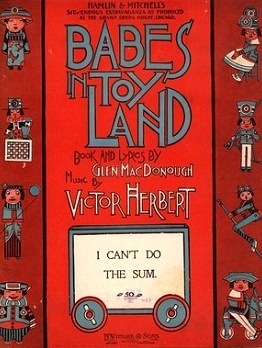
Sheet music from Victor Herbert’s BABES IN TOYLAND
Hamilton may be breaking new ground in musical theatre, with Lin-Manuel Miranda consolidating breakthroughs in mainstream musical theatre production that may or may not redefine the form, but while I enjoy keeping up to date with new developments in musical theatre, I find myself continually returning to the works of the book-writers, lyricists and composers who laid the foundations of the form as it know it today. Sometimes its easy to forget just how far musicals have come; it’s also easy to dismiss how much the ground-breakers were doing at the time.
I don’t know why I have such an intense obsession with musical theatre history. I guess I like to see the origins of things and to imagine what making and seeing theatre might have been like prior to the 1930s.
What was it like to hear Cole Porter’s “Let’s Do It, Let’s Fall in Love” for the first time in 1928? What must it have been like for Herbert Fields, Richard Rodgers and Lorenz Hart to create Dearest Enemy in 1925? How do the “new” Gershwin musicals really compare with the their originals? When Irving Berlin saw his debut musical, Watch Your Step, staged, did the audiences of 1914 anticipate a full score by the writer of “Alexander’s Ragtime Band” the same way that the audiences of today anticipate the full score of Waitress from “Love Song” songwriter Sara Bareilles? How much do Disney’s new fairy-tale musicals on stage owe to Victor Herbert and Glen MacDonough’s Babes in Toyland and The Wizard of Oz, with its The Lion King-like – in length – list of contributors.
There were of course many more – including Jerome Kern, Oscar Hammerstein II and others who came before them – who crafted and influenced the musical in its formative years and some of these theatre-makers were still making musicals decades later, reacting to later developments in the form and – in some cases – innovating these developments themselves. When you’re downloading Hamilton later this week, why not pick up a recording of Fifty Million Frenchmen, Oh, Kay!, The Red Mill or Sunny and see what you think?
In the meantime, tell us who your favourite “old master” of musical theatre is in the comment block below. Any recommendations of recordings or books to read would be great too!
One recent article I read that is a testament to that hope appeared in The New York Times on 10 September: “This Broadway Season, Diversity Is Front and Center”. The article discusses productions like On Your Feet!, Allegiance, The Color Purple, Amazing Grace, Shuffle Along, Hamilton, The Gin Game, Hughie, School of Rock and Spring Awakening, which give voice to Latin American, Japanese American, African American, Caucasian and Deaf narratives.
In the article, Lea Salonga – the first Asian woman to win a Tony Award – is quoted as saying:
Whether it’s providential, coincidence, or meant to be, the fact is what’s happening on Broadway is so diverse it’s almost utopian. It shows how many stories are out there that should be told, and can be told — so many experiences that make America what it is.
The telling of diverse stories is, of course, not only a challenge for Americans, but also one that faces us all. So, if you’re the kind of person who’d like to share your story with us, what do you do to encourage diversity in the arts in your community? Maybe your groundbreaking work will inspire us all.






 Musical Cyberspace
The “Happy Birthday, MISS SAIGON” Quiz
Simon Bowman and Lea Salonga in the original production of MISS SAIGON
1. What do you like about this show? Or, if you’re not a fan, what makes it unmemorable for you? I’ve always liked Miss Saigon. I really love the epic feel of it, the sweeping melodrama, the romance at the core of it all. I think it’s all just wonderful. But you have to buy into it at the start – or you never will.
2. Pick your favourite song in the show and tell us why it’s your favourite? “I’d Give My Life for You”. I think the song is simple and direct, a moment where I think you see exactly who Kim is. I think it might be melodramatic and over-the-top in something a little drier, but I think it’s perfect for the kind of musical that Miss Saigon is.
What is your favourite song in Miss Saigon? Easy. “I’d Give My Life for You” is one of the things that really makes Miss Saigon so effective as an emotional experience: it is a beautiful character piece married to a haunting melody. I cannot believe it has not appeared on more favourite lists in this thread
3. What is your favourite lyric? I really like “Sun and Moon”, particularly the line ‘How in the light of one night did we come so far?’ I also really like the verses in “It’s Her or Me”/”Now That I’ve Seen Her”. But see below for more on this….
Jonathan Pryce and Lea Salonga in the original production of MISS SAIGON
5. Who’s your favorite character? Kim. I think it’s a fantastic role.
6. Who is your favourite Miss Saigon-related performer? Lea Salonga.
7. Got a favourite production or cast recording? What makes it so special? Nope. But I reckon that anyone who got to see Lea Salonga in the role got to see something pretty special.
8. What do you think of the show as an adaptation of Madama Butterfly? I think it works and I think it works better. The characters are less one-note than in Madama Butterfly. Kim, as I’ve said, I think is fantastically written. Chris is a huge improvement on Pinkerton, a character that holds little appeal and who deserves no sympathy. And I like the other shifts too – Suzuki’s transformation into Mimi, Goro’s retooling as the Engineer, Prince Yamadori’s now politically motivated Thuy. Also, the building up of the Kate Pinkerton role into Ellen gives the piece an added dimension. And the context given to the piece of the war in Viet-Nam works perfectly. Character, situation and narrative come together really well in this adaptation.
Simon Bowman and Lea Salonga as Chris and Kim in the original production of MISS SAIGON
So there you go! Scroll down and send us your answers. Happy birthday, Miss Saigon!