The Saturday List: ROUND IN FIFTY

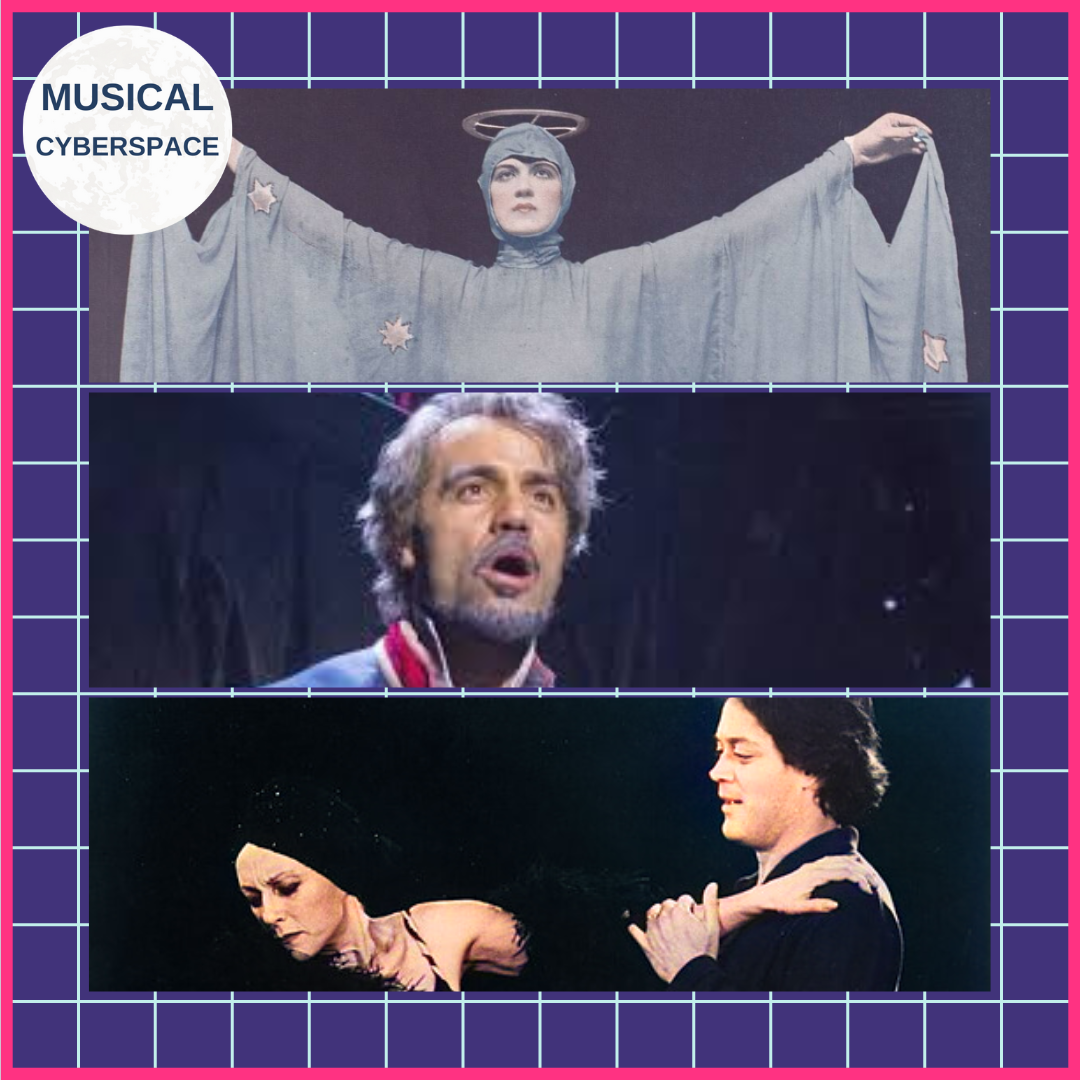
Around the musical theatre world: Liliane Gilbert in ROUND IN FIFTY, Ramin Karimloo in LES MISERABLES and Liliane Montevecchi and Raúl Juliá in NINE.
Around the musical theatre world: Liliane Gilbert in Round in Fifty, Ramin Karimloo in Les Misérables, and Liliane Montevecchi and Raúl Juliá in Nine.

Pack your bags and buckle up, fellow travellers, as we embark on a whirlwind adventure inspired by the classic novel, Around the World in Eighty Days! But wait—there’s a twist! We’re taking our cue from a musical sequel to Jules Verne’s popular tale, Round in Fifty, in which Phileas Fogg challenges his nephew, Phil, to beat his record of circumnavigating the globe. If Phil doesn’t complete his trip in fifty days, Phileas will disinherit him. With a plot as wild as the journey itself, this musical extravaganza penned by Sax Rohmer, Julian Wylie, and Lauri Wylie, with songs by Clifford Harris, Jas W. Tate and Herman Finckby, this show, which opened on this day in 1922, was a theatrical escapade like no other. Join me as I follow Phil’s quest to break records and win his inheritance, listing a favourite musical from each of the show’s locales. So, grab your passports, and let’s set sail on a globe-trotting expedition that’s sure to leave us breathless with excitement!

1. We Open in London… with Round in Fifty

Why not begin our trip by taking a closer look at the show that has inspired today’s post. Round in Fifty is a glittering testament to the vibrant energy of early 20th-century musical revues, with a kaleidoscope of scenes that whisked audiences on a global journey brimming with laughter and spectacle. Crafted as a showcase for the comedic genius of George Robey, who played Harold, Phil’s attendant opposite Alec Kellaway as the romantic lead, the production found itself adorned with an unexpected gem when American vaudeville sensation Sophie Tucker joined the cast. Across the seventeen scenes in the show, the audience was transported from France to Italy, then to China and the USA. Each locale was brought to life with exquisite sets and costumes, masterfully orchestrated by the talented Dolly Tree, whose hundreds of designs left an indelible mark on London’s theatre scene at the time. Yet, perhaps the most groundbreaking aspect of the show was its innovative use of technology, featuring filmed backdrops and film clips that dramatised aspects of the plot in a multi-modal manner often seen in productions today but which must have been breathtaking more than a century ago. Round in Fifty was ultimately embraced as a delightful romp from beginning to end, enchanting audiences for 469 performances before embarking on a triumphant tour.

2. We next play Boulogne… with Les Misérables

In the second scene of Round in Fifty, Phil has to make it through customs in Boulougne, accompanied by a drunk Harold, leading to what was by all accounts a rib-tickling comic set piece for George Robey. When considering a favourite musical with a French setting, there are several contenders for the top spot, including An American in Paris, The Phantom of the Opera, Dirty Rotten Scoundrels, Beauty and the Beast and Can-Can. There may even be someone who would go for Bad Cinderella. Indeed, there are scores of musicals with a French setting or that are set partly in France. For me, none is better than Alain Boublil and Claude-Michel Schönberg’s epic Les Misérables, with additional lyrics by Jean-Marc Natel and an English translation by Herbert Kretzmer.

Set in the 1800s, Les Misérables tells the story of Jean Valjean, a paroled convict (he stole a loaf of bread to feed his starving nephew) who seeks redemption after a bishop inspires him with a tremendous act of mercy and the means to start a new life. Javert, a police inspector with a rigid view of justice, pursues him throughout the action of the play, which sweeps everyone into the June Rebellion of 1832, during which a band of idealistic republicans tried to overturn the monarchy from a street barricade in Paris. The score features many memorable songs, including “I Dreamed a Dream,” “On My Own,” “Master of the House,” “One Day More” and “Do You Hear the People Sing?”

Les Misérables is a show which has become somewhat underrated because most people think about more recent incarnations of the show, which have become broader and more bloated as the years have gone by. In truth, Les Misérables was never more effective than in the first decade following its English-language premiere in 1985. The updated staging, while taking great advantage of technical innovations in the theatre, just isn’t as effective as the impactful original staging, which I was lucky enough to see twice as a teenager, although sadly not with the original cast. (Both of the companies I saw were outstanding though!)

It is always refreshing to go back and listen to the original cast recording with Colm Wilkinson as Jean Valjean, Roger Allam as Javert, Patti LuPone as Fantine, Susan Jane Tanner as Madame Thénardier, Alun Armstrong as Thénardier, Frances Ruffelle as Éponine, Rebecca Caine as Cosette, Michael Ball as Marius and David Burt as Enjolras. Even on record, the performances are detailed, layered with subtleties that are all too often brushed over in modern renditions. One marvels, for example, at LuPone’s vocal colouring in Fantine’s big number, “I Dreamed a Dream,” and how grounded Caine’s delightful Cosette is. As the Thénardiers, Armstrong and Tanner, are hilarious without being overly broad and menacing without being overly indicative of it. It’s true that Wilkinson would be in better voice by the time the masterful tenth anniversary concert came along, and it’s also true that there have been some incredible performances in the show from the likes of Ramin Karimloo, Lea Salonga, Ruthie Henshall, Norm Lewis and Philip Quast over the years. But everything rings true in this document of the show in its early days.

3. We then play Brindisi… with Nine

Lots of bars in Brindisi! (Apologies to Cole Porter for all these references, and the sub-headings!) The Italian sequence of Round in Fifty saw Liliane Gilbert and a procession of women parading as the world’s favourite liquers, a colourful costume parade of drinks from peach brandy to creme de menthe. There’s another show set in Italy that involved parades of women swirling through the leading man’s mind, and that is Maury Yeston and Arthur Kopit’s Nine. Other Italian-set favourites include A Funny Thing Happened on the Way to the Forum, Passion and The Light in the Piazza – but Nine seems the most apt choice for today’s purposes.

Nine sees film director Guido Contini in a crisis. At 40 year of age, his personal life is falling apart, with his wife, Luisa, threatening to leave him. Guido’s two obsessions – filmmaking and his web of romantic entaglements – have left her feeling neglected as he obsesses of the shooting of a film he has not been able to write and romps about with his mistress, Carla. Playing out at a spa in Venice, the show shifts in and out of Guido’s memories, and everything brought to life through some dazzling songs and musical sequences, including “My Husband Makes Movies,” “A Call from the Vatican,” “Folies Bergères,” “Be Italian” and “Unusual Way.”

Nine is a musical that simply envelopes you. It is the most glorious and enchanting maze. Watching or listening to Nine is a magical experience. Fans hold strong opinions about which should be the “go-to” recording of the show. The 1987 Australian Cast Recording and the 1992 London Concert Cast Recording always feature highly, but I’m partial to the two Broadway cast recording and probably play the 2003 revival recording most frequently – but comparing the different albums of Nine would take a whole “Saturday List” of its own to really look at things well.

If there is anything to regret about Nine, it is that the film, which is gorgeously designed and shot and features a simply divine cast, just doesn’t capture the ethereal beauty of this masterpiece of the stage.

Around the musical theatre world: Mary Martin in LUTE SONG, Derek Klena and Linsay Mendez in DOGFIGHT, and Isaac Powell and Shereen Pimentel in WEST SIDE STORY.
Around the musical theatre world: Mary Martin in Lute Song, Derek Klena and Linsay Mendez in Dogfight, and Isaac Powell and Shereen Pimentel in West Side Story.

4. Our next jump is Hong Kong… with Lute Song

I don’t feel spoiled for choice when selecting a favourite musical set in China. What is it to be? Aladdin? Chee-Chee? Chu Chem? Nothing feels right. As things stand, I’ll go for Lute Song. On the one hand, Lute Song is a milestone in American theatre, a well intentioned attempt to move away from an exotic, pandering or offensive depiction os China. On the other hand, it remains problematic in the way it represented China, using yellowface in the make-up design as well as a sense of generic so-called Oriental pageantry in its dramatic structure, musical approach and design.

The story of Lute Song focuses on a young student, Tsai-Yong,who leaves his wife, Tchao-Ou-Niang, to make a name for himself as a magistrate. When he succceeds and marries Nieou-Chi, her father forbids Tsai-Yong to reconnect with his family. When a famine hits his home town, Tsai-Yong’s parents die of starvation and Tchao-Ou-Niang sells her hair to pay for their funeral. Nieou-Chi intervenes and reunites Tchao-Ou-Niang with Tsai-Yong.

Lute Song lost something like $100 000 of its initial investment, but it was considered by many contemporary critics to be a succès d’estime. It appeared on lists naming the best plays of 1946 and the reviews raved about the show’s aesthetics, which today would elicit eye rolls (for example, when the show’s star, Mary Martin, is dressed in designer gowns even when the character she is playing is at her poorest) or worse (in designed where Chinese ideography used randomly to infer some kind of overall integrity in the design).

In that vein, the Chinese set piece from Round in Fifty was “The Romance of the Tea Leaves,” a tableau in which showgirls dressed in black and white costumes that made them look like ivory carvings came to life. Maybe it’s just best for us to book a ticket on a steamer and head to other musical shores.

5. Then San Francisco… with Dogfight

Round in Fifty next jumps across the Pacific Ocean for a stop in the USA. In San Francisco, everyone breaks Prohibition in a cabaret club, is then thrown into prison (where they are treated to a variety show) and ends up taking part in the harvest festivities at a local orange grove. There are quite a few musicals set in San Francisco, including classics like Flower Drum Song and to more recent shows like Mrs Doubtfire. The one I’m going highlight is Benj Pasek, Justin Paul and Peter Duchan’s Dogfight.

Dogfight tells the tale of Eddie Birdlace, an 18-year-old Marine who is being sent to Vietnam, and Rose Fenny, a shy young waitress, who go to a party together in November 1963. The kicker? Eddie has put $50 in the pot of a “dogfight” game, where the Marine who brings brings the ugliest date to the party will win all money and Rose has no idea. There’s lots of room for some great showtunes in this story, including “Nothing Short of Wonderful,” “Pretty Funny,” “First Date/Last Night” and the impactful title song.

If there’s one Off-Broadway show that should have a Broadway transfer, this is it. (Of course, there are many more, but you know – what’s a turn of phrase between friends?) Dogfight predates Pasek and Paul’s smash hit, Dear Evan Hansen, and it may be the better of the two shows. Had it transferred, we might not have seen the faceoff between Kinky Boots and Matilda at the following year’s Tony Awards and this show would perhaps have been more well-known than it is.

Nonetheless, the original cast recording preserves incredible performances from leading players Derek Klena and Lindsay Mendez, with an incredible cameo from Annaleigh Ashford, who plays Marcy, the winner of the dogfight. It’s a moving story – a difficult one to witness for sure, but its unforgettable.

6. Then New York… with West Side Story

The penultimate stop on Phil Fogg’s journey is New York. Is there any other more popular setting for musicals than the city where the genre was born? There’s A Chorus Line, On the Town, Wonderful Town, Newsies, In the Heights – even Hamilton! But the ultimate show set in New York, one that captures the city’s dynamics at a particular time in American history, has got to be West Side Story.

Set in the 1950s, West Side Story is set against the backdrop of gang rivalry between the white Jets and the Puerto Rican Sharks. Tony, a former Jet and the best friend of the gang’s leader, Riff, falls in love with Maria, who just happens to be the sister of the Sharks’ leader, Bernardo. The sophisticated score numbers several classics in its song list, including “Something’s Coming,” “America,” “Tonight,” “One Hand, One Heart,” “A Boy Like That/I Have a Love” and “Somewhere.”

Where does one even begin to start praising West Side Story? For its total concept and staging by Jerome Robbins? It’s incredible score by Leonard Bernstein and Stephen Sondheim? The cleverly transposition of Romeo and Juliet into the show’s book by Arthur Laurents? The classic original performances by Larry Kert, Carol Lawrence, Chita Rivera and the rest of that first, mind-blowing cast? Then there are the two films, the first a Hollywood classic and the second an even better movie adaptation, not to mention the revival that brilliantly incorporated Spanish translations of some of the lyrics by Lin-Manuel Miranda. Even the contoversial staging by Ivo van Hove, which ran for 24 performances before being shut down by the COVID-19 pandemic had much to offer.

All of these things are just a part of the legend that is West Side Story, which is certainly one of the greatest musical theatre shows ever created.

6. Then we open again, where? (In London… with Sweeney Todd)

The world is round and so, this being an around the world story, we must end where we began, back in London, with Phil Fogg making his triumphant return at the Gridiron Club. After New York, London must be high up on the list of the most popular settings for musicals, with just some of the shows set there including My Fair Lady, Baker Street, Mary Poppins and Oliver! But if there’s no place like London, then there’s no show like Sweeney Todd: the Demon Barber of Fleet Street.

In Stephen Sondheim and Hugh Wheeler’s 1979 show, we are asked to attend the tale of Sweeney Todd, who was sent to Australia on a trumped up charge by Judge Turpin, who wanted to seduce his wife. Formerly known as Benjamin Barker, Sweeney Todd sets up shop in Nellie Lovett’s meat pie shop and the pair soon cook up a plan to exact revenge on the judge. In the meantime, Todd will slaughter his customers and Lovett will use the bodies to make meat pies, thus destroying the evidence. A subplot involves Johanna, Sweeney Todd’s daughter, who is now the ward of Judge Turpin, and a sailor Anthony, who has fallen in love with her. Some of the show’s classic songs include “The Worst Pies in London,” “Pretty Women,” “A Little Priest” and “Not While I’m Around.”

One of the great things about Sweeney Todd is how pliable the material is. The original production offered a grand staging by Harold Prince on a set designed by Eugene Lee. But is has also been done on a very small scale in a more immersive production Harrington’s Pie Shop in London. There was even a staging by John Doyle where the actors playing their own instruments. There is so much that can be done with this musical.

That said, has anything ever surpassed that original staging, with Angela Lansbury’s indelible Nellie Lovett and Len Cariou’s tortured Sweeney Todd? I’m not sure – but I’m always open to watching a new take on this classic show.

And just like that, folks, our musical itinerary inspired by Round in Fifty comes to a close. We may need to bid adieu to the exotic locales and daring adventures we’ve encountered along the way, but the catchy tunes and thrilling plot twists we’ve encountered can be relived time and time again through proshot recordings and cast albums. So here’s to the magic of musical theatre and the joy of exploration: until our next adventure, may Round in Fifty continue to inspire you to sing and dance around the world!

Posted in The Saturday List | Tagged , , , , , , , , , , , , , , , , , , , , , , , , , , , , , , , , , , , , , , , , , , , , , , , , , , , , , , , , , , , , , , , , , , , , , , , , , , , , , , , , , , , , , , , , , , | Leave a comment

The Saturday List: The Sizzling Songsmithery of SILK STOCKINGS

The stars of SILK STOCKINGS on Broadway: Don Ameche and Hildegard Neff (top), Gretchen Wyler (middle) and Henry Lascoe (bottom, alongside Neff and Ameche).
The stars of Silk Stockings on Broadway: Don Ameche and Hildegard Neff (top), Gretchen Wyler (middle) and Henry Lascoe (bottom, alongside Neff and Ameche).

Step into a world of glamour and intrigue as we showcase some of the sizzling lyrics sung in Cole Porter’s score for Silk Stockings! Premiering at the illustrious Imperial Theatre on this day (24 February) in 1955, this Broadway gem waltzed its way into the hearts of audiences, captivating them with its blend of romance, wit, and toe-tapping melodies. Based on the beloved 1939 film Ninotchka, starring the iconic Greta Garbo and Melvyn Douglas, Silk Stockings brings to life the story of special envoy Nina Yaschenko (played by Hildegarde Neff), who is dispatched from the Soviet Union during the Cold War to rescue three bumbling commissars from the charms of Paris. Before long, she is seduced by Steven Canfield (played by Don Ameche) and the apparent virtues of capitalism. Porter’s score weaves up some luxurious musical satin and silk, despite being coupled with a storyline (shaped into a book by George S. Kaufman and Leueen MacGrath, and then Abe Burrows, who rewrote the show following its challenging tryout period) that I’ve never been able to get behind. I can’t help but grapple with the narrative of a woman who compromises her beliefs and individuality for the allure of a love affair and silk stockings. Even when I first became familiar with the show two decades ago, I didn’t buy it! Nonetheless, Porter’s lyrical gems sparkle in many moments of the show, so let’s dive into the riches of Silk Stockings!

5. “Paris Loves Lovers”

‘Only in pairs one discovers,
the urge to merge with the splurge of the spring,
Paris loves lovers, for lovers
Know that love is ev’ry thing.’

This lyric stands out because it plays around with rhyme and alliteration in the way that many of the great Cole Porter lyrics do. It’s true this is not on par with his finest work; it just doesn’t spark on the ear in the way that something like “You’re the Top” does. Maybe Porter even acknowledges this in the way it appears in the song, first sung by Steven to Ninotchka, who then throws it back in his face as a piece of cornball hokum, which it is. Perhaps there is a sly cleverness in this approach, showing that Ninotchka is not an easy sell. But wouldn’t that be even better if the lyric was top-notch and seduced us in the audience, but not her? Or would that alienate Ninotchka too much from our perspective?

4. “Paris Loves Lovers” – Again!

Capitalistic…
Characteristic…
Sensualistic…
They should be aetheistic….
Imperialistic…
I’m pessimistic…
That’s anti-communistic…
Militaristic…
You’re optimistic.
..
Bourgeois propaganda!
Unrealistic…
[Love] Is individualistic…
And not at all collectivistic…
But a low totalitarianistic thing!’

“Paris Loves Lovers” moves on to a repeat of the refrain with interjections from Ninotchka refuting each of Steven’s lines. This offers a seemingly endless series of rhymes that builds and builds, in typical Porter style, to the climax of the song. It’s so much fun and even gives us a slight break with the alternative rhyme of ‘bourgeois’ and ‘propaganda’ before bringing it all the way home. But is this a missed opportunity? Whenever I listen to the cast album, I always wish this song had served full-on “You’re Not in Love” or “An Old Fashioned Wedding” energy, just as Irving Berlin did in those two classic musical theatre songs.

3. “Too Bad”

‘Too bad – they can’t go back to Moscow
And we pity them, do.
Instead of counting chickens on each farm anywhere,
In case a party member has a chicken to spare,
You’ll see us counting chickens at the Folies Bergère!’

What’s great about this lyric is the unity that holds this section of the song together. Just a line or two earlier, Ivanov, Brankov and Bibinski, the three Soviet commissars who have been sent to Paris to bring the Russian composer Peter Ilyitch Boroff back home, have referred to the City of Love as a ‘feather-brained town.’ (There is, of course, a healthy dose of irony here as the three commissars have also been seduced by the capitalist trappings of mid-century Europe.) Then we get the fantastic triple rhyme in the triplet which is used structurally throughout the song, which juxtaposes the settings of a Soviet farm and the Folies Bergère. Also included is some wordplay, with Porter referring to the dancers at this famous cabaret music hall as ‘chickens.’ But perhaps the most impressive element of this lyric is its allusion to the idiom of ‘counting chickens before they hatch.’ Ivanov, Brankov and Bibinski are on borrowed time and another agent will soon be sent to retrieve them. This snaps into focus, at the top of the show, that there is no guarantee that they can remain there for certain, which opens up the dramatic opportunity for Ninotchka to arrive. Brilliant!

2. “Stereophonic Sound

‘If Zanuck’s latest picture were the good old-fashioned kind,
There’d be no one in front to look at Marilyn’s behind….

‘The customers don’t like to see the groom embrace the bride
Unless her lips are scarlet and her bosom’s five feet wide….

‘If Ava Gardner played Godiva riding on a mare
The people wouldn’t pay a cent to see her in the bare.
Unless she had glorious technicolor or…
Stereophonic sound.’

Sometimes rhyme can help to drive home a point. “Stereophonic Sound” is a great satire of Hollywood in the 1950s and its obsession with technological advancement as a form of marketing. It’s also a damning satire of how Hollywood viewed (and views) women, the kind of attitude where nothing a woman is or does is good enough, even if she is Marilyn Monroe or Ava Gardner. To make the grade, she also has to be exploited in the most dehumanising of ways and sexualised through technology to get the tickets sold and its Porter’s rhymes that help to highlight the idea. Truth be told, I’m not sure how intentional Porter was in this specific satirical direction, because in a further refrain, he uses Lassie as a stand-in for Monroe and Gardiner – bitchy, much? He also used Lassie as a joke to demean Fred Graham and his sex in “I Hate Men” from Kiss Me, Kate, so I’m not convinced that it’s a completely innocent reference. But, or cause, this song is a text and the meaning of a text is made through its receiver – so I’ll leave that one up to you.

1. “All of You

After watching your appeal from ev’ry angle,
There’s a big romantic deal I’ve got to wangle
For I’ve fallen for a certain luscious lass
And it’s not a passing fancy or a fancy pass.

“All of You” was the takeaway hit of Silk Stockings. Dozens of cover versions appeared following Dan Ameche’s introduction of the song in the Broadway show, with talents as diverse as Billie Holiday, Bobby Darin, Ella Fitzgerald, Frank Sinatra and Sammy Davis Jr. all releasing their own take on the material. Frankly, I’m not sure that I want to be seduced by someone who wants to take ‘complete control’ of me, a wish that is expressed in the refrain, but the wordplay in the verse makes for an incredible moment of sheer delight, especially the first time that final line lands on the ear. The wordplay of ‘passing fancy’ and ‘fancy pass’ also helps the storytelling as it helps the audience to see Steven’s growing affection for Ninotchka. “Paris Loves Lovers” was a failed attempt at a fancy pass as well as a means to an end, a passing fancy. This reversal helps to shift the story along and shows just how skilful Porter could be in moving the show forward with his songs, despite his reputation for primarily offering up songs that were simply full of wordplay and a marvel to hear.

Porter’s lyrics for Silk Stockings, even at this late stage in his career, still enable his words to charm us with their sheer sophistication. Is the show itself revivable? I’m not sure. Have we developed any nostalgia for this kind of 1950s Cold War romcom? There’s also the issue of how songs like “Without Love” with its credo, ”a woman to a man is just a woman, but a man to a woman is her life,’ stick in the throat. Perhaps, as with many of these kinds of shows, a revisal might work, if it is done with care and integrity. “Without Love” could be retooled through placement and interpretation to be a damnation of its sentiment rather than an endorsement – and after all, there are also twelve unused songs that Porter wrote for the show and an additional two tunes that were crafted for the film. It’s a job for someone who is both enterprising and smart. For now, let’s slip into the silk stockings of Porter’s genius, letting his best lyrics sweep us away with their elegant and graceful craftsmanship!

Posted in The Saturday List | Tagged , , , , , , , , , , , , , , , , , , , , , , , | 2 Comments

The Saturday List: Celebrating Conrad!

Conrad Ricamora has lit up the stage in shows like HERE LIES LOVE, THE KING AND I and LITTLE SHOP OF HORRORS.
Conrad Ricamora has lit up the stage in shows like Here Lies Love, The King and I and Little Shop of Horrors.

Grab your playbills and raise your voices in celebration because we’re shining a spotlight on Conrad Ricamora as he marks his 45th trip around the sun! Best known for his television work, Ricamora stole our hearts as the beloved Oliver Hampton in the thrilling How to Get Away with Murder. He was also great in Fire Island, a delightful gay film adaptation of Pride and Prejudice. But what we’re focusing on today is this talented star’s stage appearances in Broadway and Off-Broadway musicals. From classic tunes to contemporary hits, Ricamora’s resume offers up a medley of musical theatre treats, seamlessly blending classic shows with exciting new pieces. As a proud member of the LGBTQIA+ community, he not only lights up the stage with his charisma but also shines as a beacon of visibility and acceptance, having been presented with the Human Rights Campaign’s Visibility Award. So, join us as we explore five musicals that have showcased Ricamora’s sparkling charm and wish him the happiest of birthdays!

5. Allegiance

Allegiance marched onto the Broadway stage in 2015, but not without first cutting its teeth on the stage of San Diego’s Old Globe Theatre back in 2012 – which is when Ricamora appeared in the show. With a score by Jay Kuo and a poignant book crafted by Kuo in collaboration with Marc Acito and Lorenzo Thione, this musical shines a light on a dark chapter of American history, the Japanese American internment during World War II. Inspired by the personal journey of the indomitable George Takei, who also performed in this show alongside Lea Salonga and Telly Leung, Allegiance follows the Kimura family’s struggles as they are uprooted from their California home and moved to the Heart Mountain Relocation Centre in Wyoming. Ricamora was a swing in this early staging of Allegiance and so there isn’t really a record of his work in the show for posterity, even though his presence in the room undoubtedly contributed to the show’s impact. But it’s important to mention Allegiance here for two reasons. Firstly, it’s a testament to Ricamora’s talent and part of his journey to bigger stages and brighter lights. Even more significantly, Allegiance is a milestone in Broadway history because it is a musical created by Asian Americans with a distinctly authentic Asian-American perspective. As such, it broke new ground, paving the way for greater representation and diversity on stage. It is a remedy to shows like Anything Goes, in which Ricamora made his professional debut and was asked by the director to ‘sound more Chinese,’ an experience which Ricamora himself has identified as a low point in his career.

4. Here Lies Love

Here Lies Love isn’t just a run-of-the-mill musical – it’s a disco-infused whirlwind of politics, power, and pop, set against the backdrop of Imelda Marcos’s glamorous yet tumultuous time as first lady of the Philippines. But Here Lies Love isn’t just Evita with a killer beat and some even hotter shoes, it’s a vibrant, intelligent exploration of idolatry and its consequences. Born from the creative minds of David Byrne and Fatboy Slim, this immersive dance party extravaganza first graced Off-Broadway in 2013 before shimmying its way onto the Broadway stage a decade later. Looking back the this show’s history, there is nobody better to embody the fiery spirit of Filipino opposition leader Ninoy Aquino than the multitalented Ricamora, who not only took on the role in both productions but also dazzled audiences in a 2017 rendition in Seattle. It’s the show so nice, he did it thrice! Playing this role holds personal significance for Ricamora, as the show sparked meaningful conversations within his own family about their heritage and history, his father having come from the Philippines. This show is as infectious as it is insightful, and it is a dynamic reminder of the power of diverse storytelling in a thriving theatre culture.

3. Soft Power

In the dazzling constellation of musical cyberspace, Soft Power gleams like a comet, flashing brightly in the theatrical cosmos. Premiering in Los Angeles in 2018 ahead of a 2019 Off-Broadway run, this idiosyncratic musical is the brainchild of David Henry Hwang, who wrote the book and lyrics, and Jeanine Tesori, who wrote the music in addition to providing additional lyrics. Partly taking its inspiration from a 2015 incident where Hwang was stabbed by a stranger in New York, Soft Power is witty and wise, a satire dealing with cultural identity, appropriation and representation that leaves you spinning. This kaleidoscope of culture and comedy sees Ricamora play the role of Xuē Xíng, a Chinese film executive who approaches DHH (a fictional stand-in for Hwang himself) to make an American-style romantic musical comedy film aimed at Chinese audiences. When DHH is stabbed, he is wheeled off to surgery where he has a vision of a musical that subverts the tropes of The King and I and sees Xuē Xíng meeting and falling in love with Hillary Clinton during her presidential campaign. As Xuē Xíng, Ricamora proved to be both charming and charismatic, handling the more sympathetic moments as well as the broader comic set pieces equally well. Hwang and Tesori’s score is a gem. Whether it’s being more introspective or uproariously satirical, songs like “Dutiful,” “Fuxing Park,” “I’m With Her,” and “It Just Takes Time” all add up to a symphony of brilliance. A finalist for the 2020 Pulitzer Prize for Drama, Soft Power gives us the chance to look at both musicals and politics and challenges us to deconstruct the way we think about both of them.

2. The King and I

The King and I is one of the grand old dames of Broadway, having danced a graceful but not always flawless polka through the annals of theatre history since its debut in 1951. Penned by the iconic duo of Richard Rodgers and Oscar Hammerstein II, The King and I has seen its fair share of triumphs. Both the original production and its most recent revival won five Tony Awards and the 1956 film adaptation won five Oscars. Yet, even amidst the glittering kisses, lies the shadow of criticism. The tale of Anna Leonowens, the English schoolteacher thrust into the royal court of Siam, where cultural conflicts and forbidden romances abound, is as timeless as it is fraught with complexities. The King and I has increasingly drawn criticism for the stereotypical depictions of some of the characters, its pro-colonialist narrative and the historical, cultural and political biases and inaccuracies that are wrapped up in the original creative team’s good intentions. The most recent revival was directed by Bartlett Sher, who navigated these complexities admirably, partly by focusing on the element of The King and I that truly steals the show, which is the timeless beauty of Rodgers and Hammerstein’s score, and partly in his direction of the actors, which included Ricamora as Lun Tha opposite Ashley Park’s Tuptim. Together, the two offered a trajectory for the doomed lovers that seemed to gain an extra layer of poignancy. They offer tender renditions of “We Kiss in a Shadow” and “I Have Dreamed” that make the subsequent tragedy all the more effective.

1. Little Shop of Horrors 

Little Shop for Horrors is a classic. For the uninitiated, this isn’t your typical horticultural tale. It’s a quirky, toe-tapping romp through the perils of plant parenthood, with a killer score to boot. The show follows Seymour, who finds an innocuous-looking plant during a total eclipse of the sun – but which grows up into a manipulative, people-eating monster. Originally sprouting Off-Broadway in 1982, this musical marvel has since taken root in the hearts of theatregoers worldwide, most recently in the form of a long-running Off-Broadway revival that’s been delighting audiences in New York since 2019. And who better to step into the shoes of the lovable but luckless Seymour Krelborn than Ricamora? He was the fourth actor to take on the role in this revival, following Jonathan Groff, Gideon Glick and Jeremy Jordan. With Alan Menken’s catchy tunes and Howard Ashman’s wickedly witty lyrics, Ricamora’s portrayal of Seymour is like a perfectly pruned bonsai – nerdy yet endearing, with just the right touch of darkness rooted in the character’s initial heartache and loneliness. His performance is the kind that sends fans scrambling to their keyboards, searching for every snippet and clip they can find, and let me tell you, it’s worth the hunt. Ricamora brings his own unique flair to this iconic role, infusing it with a blend of comic charm and poignant emotion that’s simply irresistible.

And there you have it, dear theatre aficionados! As we bid adieu following this whirlwind celebration of Conrad Ricamora’s career on his 45th birthday, we’re left with a plethora of memories and melodies that have echoed across stages far and wide. Ricamora has proven time and again that he is a force to be reckoned with in the world of entertainment. As we toast this talented actor, let’s not only celebrate the roles he’s brought to life but also the impact he’s had as a cultural and social activist. May he long continue to illuminate our hearts and minds, and may his future endeavours be as bright and joyous as the songs he’s shared with us so far!

Posted in The Saturday List | Tagged , , , , , , , , , , , , , , , , , , , , , , , , , , , , , , , , , , , , , | Leave a comment

The Saturday List: Ranking Romberg’s Runners!

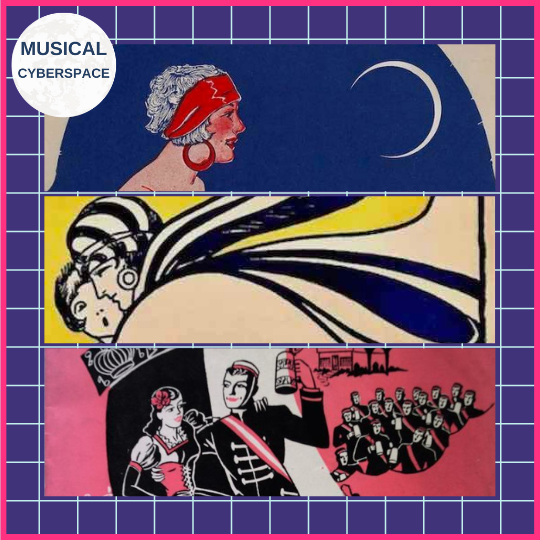
Illustrated details from promotional artwork for THE NEW MOON, THE DESERT SONG and THE STUDENT PRINCE.
Illustrated details from promotional artwork for The New Moon, The Desert Song and The Student Prince.

Step right up, music lovers, as we delve into the vibrant world of Sigmund Romberg’s timeless operettas! Today, in 1914, Broadway welcomed a musical sensation that would set the stage for Romberg’s illustrious 40-year career: The Whirl of the World. With its infectious tunes and fluffy romantic narrative, this debut marked the beginning of a musical journey that would see Romberg enchant audiences with classics like Maytime, The Desert Song, The New Moon and The Student Prince, among others. Born in Hungary but finding his true home in the heart of the American musical theatre scene, Romberg’s shows remind us of days gone by. His significant role in bringing Viennese-style operetta to American audiences and shifting the form into an American style and idiom earned him a place in musical theatre history. Join us as we embark on a melodic adventure – yes, this is your invitation to crank up those cast recordings – to rank the five longest-running musicals by Sigmund Romberg and his many collaborators. Every note is a testament to his enduring legacy. Let the overture begin!

5. Up in Central Park

Up in Central Park opened in 1945. Even back then, its strongest feature was the nostalgic ambience it created for a bygone era, something that was very much a trademark of Romberg’s most successful musicals. The show transported audiences to the Boss Tweed era of 1870s New York City. John Matthews, a reporter, is investigating Boss Tweed and the accusations of corruption that surround his role in Central Park’s construction. Things become complicated when John falls in love with the daughter of one of Boss Tweed’s ward campaigners. The plot, as set out in Herbert and Dorothy Fields’s book, feels somewhat formulaic, and the production design was the real star of the show. The visual splendour of Up in Central Park, with settings and costumes reminiscent of Currier and Ives lithographs, easily stole the spotlight from the kind of narrative that had gone out of style a decade or so earlier. Insofar as the score is concerned, Romberg’s traditional style, though straining against the evolving trends of 1940s musical theatre, shines through in romantic songs like “Close as Pages in a Book” and the poignant “April Snow.” Dorothy Fields injects contemporary wit and humour into her lyrics, particularly shining in songs like “The Fireman’s Bride” (which sounds like the kind of novelty song my grandmother used to sing to my sister and me when we were children) and “Currier and Ives.” Up in Central Park premiered in the same year as groundbreaking productions like Carousel, which from today’s perspective, makes it feel even older than it is. Old-fashioned charm only gets you so far.

4. Maytime

Maytime is a rather sweet 1917 operetta based on a 1913 German piece, Wie Einst im Mai. Broadway producers extraordinaire, the Shubert brothers, took a show that had any hopes of an international legacy dashed by World War I and had it transformed into an American-set and styled operetta that was one of the greatest hits of its time. Peggy Wood and Charles Purcell illuminated the stage as the stars of this romantic saga, which unfolds across generations, as the star-crossed lovers Ottillie and Richard navigate the obstacles of wealth, family and circumstance. Rida Johnson Young’s book and lyrics, with additional lyrics by Cyrus Wood, played out the melodramatic sequence of events to heartrending effect. While Romberg’s score initially takes its moment to find its way, it bursts to life with the catchy “It’s a Windy Day at the Battery.” Of course, the timeless classic “Will You Remember?” (also known as “Sweetheart”) remains the standout, alongside gems like “The Road to Paradise” and “Dancing Will Keep You Young.” In a savvy 2005 revision by Julie Wright and Steven Gaigle, updates like the adaptation of “Jump Jim Crow” into the more socially sensitive “Do-Si-Do” brought a refreshing touch to the production. Admittedly, Maytime may seem a tad sentimental by modern standards, but its blend of heartwarming romance and wry humour ensures its enduring appeal. It’s the kind of show that – in its revised version – could still find a welcome home in the repertoire of a light opera company.

3. The Desert Song

The Desert Song, which debuted in 1926, is a captivating blend of romance and adventure, courtesy of Sigmund Romberg’s enchanting melodies and the lyrical prowess of Otto Harbach, who wrote the libretto in collaboration with Oscar Hammerstein II and Frank Mandel. Inspired by the historical uprising of the Riffs against French colonial rule in Morocco and the legendary true-life tales of Lawrence of Arabia, the operetta transports audiences to the exotic landscapes of Saharan North Africa. Yet, while the allure of daring heroics and forbidden love still captivates audiences, the show’s romanticised portrayal of colonial politics and Moroccan culture presents challenges for contemporary productions. Nonetheless, the timeless appeal of a masked hero continues to resonate and one wonders how this show could be handled were a “revisal” to be produced. After all, one of the film adaptations had The Red Shadow, renamed El Khobar, fighting the Nazis – so why not?! Romberg’s score, featuring infectious tunes like “The Riff Song” and the haunting “The Desert Song,” has served as a gateway into the world of operetta for many, including myself. I first encountered these songs in a revue at the tender age of twenty. Still, as much as The Desert Song holds a place in the annals of theatrical history, one can’t help but question its relevance in today’s cultural landscape despite its boldly romantic tale and unforgettable melodies.

2. The Student Prince

1924’s The Student Prince heralds another triumph in the world of operetta for Romberg, with Dorothy Donnelly’s book and lyrics weaving a tale of star-crossed love versus patriotic duty. Based on Wilhelm Meyer-Förster’s play Old Heidelberg, the operetta follows Prince Karl Franz’s journey as he grapples with the weight of his royal obligations and the pull of true love. The romance between the prince and Kathie, a humble barmaid, tugs at the heartstrings, particularly as duty ultimately prevails over passion. Romberg’s score enchants with its blend of sentimentality and exuberance, featuring unforgettable tunes like “Golden Days” and “Deep in My Heart, Dear” and the spirited “Drink! Drink! Drink!” and “Come Boys, Let’s All Be Gay, Boys.” Yet, while the first act brims with tuneful charm, the subsequent acts can feel a little repetitive with the number of songs that are reprised. Even so, The Student Prince was actually a breakthrough show for me, the one that made me appreciate everything that operetta has to offer. Personally, I find the film adaptation even more captivating, with the addition of “I’ll Walk with God” taking the operetta’s emotional resonance to new heights. Nevertheless, be it on stage or screen, The Student Prince remains a marvel, captivating audiences with its timeless tale of love and sacrifice.

1. The New Moon 

The New Moon emerges as a sparkling gem in the crown of Sigmund Romberg’s repertoire, with Oscar Hammerstein II’s lyrics adding the perfect touch of romanticism and wit to this 1928 operetta. This show had a somewhat tumultuous journey to Broadway, with its tryout run in Philadelphia being a complete flop. Following many revisions, the final libretto, set against the backdrop of the French Revolution, offers up a saga that is as captivating as it is adventurous. Young French aristocrat Robert’s clandestine escape to New Orleans, his forbidden love for Marianne, and the daring mutiny aboard the New Moon all transport audiences to a world of intrigue and passion. Romberg’s score is a treasure trove of musical delights, from the yearning strains of “Softly, as in a Morning Sunrise” to the spirited melodies of “Marianne” and “The Girl on the Prow” – and let’s not forget the classic “Lover, Come Back to Me.” Hammerstein’s lyrics sparkle with romantic imagery in the ballads and playful banter in the up-tempo songs, especially in more complex set pieces like “An Interrupted Love Song” and “Funny Little Sailor Man,” infusing the production with an irresistible charm. While perhaps not achieving the status of something like The Student Prince, The New Moon has stood the test of time, finding success in revivals and adaptations on both stage and screen. The City Center Encores! revival in 2003 breathed new life into this classic, demonstrating its enduring appeal to modern audiences. For those new to operetta, the Encores! cast recording serves as a delightful introduction to the form, offering a fresh perspective that resonates with contemporary sensibilities and opening up a world of shows and scores that are part of the great legacy of musical theatre.

And with that, dear operetta enthusiasts, we draw the curtain on our delightful journey through the enchanting world of Sigmund Romberg’s timeless melodies. From the romantic allure of Maytime to the swashbuckling adventures of The Desert Song, each show we’ve explored has left an indelible mark on the annals of musical theatre history. As we bid adieu after this celebration of Romberg’s work, let us not only revel in his melodies, which have captivated audiences for generations, but also salute the creative brilliance of Romberg’s collaborators. These shows still have the power to transport us to worlds of romance, intrigue and adventure, reminding us of the enduring power of music to stir the soul.

Posted in The Saturday List | Tagged , , , , , , , , , , , , , , , , , , , , , , , , , , , , , , | Leave a comment

The Saturday List: Schoeman Smit’s Stupendous Showstoppers!

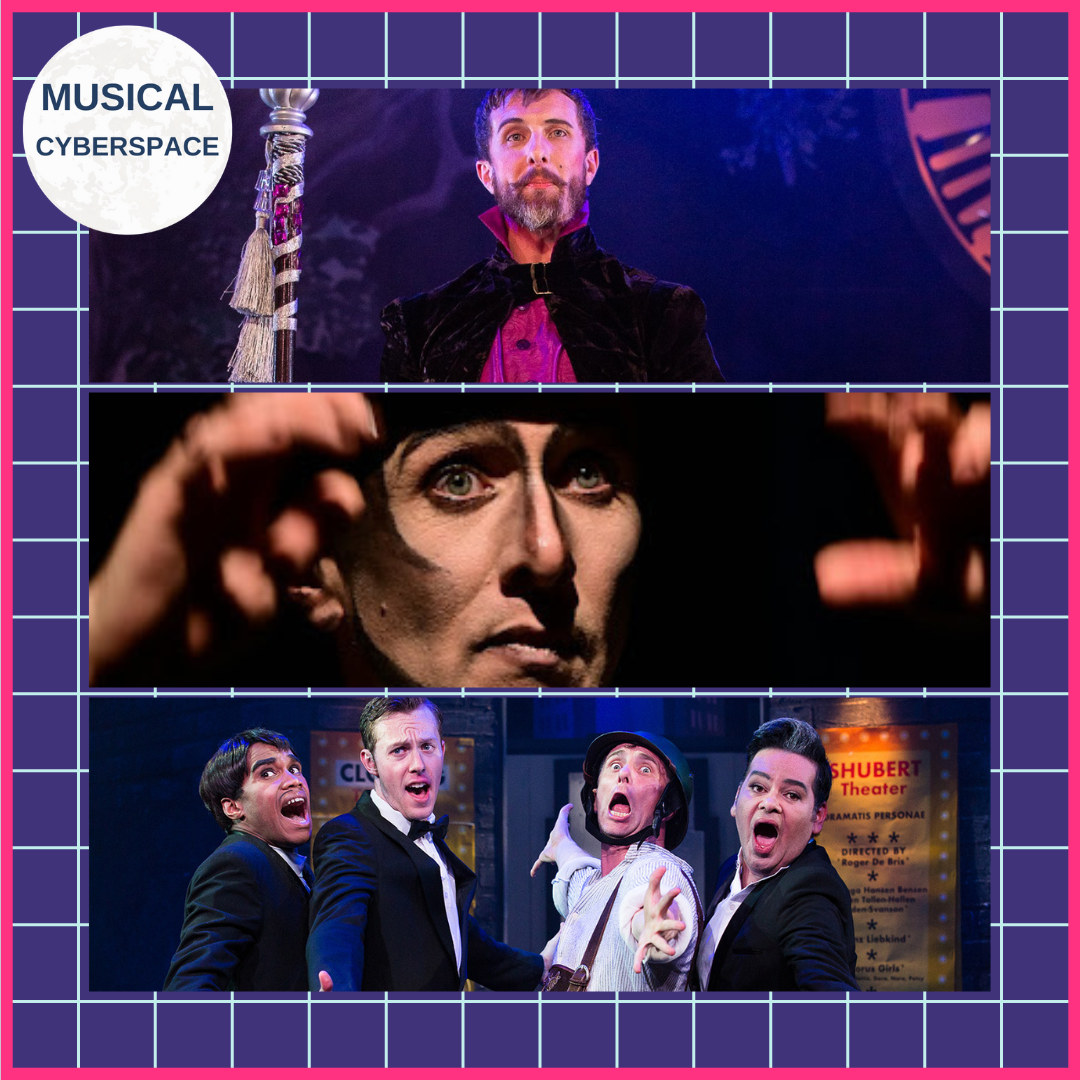
Schoeman Smit as the Steward in INTO THE WOODS, in his solo cabaret act DEVIL SONG, and as Franz Liebkind alongside Earl Gregory, Richard White and Terence Bridgett in THE PRODUCERS.
Schoeman Smit as the Steward in Into the Woods, in his solo cabaret act Devil Song, and as Franz Liebkind alongside Earl Gregory, Richard White and Terence Bridgett in The Producers.

Greetings, musical theatre aficionados! If you’re a regular at Musical Cyberspace, you’ll know that we love celebrating the brilliance of industry personalities from musical theatre stages around the world – especially when a birthday or anniversary comes along. In today’s “Saturday List,” we fete the South African musical theatre performer Schoeman Smit as he celebrates another trip around the sun! Hailing from the theatre-rich country of South Africa, Smit is more than one of this country’s premier character actors; he’s an artist who sprinkles finesse over every role he plays. Join us as we raise the curtain on his greatest triumphs, a celebration as rich and diverse as the roles he breathes life into. From the grand stages of the Artscape Opera House or the Teatro at Montecasino to the intimate corners of the Alexander Bar and Theatre or the Avalon Theatre at the Homecoming Centre, Schoeman Smit’s performances are a testament to his craft. So, warm up those vocal cords and get ready to harmonise in celebration of a South African performer who is effortlessly containing the legacy of a family steeped in the magic of the arts.

10. The Nose: A Preposterous Family Musical

With a book, music and lyrics by Kit Goldstein Grant, The Nose is a whimsical adaptation of Nikolai Gogol’s beloved tale of Kovalyov’s nose, which leaps off his face and runs riot as in St Petersburg as an officious official. Under the direction of Margot Wood for Anex Theatre Productions at the Artscape Theatre Centre’s Arena, Schoeman Smit played the role of the Doctor, a city practitioner with his roots in the provinces, and just about stole the show with his number, ““Turpentine, Lard and Soap.” Local critic Robyn Cohen said that he stopped the show in her review, adding, ‘I don’t understand why we haven’t seen more of him in high-profile mainstream productions.’ This was back in 2018, not long after Smit, who had done a fair deal of international music tours earlier in his career settled back down into a refocused theatrical career in Cape Town – so there was much more to come!

9. Camelot

One of the trends we’ll see in this column is Smit’s ability to take a couple of lines and create a memorable cameo role, much as he did in the role of Squire Dap in Camelot. Donning a jaunty French accent as he trailed after Lyle Buxton’s Lancelot, he delivered what Gisele Turner called a ‘delightfully adroit’ turn in what was a glorious show on the whole. This one was directed by Steven Stead (who doubled his duties in a memorable star-turn as Arthur) for KickstArt at the Elizabeth Sneddon Theatre in Durban. It is a pity South African audiences weren’t able to see this grand romantic classic by Alan Jay Lerner and Frederick Loewe elsewhere in the country.

8. Evita

In 2019, Smit went off to China to tour in Evita, Andrew Lloyd Webber and Tim Rice’s rock opera about Eva Peron, the infamous Argentinian hustler who dabbled in acting, political activism and philanthropy. Following a stop in Wuhan not too long before the first cases of COVID-19 were identified, the cast was able to make it home in time before everyone’s lives changed forever in 2020 – a cloud that hangs over what must have been an amazing opportunity to appear in the original Harold Prince staging of the show. Smit appeared in the ensemble of this show, also understanding the principal role of Che.

7. The Sound of Music

Smit is currently appearing in The Sound of Music and this is his latest appearance in a long line of Franzes – more of that later! This is another Steven Stead-directed piece and the Pieter Toerien Productions and Cape Town Opera co-production has been praised for its fresh take on the material, with Stead working meticulously with the cast to create characters that feel so wonderfully human in a show that is more often than not done in a very paint-by-numbers way. As the Franz, Smit pops up all over the place, opening doors and delivering drinks, often with a zesty one-liner. It’s all fun and games until it becomes clear he’s been drinking the Kool-Aid of the new regime. One wonders where drinking all of that Anschluss-champagne got him in the end – spin-off, anyone?

6. Picture Incomplete

The show so nice he did it twice! Picture Incomplete was something of a milestone for Smit, in that it also represented an early foray into producing theatre. It was also the birth of his boutique production company, Dal Segno Theatre, which was co-founded by me – see the disclaimer at the end of this column! I directed Smit the second time he did this show, which was an authorised localisation of a solo American musical by Trent Armand Kendall and Michael Polese. We’re quite proud of this show, which holds a rating of 4½ stars out of five on the Alexander Bar and Theatre’s archival site, based on reviews collected by the theatre from its patrons. One such patron, known only as Jeannine, called the show ‘a wonderful, poignant, yet amusing, look at real life.’ Truth be told, I miss hearing the songs from the score of this show!

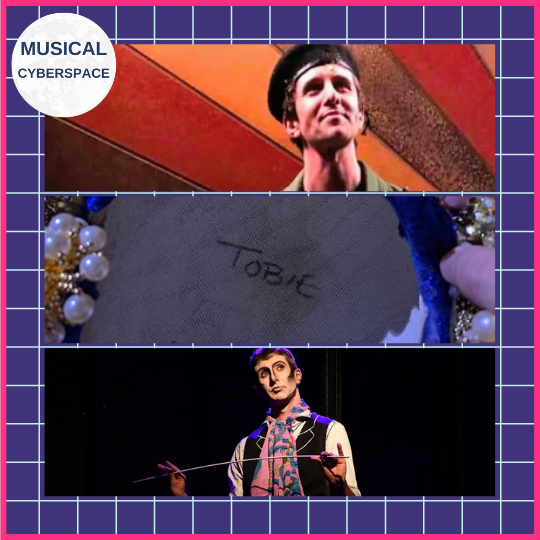
More from Schoeman Smit: a cover call for Che in Evita, a moving tribute to Tobie Cronje, and a “louder and funnier” Wodehouse extract from Devil Song.

5. Sweeney Todd: The Demon Barber of Fleet Street

Fans of this show will know that late in Act II, one of the characters is locked away in Fogg’s Asylum, which leads to a daring rescue mission through the dank corridors of this dark precursor of our modern psychiatric hospitals. Even today, people remember Smit’s arm-swinging lunatic - a great moment in a show that was full of great moments just like it. Under the direction of Steven Stead, this was a reminder that serious musical theatre performed by a virtuoso cast (led here by Jonathan Roxmouth and Charon Williams-Ros) can draw an audience in South Africa – may we see many more like it!

4. The Producers 

Like most middle children, Smit’s second Franz got our attention. The Producers, which was produced by Pieter Toerien Productions, tragically had to shut down in the middle of the first leg of its tour due to the outbreak of the COVID-19 pandemic. But before that fateful day, Smit stormed the stage as Franz Liebkind of “Old Bavaria”, expert “Guten Tag Hop-Clop” dancer and dramatist épouvantable. In Weekend Special, Karen Rutter said that Smit was fervently hilarious in what she predicated to the the ‘best musical of the year,’ even though it was only February. Her prediction came true, as it turned out, but not for the reasons she thought. While it certainly would have been ‘an extremely hard act to beat,’ it was the devastation heaped on the world by the pandemic that made this vision come to pass.

3. Rock of Ages 

Rock of Ages gifted Smit with his OG Franz, for which he earned the first of his two Naledi Theatre Award nominations. (The second was for a dramatic role in Love! Valor! Compassion!) This jukebox musical was directed by Elizma Badenhorst for VR Theatrical and starred a host of South African performers, like Craig Urbani, Claire Taylor, Zak Hendricks and Natasha van der Merwe, and each giving stand-out performances in their respective roles, as was highlighted by Masego Panyane in her IOL review of the show. Neels Clasen and Smit played stuck-up father-and-son development team and it was a delight when Smit broke loose in a zebra-stiped mankini to sing “Hit Me With Your Best Shot.”

2. Devil Song: a Cabaret of Villainous Proportions

Last year, Smit produced Devil Song under his Dal Segno banner, a cabaret inspired by the seven deadly sins and which included material written for Audra McDonald to perform at Carnegie Hall’s Zankel Hall. Included here was the moving “I Eat” by Stephen Flaherty and Lynn Ahrens and Jeff Blumenkrantz’s hilarious “My Book,” both of which Smit went on to perform at Cape Town’s monthly Musical Mondays concerts at The Outlore. He also performed extracts from South African and world literature, from Chaucer and Shakespeare to Stoker and Wodehouse. Writing for Theatre Scene Cape Town, Barbara Loots wrote that ‘his delivery of Shakespeare’s “To be or not to be” monologue from Hamlet in Afrikaans is an emotional power-punch: he makes you invest in the character more in but a few minutes, than some actors manage to achieve throughout a whole performance of the play’ and that overall, ‘he impressively flexes his theatrical muscles.’ I directed this piece and we had hoped, along with pianist Ian Bothma and the design team of Widaad Albertus, Tara Notcutt and Melissa George, to create a literate, atmospheric and thought-provoking cabaret. I believe we did – and I say that with no immodesty.

1. Sinbad the Sailor

Once again under the direction of Steven Stead, Smit showed another thread of his vast range of skills when he played the pantomime dame, Donna Kebab, in this 2023 romp through the legendary tales of Sinbad, the legend of the seven seas. Playing the mother of the leading man, Smit reminded audiences that her “Milkshake” brought all the boys to the yard and damn right, it was a great deal of fun. In his review of the show, Bruce Denill cited ‘Smit’s strong physical comedy skills’ as one of the factors that made his appearances in the show ‘consistently comical.’ Gotta love an alliterative moment! More poignantly, Smit posted this message on his Instagram account in the final week of the show’s performances:

So in my final week as Dame Donna Kebab in SINBAD THE SAILOR, there is one final person I want to mention. My finale headdress was made for Tobie Cronjé for a production at the State Theatre many moons ago.It was a nice to know that the I had something with me for every show that was made for THE MOTHERSHIP DAME. THE DAME OF ALL DAMES!!! I loved Donna and I hoped you loved her a little toooo.

Schoeman Smit, Instagram

What a link to the great legacy of South African theatre!

In the grand finale of this birthday celebration, we’ve unwrapped just a few layers of Schoeman Smit’s career. In addition to performing, he is also a much-loved vocal coach, with a particular speciality in vocal rehabilitation, and has recently mentored a host of up-and-coming theatre practitioners as a part of the Creative Careers Acceleration Programme. As the curtain falls on this showcase of his career highlights, let’s cheerfully hum the tunes from these great shows as we head out into the weekend. Bravissimo, Schoeman! May your future roles be as enchanting as the ones we’ve celebrated today.

Disclaimer: I can never claim objectivity about Schoeman Smit’s work on stage because of our personal relationship off of the stage – we’re married! – and that’s not even getting into the fact that I’ve directed him in two productions. That’s why I’ve pulled so many quotes about his work from other sources, rather than offering any kind of critical comment of my own. I hope you’ll read this week’s column in the spirit it was intended, a celebration of Schoeman’s work and by extension, of the work of all of the people he has worked alongside in the South African theatre industry. Happy birthday, husband!

Posted in The Saturday List | Tagged , , , , , , , , , , , , , , , , , , , , , , , , , , , , , , , , , , , , , , , , , , , , , , , , , , , , , , , , , , , , , , , , , , , , , | Leave a comment

The Saturday List: Seven Enchanting SOUND OF MUSIC Moments

Scenes from the 2023-24 South African Production of THE SOUND OF MUSIC, featuring Janelle Visagie as the Mother Abbess, Brittany Smith as Maria Rainer and Craig Urbani as Captain von Trapp. Photo credit: Nardus Engelbrecht.
Scenes from the 2023-24 South African Production of The Sound of Music, featuring Janelle Visagie as the Mother Abbess, Brittany Smith as Maria Rainer and Craig Urbani as Captain von Trapp. Photo credit: Nardus Engelbrecht.

With Pieter Toerien Productions and Cape Town Opera presenting a South African revival of  The Sound of Music and that revival having its first performances today in Johannesburg, where it will run for the next month or so following its debut season in Cape Town, I thought it might be more than just a little fabulous to take a look at some of the enchanting musical theatre moments in this classic Broadway musical. With a book by Howard Lindsay and Russel Crouse and a score by Richard Rodgers and Oscar Hammerstein II, The Sound of Music first opened on Broadway in 1959, after which it was adapted into a smash hit film in 1965. Among the many productions around the world since the show’s first bow are South Africa’s two or more major productions of the show in each of the past six decades – has there ever been a perennial favourite as beloved as this musical? (For the real trivia buffs, there was even a South African burlesque of the musical titled Almost the Sound of Music, which was written by Charl-Johan Lingenfelder in the 1990s!)

Attempting to narrow down the songs and scenes that make this musical a timeless treasure is like choosing a favourite von Trapp child – an impossible task, to say the least. How can one leave out Maria’s sassy return of Captain Von Trapp’s whistle in their first scene together, Liesl and Rolf’s first kiss in “Sixteen Going on Seventeen,” or the appearances of the Von Trapp villa’s salty household staff? And let’s not forget Maria’s divine shade when she promises to pray for the Baroness in response to the latter’s delight upon hearing that the former is to become a nun. These are just the warm-up notes in our “Do-Re-Mi” of heartwarming scenes. So, get dolled up in your best curtain dress and let’s work our way through some musical gems, each deserving a standing ovation of their own.

7. “How Do You Solve a Problem Like Maria?”

There’s a meme out there in cyberspace that is all about the irony of how the nuns in The Sound of Music complain about Maria singing in the abbey while they are singing in the abbey. It’s funny, I suppose, in the way that makes you roll your eyes, because what it actually shows is a lack of understanding of how musicals work. Sometimes, the characters in musicals sing diegetic songs, songs that exist in the world of the musical as songs. The Sound of Music, has plenty of songs like this, including “My Favourite Things” and “The Lonely Goatherd” – but “How Do You Solve a Problem Like Maria?” isn’t one of them. The real irony here, I guess, is that even though the actors are singing this song, the nuns are not. The nuns are dialoguing through song in the heightened fashion of almost all musical theatre pieces. OK – school’s out; so why does this song make the list? The meme I mentioned helps to showcase just how well Rodgers and Hammerstein knew their craft, and how they were able to manipulate musical theatre conventions to make theatrical magic. In the title song, for example, Maria switches from her thoughts to diegetic singing mid-song without missing a beat. What masterful artists these two men were!

6. Gaudeamus Domino

One thing that everyone expects from this is glorious music – rightly so given the title! – and there is nothing more glorious in this score than “Gaudeamus Domino.” This triumphant vocal composition forms a part of the second-act wedding sequence. If you’ve only seen the movie, this is one part of the score that will be new to you on stage, as it was cut from the film. In the stage show, it’s a gorgeous contrast (along with the joyful “Confitemini Domino”) to the other canticles in the score, such as the “Preludium,” which represent the structure and discipline of life at Nonnberg Abbey. Here we see the nuns cut loose, so to speak, and what a joyful noise they make.

5. “Do-Re-Mi”

This song is iconic in both its stage and film iterations. On stage, it appears a little earlier in the proceedings and takes place in a formal sitting room of the Von Trapp family’s villa. Everything is neat as a pin and we’ve just seen the Captain corral his offspring like a delinquent crew of sailors. Once he is gone, under Maria’s tutelage, they tentatively relax as they learn to sing. The song builds and builds until, in the libretto, a stage direction reads, ‘led by Maria, all march around the room’ and if everyone’s done their job, the audience erupts in joyful applause. The children are still marching, but they’ve broken free of the oppressiveness of their silent steps, giving way to – you guessed it – the sound of music. Maria has completed her first act of the family’s transformation. Note: No tribute to “Do-Re-Mi” would be complete without an honourable mention of the flute and clarinet obbligato as Maria launches into “When you know the notes to sing….” Kudos to orchestrator Robert Russell Bennet for this legendary instrumental flourish!

More scenes from the 2023-24 South African Production of THE SOUND OF MUSIC, featuring Brittany Smith as Maria Rainer, Nadia Beukes as Elsa Schraeder and Craig Urbani as Captain von Trapp. Photo credit: Nardus Engelbrecht.
More scenes from the 2023-24 South African Production of The Sound of Music, featuring Brittany Smith as Maria Rainer, Nadia Beukes as Elsa Schraeder and Craig Urbani as Captain von Trapp. Photo credit: Nardus Engelbrecht.

4. Maria’s Defence of the Children

Lindsay and Crouse’s book for The Sound of Music has always come under fire for its sentimentality and let’s face it, that’s not an unwarranted opinion. Ernest Lehman’s screenplay for the film improved things considerably from top to bottom. That said, one extract from the book stands out – Maria’s monologue when she advocates for the children just after Georg’s return to the villa with Elsa and Max in tow. In her dressing down of her steely employer, she names each child and lets him know just how he is letting down each of them. This speech shows just how strong Maria is when she finds her purpose. She’s climbing that mountain long before the Mother Abess makes her realise what she’s doing and what she deserves.

3. The “Laendler

Brigitta saw it, and so did we. At the glamorous party that Captain Von Trapp hosts to introduce his all-but-fiancé Elsa to his friends, his dance with Maria is a hot-blooded and scandalous breeze in the austere and pristine Austrian air. This song is more than just a cute ländler lesson: it’s a cunning loophole used by the writers to ramp up Georg’s feelings for Maria in a very public setting. While Elsa just misses out on a front-row seat to their sizzling steps, when she finds a blushing Maria being interrogated by Brigitta, she just can’t handle the heat. She knows that there’s more to it than Maria not being ‘very used to dancing’ and that she, Georg and Maria may be waltzing on the edge of a scandal.

2. “Edelweiss”

In case it wasn’t moving to know enough that “Edelweiss” was the last complete lyric written by Oscar Hammerstein before his death only nine months after The Sound of Music opened on Broadway, its placement in the show another remarkable dramatic event. While performing the song at the Kaltzberg Concert Hall, Georg has an emotional breakdown and is unable to continue singing. Only three words of the song are missed, but it feels like an eternity before Maria and the children rally, picking up where he left off and finally enabling him to join them in song once again. That pause feels like an eternity because that’s how big such a heartbreak is for a man who was so devastated by the death of his first wife that he almost gave up music and song forever. Here, thanks to his family, he finds a way through.

1. “The Sound of Music” 

One of the most meaningful moments of The Sound of Music comes halfway through the first act of the show when the title song is sung by the children to welcome Elsa to their home. The Captain overhears them and for him, it cuts close to the bone. This is, after all, what he has blocked out since the death of a woman he loved very dearly. But the power of music fills his heart and he can sing once more, joining in for the song’s final chorus. The children are amazed and as they all embrace, we all begin to weep. We know what that embrace means and we know the cost of the journey it has taken to enact it. This is the most truthful reflection in the show of what it means to be human.

Dearest readers, our journey through the gardens, mountains and ballrooms of The Sound of Music has allowed us to share seven of the most perfect moments from this classic musical. As we bid ‘so long and farewell to one another, let’s hope it is not too long until the next time the hills are alive with melodies that linger in our hearts like ‘a lark who is learning to pray!’

The creative team of the new South African production of The Sound of Music is headed by director Steven Stead, musical director Kevin Kraak and choreographer Duane Alexander. Brittany Smith stars as Maria Rainer, with Craig Urbani as Captain Georg von Trapp and Janelle Visagie as the Mother Abbess. The cast is rounded out by Nadia Beukes as Elsa Schraeder, William Berger as Max Detweiler, Ashley Scott as Liesl, Ché-Jean Jupp as Rolf, Schoeman Smit as Franz, Megan Spencer as Frau Schmidt, Alida Scheepers as Sister Magaretta, Danielle Speckman as Sister Berthe, Lusibalwethu Sesanti as Sister Sophia and Dean de Klerk as Herr Zeller, with Leah Mari as the Maria Alternate. The ensemble features Cindy-Anne Abrahams, Michiel Bester, Léa Blerk, Dineo Bokala, Mona Botha, Brandon Jones, Pumza Mxinwa, Linda Neleza, Asisipho Petu, Kirsten Pienaar, Tjaart van der Walt, Gerard van Rooyen, Van Wyk Venter and Lara Visagie. A host of 18 children played the roles of the Von Trapp children in Cape Town, with an additional 18 young performers taking over for the Johannesburg run. Bookings are through Webtickets.

Posted in The Saturday List | Tagged , , , , , , , , , , , , , , , , , , , , , , , , , , , , , , , | 2 Comments

The Saturday List: Lloyd Webber – Act II

The first three Andrew Lloyd Webber musicals of the new century: THE BEAUTIFUL GAME (revised as THE BOYS IN THE PHOTOGRAPH, with the South African cast pictured here), THE WOMAN IN WHITE (with Maria Friedman and Michael Ball) and LOVE NEVER DIES (with Ramin Karimloo and Sierra Boggess).
The first three Andrew Lloyd Webber musicals of the new century: The Beautiful Game (revised as The Boys in the Photograph, with the South African cast pictured here), The Woman in White (with Maria Friedman and Michael Ball) and Love Never Dies (with Ramin Karimloo and Sierra Boggess).

Hold onto your top hats and chandeliers, musical theatre enthusiasts, because we’re about to embark on a musical journey through the second act of Andrew Lloyd Webber’s illustrious career. This column coincides with the anniversary of the 2019 closing of School of Rock on Broadway and is a “readers’ choice” piece, with the topic having been selected by our followers on Instagram.

As one of musical theatre’s most enigmatic composers, Lord Lloyd Webber has led us through the mystical realms of the Phantom’s opera house, the feline-filled alleys of Cats, and the emotional politics in Evita. How do the shows he has created since the turn of the century measure up to these? Lloyd Webber’s juggling of what he hopes to be commercially savvy choices with artistically daring endeavours offer his audiences a rollercoaster of creative ambition and exploration. So, buckle up as we speed up, down and around a track of musicals that include Love Never Dies, Stephen Ward and Bad Cinderella, each of which provides the theatrically charged moments that define this chapter of Lloyd Webber’s career. Perhaps we may bring to life the ghosts of the past quarter century with a little illumination, dear readers? Let the overture begin!

7. (Bad) Cinderella

Bad Cinderella, as this show was titled on Broadway following its 2021 West End debut as just plain Cinderella, is a muddled concoction of ideas. It stumbles through its attempt to modernise the classic Cinderella tale into a feminist fable about the perils of image and beauty and Emerald Fennell’s book struggles to style the scattered ideas swirling within the production into any kind of sensible aesthetic. The show feels like it is desperately seeking a fairy godmother who can help transform the ideas it grapples with into a cohesive narrative. Despite Lloyd Webber’s efforts to inject some musical flair into the proceedings, including a title song that has a clever nod to Rodgers and Hammerstein’s “In My Own Little Corner” from their beloved version of Cinderella and a series of lovely melodies and instrumental items, the show remains a haphazard mess. David Zippel’s lyrics, although somewhat sophisticated and carefully crafted, lack substance, meandering through a series of ideas without ever coming to a meaningful point. His work on the ballads overloads Cinderella herself with self-pity, which dilutes the character’s spirit and distances her from the audience to no good end. While some of the ideas in Bad Cinderella have potential, the show flounders in its attempt to mimic the post-modern approach of contemporary musicals like Six, lacking the clarity of intent and approach that makes, say, that particular show shine. The rush to capitalise on a trend and to get some life into the theatre following the COVID-19 pandemic leaves Bad Cinderella feeling unfinished, a hastily assembled jumble of disjointed concepts. In the end, this poorly written and campy musical fails to rise above its rushed inception, resulting in an unsatisfying experience that leaves one wondering what could have been if more time and care were dedicated to refining its own take on an already overly adapted fairy tale.

6. Stephen Ward

In the diverse output of Lloyd Webber’s post-2000 musicals, Stephen Ward delivers something that echoes the maestro’s venture into the world of Aspects of Love, where the politics of sex entangle with the sex of politics. This dark, sexy and tragic tale delves into the scandalous 1963 Profumo affair, revolving around the eponymous English osteopath and artist. The canvas for social satire and commentary is vast in a show like this. Christopher Hampton and Don Black’s book and lyrics make the proceedings feel like a play (with a proclivity for slipping into cliche, even though it is fairly historically accurate) that is set to music rather than a traditional musical. Everything has a rather literary feel to it and never quite jumps off of the page. Running for a short stint from late 2013 to March 2014 and opening to mixed reviews, Stephen Ward never quite captured the public’s imagination. While Lloyd Webber offers a romantic score with some delightful period accents and is quite adept at sustaining tension and getting the show to simmer with intrigue, it falls short of erupting into the kind of show that could be a smash. Nevertheless, Stephen Ward boasts some enjoyable moments, with high points in the score like the tender “This Side Of The Sky,” the catchy “1963,” and the camp “You’ve Never Had It So Good.” The bid for a hit single in “I’m Hopeless When It Comes To You” got lost in the show’s brief run, rendering both it and the show somewhat forgotten today. In the grand tapestry of Lloyd Webber’s later works, Stephen Ward aims to be a fascinating exploration of scandal and society but teeters on the brink of success without quite achieving it.

5. The Beautiful Game / The Boys in the Photograph

The Beautiful Game, Lloyd Webber’s 2000 musical was rewritten into a later incarnation as The Boys in the Photograph. Despite productions around the world in Canada, South Africa and Australia, the show was not a huge hit in its original West End production and has never played Broadway. In the final analysis, it seems destined to be sandwiched in the middle of Lloyd Webber’s repertoire from this century. The overarching narrative demonstrates some noble intentions on the creators’ part. Set against the sensitive backdrop of The Troubles in Northern Ireland, The Beautiful Game uses the device of a teenage soccer team to delve into the profound impact of sectarian conflict on young people. Protagonist John’s transformation from political ambivalence to activism, which develops in tandem with an “enemies to lovers” narrative, adds depth to the production. Possibly the weakest link in the show is Ben Elton’s lyrics. While ambitious in their attempt at creating a realistic vernacular style, they lack the finesse and precision expected in musical theatre, hitting a low point in “The First Time.” Nonetheless, the musical boasts some highlights with standout moments like “Our Kind of Love” (the best incarnation of this song, which found a final version as “Love Never Dies,” having always been intended as a melody for a sequel to The Phantom of the Opera) and the striking “If This is What We’re Fighting For.” In fact, there is some really interesting compositional work from Lloyd Webber in this score and revisiting the cast recording for this column was actually quite enjoyable. Despite its hitting the post rather than scoring a goal, The Beautiful Game is noteworthy for continuing the tradition of addressing serious issues within the realm of musical theatre and for showcasing Lloyd Webber’s ability to craft a highly listenable score even when his work is paired with less-than-perfect lyrics.

Three further Andrew Lloyd Webber musicals from this century: STEPHEN WARD (with Alexander Hanson and Charlotte Blackledge pictured here), CINDERELLA (with Victoria Hamilton Barritt and Carrie Hope Fletcher) and SCHOOL OF ROCK (with Justin Collette and the children's cast from the Broadway show).
Three further Andrew Lloyd Webber musicals from this century: Stephen Ward (with Alexander Hanson and Charlotte Blackledge pictured here), Cinderella (with Victoria Hamilton Barritt and Carrie Hope Fletcher) and School of Rock (with Justin Collette and the children’s cast from the Broadway show).

4. Love Never Dies

Love Never Dies, the much-debated sequel to Lloyd Webber’s iconic 1986 hit The Phantom of the Opera, has been a frequent subject of analysis (at least on this site) and revision by its creators. Transporting us back into the Phantom’s lair, now situated at Coney Island rather than in the Palais Garnier, the show reshuffles the narrative roles of the original characters into a new story, with Christine, Raoul, Mme Giry and Meg all along for the ride. While it received its fair share of poor reviews, Love Never Dies is undeniably fascinating, presenting a new twist on the familiar Phantom tale. The score features some standout moments like the incredible “‘Til I Hear You Sing,” which blows the much-touted and repurposed “Love Never Dies,” which had been linked with this piece as early as Lloyd Webber’s 50th birthday celebration at the Royal Albert Hall, out of the water. The show’s ability to realise its potential has been hampered by cosmetic changes rather than a deep restructuring of its narrative intricacies. For Love Never Dies to be the best it can be, Lloyd Webber, along with the rest of the writing team of Ben Elton, Frederick Forsyth and Glenn Slater, would need to meticulously refine the storytelling traditions at play, namely melodrama, operetta, and the conventions of sequels. Slater, particularly in the lyrics department, would need to elevate some of his contributions. Only through this kind of process could Love Never Dies achieve the grandeur it inherently harbours. As it is, it is a complex and imperfect gem, yearning for the right touch to unlock its true potential.

3. School of Rock

I can feel the shockwaves of dissent that may ripple through the ranks when, dear readers, you see that School of Rock did not seize the top spot on this list. This joy-fuelled musical, based on a film that everyone adores, rocked Broadway for an impressive 1 309 performances and spent a little more than three years in the West End, also earning international acclaim in productions around the world. It’s undeniably fun and a textbook example of transforming a film into a well-crafted musical. Perhaps the secret to its success lies in Julian Fellowes’s adept hand in crafting the show’s book, ensuring an excellent coherence of all the show’s different elements. Even Glenn Slater, often a wild card when it comes to delivering quality musical theatre lyrics, rises to the occasion with a job that doesn’t strain his talents. The tuneful score from Lloyd Webber, complete with earworms aplenty, adds to the musical’s undeniable charm. It’s a testament to the power of great theatre, designed for a night of pure enjoyment. Yet, with the dust settled, one can’t help but wonder if School of Rock has really etched itself into the annals of timeless masterpieces. It sits at the crossroads of entertainment and greatness, leaving one to ponder whether this high-energy, crowd-pleasing spectacle is a fleeting sensation or a lasting force in the musical theatre pantheon.

2. The Woman in White

The Woman in White is a musical that some critics would have you believe is better left in the shadows, but there’s more than meets the eye to this atmospheric musical theatre creation. Picture Andrew Lloyd Webber donning the musical mantle of Benjamin Britten and weaving a mysterious tale that lingers in the air like a haunting melody and you’ll find The Woman in White has much to offer. The story kicks off when Walter Hartright sees a strange woman dressed entirely in white on his way to meet his new students, Marian Halcombe and Laura Fairlie, at their home, Limmeridge House. The mystery of the woman in white’s identity unravels from there. Thanks to Charlotte Jones’s swift-moving book, The Woman in White sustains the tension that Lloyd Webber’s score masterfully constructs. Indeed, the show thrives in its musicality, providing an enduring allure that draws one back despite David Zippel’s faltering lyrics. Despite those missteps, memorable tunes emerge, including the haunting “Evermore Without You,” the touching “I Believe My Heart,” and the mischievous “You Can Get Away With Anything.” Inevitably, the spotlight shines on the actor portraying Marian, whether it be Laura Michelle Kelly at the Sydmonton Workshop, almost incomparable Maria Friedman in both the West End and Broadway productions, and even her formidable West End replacement, Ruthie Henshall. The Woman in White is a journey, an immersive experience where story and score entwine, beckoning the imagination to ponder how much more captivating it could be in an immersive production. Sure, it’s no Sweeney Todd – but then again, what is?

1. The Wizard of Oz 

In The Wizard of Oz, Lloyd Webber gracefully steps into the realm of a timeless classic, the tale of Dorothy Gale, who discovers the meaning of home when she is magically transported from Kansas to the magical land of Oz. With this production, Lloyd Webber added two incomparable co-creators to his colleagues, E.Y. “Yip” Harburg and Harold Arlen. Both had, of course, been resting in peace for some time when this 2011 adaptation of the 1939 film came along. This project also offered Lloyd Webber a chance to reunite with possibly the best of his living collaborators, Tim Rice. Did The Wizard of Oz genuinely require new songs such as “Nobody Understands Me,” “The Wonders of the World,” “Already Home” or “Red Shoes Blues?” Probably not, but “Already Home” provides a sweet serenade to the meaning that Dorothy finds on her journey (though it’s no match for “Home” from The Wiz), and “Red Shoes Blues” has found its niche, perhaps owing to Hannah Waddingham’s spirited rendition of the song. All things told, there’s an air of hubris in Lloyd Webber’s decision to make his own mark on The Wizard of Oz, but in doing so, he created the standout among his post-2000 creations. Regardless of the new additions, who can resist the allure of Oz? The core material, already the best of all modern fairy tales, is a mesmerising yarn, with classic songs paving a yellow brick road straight to your heart.

And there you have it, fellow theatre enthusiasts! Our grand tour of Andrew Lloyd Webber’s post-2000 shows is done. Ambitious highs and lows, experimental twists and artistic audacity live alongside his commercial prowess in the haunting melodies of The Woman in White, the rebellious spirit of School of Rock, and the musical athleticism of The Beautiful Game — all a part of Lloyd Webber’s enduring legacy. As the final curtain descends on this grand retrospective of Lloyd Webber’s later works, one might consider whether they measure up to his work from the 1970s through the 1990s. Ultimately, that’s a no: there’s nothing as good as Jesus Christ Superstar, Evita, The Phantom of the Opera or even Cats. But while Lloyd Webber’s newer shows may not have reached the iconic status of their predecessors, they carry the torch of a composer unwilling to rest on his laurels. So, whether you’re singing along to Love Never Dies or pondering the provocative tale of Stephen Ward, remember that each show represents a lingering echo of Lloyd Webber’s continued love affair with the enchanting world of musical theatre. Bravo, Lord Lloyd Webber, bravo!

Posted in Broadway, The Saturday List | Tagged , , , , , , , , , , , , , , , , , , , , , , , , , , , , , , , , , , , , , , , , , , , , | Leave a comment

The Saturday List: A Little Gwen Verdon, A Lotta Talent

Just three of Gwen Verdon's great performances: REDHEAD (with Richard Kiley); DAMN YANKEES; and CHICAGO (with CHITA RIVERA).
Just three of Gwen Verdon’s great performances: Redhead (with Richard Kiley), Damn Yankees; and Chicago (with Chita Rivera).

Grab your jazz shoes and get ready to dance into the unparalleled brilliance of Broadway’s own dynamo, Gwen Verdon! Born on 13 January 1925, this legendary force of nature graced musical theatre audiences with her magnetic presence and unparalleled talent. With a theatrical career that spanned decades, Verdon left an indelible mark on the Broadway stage in eight spectacular productions — including one musical revue and a play. But book musicals are where Verdon truly shone, and she earned a jaw-dropping six Tony Award nominations and an astounding four wins for her half-dozen performances in musicals on the Main Stem. This celebratory column commemorates the anniversary of Verdon’s birth by ranking the six shows that secured her place as a Broadway luminary. So, buckle up for a journey through the dazzling world of Gwen Verdon, where every step is a testament to her enduring legacy as a true queen of the stage.

6. New Girl in Town

New Girl in Town offers a fascinating but flawed adaptation of Eugene O’Neill’s classic play, Anna Christie. Bob Merrill’s score feels like a tentative attempt to bridge the gap between a Rodgers and Hammerstein-style musical play and a high-minded musical comedy. The result is a disjointed show – as if Merrill and book writer George Abbott were hesitant to fully commit to the darkly dramatic tone of the Pulitzer Prize-winning source material. One struggles to find the dramatic thrust of the plot and characters in the songs, which is one of the trademarks of any good musical, even though on paper the score works in tandem with the book to create the throughline of the piece. Despite these challenges, charming songs like “Flings,” emotional ballads like “It’s Good to Be Alive,” and the dreamy “Look at ‘Er” encapsulate the spirit and sense of humour of the 1950s. Each reminds us of the era’s distinct musical flavour in musical theatre terms and the way that darker and more taboo topics were cushioned at the time. In some ways, songs like “At the Farm” and “Sunshine Girl” almost feel Brechtian in their approach, but they lack the twist of the knife that makes the best Brechtian commentary so memorable. When considering the show today, it’s evident that an adaptation of Anna Christie would be approached very differently just a decade later – let alone in the twenty-first century! Nevertheless, Verdon’s exceptional performance is the saving grace of the show. Her ability to pull together everything and it all work is a testament to her talent. Alongside the capable support of Thelma Ritter, with whom she shared the Tony Award for Best Performance by a Leading Actress in a Musical, Verdon’s prowess shines through in this less successfully realised, yet still noteworthy, musical endeavour.

5. Redhead

Redhead is a Tony Award-winning show that claimed the top spot for Best Musical at the Tony Awards – but it’s essentially a show that is unrevivable in its original form. Redhead has never graced Broadway with a revival, a film adaptation or a stint on the West End and that is largely due to the unparalleled synergy between Gwen Verdon and Bob Fosse, whose work onstage and behind the scenes managed to overshadow the show’s inherent flaws. Dorothy Fields, Herbert Fields, Sidney Sheldon and David Shaw’s book, a murder mystery set in a waxworks museum in Victorian England, is convoluted in its plotting, and the score is overly reliant on novelty numbers, ultimately providing little more than a canvas for Verdon’s star turn and Fosse’s innovative staging ideas. The overture summarises the musical perfectly, with a thrilling opening that descends into generic Broadway show tunes and Music Hall songs by Albert Hague that aren’t particularly memorable. That said, one aspect of the show that really works is Dorothy Fields’s lyrics – starting with this gem from the opening number – ‘You’ll see much more gore than they saw at Elsinore / If you tap tap tap on the Simpson sisters’ door’ – and moving on up from there!

4. Can-Can

Next up in our retrospective of Gwen Verdon’s musicals is Can-Can which is a jolly 1950s show, solid without behind transcendent. Penned by Abe Burrows, the book held the potential to rival the brilliance of Guys and Dolls with its story of attractive dancers and self-righteous law enforcers in Montmartre in the naughty Nineties, but Burrows fell short in weaving the same level of skill and magic into his plotting and character work. The saving grace lies in Cole Porter’s score, which boasts classic songs like “Never Give Anything Away,” “C’est Magnifique,” “Come Along with Me,” and “I Love Paris.” The absence of a poignant ballad akin to “So In Love” from “Kiss Me, Kate” leaves a void, even though Porter attempts to fill it with the heartfelt “I Am in Love” and “It’s All Right With Me.” In the end, “Allez-Vous-En” probably comes closest to the real thing. The true star of the show, however, is Michael Kidd’s choreography, with everyone at the time unanimously praising Gwen Verdon’s spectacular execution of his thrilling dance steps. Verdon’s prowess extends to the comic love duet, “If You Loved Me Truly,” where her chemistry with Hans Conried shines through on the enjoyable cast recording. Despite some shortcomings, Can-Can provided Cole Porter one of his lengthiest Broadway runs, with the show’s success stretching to the West End and a film adaptation that made several alterations to the story and song stack without enhancing the overall experience at all.

3. Damn Yankees

Securing the third spot in the countdown of Gwen Verdon’s musical triumphs is the devilishly delightful Damn Yankees. The classic 1950s romp, brought to life by George Abbott and Douglass Wallop’s witty and entertaining book, remains a timeless spectacle that can still captivate audiences today in the right hands. The show cleverly spins the Faustian tale into the world of 1950s American baseball, where the deal with the devil unfolds. Richard Adler and Jerry Ross contribute a memorable score, featuring Broadway standards like “Heart” and the seductively catchy “Whatever Lola Wants,” along with toe-tapping numbers such as “Shoeless Joe from Hannibal, Mo.,” “A Little Talent,” “Two Lost Souls,” and “Those Were the Good Old Days.” Verdon’s brilliance shines through in her captivating performance, immortalized on film, where she effortlessly transforms even the smallest gesture into pure magic. In her hands, a novelty number like “Who’s Got The Pain?” turns into a showstopper. (In the film version, she is partnered with Bob Fosse, who choreographed both the show and film.) For those who don’t remember Verdon primarily as a singer, her delivery on the original cast recording sparkles with style and mastery. Damn Yankees enjoyed immense success in its original Broadway run, a 1994 revival and a 2008 Encores! run that appeased those hesitant about the revival’s “revisal” approach. Its widespread triumph extended to a short stint in London’s West End, a film adaptation and a television movie, solidifying its status as a cherished classic.

2. Sweet Charity

In the pantheon of Gwen Verdon’s illustrious musical career, Sweet Charity takes a well-deserved silver medal. It is a delightful and poignant exploration of life through the lens of the vivacious taxi dancer Charity Hope Valentine. Rooted in its 1960s origins, the show’s existential undertones remain surprisingly relevant, with Charity emerging as a compelling contemporary figure. Neil Simon’s comedic genius, infused with a touch of heart, shines through in the book, creating a perfect balance of laughter and emotion. The score, a collaborative masterpiece by Cy Coleman and Dorothy Fields, boasts timeless classics such as the ever-popular “Big Spender,” the choir staple “The Rhythm of Life,” and gems like “If My Friends Could See Me Now,” “There’s Gotta Be Something Better Than This,” “Where Am I Going?” and “I’m a Brass Band.” Sweet Charity is a modern fairy tale, an underrated diva musical that deserves more of a spotlight. The production has seen two Broadway revivals, two successful runs in the West End, and a film adaptation by director-choreographer Bob Fosse that deserves more widespread love and respect than it has received. Verdon, who played the titular character in the original Broadway production, is an ideal Charity and used the role to showcase her impeccable comedy chops, vulnerability, emotional range, dance prowess, and heartfelt, no-holds-barred singing. Sweet Charity stands as a testament to Verdon’s unparalleled talent and the enduring allure of this enchanting musical masterpiece.

1. Chicago 

At the zenith of Gwen Verdon’s musical triumphs is Chicago, a timeless masterpiece that exudes an exuberant and sly charm. Premiering in 1975 with a lush design, the show ran for an impressive 936 performances – but it may have been a little ahead of its time, some say. The 1996 revival adopted a leaner aesthetic (sorry, pearl-clutchers, the black togs are actually costumes whether you like it or not!), but it boasts over 10 000 performances so far – only the second musical in Broadway history to do so. The tale unfolds around the merry murderesses of the show’s eponymous city, led by the audacious Roxie Hart, who cunningly leverages her scandalous crime into a ticket to show business fame. Presented in a vaudeville-inspired performance, the narrative offers a light satire on our societal inclination to consume and promote ideologies through the media, even while considering them immoral in our daily lives. John Kander and Fred Ebb’s score is a Broadway classic, featuring unforgettable numbers like “All That Jazz,” “Cell Block Tango,” “All I Care About,” and the infectious “Hot Honey Rag.” Verdon’s tenacious advocacy for the show culminated in a majestic final debut Broadway role for her, solidifying her status as a queen of the stage. A pivotal force behind the show’s success was Bob Fosse’s visionary guidance, with the revival’s choreography masterfully executed in his style by Ann Reinking, who alongside Verdon has been responsible for curating and preserving his work. The global success of Chicago, spanning productions around the world and a film adaptation that clinched the Academy Award for Best Picture, attests to its enduring appeal – a show that truly  delights every time.

That’s all, Broadway aficionados! As we take a final bow in this celebration of Gwen Verdon’s unparalleled contributions to the world of musical theatre, the stage is ablaze with the echoes of her sensational performances. It’s clear that Verdon wasn’t just a star – she was a constellation, casting her brilliance across the Broadway sky. As we reflect on her legacy on what would have been her 99th birthday, it’s evident that Verdon’s artistry endures, a timeless dance that continues to captivate and inspire. So, here’s to the woman who twirled her way into our hearts, leaving an everlasting imprint on the soul of musical theatre. Gwen Verdon, your spotlight will forever burn bright on the stages of our memories.

Posted in Broadway, The Saturday List | Tagged , , , , , , , , , , , , , , , , , , , , , , , , , , , , , , , , , , , , , , | 2 Comments

The Saturday List: The Best OLIVER! on Record

Some of the great actors who've appeared in Oliver! over time: Martin Horsey (The Artful Dodger), Ron Moody (Fagin), Georgia Brown (Nancy) and Keith Hamshere (Oliver); Shani Wallis (Nancy), Moody again (Fagin) and Oliver Reed (Bill Sikes); and Jonathan Pryce (Fagin) in the 1994 West End revival.
Some of the great actors who’ve appeared in Oliver! over time: Martin Horsey (The Artful Dodger), Ron Moody (Fagin), Georgia Brown (Nancy) and Keith Hamshere (Oliver); Shani Wallis (Nancy), Moody again (Fagin) and Oliver Reed (Bill Sikes); and Jonathan Pryce (Fagin) in the 1994 West End revival.

Step right up, ladies and gents, for a musical journey through the Dickensian alleyways of Lionel Bart’s timeless creation, Oliver! This classic show, with its heartwarming tale of an orphan’s quest for a second helping of gruel and a better life, has been immortalised in a symphony of recordings that spans more than six decades. From the cobbled streets of its London debut in 1960 through the Broadway opening on January 6, 1963, which we are commemorating today with this column, to contemporary revivals of the show, Oliver! has serenaded audiences worldwide with a myriad of cast albums, a film soundtrack and studio recordings that rival Fagin’s collection of stolen goods. So, dear readers, let us embark on this sonic adventure and unravel the best recordings of Oliver! – the ones that might make you want to ‘pick a pocket or two’ to get them into your collection!

5. The Not Quite Broadway Cast Recording

The so-called original Broadway cast album of Oliver! (it actually features the cast of the pre-Broadway tour, most of whom stayed with the show) presents a more polished but sadly more generic rendition of the show than the London recording. Although the Broadway recording lacks the raw charm found in its predecessor, it compensates with a slightly more refined sound production. The actors in the children’s roles, notably Bruce Prochnik as Oliver and Michael Goodman as the Artful Dodger, boast more secure vocals than their London counterparts while building their interpretations on Keith Hamshere and Martin Horsey’s foundations. Georgia Brown, who reprises the role of Nancy, demonstrates an increasingly seasoned delivery here, particularly shining in “I’d Do Anything” and “Oom-Pah-Pah.” However, the emotional impact of “As Long as He Needs Me” loses some of the immediacy that made the song so stirring in Brown’s rendition on the earlier recording. Clive Revill’s Fagin is competent but lacks the distinctive edge and vitality Ron Moody brought to the character, especially when he revisited the role for the film. In the final analysis, while the Broadway recording may not capture the unbridled authenticity of the 1960 London cast album, it remains a listenable rendition that showcases the score’s enduring appeal.

4. The Film Soundtrack

In the pantheon of Oliver! recordings, exploring the various early renditions is fascinating, as each has considerable strong points as well as imperfections. The standout on the 1968 film’s soundtrack is Ron Moody’s triumphant return as Fagin. Moody injects newfound nuance into the role, building upon his stellar performance in the 1960 London production and on its cast recording. Shani Wallis adds another layer of brilliance to the proceedings, infusing Nancy’s songs with heartfelt emotion. Her standout moment comes in the brilliant repurposing of “Oom-Pah-Pah,” which showcases Wallis’s vocal prowess alongside some captivating acting. Jack Wild’s Artful Dodger is also great fun. On the negative side, this album’s spark takes some time to ignite, with a supporting cast in the earlier songs that doesn’t quite deliver what actors in other recordings of the show bring to the table. Following an “Overture” that is just all right, a robust “Food Glorious Food” gives way to a handful of tracks that fail to draw in listeners as effectively as when paired with the film’s visuals. Although the soundtrack has some highlights, it falls short of capturing the cinematic magic that makes Oliver! a movie classic.

3. The 1994 London Revival Cast Recording

The 1994 London revival’s cast recording of Oliver! presents a refreshing overhaul of the material, breathing new life into Bart’s classic score through revamped orchestrations by William David Brohn. Brohn’s strength lies in illuminating the show’ subtext, providing a deeper understanding of the world within the songs. Even though it falls short of Ron Moody’s iconic portrayal, Jonathan Pryce’s performance in the role is more than serviceable, standing head and shoulders above Rowan Atkinson’s overly broad rendition in the 2009 revival of this production’s recording. Sally Dexter shines as Nancy, delivering a superb rendition of “As Long as He Needs Me” that skillfully builds emotion without succumbing to contrivance, a common pitfall in more modern interpretations of the number. The use of new recording technology allows for a more extensive album that incorporates underscoring and dialogue, notably effective in the “London Bridge” sequence. This modern take on classic material is generally commendable, but is often in danger of veering into overindulgence and overplaying – issues that plague the aforementioned 2009 revival’s recording, which leaves one yearning for a subtler approach. Overall, the 1994 revival recording successfully balances innovation with respect for the source material, compelling enough to secure a place among the top recordings of the show.

2. The Original London Cast Recording

Were the quality of the recording itself better, the original London cast album of Oliver! would be the definitive auditory treatment of this musical. As it is, the recording is a lively encapsulation of the show’s freewheeling structure, brimming with the infectious energy and genuine charm Bart infused into every note and word of the score. Even though the score may not be flawlessly sung, especially when it comes to the child actors, the imperfections contribute to a sense of authenticity, creating an intimate connection with the raw, unpolished spirit of the narrative. Ron Moody’s portrayal of Fagin is nothing short of legendary, transcending the character’s origins with his heartfelt interpretation of the role. As for Georgia Brown, her rendition of “As Long as He Needs Me” is a masterclass in emotional depth, delivering a no-holds-barred performance that sets the gold standard for the delivery of this song. Her versatility shines through in her equally masterful handling of the score’s comic moments. In one of the smaller roles, Hope Jackman as Widow Corney is unmatched in her playing of “I Shall Scream,” a role she would repeat on Broadway. Overall, this first cast recording is joyful and engaging, capturing the essence of Oliver! with unmatched fervour.

1. The 2009 Release of the 1991 Studio Cast Recording 

In an unexpected twist, JAY Records’s 2009 release of their 1991 studio cast recording of Oliver! catapults to the zenith of this list in defiance of my usual preference for cast albums. The unique ensemble brought together here includes some performers from the Sadler’s Wells National Youth Music Theatre production who have played their respective roles and had some time to develop character and nuance. Julian Forsyth, who played Fagin in that production, delivers a performance rivalled only by Ron Moody, injecting a spirited energy that gives even the Moody’s brilliance a run for his money. The child actors also shine, infusing their songs with solid vocals. Richard South also ushers in the now-standard portrayal of the titular character as a figure with agency rather than a mere angelic presence. Further factors contributing to this recording’s narrow dethroning of the 1960 London cast recording is the re-recording, remixing and remastering that took place decades after its original release, with the noteworthy introduction of three new vocalists, including Sally Ann Triplett as Nancy and Will Kenning as Bill Sykes, replacing opera singers Josephine Barstow and Richard van Allan. While Barstow and Van Allan give their songs a good go, they never feel quite right in the roles. In contrast, Triplett’s musical theatre expertise empowers her to lend dynamic nuances to her rendition of “As Long as He Needs Me,” which reaches a searing climax, and Kenning releases into the acting of “My Name” in a way that Van Allan just doesn’t. Propelled by new recording technology, the overall sound quality of this release is unparalleled, solidifying its claim as the foremost interpretation of Oliver! in the realm of recorded performances.

And there you have it, dear musical enthusiasts, our grand tour through a veritable archive of Oliver! recordings. As we emerge from the streets of London, it becomes clear that each recording of Oliver! is a testament to the enduring magic of Lionel Bart’s creation. Much like Oliver Twist himself, who sought more from life, we find ourselves in the fortunate position of having a plethora of options to savour. Whether it’s the nostalgia of the debut London cast or the modern charm of recent renditions, each album adds a unique flavour to a glorious musical feast – so crank up those speakers, and ‘consider yourself’ home free!

Posted in Broadway, Cast Recording Reviews, The Saturday List | Tagged , , , , , , , , , , , , , , , , , , , , , , , , , , , | Leave a comment

Forgotten Musicals Friday: Does HALLELUJAH, BABY! Open the Gates of Heaven or Hell?

 Leslie Uggams framed by Alan Weeks and Winston DeWitt Hemsley in HALLELUJAH, BABY!
Leslie Uggams framed by Alan Weeks and Winston DeWitt Hemsley in Hallelujah, Baby!

Today is the anniversary of Arthur Laurents’s birth, so it seems apropos to mine his work for this week’s Forgotten Musicals Friday. A couple of his shows have slid into the musical theatre memory, and one such musical is Hallelujah, Baby! The show, with music by Jule Styne and lyrics by Adolph Green and Betty Comden, premiered on Broadway in 1967 and won the Tony Award for Best Musical. Even quite hardcore musical theatre fans write off the show as little more than a trifle, even though it aims to deal with some noble themes, and it was one of a handful of the older Best Musical award-winners that has not had a contemporary revival.

Hallelujah, Baby! tells the story of Georgina, an African-American woman who faces many challenges as she navigates life in the 20th century through the civil rights era, contemporary to the time of its creation. Through her experiences, Arthur Laurents attempts to address the racial discrimination faced by people of colour as they strive for acceptance, success and fulfilment in a society built around whiteness and the privilege that comes with it.

Its tackling of such a complex issue falters in a couple of ways. Laurents himself indicated that his approach had been too soft. He attributes some of his choices to the compromises he and the rest of the creative team had to reach in the material when the show had to be built around Leslie Uggams rather than Lena Horne. Effervescence replaced steel. Optimism and hope displaced the harsh realities and complexities of systemic racism. And the emphasis on Georgina’s personal triumphs obscured the more widely felt social experiences of African-American people. Let’s put it this way: it’s no Bring in ‘da Noise, Bring in ‘da Funk, Passing Strange or Caroline, or Change.

Laurents attempted to revise the show in 2004 for a production at The George Street Playhouse, adding an epilogue that brought the show up to the moment and aiming for a darker and more intense overall approach. Despite some new lyrics by Amanda Green, Laurents found himself cornered by the score, which very much sets the show’s tone. Cosmetic adjustments to the book would not be able to bring the show closer to how its creators originally envisioned it would be.

Could four white theatremakers have explored this theme fully? In her New York Times review of the 2004 production, Naomi Siegel inferred the problem implicit here before writing off the show as being ‘entertaining, if not profoundly enlightening.’

It is easy to imagine the scene:

New York City, mid-1960’s. Four talented musical theater artists, writing for Broadway, decide to do their bit to try to heal an America torn by race riots and urban violence. They create a historically referenced musical on the subject of America’s institutional racism….

The theme makes them proud.

Good intentions are not enough to open the gates of heaven, but Hallelujah, Baby! isn’t exactly knocking at the gates of hell. It’s simply a well-meant product of its time – and that is all it will ever be.

Posted in Forgotten Musicals Friday | Tagged , , , , , , , , , , , , , , , , | Leave a comment