MILLION DOLLAR QUARTET

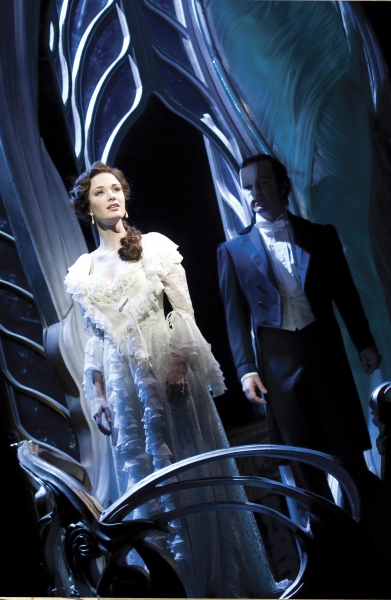
Million Dollar QuartetMillion Dollar Quartet, Broadway’s newest jukebox musical, begins its four week preview period tonight at the Nederlander Theatre. The musical tells the story of the legendary impromptu recording session by rock superstars Johnny Cash, Jerry Lee Lewis, Carl Perkins and Elvis Presley in 1956. With a book by Colin Escott and Floyd Mutrux, the show features hit songs like “Blue Suede Shoes,” “I Walk the Line,” “Fever,” “Great Balls of Fire,” “Riders in the Sky,” “Folsom Prison Blues” and “Whole Lotta Shakin’ Goin’ On.”

Starring as the musical greats are Eddie Clendening (Presley), Lance Guest (Cash), Levi Kreis (Lewis) and Rob Lyons (Perkins), who are all making their Broadway debuts following their run in the roles in the Chicago production of the show. Hunter Foster plays Sam Phillips, the man who discovered them all and who brought them together for this most memorable night in the history of rock ‘n’ roll, and Elizabeth Stanley plays Dyanne, a woman who arrives with Elvis on that December night more than half a century ago.

Directed by Eric Schaeffer, the show will open on 11 April. The official website is available here.

Following two flop jukebox musicals based on the music of Elvis Presley and Johnny Cash respectively, will Million Dollar Quartet actually be any better? I suppose taking a pinch of the Jersey Boys formula and marrying the music to it’s actual context has helped and the show was certainly very popular during its Chicago run. But to me, it still seems like just another jukebox musical at this point.

Posted in Broadway, Commentary, Musicals | Tagged , , , , , , , , , , , , , , , , | 1 Comment

A Singing “OFFICER AND A GENTLEMAN”

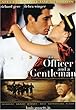
An Officer and a GentlemanA musical adaptation of the 1982 film An Officer and a Gentleman will receive a reading on 13-14 May 2010 under the auspices of Gordon Frost Productions ahead of an Australian production in 2011. The film dealt with the experiences of US Navy aviation officer candidate Zach Mayo at the Aviation Officer Candidate School, where he comes into conflict with Emil Foley, the Marine Corps Gunnery Sergeant who trains him and falls in love with factory worker, Paula Pokrifki.

With a book by Douglas Day Steward (who penned the original screenplay for the film) and Sharleen Cooper Cohen, the musical will feature a score by Robin Lerner and Ken Hirsch. The reading will be directed by Simon Phillips.

Purchases from Amazon.com

FROM LEFT TO RIGHT:
1. An Officer and a Gentleman DVD.

Posted in International, Musicals, Readings | Tagged , , , , , , , , | Leave a comment

LOVE NEVER DIES, but changes everything…

Love Never DiesWord from The New York Times is that Love Never Dies, which recently opened to decidedly mixed reviews in its debut run the West End, will definitely open on Broadway as planned despite any rumours to the contrary. In fact, Andrew Lloyd Webber has said he’s fully committed to bringing the show to the Great White Way. However, there will be some changes to the show following feedback from critics in regard to the production. Not particularly surprising news, perhaps, but one does wonder what will be changed, in terms of both broad strokes and finer details. Certainly, I’ve voiced my own opinions on the matter in my track-by-track commentary of the original cast album, which can be read on this blog starting here. Guess we’ll have to wait and see…

Purchases from Amazon.com

FROM LEFT TO RIGHT:
1. Love Never Dies Concept Album Cast Recording.
2. Love Never Dies Concept Album Cast Recording – Deluxe Edition.

Posted in Broadway, Musicals, West End | Tagged , , , , , , | Leave a comment

PHOTOS: THE SCOTTSBORO BOYS

With the show having opened Off-Broadway last night, it’s time for us to see what The Scottsboro Boys looks like for ourselves. Here’s a gallery of photographs by Carol Rosegg and Richard Termine.

THE SCOTTSBORO BOYS THE SCOTTSBORO BOYS THE SCOTTSBORO BOYS

THE SCOTTSBORO BOYS THE SCOTTSBORO BOYS THE SCOTTSBORO BOYS

THE SCOTTSBORO BOYS THE SCOTTSBORO BOYS THE SCOTTSBORO BOYS

THE SCOTTSBORO BOYS THE SCOTTSBORO BOYS THE SCOTTSBORO BOYS

THE SCOTTSBORO BOYS THE SCOTTSBORO BOYS THE SCOTTSBORO BOYS

With a book by David Thompson, The Scottsboro Boys features a score by John Kander and Fred Ebb – sadly, a posthumous premiere for Ebb. The show is directed and choreographed by Susan Stroman and has a limited run Off-Broadway. With any luck, we’ll see a Broadway transfer of this show, which seems to be the most astutely political small scale musical since Stephen Sondheim’s Assassins. Dealing with the issue of racial injustice, the musical delves into the infamous “Scottsboro” case of the 1930’s when a group of African American teenagers were unjustly accused of attacking two white women and the boys’ attempts to prove that they were innocent of that crime.

John Cullum, Brandon Victor Dixon and Colman Domingo head up the cast, which also features Sean Bradford, Josh Breckenridge, Derrick Cobey, Rodney Hicks, Kendrick Jones, Forrest McClendon, Julius Thomas III, Sharon Washington, Cody Ryan Wise and Christian Dante White.

Posted in David Thompson, Fred Ebb, John Kander | Tagged , , , , , , , , , , , , , , , , , , , , , | 1 Comment

LOVE NEVER DIES: Track by Track – Part 12

The final part of this track-by-track Love Never Dies commentary covers the ending of the show, dealing with tracks 12-13 on the second disc of the original cast recording.

12. “Gustave, Gustave”

The title of this track made me chuckle. Why is it that in the Phantom universe, names must always be repeated – and often to a melody? This particular outburst comes from Christine, who has noticed that Gustave is missing. The Phantom immediately thinks that Raoul must have taken the child when he left and he bemoans this using the melody of “The Beauty Underneath”, which works perfectly well here – without the rock beat and throbbing bassline. Squelch is summoned and replies that Raoul was definitely alone when he left, singing is words to a melodic line taken from “The Coney Island Waltz” that seems to be popular choice for recitative in this show. Then Phantom turns his attention to Madame Giry, who says she could never have even considered harming the child knowing that he was the Phantom’s son, a statement that sits more than a little oddly considering how vengeful she seemed towards the boy at the end of the first act. As she continues with her speech, which is sung to the melody used for all such outbursts by this character, Giry also says she understands ‘how it hurts to see one’s own child brought to harm’, which I suppose is meant to prepare us for Meg’s upcoming revelation. Next, Fleck arrives with the news that Meg’s dressing room was smashed and that she saw Meg taking the child, looking incredibly suspicious as she did so. No one seems bothered enough to ask Fleck why she didn’t do anything about it at the time.

Head spinning yet? I hope not, for there is even more desperate plotting to come. Having spent much energy trying to hide any real development towards a conclusion such as this one, the creative team has to work even harder to try and make all of this even vaguely believable.

Giry intrejects, fearing she has snapped but insists that Meg could never hurt the boy. The Phantom seems to know better and miraculously also seems to know where they have gone. This lease to a chase, like there was at the end of The Phantom of the Opera: this time we’re trying to track down a potential murder by running through the streets of Coney Island to the pier. This makes for several cases of mistaken identity as the characters push through the crowd in their attempts to reach their destination. Mark my words, if this was a film it would be a chase by hot air balloon, the one used earlier to bring the crowds to this performance at Phantasma.

13. “Please, Miss Giry, I Want to Go Back”

Mad Meg GiryMeanwhile, at the pier, Gustave begs Meg to take him back. She is too preoccupied reprising the little song she sang to Raoul about swimming in the sea to cleanse her conscience and ‘leave the hurt behind’. This allows time for the others to arrive just in time for Meg to have a mad scene, delivered to the tune of “Bathing Beauty” (!), in which she reveals the secret that has tormented her for years: how she had to prosituted herself for the Phantom’s sake, to get permits, to pay bills, to seal deals and to get the press on their side. “See what I’ve become!” she proclaims, having switched now to the melody of Madame Giry’s outburst recitative. The only problem is that until now she’s behaved in a fairly normal way with little to indicate that she has anything bubbling underneath her confident facade. And what was the trigger here? Her past experience has only an oblique bearing on this situayion, have to do with this siutation?

This is where Ben Elton, Glenn Slater and Andrew Lloyd Webber need to decide what story they are telling. If Christine is the protagonist and the crisis is represented in a choice between Raoul and the Phantom, then this climactic sequence has no place here. The protagonist’s choice is meant to precipitate the climax; thus, either one of the alternative endings I suggested in part 11 of this commentary would bring that story to a close.

If the Phantom is the protagonist (a fact that the creative team seem fond of dropping into press statements, but don’t seem too bother about dropping into the play itself), then the crisis needs to be represented in a choice between Meg and Christine. Meg has not been presented as even vaguely being a viable alternative to Christine in the plot of this show. He simply hasn’t been shown to place any value whatsoever on Meg’s presence in his life. I said above that there is no trigger for Meg’s actions, no pattern of cause and effect: this is because the Phantom arrived on stage with his choice already made. At least if there was a scene in which Meg confronted the Phantom and he dismissed her, kicking her out of Phantasma (his home) and and throwing some money at her (for services rendered) this scene would have some motivation. But as it stands, it does not – and we still have quite a bit of it to endure.

The Phantom asks Meg for the gun, trying to convince her that he sees her at last. He says that he looks at her and sees ‘the beauty underneath’: how ironic, we as the audience are meant to think, we see her beauty is on the outside and that she is twisted and broken inside. Meg seems to buy it until the Phantom makes a mistake by mentioning Christine’s name, at which point Meg shoots her. Giry runs to get help, never to return, and Christine’s long death scene begins.

First, she tells Gustave, who is asking for his father that the Phantom is his real father. ‘Look with your heart,’ she tells him before she dies – or so it would appear. Gustave screams as a big dramatic musical reprise of “Once Upon Another Time” takes over, followed by the Phantom singing a reprise of the same song, lamenting the loss of Christine and wondering what to do with Gustave. Christine – who hasn’t actually died yet – manages to summon up enough energy and breath to sing some really high notes, telling the Phantom to ‘love and live and give what (he) can give and take the love that (he) deserve(s)’. Even after this, she’s doesn’t die. We still have a reprise of “‘Til I Hear You Sing”, during which she asks the Phantom for a last kiss before dying (at last) in his arms.

Following this, the show’s opening flute melody of “Beneath a Moonless Sky” plays, segueing into the Phantom’s “darkness made light” theme, which appeared when he named Gustave as his ‘saving grace’ at the end of Act I. With this, the Phantom turns to comfort Gustave, who unmasks him with out any horror as the curtain falls.

Final verdict: This ending as it currently appears doesn’t work. Firstly, it’s unmotivated by the action of the play. Secondly, it is overly plotty, trying to fit in all manner of narrative detail that has been glossed over earlier in the play and which has caused the scene to appear so unmotivated in the first place. Thirdly, the dénouement pushes the suspension of the audience’s belief to the absolute maximum. It takes too long for Christine to die and she sings far too much when she should be too weak to even sustain normal breath. Maybe the creative team should go and have a look at the end of Carmen to see how to make a death scene truly effective.

The final, final verdict: Is there a good show in Love Never Dies? Potentially, yes. But it is not one that can be realised by making a few cosmetic changes made to the show as it stands. The writing team needs to get the details of the narrative straight, taking into account which storytelling traditions they are manipulating here: melodrama, operetta and the conventions of the sequel. They then need to distill that clarity into the book, the lyrics and the music. Slater, in particular, needs to up his game at this point. And then those revisions can make their way into production, transformed from drama into theatre. Only then will Love Never Dies achieve its full potential.

And that, my friends, brings this track-by-track commentary of Love Never Dies to an end. If you want to read more about the show, click here to see all the blogs about it that are available at Musical Cyberspace.

Purchases from Amazon.com

FROM LEFT TO RIGHT:
1. Love Never Dies Concept Album Cast Recording.
2. Love Never Dies Concept Album Cast Recording – Deluxe Edition.

Posted in Cast Recording Reviews, Classical Music, Commentary, Concept Albums, Musicals, West End | Tagged , , , , , , , , | 6 Comments

LOVE NEVER DIES: Track by Track – Part 11

Raoul, Christine and the PhantomThe eleventh and final part of this track-by-track commentary of Love Never Dies works through Christine’s climactic performance of the title song and its immediate aftermath: tracks 10-11 of the second disc of the original cast recording.

10. “Love Never Dies”

It is time for Christine’s climactic performance. “Love Never Dies” begins with a fairly lengthy instrumental introduction which may be very beautiful, but what is it’s function? Is it meant to, like the meditation in Jules Massenet’s Thaïs, the moment in which our heroine commits to the path she must follow? If so, how will that be represented on stage? I do hope it isn’t there simply for it’s own sake or to cover Christine’s entrance.

Let’s face it: this song has to be beautiful, transcendent. It has to awaken whatever has been sleeping in Christine since she last sang the Phantom’s music, the soul make gives her instrument meaning.

Andrew Lloyd Webber has done his job with the music – although he’s been fortunate enough to have this song in the bag for more than a decade. Glenn Slater’s lyrics are another matter: they sound something like English translations for the surtitles of an French opera. They aren’t graceful enough; they’re too literal; and they don’t sing. The lyrics weren’t much better when the song was known as “The Heart is Slow to Learn” in 1998, although it seems that back then that the lyrics place the song in the spot now taken by “‘Til I Hear You Sing”. The song has still never been better than when it was “Our Kind of Love” in The Beautiful Game in spite of the composer’s protesting that it didn’t fit into that show. Whether or not it would have been better to let it remain there and to write a completely new song for this spot, it is here in Love Never Dies now and it needs better lyrics. Lyrics that sing. Lyrics that move us and, more importantly, Christine.

11. “Ah Christine”

In the dressing room after the performance, the Phantom congratulates Christine on her marvellous performance. Christine is overwhelmed by the effect singing the song has had on her. Much of this is done to yet another inappropriate non-diegetic reprise of the “Beautiful” theme.

Christine then discovers a letter from Raoul stating that he has left for good, which is set to the “Little Lotte” theme from The Phantom of the Opera in which their earliest days together as children were recalled.

Now as I see it, this scene provides a way in to two alternative endings other than the one we get and which will be discussed in the final entry in this series. Both would require some rewriting throughout the rest of the show, but I think that is going be be a feature of any attempt to get this show up to scratch no matter what narrative strategies the the creative team chooses to follow.

In the first, the Phantom arrives in Christine’s dressing room to sing of his triumph, only to discover that Raoul has taken Christine and Gustave and fled – a last desperate attempt to keep his family together. Christine, at this point, wants to stay, having had her transcendental experience as she sang her song. The Phantom pursues them and, in the streets of Coney Island, Raoul and the Phantom finally face off in a duel. Raoul is killed and Christine, seeing the Phantom for what he is, unmasks him in front of everyone as she did in The Phantom of the Opera, takes Gustave and leaves as the crowd closes in on him and burns Phantasma to the ground. In the emptiness that is left behind, we are given an epilogue in which we see Gustave as a young man achieve some kind of musical acclaim, realising all the good in his father without the burden of his deformity. As his mother looks on proudly, beautifully and filled with regret, the curtain falls.

In the second, we see the two sections switched around. Christine discovers Raoul’s note first and it becomes clear to her how both men have manipulated her during the course of The Phantom of the Opera and Love Never Dies: in the former, she was a pawn; in the latter, she is the prize. The Phantom enters singing about his triumph and Christine sings about her transcendence, but realises that she needs to discover her own voice. Being the Phantom’s mouthpiece is not enough for her anymore. Raoul is out of her life, she tells the Phantom, but she cannot stay with him either. It’s very intellectual and very Ibsen – see A Doll’s House. She takes Gustave and they leave as the Phantom laments how he will never hear Christine sing again. Cue a similar coda to satisfy the emotional expectations of the target audience and we’re home free.

I think either might be a good alternative, but instead we’re treated to a second, melodramatic climax involving Meg and the big secret she and Madame Giry have been hiding throughout the show…

Final verdict: To Glenn Slater: please write better lyrics for this show and especially for this song. To Andrew Lloyd Webber: please demand excellence from your collaborators. To both of you: please go through the entire show carefully and decide which story you want to tell; consider whether the climax of your story is Christine’s choice or the melodramatic nonsense with which you’ve chosen to end the show; and don’t let Ben Elton distract you with any more of his bizarre story ideas. Or if you are going to go with the melodramatic nonsense, please set it up better so that it is only melodramatic and not nonsense. That should sort out this section of the show and several others too.

NEXT UP: Second climax – or dénouement?

Purchases from Amazon.com

FROM LEFT TO RIGHT:
1. Love Never Dies Concept Album Cast Recording.
2. Love Never Dies Concept Album Cast Recording – Deluxe Edition.

Posted in Cast Recording Reviews, Classical Music, Commentary, Concept Albums, Musicals, West End | Tagged , , , , , , , , , , , | Leave a comment

LOVE NEVER DIES: Track by Track – Part 10

Part 10 of this track-by-track Love Never Dies commentary takes us to Christine’s dressing room, beginning the lead up to the moment whether Christine will choose to sing or not, taking us through tracks 8-9 of the second disc of the original cast recording.

8. “Before the Performance”

“Before the Performance” consists of several musical themes and a great deal of plotting. It’s aim to to create a real crisis for Christine: will she sing or not? However, the foundations for creating a crisis have been poorly laid and this superficial attempt doesn’t really make us wonder whether the outcome will be anything but the eventual performance of the Phantom’s new song.

The scene starts off with Gustave humming a haunting little melody, which – if we’ve been paying attention – we first heard in “The Coney Island Waltz” before it became the melody for “Mother, Please I’m Scared”, when he dreamed of someone taking him away and drowning him. It’s subtle foreshadowing, I think: not enough not for anyone to put the pieces all together if they aren’t sure of the plot, but certainly one that is a delightful touch when viewing the show retrospectively.

The scene set is in Christine’s dressing room. She is putting on her jewellery and asks Gustave to help her. This leads into a reprise of “Beautiful” which has some awfully flat lyrics, about how Christine looks ‘like a queen in a book’ and how much ‘fun’ it would be for the two of them to spend some time alone together after the performance. I also wondered about the choice of music here: is the use of this melody here appropriate? “Beautiful” is meant to be a song that Gustave has in his head, that the Phantom heard him playing in his lair prior to “The Beauty Underneath”. Is this diegetic material really appropriate for use non-diegetically in this scenario? It is used non-diegetically in the scene that culminates with “The Beauty Underneath”, but there it develops out of the Phantom and Gustave’s interaction and feels as if it fits. Here, is doesn’t seem to be quite as good a match. Maybe it would be better if there was a reprise of “Look With Your Heart” here instead and perhaps that reprise should happen once Christine, the choice having not yet entered her mind, is in some turmoil about whether to perform or not. Or maybe “Beautiful” should be a completely non-diegetic piece and the melody is Gustave’s head should always be the one he is singing now.

The show also lacks an interaction in which Gustave mentions his experience of seeing the Phantom without his mask and Christine unpacks that a little in a way that makes his acceptance of his real father more moving; to achieve that Gustave should be a little more stubborn in this interaction so that the question appears to be one answered only in the moment of crisis near the end of the show. Whether or not this is the right place for that little scene is up for debate, but I think it is an important beat in the action that has been skipped over by the creators of the show.

Raoul arrives on the scene next, looking more like his old self and doing his best to be just as charming. Gustave is excused; Christine gives him permission to explore backstage on the condition that he returns to her dressing room after her performance. Raoul then has some apologetic recitative, which is then followed by his attempt to convince Christine not to sing, which culminates in a weak-willed reprise of “Why Does She Love Me?” – and that’s that. It’s not nearly good enough a proposal to throw Christine into the kind of turmoil she is supposed to experience when considering whether she would sing or not. The option of not singing is not made attractive enough, not to her or to the audience. With so much apparently on the line, Raoul’s attempt at convincing Christine not to sing needs to leave Christine (and us) believing that there is really is a possibility of a wonderful future for the three of them together as a family. Raoul needs something much better than a reprise of his pitiful drinking song from earlier in Act II; he needs an “All I Ask of You”.
The Phantom and Christine
We move directly on to the Phantom’s counterargument, which begins with a sequence of rather awkwardly arguments about Raoul: ‘He knows his love is not enough / He knows he isn’t what you need’. The point of his argument here is that it is time for Christine ‘to be who [she] should be’ so why not phrase them to here in the second person instead, in other words ‘You know his love is not enough / You knows he isn’t what you need’. While those lyrics might be served by a minor adjustment, the lyrics about Christine being ‘made of finer stuff’ and about how she should ‘leave him in the dust’ are, frankly, unsalvageable.

The Phantom’s argument continues with a reprise of “‘Til I Hear You Sing’, which encompasses further arguments for his case: the thrill of performing for an audience with music that makes her feel truly alive once more and the opportunity to fulfill the romantic potential discovered between them one night “Beneath a Moonless Sky” at last.

The stage manager arrives to tell Christine that it’s time for her to perform. She sings “Twisted every way, what answer can I give”. The problem is, she’s not twisted every way. One option seems clearly better than the other; the dramatists haven’t done their job and have overly relied on the moral codes of marriage and family to make an argument for staying with Raoul. Christine is given another couple of lines to sing here, but I don’t think they would be necessary if the play had set up the conflict well enough; music and body language should be enough to communicate her conflict to us in these moments before her performance. The music here represents her deliberation in itself.

The scene concludes with a sung snippet to the tune of “Prima Donna” from The Phantom of the Opera before the orchestra swells using the same musical theme. It does bring a sense of grandeur to the moment and a lump to the throat. As the melodic works up to its climax, you catch your breath and –

ANTI-CLIMAX!

Instead of being carried through to the climactic moment of Christine’s performance, we’re taken through a reprise of “Devil Take the Hindmost” – yet another poorly calculated error in judgment.

9. “Devil Take the Hindmost (Quartet)”

I’m not disputing that the idea of a reprise of “Devil Take the Hindmost” can add invaluable tension and suspense within the sequence leading up to Christine’s performance, but this is the wrong place for it. Placed here, it just becomes a frustrating scene we have to sit through while we wait for Christine to sing – or not sing, if we supposed to be seriously consider that there is a choice in the matter at this point.

So where should it be? I’m not entirely sure; there are several options and any of them would require some rewriting. The first option is to start it off between Madame Giry and Meg after their scene (“Mother Did You Watch?”), during which they could see and hear Gustave humming his tune en route to Christine’s dressing room before we see the Phantom and Raoul separately deliberating over their plans to convince Christine to sing or not. Meg can have her epiphany and leave to play her part in the final events of the show. The second option would be to place it in between Raoul and the Phantom’s visits to Christine, with Raoul reflecting on the case he has made and the Phantom reflecting on the case he is about to make, while the sections pertaining to Madame Giry, Meg and Gustave remaining the same as outlined above. The third option would be the most difficult to achieve successfully and to create a fully integrated musical backstage sequence that somehow weaves all of the themes mentioned in this section of the commentary together into one complex, masterful dramatic whole.

The song as it stands still places too much focus on Madame Giry and too little on Meg. We have to see Meg snap or at least take on some kind of agency as the villain of this show and one line at the end of a song isn’t enough. Yes, we will be shocked perhaps by her actions later – but it is a shock that seems unmotivated by the events of the play as a whole.

Final verdict: It’s clear that Ben Elton, Glenn Slater and Andrew Lloyd Webber are struggling with the question of how to tell their story. The structure of these two backstage sequences, which have a fair amount of material that works in its favour, doesn’t help the play rhythmically and there are some serious issues that need to be approached if this “moment of crisis” is going to properly set up the climax of the show. To find the answers, the creators really need need to decide what story they are telling. At the moment, its seem as if they’re just throwing together chunks of narrative and hoping for the best. Certainly chance plays some role in whether a show is successful or not, but creating drama is still primarily about making choices. That way, even if a show doesn’t go over with audiences, the theatre-makers can find some comfort in the value of their artistry. Love Never Dies can’t yet offer its creators even that.

NEXT UP: Love Never Dies.

Purchases from Amazon.com

FROM LEFT TO RIGHT:
1. Love Never Dies Concept Album Cast Recording.
2. Love Never Dies Concept Album Cast Recording – Deluxe Edition.

Posted in Cast Recording Reviews, Commentary, Concept Albums, Musicals, West End | Tagged , , , , , , , | Leave a comment

LOVE NEVER DIES: Track by Track – Part 9

The ninth part of my track-by-track commentary of Love Never Dies deals with a sequence of reprises of tunes we’ve heard earlier in the show, those heard on tracks 4-5 of the second disc of the original cast recording, “Bathing Beauty” (track 6), a number which we’ve seen rehearsed in Act I of the show and the backstage reactions of Meg and Madame Giry to the number (track 7).

4. “Heaven By the Sea (Reprise)”

I had more patience with this song the first time it appeared. The small amount of charm it managed to muster has disappeared and now it sounds more like the Animaniacs theme song than a song befitting the period and situation. In truth, it is a double reprise and segues into a reprise of “Only For You”. It’s a throwaway piece that merely serves to put into context the final day of the season. The number gets more interesting as it goes along, as the tourists settle into a more relaxed mode. But ultimately, I just don’t think it’s good enough and I think it’s in the wrong place. As I said in my previous entry in this series, I think some version of this number (or – perhaps this would be even better – a completely new and spectacular one about “The Last Day of the Season”) should appear at the top of the second act. The way it relaxes toward the end would be a perfect entry point into Raoul’s bar scene and the contrast between the moods of the juxtaposed scenes would be immensely effective.

5. “Ladies… Gents!/The Coney Island Waltz (Reprise)”

At this point, Fleck, Gangle and Squelch arrive by hot hair balloon to announce the performances for the evening, accompanied by the musical theme that usually marks their appearance. They make their announcement to melodic strains from “The Coney Island Waltz” which then transports us to a scene onstage at Phantasma and a spoken announcement by the three freaks that mostly repeats what what we’ve just heard them sing. These characters are really represent such a conundrum. Obviously they are set up to contextualise the Phantom’s presence at Coney Island, but they are so underutilised. Perhaps I shouldn’t be expecting so much, however: if Ben Elton, Glenn Slater and Andrew Lloyd Webber aren’t sure of what to do with major characters like Raoul and Meg, what hope do we have of seeing minor characters like these find their place in the show?

Fleck, Squelch and Gangle

6. “Bathing Beauty”

“Bathing Beauty” is Meg’s big number: it’s quick-change cross strip-tease routine in which she decide what swimming costume to wear on her visit to Coney Island. Why Meg has suddenly turned into Gypsy Rose Lee is anybody’s guess, but I hope the staging approaches the brilliance of a Michael Bennett number because the song isn’t much of a masterpiece. Fleck’s assessment of the number as ‘earthbound’ might be the understatement of the season.

7. “Mother Did You Watch?”

An ebullient Meg rushes backstage to her mother, singing of her triumph in a reprise of “Only For Him”. Madame Giry is not so cheerful because the Phantom did not watch her performance and informs Meg that they have been replaced by Christine and Gustave in the life of their master. Meg is shocked and distraught, so much so that she seems to have been completely un. This little scene seems pointless: we’ve heard the music before and we’ve heard the sentiments of both characters too. The show needs to move forward at this point and, for the last 10 minutes or so, it has floundered.

Final verdict: The sequence of scenes in this section of the show is among the weakest in the show. The already shaky second act really starts to unravel here. The creators, because of choices they have made in telling the story thus far, seem unsure in which direction to move so they seem content with recapping a few plot points. With the possible exception of “Bathing Beauty”, you could remove this whole section of the show without losing anything narrative or thematic. Even worse, the sequence doesn’t work structurally or rhythmically; it’s like an engine that it struggling to take, but that just can’t make it. Simply and frankly put, it’s not nearly up to scratch dramatically or musically and needs some serious attention.

NEXT UP: Moment of Crisis…

Purchases from Amazon.com

FROM LEFT TO RIGHT:
1. Love Never Dies Concept Album Cast Recording.
2. Love Never Dies Concept Album Cast Recording – Deluxe Edition.

Posted in Cast Recording Reviews, Commentary, Concept Albums, Musicals, West End | Tagged , , , , , , , , , , | Leave a comment

LOVE NEVER DIES: Track by Track – Part 8

Part 8 of this track-by-track commentary of Love Never Dies deals with the start of Act 2, moving onto tracks 1-3 of the second disc of the the original cast recording.

1. “Entr’acte”

Act II starts off with an energetic entr’acte, beginning with a rendition of “Only For You” that sounds like the galop infernal from Orpheus in the Underworld, segues into a a lilting, more up-tempo version of “Look With Your Heart” than we heard in the show proper before moving into a string-filled arrangement of “Once Upon Another Time”. This is followed, first by an urgent (with a fanfare that sounds like a nod to the overtures of My Fair Lady and (even more so) Camelot), then unabashedly romantic excerpt from “‘Til I Hear You Sing” (bonus points for noticing the nod to “All I Ask of You” in the chorus of the song). A coda that returns us to the “Only For You” theme with some dissoance thrown in for fun brings the “Entr’acte” to a close.

The structure of the piece closely mirrors the “Entr’acte” of The Phantom of the Opera, which starts with an ebullient “Angel of Music” before shifting into a more lilting version of the same song, which then segues into a string-filled arrangement of “Music of the Night” and an unabashedly romantic excerpt from “All I Ask of You” before introducing some dissonance via the familiar descending chords from “The Phantom of the Opera”. Since the original’s “Entr’acte” closed with a piece that signified the villain of the piece, maybe we’re getting another clue here about Meg’s role in the bigger picture of the show itself.

Raoul2. “Why Does She Love Me?”

The title of this sequence makes me dread what the song might be like; we’re obviously being invited to attend a pity party here. As an instrumental reprise of “Beneath a Moonless Sky” ending with a cheap-sounding saxophone that sounds like it escaped from Miss Saigon, we arrive in a bar where Raoul is drinking himself into a stupor in a suit he must have borrowed from Joe Gillis in Sunset Boulevard. In the dialogue, Raoul becomes unwittingly meta-textual, asking “What to do with me? That’s the question, isn’t it? It’s always been the question, ever since the beginning.” Raoul always seems to be near the bottom of the list when it comes to serving up characterisation. The song doesn’t answer the question.

“Why Does She Love Me?” has a delicate melody; it’s very clearly a lament. Laments of regret were a staple of opera seria in the Baroque, Classical and Romantic periods and were sometimes used in opera buffe as a contrast to the comic tone of the action in general. Reserved for the heroines of these operas, laments often become popular outside the context of the show because of their appeal to fundamental human emotions. Raoul’s lament seems, in some ways, to be a cousin of the Countess Rosina’s lament of her husband’s infidelity in The Marriage of Figaro, “Porgi, amor, qualche ristoro“, although here is seems to be drink, rather than love, from whom the comfort is sought.

The biggest problem with “Why Does She Love Me?” is that the lyrics generally wallow in the direst self-pity, making it seem as though Raoul has already given up in his ongoing battle with the Phantom for Christine’s affection. Once again, he’s depicted only as a fallen and flawed man, with very little to redeem himself in the eyes of his wife. As I mentioned in my blog about Raoul’s charaterisation when he first appears in Love Never Dies, Ben Elton, Glenn Slater and Andrew Lloyd Webber need to be making the choice more and more difficult for Christine as the show progresses toward the moment where she has to make it. This kind of song kills any chance of suspense in that moment of decision.

Lyrically, there is one somewhat interesting idea here, an attempt at depicting Raoul as a mask-wearer, that he is beautiful and together on the outside and full of “horror, shame (and) despair” on the inside. That’s a fine statement, one that sounds like it should be a defining characteristic of the character. However, in drama, character is action and we don’t see this proposal carried through in Raoul’s actions: there is no mask; the distortion of his inner mind and soul are clearly revealed in his actions. This is certainly true in regard to the behaviour we’ve seen from him earlier, which is a pity, as playing with a mask of this sort might have begun to establish Raoul as a character that offers something truly worthwhile to the play. We see the idea coming together marginally between now and the end of the play, but it’s really too little too late.

Into this scene storms Meg, breaking the mood with the opening melodic phrase of “Old Friends”. She’s there to advise Raoul to leave America with Christine and Gustave – on her mother’s orders. How much more interesting this would be if the impetus came from Meg herself! It would be better for the show too. During this interaction, comes the information that this bar is called Suicide Hall, because desperate people come here to get drunk and disappear by jumping off the nearly pier. Meg comes here to swim, to cleanse her conscience of what Coney Island has caused her to lose. There’s a duality in the register of the lyrics, one meaning giving us – at last – some attempt at a motivation for Meg’s obsession with the Phantom, putting in place a foundation for the “big reveal” we’ll get later in the show and the other, which cleverly distracts us from gleaning too much information from the first almost sounds like she’s manipulating Raoul towards his own suicide before she changes her tune and tries to persuade him to leave, which is her primary tactic for achieving her objective at this point, to get Christine out of the way. It might be interesting to see the manipulator in Meg developed a little more. Would it work to see her try and follow through more in her attempt to convince Raoul to commit suicide? Or would that free Christine up even further in terms of her eligibility as the Phantom’s bride? Or would it perhaps place Gustave in greater need of the Phantom’s care, which Meg desires for herself? Maybe it would, but we also know that Christine has promised to leave after singing the aria because of all the pain the has caused the Phantom during their association. Does Meg know this via Madame Giry who overheard the discussion in question? We don’t know for sure, but it’s possible that she doesn’t. After all, why would she try to get Raoul to take Christine and leave if she knew that Christine had already promised to leave forever after the performance anyway? Does she know at this point that Gustave is the Phantom’s son? Either the creators have assumed that these facts are as clear to us as they are to them, or they don’t know themselves, or they haven’t fully thought through the ramifications of all these scenarios. That’s why some really good proposals in this scene don’t translate into drama that is as effective as it could be.

3. “Devil Take the Hindmost”

Can you imagine how this song got its title? I must admit that, rather cynically, I have an image of Glenn Slater looking at all the entries under the word “devil” in a dictionary of idioms and picking out anything that could even vaguely work. Fortunately, the result here works incredibly well for the situation, as the expression “devil take the hindmost” means “each man for himself” and offers up a chance for some interesting rhymes. Slater is on the thin edge of a wedge here; the rhymes could so easily become self-conscious and contrived, but he seems to quit himself fairly well on that account. What’s even more fun is that he manages to let Raoul’s counterpoint lyrics to be expressed in gambling terms, although the counterpoint itself seems not to leave a question regarding the dramatic sensibilities of inclusion. (What exactly is happening when the counterpoint occurs? They can’t be talking over one another at each other; the score is far too deliberate to signify that kind of Caryl Churchill inspired interaction and the music tells us we’re into the mode of dual soliloquies as it’s already established earlier in this song how interruptions occur in this conversation.)

To get to the song, we have to endure Raoul shouting a little more, this time about how he previously bested the Phantom and therefore has no need to run now. The Phantom appears as if he was summoned by Raoul’s arrogance and they make a deal: if Christine sings, then the Phantom has won and Raoul must leave alone and if she doesn’t, then Raoul has won and leaves with his family and his debts all paid. And in the competition for the prize – you guessed it – devil take the hindmost. It’s definitely a piece in which the gauntlet is thrown down and taken up – the terms are repeated at the end of the song, just in case we missed them, and the Phantom plants a seed of doubt in Raoul’s mind about who Gustave’s father really is – and I think it largely works, except for the moment of counterpoint mentioned above.

So how can that be solved? Easily – by remembering that these two men are not the only players in this game and ultimately both are at the mercy of a far more manipulative villain. How intriguing this would be if Meg was privy to all of this manly gauntlet throwing and took on the same “devil take the hindmost” viewpoint as she eavesdropped. Then we could have all of the counterpoint in the world without sacrificing the dramatic credibility of the scene or trying to justify it with the very poor excuse of poetic license. And once again, we’d be creating a play that deals with its characters instead of trying to hide what’s going on prior to an anti-climactic reveal.

Final verdict: This sequence starts off weak and ends up a lot stronger. The spectacular opening of Act II of “The Phantom of the Opera” has been avoided here (maybe the moment it is being saved for “Bathing Beauty”?) in favour of starting off very low and slow. I’m not sure that this works entirely well and I don’t think the intimacy of the opening interactions between the barman, Raoul and eventually Meg are strong enough dramatically to stand on their own. Perhaps their needs to be some shifting around in Act II so that the act begins with a celebration of the final day of the season (which we eventually get to with a reprise of “Heaven by the Sea” anyway), thereby allowing the scene with Raoul to at least offer some contrast to the situation, even if it might not be any more dramatically effective if left as it stands. Contrast is, after all, along with conflict, one of the essential features of drama. I think that element of personal drama within the public context is what’s missing here; it was so effective in “Masquerade” and it would be nice to see the formula used and manipulated here, as it would have to be – remember, the personal drama in “Masquerade” was also one of celebration and here it would have to sit in contrast to that. In The Phantom of the Opera, “Masquerade” is followed by the Phantom’s entrance as he lays down his challenge to the managers in “Why so Silent”, which segued into a more complex “Notes” sequence. Here these two elements are combined into “Devil Take the Hindmost”, but it would be nice to see it made complex in a way that really works for the dramatic build of the play as a whole, as I’ve proposed in the above commentary.

NEXT UP: Back to the Beach!

Purchases from Amazon.com

FROM LEFT TO RIGHT:
1. Love Never Dies Concept Album Cast Recording.
2. Love Never Dies Concept Album Cast Recording – Deluxe Edition.

Posted in Cast Recording Reviews, Commentary, Concept Albums, Musicals, West End | Tagged , , , , , , , , , , , , | Leave a comment

LOVE NEVER DIES: Track by Track – Part 7

The seventh part of this track-by-track Love Never Dies commentary brings us to the end of the first act of the show and deals with tracks 17-19 on the original cast recording.

17. “Beautiful”

With Gustave having gone missing at the end of the previous scene, we catch up with him as he is taken to the Aerie by Fleck, Gangle and Squelch. This is all done to the music-box like musical theme we heard when they met the De Chagny family at the docks. It’s short and probably a better beckoning song than Camelot‘s “Follow Me”; it seems to fit in with what’s going on around it a little more comfortably at any rate.

As he arrives, we are treated once again to a musical theme from The Phantom of the Opera, the musical “Little Lotte” theme that is repeated when Christine first visits the Phantom’s lair and again in “Past the Point of No Return”. This time it mirrors the second of those three instances; here it is Gustave’s first visit to the Phantom’s new lair that is being described. Even the new lyrics have something in common with the old: compare the original show’s ‘I have brought you to the seat of sweet music’s throne / To this kingdom where all must pay homage to music’ with the new show’s ‘This is my realm, illusion’s domain / Where music and beauty and art have first reign’.

Left to his own devices while the Phantom finishes his work, Gustave plays the melody of the “Beautiful” melody – ‘just a song in my head’ – on a piano. As the orchestra takes over, the Phantom begins to reflect on questions that will lead to the revelation that Gustave is his son. We’re leading up to the displaced “The Phantom of the Opera” section, and this section is already decidedly creepy – laying a foundation for a subtext that I’m sure will feature in discussions of this show for as long as it remains in human memory.

Remember how in The Phantom of the Opera, there was an erotically charged moment when Christine caressed the Phantom’s mask? There is an intense eroticism woven into the idea of the Phantom’s unmasking, intensified by the repression of the era and idea of connecting with the taboo. This is another staple feature of Gothic Romanticism and it worked in the favour of the show. However, the idea doesn’t sit nearly quite as well when it’s ported over into Love Never Dies. We’re leading up to a similar unmasking, one in which the Phantom exposes himself in the hope that Gustave will accept him, and that process begins here as the music builds and builds towards a climax (while the Phantom shouts “My God” in a tone of hopeful rapture) that will thrust us into a song called “The Beauty Underneath”. There is something decidedly, if unintentionally, pederastic about the way this sequence has been created even if no such act is perpetrated in the narrative of the play. Yet, it does give us something interesting to explore in terms of the Phantom’s psychology. Harold Prince insisted that the way that the Phantom pursued his relationship with Christine was the result of his physical deformity and the reactions of people to it having distorted his normality. From Harold Prince and the American Musical Theatre:

There was total conflict in me (and so many of the audience) respecting out perception of physical deformity. We recoil and at the same time our reason tells us that’s ridiculous, that we should be ashamed. And then we recoil again. The Phantom has accepted the recoiling mechanism and cannot integrate the fact that Christine, having grown to know him, no longer perceives him in that way. It was the quality of the Phantom’s common humanity, his normal sexual and romantic impulses that get distorted by his physical deformity, that I wanted to emphasize.

So perhaps this is a proposal in the same vein? That his normal paternal instincts are distorted by his obsession with his physical deformity? If so – how interesting? Why not explore that more fully instead of delivering what comes next – a song that sticks out like a sore thumb in the score of Love Never Dies.

18. “The Beauty Underneath”

In the notes he wrote for the CD booklet, Andrew Lloyd Webber discusses how he used the title song of Love Never Dies, originally intended for a sequel to The Phantom of the Opera for The Beautiful Gamehave a look at this blog about the same issue if you want to compare the different versions. Of the song’s inclusion in The Beautiful Game, he says that he ‘felt it stuck out like a sore thumb from the rest of the score’. One wonders if he has listened to “The Beauty Underneath” as a part of the score of Love Never Dies. We may have heard snippets of the melody earlier in the show – snippets that already sat oddly in the context of the score – but that doesn’t stop the song sounding like it should be in Starlight Express, albeit one in which the pederastic subtext is carried through with remarkable consistency.

The Phantom and the Gorilla

During the song, the Phantom presents all kinds of bizarre and grotesque inventions to Gustave, like a skeletal gorilla playing and organ, and it is only when his mask is removed that Gustave is horrified and screams – just as Christine conveniently enters so that she will be there to comfort him.

19. “The Phantom Confronts Christine”

With Christine on hand, the Phantom can discover the truth about Gustave and Christine confesses everything to him, that the boy is his son. She must be translating her words directly from the French in her head, as the lyrics contain a painfully obvious errors in English grammar: ‘I kept the secret hid / The secret my marriage forbid’. Firstly, hid is not the past participle of hide, hidden is; secondly, if the marriage is preventing her from revealing the secret now, there is an error in concord and “forbids” should be used instead of “forbid”; and thirdly, if the marriage prevented her from revealing the secret in the past, it should be in the past tense, “forbade”. After adding these mistakes to all her others, Christine says she will sing the Phantom’s song and then leave with the boy, having caused the Phantom nothing but pain since they came into one another’s lives.

The Phantom, however, declares that Gustave is his ‘saving grace’ and that everything that he owns will be left to his son. All of this is overheard by Madame Giry, who is furious that her work over the years for the Phantom will amount to nothing because of this ‘bastard’. Her intense hatred for the boy is odd, especially considering her words later in the second act that her loyalty to the Phantom would prevent her from harming the boy. So this is a red herring parading as a plot point so that we can all be surprised when Meg kidnaps him later. But it should be Meg here, in her role as villain-seducer, promising us that ‘it is to be war’ them and that this will lead to ‘a disaster beyond your imagination’ in the second act. As it stands, it falls rather flat as the closing of an act, not really giving enough of a cliffhanger for a play that is so completely rooted in the tradition of melodrama, even as it plays with and subverts the tradition.

Final verdict: This sequence has a lot of energy contrived by the rock music used in it. The dramatic ideas wane, foundering as proposals that aren’t followed through by Ben Elton and Glenn Slater in the book or lyrics, but this doesn’t seem to be a priority as long as Andrew Lloyd Webber’s music and the robotic creations on display distract us from the fact. The ending of the sequence is also weak, particularly given that it’s the end Act I. This is the moment where the stakes should be highest, the moment that draws us in to see how things will be resolved. But because the team is reluctant to commit to a narrative strategy, the audience can’t even really be sure where the primary conflicts of the play lie. I suspect this has something to with what Lloyd Webber perceived to be problem with The Woman in White. In an interview with Mark Shenton at Playbill, the composer said the following:

I have learned very definitely over the last few years that you have to be very sure before you go forward…. I got myself into [the problem that the end of it is very confused] with The Woman in White. We had a terrific first act, but actually today, and it was something I had underestimated, there’s no secret you can even remotely put on a stage today that a modern audience can find shocking. It was a novel about a faked birth certificate – and people said, ‘So what?’ That was our mistake – if ever I revisited the piece, we would have to stop at the point where it is revealed that the sisters are swapped in the asylum. So I don’t want to make that mistake again…

And yet, here he is making the same mistake. The revelation about Meg that is coming in the second act is tremendously underwhelming and by covering it up with red herrings like the one at the end of this act of Love Never Dies, the problem is only being compounded. Even with all the minds at work on this show, the basic principle of creating drama – making choices and following through on them – has been ignored. And ultimately, that is what will make Love Never Dies only half as good as it could be unless some drastic revisions are made to the show as it continues its development en route to Broadway.

NEXT UP: Meanwhile, in a bar on Coney Island…

Purchases from Amazon.com

FROM LEFT TO RIGHT:
1. Love Never Dies Concept Album Cast Recording.
2. Love Never Dies Concept Album Cast Recording – Deluxe Edition.

Posted in Cast Recording Reviews, Commentary, Concept Albums, Musicals, West End | Tagged , , , , , , , , , , | 2 Comments