The Saturday List: Five HAIRSPRAY Movie Moments That Hold Fast Today – and Five That Are a Little More Sticky

Today marks the seventeenth anniversary of the release of the film adaptation of Hairspray. Almost two decades after it hit cinemas, it’s mostly still a great deal of fun. While the movie is by no means perfect, it provides an enjoyable couple of hours in front of the TV. Some viewers compare it unfavourably with the 1988 John Waters original – with some even refusing to watch it – but the original is its own thing: the two are vastly different in tone and I’m happy to let the two versions co-exist peacefully. Between the two films came the 2002 Tony Award-winning Broadway adaptation that inspired the second silver screen adaptation, which was followed nine years later by Hairspray Live!, which Waters felt was the weakest iteration of his original concept.

Set in Baltimore in the early 1960s, Hairspray follows the exploits of Tracy Turnblad, a spirited teen, as she chases her dream of dancing on a local TV show. Along the way, she fights against racial segregation, promoting equality and acceptance in her community. With a screenplay by Leslie Dixon, based on Waters’s original and the Mark O’Donnell and Thomas Meehan-penned book for the musical, and a score by Marc Shaiman and lyricist Scott Wittman, Hairspray, which was directed and choreographed by Adam Shankman, was hugely popular when it was first released, drawing mostly positive reviews and setting a new record for having the biggest opening weekend for a movie based on a stage musical, which would, in turn, be smashed by Mamma Mia! the following year. In hindsight, there are some moments in the film where the Ultra Clutch holds fast, but others where things are a little more sticky – so let’s explore a few of those in this week’s Saturday List!

The cast of the film version of HAIRSPRAY - including Amanda Bynes, Nikki Blonsky, Zac Efron, Brittany Snow and John Travolta - in action.
The cast of the film version of Hairspray – including Amanda Bynes, Nikki Blonsky, Zac Efron, Brittany Snow and John Travolta – in action.

Sticky: Losing “Mama, I’m a Big Girl Now”

Cutting “Mama, I’m a Big Girl Now” from the score was a mistake. This is one of the most popular songs from the Broadway show and showcases Tracy, Penny, and Amber in a dispute with their respective mothers, Edna, Trudy and Velma. “Mama, I’m a Big Girl Now.” When asked about the choice, Shankman and Dixon said they struggled to find a way to conceptualise the number without using a three-way split screen, which they wanted to avoid. They also believed the number didn’t significantly move the plot forward. While that may be true, it’s significant in another way – how it establishes the characters and the dynamics between them. Penny and Trudy take the biggest hit with Amber and Velma not far behind. The character stuff is never really reclaimed although there is an attempt to get the dynamic of the relationships reflected in Penny and Trudy’s dialogue and in the reworked “Miss Baltimore Crabs” for Amber and Velma. But neither adjustment is successful in the way that the lost song is.

Holds Fast: Adding Some Great New Songs

What the good Lord lord giveth, the good Lord taketh away, so the Good Book says. The opposite is also true when it comes to movie musicals and even though there were cuts and changes to the score of Hairspray, Shaiman and Wittman gave us a couple of great new songs: “Ladies Choice” and “The New Girl in Town.” Technically, “The New Girl in Town” was already in existence and had been written for the stage show, but never made it to the final version of the smash hit production. Here, it achieves something that the Broadway version never did, letting the audience see what happens when Maybelle takes over The Corny Collins Show and almost referencing the whitewashing of African American music, something that had also been done in Dreamgirls, both on Broadway and the silver screen, with the Dreamgirls having made its mark in cinemas only a year earlier. The way Dreamgirls uses “Cadillac Car” is more authentic, while the sequencing of “The New Girl in Town” is more problematic, perhaps an indication of some of the wider issues at play in Hairspray – more about that later. “Ladies’ Choice” is great fun, cheeky and suggestive in the way “It Takes Two” is, without being so stodgy. It’s true that “Ladies’ Choice” is not a one-for-one replacement for “It Takes Two,” replacing “The Madison” at the Sophomore Hop where Tracy eventually has the breakthrough moment that gets her on The Corny Collins Show. Nonetheless, its great triumph is that Link comes across as much less of a wet. Ironically, it’s also a place where we see cultural appropriation taking a white character places an African American character cannot go on most days within the context of this film’s narrative.

Sticky: Rewriting “Big, Blonde and Beautiful”

What was with the rewrite of “Big, Blonde and Beautiful?” It turns a song that was about identity and character into a song that’s about food. To be fair, the movie version eventually gets to the point as it wraps up, but this is simply not as effective as the original’s use of a verse before jumping into its choruses to give the song a clear framework. Having this little octet ahead of the main song makes a huge difference.

Once upon a time, girl, I was just like you –
Never let my extra large largesse shine through –
Hair was brown and nappy, never had no fun;
I hid under a bushel, which is easier said than done.
Then one day my grandma who was big and stout –
She said, “You gotta love yourself from inside out!”
And just as soon as I learned how to strut my funky stuff
I found out that the world at large can’t get enough!

Holds Fast: Great Casting and Performances

Generally, I thought the film was well cast, with almost everyone delivering great performances. Nikki Blonsky hits exactly the right notes as Tracy and the risk of casting John Travolta paid off well for general audiences – I think he is great as Edna, despite being directed in a way that largely stripped the role of its camp joy. Is Travolta as good as Divine? No, of course not, but he works within the context of the film. I particularly enjoy the progression of Blonsky and Travolta’s scenes as their relationship develops throughout the film. Christopher Walken is phenomenal as Wilbur, in a flawless performance, as is Queen Latifah, who delivers her two-and-a-half numbers with great flair and gusto. Zac Efron, as Link, is great and gives a far better performance than his after his bland turn in High School Musical – it’s great to see what he can do with some good material. Elijah Snow is also fantastic as Seaweed and Taylor Parks is simply a joy to behold as Little Inez. As mentioned above, Michelle Pfeiffer’s Velma and Brittany Snow’s Amber suffered from the rewrites, but they are both solid throughout.

Sticky: Casting Amanda Bynes as Penny

Amanda Bynes was big stuff on the teen pop culture scene when Hairspray was released. She’d had a great run on the sitcom What I Like About You and the momentum of She’s the Man pushed her even further into a spotlight tragically destined to break her spirit a few years later, when she began to struggle with her mental health and substance abuse. Her presence in the cast of Hairspray was undoubtedly meant to be a win-win: for Bynes, it would be another step towards mainstream stardom; for the movie, Bynes’s fame would be a drawcard. In the end, Bynes’s Penny is still the weak link in the cast for me. Her transformation from nervous geek to checkerboard chick doesn’t have enough of an arc. Some of this is due to Bynes’s performance, but the fact that she had less material to make her character work successfully than she could or should have had plays a part in this too.

Holds Fast: Cameos and Callbacks

One of the great joys of the film is the range of cameos and callbacks that appear throughout it. First up is Hairspray‘s creator, with Waters being given the perfect spot in terms of his own brand of creativity and humour as who appears as ‘the flasher who lives next door’ in “Good Morning Baltimore.” Ricki Lake, the first-ever Tracy appears as a William Morris Talent Agent and also joins Broadway’s first Tracy, Marissa Jaret Winokur, and Blonsky in a credits version of “Mama, I’m a Big Girl Now,” which also pops in a bit of Harvey Fierstein for good measure. Shaiman and Wittman, who wrote the score, also appear as William Morris Talent Agents, with director Shankman rounding out that group of talent scouts. Diving deep, if you’ve got sharp ears, you can hear Shaiman and Shankman dueting on the song Prudy plays for Penny when she ties her up for hiding Tracy in their fallout shelter, “”Tied Up in the Knots of Sin.” Three Broadway Seaweeds – Corey Reynolds, Arthur Adams and Chester Gregory – also pop up in singing cameos, performing the background numbers “Trouble on the Line,” “Boink-Boink” and “Breakout” respectively. There are also some references to classic movie musicals, like the opening zoom of the film from the skies to ground-level Baltimore, a clear nod to Robert Wise’s openings of West Side Story and The Sound of Music. There’s a second reference to The Sound of Music in “You Can’t Stop the Beat” when Penny shows up in a dress made up of her bedroom curtains, which appear in the “Without Love” sequence. “Without Love” itself has a throwback to The Broadway Melody of 1938, with Link singing to Tracy like Judy Garland did to Clark Gable in “You Made Me Love You.” Shankman has also been clear in interviews that he referenced Funny Girl twice, once when Tracy’s new hairstyle is revealed in “Welcome to the ’60s” and again as she rides on the garbage in “Good Morning Baltimore.” Have fun pointing those out to your friends in your next watch!

Some of the great song sequences in HAIRSPRAY include "You Can't Stop the Beat," "I Know Where I've Been" and "Run and Tell That."
Some of the great song sequences in Hairspray include “You Can’t Stop the Beat,” “I Know Where I’ve Been” and “Run and Tell That.”

Sticky: A Lack of Directorial Vision and Camp

Two major criticisms of the movie from when it was released were the “traffic officer” style of direction and the dialling down of the camp nature of the material, especially in comparison with the Waters original and the Broadway show. While Shankman’s work as a director is never less than serviceable, it doesn’t always make the film pop as it should. It often has life, but not vibrancy – which is slicing things pretty fine. Either way, it doesn’t get in the way of things too much and some moments work incredibly well – just take the build to “The Nicest Kids in Town” from Tracy’s classroom and behind the scenes at the television studio until The Corny Collins Show goes live as an example. Shankman also delivers on the choreography front and everything is filmed pretty stylishly thanks to Bojan Bazelli’s cinematography. While there’s less director-driven character work than there could be, this is perhaps not as destructive as the way that the camp tone of the material is dialled way down. Dixon’s work on the screenplay in this regard is a clear sign that this was part of the creative vision for the whole film, but it sits at odds with many songs in the score and even the idea of playing Edna in drag.

Holds Fast: The Balance of Pastiche and Heart

Shankman’s work on Hairspray succeeds in one big way Susan Stroman’s work on The Producers, released two years earlier, failed miserably. Look at a number like “Timeless to Me.” One of my favourite parts of the movie, this number is the kind of stylistic throwback that the film remake of The Producers was going for and just didn’t achieve again and again and again. The fact that Shankman and his team also remembered to give Hairspray a heart, something that was lacking in The Producers, also elevated things. Side note: Does The Producers need a heart? I don’t know – maybe not – but without one, it bores one to tears. When you put the two side by side, I don’t think The Producers holds a candle to Hairspray. I found The Producers relatively entertaining the first time around, all of its retread jokes and gags don’t land as well on repeat viewings. While Hairspray also deals with pastiche in spades, it has style and character, and is characterful – three things that I think prevent The Producers from being memorable on celluloid – at least, that’s the way it is for me.

Sticky: The White Saviour

The march for integration is a key sequence in Hairspray and the use of “I Know Where I’ve Been” to underscore the action is perhaps the most memorable part of the film. When the police arrive, Tracy runs away from something that was her suggestion in the first place. Is this problematic? Is it out of character? In the stage show, Tracy is arrested along with everyone else. What happens to a white saviour narrative when the white saviour disappears when things get hot? For those unfamiliar with the term, the white saviour trope occurs when a story is built around a white character who improves the lives of circumstances of people of colour in difficult situations. That character, often out of place in their own community until they lead minorities to glory, also undergoes personal growth during the process. Sound familiar? Hairspray actually walks a pretty fine line when it comes to its white saviourism, but it could have done better. Those who’ve followed this site for a long time will know how big a fan I am of the concept of “the faux musical,” a term that Michael John LaChiusa coined in Opera News to describe contemporary musicals that are formulaic and often based on existing intellectual properties in pop culture without transcending the source material. He names Hairspray as an example of such a musical and it took me a lot of time to crack his citation of this show as an example, his others all having made sense to me instantly. I think this is where Hairspray fits the faux musical bill in its adaptation of the original Waters film. It misses a beat in not giving the African American characters greater ownership of their narrative. In the West End revival of Hairspray, there was finally a nod to the changing of the times when a lyric in “You Can’t Stop the Beat” was changed from ‘tomorrow is a brand new day and it don’t know white from black’ to ‘it sees both white and black.’ Imagine what could have been had that focus been in place when Hairspray was first adapted for the stage!

I wasn’t convinced by the changes in the narrative in the last third of the film, after the march. I think the thread of the love story between Link and Tracy was a little out of focus and the right balance between the love story and the civil rights story (which I found incredibly moving) wasn’t quite achieved.

Holds Fast: The Score overall

The best thing about Hairspray has always been its score, which stands out for its infectious energy and memorable tunes. The songs are incredibly catchy, making them instantly memorable and fun to sing along to – hence the release of sing-along prints to movie theatres two weeks after the film’s release. The arrangements are meticulously crafted, enhancing the energetic atmosphere of the musical. The vocals are also consistently engaging, delivered with enthusiasm and character in a way that draws in audiences. The score cleverly plays with old pop styles, creating a nostalgic yet fresh sound that delights listeners. This throwback to classic pop is both fun and innovative, adding a unique flavor to the musical. Generally speaking, the storytelling through music in Hairspray is exceptional. Songs like “I Can Hear the Bells” and “Run and Tell That!” seamlessly blend narrative and melody, advancing the plot while entertaining the audience. Listening to the soundtrack of the film offers a great experience every time, a testament to the standout feature of this show.

Final Thoughts

The film adaptation of Hairspray continues to resonate seventeen years after its release, blending charm, music and social commentary into a vibrant and joyful experience. While it’s true that some aspects of the film could be seen as sticky, particularly in the changes made to beloved songs and certain narrative choices, the essence of Hairspray holds fast. Its message of acceptance, equality and self-love remains powerful and relevant. The score’s energy, the cast’s dedication, and the story’s heart ensure that Hairspray will continue to connect with audiences as the years go by. In a constantly evolving world, the themes of Hairspray remind us of the importance of embracing change, celebrating diversity and fighting for what is right. So, whether you’re a fan of the original John Waters film, the Broadway musical, or this star-studded adaptation, there’s something in Hairspray for everyone to enjoy. As Tracy Turnblad enthusiastically declares, “You can’t stop the beat!” And indeed, the beat goes on, encouraging us all to dance through life with open hearts and minds.

Posted in The Saturday List | Tagged , , , | Leave a comment

Forgotten Musicals Friday: The Glitzy Showbiz Gem, TWO ON THE AISLE

Hello, fellow musical theatre aficionados! For this week’s Forgotten Musical Friday, we’re diving into the glitzy, glamorous world of Two on the Aisle, a sparkling gem that graced Broadway in the early 1950s. With a score by Jule Styne and the razor-sharp wit of Betty Comden and Adolph Green, this show is a delightful romp you’ll wish you’d found out about sooner!

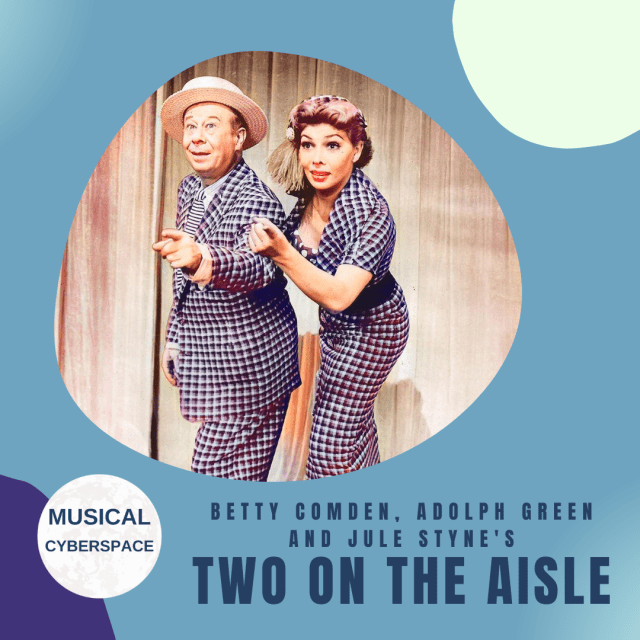
Bert Lahr and Delores Gray in TWO ON THE AISLE
Bert Lahr and Delores Gray in Two on the Aisle

Two on the Aisle was a landmark collaboration, Comden and Green’s first team-up with Jule Styne – and what a team they made! They went on to create classics like Bells Are Ringing, Do Re Mi and Hallelujah, Baby! while also having many successes outside their partnership. Comden and Green had already created On the Town with Leonard Bernstein and would soon work with him again on Wonderful Town, while Styne would go on to create one of the greatest musicals of all time with Stephen Sondheim, Gypsy.

Premiering at the Mark Hellinger Theater on July 19, 1951, Two on the Aisle was an evening of comedy routines and dazzling musical numbers, designed to showcase the legendary talents of Bert Lahr. Dolores Gray co-starred, adding her own sparkle to the proceedings, despite a well-documented backstage rivalry with Lahr. The show ran for 276 performances and left audiences cheering for more.

The many musical highlights in this show are all preserved on an excellent original cast album released by Decca. The show opens with a bouncy overture that sets the tone for an evening of fun and glamour. Show Train, the opening number, is a fantastic ride through Broadway’s hits of the time, packed with references to shows like Guys and Dolls and The King and I. Comden and Green’s sharp wit shines through, giving the audience a delightful ride into the revue. The ensemble is also given a chance to shine in the toe-tapping “Here She Comes Now.”

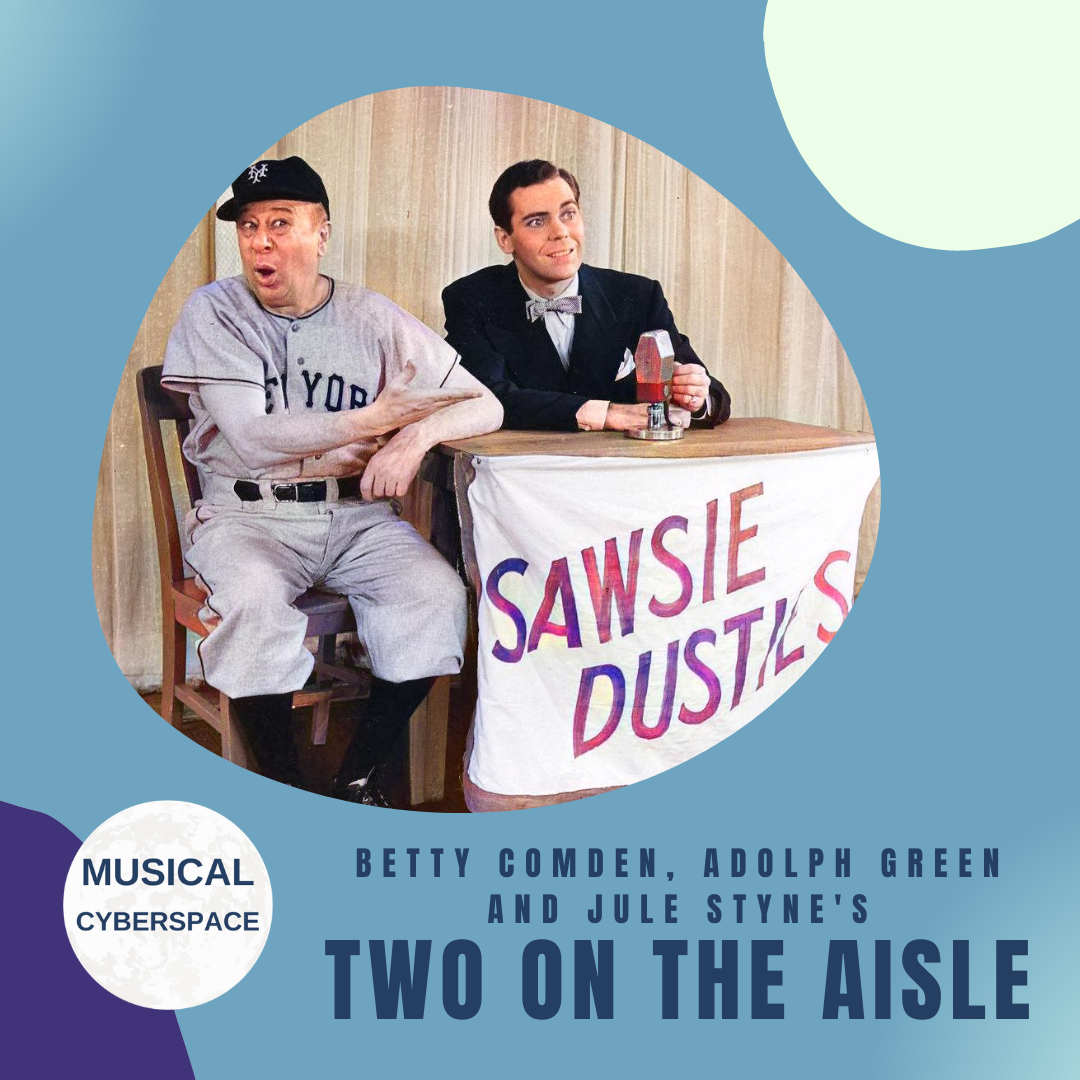
Bert Lahr and Elliott Reid in TWO ON THE AISLE

Gray has several numbers that showcase her appeal and vocal chops. “Hold Me, Hold Me, Hold Me” is charming and sweet, capturing the character’s yearning for affection over material wealth, while “If You Hadn’t, But You Did” sees her put off a song that starts off like a torch song, but delivers a twist that’s simply breathtaking. Comden and Green’s work in this latter song features some ingenious rhyming sequences and Gray’s performance is electrifying. “How Will He Know?” gives the audience a more typical period torch song, with Gray delivering a heartfelt performance as a woman in love with her boss. It’s sympathetic and touching, a quieter moment amidst the comedy and spectacle. Another song, the playful “Give a Little, Get a Little” is a joyful meditation on modern life, with rhythmic wordplay that’s utterly charming, even more so owing to Gray’s delivery of the lyric. The last of the showcase pieces created for Gray, “There Never Was a Baby Like My Baby,” stands out as a clever and memorable song, showcasing the kind of brilliance Comden and Green would show in their Hollywood classics, Singin’ in the Rain and The Band Wagon. Set to a seductive melody by Styne it’s a golden age song that begs to be rediscovered.

Gray teams up with Lahr in numbers like “Vaudeville Ain’t Dead/Catch Our Act at the Met,” a hilarious take on opera, filled with jolly puns and infectious energy. It’s a comedic goldmine that must have audiences of the time in stitches. Lahr’s star spot, “The Clown” is a great showcase for his unique talents. His work here proves that a little Lahr can go a long way. Those who loved his performance of “If I Were King of the Forest” as the Cowardly Lion in The Wizard of Oz, are sure to adore this number: it’s classic Lahr, full of whimsy and heart.

Delores Gray in TWO ON THE AISLE
Delores Gray in Two on the Aisle

On the whole, Two on the Aisle is a blast from the past that deserves to be remembered and celebrated. The cast recording is a treasure trove of the show’s brilliant performances and catchy tunes. If you haven’t given it a listen, now’s the time. Grab your headphones and let Two on the Aisle” take you back to a time when Broadway was all about glitz, glamour, and pure, unadulterated fun. This material is too good to be forgotten – so let’s give it the recognition it deserves!

Posted in The Saturday List | Tagged , , , , , , , , , , , , , , , , , , , , , , | Leave a comment

The Saturday List: Ranking all Seven of Lerner and Loewe’s Broadway Musicals

Today, we dive into the illustrious shared career of Alan Jay Lerner and Frederick Loewe, a duo celebrated for their contributions to musical theatre during the art form’s so-called golden age. Their partnership produced some of Broadway’s most memorable shows, following a small start in October 1942 with Life of the Party, an musical adaptation of Barry Connor’s farce The Patsy, which was written for a stock theatre company in Detroit and never played the Main Stem. We’re expanding our look beyond their “Big Five” Broadway shows (Brigadoon, Camelot, Gigi, My Fair Lady and Paint Your Wagon) to include their lesser-known works, What’s Up? and The Day Before Spring. (What’s not included is their final work, The Little Prince, which was written for the silver screen rather than the stage.) With the formalities out of the way, it’s time to see how these seven musicals stack up!

Madison Claire Parks in York Theatre's THE DAY BEFORE SPRING; Keith Carradine, Jenni Barber, Caleb Damschroder and the company of the Encores! presentation of PAINT YOUR WAGON; and Corey Cott in the Broadway revival of GIGI
Madison Claire Parks in York Theatre’s The Day Before Spring; Keith Carradine, Jenni Barber, Caleb Damschroder and the company of the Encores! presentation of Paint Your Wagon; and Corey Cott in the Broadway revival of Gigi

7. What’s Up? is an inauspicious wartime musical curio.

What’s Up? marked the first Broadway collaboration between Lerner and Loewe, with Arthur Pierson also contributing to the show’s book. Opening at the National Theatre in November 1943, this wartime musical about aviators quarantined in a boarding school for girls was directed and choreographed by George Balanchine. It closed after 63 performances. The book, though showing promise, was said to lack finesse, and the score, while catchy, feels old-fashioned, even in comparison with other shows of that time. Standout songs include “You’ve Got a Hold on Me,” which was recorded by Frank Sinatra and the sweet “My Last Love,” with versions by Brent Barrett and Steve Ross among others. Despite these highlights, What’s Up? is largely forgotten, and was not a hugely promising debut for the legendary duo.

6. The Day Before Spring is a footnote in Lerner and Loewe’s storied partnership.

In The Day Before Spring, the Lerner-Loewe partnership found its footing. This musical, which opened in November 1945 and ran for 167 performances, was directed by Edward Padula with choreography by Antony Tudor. The plot focuses on a married woman who, at a college reunion, contemplates leaving her husband for an old flame. The show lacks a cast recording, but some songs, like “You Haven’t Changed at All” and “My Love Is a Married Man,” are preserved in compilations, performed by the likes of Brent Barrett, Lauren Bacall, Julie Andrews and Ann Hampton Calloway. Despite occasional concert and lost musical-style revivals, this show remains a footnote in Lerner and Loewe’s canon, with nothing that truly caught on beyond its few lovely tunes.

5. Paint Your Wagon offers a brilliant score trapped in a misogynistic narrative.

Paint Your Wagon has an excellent score but is burdened by its bizarre and misogynistic wife-selling storyline. This show, which premiered in 1951, includes memorable tunes like “They Call the Wind Maria,” “How Can I Wait?” and “Wand’rin’ Star.” Despite its musical strengths, its problematic plot has prevented major revivals. If “I’m a Bad, Bad Man” from Annie Get Your Gun was too racy for audiences at the turn of the century, Paint Your Wagon isn’t likely to be seen in an unrevised form anytime soon. Indeed, a new production, with a revised libretto by David Rambo, premiered in 2005, but it never caught on. Most recently, it was presented in a staged concert production as part of New York City Center’s Encores! programme in March 2015, the kind of setting for which this show seems destined. Paint Your Wagon also spawned one of the weirdest movie musicals ever, adapting the show to create a polyamorous marriage between Lee Marvin, Clint Eastwood and Jean Seberg. Perhaps that’s just the Gen Z perspective the material needs for a true 21st-century reinvention?

4. Gigi transformed from an unforgettable film to a forgettable show.

Gigi differs from the other musicals on this list because it originated as a film musical which was then adapted for the stage some 15 years later. The 1958 film, with Leslie Caron in the title role, is unforgettable, despite its cringe-worthy opening number “Thank Heaven for Little Girls.” That number aside, Gigi is a delightful coming-of-age story set against a very specific social backdrop. The stage version dilutes the original’s magic. The songs “Gigi,” “The Night They Invented Champagne,” and “I Remember It Well” remain as charming as they ever were, but no stage actress has matched Caron’s iconic performance. Caron is, in a word, unforgettable – even if she was – to her dismay – dubbed by Betty Wand after she had filmed the songs to her own vocal tracks. The 2015 Broadway revival attempted to modernise the story but failed to capture the original’s charm. At least it ditched Gigi’s dreadfully sentimental introductory song, “The Earth and Other Minor Things,” and restored “The Parisians,” which sets up the character much better and starts off by giving her some sense of agency, something that is needed if this story is to endure in our modern times.

A thrilling dance from BRIGADOON; Julie Andrews in Broadway's original CAMELOT; and Vanessa Redgrave and Amara Okereke in MY FAIR LADY
A thrilling dance from Brigadoon; Julie Andrews in Broadway’s original Camelot; and Vanessa Redgrave and Amara Okereke in My Fair Lady

3. Brigadoon is a Scottish fantasy with an underrated score.

Brigadoon has grown on me over the years. On paper, the idea of a mysterious Scottish village that appears for only one day every century has always intrigued me. I’ve always loved the idea of Brigadoon. Yet initially, the show and its lesser film adaptation left me cold, even though I adored some of the score’s songs, including “The Heather on the Hill” and “Almost Like Being in Love.” For the most part, though, I found the songs forgettable and the whole thing felt a bit contrived – even silly at times. The 2017 Encores! staged concert, featuring Kelli O’Hara, Patrick Wilson, Stephanie J. Block and Aasif Mandvi, completely shifted my view of this show. What this presentation did best of all was showcase the score’s brilliance, which it preserves in a sparkling cast recording. In doing so, it really unlocked the full scope of the show’s ideas and the stakes at play. I’d love to see a full-scale contemporary Broadway revival blossom. Rumours of a “revisal” of the show surfaced in 2008, mentioning a book by John Guare that turned Brigadoon into a pacifist town that disappeared in 1939, sank without a trace. Truth be told, I don’t know how much revising it needs. What’s clear is that there is definitely more to Brigadoon there than there seems to be at first – or at least, there was to me.

2. Camelot is a deeply emotional, flawed masterpiece.

Camelot is Lerner and Loewe’s most deeply emotional show. Due to its complicated production history it remains a flawed masterpiece. A prologue, added later, helped audiences to reconcile the tone of the start of the show with its ending, but it still doesn’t all gel together perfectly, despite a winning score, full to the brim with fabulous songs like “Camelot,” “I Loved You Once in Silence” and “If Ever I Should Leave You.” Even what some might consider throwaway numbers like “Then You May Take Me to the Fair” shimmer with sheer magnificence. Every revival, including the 2023 production with a revised book by Aaron Sorkin, has tried to fix the show’s flaws, but perhaps its beauty lies in its imperfections, much like the tragic flaw that sank King Arthur’s idealistic vision for a world where “might”doesn’t equal “right.” As it is, the show is still incredibly moving and there’s no better introduction to it than through the original Broadway cast recording with Richard Burton and Julie Andrews.

1. My Fair Lady is the quintessential Lerner and Loewe masterwork.

Widely regarded as a perfect musical, My Fair Lady isn’t without its faults, particularly in its lyrics. For a man who had a reputation of agonising for weeks over a single lyric, Lerner certainly let his share of duds through and some make their way into My Fair Lady, the worst offender being the use of ‘hung’ instead of ‘hanged’ in the opening number, a choice which hamstrings the leading man even as it establishes him. That said, the show is the best of the Lerner and Loewe shows: it is exquisitely constructed, the characters play off one another wonderfully and the songs (including “Wouldn’t It Be Loverly?,” “I Could Have Danced All Night” and “I’ve Grown Accustomed to Her Face”) became standards the instant they were introduced by Rex Harrison, Julie Andrews and the rest of the original Broadway cast. It’s most certainly Lerner and Loewe’s masterwork and has proved to be a show for the ages.

Final thoughts

Lerner and Loewe’s contribution to Broadway is enshrined in the pantheon of musical theatre greats, offering a repertoire that continues to captivate and enchant audiences. While they lack the socio-political heft of works like Richard Rodgers, Oscar Hammerstein II and Joshua Logan’s South Pacific, the charm, wit and timeless melodies they infused into their musicals ensure their lasting legacy. From the idyllic Scottish hills of Brigadoon to the majestic halls of Camelot, and the transformative journey of Eliza Doolittle in My Fair Lady, their stories and songs remain perennial favourites. As we conclude this reflection on their illustrious career, let us celebrate the magic they created on stage, and raise a glass to Alan Jay Lerner and Frederick Loewe, whose musicals will continue to shine brightly for generations to come.

Posted in The Saturday List | Tagged , , , , , , , , , , , , , , , , , , , , , , , , , , , , , , , , , , , , , , , , , | 1 Comment

Forgotten Musicals Friday: FELA! – A Bold and Brilliant Afrobeat Revolution

TGIF, theatre buffs – it’s time for Forgotten Musicals Friday! This week, we’re diving into a more recent, truly unique gem that pulsates with rhythms and rebellion – Fela! A musical that is as audacious as its namesake, Fela Kuti, this show brought an authentically African sensibility to the stage in its runs on Broadway and in the West End, breaking away from typical musical theatre fare. Let’s explore why Fela! deserves to be remembered and celebrated – and consider why it could be considered a forgotten musical, even so soon after its original theatrical run only 15 years ago.

Sahr Ngaujah in FELA!
Sahr Ngaujah in Fela!

Fela! is a biographical jukebox musical with a book by Bill T. Jones and Jim Lewis, featuring the powerful and politically charged music of Nigerian legend Fela Kuti. Known for pioneering the Afrobeat genre, Kuti was not just a musical icon but a fearless activist too. The musical is set during the peak of his influence in the late 1970s, a time when Nigeria was experiencing extreme political turmoil.

Imagine being in the legendary Lagos nightclub, The Shrine, where Kuti’s electrifying performances were a beacon of resistance against oppression. Fela! captures this atmosphere vividly, which is exhilarating, but it also focuses on the darker periods of Kuti’s life. Jones and Lewis built the show around the government-ordered army raid of Kuti’s compound, the Kalakuta Republic. In this targeted attack, a thousand soldiers were sent to shut him down, burning the compound to the ground after torturing Kuti and many other people who lived there, including his mother, Funmilayo Ransome-Kuti, who was thrown from a window of the second floor of the compound and died eight weeks later as a result of her injuries.

The complicated relationship between Fela and his mother is a key element of the show, intertwining Kuti’s revolutionary music with his personal battles. Ransome-Kuti was a staunch civil rights activist and while the show makes it clear that Funmilayo and Fela are on the same page when it comes to opposing social injustice, the manifestations of their unyielding opposition to Nigeria’s military dictatorship were a source of conflict between them.

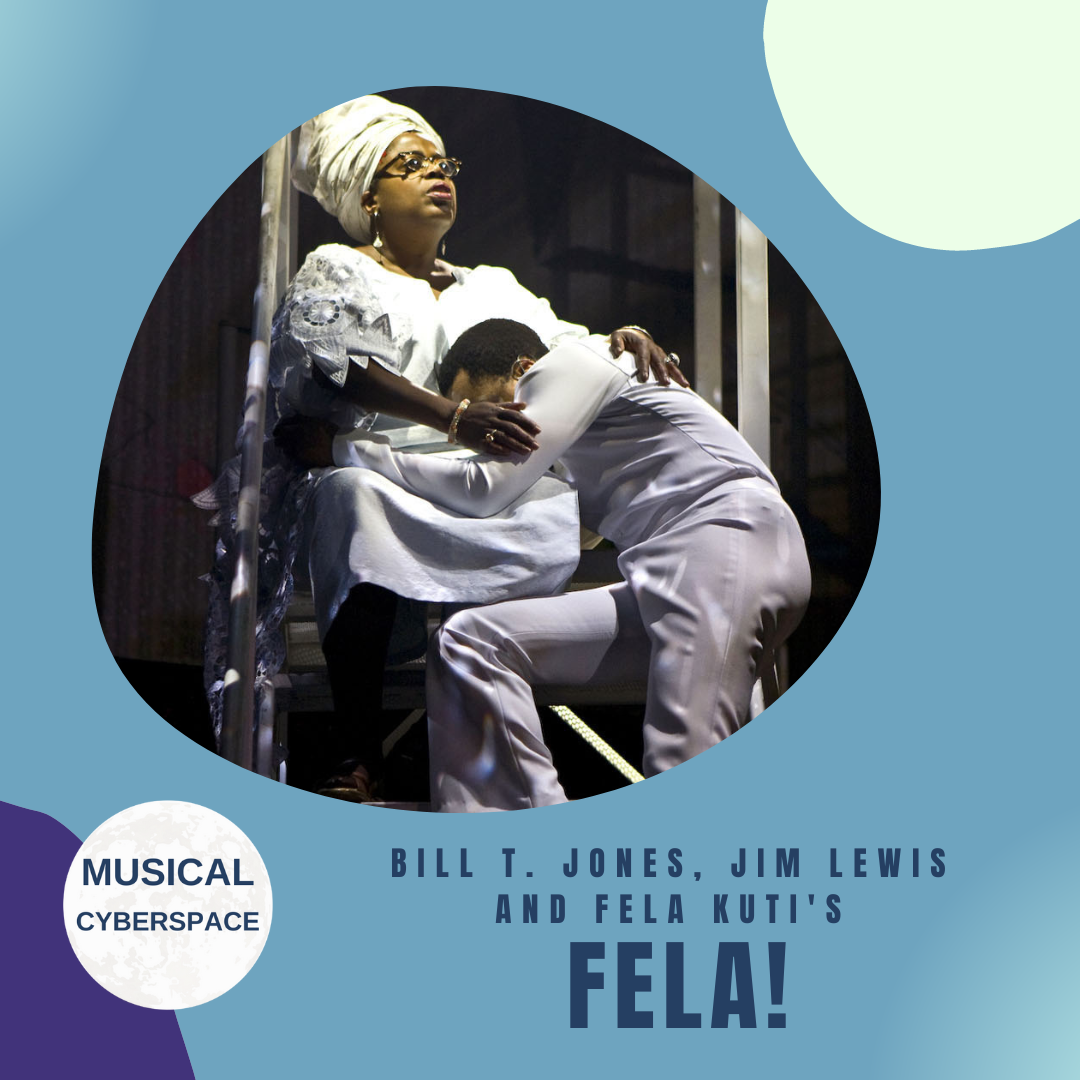
Lillias White and Kevin Mambo in FELA!
Lillias White and Kevin Mambo in Fela!

While the show and its songs are strong on storytelling, its structure is unconventional. In some ways, Fela! is like a gloriously enveloping fever dream, one idea inspiring another rather than following the typical cause-and-effect structure of most musicals. In addition to dramatising key moments and conflicts in Fela’s life, it takes time, for instance, to delve into the mechanics of the Afrobeat sound, exploring how it blends West African rhythms with funk and jazz influences. This approach to the musical inspires rich and vivid imagery, both in the show’s design and its choreography, with powerful visual symbolism built into the book of the show. Without crossing the line into spoiler territory, it’s worth mentioning that Kuti’s presentation of his mother’s symbolic coffin to the Nigerian military a year after her death inspires one of the most gripping moments of the show. It’s moments like this, where history, legend and art come together, using songs like “Coffin for Head of State” that this show is at its most powerful.

Fela! had a brief but impactful run Off-Broadway in 2008 before opening at Broadway’s Eugene O’Neill Theatre in 2009. Audiences went wild for the show’s boldness and brilliance, with celebrities like Alicia Keys, Jay-Z, Beyoncé, Charlize Theron and David Byrne all endorsing the show, much in the way celebrities would come to bat for Hamilton when it was first performed. It garnered an impressive eleven Tony nominations, winning three for Best Choreography, Best Costume Design and Best Sound Design. Despite the show’s energy and authenticity, it lost the Best Musical prize to one of the most lacklustre Tony-Award-winning Best Musicals of all time, Memphis. It had previously lost the equivalent Drama Desk award to Billy Elliot and would go on to lose the Laurence Olivier Award to Legally Blonde.

Perhaps one of the reasons that Fela! remains somewhat under the radar is its lack of achievement at that topmost level of the musical theatre awards industry. However, many musicals that don’t take home Best Musical awards endure, so this can’t be the totality of it.

Kevin Mambo and the cast of FELA!
Kevin Mambo and the cast of Fela!

Is it some kind of controversy that keeps the show bubbling under instead of breaking through? Fela! could fit the bill in a couple of cases here. Two legal suits were raised against the show, one by Marilyn Nance, a photographer who claimed the show used one of her images without permission and the other by Carlos Moore, who sued for copyright infringement because of the use of his biography, Fela, Fela! This Bitch of a Life!, as source material for the show. In the former case, the photograph in question was replaced, with the producers claiming that they did not know the fragment of the photograph being used was Nance’s, while the latter was settled out of court, with credit given to Moore in the show’s credits and all subsequently published show materials. I’m also not convinced by this, as although these cases are well documented online, they rarely seem to be cited as a reason for anyone’s dissatisfaction with the show.

Perhaps a bit more convincing, even more so in a post #MeToo world, are the objections to the show’s bias towards Kuti and the way it skirts around his treatment of women, one of the points of conflict between him and his mother, who was a suffragist and women’s rights activist. The glossing over of Kuti’s polygamous lifestyle, reports of the domestic abuse of his 27 wives and his HIV/AIDS-denialism point toward a significant conflict that the show fails to address adequately, raising questions about the portrayal of male icons and their unchecked behaviour towards women.

Most of all though, I think Fela slides into the realm of the forgotten musical because it doesn’t fit the typical Broadway musical mould. It’s raw, unfiltered and unapologetically African in its approach, as it has to be given its used of Kuti’s songs as the key medium of its storytelling. This makes it a tough sell in arenas where musicals catch fire outside of top-tier professional productions, such as community theatre productions and in schools, where its edgy subject matter also counts against it. Indeed, it has even been an anomaly on professional stages since its debut, with the first new production only making its bow only last year.

Even so, Fela! matters. Fela! is not just a musical; it represents a movement. It’s a celebration of the power of music as a tool for social change. Its infectious energy, defiant spirit and unforgettable music make it a standout piece in the world of musical theatre. Fela! challenges our expectations of what a musical should be. It’s not just entertainment; it’s an experience that shakes you to your core, just like Kuti’s music did. The next time you’re looking to explore a show that is provocative and profoundly moving, give the cast album a listen and just for a moment, restore this revolutionary jukebox musical back into the spotlight where it belongs.

Posted in Forgotten Musicals Friday, Uncategorized | Tagged , , , , , , , , , , , , , , , , | Leave a comment

The Saturday List: Don’t Talk, Just Kiss – Ten Great Musical Moments of Love and Longing

Happy International Kissing Day! In celebration of the simple pleasures associated with kissing, let’s take a trip through some of the most memorable, passionate and significant kisses in musical theatre for this week’s Saturday List. These moments capture the essence of love, longing and sometimes, sheer awkwardness. Here are ten kisses that have left an indelible mark on the world of glamour and show tunes. Pucker up – but be warned, spoilers may follow!

10. Maria and Georg in The Sound of Music

The relationship between Maria and Georg comes to a touching culmination in The Sound of Music, which features a score by Richard Rodgers and Oscar Hammerstein II and a book by Howard Lindsay and Russel Crouse. The kiss in the original stage version precedes the dirge-like, but well-intentioned “An Ordinary Couple” and it’s Lindsay and Crouse’s lead-in dialogue that gives one the giggles. ‘When you were a very little girl,’ Georg says, ‘did a very little boy ever kiss you?’ Maria replies in the affirmative, and the Captain tells her it is very different from kissing a man. He then shows her, and she exclaims, ‘It is different!’ This kiss, though giggle-inducing, marks a clear manifestation of their heartfelt connection. It’s a gentle reminder that sometimes, first kisses are a mix of nerves and joy.

Some of Broadway's greatest couple stans, from THE COLOUR PURPLE, RENT and MOULIN ROUGE
Some of Broadway’s greatest couple stans, from The Color Purple, RENT and Moulin Rouge

9. Christian and Satine in Moulin Rouge

In Moulin Rouge, written by John Logan to fit a jukebox score, the kiss during the “Elephant Love Medley” is the climax of a spectacular theatrical sequence. Christian, fully believing in their love, has returned to Satine, who up until now has thought him to be totally ridiculous, and she eventually reciprocates his affections. This kiss is a rapturous epitome of their intense, forbidden romance, setting up the emotional journey of the second act. where they share a second kiss during “Come What May.” That second kiss takes place when the stakes are higher and their passion has matured a little, so it could be argued that it is more impactful – but it simply doesn’t measure up to that moment when Christian holds Satine in his arms and leans over to kiss her in a most romantic of act-closers.

8. Angel and Collins in RENT

Jonathan Larson’s RENT is filled with kisses, but the best ones belong to Collins and Angel. Their duet, “I’ll Cover You,” promises, in fact, ‘a thousand sweet kisses.’ Their sentimental kiss in the snow during “Christmas Bells” and their more performative one in “La Vie Boheme” highlight a deeply profound love that is also politically important. Angel’s death in Act II is heart-wrenching, making their initial kiss all the more meaningful. We weep for the loss of the most authentic individual in the show and for the depth of pain that Collins feels. And to think, it all started with a joyous little bop on the street with some cheeky choreography that lets these two characters dance deep into our hearts without us even realising it.

7. Celie and Shug in The Color Purple

Shug’s kiss with Celie in The Color Purple (with a book by Marsha Norman and a score by Brenda Russell, Allee Willis and Stephen Bray) was a groundbreaking moment of bisexual realness on Broadway. Celie, who has endured a lifetime of abuse first by her father and then by her husband, Mister, finds someone who cares for her well-being in Shug. Shug is a jazz singer who is also Mister’s longtime lover. She is in such bad shape when she arrives that Celie has to nurse her back to health despite disapproval from the local community. While tailoring a dress for Shug’s debut, Celie experiences feelings of warmth for the first time, while Shug learns more about Celie’s relationship with Mister. Their kiss during “What About Love?” is a natural yet surprising event that sets Celie on a path to self-love and empowerment. By the time the show ends, Celie has learned the lesson of love we all need to learn at some point – that true love starts by loving yourself.

Some of Broadway's greatest kisses, from FUN HOME, HAMILTON and WICKED
Some of Broadway’s greatest kisses, from Fun Home, Hamilton and Wicked

6. Elphaba and Fiyero in Wicked

In Stephen Schwartz and Winne Holzman’s Wicked, Elphaba and Fiyero’s kiss during “As Long As You’re Mine” is a passionate and intense moment. It comes at a cost too. Early in the show, Galinda is charmed by Fiyero’s good looks and shallow philosophy, while Elphaba is unimpressed. One makeover and some social protests later, Elphaba and Fiyero rescue a lion cub imprisoned in a cage designed to prevent any Animal from speaking, after which Elphaba revises her take on Fiyero, also lamenting that Fiyero will never love her in “I’m Not That Girl”. One unhappy marriage to Glinda later, Fiyero helps Elphaba – now in full Wicked Witch mode – escape from the Emerald City and decides to go with her, leaving Glinda behind. They confess their devotion to one another in a hidden forest, which leads to a hot and heavy kiss, a testament to their undeniable chemistry and the complicated nature of their relationship. Being wicked has never felt so good.

5. Alexander and Eliza in Hamilton

In Lin-Manuel Miranda’s Hamilton, the song “Helpless” gives us two kisses between Alexander and Eliza. At “A Winter’s Ball” hosted by Philip Schuyler, Eliza falls in love with Alexander, who reciprocates her feelings (“Helpless”), while Angelica suppresses her own feelings for the sake of their happiness (“Satisfied”). Alexander and Eliza’s first gentle kiss, his on her hand, is sweet, while their wedding kiss symbolizes their unity. “Helpless” captures the giddiness and all-consuming nature of love, making these kisses memorable and heartwarming. (Technically, the song gives us three kisses, but one is between Eliza and her father as he gives her away at her wedding. Even so, it’s also sweet – and kisses aren’t just about romance!)

4. Medium Alison and Joan in Fun Home

In Jeanine Tesori and Losa Kron’s Fun Home, Medium Alison’s kiss with Joan is an identity-affirming event. It takes place as part of the lead-in to the fantastic “I’m Changing My Major to Joan,” which in its chorus is a contemporary show tune in waltz time that is right up there with the best of Richard Rodgers’s waltzes from the Golden Age. In the scene, Medium Alison proudly tells Joan she has written a letter to her parents telling them that she is a lesbian, but begins to second-guess herself until Joan kisses her. Alison reciprocates almost immediately with a kiss of her own and later that night, she is delirious with the joy of self-discovery and something that feels a little bit like love.

Sometimes, it's all about the kiss (THE PHANTOM OF THE OPERA); sometimes, it's all about the moment before the kiss (SOUTH PACIFIC and WEST SIDE STORY)
Sometimes, it’s all about the kiss (The Phantom of the Opera); sometimes, it’s all about the moment before the kiss (South Pacific and West Side Story)

3. Tony and Maria in West Side Story

The iconic kiss between Tony and Maria during the “Dance at the Gym” in Leonard Bernstein, Arthur Laurents and Stephen Sondheim’s West Side Story captures their instant, passionate chemistry. Despite the feud between the Jets and the Sharks, their tender kiss stands out as a point of stillness in a whirlwind of conflict. Before this, Tony has been convinced that something important is waiting for him (“Something’s Coming”), while Maria, who has recently arrived from Puerto Rico, is not in love with Chino, the man everyone expects her to marry. This brief kiss sets in motion the tragic events that follow. When Bernardo pulls his sister away from Tony and sends her home, it becomes the moment when the ultimate war between the Jets and the Sharks begins.

2. Emile and Nellie in South Pacific

In South Pacific, the long-awaited kiss between Emile and Nellie is a masterclass in building anticipation. Their initial interactions are loaded with sexual tension, culminating in a kiss after Emile’s formal proposal later in the show. The brilliantly written opening scene brings the pair close to a kiss a couple of times, notably at the end of “Twin Soliloquies” which is perhaps loaded with even more sex and eroticism than any Golden Age show knew how to handle! As each wonders whether the other reciprocates their feelings of love, they drink their snifters of brandy and – well, it’s very, very sexy. A big ballad follows (“Some Enchanted Evening”) as does the hint at a marriage proposal, but any chance of a stolen kiss is interrupted by Henri’s announcement of the arrival of Nellie’s ‘zheep.’ Finally, after Nellie has vocalised her doubts about marrying Emile and even vowed to ‘wash that man right outta (her) hair,’ Emile arrives with a formal proposal. Their kiss, after a glorious reprise of “Some Enchanted Evening,” is a satisfying payoff that highlights their mutual adoration.  It’s brilliant drama from Richard Rodgers, Oscar Hammerstein II and Joshua Logan!

1. Christine and the Phantom in The Phantom of the Opera

The kiss between Christine and the Phantom in Andrew Lloyd Webber, Charles Hart and Richard Stilgoe’s The Phantom of the Opera is a powerful cornerstone of the show’s final scene. Exposed after Christine has removed his mask on stage to a horrified audience, the Phantom drags Christine back to his lair. Raoul comes to the rescue but is ensnared in the Phantom’s deadly Punjab lasso. In a dramatic reprise of “The Point of No Return,” the Phantom offers Christine an ultimatum: if she stays with him, he will spare Raoul; her refusal will sentence Raoul to death. Christine tells the Phantom that he’s not alone and kisses him. her kiss, filled with kindness and compassion, touches the Phantom deeply and he frees Raoul and lets them go. This kiss is the culmination of the entire show’s build-up, making it a long and wondrous moment that resonates with audiences, even as it horrifies Raoul, who simply doesn’t understand the extent of what has transpired between Christine and the Phantom.

Final Thoughts

Kissing in musical theatre is more than a mere romantic gesture; it’s a way to convey deep emotions, pivotal plot points and the complexities of relationships. These ten kisses, whether awkward, tender, or passionate, remind us of the magic of love and the significance of a simple kiss. Which of your favourites have we left out? Let us know in the comments! And remember – it doesn’t have to be International Kissing Day for us to celebrate the beauty and joy of kissing for kissing’s sake. Spread the love!

Posted in The Saturday List | Tagged , , , , , , , , , , , , , , , , , , , , , , , , , , , , , , , | Leave a comment

Forgotten Musicals Friday: Wartime Unity and Cultural Controversy in THIS IS THE ARMY

Welcome back, theatre aficionados, to the thrilling reboot edition of Forgotten Musicals Friday! Having focused on improving the regularity of our engagement on the site for the last six months, we ran a poll on our Instagram account last week to find out what we could add as a second weekly feature on the site – and the return of Forgotten Musicals Friday came out tops! This week, we’re diving into a wartime classic that certainly boosted military morale during World War II, while simultaneously breaking new ground in the arts and placing itself, in some ways, on the wrong side of the cultural conversations of the time. So let’s dust off our military fatigues and march into the world of This Is The Army!

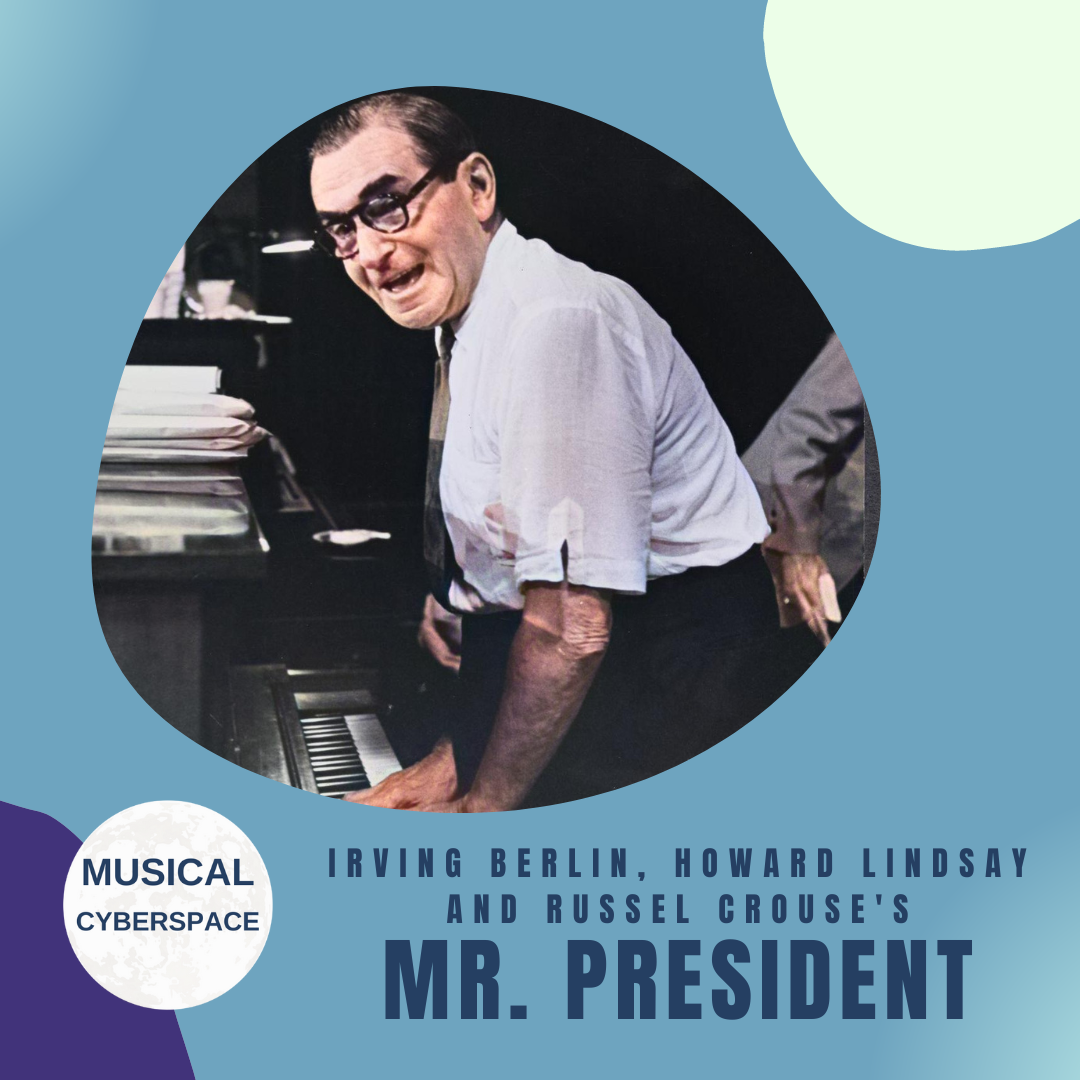
Irving Berlin and the company of THIS IS THE ARMY on stage
Irving Berlin and the company of This is the Army on stage

Picture it: July 4, 1942. The Broadway Theatre is abuzz with excitement as the military revue, This Is The Army, premieres to an enthusiastic audience. With music and lyrics by the legendary Irving Berlin and a book by James McColl, with dialogue for the minstrel show (more on that later!) by Private Jack Mendelsohn, Private First Class Richard Burdick and Private Tom McDonnell, this revue was no ordinary show. It was a patriotic spectacle designed to lift the spirits of a nation at war, produced by none other than the United States Army – whimsically credited as Uncle Sam in the production credits – itself. And boy, did it deliver! The show ran for 113 performances on Broadway before embarking on a national tour, hitting major cities across the USA from Washington to San Francisco, D.C. to Los Angeles, raising a staggering $2 million for the Army Emergency Relief Fund. This wasn’t just a show; it was a nationwide phenomenon that brought joy and unity during dark times.

The concept of unity is an interesting and complex part of the history of This is the Army, which was a follow-up to Berlin’s World War I wartime revue, Yip Yip Yaphank. In the earlier show, there was no racial integration in the cast. This time around, Berlin insisted on racial integration – or at least a version of it. In 1942, when the show was written and staged, there were no racially integrated units in the United States Army. Because the show was to be performed by a specially formed unit, the company created for This is the Army would be the first to be racially integrated. As such, the soldiers lived and worked together at Camp Upton where the show was rehearsed; ironically, they did not appear on stage simultaneously. Berlin wrote a special number titled “What the Well-Dressed Man in Harlem Will Wear” for the African American performers and sharp ears might note its rhymic similarity to another Berlin song, “Puttin’ On the Ritz,” itself an ode to the 1920s-based social observation of fashionable African American people strutting their stuff in Lenox Avenue. Berlin simply played the song over and over until it took on its new form.

Corporal James Cross, one of the cast members of This is the Army.

At the heart of the evolution from “Puttin’ On the Ritz” to “What the Well-Dressed Man in Harlem Will Wear,” there is a transaction founded Berlin’s stereotypical views of African American people and his perception of African American music. It’s a very short road from this kind of discernment to Berlin’s view on minstrel shows and blackface. It is well documented that Berlin had hoped to reproduce the minstrel show sequence from Yip Yip Yaphank, which featured more than 100 soldiers sitting on bleachers in blackface, in This is the Army. Ezra Stone, the director of This is the Army, had an unambiguous response to this idea:

I know the heritage of the minstrel show. Those days are gone. People don’t do that anymore.

Berlin disagreed with him, writing off Stone’s views as progressive nonsense. Eventually, Stone talked Berlin around the idea of having the entire company in blackface, convincing him of its impracticality. Even so, the opening sequence was still sub-titled “A Military Minstrel Show” and it still included the reproduction of the song “Mandy” from Yip Yip Yaphank, in which blackface was still used. It’s a most perplexing muddle of racism and an attempt to move away from it.

Another blight on the vision of unity that This is the Army was Berlin’s later diatribe about the number of Jewish performers in the show. In his opinion, there were ‘too many’ and he wanted to rationalise the inclusion of ethnicities in the show. Given that Berlin himself was Jewish, the son of a cantor, this hits hard. Given the wider context of World War II and the Holocaust, it’s pretty much unforgivable.

Berlin’s personal politics aside, This is the Army played a significant role in building the military’s esprit de corps, humanising the soldiers’ experiences for civilians who saw the show and raising money for the relief fund. By contemporary standards, it’s perhaps easy to dismiss the score, which is full of catchy ditties about army life (like “This Is the Army” and “The Army’s Made a Man Out of Me”), sentimental ballads about the things soldiers leave behind (such as “I’m Getting Tired So I Can Sleep”) and patriotic anthems (including “American Eagles” and “This Time”). But this doesn’t take into account how it landed in the 1940s. One can imagine just how stirring this production must have been back then, when the life of a loved one – or even your own – was hanging in the balance. Suddenly, something straightforward and perhaps even ostensibly trite, takes on another dimension and becomes something extraordinary.

Indeed, the show was so impactful that Warner Brothers paid $250 000 for the film rights, which Berlin granted on condition that the rights and profits from the motion picture were donated to the army. The film version of This is the Army combined elements from both Yip Yip Yaphank and This is the Army, structuring everything around a fictional backstage story about the making of the two shows. It became the highest-grossing musical film of all time for a little more than a decade and was nominated for three Academy Awards, winning one for Best Scoring of a Musical Picture.

Members of the United States Army Signal Corps in drag in THIS IS THE ARMY

The success didn’t stop in the United States. In 1943, the stage version of This Is The Army crossed the Atlantic, performing in London, Glasgow, Naples and Rome, and then leapt into North Africa for some time in Cairo before heading east to perform in Iran and even further afield in New Guinea, Guam, Leyte, Okinawa and Iwo Jima before wrapping things in Honolulu and on Maui in 1945. Berlin joined the tour to sing his signature wartime tune, “Oh! How I Hate to Get Up in the Morning,” and made local adaptations for the show, including “My British Buddy,” as it made its way around the world.

Considering this show’s legacy is not easy. As a topical revue, it’s obviously not the kind of show that can be revived. It also has problematic elements, not only from our modern-day view but from a contemporary perspective too. Perhaps, like the 2016 revival-adaptation of Shuffle Along, retitled A 2016 adaptation, Shuffle Along, or, the Making of the Musical Sensation of 1921 and All That Followed, revisiting this show needs to recognise its social context. This was the approach taken when This is the Army received a tribute in a performance at 54 Below to mark its 75th anniversary. Directed and produced by Jason Ferguson, the concert sported a revised book (also by Ferguson) based on Alan Anderson’s memoir The Songwriter Goes to War and included the expected story of how the first racially integrated army unit came to be alongside tales of openly gay soldiers in the unit who risked military prison and how the company avoided brushes with death during their trips in combat zones. Anderson was the stage manager of This is the Army and his book is one to add to your reading list if you haven’t already read it.

So there you have it – a forgotten gem that not only entertained audiences in the 1940s, but also gives us a snapshot into that place and time, when social and cultural politics were shifting in ways that are, perhaps, not all that dissimilar to the shifts we navigate today. Until next time, dear readers, keep those jazz hands ready and your spirits high!

Posted in Forgotten Musicals Friday | Tagged , , , , , , , , , , , , , , , , | Leave a comment

The Saturday List: Which Loesser Offers More?

Frank Loesser’s legacy in musical theatre is nothing short of monumental, his creations being a testament to the power of wit, melody and drama. On what would have been his birthday, we celebrate the Broadway works that solidified his place among the pantheon of musical theatre giants. From whimsical misfires to groundbreaking triumphs, Loesser’s Broadway journey is a kaleidoscope of innovation and influence. As we toast the man behind some of the most memorable scores ever to grace this best of all possible theatre districts, let’s rank his five Broadway shows. Which of these productions truly encapsulates Loesser’s genius and continues to enchant audiences today? Well, let’s buckle up for a dive into the work of Frank Loesser on Broadway and see!

More or Loesser? Daniel Radcliffe and John Larroquette in How to Succeed in Business Without Really Trying, Shuler Hensley and Laura Benanti in The Most Happy Fella and Faith Prince and Nathan Lane in Guys and Dolls.

5. Where’s Charley? is a whirlwind mixture of courtship, farce and show tunes.

Where’s Charley? wasn’t just Loesser’s first full-scale Broadway musical; it’s a cocktail of bold choices and classic farce. Adapted from Brandon Thomas’s Charley’s Aunt, the play follows the troubles of two Oxonians, Jack and Charley, who cook up a scheme in which Charley will dress up as his aunt, Donna Lucia D’Alvadorez, so that they can avoid the scandal of meeting with their girlfriends without a chaperone.

George Abbott’s book threw caution to the wind by merging two characters (Charley and his aunt’s impersonator) into one, giving Ray Bolger a starring role that let him shine brighter than a Broadway marquee and win a Tony Award for his efforts.

The songs, perhaps more decorative than narrative, hit some high notes. “My Darling, My Darling” and “Lovelier Than Ever” reveal tender portraits of love across generations, while songs like “Better Get Out of Here” and “Make a Miracle” foreshadow Loesser’s later genius in Guys and Dolls. In that latter song, Amy gives us a bouncy prelude to Miss Adelaide as a musical theatre heroine who turns to books when romantic problems arise. The real showstopper is “Once in Love with Amy,” a song so infectious that Bolger’s encores turned the show into an impromptu singalong. Loesser’s attempt at an English period pastiche is mostly charming, even if songs like “The New Ashmolean Marching Society And Students’ Conservatory Band” feel like they escaped from the score of something like The Music Man.

Modern critics might call Where’s Charley? pleasant but not dazzling, yet its 792-performance run on Broadway, its subsequent success in London and 1952 film adaptation tell a different story: in its day, it was the cat’s pyjamas of musical comedy.

4. Greenwillow‘s misplaced whimsy still has a score worth revisiting.

Greenwillow was Loesser’s penultimate Broadway effort, a peculiar and whimsical musical that didn’t quite find its footing. With a book by Lesser Samuels built around Loesser’s music and lyrics, it spins a yarn about the magical eponymous town, where the eldest Briggs men are compelled to obey a “call to wander,” leaving behind their wives, who tend their homes and raise their children, all the while hoping for a reunion with their husbands. The eldest Briggs boy of the current generation is Gideon, who is desperate to settle down with his love, Dorrie, and break this cycle.

Although it premiered in 1960, Greenwillow feels oddly displaced, as if it belongs to the 1940s. It attempts to capture the whimsical charm of Alan Jay Lerner and Frederick Loewe’s Brigadoon and E. Y. Harburg, Fred Saidy and Burton Lane’s Finian’s Rainbow but lacks the stakes and satire that respectively make those shows successful and relevant. The problems must largely have originated in Samuels’s book, as Loesser’s folksy score hit some high notes. Songs like “Could’ve Been a Ring” and “Gideon Briggs, I Love You” bring playful humour to the proceedings, while “Summertime Love” is filled with a delicious sense of yearning. The standout hit, “Never Will I Marry,” which went on to be recorded by icons like Barbra Streisand and Judy Garland, takes on a profound subtext for us today when we hear it sung by its originator, Anthony Perkins, resonating as an LGBTQ-themed torch song just as the gay rights movement gained momentum toward Stonewall.

Greenwillow might just be ripe for a revisal. As it stands, it’s a bit twee, but with a score dotted with fantastic gems, it has the potential to be a grand affair. Perhaps a modern reinterpretation could uncover its latent brilliance.

3. How to Succeed in Business Without Really Trying is a sharp satire with timeless tunes.

How to Succeed in Business Without Really Trying is a zany workplace satire with a book by Abe Burrows, Jack Weinstock and Willie Gilbert, and a score that showcases Loesser’s undeniable wit. Following the ambitious J. Pierrepont Finch, who skyrockets from window washer to chairman of the World Wide Wicket Company, the musical skewers corporate culture with biting humour. Its acclaim is well-deserved, having nabbed the Tony Award for Best Musical and the prestigious Pulitzer Prize for Drama, also sweeping the Tonys with seven wins out of eight nominations, including Best Author and Best Score.

This show resonated with the social politics of its time and continues to captivate audiences, as evidenced by the gender-fluid revival in London in 2023. Songs like “Paris Original” and “I Believe in You” drip with wit, while “Brotherhood of Man” delivers a rousing, show-stopping 11 o’clock number. The original 1961 production was a smash hit, running for 1 417 performances, and has since seen two Broadway revivals, as well as film and TV adaptations.

How to Succeed in Business Without Really Trying has proven a stellar vehicle for stars like Robert Morse, Matthew Broderick, Ralph Macchio, Daniel Radcliffe, Nick Jonas and Darren Criss. Even the casting of the book’s voice has featured notable names like Walter Cronkite, Anderson Cooper and Michelle Visage. This timeless musical remains a brilliant commentary on ambition and corporate shenanigans, with a score that keeps audiences laughing and tapping their toes.

2. The Most Happy Fella is Tony-snubbed but remains an epic Loesser legacy.

The Most Happy Fella might have been the biggest loser at the 11th Tony Awards, overshadowed by the juggernaut My Fair Lady, but in hindsight, it’s clear which show was the lesser of the two. Sorry, not sorry: it wasn’t the Loesser show. Loesser’s ambitious opus, with book, lyrics, and music all penned by him, makes Lerner and Loewe’s efforts look like child’s play. Viewed through the 20/20 lens of hindsight, The Most Happy Fella is a monumental influence on American musical theatre, building on the foundations laid by Show Boat, which were further developed by Richard Rodgers and Oscar Hammerstein II, and paving the way for the sophisticated works of Stephen Sondheim and the lush, mature soundscapes of Craig Lucas and Adam Guettel’s The Light in the Piazza.

Based on Sidney Howard’s They Knew What They Wanted, the musical centres on the romance between Tony, an older Italian-American grape farmer, and Rosabella (whose real name is – spoiler alert – Amy), a San Francisco waitress. Their relationship, sparked by a tip in the form of an amethyst tie-pin and sustained through heartfelt letters, takes a dramatic turn when Amy discovers Tony has sent her a photo of his foreman, Joe, instead of himself – after she has travelled to Napa to marry him. The ensuing drama, which follows Tony’s life-threatening injury on their wedding night and Amy’s tryst with Joe, which leaves her pregnant, unfolds against the vast, mythical backdrop of 1950s America, evoking the grandeur of Edna Ferber’s Giant and the way that the movies viewed the United States in the decade following World War II. The full power of the show culminates in its final scenes, with Tony and Amy standing before each other, sure for the first time of who they are to themselves and each other.

Some people say The Most Happy Fella is more an opera than a musical. They’re wrong. Loesser’s score is an expansive, dramatic tapestry firmly rooted in the musical theatre tradition; Loesser himself accurately described the show as ‘a musical with (a lot of) music.’ The show’s takeaway songs, the whimsical “Standing on the Corner” and the rousing “Big D,” are just the tip of the iceberg when it comes to this gorgeous score. The title tune, “The Most Happy Fella,” is ebullient as is “I Like Everybody,” while “My Heart Is So Full of You” delivers raw emotion and “Somebody, Somewhere” gives us a dreamy ‘I Want’ song for the ages.

Despite being snubbed at the Tony Awards, The Most Happy Fella is a superb drama that deserves full-scale revivals. It’s a testament to Loesser’s genius, a richly woven narrative that we should celebrate and revisit in today’s theatrical landscape.

1. Guys and Dolls is a jackpot of Broadway brilliance and high-stakes romance.

Guys and Dolls is the Broadway musical equivalent of a high-stakes poker game where every hand is a royal flush. Loesser’s second Broadway outing, based on Damon Runyon’s colourful tales, hit the jackpot with a book by Abe Burrows that turned Jo Swerling’s unusable draft into pure gold.

The story follows Nathan Detroit, a man juggling a floating crap game and his exasperated fiancée, Miss Adelaide, and his bet with Sky Masterson that he can’t woo the pious Sarah Brown. Spoiler: Sky wins more than just the bet. This show is a masterclass in musical integration; every song is a gem with the narrative seamlessly woven into the score. From the infectiously catchy “Fugue for Tinhorns” to the tender “I’ll Know” (an exemplary variation on the conditional love song in the Rodgers and Hammerstein tradition) and the joyous “If I Were a Bell,” Loesser’s score is unparalleled. Miss Adelaide’s Hot Box numbers (“A Bushel and a Peck” and “Take Back Your Mink”) are comedic gold, while “Sit Down You’re Rocking the Boat” practically brings down the house. “Luck Be a Lady” brims with tension and drama, proving this score has it all. The characters are vivid and relatable, balancing humour with heart. It’s no wonder the original production ran for 1 200 performances and scooped five Tony Awards.

Personal nostalgia aside — I performed in this show in high school and later choreographed a production — I think it’s difficult to mount a bad production of Guys and Dolls. It’s that foolproof. That said, the 2009 Broadway revival managed to do what seemed impossible and flopped, folding after 113 performances. Nonetheless, Guys and Dolls remains the golden standard for Golden Age musical comedies, a timeless triumph that continues to captivate today’s audiences, something the 2023 London revival of the show does in spades.

Final Thoughts

Loesser’s indelible mark on Broadway is etched into history with phenomenal musicals that continue to resonate with audiences. While we can only imagine what might have been had Pleasures and Palaces been reworked and made it to Broadway instead of folding out of town, we still have an abundance of his genius to celebrate. From the high-flying antics of J. Pierrepont Finch to the heartwarming romance between Tony and his Rosabella, Amy, in Napa Valley, Loesser’s works are a testament to his extraordinary talent and vision. As we commemorate his birthday, let’s toast to the timeless melodies, the sharp wit, and the unforgettable characters he brought to life. Here’s to Frank Loesser, whose legacy will keep audiences singing and smiling for generations to come.

Posted in The Saturday List | Tagged , , , , , , , , , , , , , , , , , , , , , , , , , , , , , , , , , , , , , , , , , , , , , , , , , , , , | Leave a comment

The Saturday List: Brilliance and Resilience at the 2024 Tony Awards

Ah, the Tony Awards – a night meant to celebrate the dazzling world of Broadway with all the glitz and glamour one can muster. Yet this year, things were more – with apologies to Stephen Sondheim – comedy tomorrow, tragedy tonight, with the ceremony offering an opening number as thrilling as Mister Monotony’s slide trombone and camerawork that might send Guido Contini into an even deeper creative crisis than the one he faced in Nine. As if that weren’t enough, the entire evening was marred by a staggering lack of vision, leaving us to wonder if anyone in charge remembered what these awards signify. But fear not, dear readers, for even in the midst of such calamity, there were diamonds to be found among the rough. As awards were handed out and heartfelt thank-yous were delivered, there were moments that shone brightly. In this column, we will endeavour to sweep aside the lowlights and embrace the highs, celebrating the best of what this year’s Tony Awards had to offer. So, sit back, relax, and let’s find the silver lining in this theatrical storm.

The casts of HELL'S KITCHEN, MERRILY WE ROLL ALONG and ILLINOISE at the Tony Awards.
The casts of Hell’s Kitchen, Merrily We Woll Along and Illinoise at the Tony Awards

Before we jump into the main list, how about a few honourable mentions? All of these moments gave us the feels.

  • Linda Cho’s nod to how much the world has changed since her mom told her, ‘You’re a woman, you’re a minority, you will never succeed in anything artistic.’ Things are changing.
  • David Zinn’s reflection on ‘what turns a room into a poem.’ He was talking about design, but this is the transformative act that is theatre in and of itself.
  • Hana S. Kim’s speechless speech, which just reminds us all of being recognised for who we are, and having that person embraced.
  • Branden Jacobs Jenkins, whose plays have been considered twice for Pulitzer Prizes, thanking Carole Rothman for saying yes to Appropriate, which won the Tony Award for Best Revival of a Play, ‘after years and years of being told I was too risky, I was too provocative and too not commercial enough,’ because staying true to yourself as an artist is one of the hardest vocations of them all.
  • The outstanding “In Memorium” segment, supported by Nicole Scherzinger’s delivery of “What I Did For Love,” which paid tribute to the members of our artistic community we lost this past year.

10. The Opening Montage of Act One

Act One started off with a montage of clips from shows and interviews that gave a recap of the season. Perhaps it lacked a little context in its setup, but it was super to see the focus on the creative disciplines in this segment and to catch moments from shows that would not receive major attention in the full ceremony. What this clip captured that many parts of the main ceremony didn’t was a love for the theatre that felt authentic; there was a stark juxtaposition in this authenticity almost as soon as the hosts for Act One, Julianne Hough and Utkarsh Ambudkar, walked out and started their banter, with bits that just felt pat and flat. To be fair, Hough did have a few moments when she tried to be genuine about her love for dance as a universal language, but even these came across as manufactured and postered. So when returning to the clip upon a second viewing of the ceremony, its sense of truth just stood out even more.

9. The Greasers are Gonna Have Their Way Tonight

In The Outsiders, one piece of choreography and its technical design has already entered the annals of theatrical legend. Late in the show, the Greasers and Socs brutally fight one another in the pouring rain, and part of this sequence was showcased in the performance from the show, alongside “Tulsa ’67” and “Grease Got a Hold.” It’s proof of just how stirring theatre can be when everything comes together perfectly.

8. CJay Philip’s Drama Lesson

CJay Philip was presented the Excellence in Theatre Education Award and ended her address to the audience with a collaborative mantra, something that revealed just how important theatre programmes in our schools are. In the clip that introduced her, Philip said:

I want my students to know that art is connective. It helps us to see each other, to be moved. It gets at the soul and the core of us as creative beings

Watch her acceptance speech below and join her in saying, ‘Let the light within you shine.’ And then go out and shine a light.

7. Dede Ayite’s Winning Speech

Dede Ayite’s words following her win for Best Costume Design of a Play for Jaja’s African Hair Braiding was a fabulous reminder of one of the markers of a truly great speech, meaningful thanks to those who have held you up on the journey; for her, this included ‘all the costume shops and makers who truly move the needle in terms of getting the glitz and glam on stage.’ It was also heartwarming to see an African winner afforded recognition for her role in helping to tell an African story.

6. Illinoise and the Beauty of Dance

No matter how many times it’s said out loud, Illinoise is still not a musical. What it is, is an incrediblepiece of dance theatre, something that was in evidence in the gorgeous performance of “The Predatory Wasp of the Palisades Is Out to Get Us!” Justin Peck’s choreography is a dream and there’s no doubt that Illinoise is a superb theatrical endeavour. But as in the case of Contact, another dance show nominated for and which actually went on to win Best Musical at the Tony Awards, Illinoise is a reminder there is just no space to recognise dance theatre at the Tony Awards. This means that shows like this one, and others that have gone before it, need to be shoehorned in somewhere else and consequently market themselves as something that they aren’t, which limits the development of and the accessibility to dance theatre in the wider context of theatre on Broadway. The best solution the Tony Awards could come up with in the past was a now-retired prize, Best Special Theatrical Event, which wasn’t really suitable to recognise productions told in the medium of dance either. Surely the American Theatre Wing and The Broadway League can do better than this?

5. Kecia Lewis is the Roman Empire of New York’s Hell’s Kitchen

The first performance from a nominated musical was a medley of numbers from Hell’s Kitchen. Much has already been said about the appearance of Alicia Keys and Jay-Z that was appended to this segment, with many citing it as a highlight of the ceremony. Yes, it was a vibe, but the stand-out in the selection performed from the show itself was Kecia Lewis, who would go on to win Best Performance by an Actress in a Featured Role in a Musical. Lewis delivered some smart singing that was emotionally impactful. Her acceptance her trophy was even more moving. Her humourous appeal at the start of her speech, which she read from her phone – ‘People, stop texting me, Jesus.’ – introduced a story of passion, commitment and sacrifice.

Being in this business 40 years I wanted to give up many times…. I’d like to thank my spiritual families over the years for their training and loving me just for me without having me even open my mouth and sing a note, particularly pastors Martin and Gail Watson, Reverend Darling, Palmer, and Dr. Hart Ramsey at Hunger Church Atlanta. To my family, aunt Ruth, who indulged me but still laughs about me standing in the mirror as a kid watching myself cry to see if I looked like a wonderful actress. My parents, the late John Henry Lewis and Betty Mae Lewis, and my heart that walks outside my body, my son, Simon Evans. Lastly, 40 years ago yesterday, I walked into the Imperial Theatre to begin my Broadway career at 18 years old. I have had so many amazing experiences and some heartbreaking ones too. I took a short break from showbusiness and raised a son as a single parent while trying to build a career. This moment is the one I dreamed of for most of those 40 years. So, I say to everyone who can hear my voice ‘don’t give up!

4. The Triumph of Merrily We Roll Along

One of the most infamous flops in Broadway history, Merrily We Roll Along returned to Broadway this season in a revival that took home four Tony Awards, including Best Revival of a Musical, a triumph reflected in Maria Friedman’s observations when the prize was presented to the show.

There was a line that flew out on opening night to me from the show, which is, “Musicals are popular, they’re a great way of stating important ideas, ideas that can really change the world, make a difference.” And then Frank turns to Charlie and says, “Charlie, we can change the world.” Well, Steve and George, “Merrily is popular. 

This followed a sterling performance of one of the key numbers in the show, “Old Friends,” which featured the entire cast in its introductory transition before showcasing the performances of Jonathan Groff, Daniel Radcliffe and Lindsay Mendez who made an almost impossible task seem easy, helping us jump into the complex relationships between these three characters without the benefit of seeing it in the context of the show. They let us in – and by the final ‘damn few,’ we were right there with them. The synergy developed between these three stars was also referenced explicitly in two of the evening’s other superlative moments, during Radcliffe’s speech after winning Best Performance by an Actor in a Featured Role in a Musical –

Jonathan, Lindsay, I will miss you so much. I don’t really have to act in this show, I just have to look at you and feel everything that I want feel. I will never have it this good again.

– and in Groff’s speech after he won Best Performance by an Actor in a Leading Role in a Musical –

Daniel Radcliffe and Lindsay Mendez, you are more than old friends, you are soulmates, and I’m looking forward to watching each other change for the rest of our lives.

Groff’s remarks also reflected on the meaning of having a supportive family, one that knows ‘the life-saving power of fanning the flame of a young person’s passions without judgment.’ Could anyone in 1981 have predicted how much joy Merrily We Roll Along would bring us more than four decades later?

3. Jack O’Brien’s Reminder of Why We Do It

When Jack O’Brien was presented with his Special Tony Award for Lifetime Achievement in the Theatre, he reflected on the privilege and honour inherent in responding to the calling to a life in the theatre.

We didn’t answer an ad in the New York Times that said ‘glittering theatrical types needed to save a moribund industry’ as a matter of fact I can tell right now that most of the people in this house were discouraged from being here tonight by their parents, their teachers, their lovers, their financial advisors, “Don’t do it.” But we couldn’t help it could we? There is a fragile web of belief we chase each night in these houses. It’s the only real magic accorded to us, and it doesn’t come when called. So when it doesn’t work you’ve got to do it the next night and try to be better. But when it works, it can change lives.

These words speak to the miracle buried in the heart of the theatre and remind us that despite every challenge we face, there’s a deeper “why” for everyone who involves themselves in the arts.

2. Jonathan Tunick’s Win for Best Orchestrations

Jonathan Tunick’s win early on in the night was the first tearjerker of the ceremony. As he mentioned, this was his first win for a Stephen Sondheim musical – an almost unbelievable fact given that he gave voice to Sondheim’s scores for Company, Follies, A Little Night Music, Pacific Overtures, Sweeney Todd, Into the Woods, Passion, the new orchestrations of A Funny Thing Happened on the Way to the Forum and The Frogs, Putting it Together, Road Show and the original version of Merrily We Roll Along! The only reason for this is that there was no recognition for Best Orchestrations until 1997. Sondheim mentioned Tunick’s contributions in his thanks each time he won Best Score and advocated for a category recognising orchestrators for their indispensable work, so this was truly a full-circle moment. When Tunick thanked Sondheim in this speech, calling him his ‘old friend and teacher,’ his humility and gratitude were an object lesson to us all.

1. George C. Wolfe’s Special Tony Award for Lifetime Achievement in the Theatre

This segment was one of the overall highlights of the ceremony. Audra McDonald’s introduction shared with us some of the reasons why people love working with George C. Wolfe, namely his brilliance in guiding everyone through the creative process of making theatre and the words he uses to do so. Watching the video tribute was a reminder of just how significant an impact he has had in the theatre, including his work on some landmark Broadway plays and musicals, including Angels in America, Bring in ‘da Noise, Bring in ‘da Funk, The Wild Party, Caroline, or Change, The Normal Heart and Shuffle Along, or, the Making of the Musical Sensation of 1921 and All That Followed. Wolfe’s acceptance of this honour was filled with gems, emphasising the importance of parents telling their children that they are ‘magical and special;’ that in the theatre and in life, we have ‘a responsibility to honour the culture that [we] come from and to join other cultures and connect with them, so [we can learn] that it [doesn’t] need to look like you to be about you;’ and perhaps most importantly of all, the power of theatre to give all of us a piece of ourselves that we didn’t know that we had.’ Before he departed, he left behind a challenge:

As we go through this incredibly complicated time, it’s very important that we approach it not with fear, not with trepidation, but knowing that we work with the dynamic of celebrating and exploring the powerful, fragile dynamic that is the human heart. So we need to do so, more so, with power and command and authority and defiance, and take on the world. And those people that come to see us, see the work that we do, whether onstage or backstage, will hopefully feel empowered from experiencing the work we do.

Final Thoughts

While this year’s Tony Awards might have faltered in their presentation, lacking the polish we expect from Broadway’s biggest night, the event still managed to spotlight the resilience and brilliance of the theatre community. Despite a shaky start and a few questionable production choices, the heartfelt speeches, memorable performances, and deserving winners reminded us why we love the theatre, shining through the evening’s flaws. So, as we look ahead to the continuing current season on Broadway, let’s celebrate these highlights and remember that even in the most imperfect of settings, the magic of the theatre will always find a way to dazzle us.

Posted in The Saturday List | Tagged , , , , , , , , , , , , , , , , , , , , , , , , , , , , , , , , , , , , , , , , , , , , , , , , , , , , , | Leave a comment

The Saturday List: Tony Award-winning Leading Actresses Who’ve Never Appeared in a Best Musical Nominee

Broadway and the Tony Awards represent the zenith of achievement for many musical theatre aficionados, offering a platform to celebrate the crème de la crème from the world of musical theatre, surely the most entertaining, enlightening and moving art form to grace the stages of the world. While accolades and nominations are markers of recognition, some exceptional talents who have won Best Performance by a Leading Actress in a Musical award over the years have never graced the stage in a production that clinched a nomination for Best Musical. Here’s a look at some of those stars, whose incredible performances live on in our memories and the ongoing legend of Broadway.

Tyne Daly in GYPSY, Bebe Neuwirth in CHICAGO and Natasha Richardson in CABARET
Tyne Daly in Gypsy (top), Bebe Neuwirth in Chicago (centre) and Natasha Richardson in Cabaret

Note: The performers mentioned in this list had to originate a role in the original cast of a show nominated as Best Musical. In other words, performers who headlined revivals of such are included here. Rather than being ranked, this list is presented in chronological order.

13. Grace Hartman

Grace Hartman was a dynamo of comedic and musical talent. Her performance in Angel in the Wings earned her a Tony Award for Best Actress in a Musical at the second Tony Awards ceremony. At the first ceremony, only a single award was given to a performer from a musical, David Wayne in Finian’s Rainbow, making Hartman the first recipient of this award. Despite her groundbreaking win, the shows she starred in did not land a Best Musical nomination, only starring in two further revues on Broadway in the years that followed, a testament to her personal brilliance which often outshone the productions themselves.

12. Nanette Fabray

Nanette Fabray, an actress known for her impeccable timing and charming stage presence, won a Tony Award for Love Life, a production never nominated for Best Musical, possibly because at this stage in the history of the Tony Awards, no nominations were announced ahead of the ceremony. Nonetheless, her versatility and skill made her a standout performer, with Fabray having had precious personal success in High Button Shoes and receiving a further nomination many years later for her work in Irving Berlin’s final musical, Mr President.

11. Delores Gray

Delores Gray’s performance in Carnival in Flanders won her a Tony Award, but the show closed after a short run and never received a Best Musical nod. In fact, her performance is the shortest-lived Tony-honoured performance in history, with Carnival in Flanders only having had a run of 6 performances on Broadway. Gray’s extraordinary talent often graced revivals of great musicals made all the more memorable for her presence. Her final major role was Carlotta in the London production of Follies, where she put across an emotional reading of “I’m Still Here,” which she reprised at Broadway at the Bowl the following year.

10. Vivien Leigh

Vivien Leigh, most famous for her film work in Gone with the Wind and A Streetcar Named Desire, also left a lasting impression on Broadway, winning a Tony Award for her only role in a musical as Tatiana in Tovarich. It wasn’t the kind of show that traditionally snags a Best Musical nomination, but even the short clip of Leigh dancing up a storm with Byron Mitchell in “Wikes-Barre, Pa.” on The Ed Sullivan Show shows that her prowess as a performer transcended the acclaim of the work for which she is most remembered.

Liza Minnelli in FLORA, THE RED MENACE (top), Patricia Routledge rehearsing DARLING OF THE DAY (centre) and Natalia Makarova in ON YOUR TOES.
Liza Minnelli in Flora, the Red Menace (top), Patricia Routledge rehearsing Darling of the Day (centre) and Natalia Makarova in On Your Toes.

9. Liza Minnelli

Liza Minnelli, an icon of stage and screen, won her first Tony Award for her performance in Flora, the Red Menace. Minnelli’s star continued to rise regardless, underscoring her unmatched talent. Despite her undeniable star power and dynamic performances, neither this show nor The Act – for which Minnelli won a second Tony Award in the same category – secured a Best Musical nomination. I suppose, given that show’s thinness, this wasn’t surprising – but it’s wild to think that 1984’s The Rink (for which Minnelli’s co-star, Chita Rivera, won the Tony) never snatched a Best Musical nomination either!

8. Patricia Routledge

Best known for her television role in Keeping Up Appearances, Patricia Routledge has also had a stellar stage career, especially on the English stages of her home country. Her performance in Darling of the Day won her a Tony Award, but the show itself didn’t make the nominee list. Similarly, her involvement in 1600 Pennsylvania Avenue brought individual praise without the show – which had a cold critical reception – finding a spot among the Best Musicals of the season.

7. Natalia Makarova

This is probably the most predictable of the names to appear on this list. Natalia Makarova, a prima ballerina, won a Tony for her performance when she transformed herself into a musical theatre star as a fictional star of the ballet, Vera Baranova, in the Broadway revival of On Your Toes. While this transition was seamless, the production was a revival of a show that was by this time, a classic that did manage to take home the prize for the Best Revival of a Musical.

6. Tyne Daly

Tyne Daly’s portrayal of Rose in Gypsy earned her widespread admiration and a Tony Award. Despite this remarkable performance, the show was a revival, so this was a case Makarova’s On Your Toes history repeating itself, a pattern that characterises the rest of this list. Daly would appear in another Broadway musical a quarter of a century later. While the show, It Shoulda Been You, was a timely reflection of the legalisation of same-sex marriage in the United States, it was completely shut out at the Tony Awards, although those who watched the ceremony that year were treated to a number from the show, “Jenny’s Blues.”

5. Bebe Neuwirth

In some ways, Bebe Neuwirth is the biggest surprise on this list. She is a Broadway legend of the ilk which makes it astounding to see she has never started a run in a show that would be nominated for the Best Musical Award. Neuwirth won Tony Awards for her roles in the revivals of Sweet Charity and Chicago, the earlier of the two being in the Best Featured Actress category. Her portrayal of Velma Kelly, in particular, remains iconic, emphasizing her status as a Broadway legend despite the original shows she has headlined, like The Addams Family, not receiving the same plaudits as those in which she has revived roles or served as a cast replacement during a long run.

4. Natasha Richardson

Natasha Richardson’s hauntingly beautiful performance in the 1998 revival of Cabaret won her a Tony Award. It was the perfect match of actor and character in a landmark revival of a classic show. With her main body of work in plays and on film, this performance makes Richardson’s talent and legacy in musical theatre even more profound, all the more so in the light of her tragic death in a skiing accident at the age of 45.

Catherine Zeta-Jones in A LITTLE NIGHT MUSIC, Cynthia Erivo in THE COLOR PURPLE and Bette Midler in HELLO, DOLLY!
Catherine Zeta-Jones in A Little Might Music (top), Cynthia Erivo in The Color Purple (centre) and Bette Midler in Hello, Dolly!

3. Catherine Zeta-Jones

Another star of a musical in revival, Catherine Zeta-Jones won a Tony for her performance in A Little Night Music. Known for her versatile talent in film and theatre, this was a key moment for Zeta-Jones, who had started off her career in musical theatre in shows like The Pajama Game, 42nd Street and Street Scene, and who had also won an Oscar for her portrayal of Velma Kelly in the film adaptation for Chicago.

2. Cynthia Erivo

Cynthia Erivo’s powerhouse performance in the revival of The Color Purple won her a Tony Award, but she has yet to headline a new musical on the Main Stem. Erivo’s career has continued to soar, marked by her exceptional talent and numerous accolades across different entertainment mediums, and we are all looking forward to seeing her when the first of the two Wicked films drops later this year.

1. Bette Midler

Bette Midler’s triumphant return to Broadway in Hello, Dolly! won her a competitive Tony Award, following the special award she received in 1974 for adding lustre to the Broadway season. Despite her magnetic performance, Hello Dolly! was a revival and Midler’s only other credit in a Broadway musical was as a replacement in Fiddler on the Roof. Midler’s illustrious music, film, television and theatre career is as fabulous as she is, with her Broadway work holding a special place in fans’ hearts.

Final Thoughts

These thirteen remarkable actresses have each left an indelible mark on musical theatre history. Their individual achievements highlight their immense talent through a series of performances that continue to inspire current and future generations of performers. With this year’s Tony Awards taking place tomorrow, there’s a small chance that another performer joins their ranks as an individual without a Best Musical Tony Award-winning show on their resume: Eden Espinosa in this season’s Lempicka, which didn’t earn itself a nomination in the category, and Gayle Rankin, who is appearing in the revival of Cabaret. However, this year’s award is Maleah Joi Moon’s to lose, so it’s likely that this group venerated group will remain as is for at least one more season!

Posted in The Saturday List | Tagged , , , , , , , , , , , , , , , , , , , , , , , , , , , , , , , , , , , , , , , , , , , , , , , , , | Leave a comment

The Saturday List: Diving “Under the Sea” on World Oceans Day!

World Ocean Day is here, and what better way to honour our magnificent oceans than by celebrating musicals that bring the underwater world to life on stage? This year’s theme, “Awaken New Depths: Catalysing Action for Our Ocean and Climate,” reminds us of the power of the arts to inspire empathy and action when interacting with the real world around us. Let’s dive into these spectacular shows that whisk us away to the depths of the sea and highlight some key songs for your ultimate “Under the Sea” playlist!

The casts of THE LITTLE MERMAID, SPONGEBOB SQUARPANTS and BEDKNOBS AND BROOMSTICKS bring diverse worlds under the idea to life on stage!
The casts of The Little Mermaid, Spongebob Squarepants and Bedknobs and Broomsticks bring diverse worlds under the idea to life on stage!

4. Bedknobs and Broomsticks

While Bedknobs and Broomsticks spends the least amount of time under the sea of any of the shows on today’s list, it features the classic song “The Beautiful Briny,” which highlights the magic of the underwater world. First appearing in the film upon which the recent stage adaptation is based, the Sherman Brothers’ cheerful and catchy tune captures the beauty and charm of the sea as the human characters explore the underwater world into which their magical travelling bed has dropped them. While the film uses animation to bring this little seaside nook to life, the stage musical adaptation uses creative set designs, costumes, puppets and lighting to translate this enchanting sequence to the stage. The humorous and whimsical interactions between characters and sea creatures add to the joyous atmosphere, encouraging an appreciation for the natural world.

3. SpongeBob SquarePants: The Broadway Musical

SpongeBob Squarepants brings the optimistic and adventurous SpongeBob to life, reflecting the quirky charm of marine life that enchants many of us as children. Set in the vibrant underwater city of Bikini Bottom, it extols the creativity and imagination of the ocean. From the heartwarming camaraderie that fills the stage in the show’s opening number, “Bikini Bottom Day,” through the lively and carefree “Best Day Ever,” to Patrick’s humorous and energetic paean to environmental champions in “Super Sea Star Saviour,” the score of the show is a bubbly romp through life under the sea. SpongeBob Squarepants is all about environmental challenges, with the plot focusing on the threat of a volcanic eruption, and promotes the idea of environmental stewardship and the importance of protecting marine habitats. SpongeBob and his friend’s unwavering optimism and determination inspire us all to have a positive outlook on the difference we can make to the significant element of our environment on Earth.

2. The Little Mermaid

Arguably the most famous undersea musical, The Little Mermaid celebrates sea life through its vibrant portrayal of underwater creatures and the enchanting underwater kingdom. “Under the Sea” is an anthem to everything fishy, with Sebastian paying homage to all kinds of marine animals as he paints a picture of the fabulous and vibrant spirit of life under the waves. Elaborate and colourful costumes mimic the fluidity and diversity of underwater life, and the dance routines enhance the feeling of being underwater – although the use of heelies in the original Broadway production was a headscratcher. Nonetheless, The Little Mermaid‘s whimsical tone encourages audiences to appreciate the wonders of marine environments. While we all dream about mermaids and sea witches, Ariel’s dreams about us in “Part of Your Word” remind us that we are all interconnected. We all have a part to play in preserving the unique beauty and wonder of the sea if we only dream about Ariel’s world with as much mindfulness as she dreams of ours!

    1. Finding Nemo: The Musical

    Finding Nemo: The Musical vividly portrays underwater life through engaging storytelling and captivating musical numbers. The stage design and special effects create an immersive underwater world, complete with enough coral-inspired views to evoke the vibrant sea floor of the Great Barrier Reef. Key songs in this delightful little score include “In the Big Blue World,” an opening number following the show’s devastating prologue, which introduces the wonders of the ocean as Nemo drops hints about some of the characters we’ll meet later on, including sharks (‘Haven’t you seen Jaws?’) sea turtles (‘Sandy Plankton said that they could live to be a hundred) and everything in between! Later in the show, “Just Keep Swimming” is a song that turns Dory’s signature catchphrase into a salute to perseverance and positivity. If only all sea life were that resilient, able to bounce back from the damage people have inflicted on the oceans over the ages. Crush and Squirt, the sea turtles, are fan favourite characters and their upbeat song, “Go with the Flow,” recalls the laid-back attitude often associated with The Beach Boys. In productions of Finding Nemo, the elaborate costumes and puppets bring sea creatures to life with bright colours and detailed designs, enhancing the experience of the show. The show subtly promotes an appreciation for marine ecosystems and the need for their conservation, making it the strongest advocate for the ocean on today’s list.

    Final Thoughts

    To protect the real-life equivalents of Sebastian, Nemo, SpongeBob, Norton and their under-the-sea friends, remember to engage your political leaders on ocean issues, eat responsibly sourced seafood, teach kids about the ocean environment and leave nothing behind when you visit the seaside. And while you’re at it, curate yourself an ultimate sea-themed musical theatre playlist, so you can enjoy the magic of the ocean wherever you go! Happy World Ocean Day!

    Posted in The Saturday List | Tagged , , , , , | Leave a comment