9. “Off to the Party”
Following the match and their win, the boys rush off to the locker room where they get ready to party after the match. As they rip off their kit and get dressed up for the night, they sing “Off to the Party”, a song that transforms into a more laid back pub style ditty. The song is as ‘testosterone filled’ as its lyric proclaims the boys to be and its a perfect musical match for the energy these characters must feel as they come off of a match high. Elton checks in with the by now standard set of half rhymes: ‘business’ doesn’t rhyme with ‘witness’; ‘superb’ does’t rhyme with ‘heard’ or ‘preferred’; and ‘obscene’ doesn’t rhyme with team. Other than that, this song hits the spot precisely and fulfills its objective completely.
10. “The Craic”
The boys arrive at the pub and, following a speech by Father O’Donnell, the party proper begins. “The Craic” is a strange piece musically, perhaps too dissonant at times for a celebration, particularly in the choruses, which sound a bit like they were orchestrated for the revised version of Starlight Express. However, one can see what purpose Lloyd Webber is attempting to achieve through the introduction of this dissonance: dramatically, there is a great deal going on in this scene that moves it away from being merely a celebratory party. For instance, Del comes to celebrate with the team and to visit Christine, but Thomas quickly reminds him that he isn’t welcome. However, the bridge sections of the song manage to get the balance between party and tension a little better. The verses are perhaps just a little too off-kilter.
(Furthermore, it feels a little odd when the drama fits in between the choruses of the song and isn’t reflected in the song itself. It means we lose touch with the characters a little in the score. What is happening to John and Mary at this point? Perhaps the answer lies in the integration of scene and song, but this really should be reflected on the cast recording. The song feels incomplete without it.)
Elton’s lyrical misfires in this song are represented by attempts to rhyme ‘mind’ with ‘time’ and ‘inhibitions’ with ‘friction’.
11. “Don’t Like You (Reprise)”
As the party continues, Ginger summons up enough courage to speak to Bernadette, who returns his affection and shares with him a kiss before they leave. This action is framed with an odd reprise of “Don’t Like You”, but why these characters are singing this song when it neither musically belongs to either character nor reflects the relationship dynamic represented by the song as we heard it earlier is anybody’s guess. Seen for what it is, the song is nothing more than a contrived attempt to manipulate sympathy for the characters when Ginger is killed off in the following scene. It is a short cut and the emotional reaction it seeks to create is not earned; the end is undermined by the means used to achieve it. The lyrics – for once appropriating an uncompromised rhyme scheme – are even more trite than those heard in the first version. This song should be cut: these characters deserve to be established properly in the score given what is required of them by the drama.
With the party finished, Ginger walks home with Daniel. After Daniel has gone inside his house, Ginger is confronted by a gang of Protestant thugs in the streets. The attack is fatal and Ginger is left to die in the street.
Purchases from Amazon.com
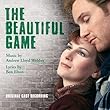

FROM LEFT TO RIGHT:
1. The Beautiful Game Original London Cast CD.
2. The Beautiful Game Vocal Selections.
Pages:
1 2 3 4 5 6 7 8 9 10 11 12
About David Fick
teacher + curator + writer + director + performer = (future maker + ground shaker) x (big thinker + problem shrinker) x (go getter + detail sweater)

 Musical Cyberspace
THE BEAUTIFUL GAME: 2000 OCR Track by Track
9. “Off to the Party”
Following the match and their win, the boys rush off to the locker room where they get ready to party after the match. As they rip off their kit and get dressed up for the night, they sing “Off to the Party”, a song that transforms into a more laid back pub style ditty. The song is as ‘testosterone filled’ as its lyric proclaims the boys to be and its a perfect musical match for the energy these characters must feel as they come off of a match high. Elton checks in with the by now standard set of half rhymes: ‘business’ doesn’t rhyme with ‘witness’; ‘superb’ does’t rhyme with ‘heard’ or ‘preferred’; and ‘obscene’ doesn’t rhyme with team. Other than that, this song hits the spot precisely and fulfills its objective completely.
10. “The Craic”
The boys arrive at the pub and, following a speech by Father O’Donnell, the party proper begins. “The Craic” is a strange piece musically, perhaps too dissonant at times for a celebration, particularly in the choruses, which sound a bit like they were orchestrated for the revised version of Starlight Express. However, one can see what purpose Lloyd Webber is attempting to achieve through the introduction of this dissonance: dramatically, there is a great deal going on in this scene that moves it away from being merely a celebratory party. For instance, Del comes to celebrate with the team and to visit Christine, but Thomas quickly reminds him that he isn’t welcome. However, the bridge sections of the song manage to get the balance between party and tension a little better. The verses are perhaps just a little too off-kilter.
(Furthermore, it feels a little odd when the drama fits in between the choruses of the song and isn’t reflected in the song itself. It means we lose touch with the characters a little in the score. What is happening to John and Mary at this point? Perhaps the answer lies in the integration of scene and song, but this really should be reflected on the cast recording. The song feels incomplete without it.)
Elton’s lyrical misfires in this song are represented by attempts to rhyme ‘mind’ with ‘time’ and ‘inhibitions’ with ‘friction’.
11. “Don’t Like You (Reprise)”
As the party continues, Ginger summons up enough courage to speak to Bernadette, who returns his affection and shares with him a kiss before they leave. This action is framed with an odd reprise of “Don’t Like You”, but why these characters are singing this song when it neither musically belongs to either character nor reflects the relationship dynamic represented by the song as we heard it earlier is anybody’s guess. Seen for what it is, the song is nothing more than a contrived attempt to manipulate sympathy for the characters when Ginger is killed off in the following scene. It is a short cut and the emotional reaction it seeks to create is not earned; the end is undermined by the means used to achieve it. The lyrics – for once appropriating an uncompromised rhyme scheme – are even more trite than those heard in the first version. This song should be cut: these characters deserve to be established properly in the score given what is required of them by the drama.
With the party finished, Ginger walks home with Daniel. After Daniel has gone inside his house, Ginger is confronted by a gang of Protestant thugs in the streets. The attack is fatal and Ginger is left to die in the street.
Purchases from Amazon.com
FROM LEFT TO RIGHT:
1. The Beautiful Game Original London Cast CD.
2. The Beautiful Game Vocal Selections.
Share this:
Related
About David Fick
teacher + curator + writer + director + performer = (future maker + ground shaker) x (big thinker + problem shrinker) x (go getter + detail sweater)