6. “God’s Own Country (Protestant March)”
A reprise of the song we have just heard follows, one that is as violent as the original version was gentle. Unfortunately, it is no less refined as a piece of writing: once again, there are half rhymes (with ‘fathers’ and ‘martyrs’ once again making an appearance) and words where the the melodic line is at odds with the scansion of particular words (‘enemy’ and ‘history’, which both take an emphasis on the first syllable not on the final syllable as used here). The song apparently leads to a trashing of the Catholic football team’s locker room, a move which is perhaps reminiscent of the pogrom at the end of Fiddler on the Roof‘s first act. I can’t imagine that the emotional resonance of this event is anything like it is in that classic 1967 musical: we’re not invested enough in these characters’ lives yet. It also doesn’t help that the situation is undermined to a certain extent by the emergence of Christine and Del from the wreckage; the pair were secretly making love while this apparently disturbing raid was taking place. It is a laugh earned at the expense of the drama. So was this raid not serious enough to disrupt the lives of our protagonists after all?
7. “Let Us Love in Peace”
The aftermath of the raid is, however, serious enough to affect Del and Christine and the next song is a wish on their part that the fighting would stop so that they can be together. “Let Us Love in Peace” is another song that was singled out in reviews as a highlight of the show. I think this is because we can sense the humanity in the desire expressed in the song: the song is not merely an abstract wish for political stability, but a concrete desire for an environment in which these two characters would be able to explore openly their feelings for one another. It is one of the most emotionally honest moments of the play thus far, one up on “God’s Own Country” because it really works dramatically in the context of the play, taking the action forward by developing these characters and their relationship in the specific context created by their surroundings. Only in moments when the specificity wanes does the song flounder, for example in incomplete thoughts such as ‘time to learn how to believe’ and ‘time to know’. Believe in what? Know what? These are questions that should have been answered in the lyric.
Elton’s craftsmanship is slightly more consistent here too, although he still inflicts the lyric with half rhymes (‘like’/’might’, ‘tranquil’/’thankful’ and ‘breathe’ / ‘believe’) and tries to ignore the unstressed ‘ə’ vowel in ‘violence’ so that it will rhyme with ‘silence’. I wondered for a moment if this had to do with the Irish accent, but a very cursory look at some of the conventions of the dialect (see here and here) seems to indicate that, if anything, the vowel would gain rather than lose emphasis in pronunciation. Flaws such as these prevent a pleasant song from being a masterful one.
Purchases from Amazon.com
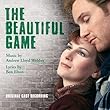

FROM LEFT TO RIGHT:
1. The Beautiful Game Original London Cast CD.
2. The Beautiful Game Vocal Selections.
Pages:
1 2 3 4 5 6 7 8 9 10 11 12
About David Fick
teacher + curator + writer + director + performer = (future maker + ground shaker) x (big thinker + problem shrinker) x (go getter + detail sweater)

 Musical Cyberspace
THE BEAUTIFUL GAME: 2000 OCR Track by Track
6. “God’s Own Country (Protestant March)”
A reprise of the song we have just heard follows, one that is as violent as the original version was gentle. Unfortunately, it is no less refined as a piece of writing: once again, there are half rhymes (with ‘fathers’ and ‘martyrs’ once again making an appearance) and words where the the melodic line is at odds with the scansion of particular words (‘enemy’ and ‘history’, which both take an emphasis on the first syllable not on the final syllable as used here). The song apparently leads to a trashing of the Catholic football team’s locker room, a move which is perhaps reminiscent of the pogrom at the end of Fiddler on the Roof‘s first act. I can’t imagine that the emotional resonance of this event is anything like it is in that classic 1967 musical: we’re not invested enough in these characters’ lives yet. It also doesn’t help that the situation is undermined to a certain extent by the emergence of Christine and Del from the wreckage; the pair were secretly making love while this apparently disturbing raid was taking place. It is a laugh earned at the expense of the drama. So was this raid not serious enough to disrupt the lives of our protagonists after all?
7. “Let Us Love in Peace”
The aftermath of the raid is, however, serious enough to affect Del and Christine and the next song is a wish on their part that the fighting would stop so that they can be together. “Let Us Love in Peace” is another song that was singled out in reviews as a highlight of the show. I think this is because we can sense the humanity in the desire expressed in the song: the song is not merely an abstract wish for political stability, but a concrete desire for an environment in which these two characters would be able to explore openly their feelings for one another. It is one of the most emotionally honest moments of the play thus far, one up on “God’s Own Country” because it really works dramatically in the context of the play, taking the action forward by developing these characters and their relationship in the specific context created by their surroundings. Only in moments when the specificity wanes does the song flounder, for example in incomplete thoughts such as ‘time to learn how to believe’ and ‘time to know’. Believe in what? Know what? These are questions that should have been answered in the lyric.
Elton’s craftsmanship is slightly more consistent here too, although he still inflicts the lyric with half rhymes (‘like’/’might’, ‘tranquil’/’thankful’ and ‘breathe’ / ‘believe’) and tries to ignore the unstressed ‘ə’ vowel in ‘violence’ so that it will rhyme with ‘silence’. I wondered for a moment if this had to do with the Irish accent, but a very cursory look at some of the conventions of the dialect (see here and here) seems to indicate that, if anything, the vowel would gain rather than lose emphasis in pronunciation. Flaws such as these prevent a pleasant song from being a masterful one.
Purchases from Amazon.com
FROM LEFT TO RIGHT:
1. The Beautiful Game Original London Cast CD.
2. The Beautiful Game Vocal Selections.
Share this:
Related
About David Fick
teacher + curator + writer + director + performer = (future maker + ground shaker) x (big thinker + problem shrinker) x (go getter + detail sweater)