The next scene opens after some time has passed. John and Mary’s romance has flourished since the previous scene. Mary asks John to participate in a march for Catholic rights, but he says he’d rather go drinking with his friends. Mary is left alone, but instead of reflecting on her relationship with John, a choice that would develop naturally out of the action as it stands, she reflects on her love for Ireland.
5. “God’s Own Country”
“God’s Own Country” is a song that was singled out by many critics for being one of the highlights of the show. It is almost certainly the situation that the song contrives that elevates it to that level, for as Mary sings this unaffected song, her thoughts are echoed by a protestant girl, showing how passionate they are about their country’s future and how they both believe that their side’s claim to Ireland is the one that is valid.
The song itself, though disarming in its simplicity, is not without problems. Its dramatic purpose, other than to deliver some kind of thesis statement about political beliefs, seems unclear to me. It seems to me that the song would serve a stronger dramatic purpose were it, for example, a song that Mary uses to convince John to go to the march with her rather than merely being a soliloquy that is sung directly to the audience. The other problem with the conception of the song is that the “Protestant Girl” is just that: a random character in whom we can’t invest. It would be far more effective if these thoughts were placed into the mouth a character that we care about, although the lack of fully developed Protestant characters makes that difficult. It simply wouldn’t work as a piece for Del: although identified by Thomas as a Protestant, he defines himself as an Atheist and would therefore not have the same stakes as the singer of this lyric would have to have. Del is also male and part of the appeal of this song is its blend of female voices. As such, there is no obvious solution to this problem and the song is left to be nothing more that a clever idea, with its placement framed somewhat artificially by a characters exit and unjustified re-entrance. I would imagine that it plays well enough on stage, but its in gaps like these that Elton’s inexperience in crafting a complex and multi-layered libretto for musical theatre can be seen.
The song itself also confirms his inexperience as a lyricist in this genre. As noted above in the analysis of “The Beautiful Game”, there are lyrics in this show that rhyme poorly, with only the slightest associative qualities in the vowel sounds. In this song, we do see some inconsistencies in rhyme (‘land’/’began’, ‘fathers’/’martyrs’, ‘sang’/’began’ and ‘bones’/’home’), what is perhaps even more interesting is the rather complex rhyme scheme that Elton sets up for himself, which is established in the first stanza as follows:
Where we live is God’s own country
Though it’s dirtier and poorer than He planned
Broken windows, broken lives
Jobless husbands, weeping wives
It may not look like God’s own country
But God is love and I know He loves this land
Though it’s ragged and it’s worn
It’s the place where I was born
The beauty lies within in God’s own country
It sleeps beneath the soil and ‘neath the sand
It’s our mothers and fathers, our heroes and martyrs
For God’s in the people and people are the land
Each new generation will rebuild the nation
That’s how it’s been since our history began.
Already imperfectly applied, things fall apart even further in the next section of the song, which mirrors the structure of the first. Elton sets up the new rhyme for pattern indicated in green with ‘song’ and ‘wrong’. The rhyme scheme is then abandoned for some reason, with the words in the following three positions being ‘free’, ‘be’ and ‘sea’. The structure of the rest of the verse is held intact despite an additional half rhyme as it draws to a close (mine/time), so why this change? The final repeat of this triptych once again abandons the pattern: after an initial ‘me’, Elton repeats lines from the first unit with the ‘sand’/’land’/’began’/’planned’ sequence of rhymes. I can’t think of a reason that explains any of these choices other than poor craftsmanship.
The song also displays two further problems in its lyrics. Firstly, Elton displays little discipline in his application on scansion to his lyrics, adding in syllables indiscriminately as he needs them as if lyric writing is a simple exercise in free verse. This can be clearly seen in the difference between the first two verses as quoted above, where extra metrical feet are added to give Elton room to state the idea in the lyric.
Secondly, the statement “where we live is God’s own country” (later “where I live is God’s own country”) is ambiguous in its meaning: the intended meaning, that Ireland is God’s country, is contested by the connotation that wherever one lives is God’s country. As the song continues, an interpretation emerges that is similar to the sentiment phrased more definitively in “Anthem” from Chess: ‘My lands only borders lie around my heart’: these characters can go wherever the will and Ireland will always be with them. Elton needed to consider his phrasing more carefully to clarify his intentions in the lyric. My argument here is not that a song shouldn’t be layered in the meaning that it makes, but the layering shouldn’t come about by accident. Accidental, interpretative layering means that gaps in logic and consistency can so easily occur and that’s what happens here.
After the twin soliloquies of “God’s Own Country”, John returns. He has (inexplicably) changed his mind and decided to attend the march with Mary. With all the potential that lies within the idea behind this musical, it is somewhat disheartening to see it falling short of what it could achieve, in small details such as these as well as in some of the bigger problems outlined in the discussion of each of musical numbers above.
Purchases from Amazon.com
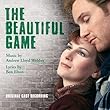

FROM LEFT TO RIGHT:
1. The Beautiful Game Original London Cast CD.
2. The Beautiful Game Vocal Selections.
Pages:
1 2 3 4 5 6 7 8 9 10 11 12
About David Fick
teacher + curator + writer + director + performer = (future maker + ground shaker) x (big thinker + problem shrinker) x (go getter + detail sweater)

 Musical Cyberspace
THE BEAUTIFUL GAME: 2000 OCR Track by Track
The next scene opens after some time has passed. John and Mary’s romance has flourished since the previous scene. Mary asks John to participate in a march for Catholic rights, but he says he’d rather go drinking with his friends. Mary is left alone, but instead of reflecting on her relationship with John, a choice that would develop naturally out of the action as it stands, she reflects on her love for Ireland.
5. “God’s Own Country”
“God’s Own Country” is a song that was singled out by many critics for being one of the highlights of the show. It is almost certainly the situation that the song contrives that elevates it to that level, for as Mary sings this unaffected song, her thoughts are echoed by a protestant girl, showing how passionate they are about their country’s future and how they both believe that their side’s claim to Ireland is the one that is valid.
The song itself, though disarming in its simplicity, is not without problems. Its dramatic purpose, other than to deliver some kind of thesis statement about political beliefs, seems unclear to me. It seems to me that the song would serve a stronger dramatic purpose were it, for example, a song that Mary uses to convince John to go to the march with her rather than merely being a soliloquy that is sung directly to the audience. The other problem with the conception of the song is that the “Protestant Girl” is just that: a random character in whom we can’t invest. It would be far more effective if these thoughts were placed into the mouth a character that we care about, although the lack of fully developed Protestant characters makes that difficult. It simply wouldn’t work as a piece for Del: although identified by Thomas as a Protestant, he defines himself as an Atheist and would therefore not have the same stakes as the singer of this lyric would have to have. Del is also male and part of the appeal of this song is its blend of female voices. As such, there is no obvious solution to this problem and the song is left to be nothing more that a clever idea, with its placement framed somewhat artificially by a characters exit and unjustified re-entrance. I would imagine that it plays well enough on stage, but its in gaps like these that Elton’s inexperience in crafting a complex and multi-layered libretto for musical theatre can be seen.
The song itself also confirms his inexperience as a lyricist in this genre. As noted above in the analysis of “The Beautiful Game”, there are lyrics in this show that rhyme poorly, with only the slightest associative qualities in the vowel sounds. In this song, we do see some inconsistencies in rhyme (‘land’/’began’, ‘fathers’/’martyrs’, ‘sang’/’began’ and ‘bones’/’home’), what is perhaps even more interesting is the rather complex rhyme scheme that Elton sets up for himself, which is established in the first stanza as follows:
Already imperfectly applied, things fall apart even further in the next section of the song, which mirrors the structure of the first. Elton sets up the new rhyme for pattern indicated in green with ‘song’ and ‘wrong’. The rhyme scheme is then abandoned for some reason, with the words in the following three positions being ‘free’, ‘be’ and ‘sea’. The structure of the rest of the verse is held intact despite an additional half rhyme as it draws to a close (mine/time), so why this change? The final repeat of this triptych once again abandons the pattern: after an initial ‘me’, Elton repeats lines from the first unit with the ‘sand’/’land’/’began’/’planned’ sequence of rhymes. I can’t think of a reason that explains any of these choices other than poor craftsmanship.
The song also displays two further problems in its lyrics. Firstly, Elton displays little discipline in his application on scansion to his lyrics, adding in syllables indiscriminately as he needs them as if lyric writing is a simple exercise in free verse. This can be clearly seen in the difference between the first two verses as quoted above, where extra metrical feet are added to give Elton room to state the idea in the lyric.
Secondly, the statement “where we live is God’s own country” (later “where I live is God’s own country”) is ambiguous in its meaning: the intended meaning, that Ireland is God’s country, is contested by the connotation that wherever one lives is God’s country. As the song continues, an interpretation emerges that is similar to the sentiment phrased more definitively in “Anthem” from Chess: ‘My lands only borders lie around my heart’: these characters can go wherever the will and Ireland will always be with them. Elton needed to consider his phrasing more carefully to clarify his intentions in the lyric. My argument here is not that a song shouldn’t be layered in the meaning that it makes, but the layering shouldn’t come about by accident. Accidental, interpretative layering means that gaps in logic and consistency can so easily occur and that’s what happens here.
After the twin soliloquies of “God’s Own Country”, John returns. He has (inexplicably) changed his mind and decided to attend the march with Mary. With all the potential that lies within the idea behind this musical, it is somewhat disheartening to see it falling short of what it could achieve, in small details such as these as well as in some of the bigger problems outlined in the discussion of each of musical numbers above.
Purchases from Amazon.com
FROM LEFT TO RIGHT:
1. The Beautiful Game Original London Cast CD.
2. The Beautiful Game Vocal Selections.
Share this:
Related
About David Fick
teacher + curator + writer + director + performer = (future maker + ground shaker) x (big thinker + problem shrinker) x (go getter + detail sweater)