After a short instrumental interlude that represents John and Mary’s consummation – one supposes that all of the fears he listed in the previous song were realised – the phone rings. Thomas is in trouble and needs to be driven to an Irish Republican Army (IRA) safehouse. John agrees to help him out despite Mary’s protests, telling her that he owes it to his friend even though he doesn’t agree with Thomas.
17. “I’d Rather Die on My Feet Than Live on My Knees”
John searches the streets for Thomas to an evocative piece of music known as “Warzone”, which foreshadows both “I’d Rather Die on My Feet Than Live on My Knees” and the prison song, “Deadzone”. When he finds Thomas, he tells him that he will never do anything like this again. Thomas tries to explain his own point of view in his song, which develops naturally out of the underscoring. The song is a short one and Lloyd Webber once again contributes an evocative piece of music that suits both character and situation. What is particularly interesting to hear is the use of the short string phrases that appear in the “Overture” and “The Final” playing in counterpoint to the melodic line.
Elton’s main challenge in this song seems to have been getting the lines to conform to the metre he set up in the first line, which states the title of the song in 12 syllables. He fails to craft the other lines that take this rhythm into the same length of metrical feet: “Because the weak and fearful are a social disease” (14 syllables), “When the battle is over and the last deal is done” (13 syllables), “The man with the power will be the man with the gun” (13 syllables) and “Because I am my country and my country is me” (13 syllables).
Elton’s usual problems with pure rhyme penetrate this song too. Until the final verse, it seems that the song eschews pure rhyme completely. That is when the rhyme in the final two syllables of ‘surrender’ and ‘defend her’ appears. Working through the song retrospectively, one then realises that words in similar positions in each chorus are meant to rhyme perfectly: the double assonance rhyme ‘honour’/’stronger’ in the first and the identity rhyme of ‘you’ in the second.
It is a pity in some ways that this song is not just slightly longer than it is. This song has to plant some doubt in John; it is the seed that makes his transformation during the prison sequence possible as seen when he himself appropriates some of this melody into his expression. Even so, this song represents the huge strides made in musical theatre over the decades. In Carousel, one of the greatest flaws is how Jigger’s detrimental influence on Billy is ignored in the score and countered, perhaps even neutralised, by comic moments such as “Blow High, Blow Low”. Here, Thomas is a very clear threat everything in John’s life and it is thrilling that this is able to be embodied in the score as well as in the book of the show.
18. “God’s Own Country (Reprise)”
Some time passes and it is time for the soccer trials where John is hoping to get his big break. On her way to the football field, a newly pregnant Mary says goodbye to Christine and Del, who are moving to New York with their own baby to escape the situation in Ireland. Mary is expecting to move to England with John when he is selected and the three reflect on leaving Ireland behind for separate lives in new countries.
I have a problem with this reprise. It features two characters proclaiming their Irish-ness and their love for their home country who have hitherto only spoken about how much they want to leave. Del has stated outright that he is an ‘internationalist’ and has no care for his country. Consequently, this last grasp at a sad farewell does not ring true. The other thing that I find perplexing is this idea, which is stated and then repeated later in the song:
Gone to seek a better place
It’s the story of our race.
This reminds me of the struggles of the Jewish people throughout history to find a homeland, always being driven from places by prejudice. Perhaps I need to be corrected, but Irish history doesn’t seem to encompass that same dynamic to me. Certainly, emigration was seen to a great extent in the century following the famine in the 1840s, but is emigration something that is inherent to Irish history? As this point, I remain unconvinced. Belfast just doesn’t seem like the Irish equivalent of Anatevka to me.
The lyrics displays the same inconsistency seen in the Act I version of the song, where the complicated five part rhyme established by Elton in the establishing verse in the first version of the song split into two parts: (‘tide’/’wide’ and ‘die’/’lie’/’bye’). Perhaps it would have been a better choice for Elton to separate the two sets rhyme in the song initially, thereby eliminating the challenge of finding five perfect rhymes for each section of the song.
Purchases from Amazon.com
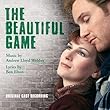

FROM LEFT TO RIGHT:
1. The Beautiful Game Original London Cast CD.
2. The Beautiful Game Vocal Selections.
Pages:
1 2 3 4 5 6 7 8 9 10 11 12
About David Fick
teacher + curator + writer + director + performer = (future maker + ground shaker) x (big thinker + problem shrinker) x (go getter + detail sweater)

 Musical Cyberspace
THE BEAUTIFUL GAME: 2000 OCR Track by Track
After a short instrumental interlude that represents John and Mary’s consummation – one supposes that all of the fears he listed in the previous song were realised – the phone rings. Thomas is in trouble and needs to be driven to an Irish Republican Army (IRA) safehouse. John agrees to help him out despite Mary’s protests, telling her that he owes it to his friend even though he doesn’t agree with Thomas.
17. “I’d Rather Die on My Feet Than Live on My Knees”
John searches the streets for Thomas to an evocative piece of music known as “Warzone”, which foreshadows both “I’d Rather Die on My Feet Than Live on My Knees” and the prison song, “Deadzone”. When he finds Thomas, he tells him that he will never do anything like this again. Thomas tries to explain his own point of view in his song, which develops naturally out of the underscoring. The song is a short one and Lloyd Webber once again contributes an evocative piece of music that suits both character and situation. What is particularly interesting to hear is the use of the short string phrases that appear in the “Overture” and “The Final” playing in counterpoint to the melodic line.
Elton’s main challenge in this song seems to have been getting the lines to conform to the metre he set up in the first line, which states the title of the song in 12 syllables. He fails to craft the other lines that take this rhythm into the same length of metrical feet: “Because the weak and fearful are a social disease” (14 syllables), “When the battle is over and the last deal is done” (13 syllables), “The man with the power will be the man with the gun” (13 syllables) and “Because I am my country and my country is me” (13 syllables).
Elton’s usual problems with pure rhyme penetrate this song too. Until the final verse, it seems that the song eschews pure rhyme completely. That is when the rhyme in the final two syllables of ‘surrender’ and ‘defend her’ appears. Working through the song retrospectively, one then realises that words in similar positions in each chorus are meant to rhyme perfectly: the double assonance rhyme ‘honour’/’stronger’ in the first and the identity rhyme of ‘you’ in the second.
It is a pity in some ways that this song is not just slightly longer than it is. This song has to plant some doubt in John; it is the seed that makes his transformation during the prison sequence possible as seen when he himself appropriates some of this melody into his expression. Even so, this song represents the huge strides made in musical theatre over the decades. In Carousel, one of the greatest flaws is how Jigger’s detrimental influence on Billy is ignored in the score and countered, perhaps even neutralised, by comic moments such as “Blow High, Blow Low”. Here, Thomas is a very clear threat everything in John’s life and it is thrilling that this is able to be embodied in the score as well as in the book of the show.
18. “God’s Own Country (Reprise)”
Some time passes and it is time for the soccer trials where John is hoping to get his big break. On her way to the football field, a newly pregnant Mary says goodbye to Christine and Del, who are moving to New York with their own baby to escape the situation in Ireland. Mary is expecting to move to England with John when he is selected and the three reflect on leaving Ireland behind for separate lives in new countries.
I have a problem with this reprise. It features two characters proclaiming their Irish-ness and their love for their home country who have hitherto only spoken about how much they want to leave. Del has stated outright that he is an ‘internationalist’ and has no care for his country. Consequently, this last grasp at a sad farewell does not ring true. The other thing that I find perplexing is this idea, which is stated and then repeated later in the song:
This reminds me of the struggles of the Jewish people throughout history to find a homeland, always being driven from places by prejudice. Perhaps I need to be corrected, but Irish history doesn’t seem to encompass that same dynamic to me. Certainly, emigration was seen to a great extent in the century following the famine in the 1840s, but is emigration something that is inherent to Irish history? As this point, I remain unconvinced. Belfast just doesn’t seem like the Irish equivalent of Anatevka to me.
The lyrics displays the same inconsistency seen in the Act I version of the song, where the complicated five part rhyme established by Elton in the establishing verse in the first version of the song split into two parts: (‘tide’/’wide’ and ‘die’/’lie’/’bye’). Perhaps it would have been a better choice for Elton to separate the two sets rhyme in the song initially, thereby eliminating the challenge of finding five perfect rhymes for each section of the song.
Purchases from Amazon.com
FROM LEFT TO RIGHT:
1. The Beautiful Game Original London Cast CD.
2. The Beautiful Game Vocal Selections.
Share this:
Related
About David Fick
teacher + curator + writer + director + performer = (future maker + ground shaker) x (big thinker + problem shrinker) x (go getter + detail sweater)