The Saturday List: 1958 in Musical Theatre

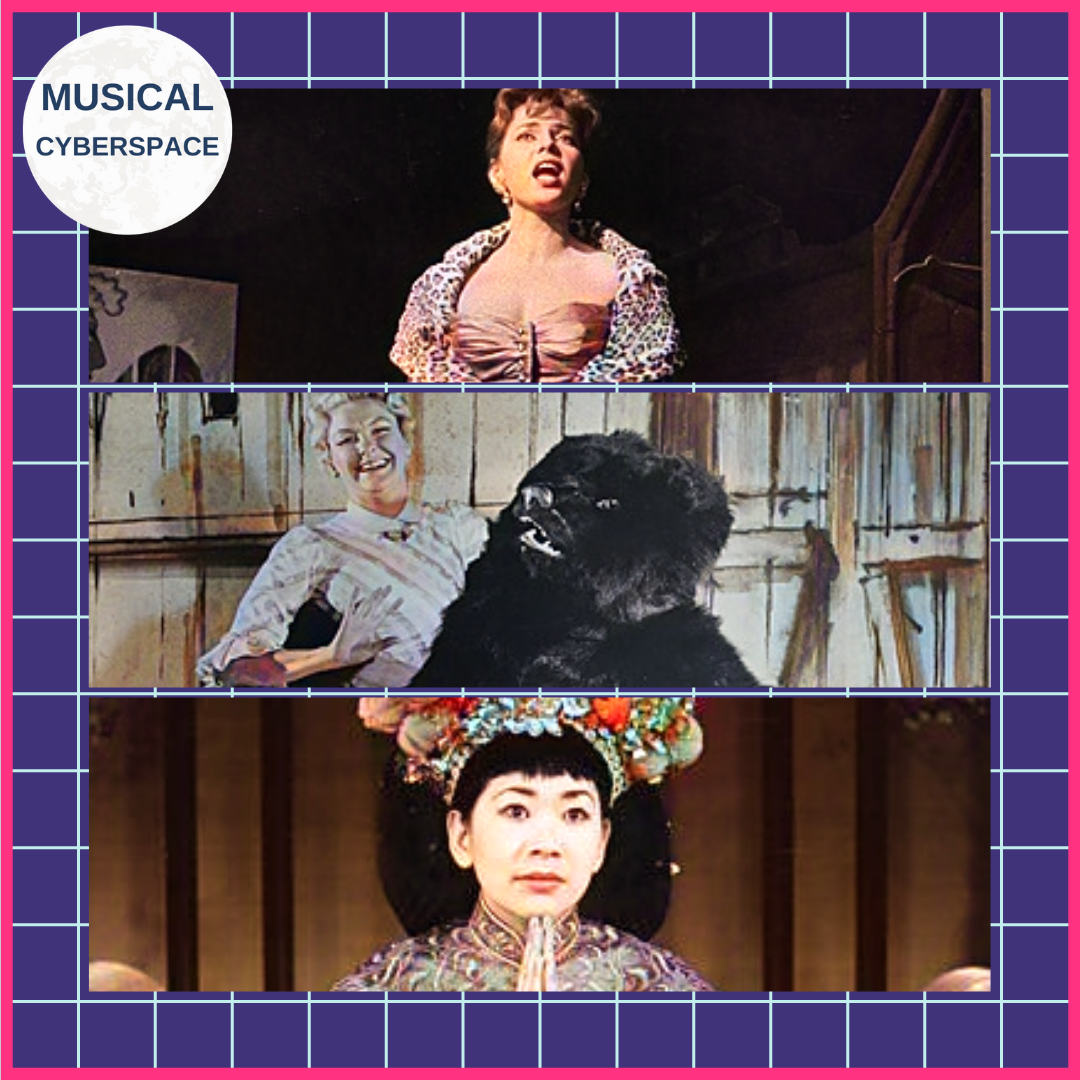
Scenes from OH, CAPTAIN! (featuring Abbe Lane), GOLDILOCKS (featuring Elaine Stritch and Flower Drum Song (featuring Miyoshi Umeki).
Scenes from Oh, Captain! (featuring Abbe Lane), Goldilocks (featuring Elaine Stritch and Flower Drum Song (featuring Miyoshi Umeki).

Picture it: planet Earth, 1958. 65 years ago. It was a slow year for new musicals and perhaps even a slow year in history. Nonetheless, it’s the subject of today’s “Saturday List.” One of the greatest inventions of the year was the peace symbol, created by Gerald Holtom as part of the British nuclear disarmament movement. Over the next decade, it would be adopted as the international symbol of peace it now represents. Another significant creation this year was the founding of the National Aeronautics and Space Administration (NASA), which United States President Dwight “Ike” Eisenhower founded in response to the launch of the Soviet Union’s Sputnik the previous year. On the sports scene, Bobby Fischer won the United States Chess Championship at age 14. At the movies, a musical – South Pacific– topped the grosses, with another – Gigi, which would go on to win the Academy Award for Best Picture the following year – not far behind in fifth position. Some of the chart-topping pop music releases of the year included Domenico Modugno’s “Volare” and “All I Have to Do is Dream” by The Everley Brothers. The most popular word in the slang terms of the year was “nuke,” a clear indication of just how newsworthy the nuclear tests in the United States were. But let’s get to why we’re all here and look at what happened on the musical theatre scene all those years ago.  

1. The Award Winners for Best Musical

If there’s any evidence needed that 1958 was not a great year for new musicals, here it is. In 1958, the Tony Award went to a musical that bowed in 1957, The Music Man. In 1959, the award went to a show that had debuted that year, Redhead. Of the 1958 musicals, only three scored nominations for the top prize: Oh, Captain!, La Plume de Ma Tante and Flower Drum Song. Did Redhead deserve the award over La Plume de Ma Tante, which first opened in London in 1955 and was a smash hit on Broadway, or Flower Drum Song, Richard Rodgers and Oscar Hammerstein’s penultimate stage presentation? I think hindsight has given us the answer. (It’s a no.)

2. Most Overrated

In a year where very little landed, how does one pick a show that is the most overrated? Perhaps the fairest way to do this is to name one of the shows that had enough impact to earn a Best Musical nomination at the Tony Awards: Oh, Captain! But this approach presents something of a problem. This nomination of its five-strong total aside, Oh, Captain! did not receive unanimous raves. While the cast drew good notices, the show was viewed as being unremarkable compared with the greatest hits of the day, including The Music Man and My Fair Lady. Adapted by Al Morgan and José Ferrer from the 1953 British film, The Captain’s Paradise, Oh, Captain! feels a little old-fashioned. Ray Evans and Jay Livingston’s score has some jaunty moments, particularly in songs like”You’re So Right for Me,” “Double Standard,” and “Give It All You’ve Got.” But it also stalls in songs like the opening number, “A Very Proper Town,” which harks back to the style of British comic opera and sets up a show that isn’t quite what you get. Still, nobody has said that Oh, Captain! is the show to end all shows, making it hard to call it overrated – except in the broadest of terms considering its achievements in relation to those of the other musicals debuting in that year.

3. Most Underrated

While it’s difficult to choose a show from 1958 that is overrated, one is possibly spoiled for choice when it comes to shows that might be considered underrated. There’s one that leads the pack, though – a show that, despite its problems, caught the attention of a young Stephen Sondheim, who then encouraged Harold Prince to rush to the theatre and see what first-time collaborators Sheldon Harnick and Jerry Bock had on offer. The show was The Body Beautiful, which, uncharacteristically for the team who would go on to write Fiorello!, She Loves Me and Fiddler on the Roof, was an original story set in the present day. The Body Beautiful isn’t in the same league as those shows by any means, but perhaps, it is trying to be something different. It’s more a follow-up to shows like Damn Yankees and The Pajama Game than a Pulitzer Prize-winning political observation, a charming romantic comedy or an internationally successful cultural touchstone. While the plot about a couple of boxers, their manager and their romantic interests doesn’t offer much in terms of its execution, there’s a great deal in the score that is instantly listenable and likeable, including a winning title song that really shows the potential this show could have had with a better book than the one created by Joseph Stein and Will Glickman. There’s certainly more about The Body Beautiful than meets the eye.

4. Hidden Gem 

The Body Beautiful might well be 1958’s hidden gem too, but in the spirit of showcasing a series of musicals of the year, how about Goldilocks? This show received some praise in its season, particularly for the score by Leroy Anderson, Walter Kerr, Jean Kerr and Joan Ford. Elaine Stritch and Don Ameche’s performances also drew praise from the critics. On the other hand, the book (also by the Kerrs, telling a farcical behind-the-scenes showbiz tale) drew criticism for its forced contrivances and lacklustre humour. It is not surprising, then, that one doesn’t generally hear much about Goldilocks today. Even so, the cast recording is worth a listen as a record of the show’s eclectic score. There are some gems here, including “I Can’t Be in Love,” “I Never Know When,” and “Who’s Been Sitting in My Chair?” – all characterful pieces that are wonderfully entertaining. Perhaps the most momentous thing captured on the cast recording is this pivotal step in Stritch’s career, a transition into a star around whom a role could be built. Listening to her put across her numbers is reason enough to excavate Goldilocks.

5. Show of the Year

Could the show of the year be anything but Flower Drum Song? While it is in some ways standard 1950s musical comedy fare, it is a piece that represents so much more. It is a show that numbers great wins, on the one hand: it was a show that focused on Asian American characters and their experiences, particularly issues of race and identity that caused conflict between Chinese immigrants and their American-born children. On the other hand, as time has passed, the show has drawn criticism for its idealisation of the Chinese-American experience, its perpetuation of Asian American stereotypes, and its reinforcement of the myth of the model minority. A 2002 Broadway revisal by David Henry Hwang attempted to address these issues. Warmly embraced in Los Angeles, the show was panned by the critics in New York and did not sustain a substantial run. Perhaps it was the timing? Maybe the changes between Los Angeles and New York shifted things too much? Who knows? Still, there is something about the story that resonates today. Perhaps another iteration will hit the mark. One thing you can bet, though, is that for every person who argues for a reimagining, there’s another who will suggest that it should be left in the past as a relic of its time.

1958 was a slow year if we are looking for musicals that made the same impact as other 1950s shows like West Side Story or Gypsy. Nonetheless, it is a year that offers a series of shows with – if nothing else – enjoyable scores that are great to listen to when lining up a playlist on your music player of choice. Still, I’d argue that there is a lot more potential in some of these shows than we’ve seen in the six-and-a-half decades that have passed. There is some first-rate material to mine here, especially in a world where old musicals can be adapted and reimagined as new ones.

Posted in The Saturday List | Tagged , , , , , , , , , , , , , , , , , , , , , , , , , , , , , , , , , , , , , , , , | Leave a comment

Forgotten Musicals Friday: Blithely Broadway with HIGH SPIRITS

Bea Lillie in HIGH SPIRITS, sits on her pink bed with a ouija board.
Bea Lillie in High Spirits on Broadway

This Friday, we’re heading to the legendary Broadway season of 1963-1964. Hello, Dolly! won 10 of the 11 Tony Awards for which it was nominated. They all coloured her Barbra after Funny Girl opened, and even the most-esteemed flop of the season, Anyone Can Whistle, is remembered and beloved by Stephen Sondheim’s cookies, myself included. 110 in the Shade has its rainmakers; She Loves Me has devotees who love it as much as Amalia loves “Vanilla Ice Cream.” The show we’re celebrating as today’s Forgotten Musical opened on 7 April 1964, 58 years ago to the day of this column: Hugh Martin and Timothy Gray’s High Spirits, based on the hugely popular Noël Coward play, Blithe Spirit.

Like the play upon which it is based, High Spirits tells the story of a writer, Charles Condomine, who invites a medium, Madame Arcati, to his home to provide post-dinner entertainment in the form of one of her famous seances. During the seance, Charles’s dead wife, Elvira, is manifested, which leads to all sorts of romantic hijinks – particularly as Charles tries to explain what’s going on to his new wife, Ruth, and Elvira’s plan to bring Charles into the afterlife to join her goes awry.

Martin (of Meet Me in St Louis fame) and Gray (who also penned the Daddy-Long-Legs musical Love From Judy) hewed pretty closely to the original play in their adaptation, which Coward loved so much that he agreed to direct it. Their main departures from the source material are in building up the role of Madame Arcati into a star turn and in the adjusted ending of the show. It’s all very charming and was warmly received in New York – less so in London, where the battle of wills between Coward and Cicely Courtneidge, who played Madame Arcati in the West End, seemed to seep into the production and rather spoil things. On Broadway, that role was played by Beatrice Lillie, who delivered a performance that was appreciated by critics and audiences alike.

The score is just delightful. Even on a first listen, it greets you like an old friend, with three of Madame Arcati’s big numbers, “Faster Than Sound,” “Talking to You,” and “Something is Coming to Tea,” extending the most generous hand. Evira also has a wonderfully camp showstopper in “Home Sweet Heaven.” The material for Charles and Ruth is endearing, her “Was She Prettier than I?” and their “If I Gave You” beautifully grounding the everyday world that contrasts all of the supernatural silliness.

When it comes to that silliness, I dare say that Jerry Herman wanted the quirkier sections of Dear World to land like this. In High Spirits, the offbeat characters, wit and whimsy feel effortless, while Herman’s effort from a half-decade later – more often than not – sounds like work. It’s true that there isn’t an anthem like “I Don’t Want to Know” in High Spirits. Everything in High Spirits is tailored to the show and its characters and is thus more difficult to extract for show-tune-friendly albums and events. It may be a limiting factor in terms of the show’s popularity, but on its own terms, High Spirits is all the better for the integrity of its internal logic.

The factor that perhaps holds back High Spirits from being a better-remembered musical is that it is based on a fantastic play that is still produced quite often today. Nonetheless, if ever there was a case to be made for a Broadway show that has never had a revival that needs one, here it is. It may not have the razzle-dazzle or weighty enlightenment of Moulin Rouge or Hamilton, but it could certainly hold its own next to something like the twice-revived She Loves Me. Yes – High Spirits needs its own Madame Arcati to come cycling in and restore it to our memories!

Posted in Forgotten Musicals Friday | Tagged , , , , , , , , , , , , , , , , , , , , , , | 2 Comments

Forgotten Musicals Friday: Laughing Matters WHEN PIGS FLY

The original production of WHEN PIGS FLY in Howard Crabtree's fabulous costumes. The cast members are each wearing a dress in the shape of a vanity.
The original production of When Pigs Fly in Howard Crabtree’s fabulous costumes.

We’re headed Off-Broadway for today’s Forgotten Musical to celebrate the life of the composer, musical director and accompanist, Dick Gallagher, who passed away on this day in 2005. The show is When Pigs Fly, a revue conceived by Howard Crabtree and Mark Waldrop, the latter of whom wrote the sketches and lyrics. Crabtree would also design the costumes for the show. Of the shows that Gallagher would compose, this was his most successful.

When Pigs Fly celebrates the gay experience. On the surface, it is playful and delightfully camp. The show glitters with joy. But underneath the veneer, there is irony. There are nods to the tragedy of the closet, although the show never becomes tragic. There is also a proud resistance to homophobia in the show’s use of drag and its reclamation and celebration of stereotypes and tropes. It’s a response to gay history as well as the then-present context of the late 1990s and when revisiting it in 2023, When Pigs Fly feels as fresh and relevant as ever. The times have changed, but there is still a long way to go.

Listening to the cast recording of When Pigs Fly offers delight after delight. The title song gets things off to a jaunty start before the show dips into some delightful puns and witty observations in “You’ve Got to Stay in the Game.” There’s a playful defiance in “Light in the Loafers,” which in its staging had shoes that lit up, one of the genius costume conceits for which Crabtree was famous in New York. A delightful trio of torch songs gives voice to people in the queer community who are sometimes invisible to their own. That When Pigs Fly is unafraid to take on the biases held by the very people the show celebrates makes it all the more brilliant.

This all happens before one even arrives at the gay anthem, “A Patriotic Finale,” which recentres the gay experience in US states and settings. It’s insistent and bursts with pride. In fact, celebrated musical theatre writer Peter Filichia once said it should be an official anthem for gay Americans. Perhaps, the most poignant of all the numbers is “Laughing Matters,” a reminder of the need for and power of laughter in a world where so many hateful things happen. Laughter can be weaponised, and we should all arm ourselves with it for our own good.

A 2017 Off-Broadway revival of When Pigs Fly never came to fruition, which is rather devastating. It is a show that deserves to be in our consciousness, an entertainment that holds profound meaning. Seek it out, my pretties!

Posted in Forgotten Musicals Friday | Tagged , , , , , | Leave a comment

The Saturday List: 1998 in Musical Theatre

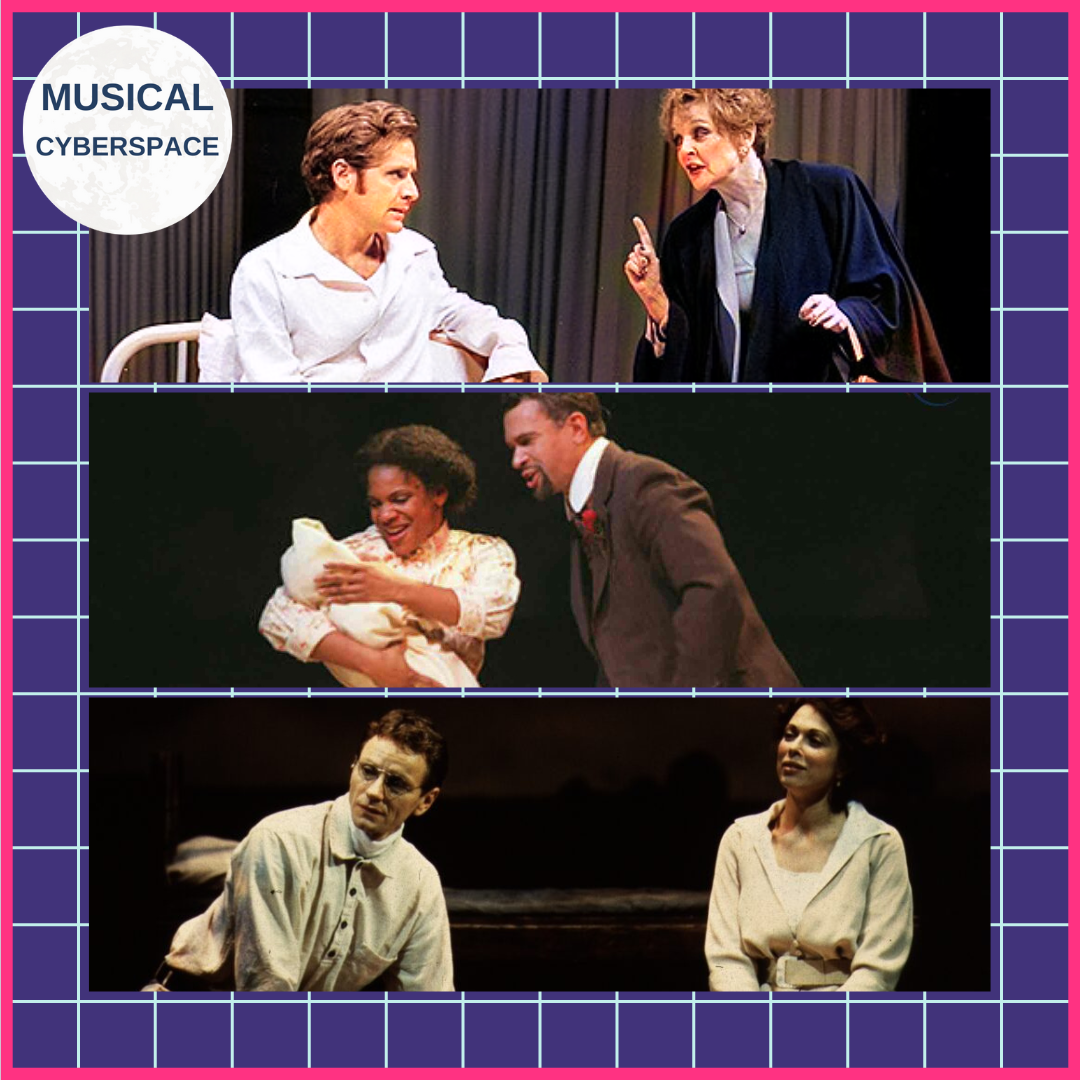
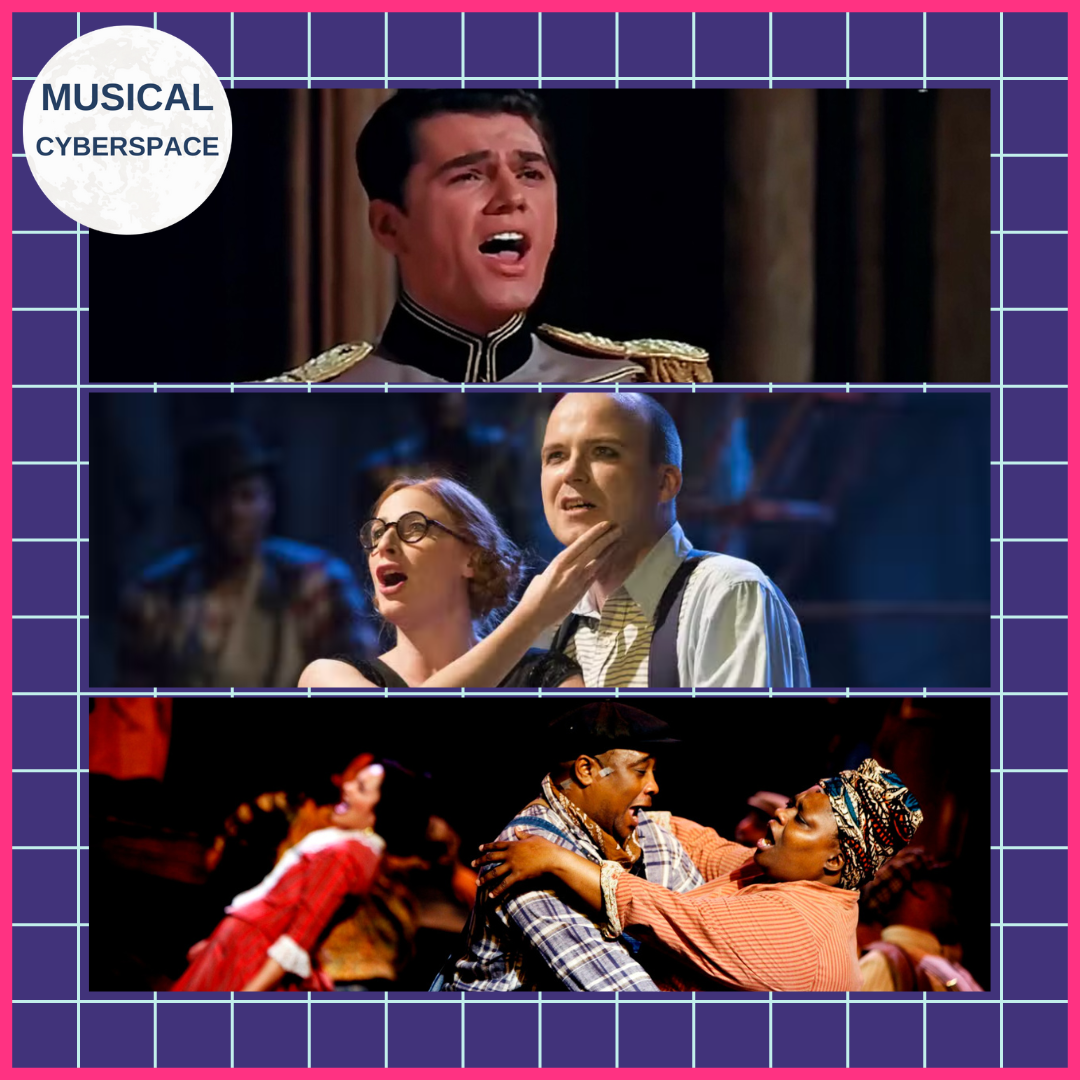
Scenes from A NEW BRAIN (featuring Malcolm Gets and Penny Fuller), RAGTIME (featuring Audra McDonald and Brian Stokes Mitchell and PARADE (featuring Brent Carver and Carolee Carmello).
Scenes from A New Brain (featuring Malcolm Gets and Penny Fuller), Ragtime (featuring Audra McDonald and Brian Stokes Mitchell and Parade (featuring Brent Carver and Carolee Carmello).

For our second “Saturday List” of 2023, let’s jump back 25 years and see where contemporary musical theatre was back then. 1998 was the International Year of the Ocean. It was the year that United States President Bill Clinton was impeached due to the Clinton–Lewinsky scandal. While The Troubles in Northern Ireland were coming to an end thanks to the Good Friday Agreement, protests erupted in Indonesia following the collapse of President Suharto’s government. In 1998, the Winter Olympics were held in Japan, while the FIFA World Cup was held in France. The only movie musical to have an impact at the box office – the second-highest-grossing family film of the year and the seventh-highest-grossing film of the year overall – was one of the second-tier films of the Disney Animation renaissance, Mulan. Pop music was bop-tastic in 1998, with songs like Brandy and Monica’s “The Boy is Mine,” Janet Jackson’s “Together Again,” and Savage Garden’s “Truly Madly Deeply” featuring in the charts. The prefix “e-” was the most significant contribution in terms of new words of the year, indicating the world’s accelerating shift towards digital literacy. Let’s look at what was happening on musical theatre stages.  

1. The Award Winners for Best Musical

In 1998, a show from 1997, The Lion King, took home Tony Award for Best Musical. This phenomenon isn’t unusual, as theatrical seasons on Broadway do not follow calendar years. The following year, the revue that was the first Broadway show to open in 1999, Fosse, was presented with the award – so none of the new 1998 Broadway musicals, which include Ragtime, The Capeman, High Society, Footloose and Parade, earned the highest recognition for a musical theatre production from the American Theatre Wing. The situation was similarly bleak across the pond at the Olivier Awards, which saw four 1997 West End shows nominated in 1998, with the winner being Beauty and the Beast, which had made its Broadway bow in 1994! In 1999, things looked a little better in London, although the top prize was taken home by Kat and the Kings, a show that had opened on the West End in 1998 but was first produced in South Africa in 1996 and had already had a UK debut in 1997. The other nominees included some bona fide 1998 shows, including Saturday Night Fever (a jukebox musical of the standard typically expected of such fare) and Whistle Down the Wind (which had received a kind of out-of-town tryout in Washington, where it flopped but prompted the kind of rewriting that happens when a musical is being made).

2. Most Overrated

It almost feels sacrilegious to say it, but an overrated musical will rarely be bad; by definition, it will be a beloved one. For me, the most overrated musical of the year was Parade. While there is no question that the show is impressive, with several highlights in Jason Robert Brown’s score, it’s all too – I don’t know – straightforward. Going into Parade, there’s no doubt about how it will end, which keeps everything at an emotional distance. The trajectory of Alfred Uhry’s book tells the audience what it needs to feel when it should be stirring up the audience’s emotions. We should be churning at the end of this show because of the injustices it has the power to interrogate. Instead, we’ve been led to an opportunity to pat ourselves on the back for positioning ourselves on the moral high ground in viewing this telling of the story of Leo Frank. But in a tale that features gender-based violence on the one hand and antisemitism on the other, there are layers and layers of potential narrative complexity that the show just cuts through. There’s no question that the show has been improved over time, with several revisions made for the Donmar Warehouse production in 2007, which were retained in the recent New York City Center concert presentation of the show, which will transfer to Broadway next month. Perhaps Michael Arden holds the key to unlocking more of what Parade has to offer; the word from last year’s run is that he has.

3. Most Underrated

Many of Andrew Lloyd Webber’s shows don’t quite get their due. While musicals like Whistle Down the Wind, The Beautiful Game and The Woman in White aren’t among the composer’s best works, each has something to offer. Whistle Down the Wind has some really memorable songs, for which Jim Steinman wrote the lyrics. The show certainly has its flaws, particularly in the way it handles its plot in the book (which is credited to Patricia Knop and Gale Edwards as well as Lloyd Webber himself), but some of the songs in the show are simply fantastic, including the devastating “Unsettled Scores,” the gloriously camp “Tire Tracks and Broken Hearts” and the utterly unpretentious title song. Even when the cheese factor amps up in something like “When Children Rule the World,” Lloyd Webber and Steinman’s work yields a fun, modern Christmas carol. Whistle Down the Wind may not be perfect, but it doesn’t deserve the sheer dismissal and even hatred that some musical theatre critics and fans have sent its way.

4. Hidden Gem 

Wouldn’t it be wonderful if there were more to Paul Simon’s The Capeman than audiences first thought? Unfortunately, there isn’t – despite a couple of musical delights like the song, “Bernadette.” The two most worthy contenders for 1998’s hidden gem come from Off-Broadway in the form of Hedwig and the Angry Inch and A New Brain. Given its subsequent film adaptation, Broadway revival and successful international productions, the former can’t really be said to be hidden. A New Brain, written by William Finn and James Lapine, has popped up here and there, notably in a 2015 Encores! staged concert, but it still hasn’t caught fire in the way that some of Finn’s other shows, like Falsettos and The 25th Annual Putnam County Spelling Bee, have. A New Brain is, in some ways, a tough sell, dealing as it does with a
songwriter who lives through surgery to fix an arteriovenous malformation and rediscovers his
potency as a creative being after walking through the fire of his ordeal. The style of the show is heightened as the cartoonish fever dream of Gordon’s neurosis and illness threaten the unaffected emotional truth of his “Heart and Music.” The two energies’ meeting remains the show’s greatest challenge to both theatremakers and audiences. Still, even if it had nothing else to offer – and it does – “Sailing” would make it all worth it.

5. Show of the Year

The world was a complicated place in 1998. If theatre is a response to the world around it, no show embodied the spirit of 1998 more than Ragtime, Stephen Flaherty, Lynn Ahrens and Terrence McNally’s musical about America in the early 20th century. Dealing with racial tension, xenophobia and privilege, the show is as relevant now as it was a quarter century ago. Given that it dramatises a milieu from which time only a very few individuals survive today – the oldest people in our world – Ragtime reminds us that the more things change, the more they stay the same. A society that offers equality and parity is somehow as evasive now as it was in the world of Ragtime; even though significant advances have been made, the road to be travelled remains long. In the opening number of Frank Galati and Graciela Daniele’s original Broadway production, there was a glorious moment of staging as the three social castes move around the stage like the gears of a clock, the clockwork jamming each time they face off. The image explodes, the groups mix, and no one knows where they’ve landed. That’s what Ragtime is. That’s the world Ragtime is in.

1998 was a somewhat quiet year for new, high-profile musical theatre. It was perhaps a time of transition with shows that looked to the past in terms of how they told their stories, some that captured the moment as it was, and others that looked towards the future of storytelling in his genre. What a perfect reminder that musical theatre is a living art form, ever adapting to the shifting sands of human existence.

Posted in The Saturday List | Tagged , , , , , , , , , , , , , , , , , , , , , , , , , , , , , , , , , , , , , , , , , , , , , , , , , , , | Leave a comment

Forgotten Musicals Friday: The Merely Marvelous REDHEAD

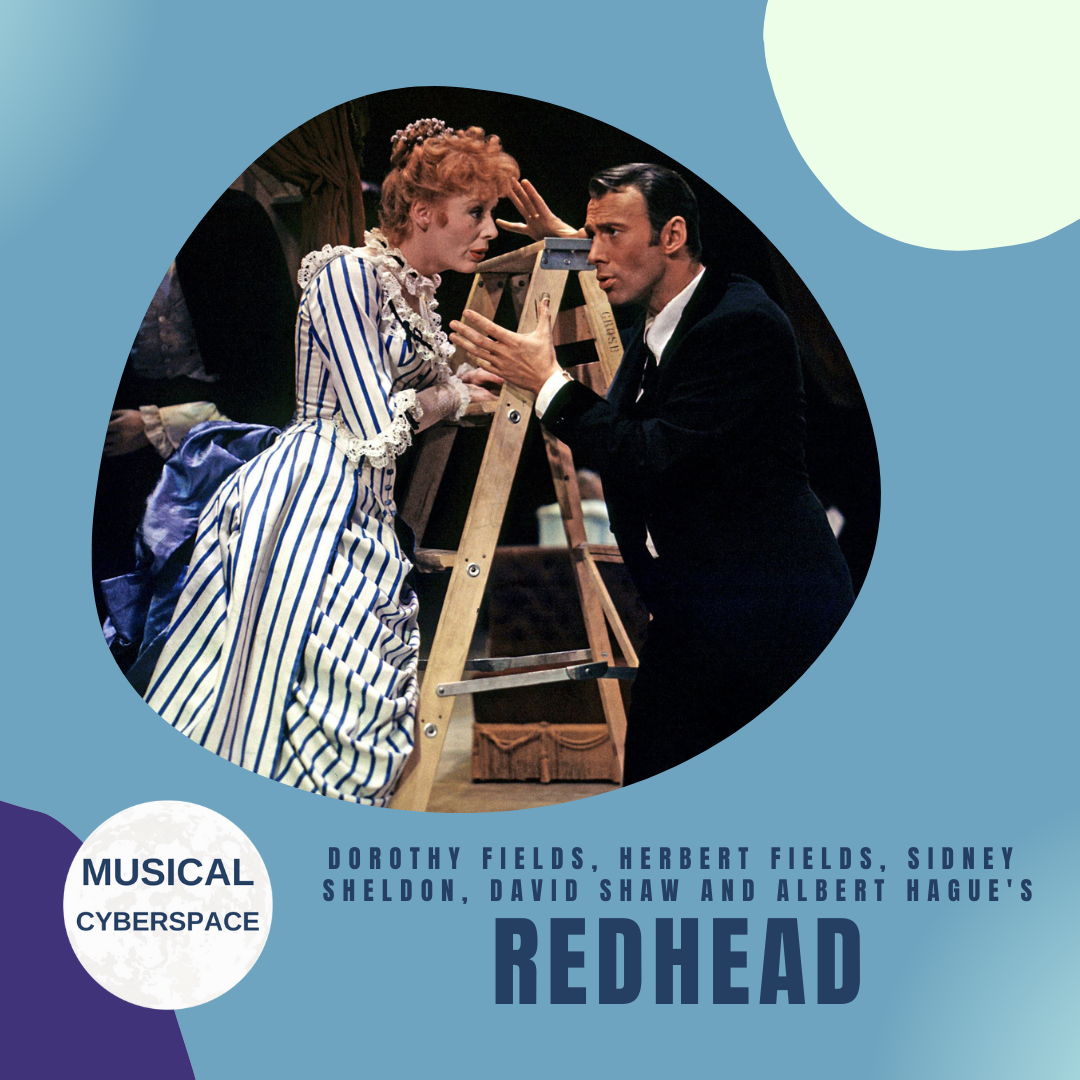
Gwen Verdon, standing on a ladder in a white Victorian dress with blue stripes, speaks with Richard Kiley, in a black suit, in REDHEAD.
Gwen Verdon and Richard Kiley in Redhead

Today is Gwen Verdon’s birthday! What better way to celebrate it on Forgotten Musicals Friday than to take a look at one of her key shows, Redhead. Although it won the Tony Award for Best Musical in 1959, Redhead has never had a revival on Broadway, been adapted for film or played on the West End – nor is it likely to do so any time soon. Many Broadway fans will tell you that this is because of how well the show was tailored to Verdon’s strengths and that there simply isn’t anyone who could do what she did in the original production, which also marked Bob Fosse’s debut as a director-choreographer. While it is true that Redhead was moulded to Verson’s talents, it’s also true that the show is just not great, little more than a passable musical comedy of its time elevated by a fantastic performance and virtuosic staging.

Redhead was first conceived in the 1940s by Dorothy and Herbert Fields after a visit to Madame Tussauds. At that time, the show was called The Works, the core idea being a musical murder mystery set in and around a wax museum in Jack the Ripper-era London. It was thought that the show might be written for Beatrice Lillie, but the project never came together. Years later, it was picked up as a potential vehicle for Verdon, a Broadway superstar following her appearances in Can-Can, Damn Yankees and New Girl in Town, each of which earned her a Tony Award. Verdon now had the power to shop around for roles and directors and used her influence to secure Fosse his directorial debut on the show. Herbert Fields had died, so Sidney Sheldon joined Dorothy Fields to write the book, along with David Shaw, who had to be on board due to a contractual requirement that Verdon was to have appeared in a show written by him. Fields also wrote the lyrics, with Albert Hague providing the music.

Listening to the cast recording today, the “Overture” sums up the production well. Following a thrilling and evocative opening, the melodies shift into standard Broadway mode, alternating with tunes in an Americanised version of the English Music Hall style. There’s some irony in the appropriation of an essentially British musical form in an American show, given a number like “Uncle Sam Rag,” which spoofs British attempts to master American music. At any rate, the point is that the “Overture” shifts into something quite generic and unmemorable, much as the book and score do. The book is convoluted in its plotting, and the score is too reliant on novelty numbers – although Fields’s lyrics are generally a delight. She comes up with some great rhymes, not the last of which is ‘much more gore than they saw at Elsinore!’ And yet, the weakness of the material provides the space for Verdon’s star turn and Fosse’s brilliant staging ideas. What a conundrum!

As the show was created, some of the most prominent elements of Fosse’s style would come into play, including the signature white gloves and neutral black costumes. As was his wont, Fosse developed sequences for the show that were simply for entertainment, for example, “Essie’s Vision,” which – to paraphrase the master – was a dream ballet that did nothing to further the plot. No apologies were made for diverging into musical and movement languages that journey far beyond the boundaries of Victorian London in numbers like “The Pick-Pocket Tango,” which recalled the spirit of Verdon’s Lola in Damn Yankees, or the climatic chase scene that was more reminiscent of the silent film antics of Charlie Chaplin or the Keystone Cops than anything that came before the heyday of the silent film era. Because Fosse guided Verdon and the cast through such sequences with such skill, audiences of the time had no problem suspending their disbelief regarding such inconsistencies. It is difficult to imagine this approach working for today’s audiences.

Redhead winning the Tony Award for Best Musical can be attributed to two things. Firstly, it was a weak season. Its only real competition was Flower Drum Song, which only won one award for Salvatore Dell’Isola as Best Conductor and Musical Director. The offerings of the third nominee, La Plume de Ma Tante, were much more suited to the Special Tony Award it won, while Whoop-Up and Goldilocks were shut out of the Best Musical race altogether. Secondly, what Fosse and Verdon had done was so masterful that it seems there was no choice but to reward the most innovative and virtuosic achievements of the season, even if these made for a show that didn’t hold together as well as it was written. At this time, there were no awards given for the Best Book or Best Score and looking at what’s on paper, one just can’t make a case for presenting these accolades to Redhead over Flower Drum Song.

In its original form, Redhead is an unrevivable show. Part of this is about Verdon and Fosse, but many shows have overcome the memories of an iconic performance or staging. In this case, what’s left once you take Verdon and Fosse out of the equation just doesn’t cut the mustard – which places us in “revisal” territory. And when it comes to Redhead, would a “revisal” really be worth the effort? Could the piece be elevated beyond what it is? My feeling? No, it could not – and it is better left in the musical theatre history books, recognised for what it is rather than shown up for what it can never be.

Posted in Forgotten Musicals Friday | Tagged , , , , , , , , , , , , , , , , , , , , , | Leave a comment

The Saturday List: 2013 in Musical Theatre

Scenes from KINKY BOOTS (a close up of Billy Porter's face as Lola), A GENTLEMAN'S GUIDE TO LOVE AND MURDER (Monty - played by Bryce Pinkham - stands between the two women who wish to marry him - played by Lisa O'Hare and Lauren Worsham) and HERE LIES LOVE (Jose Llana and Ruthie Ann Miles dressed up as the Marcoses.
Scenes from Kinky Boots (featuring Billy Porter), A Gentleman’s Guide to Love and Murder (featuring Lisa O’Hare, Bryce Pinkham and Lauren Worsham and Here Lies Love (featuring Jose Llana and Ruthie Ann Miles).

This year, we’re stepping away from the kind of ranked lists we have done in the past, looking instead at different years in musical theatre history. Each week, we’ll look at the big award winners of the year and the legacy of some of the shows that lit up stages on Broadway, Off-Broadway and in the West End, with occasional leaps into what other countries had to offer.

For our first column of the year, let’s jump back a decade to 2013. Designated as the International Year of Water Cooperation and the International Year of Quinoa, 2013 was also the year that saw Edward Snowden’s rise to international fame, the tragic Boston Marathon bombing and the election of Pope Francis to the Papacy. At the movies, Frozen, which would become a stage musical in the years to come, was top at the worldwide box office. “Thrift Shop,” “Blurred Lines,” and “Radioactive” were top of the charts when it came to pop music, and the most popular new word of the year was “bingeable.” Let’s take a look at what was happening on musical theatre stages around the world.  

1. The Award Winners for Best Musical

Kinky Boots was named Best Musical at the Tony Awards in 2013, having opened on 4 April of that year following a developmental run in Chicago in 2012. Its biggest competition came from Matilda the Musical, which premiered on the West End in 2011. At the following year’s ceremony, another 2013 Broadway musical, A Gentleman’s Guide to Love and Murder, would take home the prize. Across the pond, the Olivier Award for Best Musical went to Top Hat, a new stage adaptation of the 1935 film, which featured a score by Irving Berlin. As is usually done in adaptations of this nature, several Berlin songs written for other projects augmented the song score from the movie. Following a tour of the United Kingdom in 2011, the production made its West End bow in 2012. The following year, an American musical from 2011, The Book of Mormon, took home the top prize, beating the only nominated musical from 2013 in both seasons, Charlie and the Chocolate Factory. All in all, it was not a great couple of years for new British musicals.

2. Most Overrated

I’m sad to say it, but the most overrated musical of this year for me is Kinky Boots. It’s a good musical, but not a great one. Cyndi Lauper’s score stays with you for the night but not for the ages. Harvey Fierstein’s book is aware of the ideas with which it grapples, but it never distils these fully into the plot and characters. In short, Kinky Boots never quite gets to grips precisely with what it wants to say about gender or race. There is a distinct sense of everyone hedging their bets. While Jerry Mitchell’s innovative staging distracted audiences from that shortcoming, the cast’s performances truly elevated this show in its original run, a trend that seems consistent wherever it travels. This is especially true of Billy Porter’s Lola. What Porter did with songs like “Not My Father’s Son” and “Hold Me In Your Heart” turned what could easily be played as sentiment into pure emotion, creating moments that really mean something in a world like ours.

3. Most Underrated

Hands on a Hardbody is a somewhat unconventional musical. It’s like A Chorus Line, but instead of dancers auditioning to be part of a Broadway ensemble, a group of working-class Americans competes to win a hardbody truck. Whoever keeps their hand on the vehicle for the longest time goes home with the prize. What’s amazing and perhaps even surprising about this show is how well it captures moments of people just being human in songs like “Alone With Me” or scenes like the one in which Norma breaks into uncontrollable laughter before transitioning into “Joy of the Lord.” That sense of empathy is one key element of the theatrical act. It invests the show with stakes in which an audience can invest. It’s a pity that high schools and community theatres don’t produce this show more often, as it has a lot to offer.

4. Hidden Gem 

After Evita but before Six, there was Here Lies Love. Presented as a concept album before its premiere as an immersive Off-Broadway poperetta, Here Lies Love tells the story of Imelda Marcos, the former first lady of the Philippines. Created by David Byrne and Fatboy Slim, the show offers 90 minutes of great bops with some fantastic hooks. While the concept album showcases a range of pop artists, the cast recording features Ruthie Ann Miles, Jose Llana and Conrad Ricamora in their stage roles. The concept for the production was a club party, during which a DJ and the club’s staff presented the story of the Marcoses. As the clubbers, the audience was encouraged to dance along as the show progressed. What a brilliant way to illustrate our complicity and relative distance in the political processes that shape our lives!

5. Show of the Year

For me, the show of the year was A Gentleman’s Guide to Love and Murder. With an award-winning book by Robert L. Freedman, who collaborated on the score with Steven Lutvak. This musical is a delightful romp through Edwardian-era London, poking fun at the conventions of class with some delicious nods to the conventions of the theatre of the time too. Witty and droll, the show is entertaining from curtain to curtain as Monty Navarro works his way to an earldom by bumping off the eight relatives that stand between him and his aristocratic right as one of the D’Ysquith dynasty. There is great fun in numbers like “Poison in My Pocket” and “I’ve Decided to Marry You” and outstanding character work in songs like “Foolish to Think” and “Inside Out,” which balances the drive of the farcical book. It’s outstanding work all around. The show bears repeated viewings and the cast recording, many listens.

2013 was certainly a good year for musical theatre – not the strongest ever, perhaps, but one in which several enjoyable shows left their mark on the world. Kinky Boots is among the thirty longest-running Broadway productions of all time, and the Tony Awards ceremony opened with one of the best numbers in the history of the awards, “Bigger!” by Lin-Manuel Miranda and Tom Kitt. What a tribute to a solid Broadway season!

Posted in The Saturday List | Tagged , , , , , , , , , , , , , , , , , , , , , , , , , , , , , , , , , | Leave a comment

Forgotten Musicals Friday: THE TOREADOR

Edmund "Teddy" Payne in THE TOREADOR. Payne is costumed as a toreador, with a black hat, jacket and tie, a white shirt, golden waistcoat and red belt.
An illustration of Edmund “Teddy” Payne in The Toreador.

For this January, we’re heading back into some short-form Forgotten Musicals Friday columns. This week, we’re celebrating the anniversary of the Broadway bow of The Toreador. This British musical comedy held the distinction of being the final musical produced by the Gaiety Theatre in London. In England, The Toreador debuted in 1901 and ran for 675 performances, with the Broadway premiere following in 1902 for a 121-performance run. An international success, the show would also be staged in Australia, South Africa, Austria, France, Hungary and Gibraltor.

The Toreador featured a book by James T. Tanner and Harry Nicholls, with music by Ivan Caryll and Lionel Monckton and lyrics by Adrian Ross and Percy Greenbank, all of whom barring Greenbank were established members of the Gaiety Theatre team. This was to be their most successful hit.

Set against the backdrop of Spain’s Carlist Wars, the plot of The Toreador followed Sammy Gigg (played by Edmund “Teddy” Payne in London and Francis Wilson in New York), who gets involved in a bombing conspiracy led by Donna Teresa (Queenie Leighton in the UK and Jennie Hawley in the USA), all in the name of love. Also caught up in the story is Dora, who avoids a blind wedding to Augustus, by disguising her best friend, Nancy, as a dummy husband. Meanwhile, Mrs Malton Hoppings plays off two beaus, while Archie and Susan add to the flirtatious fun that lurks beneath the bullets and bullfights.

While there is no cast recording of the show, the vocal score of The Toreador is readily available. Playing through some of the songs (notably “Everybody’s Awfully Good to Me”), it’s easy to spot the kind of ideas that would be developed in the musical comedies of George and Ira Gershwin and Cole Porter a little more than a decade later. And while the influence of W. S. Gilbert and Arthur Sullivan’s comic operas is evident in the score, so is a clear sense of movement into the musical comedy style that the Gaiety Theatre popularised in the United Kingdom. The Toreador is also a fantastic example of how the Ned Harrigan and Tony Hart musical comedy popularised in the United States developed into a form that is more recognisable to us today. (One also has to credit the composer of the Harrigan and Hart shows, David Braham, as a fundamental part of this journey.)

While The Toreador is perhaps not much more than a footnote in musical theatre history, it seems as though it was a great show in its time, certainly one that is interesting to read about and consider in the context of the development of musical theatre over the past 150 years.

Posted in Forgotten Musicals Friday | Tagged , , , , , , , , , , , , , , , , , , , , , | Leave a comment

Forgotten Musicals Friday: Way Back to MARIE CHRISTINE

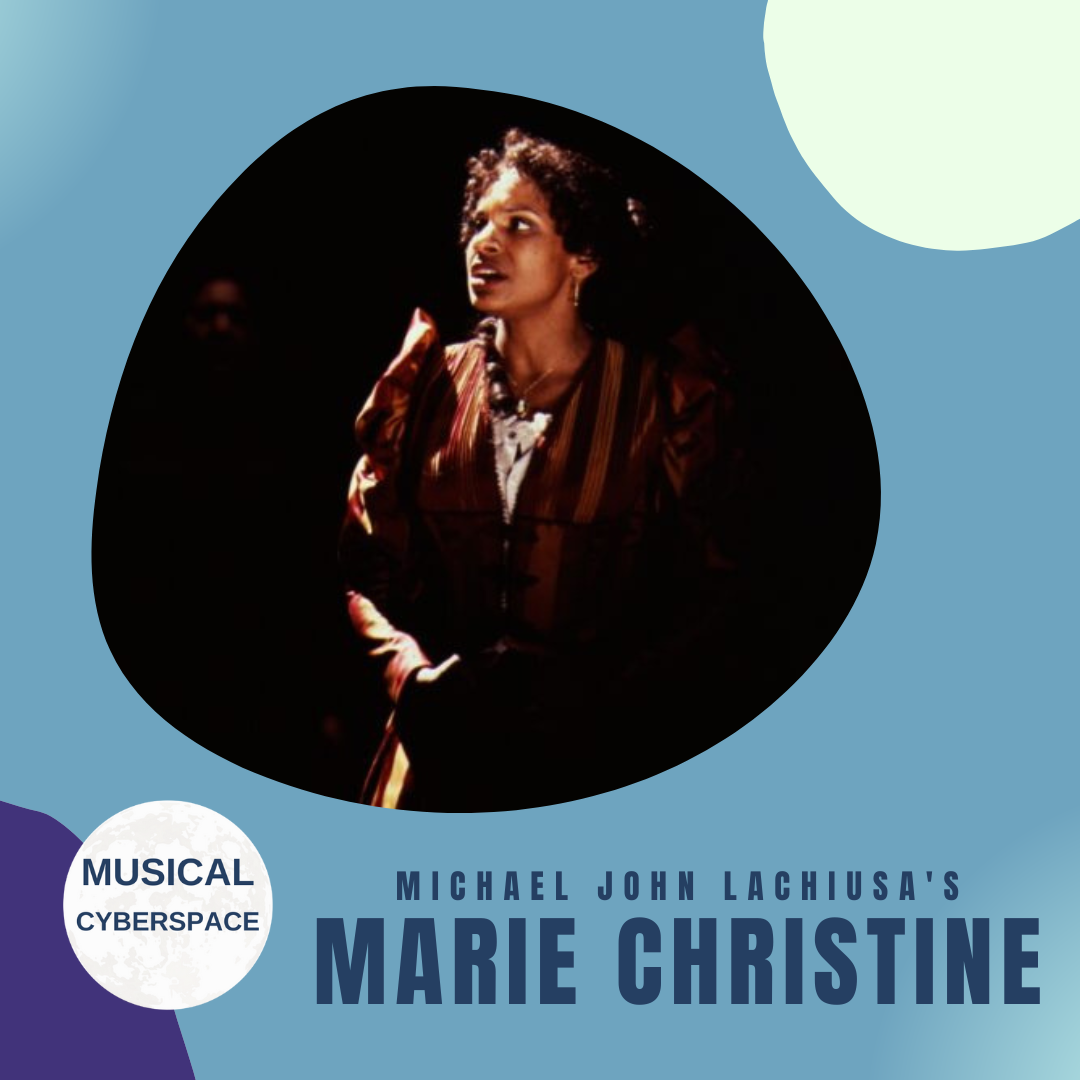
Audra McDonald in MARIE CHRISTINE. Photo credit: Joan Marcus.
Audra McDonald in Marie Christine.
Photo credit: Joan Marcus.

For December’s Forgotten Musicals Friday series, we’re looking at the “Miracles and Mysteries” of Marie Christine, the second Broadway musical from one of contemporary musical theatre’s most thrilling voices, Michael John LaChiusa. As the month speeds by, we’ll explore the background of the show, its book and score, its staging and design and finally, the show’s legacy. In today’s column, we’ll shine a spotlight on how the show came to be.

The Lincoln Center Theater features strongly in the making of Marie Christine. LaChiusa’s Hello Again (1993) premiered under its banner, while the star around whom the show was crafted, Audra McDonald, won her first Tony Award for the Lincoln Theatre’s presentation of the Royal National Theatre’s stateside transfer of their production of Carousel. Marie Christine also reunited LaChiusa with the director-choreographer of Hello Again, Graciela Daniele. A blend of Euripides’ Medea and the legends surrounding Marie Laveau and her daughter, two famous so-called Voodoo queens from the nineteenth century, Marie Christine sees its eponymous character telling her story from a New Orleans prison in 1899. It is not a story that is easy to tell or hear, and LaChiusa was up to the challenge of writing a score that reflected the complexity and intensity of the tale.

Following a few workshops over more than three years, Marie Christine premiered in the final season of the twentieth century. Running for only 42 performances, the show received a mixed-negative reception from the press and its audience. Nonetheless, it was nominated for five Tony Awards, including Best Book and Best Original Score – missing out on a nomination for Best Musical in the year that Contact, which was a dance show and decidedly not a musical, took home the big prize.

Today, on the 23rd anniversary of the show’s Broadway opening, it is clear that Marie Christine is a challenging and layered musical. It’s not perfect; how many musicals are? It’s also a difficult musical to stage. The ever-encircling darkness of the piece requires an epic romance to be established as a counterbalance to the show’s relentless pursuit tragedy. If the passion between Marie and Dante doesn’t land, neither does the show. The action develops slowly, requiring a keen sense of what’s beneath the text and an understanding of how to translate this into imagery on stage. Over the coming weeks, we’ll explore the extent to which the original production met these challenges – join us for five weeks of what is sure to be a fascinating discussion!

Posted in Forgotten Musicals Friday | Tagged , , , , , , , , , , , , | Leave a comment

The Saturday List: In Good Faith

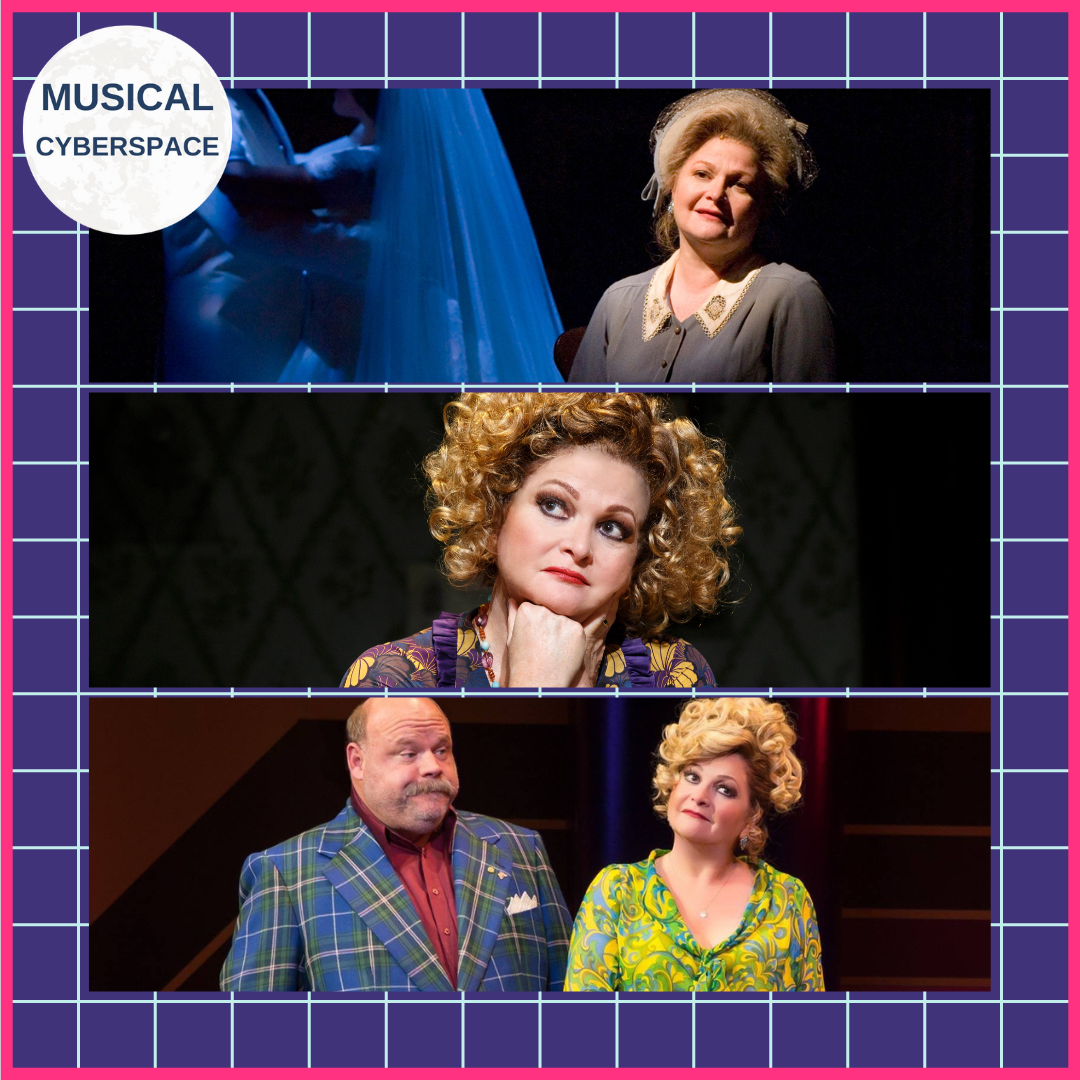
Faith Prince in A CATERED AFFAIR, ANNIE and DISASTER!
Faith Prince in A Catered Affair, Annie and Disaster!

I love Faith a bushel and a peck –
You bet your pretty neck, I do!

It’s Faith Prince’s 65th birthday today, and there’s no better time to celebrate her fabulous Broadway appearances than today. While Prince has appeared in a few films and guest starred in numerous television shows, it is on the Broadway stage that many of her fans grew to love her. A phenomenal comedienne, Prince also plays her characters with a great deal of humanity, allowing audiences to fall in love with her as Adelaide, Anna and Aggie – or any other role she plays.   

5. Bells Are Ringing (2001)

One of Prince’s most legendary roles was Ella Petersen in the ill-fated revival of Jule Styne, Betty Comden and Adolph Green’s Bells Are Ringing, a show during which all kinds of stories flew around the Internet about cheques bouncing before it shuttered after 68 performances at a loss of about $7 million. The reviews were mixed, but Prince had great reviews and earned a Tony nomination for her performance. On the telecast of that awards show, she delivered one of those performances that routinely pop up in conversations as a favourite. Her performance of “I’m Going Back” was an uninhibited smash!

4. Little Me (1998) 

I’m pretty sure the person who thought it was a good idea to cast Martin Short in a Broadway revival of Neil Simon, Carolyn Leigh and Cy Coleman’s Little Me imagined the show would be a hit. It wasn’t – and the reviews left nobody unscathed. The show is a bit of a bomb, albeit one with some catchy tunes. The parts of the older and younger Belle Poitrine, usually split between two performers, were combined for Prince in this revival, likely to bolster the role into a role that matched her talent. While having very little to play insofar as the character was concerned, Prince received praise for putting her numbers across with her usual style and comic timing. Watching her take on the title song, it occurs that it’s a pity that she didn’t get to lead a Broadway revival of Mame around the same time.

3. A Catered Affair (2008)

Harvey Fierstein and John Bucchino’s A Catered Affair is an intimate, character-driven story that gives Prince a showcase for the kind of skill she doesn’t always get to show off. There’s no schtick, character-driven or otherwise, for her to pull off here. Instead, she plays a layered character whose experience of planning her daughter’s wedding is so human that one can’t help but empathise but her and think about the choices we’ve made and the opportunities we may have missed. Prince was nothing less than the beating heart of the show. While it drew its fair share of negative reviews, there’s more to this show than what the reviews say there was. It should appear on more musical theatre fans’ “underrated” lists without question.

2. Jerome Robbins’ Broadway (1989) 

Jerome Robbins’ Broadway was Faith Prince’s main stem debut, and time has treated her debut kindly. Taking on a couple of numbers from High Button Shoes and Gypsy, Prince traded tunes, patter and a couple of steps with Jason Alexander in “I Still Get Jealous” and brought down the house as Tessie Tura in “You Gotta Have a Gimmick.” What an introduction!

1. Guys and Dolls (1992) 

Prince’s most memorable success was her performance as Miss Adelaide in the legendary 2993 Broadway revival of Guys and Dolls. Her take on the role is second only to the original production’s Vivian Blaine – perhaps – and she is simply incredible in the role. “Adelaide’s Lament” has followed her ever since, and she has performed the song in several concerts.  A delightfully different take on the number appears on the album of Prince’s Joe’s Pub cabaret, A Leap of Faith. The marriage of this classic show and this talented-as-hell star is sheer perfection.

Prince’s other Broadway shows include the 9-performance flop Nick & Nora (her all-out performance in “Men” is a highlight of the cast recording) and Seth Rudetsky’s jukebox musical, Disaster! She has also done replacement turns in Annie, The Little Mermaid and The King and I. No matter the show, Prince brings something unforgettable to the table and whatever she does next is sure to be as memorable as everything she has done before! 

Posted in The Saturday List | Tagged , , , , , , , , , , , , , , , , , , , , , , , , | 2 Comments

The Saturday List: Five Bees-Knees Musicals of the 1920s

THE STUDENT PRINCE, THE THREEPENNY OPERA and SHOW BOAT are just the bee's knees!
The Student Prince, The Threepenny Opera and Show Boat are just the bee’s knees!

How’s tricks, everyone? Today’s “Saturday List” looks at my top five musicals from the 1920s. There are, of course, many nifty little shows that one might consider in compiling such a list. Honourable mentions like Strike Up the Band, Fifty Million Frenchmen or No, No, Nanette all have their delights, but these five are the cat’s meow for me!

5. Oh, Kay!

There are several shows that I could have placed into this fifth spot, none of which I prize above the other. Could it have been Dearest Enemy? Absolutely! The Desert Song? For sure! What about Funny Face? Why not? As it is, I chose George Gershwin, Ira Gershwin, Guy Bolton and P. G. Wodehouse’s Oh, Kay! because it is the show that gave the world that most enduring of standards, “Someone to Watch Over Me.” There are other ebullient pleasures in the score, including the “Do, Do, Do,” “Clap Yo’ Hands” and “Fidgety Feet.” Together, the numbers encapsulate the great appeal of the Gershwins in the 1920s: catchy lyrics and heartfelt sentiments married to the kind of music for which the Germans invented the term “earworm.” It wouldn’t be hard for you to guess then, dear reader, what tune is spinning endlessly in my mind as I’m typing up this column.

4. Mr Cinders

I love a Cinderella story. I’m also a sucker for a good partworks collection. One such series was The Musicals Collection, which allowed me to add the highlights of a cast recording and a magazine to my CD rack once a fortnight. I already knew many of the shows they featured, but several were new to me, including this little gem by Vivian Ellis, Richard Myers, Clifford Grey and Greatrex Newman. A reverse gendered version of this most beloved of fairy tales, Mr Cinders toys with social class by placing Jim, a servant at Merton Chase, opposite Jill, an American heiress at the neighbouring home, The Towers. The usual fizzy 1920s plot devices knit together the appealing score, which included a breakout hit in “Spread A Little Happiness.” A collection of witty numbers for the two nasty brothers, “Blue Blood”, “True To Two” and “Honeymoon For Four,” as well as a delightful pair of ensemble numbers, “On With Dance” and “18th Century Drag,” rounded out a jaunty overall set of songs. Although it enjoyed a couple of revivals towards the end of the last century, Mr Cinders has all but disappeared over the past two decades. Here’s hoping for a second rediscovery of this charming little musical!

3. The Student Prince

My way into Sigmund Romberg and Dorothy Donnelly’s The Student Prince, as in so many musical theatre matters, was through my grandmother. My grandmother’s record collection was the source of the first musicals I encountered, but it wasn’t until much later that she guided me towards knowing The Student Prince. I was gathering some movie musicals for my gran to watch on her new flatscreen TV, and The Student Prince was one of the films she asked me to find. When I sat down to watch it with her, I had prepared myself for something I’d have to endure. I found myself seduced by the giddy romance of this tale, in which love and life experience transforms the staid Prince Karl into a man who has to choose between the kingdom for which he is responsible or Kathie, the woman he loves. In the interest of full disclosure, the dreamy Edmund Purdom and Mario Lanza’s heartfelt vocal for Prince Karl’s “I Walk With God” (which Nicholas Brodzsky and Paul Francis Webster wrote for the film) sealed the deal for me. As I mentioned when discussing Oh, Kay!, one song can be the gateway to the entire journey. What is particularly bittersweet about The Student Prince is that the piece gives Kathie – to some extent, given the period – agency in bringing Karl to his final decision. Her choices, thoughts and emotions matter as much as his. I don’t know where it would play, but I’d love to see a contemporary revival of this show.

2. The Threepenny Opera

I always respected Bertolt Brecht and Kurt Weill’s The Threepenny Opera, but I never truly loved it until I saw the National Theatre’s live broadcast of their 2016 production, a new adaptation by Simon Stephens that was directed by Rufus Norris. Watching the incredible cast bring this interpretation of the material to life, I felt within me everything that, until then, I only understood academically about this brilliant piece of theatre. Its unforgiving commentary on human vices such as corruption, exploitation and hypocrisy remains as incisive today as it must have been at its premiere in Germany in 1928. (In truth, perhaps it was watching the United States cut of the 1962 film that had disenchanted my ability to perceive its brilliance until then.) Besides its thematic heft, The Threepenny Opera also numbers in its score some jewels of songwriting, “Pirate Jenny” (which I had the privilege of seeing Bea Arthur sing live in Just Between Friends as she shared her memories of the brilliant Lotte Lenya’s performance of the same song) and the “Jealousy Duet” (which Arthur intones most memorably with Jo Sullivan on the 1954 cast recording of the show) among them. What I enjoy most about The Threepenny Opera, I think, is how layered it is. It’s serious stuff, but it’s so funny. It plays with you as you watch it.  And isn’t play one of the things we desire most when we go to the theatre?

1. Show Boat

One of the most fascinating things about Show Boat is the sheer number of iterations of the show that have played the world’s stages since Jerome Kern and Oscar Hammerstein II created this landmark musical. These are largely documented in Miles Kreuger’s Show Boat – The Story of a Classic American Musical, offering a rare and detailed tour through the production history of the show up until the time of its final revision in 1990 before going out of print. What makes Show Boat survive the ages? Certainly, its classic score has something to do with it, the grand lyrics and gorgeous melodies of songs like “Ol’ Man River” and “Can’t Help Lovin’ Dat Man” being unforgettable, as is the wit of numbers like “Life Upon the Wicked Stage,” the radiant joy of “Why Do I Love You?” and the devastating rawness of “Bill.” That said, there are many great scores that have slipped into the recesses of time. May I submit the idea that it is Hammerstein’s integrity in handling the themes that emerged from Edna Ferber’s novel that lends the show its continued relevance? For in addition to its central love story, Show Boat tackles the shifting dynamics of race relations in the face of a society that espouses the ideal of freedom for all but still treats people unequally in reality. This idea is strongly resonant with our times and in an age where Oklahoma! can be explored with a contemporary sensibility, as was done in Daniel Fish’s recent take on the material, perhaps the time is right for Show Boat to be reinvented yet again.

Well, there you go! As I’ve written this piece, names of other great 1920s shows have popped into my mind, including Bitter Sweet, The Girl Friend and The New Moon. It was a decade of memorable songs that keep one’s foot tapping and heart singing, whether the show overall is a favourite or not!

Posted in The Saturday List | Tagged , , , , , , , , , , , , , , , , , , , , , , , , , , , , , , , , , , , , , , , , , , , | Leave a comment