Forgotten Musicals Friday: The Merely Marvelous REDHEAD

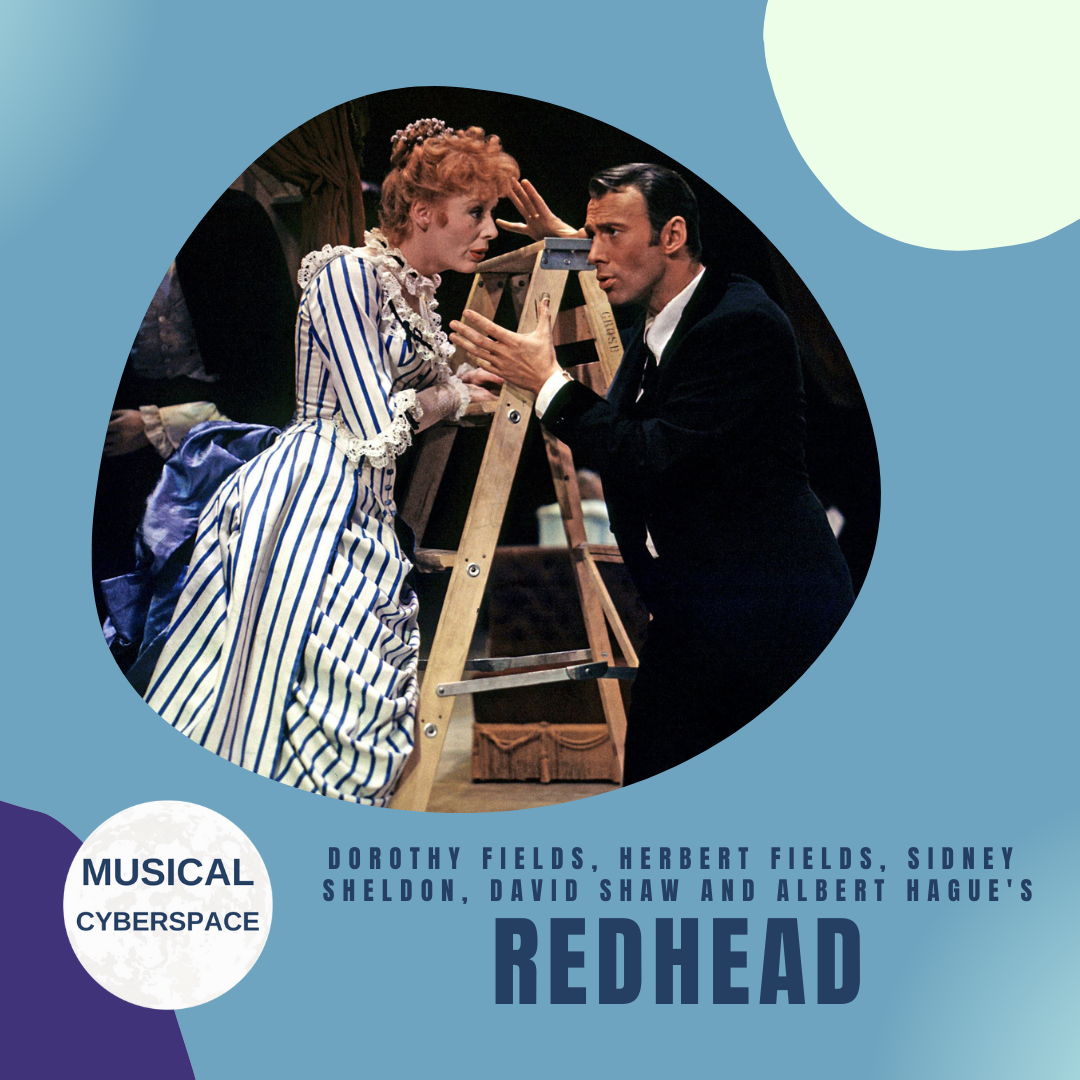
Gwen Verdon, standing on a ladder in a white Victorian dress with blue stripes, speaks with Richard Kiley, in a black suit, in REDHEAD.
Gwen Verdon and Richard Kiley in Redhead

Today is Gwen Verdon’s birthday! What better way to celebrate it on Forgotten Musicals Friday than to take a look at one of her key shows, Redhead. Although it won the Tony Award for Best Musical in 1959, Redhead has never had a revival on Broadway, been adapted for film or played on the West End – nor is it likely to do so any time soon. Many Broadway fans will tell you that this is because of how well the show was tailored to Verdon’s strengths and that there simply isn’t anyone who could do what she did in the original production, which also marked Bob Fosse’s debut as a director-choreographer. While it is true that Redhead was moulded to Verson’s talents, it’s also true that the show is just not great, little more than a passable musical comedy of its time elevated by a fantastic performance and virtuosic staging.

Redhead was first conceived in the 1940s by Dorothy and Herbert Fields after a visit to Madame Tussauds. At that time, the show was called The Works, the core idea being a musical murder mystery set in and around a wax museum in Jack the Ripper-era London. It was thought that the show might be written for Beatrice Lillie, but the project never came together. Years later, it was picked up as a potential vehicle for Verdon, a Broadway superstar following her appearances in Can-Can, Damn Yankees and New Girl in Town, each of which earned her a Tony Award. Verdon now had the power to shop around for roles and directors and used her influence to secure Fosse his directorial debut on the show. Herbert Fields had died, so Sidney Sheldon joined Dorothy Fields to write the book, along with David Shaw, who had to be on board due to a contractual requirement that Verdon was to have appeared in a show written by him. Fields also wrote the lyrics, with Albert Hague providing the music.

Listening to the cast recording today, the “Overture” sums up the production well. Following a thrilling and evocative opening, the melodies shift into standard Broadway mode, alternating with tunes in an Americanised version of the English Music Hall style. There’s some irony in the appropriation of an essentially British musical form in an American show, given a number like “Uncle Sam Rag,” which spoofs British attempts to master American music. At any rate, the point is that the “Overture” shifts into something quite generic and unmemorable, much as the book and score do. The book is convoluted in its plotting, and the score is too reliant on novelty numbers – although Fields’s lyrics are generally a delight. She comes up with some great rhymes, not the last of which is ‘much more gore than they saw at Elsinore!’ And yet, the weakness of the material provides the space for Verdon’s star turn and Fosse’s brilliant staging ideas. What a conundrum!

As the show was created, some of the most prominent elements of Fosse’s style would come into play, including the signature white gloves and neutral black costumes. As was his wont, Fosse developed sequences for the show that were simply for entertainment, for example, “Essie’s Vision,” which – to paraphrase the master – was a dream ballet that did nothing to further the plot. No apologies were made for diverging into musical and movement languages that journey far beyond the boundaries of Victorian London in numbers like “The Pick-Pocket Tango,” which recalled the spirit of Verdon’s Lola in Damn Yankees, or the climatic chase scene that was more reminiscent of the silent film antics of Charlie Chaplin or the Keystone Cops than anything that came before the heyday of the silent film era. Because Fosse guided Verdon and the cast through such sequences with such skill, audiences of the time had no problem suspending their disbelief regarding such inconsistencies. It is difficult to imagine this approach working for today’s audiences.

Redhead winning the Tony Award for Best Musical can be attributed to two things. Firstly, it was a weak season. Its only real competition was Flower Drum Song, which only won one award for Salvatore Dell’Isola as Best Conductor and Musical Director. The offerings of the third nominee, La Plume de Ma Tante, were much more suited to the Special Tony Award it won, while Whoop-Up and Goldilocks were shut out of the Best Musical race altogether. Secondly, what Fosse and Verdon had done was so masterful that it seems there was no choice but to reward the most innovative and virtuosic achievements of the season, even if these made for a show that didn’t hold together as well as it was written. At this time, there were no awards given for the Best Book or Best Score and looking at what’s on paper, one just can’t make a case for presenting these accolades to Redhead over Flower Drum Song.

In its original form, Redhead is an unrevivable show. Part of this is about Verdon and Fosse, but many shows have overcome the memories of an iconic performance or staging. In this case, what’s left once you take Verdon and Fosse out of the equation just doesn’t cut the mustard – which places us in “revisal” territory. And when it comes to Redhead, would a “revisal” really be worth the effort? Could the piece be elevated beyond what it is? My feeling? No, it could not – and it is better left in the musical theatre history books, recognised for what it is rather than shown up for what it can never be.

Posted in Forgotten Musicals Friday | Tagged , , , , , , , , , , , , , , , , , , , , , | Leave a comment

The Saturday List: 2013 in Musical Theatre

Scenes from KINKY BOOTS (a close up of Billy Porter's face as Lola), A GENTLEMAN'S GUIDE TO LOVE AND MURDER (Monty - played by Bryce Pinkham - stands between the two women who wish to marry him - played by Lisa O'Hare and Lauren Worsham) and HERE LIES LOVE (Jose Llana and Ruthie Ann Miles dressed up as the Marcoses.
Scenes from Kinky Boots (featuring Billy Porter), A Gentleman’s Guide to Love and Murder (featuring Lisa O’Hare, Bryce Pinkham and Lauren Worsham and Here Lies Love (featuring Jose Llana and Ruthie Ann Miles).

This year, we’re stepping away from the kind of ranked lists we have done in the past, looking instead at different years in musical theatre history. Each week, we’ll look at the big award winners of the year and the legacy of some of the shows that lit up stages on Broadway, Off-Broadway and in the West End, with occasional leaps into what other countries had to offer.

For our first column of the year, let’s jump back a decade to 2013. Designated as the International Year of Water Cooperation and the International Year of Quinoa, 2013 was also the year that saw Edward Snowden’s rise to international fame, the tragic Boston Marathon bombing and the election of Pope Francis to the Papacy. At the movies, Frozen, which would become a stage musical in the years to come, was top at the worldwide box office. “Thrift Shop,” “Blurred Lines,” and “Radioactive” were top of the charts when it came to pop music, and the most popular new word of the year was “bingeable.” Let’s take a look at what was happening on musical theatre stages around the world.  

1. The Award Winners for Best Musical

Kinky Boots was named Best Musical at the Tony Awards in 2013, having opened on 4 April of that year following a developmental run in Chicago in 2012. Its biggest competition came from Matilda the Musical, which premiered on the West End in 2011. At the following year’s ceremony, another 2013 Broadway musical, A Gentleman’s Guide to Love and Murder, would take home the prize. Across the pond, the Olivier Award for Best Musical went to Top Hat, a new stage adaptation of the 1935 film, which featured a score by Irving Berlin. As is usually done in adaptations of this nature, several Berlin songs written for other projects augmented the song score from the movie. Following a tour of the United Kingdom in 2011, the production made its West End bow in 2012. The following year, an American musical from 2011, The Book of Mormon, took home the top prize, beating the only nominated musical from 2013 in both seasons, Charlie and the Chocolate Factory. All in all, it was not a great couple of years for new British musicals.

2. Most Overrated

I’m sad to say it, but the most overrated musical of this year for me is Kinky Boots. It’s a good musical, but not a great one. Cyndi Lauper’s score stays with you for the night but not for the ages. Harvey Fierstein’s book is aware of the ideas with which it grapples, but it never distils these fully into the plot and characters. In short, Kinky Boots never quite gets to grips precisely with what it wants to say about gender or race. There is a distinct sense of everyone hedging their bets. While Jerry Mitchell’s innovative staging distracted audiences from that shortcoming, the cast’s performances truly elevated this show in its original run, a trend that seems consistent wherever it travels. This is especially true of Billy Porter’s Lola. What Porter did with songs like “Not My Father’s Son” and “Hold Me In Your Heart” turned what could easily be played as sentiment into pure emotion, creating moments that really mean something in a world like ours.

3. Most Underrated

Hands on a Hardbody is a somewhat unconventional musical. It’s like A Chorus Line, but instead of dancers auditioning to be part of a Broadway ensemble, a group of working-class Americans competes to win a hardbody truck. Whoever keeps their hand on the vehicle for the longest time goes home with the prize. What’s amazing and perhaps even surprising about this show is how well it captures moments of people just being human in songs like “Alone With Me” or scenes like the one in which Norma breaks into uncontrollable laughter before transitioning into “Joy of the Lord.” That sense of empathy is one key element of the theatrical act. It invests the show with stakes in which an audience can invest. It’s a pity that high schools and community theatres don’t produce this show more often, as it has a lot to offer.

4. Hidden Gem 

After Evita but before Six, there was Here Lies Love. Presented as a concept album before its premiere as an immersive Off-Broadway poperetta, Here Lies Love tells the story of Imelda Marcos, the former first lady of the Philippines. Created by David Byrne and Fatboy Slim, the show offers 90 minutes of great bops with some fantastic hooks. While the concept album showcases a range of pop artists, the cast recording features Ruthie Ann Miles, Jose Llana and Conrad Ricamora in their stage roles. The concept for the production was a club party, during which a DJ and the club’s staff presented the story of the Marcoses. As the clubbers, the audience was encouraged to dance along as the show progressed. What a brilliant way to illustrate our complicity and relative distance in the political processes that shape our lives!

5. Show of the Year

For me, the show of the year was A Gentleman’s Guide to Love and Murder. With an award-winning book by Robert L. Freedman, who collaborated on the score with Steven Lutvak. This musical is a delightful romp through Edwardian-era London, poking fun at the conventions of class with some delicious nods to the conventions of the theatre of the time too. Witty and droll, the show is entertaining from curtain to curtain as Monty Navarro works his way to an earldom by bumping off the eight relatives that stand between him and his aristocratic right as one of the D’Ysquith dynasty. There is great fun in numbers like “Poison in My Pocket” and “I’ve Decided to Marry You” and outstanding character work in songs like “Foolish to Think” and “Inside Out,” which balances the drive of the farcical book. It’s outstanding work all around. The show bears repeated viewings and the cast recording, many listens.

2013 was certainly a good year for musical theatre – not the strongest ever, perhaps, but one in which several enjoyable shows left their mark on the world. Kinky Boots is among the thirty longest-running Broadway productions of all time, and the Tony Awards ceremony opened with one of the best numbers in the history of the awards, “Bigger!” by Lin-Manuel Miranda and Tom Kitt. What a tribute to a solid Broadway season!

Posted in The Saturday List | Tagged , , , , , , , , , , , , , , , , , , , , , , , , , , , , , , , , , | Leave a comment

Forgotten Musicals Friday: THE TOREADOR

Edmund "Teddy" Payne in THE TOREADOR. Payne is costumed as a toreador, with a black hat, jacket and tie, a white shirt, golden waistcoat and red belt.
An illustration of Edmund “Teddy” Payne in The Toreador.

For this January, we’re heading back into some short-form Forgotten Musicals Friday columns. This week, we’re celebrating the anniversary of the Broadway bow of The Toreador. This British musical comedy held the distinction of being the final musical produced by the Gaiety Theatre in London. In England, The Toreador debuted in 1901 and ran for 675 performances, with the Broadway premiere following in 1902 for a 121-performance run. An international success, the show would also be staged in Australia, South Africa, Austria, France, Hungary and Gibraltor.

The Toreador featured a book by James T. Tanner and Harry Nicholls, with music by Ivan Caryll and Lionel Monckton and lyrics by Adrian Ross and Percy Greenbank, all of whom barring Greenbank were established members of the Gaiety Theatre team. This was to be their most successful hit.

Set against the backdrop of Spain’s Carlist Wars, the plot of The Toreador followed Sammy Gigg (played by Edmund “Teddy” Payne in London and Francis Wilson in New York), who gets involved in a bombing conspiracy led by Donna Teresa (Queenie Leighton in the UK and Jennie Hawley in the USA), all in the name of love. Also caught up in the story is Dora, who avoids a blind wedding to Augustus, by disguising her best friend, Nancy, as a dummy husband. Meanwhile, Mrs Malton Hoppings plays off two beaus, while Archie and Susan add to the flirtatious fun that lurks beneath the bullets and bullfights.

While there is no cast recording of the show, the vocal score of The Toreador is readily available. Playing through some of the songs (notably “Everybody’s Awfully Good to Me”), it’s easy to spot the kind of ideas that would be developed in the musical comedies of George and Ira Gershwin and Cole Porter a little more than a decade later. And while the influence of W. S. Gilbert and Arthur Sullivan’s comic operas is evident in the score, so is a clear sense of movement into the musical comedy style that the Gaiety Theatre popularised in the United Kingdom. The Toreador is also a fantastic example of how the Ned Harrigan and Tony Hart musical comedy popularised in the United States developed into a form that is more recognisable to us today. (One also has to credit the composer of the Harrigan and Hart shows, David Braham, as a fundamental part of this journey.)

While The Toreador is perhaps not much more than a footnote in musical theatre history, it seems as though it was a great show in its time, certainly one that is interesting to read about and consider in the context of the development of musical theatre over the past 150 years.

Posted in Forgotten Musicals Friday | Tagged , , , , , , , , , , , , , , , , , , , , , | Leave a comment

Forgotten Musicals Friday: Way Back to MARIE CHRISTINE

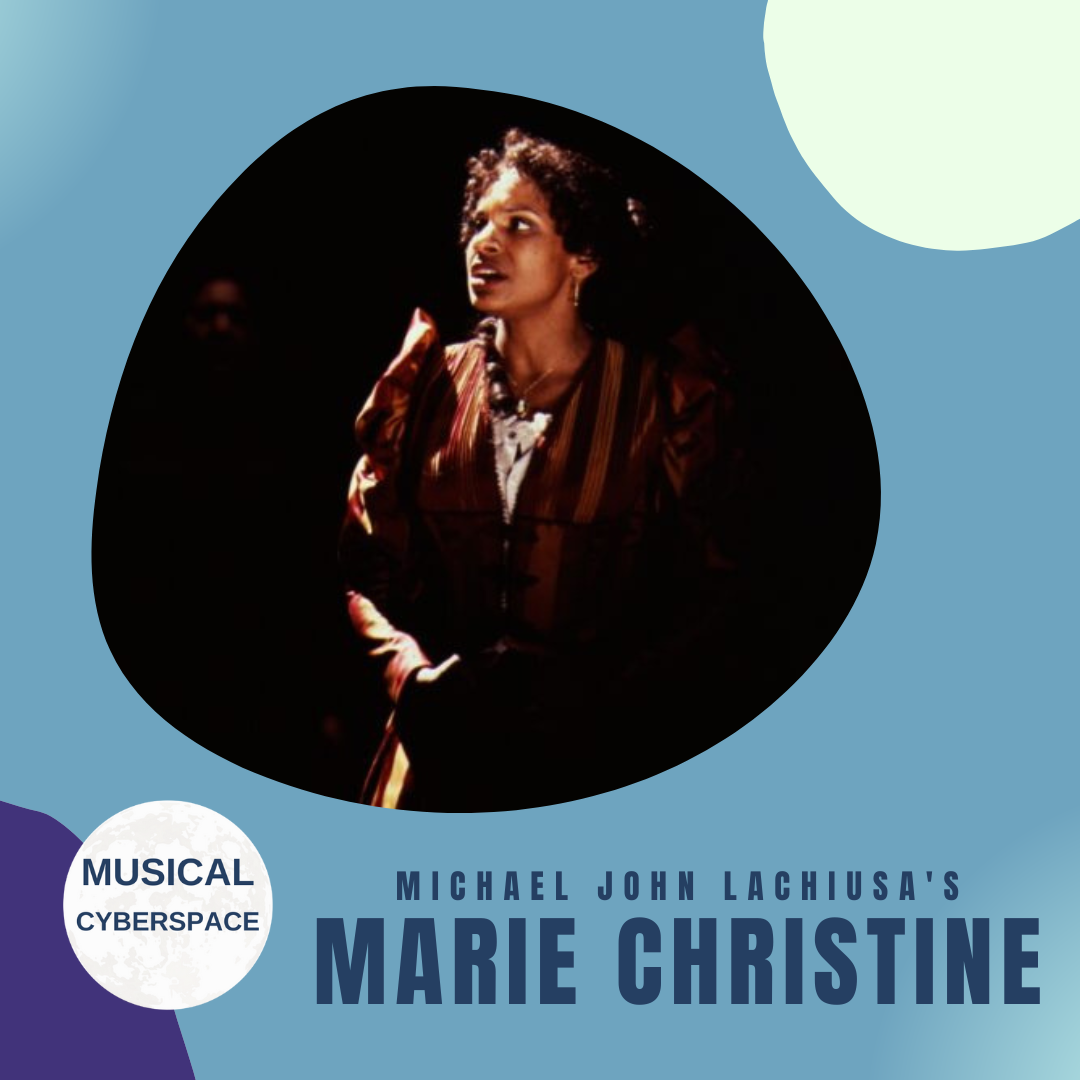
Audra McDonald in MARIE CHRISTINE. Photo credit: Joan Marcus.
Audra McDonald in Marie Christine.
Photo credit: Joan Marcus.

For December’s Forgotten Musicals Friday series, we’re looking at the “Miracles and Mysteries” of Marie Christine, the second Broadway musical from one of contemporary musical theatre’s most thrilling voices, Michael John LaChiusa. As the month speeds by, we’ll explore the background of the show, its book and score, its staging and design and finally, the show’s legacy. In today’s column, we’ll shine a spotlight on how the show came to be.

The Lincoln Center Theater features strongly in the making of Marie Christine. LaChiusa’s Hello Again (1993) premiered under its banner, while the star around whom the show was crafted, Audra McDonald, won her first Tony Award for the Lincoln Theatre’s presentation of the Royal National Theatre’s stateside transfer of their production of Carousel. Marie Christine also reunited LaChiusa with the director-choreographer of Hello Again, Graciela Daniele. A blend of Euripides’ Medea and the legends surrounding Marie Laveau and her daughter, two famous so-called Voodoo queens from the nineteenth century, Marie Christine sees its eponymous character telling her story from a New Orleans prison in 1899. It is not a story that is easy to tell or hear, and LaChiusa was up to the challenge of writing a score that reflected the complexity and intensity of the tale.

Following a few workshops over more than three years, Marie Christine premiered in the final season of the twentieth century. Running for only 42 performances, the show received a mixed-negative reception from the press and its audience. Nonetheless, it was nominated for five Tony Awards, including Best Book and Best Original Score – missing out on a nomination for Best Musical in the year that Contact, which was a dance show and decidedly not a musical, took home the big prize.

Today, on the 23rd anniversary of the show’s Broadway opening, it is clear that Marie Christine is a challenging and layered musical. It’s not perfect; how many musicals are? It’s also a difficult musical to stage. The ever-encircling darkness of the piece requires an epic romance to be established as a counterbalance to the show’s relentless pursuit tragedy. If the passion between Marie and Dante doesn’t land, neither does the show. The action develops slowly, requiring a keen sense of what’s beneath the text and an understanding of how to translate this into imagery on stage. Over the coming weeks, we’ll explore the extent to which the original production met these challenges – join us for five weeks of what is sure to be a fascinating discussion!

Posted in Forgotten Musicals Friday | Tagged , , , , , , , , , , , , | Leave a comment

The Saturday List: In Good Faith

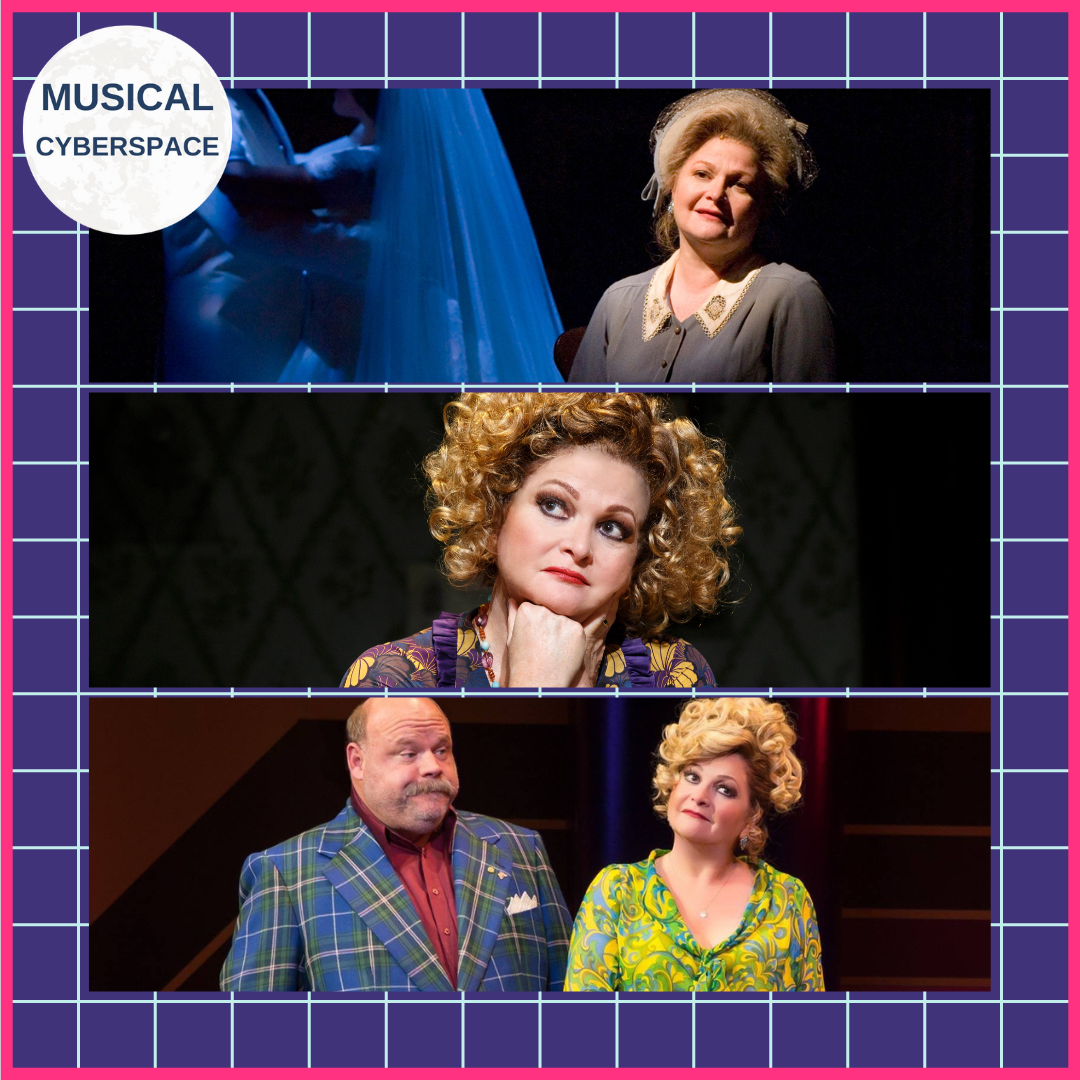
Faith Prince in A CATERED AFFAIR, ANNIE and DISASTER!
Faith Prince in A Catered Affair, Annie and Disaster!

I love Faith a bushel and a peck –
You bet your pretty neck, I do!

It’s Faith Prince’s 65th birthday today, and there’s no better time to celebrate her fabulous Broadway appearances than today. While Prince has appeared in a few films and guest starred in numerous television shows, it is on the Broadway stage that many of her fans grew to love her. A phenomenal comedienne, Prince also plays her characters with a great deal of humanity, allowing audiences to fall in love with her as Adelaide, Anna and Aggie – or any other role she plays.   

5. Bells Are Ringing (2001)

One of Prince’s most legendary roles was Ella Petersen in the ill-fated revival of Jule Styne, Betty Comden and Adolph Green’s Bells Are Ringing, a show during which all kinds of stories flew around the Internet about cheques bouncing before it shuttered after 68 performances at a loss of about $7 million. The reviews were mixed, but Prince had great reviews and earned a Tony nomination for her performance. On the telecast of that awards show, she delivered one of those performances that routinely pop up in conversations as a favourite. Her performance of “I’m Going Back” was an uninhibited smash!

4. Little Me (1998) 

I’m pretty sure the person who thought it was a good idea to cast Martin Short in a Broadway revival of Neil Simon, Carolyn Leigh and Cy Coleman’s Little Me imagined the show would be a hit. It wasn’t – and the reviews left nobody unscathed. The show is a bit of a bomb, albeit one with some catchy tunes. The parts of the older and younger Belle Poitrine, usually split between two performers, were combined for Prince in this revival, likely to bolster the role into a role that matched her talent. While having very little to play insofar as the character was concerned, Prince received praise for putting her numbers across with her usual style and comic timing. Watching her take on the title song, it occurs that it’s a pity that she didn’t get to lead a Broadway revival of Mame around the same time.

3. A Catered Affair (2008)

Harvey Fierstein and John Bucchino’s A Catered Affair is an intimate, character-driven story that gives Prince a showcase for the kind of skill she doesn’t always get to show off. There’s no schtick, character-driven or otherwise, for her to pull off here. Instead, she plays a layered character whose experience of planning her daughter’s wedding is so human that one can’t help but empathise but her and think about the choices we’ve made and the opportunities we may have missed. Prince was nothing less than the beating heart of the show. While it drew its fair share of negative reviews, there’s more to this show than what the reviews say there was. It should appear on more musical theatre fans’ “underrated” lists without question.

2. Jerome Robbins’ Broadway (1989) 

Jerome Robbins’ Broadway was Faith Prince’s main stem debut, and time has treated her debut kindly. Taking on a couple of numbers from High Button Shoes and Gypsy, Prince traded tunes, patter and a couple of steps with Jason Alexander in “I Still Get Jealous” and brought down the house as Tessie Tura in “You Gotta Have a Gimmick.” What an introduction!

1. Guys and Dolls (1992) 

Prince’s most memorable success was her performance as Miss Adelaide in the legendary 2993 Broadway revival of Guys and Dolls. Her take on the role is second only to the original production’s Vivian Blaine – perhaps – and she is simply incredible in the role. “Adelaide’s Lament” has followed her ever since, and she has performed the song in several concerts.  A delightfully different take on the number appears on the album of Prince’s Joe’s Pub cabaret, A Leap of Faith. The marriage of this classic show and this talented-as-hell star is sheer perfection.

Prince’s other Broadway shows include the 9-performance flop Nick & Nora (her all-out performance in “Men” is a highlight of the cast recording) and Seth Rudetsky’s jukebox musical, Disaster! She has also done replacement turns in Annie, The Little Mermaid and The King and I. No matter the show, Prince brings something unforgettable to the table and whatever she does next is sure to be as memorable as everything she has done before! 

Posted in The Saturday List | Tagged , , , , , , , , , , , , , , , , , , , , , , , , | 2 Comments

The Saturday List: Five Bees-Knees Musicals of the 1920s

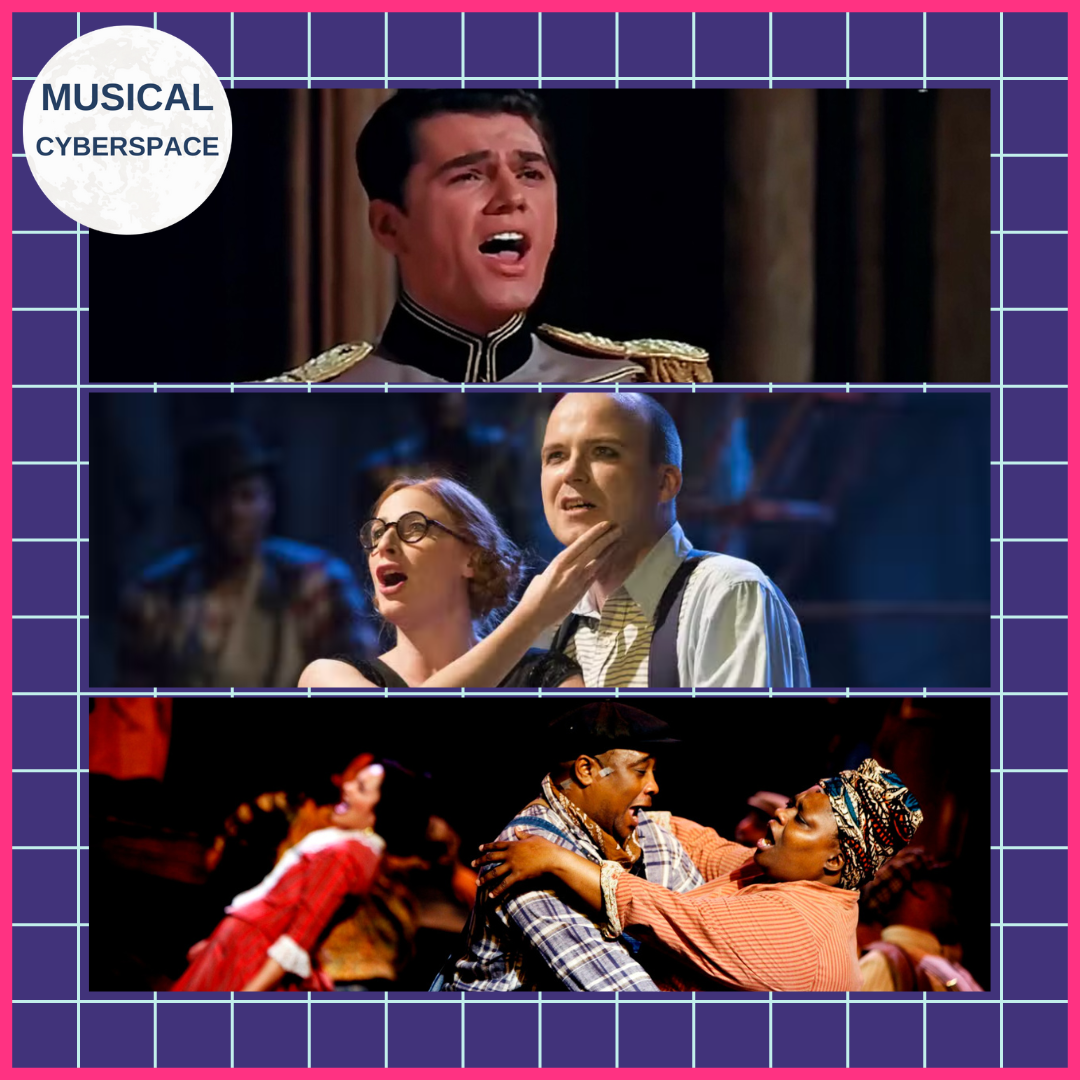
THE STUDENT PRINCE, THE THREEPENNY OPERA and SHOW BOAT are just the bee's knees!
The Student Prince, The Threepenny Opera and Show Boat are just the bee’s knees!

How’s tricks, everyone? Today’s “Saturday List” looks at my top five musicals from the 1920s. There are, of course, many nifty little shows that one might consider in compiling such a list. Honourable mentions like Strike Up the Band, Fifty Million Frenchmen or No, No, Nanette all have their delights, but these five are the cat’s meow for me!

5. Oh, Kay!

There are several shows that I could have placed into this fifth spot, none of which I prize above the other. Could it have been Dearest Enemy? Absolutely! The Desert Song? For sure! What about Funny Face? Why not? As it is, I chose George Gershwin, Ira Gershwin, Guy Bolton and P. G. Wodehouse’s Oh, Kay! because it is the show that gave the world that most enduring of standards, “Someone to Watch Over Me.” There are other ebullient pleasures in the score, including the “Do, Do, Do,” “Clap Yo’ Hands” and “Fidgety Feet.” Together, the numbers encapsulate the great appeal of the Gershwins in the 1920s: catchy lyrics and heartfelt sentiments married to the kind of music for which the Germans invented the term “earworm.” It wouldn’t be hard for you to guess then, dear reader, what tune is spinning endlessly in my mind as I’m typing up this column.

4. Mr Cinders

I love a Cinderella story. I’m also a sucker for a good partworks collection. One such series was The Musicals Collection, which allowed me to add the highlights of a cast recording and a magazine to my CD rack once a fortnight. I already knew many of the shows they featured, but several were new to me, including this little gem by Vivian Ellis, Richard Myers, Clifford Grey and Greatrex Newman. A reverse gendered version of this most beloved of fairy tales, Mr Cinders toys with social class by placing Jim, a servant at Merton Chase, opposite Jill, an American heiress at the neighbouring home, The Towers. The usual fizzy 1920s plot devices knit together the appealing score, which included a breakout hit in “Spread A Little Happiness.” A collection of witty numbers for the two nasty brothers, “Blue Blood”, “True To Two” and “Honeymoon For Four,” as well as a delightful pair of ensemble numbers, “On With Dance” and “18th Century Drag,” rounded out a jaunty overall set of songs. Although it enjoyed a couple of revivals towards the end of the last century, Mr Cinders has all but disappeared over the past two decades. Here’s hoping for a second rediscovery of this charming little musical!

3. The Student Prince

My way into Sigmund Romberg and Dorothy Donnelly’s The Student Prince, as in so many musical theatre matters, was through my grandmother. My grandmother’s record collection was the source of the first musicals I encountered, but it wasn’t until much later that she guided me towards knowing The Student Prince. I was gathering some movie musicals for my gran to watch on her new flatscreen TV, and The Student Prince was one of the films she asked me to find. When I sat down to watch it with her, I had prepared myself for something I’d have to endure. I found myself seduced by the giddy romance of this tale, in which love and life experience transforms the staid Prince Karl into a man who has to choose between the kingdom for which he is responsible or Kathie, the woman he loves. In the interest of full disclosure, the dreamy Edmund Purdom and Mario Lanza’s heartfelt vocal for Prince Karl’s “I Walk With God” (which Nicholas Brodzsky and Paul Francis Webster wrote for the film) sealed the deal for me. As I mentioned when discussing Oh, Kay!, one song can be the gateway to the entire journey. What is particularly bittersweet about The Student Prince is that the piece gives Kathie – to some extent, given the period – agency in bringing Karl to his final decision. Her choices, thoughts and emotions matter as much as his. I don’t know where it would play, but I’d love to see a contemporary revival of this show.

2. The Threepenny Opera

I always respected Bertolt Brecht and Kurt Weill’s The Threepenny Opera, but I never truly loved it until I saw the National Theatre’s live broadcast of their 2016 production, a new adaptation by Simon Stephens that was directed by Rufus Norris. Watching the incredible cast bring this interpretation of the material to life, I felt within me everything that, until then, I only understood academically about this brilliant piece of theatre. Its unforgiving commentary on human vices such as corruption, exploitation and hypocrisy remains as incisive today as it must have been at its premiere in Germany in 1928. (In truth, perhaps it was watching the United States cut of the 1962 film that had disenchanted my ability to perceive its brilliance until then.) Besides its thematic heft, The Threepenny Opera also numbers in its score some jewels of songwriting, “Pirate Jenny” (which I had the privilege of seeing Bea Arthur sing live in Just Between Friends as she shared her memories of the brilliant Lotte Lenya’s performance of the same song) and the “Jealousy Duet” (which Arthur intones most memorably with Jo Sullivan on the 1954 cast recording of the show) among them. What I enjoy most about The Threepenny Opera, I think, is how layered it is. It’s serious stuff, but it’s so funny. It plays with you as you watch it.  And isn’t play one of the things we desire most when we go to the theatre?

1. Show Boat

One of the most fascinating things about Show Boat is the sheer number of iterations of the show that have played the world’s stages since Jerome Kern and Oscar Hammerstein II created this landmark musical. These are largely documented in Miles Kreuger’s Show Boat – The Story of a Classic American Musical, offering a rare and detailed tour through the production history of the show up until the time of its final revision in 1990 before going out of print. What makes Show Boat survive the ages? Certainly, its classic score has something to do with it, the grand lyrics and gorgeous melodies of songs like “Ol’ Man River” and “Can’t Help Lovin’ Dat Man” being unforgettable, as is the wit of numbers like “Life Upon the Wicked Stage,” the radiant joy of “Why Do I Love You?” and the devastating rawness of “Bill.” That said, there are many great scores that have slipped into the recesses of time. May I submit the idea that it is Hammerstein’s integrity in handling the themes that emerged from Edna Ferber’s novel that lends the show its continued relevance? For in addition to its central love story, Show Boat tackles the shifting dynamics of race relations in the face of a society that espouses the ideal of freedom for all but still treats people unequally in reality. This idea is strongly resonant with our times and in an age where Oklahoma! can be explored with a contemporary sensibility, as was done in Daniel Fish’s recent take on the material, perhaps the time is right for Show Boat to be reinvented yet again.

Well, there you go! As I’ve written this piece, names of other great 1920s shows have popped into my mind, including Bitter Sweet, The Girl Friend and The New Moon. It was a decade of memorable songs that keep one’s foot tapping and heart singing, whether the show overall is a favourite or not!

Posted in The Saturday List | Tagged , , , , , , , , , , , , , , , , , , , , , , , , , , , , , , , , , , , , , , , , , , , | Leave a comment

Forgotten Musicals Friday: The Legacy of THE JUNGLE BOOK

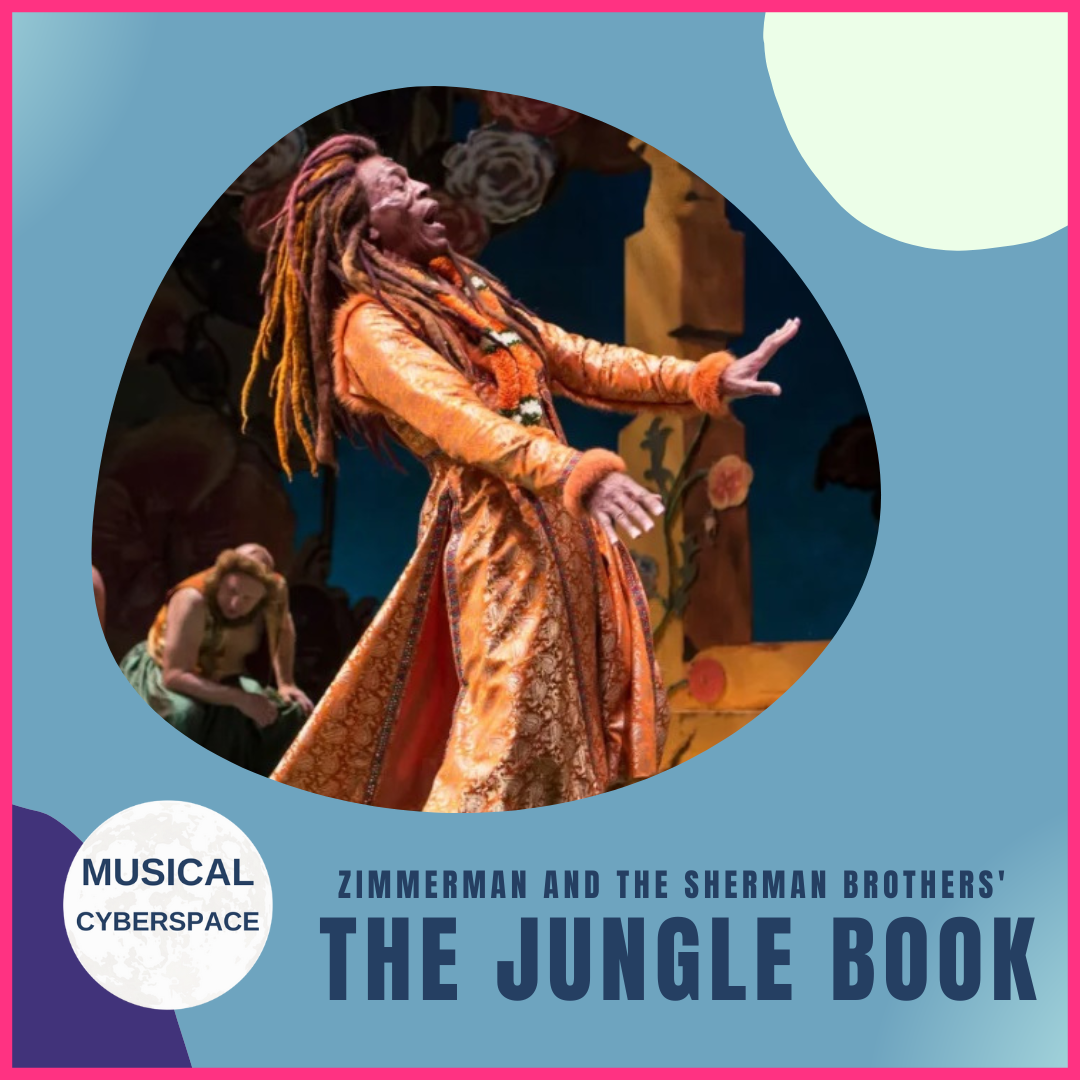
André de Shields in THE JUNGLE BOOK
André de Shields in The Jungle Book

Our final Forgotten Musicals Friday column for July brings us full circle in our journey through The Jungle Book. As mentioned in our first column, we are looking at the show’s legacy, having already looked at its book and score, staging and design. It is impossible to look at how the show sits in today’s world without jumping into its history, starting with the approach Rudyard Kipling, the author of the original text, used in placing his worldview into his writing.

Kipling is a controversial figure today, both in India and around the world. On the one hand, his ability to distil an idea to its essence is evidence of his genius. On the other, Kipling used this genius to produce works like “The White Man’s Burden,” a poem that justifies the atrocities of imperial conquests, such as the exploitation of land and the theft of natural resources, as a means to an end, colonial civilisation – so-called civilisation, that is. One question that must have sat foremost in the minds of the team behind The Jungle Book was how to ensure that the story they were telling could exist separately from Kipling’s politics. This task was nothing less than daunting. How could it not be, given that the original material deals with the theme of civilisation at its very core, using the ideas of people as animals and animals as people as a vehicle for its exploration?

This discourse made its way into Disney’s first take on the material in the form of “I Wanna Be Like You,” a song sequence in the film in which the monkeys are racially coded as black people and viewed as sub-human animals who want to become civilised men. While this is a précis of the argument, it was something that Mary Zimmerman had to address in making the show. Her response to the idea that King Louie, the monkeys’ leader, has been identified as a signifier of racism was that ‘many people believe [the character] was voiced by Louis Armstrong, but was in fact conceived for and voiced by Louis Prima, a white Italian American.’ She continues: ‘I challenged the assumption that King Louie is a derogatory depiction of a black man given that what is on the screen is only an ape, drawn in a style consistent with all Disney animation of the period, voiced by a white musician, singing to a little Indian boy.’ 

Zimmerman argued that observers of The Jungle Book inserted the issue of race into the material. Where is the acknowledgement that such observations are grounded in a clear socio-historical context? While Louis Armstrong may not have voiced King Louie, as some have assumed, Richard M. Sherman has been open about Armstrong’s role in inspiring the song and the character’s name. The character has no equivalent in the Kipling original, in which the Bandar-Log – or monkey people – have no king. Given factors such as these, can it credibly be argued that there is no evidence of racist worldviews in the film?

A further beat that Zimmerman misses here is that the criticism levelled at the film on this issue isn’t exclusively about King Louie but also in the scenes that lead up to it. Baloo, an American-sounding bear voiced by a white actor, forges a link between stereotypical African-American physical features and the monkeys that serve King Louie. The language used in the film to construct these stereotypes was common in the lingua franca of the 1960s. Neither can we take the sinister history of comparing black people to monkeys as unread in this context. Some cultural critics felt that Zimmerman’s choice to cast André De Shields in the role of King Louie complicated things even further. De Shields has gone on record to say that he hoped to detonate and thus exorcise the stereotype through his performance. One wonders whether they were on the same page.

Creating a stage production of The Jungle Book for today’s audiences is a complicated affair; it is simply the nature of the beast. In this adaptation, Zimmerman aimed to marry a colonial literary view of India and Disney’s American sensibilities with a more modern and socially just world. Reviews of and responses to the show put forward the idea that The Jungle Book neither felt like a fully realised vision nor negotiated the politics lurking behind the facade of a narrative about a child’s imagination. Given these reactions, is it any surprise that this version of The Jungle Book did not go any further, even though there was some hope that perhaps it might? For now, the only version of The Jungle Book you might catch on stage is a local production of The Jungle Book KIDS, a much more straightforward, half-hour-long adaptation of the original film. Perhaps, someday, someone else will have a crack at a grander full-scale production and succeed.

Posted in Forgotten Musicals Friday | Tagged , , , , , , , , , | Leave a comment

The Saturday List: Krysta with a “Y” on Broadway

Krysta Rodriguez in FIRST DATE, THE ADDAMS FAMILY and SPRING AWAKENING
Krysta Rodriguez in First Date, The Addams Family and Spring Awakening

I’m being pulled in Krysta’s direction –
But I think I like it!

Before she was “Liza with a Z” in television’s Halston, Krysta with a “Y” was making a name for herself on Broadway – and we’re ranking five of Krysta Rodriguez’s Broadway appearances in today’s Saturday List to celebrate her birthday. In today’s column, we’re looking at shows where Rodriguez appeared in the production on opening night, so that means her appearance as a replacement Bebe in the revival of A Chorus Line is an honourable mention. Let’s go!

5. Good Vibrations (2005)

Rodriguez made her debut on Broadway in one of the main stem’s infamous flops, the Beach Boys jukebox musical, Good Vibrations. In the workshop that preceded the show’s New York debut, Rodriguez originally played the daughter of Bobby and Caroline, two star-crossed lovers who overcame their high school differences on a road trip to California, in a flash-forward at the end of the piece. After several endings and many rewrites to Richard Dresser’s book, Rodriguez ended up as a swing for the 94-performance main stem run of the show. Wild!

4. In the Heights (2008)

Between Good Vibrations and In the Heights, Rodriguez appeared on Broadway in A Chorus Line and the original production of Spring Awakening. Quiara Alegría Hudes and Lin-Manuel Miranda’s In the Heights saw her consolidate herself as a dependable Broadway performer as she took to the stage nightly in the ensemble of the show and understudied the roles of Nina, Vanessa and Carla. While there are clips of her taking to the stage in those roles floating around cyberspace, Rodriguez has also performed some of the show’s key numbers, like “Breathe” and “When You’re Home,” in concert and cabaret settings.

3. First Date (2013)

Rodriguez’s appearance in First Date shows how much good faith she had garnered when Austin Winsberg, Alan Zachary and Michael Weiner were developing this atypical Broadway show. Smaller in scale than the fare that usually hits the main stem, the producers were partly selling the show on her ability to sell it alongside her co-star, Zachary Levi, who brought with him credits in television and film. Although it only ran for 174 performances and was criticised for its reliance on stereotypical tropes and somewhat generic score, Rodriguez walked away with glowing reviews for her appealing performance. Her skill at creating sympathy for a character through song is on prime display in the cast recording, especially in her key number “Safer.” Listening to the recording almost a decade later, you finish off wanting to hear more of what Rodreguez has to offer.

4. Spring Awakening (2015)

How many performers can claim to have appeared in a Broadway production and its first revival? All right, there are a few – but how many have appeared in two such strikingly different productions as the original production of  Duncan Sheik and Steven Sater’s Spring Awakening and the Deaf West Theatre interpretation of the same material almost a decade later? In 2006, Rodriguez was in the ensemble and understudied many roles. By the time 2015 rolled around, she played Ilse and was able to put her stamp on the material. Her performance of “The Dark I Know Well” alongside Treshelle Edmond and Kathryn Gallagher with the rest of the company in support was thrilling! 

1. The Addams Family (2010)

Rodriguez delivered her most remembered stage performance as Wednesday Addams in Marshall Brickman, Rick Elice and Andrew Lippa’s twisted spin on Guess Who’s Coming to Dinner? Rodriguez introduced the number “Pulled” in the Chicago tryout and Broadway transfer of The Addams Family. Load up any clip of her performing the song on YouTube, and you’ll see the sheer talent, exuberance, vocal and physical agility, range of expression, and specificity for which she has become known. Her performance launched the song as a piece that a million teenagers sing to show they can belt their faces off – but nobody has done it better than Rodriguez!

Rodriguez has spent much of her time in the recent part of her career building television and film credits. She also beat cancer after a diagnosis in the fall of 2014, which led her to blog about her experiences on a platform she called ChemoCouture, which led to some columns for Cosmopolitan’s online health and fitness platform. While Rodriguez has been in musicals like the Hollywood Bowl production of A Chorus Line and the Delacorte Theatre run of Hercules, I’m sure many would welcome her return to Broadway. Perhaps, in a couple of years, she can be the Mame everyone has been waiting for, for so long. Or maybe, it will be in something original. Either way, we’d love to see her return!

Posted in The Saturday List | Tagged , , , , , , , , , , , , , , , , , , , , , , , , , , , , , | Leave a comment

Forgotten Musicals Friday: THE JUNGLE BOOK Look

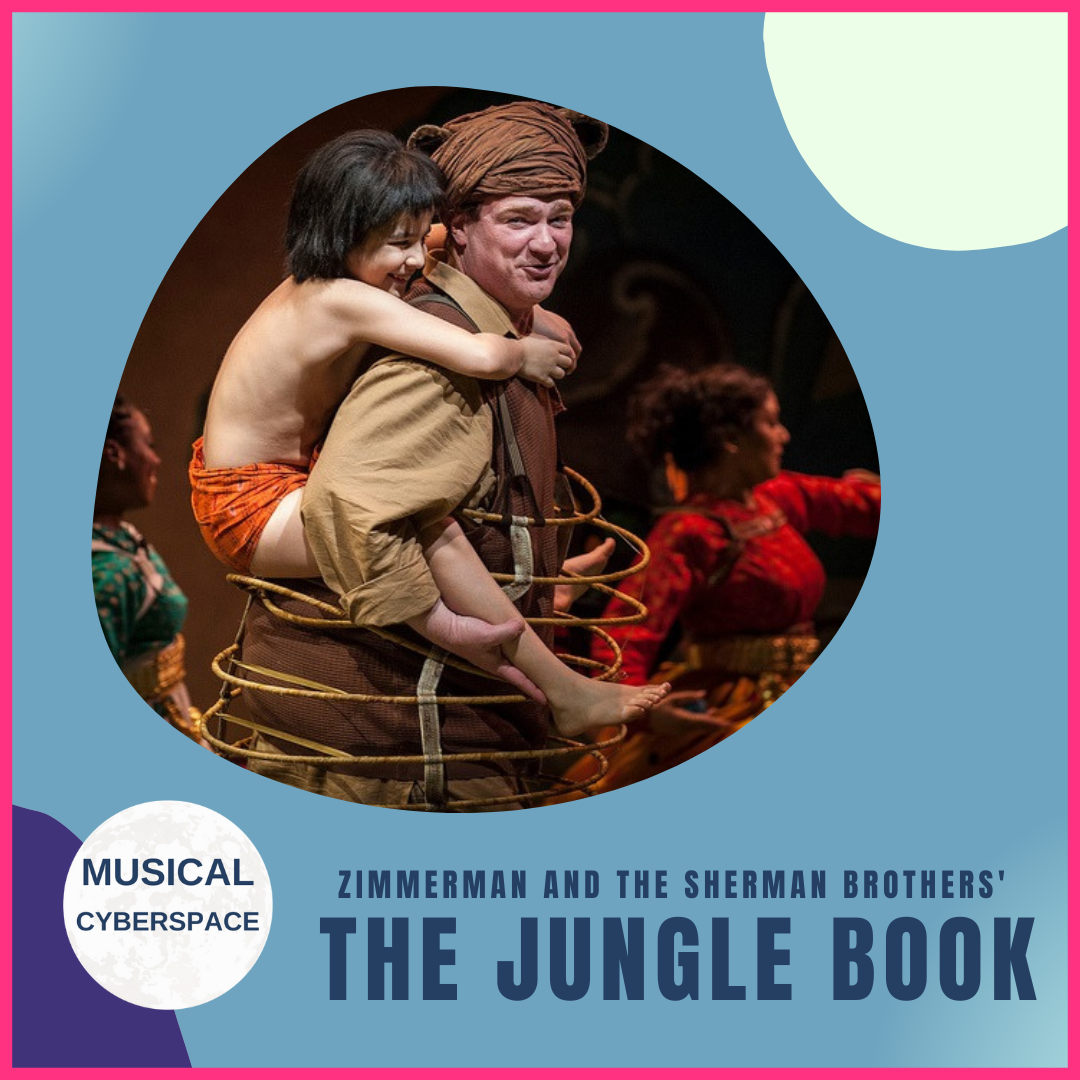
Akash Chopra and Kevin Carolan in THE JUNGLE BOOK. Photo credit: Liz Lauren.
Akash Chopra and Kevin Carolan in The Jungle Book.
Photo credit: Liz Lauren.

We’re almost through The Jungle Book, having covered the chapters on the show’s origins, the book and the score and the staging of the 2013 production that has been the focus of this month’s Forgotten Musicals Friday. This week, we’re taking a look at The Jungle Book “look” and how the show came to life through its scenic design and costumes.

One idea that came to the foreground in last week’s column was the stylisation of the production in its combination of influences from Rudyard Kipling’s original book, through its Indian setting to Disney’s film adaptation. The stylisation required to marry these elements is also an element that Dan Ostling picked up in the production’s scenic design. Ostling’s set evoked a Victorian toy theatre, its shifting drops decorated with stylised paintings of trees, shrubbery and flowers. The colours and patterns are reminiscent of the Indian painting style the creative team must have observed on their research trip to India. As individual pieces, the set pieces were all gorgeous. 

When it came together, the scenic design missed the all-important sense of achieving a coup de théâtre. The transition from the Victorian drawing room, in which Mowgli dozes off while reading The Jungle Book as part of a framework that Zimmerman added to the material, to the jungles of India should have been breathtaking. Instead, the mechanism was apparent rather than its effect. The same is true of another crucial new moment in the show, the death of Shere Khan by fire. The aim was for the design and staging to come together with T. J. Gerckens’s lighting design to create a striking transition from the physical plane of life into the spiritual one. The idea is clear, but the execution lacks absolute clarity and a true sense of wonder in such a significant moment.

Another significant factor in creating the visual world of The Jungle Book is Mara Blumenfeld’s costume design. Blumenfeld’s designs abstract an easily identifiable visual feature of each animal, and she then builds the costume around it. Her approach reinforces Mary Zimmerman’s concept of the material as something that takes place within a child’s imagination. The audience remains aware of the actors playing animals; their imagination fills in the gaps, so they are complicit in constructing Mowgli’s world of fantasy. 

In the show’s design, it is clear that there was more The Jungle Book could have done. While one certainly wouldn’t want a duplication of the kind of theatricality that Julie Taymor infused into The Lion King, I think something that aims for the same level of mastery is what this show needed to take it to the next level. It is one thing that could have transformed the audience’s response into something that would have twisted Thomas Schumacher’s arm to make The Jungle Book another Newsies instead of another The Hunchback of Notre Dame.

In the final chapter of our The Jungle Book series, we’ll consider the legacy of the show, also looking at some of the challenges of creating a show with such a complex cultural history.

Posted in Forgotten Musicals Friday | Tagged , , , , , , , , , , | Leave a comment

The Saturday List: The Crown Julies

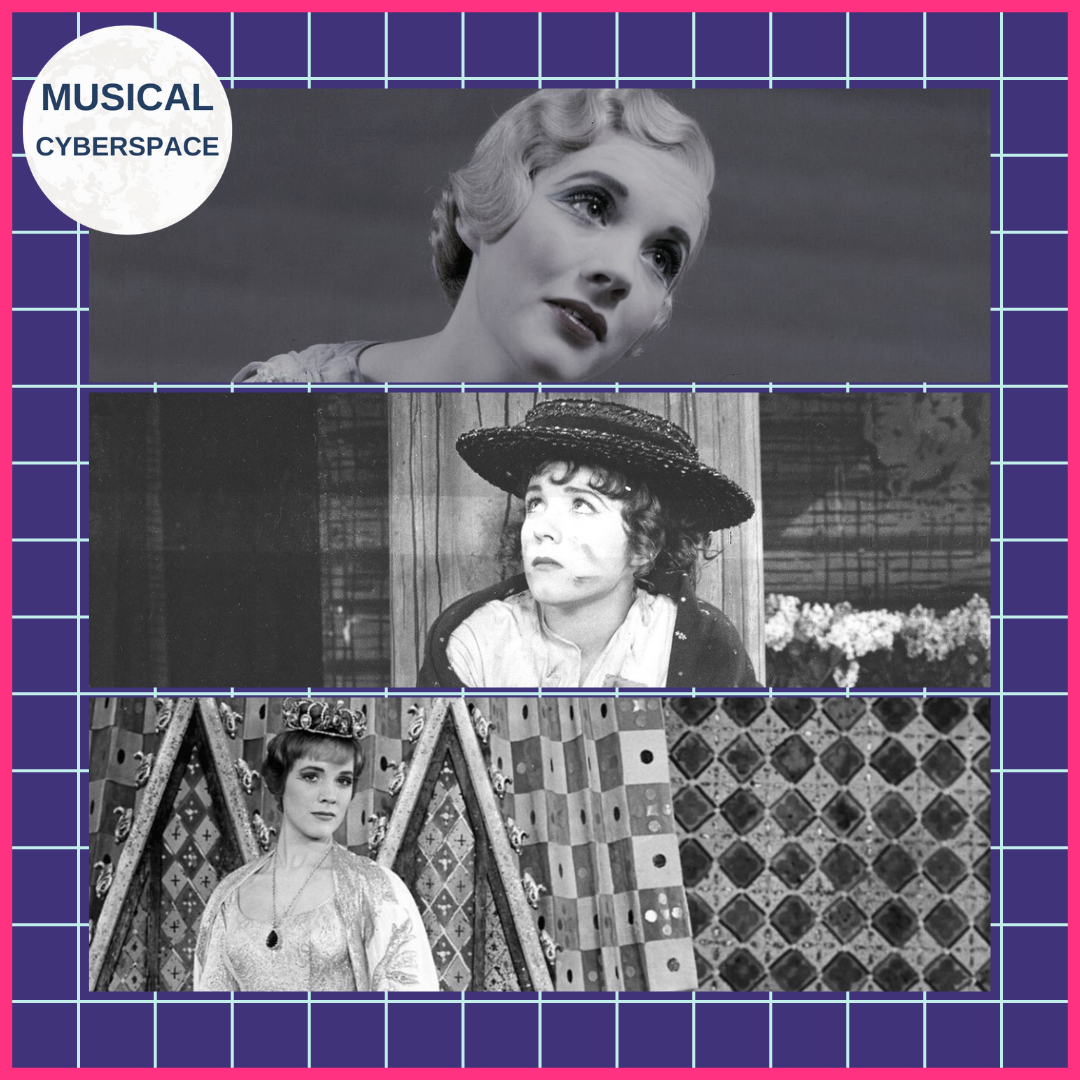
Julie Andrews in THE BOY FRIEND, MY FAIR LADY and CAMELOT
Julie Andrews in The Boy Friend, My Fair Lady and Camelot

Oh baby, won’t you play me
Le Julie, maybe –
And don’t ever let it end!

In today’s Saturday List, we’re looking at “The Crown Julies,” the five Broadway and off-Broadway stage appearances of Julie Andrews. While her successes encompass far more than these five musicals, sometimes it’s delightful to celebrate ‘the simple joys of maidenhood’ and think about where it all began for Andrews: the stage! Of course, Andrews had already had a long career as a singer before touching down in New York in 1954 – but we’ll save the rest of her incomparable career for another day!

5. Putting it Together (1993)

Running for 59 performances following 37 previews, Putting it Together was Andrews’s shortest New York season. Her return to a New York stage in a musical after more than three decades caused a frenzy for tickets at the time. The show is a mixed bag no matter who is in the cast due to its flimsy retelling of the plot of the masterful Follies. On the other hand, the album captures some classic Andrews performances of Stephen Sondheim songs, including her impeccable take on “Not Getting Married Today” and a heart-rending reading of “Like It Was.” And, of course, one simply can’t pass up the opportunity of hearing the actress who brought Mary Poppins to life exclaim, “Oh, fuck it, let’s do it!” It is a real pity we never were able to see Andrews in a full-scale Sondheim production. What a memorable Desiree she would have made!

4. The Boy Friend (1954)

The Boy Friend was Andrews’s Broadway debut. A camped-up version of Sandy Wilson’s long-running West End success (in which Andrews did not appear), the show ran for 485 performances. In a story of a quintet of young women looking for love, Andrews played the central part of Polly Browne, who is that little bit more sentimental than her frantic roommates at Mme Dubonnet’s School for Young Ladies. It is super to have the cast recording from this show as a snapshot of Andrews at this stage of her career. Everything we love about Andrews is in place in the sheer exuberance of the title song and the sweet romance of “I Could Be Happy with You” and “A Room in Bloomsbury.” While the piece isn’t as demanding as future projects like My Fair Lady or Camelot, the joy of The Boy Friend has always been in its simplicity, and Andrews is just pitch perfect in this valentine to the 1920s.

3. Victor/Victoria (1995)

Andrews’s third longest-running musical in New York was Victor/Victoria, an adaptation of the much better 1982 film in which she starred as a woman who takes on the persona of a man who takes Paris by storm as a virtuoso drag artist. If this list were to be ranked qualitatively, Victor/Victoria would end up last on the merits of “Paris Makes Me Horny” alone. While Blake Edwards’s adaptation fails to capture the magic of his original film, the pro-shot reveals that there were some high points, like the production numbers staged by Rob Marshall to “Le Jazz Hot” and “Louis Says.” Frank Wildhorn scored that latter song, teaming up with Henry Mancini and Leslie Bricusse to augment the film’s roster of musical numbers for Broadway. Musical theatre fans probably remember the show most for its Tony Awards controversy. When Andrews earned the only nomination given to the show, she declined it, saying that she preferred ‘to stand instead with the egregiously overlooked’ members of her Victor/Victoria family. What a fabulous moment of integrity for this stage and screen legend!

2. Camelot (1960)

Camelot reunited Andrews with Alan Jay Lerner and Frederick Loewe to tell the story of how Queen Guenevere’s love for Lancelot, King Arthur’s most trusted knight, dismantled the fabled British kingdom and its legend of justice. Andrews was joined on stage by Richard Burton and Robert Goulet. Audiences were expecting the show to repeat the success of My Fair Lady, but the famously troubled rehearsal process saw a show open that was not as good as it could have been. Despite some fantastic writing, the book creaks along from one song to the next, almost all of which are glorious Golden Age pieces. Andrews did most of the heavy lifting when it came to the score. One hears her singing more carefully on the cast recording than after years of performing in My Fair Lady, which doesn’t make “The Simple Joys of Maidenhood,” “The Lusty Month of May,” “Then You May Take Me to the Fair” or “I Loved You Once in Silence.” Camelot captures Andrews’s incredible wit as a performer alongside her ability to interpret a romantic lyric in her glorious soprano most brilliantly.

1. My Fair Lady (1956)

While Richard Rodgers and Oscar Hammerstein’s Cinderella and the miracle of television first placed Julie Andrews front and centre in American pop culture in the 1950s, another Cinderella role, Eliza Doolittle, in My Fair Lady was her most significant success on stage. While Eliza transforms from a Cockney flower girl into a lady under the tutelage of Henry Higgins, Andrews had to work backwards and learn how to speak in a Cockney accent with a real-life tutor. Two cast recordings preserve the original production show, the Broadway album and the later stereo album recorded in London. Everyone has their favourite of the two, many preferring the second album, but it is interesting to hear how Andrews grew in the role over her long run with the show. On both albums, she puts her definitive stamp on the numbers she introduced, including “Wouldn’t It Be Loverly?,” “I Could Have Danced All Night” and “Just You Wait,” the last of which is played with abandon each twentieth of May in celebration of Andrews’s most memorable stage heroine!

Want to share your thoughts about Julie Andrews? Head on to the comment box at any time, dear reader!

Posted in The Saturday List | Tagged , , , , , , , , , , , , , , , , , , , , , , , | Leave a comment