The Saturday List: 1937 in Musical Theatre

Scenes from THE CRADLE WILL ROCK (featuring Mark Blitzstein with the company), BABES IN ARMS (Mitzi Green, Ray Heatherton and Alfred Drake) and ME AND MY GIRL (featuring Lupino Lane and the company).
Scenes from The Cradle Will Rock (featuring Mark Blitzstein with the company), Babes in Arms (Mitzi Green, Ray Heatherton and Alfred Drake) and Me and My Girl (featuring Lupino Lane and the company).

1937, the chosen year for today’s “Saturday List” year, was a time of huge highs and lows. Early in the year, aviator Howard Hughes broke his transcontinental flight speed record. On the other hand, Amelia Earhart mysteriously disappeared over the Pacific Ocean in her attempt to become the first woman to circumnavigate the globe in a plane. The German airship, the Hindenburg, burst into flames, killing 35 of the 97 people on board. In the world’s political arenas, the Spanish Civil War continued, while the Second Sino-Japanese War commenced. The Hossbach Memorandum recorded another step towards World War II, with Adolf Hitler outlining his plan to acquire additional “living space” for the Germans. Minute by minute, the lows were becoming more frequent than the highs. At the movies, three musicals were among the year’s top-grossing films, with Walt Disney’s Snow White and the Seven Dwarfs taking the top spot. The others were the operetta, Maytime, and the oddly-titled Broadway Melody of 1938. The most popular songs of the year included no fewer than four Bing Crosby hits, “Too Marvelous for Words,” “Remember Me?,” “The Moon Got in My Eyes” and “Sweet Leilani.” One of the big new words of the year was “doodle” – something you might do while listening to Ol’ Bingo from Bingville croon one of his melodies from yesteryear. On to the musicals!  

1. The Award Winners for Best Musical

1937 is a year that pre-dates the Tony Awards, so there is not much to discuss here. Babes in Arms would have been a strong contender, perhaps even a sure thing, to win in the 1937-1938 season. It’s also likely that a 1937 show would have won the following year. Perhaps the popular union revue Pins and Needles? The more cerebral The Cradle Will Rock? Would Hooray for What!, less popular than Pins and Needles but more accessible than The Cradle Will Rock, have stood a chance? What a fascinating trio of shows to pit against each other.

2. Most Overrated

Marc Blitzstein’s The Cradle Will Rock is often cited as one of the most historically significant shows of the 1930s. No arguments there. It has been described as an opera, in the tradition of The Threepenny Opera, and a play in music, like Bertolt Brecht’s greatest plays, as often as it has been called a musical. It’s one of those shows that draw from multiple traditions and ends its own thing. It’s also a solid show with a clear social and political thesis. In a nutshell, that’s also its problem. It is so logical, so successful in its verfremdung, that it keeps itself at a distance. No Mack or Mother Courage pull in the audience and agitate its beliefs. Moll and Harry aren’t written charismatically enough to shift us into dialectical distress. In some ways, the story behind the show’s origins as a Federal Theatre Project as a New Deal work-relief programme, its cancellation by the government in an attempt to censor what they felt had become an anti-establishment propaganda piece, and the legendary dress rehearsal that cheated the system is more compelling than The Cradle Will Rock itself. These circumstances made this show a musical theatre legend rather than a footnote in Broadway history.

3. Most Underrated

Babes in Arms is the kind of show everyone thinks they know, thanks to the 1939 Busby Berkeley film starring Mickey Rooney and Judy Garland and the frequently performed 1959 revisal of the show, which stripped it of its social commentary. As such, it is written off as an inconsequential 1930s musical comedy, albeit with a score packed to the brim with hit songs by Richard Rodgers and Lorenz Hart. This is why I consider the original version of the show underrated, as many people aren’t aware of everything that Rodgers and Hart packed into the show’s book. Rather than a group of teens trying to rebel against their parents by making it on Broadway (!) or save a local theatre from being demolished, the original show’s characters put on their performance to avoid being sent to a work farm, which the town sheriff feels is the appropriate path of action when their actor parents go on the road for five months. The original Babes in Arms is not about vanity or community outreach. It is about survival and self-preservation. The original Babes in Arms wasn’t afraid to tackle racism, sexual harassment or the contemporary interests in Nietzsche and communism. It was light entertainment, for sure, but one with a bit of a bite – and that’s before one even considers the score’s great pleasures, which include “I Wish I Were in Love Again,” “My Funny Valentine,” “Johnny One Note,” “Where or When?” and “The Lady is a Tramp.”

4. Hidden Gem 

The longest-running show to open in 1937 is, ironically, the year’s hidden gem. Pins and Needles was a revue produced by the International Ladies Garment Workers Union. Its unusual origins and content have seen it slide into relative obscurity, despite an incredible 25th Anniversary recording – which featured Barbra Streisand as one of its performers in the face of Columbia Records president Goddard Lieberson’s pearl-clutching on her inclusion on the album – and a couple of productions that have popped up over the years. Pins and Needles included songs and sketches by Arthur Arent, Marc Blitzstein, Emmanuel Eisenberg, Charles Friedman, David Gregory, Joseph Schrank, Arnold B. Horwitt, John Latouche and Harold Rome, the last of whom also wrote the majority of the show’s score. The writers updated the show’s content every few months to keep it topical. There’s not a dud song in the score. Each is full of wit, double meanings and delightfully articulated takes on social issues – some of which remain as relevant today as when they were first written! Highlights include “Doing The Reactionary,” a spoof on the tried-and-tested musical comedy dance craze number, now a political dance of people moving to the left or the right, and “Nobody Makes A Pass At Me,” a criticism of how capitalism and commercialism impact on individual identity. There’s also “Not Cricket To Picket,” which is a satirical reminder of how social action inconveniences those who hold power – ‘Just think of the predicament in which your boss is placed’ – and “One Big Union For Two” which repackages love and marriage as socially relevant processes to rib-tickling effect. In 1938, Pins and Needles was performed in the White House for the Roosevelts, which prefigures the Obamas’ similar endorsement of Hamilton in 2016. How strange it is to think that the Hamilton of its day is rarely remembered by most musical theatre fans, let alone the general populace!

5. Show of the Year

Last week, I couldn’t quite commit to naming the British The Boy Friend as the show of the year with the USA’s Wonderful Town in the mix. This week, I have no hesitation in giving the title to Noel Gay, Douglas Furber and L. Arthur Rose’s Me and My Girl, which Stephen Fry and Mike Ockrent reinvented for modern audiences in the 1980s. In between, there had been a successful film adaptation and three revivals in the West End. Me and My Girl has found an audience in each iteration. It’s a jolly romantic romp through the British class system, with just enough social observation to anchor the tuneful score and rags-to-riches plot in a way that allows it to play today. The big hit was “The Lambeth Walk,” which inspired a jaunty walking dance, which saw people strutting it out around the globe just like we’ve all been jiving to “Pink Shoe Laces” on TikTok this year. The score has further delights like the wistful “Once You Lose Your Heart” and the warm-hearted title tune. Me and My Girl is pure entertainment from start to finish.

1937 was a year that saw the bow of some fantastic landmark musicals. There were other fascinating little shows like Pepper Mill, a revue that was a political defiance of the Nazi rise to power. It had been so successful in Germany that its makers had to flee to the USA to continue the fight, which stalled in New York due to the cultural divide between the two countries and their theatrical traditions. It is also interesting to see echoes of this season in modern musicals like Urinetown and A Gentleman’s Guide to Love and Murder. If nothing else, it is clear that 1937 was a significant year for musicals and it is the kind of season that is a joy to look back on today.
Posted in The Saturday List | Tagged , , , , , , , , , , , , , , , , , , , , , , , , , , , , , , , , , , , , , , , , , , , , , , , , , , , , , , | Leave a comment

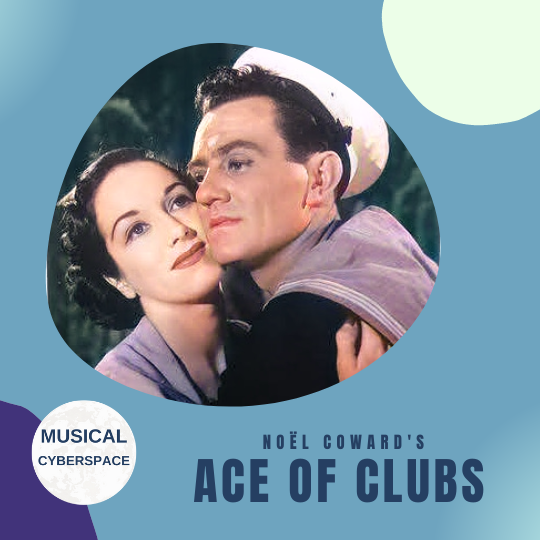
Forgotten Musicals Friday: ACE OF CLUBS – Royal Flush or a Bottom End?

Pat Kirkwood and Graham Payn in ACE OF CLUBS
Pat Kirkwood and Graham Payn in Ace of Clubs

Ace of Clubs must have surprised audiences in 1950 when this show opened in London on this night so many years ago. Following tryouts in Manchester, Liverpool and Birmingham, the show formally debuted in the Cambridge Theatre for a 211-performance run. At the time, Noël Coward was known for his satirical upper-class comedies, but Ace of Clubs was about showgirls and sailors caught up in a heist at a nightclub in Soho. There are those, I suppose, who think that’s why the show had little impact in the mid-century British musical theatre scene, why it never travelled and why it is almost never revived. The fact is that despite some appealing songs, the show just isn’t all that great.

Ace of Clubs is set in 1949 in an eponymous London nightclub, where Pinkie Leroy, a singer, falls in love with a sailor, Harry Hornby. Pinkie and Harry get mixed up with some gangsters who are meant to intercept a package with a stolen diamond necklace at the club. The show plays out through a series of madcap encounters before an inevitable happy ending is reached.

When considering the show, musical theatre historians think that its big flex is that some of the songs were so great that they would be incorporated into Coward’s cabarets and even into other shows. That’s all fine, but it signifies the main problem with Ace of Clubs. The songs feel like they’re from a different show from the one described above, as though they are respites from the plot rather than extensions of it. Listening to the cast recording alone, for example, might leave one mystified, something that can’t be said of Oklahoma!, which was still going strong in London at the time and to which it was compared in some reviews. Indeed, a little digging reveals that the score had been created for a different show known at various points as Over the Garden Wall, Hoi Polloi and Come Out to Play. Coward had failed to sell this earlier show to a producer, so one wonders whether the marriage between the book and score had been any better when he originally conceived them.

Nonetheless, if there is any reason to remember Ace of Clubs, it is for a handful of standout songs. There is the enduring “Sail Away,” which would eventually become the title song of its own show, at least one gorgeous ballad in “I’ll Never Never Know,” and several cute comic ditties like “Napoleon” and “Chase Me, Charlie” – Pinkie’s nightclub numbers – and “Three Juvenile Delinquents” – a number that poked fun at the modern judicial system. The recordings of the original cast are also quite delightful, especially Pat Kirkwood and Graham Payn’s performances of their numbers.

Ace of Clubs is an undemanding historical footnote in musical theatre history. It’s not first-rate Coward, but it is a first-rate lesson in what happens when the different elements of a show just don’t come together.

Posted in Forgotten Musicals Friday | Tagged , , , , , , , , | 1 Comment

The Saturday List: 1953 in Musical Theatre

Scenes from JOHN MURRAY ANDERSON'S ALMANAC (featuring Hermione Gingold and Billy DeWolf), KISMET (featuring Alfred Drake) and WONDERFUL TOWN (featuring Edie Adams and Rosalind Russell).
Scenes from John Murray Anderson’s Almanac (featuring Hermione Gingold and Billy DeWolf), Kismet (featuring Alfred Drake) and Wonderful Town (featuring Edie Adams and Rosalind Russell).

Today’s “Saturday List” year, 1953, was full of events that populate history books around the globe. March marked the death of Soviet leader Joseph Stalin, while Tenzing Norgay conquered Mount Everest with Edmund Hilary in tow in May. Days later, Queen Elizabeth II of Great Britain was crowned. The month after the coronation saw the end of the Korean War, with Korean Armistice Agreement being signed. And a month after that, the USSR exploded a hydrogen bomb. At the movies, two musicals, one animated and one live-action, would appear in the list of the year’s top-grossing films: Peter Pan and Gentlemen Prefer Blondes. When it came to pop music, Patti Page sang about “The Doggie in the Window,” but 1953’s most significant release catapulted a wilder canine, “Hound Dog,” to fame, with Willie Mae “Big Mama” Thornton having recorded the song the previous year. To wit, the word “frenemy” was first coined by Walter Winchell in 1953 as a proposed way of describing the relationship between the Americans and the Russians.  

1. The Award Winners for Best Musical

1953 is one of those years that yielded two Tony Award winners for what was then called the year’s “Outstanding Musical.” At the seventh Tony Awards, Wonderful Town took home the prize, with Kismet following in its footsteps the next year. When Michael Ball appeared in the latter in a 2007 revival for the English National Opera, he said, “It was like being in a cross between Springtime for Hitler and Carry on Camel.” While this perhaps spoke more to the production than the show itself, Kismet is very much a show of its time rather than one for the ages. So let’s move swiftly onwards to discuss it as the most overrated musical of the year.

2. Most Overrated

People probably talk about Kismet less than they should. For the most part, it is accepted for what it is: a spectacular operetta from the 1950s with some fine music, remembered fondly by many who have performed in it and by a certain type of musical theatre fan. The questions about what it isn’t, an authentic depiction of Islamic culture in the so-called Islamic Golden Age, aren’t asked often enough. And when they are, that certain type of musical theatre fan springs to the show’s defence, more often than not using the context in which the musical was made as the basis for their argument, all the while forgetting that a new theatre production of Kismet would not be playing the Ziegfeld Theatre seven decades ago. Based on a 1911 play by Edward Knoblock, the book of the musical was crafted by Charles Lederer and Luther Davis, with George Forrest and Robert Wright setting lyrics to music they had adapted from Alexander Borodin. In the way that Kismet is peopled, the audience is presented with a homogenous community, which consequently doesn’t undermine any racial, religious or cultural identity from a narrative standpoint. The problem is that this community could really exist anywhere in the world. What specificities of race, religion or culture are present are simply functions of the setting. Consider, for example, how simply everything was transposed to Timbuktu! in the 1970s, an adaptation of Kismet set in Mali rather than Iraq. Kismet is an example of pure Orientalism, an aesthetic imitation of – in this case – the Middle East for a Western audience by Western artists. Taking Kismet at face value is like giving Antoine Galland credit for The Arabian Nights rather than acknowledging the expansive, rich and complex cultural history in which One Thousand and One Nights was created.

3. Most Underrated

1953 is full of musicals with a couple of great songs that are otherwise largely forgettable. There’s Hazel Flagg, in which Jule Styne showcases a few jaunty tunes set to lyrics by Bob Hilliard in a book by James H. Street, and Can-Can, a long-running show with a much-maligned Cole Porter score and a dull book by Abe Burrows. Richard Rodgers and Oscar Hammerstein churned out Me and Juliet in the hope of producing a musical comedy throwback to the days of Rodgers’s collaboration with Lorenz Hart, while Jimmy Van Heusen, Johnny Burke and Preston Sturges turned a delicate French pâtisserie into some kind of heavy American cake when creating Carnival in Flanders. It seems almost ridiculous to name the show of 1953 that ran longer than any other Broadway musical that debuted that season, but that’s where we are with Can-Can. The success of Can-Can was largely attributed to two people: Michael Kidd, the choreographer, and Gwen Verdon, who played Can-Can dancer Claudine, both of whom took home Tony Awards for their work on the show. Certainly, his steps and her performance were by all accounts the strongest elements in an otherwise mediocre affair, with Burrows drawing criticism for his dated book and Porter taking hits for songs that fell short of his usual brilliance. But hindsight is 20/20 and even this rather pedestrian show stands out when measured against its peers. It may not be a great show, but it is a solid one. Sometimes, all you have to be is the best of the rest.

4. Hidden Gem 

Well, it’s not Hazel Flagg. For me, the hidden gem of the year is John Murray Anderson’s Almanac, a revue that closed out the year on Broadway. There is something absolutely charming about this collection of sketches and songs, some of which were written by the team of Richard Adler and Jerry Ross who would go on to create back-to-back hits in the following two years with The Pajama Game and Damn Yankees. The show had a fantastic cast, including Hermione Gingold – whose delivery of “Which Witch” might alone have been worth the price of admission – as well as Harry Belafonte – who wrote some additional material for the show in addition to taking great strides forward in establishing his career. Throw in a couple of delightful ditties like “When Am I Going to Meet Your Mother?” and “You’re So Much a Part of Me” and you’re home free.

5. Show of the Year

My heart says The Boy Friend, which premiered in the United Kingdom in 1953, but my head says Wonderful Town. On the one hand, Sandy Wilson’s The Boy Friend is a perfectly crafted show that knows exactly what it is. On the other, Joseph A. Fields, Jerome Chodorov, Betty Comden, Adolph Green and Leonard Bernstein’s Wonderful Town is an ambitious and sprawling piece that aims for the stars. Each has its joys. The Boy Friend is best when it stays true to its size and style. Any attempt to pump it up into a big flashy production is doomed to fail. The show just buckles under that kind of aesthetic distortion. Every song is joyous and the book wittily careers from situation to situation. It looks backwards, with love and joy. Wonderful Town looks forward, pulsating with the energy of its New York setting. Like the city itself, there is a lot of noise which the score’s gorgeously structured character pieces cut through. Was plaintiveness ever as appealing as in “Ohio?” Was there ever a love song as enveloping as “A Little Bit in Love?” And that’s before we even unpack the joys of “What a Waste” or “Conversation Piece.” It’s a giddy joy from start to finish.

Looking back at 1953, it’s clear that this was no great year for musicals. There are really only two shows that have stood the test of time, a third that has endured despite itself, and a host of shows that struggled to fulfil the visions of their respective creators. Are we in any better a position 70 years later? Looking back at last month’s Tony Awards and at what is planned to open in the next few months, perhaps not. In time, we may find that the musicals of 2023 feel very much the same to us as those considered in this column today.

Posted in The Saturday List | Tagged , , , , , , , , , , , , , , , , , , , , , , , , , , , , , , , , , , , , , , , , , , , , , , , , , , , | Leave a comment

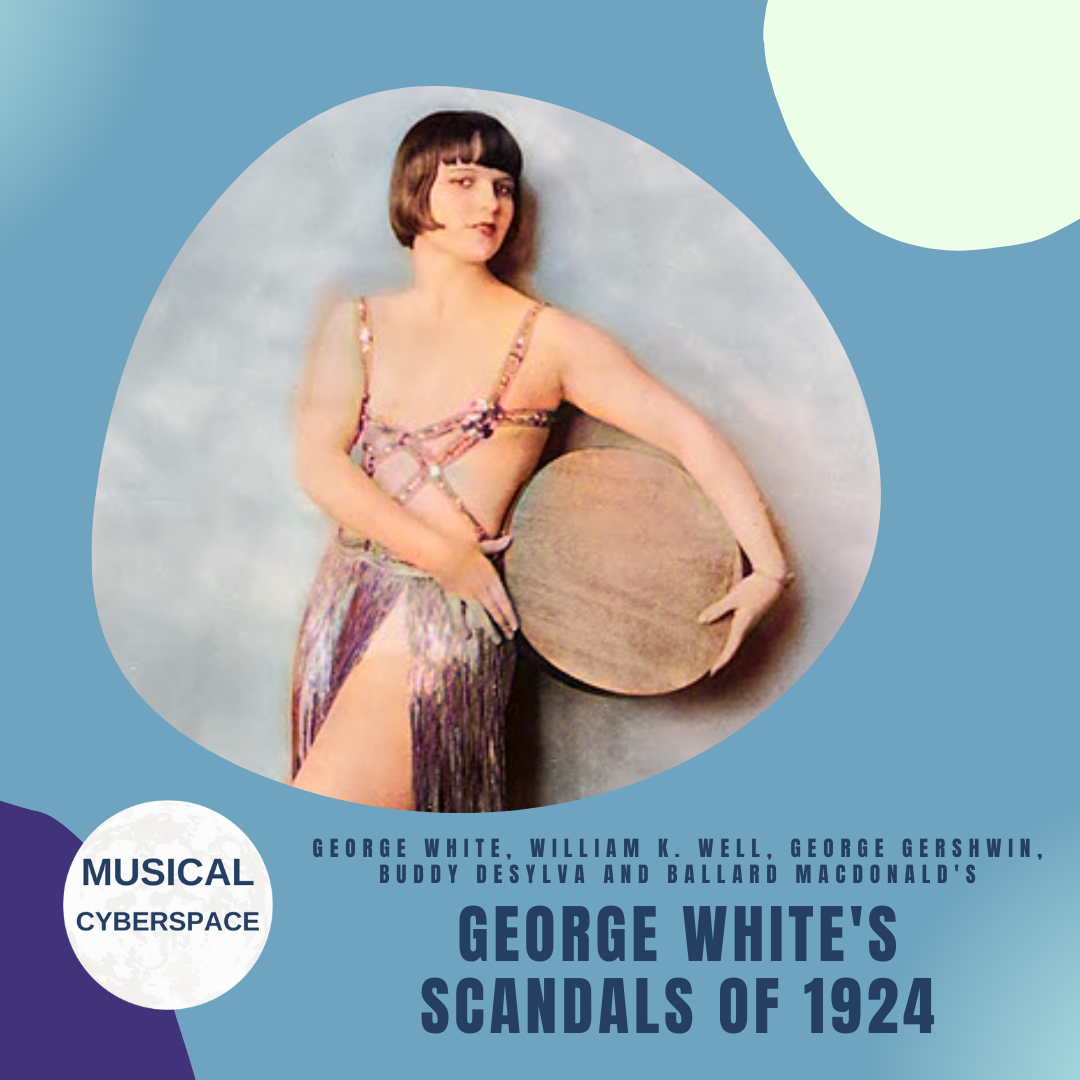
Forgotten Musicals Friday: GEORGE WHITE’S SCANDALS OF 1924

Louise Brooks in GEORGE WHITE'S SCANDALS OF 1924
Louise Brooks in George White’s Scandals of 1924

In a year’s time, George White’s Scandals of 1924 will have bowed on Broadway a century ago. 30 June was the opening night of this sixth edition of the long-running series of revues. Arguably, none of the Scandals, which followed the model of the Ziegfield Follies, is significant individually, but there is no question that the set was a cultural touchstone. The revues were a stepping stone in the careers of several stage and film stars – including Ray Bolger, Bert Lahr, Ethel Merman and Ann Miller – and provided a space in which many early George Gershwin melodies were heard. The 1926 edition of the revue propelled the Black Bottom from its regional origins into a national dance craze – think of it as being the TikTok dance challenge of its day – and 1920’s “Scandal Walk” was featured in the television series, The Young Indiana Jones Chronicles.

George White’s Scandals of 1924 included skits by George White and William K. Wells, interspersed with songs that set George Gershwin’s music to Buddy DeSylva and Ballard MacDonald’s lyrics and one number provided by Sam Gould, Charlie Winston, Lew Pollack and Will Mahoney. Some critics felt it was the best of the Scandals to date, while others thought it the very essence of vulgarity, with one critic observing that ‘decent women hid their faces until they could get used to the spectacle!’

The show opened strong with a cute take on the traditional opening number. The Williams Sisters sang “Just Missed the Opening Chorus” to the audience, reproaching them for their tardiness. This song introduced a series of four comedy skits focused on the theme of lateness and the rest of the acts followed. Lester Allen and Tom Patricola clowned up a storm, while Richard Bold and Helen Hudson were lauded for their gorgeous voices. The breakout star of the show was Will Mahoney, a vaudeville performer who would go on to become the highest-paid variety star in the United States and, much later in his career, earn a Tony Award nomination for his performance in the 1955 revival of Finian’s Rainbow.

The show had its fair share of spectacle too. One sequence used a dramatic lighting effect to transform a bevy of chorus girls in bathing costumes into a set of apparently nude marble statues, one of whom was then transformed into the Venus de Milo through some further stage magic. The costumes, designed by Erté and Juliette, were imported from Paris and were a feast for the eyes.

When it came to songs for the ages, George White’s Scandals of 1924 gave us “Somebody Loves Me,” which would later appear in the films Broadway Rhythm, Rhapsody in Blue, Lullaby of Broadway and Pete Kelly’s Blues. The song’s popularity was still rock solid almost three decades later when a 1952 film starring Betty Hutton was built around and named after the song. Outside of stage and film, there have been dozens of recordings, with artists as diverse as Nat King Cole, Meat Loaf, Kiri Te Kanawa and Ella Fitzgerald offering their interpretation of the piece.

George White’s Scandals of 1924 would run at the Apollo Theatre in New York for 196 performances before going on tour. A new edition of the show would appear the following year, with nine further outings – including a couple on film – to follow.

Posted in Forgotten Musicals Friday | Tagged , , , , , , , , , , , , , , , , , , , , , , , , , , , , , , | Leave a comment

The Saturday List: 1946 in Musical Theatre

Scenes from ST LOUIS WOMAN (featuring Pearl Bailey), LUTE SONG (featuring Mary Martin) and ANNIE GET YOUR GUN (featuring Ethel Merman).
Scenes from St Louis Woman (featuring Pearl Bailey), Lute Song (featuring Mary Martin) and Annie Get Your Gun (featuring Ethel Merman).

Where were you when the first bikini was modelled in Paris? I wasn’t even a twinkle in my father’s eye. In fact, my parents weren’t born yet. It would have been my grandparents taking note of that first appearance of the bikini in 1946, the year chosen for today’s “Saturday List.” This was the year of Eva Perón’s Rainbow Tour, an event dramatised in the musical Evita three decades later. A good portion of the year was engaged with the Nuremberg trials, which had started late in 1945, and the subsequent executions during which ten prominent political and military leaders from Nazi Germany were put to death by hanging. Elsewhere, the first meetings of the United Nations, an institution established to prevent future world wars, took place. MENSA, a society with non-political aims for an IQ-measured “intellectual aristocracy,” was founded at Lincoln College in Oxford, England, in 1946. As is usual in history, we see people create forces that drive us apart even more quickly than those which might bring us together. At the movies, three musicals would place among the year’s top-grossing films: The Jolson Story and Night and Day, biographical musicals about Al Jolson and Cole Porter, and Blue Skies, an Irving Berlin jukebox musical. The top spots on the music charts belonged to Eddy Howard and His Orchestra for their rendition of the title song from the film To Each His Own and Louis Jordan and His Tympany Five for their blues and country-flavoured “Choo Choo Ch’Boogie.” Words-wise, 1946 was the year that a mistranslation of the Bible fuelled the biblical basis for prejudice against LGBTQIA+ people. The assertion that homosexuality was sinful impacted politics and human rights with deadly consequences. I had to take a beat to process that fact once again when writing this – it’s a lot – and moving to what was happening in musicals in this first year following the end of World War II.  

1. The Award Winners for Best Musical

1946 is a year that pre-dates the Tony Awards – so there’s not much to discuss here. There’s no doubt which show would have taken the Best Musical prize – look no further than Annie Get Your Gun. One hopes, though, that in true Tony Awards style, St Louis Woman would have appeared across the board when it came to the nominations and even taken home some of the prizes.

2. Most Overrated

It might be considered unfair to name a flop from the season as an overrated show, but 1946 had only a few shows that gave their net margins a run for the money. There’s also a difference between what a show was and what it means, which is why this week, I am going to take the unusual route of naming the same show as the most overrated and the most underrated of the season: Lute Song. While Lute Song lost something like $100 000 of its initial investment, it was considered by many critics to be a succès d’estime. It appeared on lists naming the best plays of 1946, and even critics who could not access its gentle pace raved about its aesthetics. Its 142-performance run was just short of the average run of musicals that opened in the same year, well ahead of the median show, which ran about half as long. The aspects of the show that are overrated in terms of its legacy really have to do with the typical yet problematic ways of representing China at the time: the use of yellowface and the sense of generic so-called Oriental pageantry in its dramatic structure, musical approach and design. It’s in recognising the way that the ending of the source material, Pipa ji, was shifted to suit the American standard of marital monogamy and to placate the egos of the show’s star, Mary Martin and her husband, Richard Halliday, who claimed that sharing a man was unworthy of a star of Martin’s status. It’s in understanding how songs like “See the Monkey” land(ed) on the ear – then and now. It’s picking through the stories about co-star Yul Brynner’s heritage (leading to the follow-up question of whether minorities are interchangeable when it comes to casting) and life experience (did he really see Pipa ji in China, leaving such an impression on him that he simply had to do this show?) as ways of justifying his casting in the show, which had no Chinese American cast members and only a Japanese American choreographer, Yeichi Nimura, as a gesture towards any kind of authenticity. And that’s before we even get to the yellowface, the designer gowns created for Martin’s character when she is at her poorest in the narrative’s arc, and the Chinese ideography used randomly to infer some kind of overall integrity in the design. This list includes what many white American theatre critics referenced as the show’s positive aspects. In that sense, the critical reaction to the show was most certainly overrated. Had it not been for an article I read while preparing this column, Josh Stenberg’s “How far does the sound of a Pipa carry? Broadway adaptation of a Chinese classical drama” in Volume 14: 2 of the journal, Studies in Musical Theatre, that is where I might have left things.

3. Most Underrated

If you have not read Stenberg’s article, I urge you to seek it out. It really gets to grips with the idea of what Lute Song means despite what it was. He puts it better than I ever could in his abstract for his essay.

The 1946 Broadway premiere of Lute Song represents a milestone in reception of the Chinese dramatic tradition in the United States…. (I)t must be situated at the beginnings of a more respectful relationship to China and Chinese people, as the American stage began to move beyond treatments of China dominated by racist vaudeville or fantastical fairy tales. Instead, Lute Song emerged from a classic text, the long drama Pipa ji…. Lute Song, one of several indirect adaptations of Chinese dramas in the American mid-century, represents a milestone as the first Broadway show inspired by American immigrant Chinatown theatre and the first Broadway musical to be based on Chinese classical drama, mediated through European Sinology.

What Stenberg does well in his piece is explore both sides of the story convincingly. What he has to say gave me a great deal of food for thought and reminded me of the complexities existing in cultural texts from the past – a solid reason for Lute Song to be the most underrated show of 1946.

4. Hidden Gem 

Two shows might have taken this spot: St Louis Woman and Beggar’s Holiday. There might have made a nice moment to select the latter, which is derived from one of the root texts of the musical theatre format, The Beggar’s Opera, and which is jazz great Duke Ellington’s only stage show in this format – but one’s access to the show as it was is quite limited and severely mediated through a 2004 rewrite by Dale Wasserman, which is significantly different from the original in structure and tone – which means, I suppose, that the original truly is a hidden gem. On the other hand, St Louis Woman benefits from having both an original cast album and a recording of the score from a 1998 Encores presentation, which was by its very nature an attempt to represent the musical faithfully in a concert format. The crowning glory of this show is its score by Harold Arlen and Johnny Mercer. Listening to standards from the score, like “Any Place I Hang My Hat is Home” and “Come Rain Or Come Shine,” alongside its other pleasures, including “Legalize My Name,” ‘I Feel My Luck Comin’ Down’, ”It’s a Woman’s Prerogative,” “I Wonder What Became of Me” and “Leavin’ Time,” it’s hard to imagine why this show hasn’t survived the ages like Oklahoma! or Carousel. Of course, the reason is its book, which doesn’t seem to know whether it wants to be an operatic tragedy (the comparisons with Porgy and Bess at the time are an insight into this idea) or a more traditional musical comedy of the period (which is what, sadly, was the more common expectation for musicals focused on the African American experience on Broadway, and part of the reason that the NAACP criticised the musical). All of this shows the weight of expectations that theatre-makers must face, particularly with stories like the one told in St Louis Woman in the context of the 1940s. Could it be time for a revisal to transform material in the great musical play that it should have been?

5. Show of the Year

One show dominated 1946: Annie Get Your Gun. It ran longer by a third than its closet rival, the post-war revue, Call Me Mister, and is still one of the top 100 longest-running Broadway shows. In revival, it has proved just as successful, albeit in a revised format, with the 1999 production trailing only 15 spots behind the original. Would the show have been as successful with a Jerome Kern-Dorothy Fields score as was originally intended? Who knows? It would have certainly been a different show, but Kern’s sudden death opened a door for Irving Berlin into a new musical theatre world, one that he feared. Berlin was initially concerned that he could not write songs to suit a show differently structured from those he was accustomed to. After all, this musical was being created post-Oklahoma!, and the writers of that smash hit, Richard Rodgers and Oscar Hammerstein II, were set to produce Annie Get Your Gun. But after an intervention by Hammerstein, Berlin delivered the first three songs of what would become a hit-filled score: “Doin’ What Comes Naturally,” “You Can’t Get a Man With a Gun,” and “There’s No Business Like Show Business.” With the songs that established the leading character’s journey in place and tailored to the talents of the show’s star, Ethel Merman, Berlin was on his way. There’s nary a misstep in the subsequent material Berlin drummed up, although the songs for the secondary couple, Tommy and Winnie, are arguably the least inspired. In fact, there’s only one song that never needs to be heard in a contemporary production of Annie Get Your Gun ever again, the racist “I’m an Indian, Too.” (Sorry, folks, the counterargument that the song is a satirical take on racial stereotyping just doesn’t wash, and it certainly doesn’t play.) The accompanying “Wild Horse Ceremonial Dance” and “Adoption Dance” can be jettisoned too. That’s just what happened in the 1999 revival, along with some retooling of the book to adjust how the Native American characters were portrayed. Did Peter Stone hit the mark? Not quite, but it was a step in the right direction. What’s missing, perhaps, in the attempt to create an ideal fictional word for Annie Get Your Gun is a criticism of the stereotyping and treatment of Native American groups in the real world in which this fictionalised biography is set. Nonetheless, Annie Get Your Gun is a cultural touchstone. On paper, it shows us what 1946 – rather than 1876, when the show was set – was like in the USA. In the sense that it is a show of its time, it certainly is the musical of the year.

All things told, 1946 was an interesting year in musical theatre and perhaps more of a cultural reflection point than it first might appear to be. The musicals from this year, even beyond those mentioned in this column, show the theatre-makers of a dramatic form grappling with the world around it, willing to hold up the mirror and reflect what they were seeing, but not to smash the mirror itself and rebuild something magnificent from the fragments.

Posted in The Saturday List | Tagged , , , , , , , , , , , , , , , , , , , , , , , , , , , , , , , , , , , , , , , | Leave a comment

Forgotten Musicals Friday: Don’t Leave THE BODY BEAUTIFUL Well Enough Alone!

Brock Peters and Steve Forrest in THE BODY BEAUTIFUL
Brock Peters and Steve Forrest in The Body Beautiful

It’s been said across multiple social media platforms: this season’s Some Like It Hot is a great old-fashioned musical comedy hit. Nonetheless, two things can be true simultaneously, and it could also be said that Some Like It Hot feels a lot like most of the Marc Shaiman-Scott Wittman collaborations: undistinguished. This Friday’s Forgotten Musical takes us back in time to a musical of which almost the opposite could be said. The Body Beautiful, which was Jerry Bock and Sheldon Harnick’s debut Broadway musical as a songwriting team, has the reputation of being undistinguished when compared with other similar musical comedies of the 1950s – but compared with the score of Broadway’s latest musical wannabe comedy smash, it offers a score that actually sounds like it could be a great old-fashioned musical comedy hit.

The Body Beautiful ran for a season a little shy of two months in 1958. Despite a short run, it was a bright spot in a year of slim pickings for musical theatre presentations. While it didn’t leave a lasting impression on Broadway history, the score was good enough to prick the ears of a young Stephen Sondheim, who recommended it to Harold Prince. Prince went to see the sho. Although he acknowledges that The Body Beautiful had its problems, he appreciated the talent of this young songwriting team. Prince then signed up Bock and Harnick to write Fiorello! – and the rest is solid gold musical theatre history.

When contemporary critics look back at The Body Beautiful, the major criticism, as it was back in the 1950s, is of Joseph Stein and Will Glickman’s book. Dealing with boxers and prizefighting, it has a lot of action but not much going on underneath the frenetic events of the plot. It hints tantalisingly at more substantial ideas – and why not? Many musical comedies use a light story to make some pertinent social observations. The Body Beautiful doesn’t get that far, although it flirts with themes like the cost of fame, outer vs inner beauty, race and the dynamics of marriage. The show might have worked better with a book by a writer like George Abbott, who had balanced sports and social observations so deftly in 1955’s Damn Yankees and would indeed collaborate with Bock and Harnick on Fiorello!

The score of The Body Beautiful has a reputation for being pedestrian but showing promise. A fresh listen reveals that it has a lot more to offer than that. Close to the top of the show, the upbeat title song delivers a hummable melody and allows the audience to connect immediately with the character who’s doing the singing. This is followed by “Fair Warning,” a characterful duet-cum-ensemble piece that jauntily sets up the second couple’s primary conflict in a typically musical comedy style. There’s lots of fun too in “All of These and More,” The Honeymoon is Over” and “Gloria” – and each has this ability to land character and situation in addition to delivering on smiles and chuckles when it comes to the lyrics. And anyone who doubts Bock’s musical sophistication at this early stage of his career needs to look no further than how he builds “A Relatively Simply Affair” into an impactful musical moment.

While the ballads that populate the more introspective moments in the show, like “Leave Well Enough Alone” and “Hidden in My Heart,” perhaps don’t hit home like Richard Rodgers and Oscar Hammerstein II’s “Hello, Young Lovers” or “This Nearly Was Mine,” they’re actually no worse than Bock and Harnick’s “Now I Have Everything” from the acclaimed Fiddler on the Roof – and perhaps they’re an indication of the exact thing that is missing from something like today’s Some Like It Hot.

The major problem with Some Like it Hot is its onslaught of relatively generic music and wall-to-wall lyrics, neither of which the audience into the story and its characters and which don’t give the jokes time to land. That task is left to the performers. Songs like “I’m California Bound,” “Zee Bap” and “Let’s Be Bad” fail to develop the situations they dramatise beyond the initial setup. That problem is left to Matthew López and Amber Ruffin to solve in the book and director-choreographer Casey Nicholaw to address in his staging. The real lesson of The Body Beautiful, whatever its other flaws are, is just how well Bock’s music lets Harnick’s lyrics sing. Bock and Harnick don’t hit you over the head in the hope of leaving you giddy; the score engages you on its own merits. If ever there was a musical ripe for retooling, it’s The Body Beautiful. Compared with most contemporary musical comedies, it could be ‘all these and more!’

Posted in Forgotten Musicals Friday | Tagged , , , , , , , , , , , , , , , , , , | Leave a comment

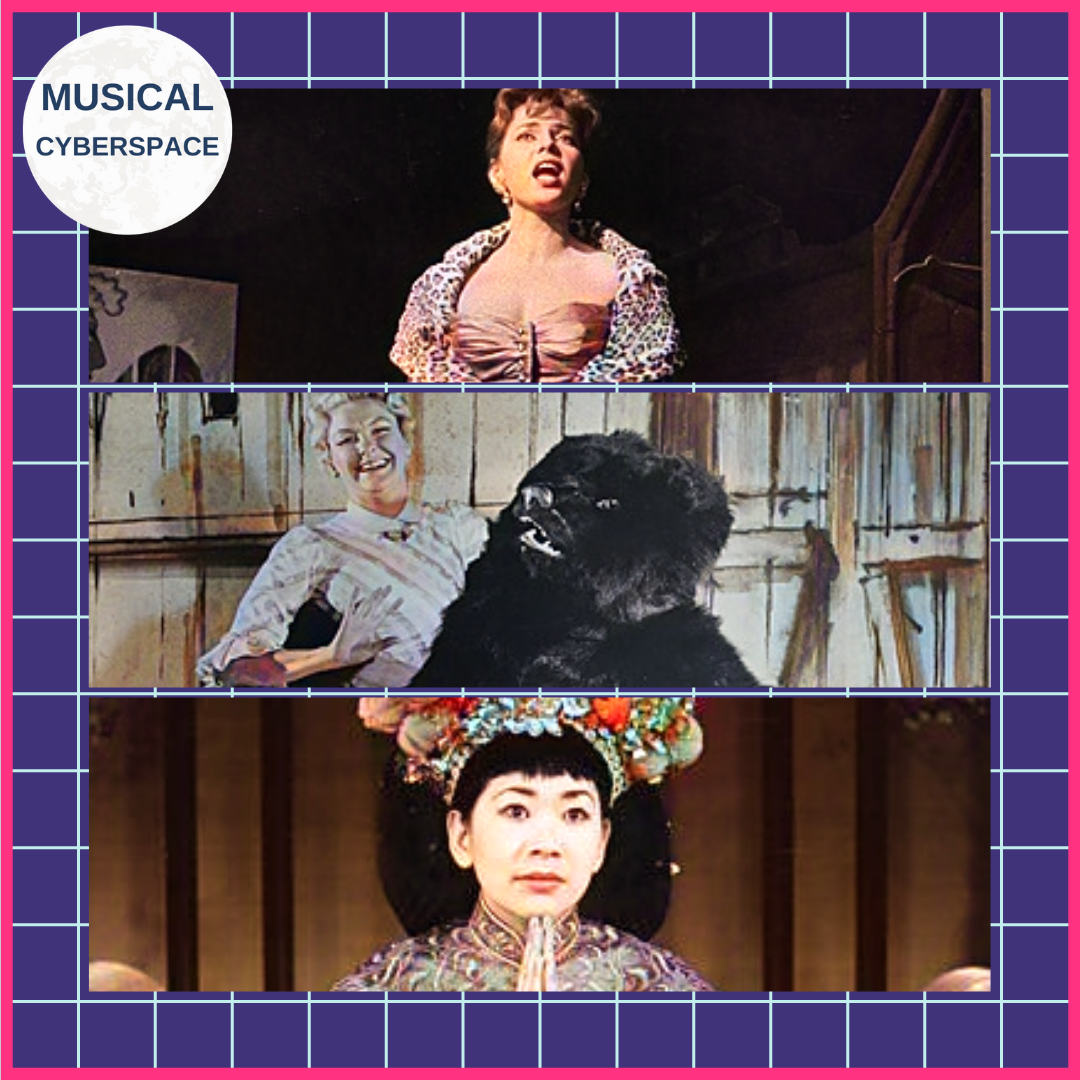
The Saturday List: 1958 in Musical Theatre

Scenes from OH, CAPTAIN! (featuring Abbe Lane), GOLDILOCKS (featuring Elaine Stritch and Flower Drum Song (featuring Miyoshi Umeki).
Scenes from Oh, Captain! (featuring Abbe Lane), Goldilocks (featuring Elaine Stritch and Flower Drum Song (featuring Miyoshi Umeki).

Picture it: planet Earth, 1958. 65 years ago. It was a slow year for new musicals and perhaps even a slow year in history. Nonetheless, it’s the subject of today’s “Saturday List.” One of the greatest inventions of the year was the peace symbol, created by Gerald Holtom as part of the British nuclear disarmament movement. Over the next decade, it would be adopted as the international symbol of peace it now represents. Another significant creation this year was the founding of the National Aeronautics and Space Administration (NASA), which United States President Dwight “Ike” Eisenhower founded in response to the launch of the Soviet Union’s Sputnik the previous year. On the sports scene, Bobby Fischer won the United States Chess Championship at age 14. At the movies, a musical – South Pacific– topped the grosses, with another – Gigi, which would go on to win the Academy Award for Best Picture the following year – not far behind in fifth position. Some of the chart-topping pop music releases of the year included Domenico Modugno’s “Volare” and “All I Have to Do is Dream” by The Everley Brothers. The most popular word in the slang terms of the year was “nuke,” a clear indication of just how newsworthy the nuclear tests in the United States were. But let’s get to why we’re all here and look at what happened on the musical theatre scene all those years ago.  

1. The Award Winners for Best Musical

If there’s any evidence needed that 1958 was not a great year for new musicals, here it is. In 1958, the Tony Award went to a musical that bowed in 1957, The Music Man. In 1959, the award went to a show that had debuted that year, Redhead. Of the 1958 musicals, only three scored nominations for the top prize: Oh, Captain!, La Plume de Ma Tante and Flower Drum Song. Did Redhead deserve the award over La Plume de Ma Tante, which first opened in London in 1955 and was a smash hit on Broadway, or Flower Drum Song, Richard Rodgers and Oscar Hammerstein’s penultimate stage presentation? I think hindsight has given us the answer. (It’s a no.)

2. Most Overrated

In a year where very little landed, how does one pick a show that is the most overrated? Perhaps the fairest way to do this is to name one of the shows that had enough impact to earn a Best Musical nomination at the Tony Awards: Oh, Captain! But this approach presents something of a problem. This nomination of its five-strong total aside, Oh, Captain! did not receive unanimous raves. While the cast drew good notices, the show was viewed as being unremarkable compared with the greatest hits of the day, including The Music Man and My Fair Lady. Adapted by Al Morgan and José Ferrer from the 1953 British film, The Captain’s Paradise, Oh, Captain! feels a little old-fashioned. Ray Evans and Jay Livingston’s score has some jaunty moments, particularly in songs like”You’re So Right for Me,” “Double Standard,” and “Give It All You’ve Got.” But it also stalls in songs like the opening number, “A Very Proper Town,” which harks back to the style of British comic opera and sets up a show that isn’t quite what you get. Still, nobody has said that Oh, Captain! is the show to end all shows, making it hard to call it overrated – except in the broadest of terms considering its achievements in relation to those of the other musicals debuting in that year.

3. Most Underrated

While it’s difficult to choose a show from 1958 that is overrated, one is possibly spoiled for choice when it comes to shows that might be considered underrated. There’s one that leads the pack, though – a show that, despite its problems, caught the attention of a young Stephen Sondheim, who then encouraged Harold Prince to rush to the theatre and see what first-time collaborators Sheldon Harnick and Jerry Bock had on offer. The show was The Body Beautiful, which, uncharacteristically for the team who would go on to write Fiorello!, She Loves Me and Fiddler on the Roof, was an original story set in the present day. The Body Beautiful isn’t in the same league as those shows by any means, but perhaps, it is trying to be something different. It’s more a follow-up to shows like Damn Yankees and The Pajama Game than a Pulitzer Prize-winning political observation, a charming romantic comedy or an internationally successful cultural touchstone. While the plot about a couple of boxers, their manager and their romantic interests doesn’t offer much in terms of its execution, there’s a great deal in the score that is instantly listenable and likeable, including a winning title song that really shows the potential this show could have had with a better book than the one created by Joseph Stein and Will Glickman. There’s certainly more about The Body Beautiful than meets the eye.

4. Hidden Gem 

The Body Beautiful might well be 1958’s hidden gem too, but in the spirit of showcasing a series of musicals of the year, how about Goldilocks? This show received some praise in its season, particularly for the score by Leroy Anderson, Walter Kerr, Jean Kerr and Joan Ford. Elaine Stritch and Don Ameche’s performances also drew praise from the critics. On the other hand, the book (also by the Kerrs, telling a farcical behind-the-scenes showbiz tale) drew criticism for its forced contrivances and lacklustre humour. It is not surprising, then, that one doesn’t generally hear much about Goldilocks today. Even so, the cast recording is worth a listen as a record of the show’s eclectic score. There are some gems here, including “I Can’t Be in Love,” “I Never Know When,” and “Who’s Been Sitting in My Chair?” – all characterful pieces that are wonderfully entertaining. Perhaps the most momentous thing captured on the cast recording is this pivotal step in Stritch’s career, a transition into a star around whom a role could be built. Listening to her put across her numbers is reason enough to excavate Goldilocks.

5. Show of the Year

Could the show of the year be anything but Flower Drum Song? While it is in some ways standard 1950s musical comedy fare, it is a piece that represents so much more. It is a show that numbers great wins, on the one hand: it was a show that focused on Asian American characters and their experiences, particularly issues of race and identity that caused conflict between Chinese immigrants and their American-born children. On the other hand, as time has passed, the show has drawn criticism for its idealisation of the Chinese-American experience, its perpetuation of Asian American stereotypes, and its reinforcement of the myth of the model minority. A 2002 Broadway revisal by David Henry Hwang attempted to address these issues. Warmly embraced in Los Angeles, the show was panned by the critics in New York and did not sustain a substantial run. Perhaps it was the timing? Maybe the changes between Los Angeles and New York shifted things too much? Who knows? Still, there is something about the story that resonates today. Perhaps another iteration will hit the mark. One thing you can bet, though, is that for every person who argues for a reimagining, there’s another who will suggest that it should be left in the past as a relic of its time.

1958 was a slow year if we are looking for musicals that made the same impact as other 1950s shows like West Side Story or Gypsy. Nonetheless, it is a year that offers a series of shows with – if nothing else – enjoyable scores that are great to listen to when lining up a playlist on your music player of choice. Still, I’d argue that there is a lot more potential in some of these shows than we’ve seen in the six-and-a-half decades that have passed. There is some first-rate material to mine here, especially in a world where old musicals can be adapted and reimagined as new ones.

Posted in The Saturday List | Tagged , , , , , , , , , , , , , , , , , , , , , , , , , , , , , , , , , , , , , , , , | Leave a comment

Forgotten Musicals Friday: Blithely Broadway with HIGH SPIRITS

Bea Lillie in HIGH SPIRITS, sits on her pink bed with a ouija board.
Bea Lillie in High Spirits on Broadway

This Friday, we’re heading to the legendary Broadway season of 1963-1964. Hello, Dolly! won 10 of the 11 Tony Awards for which it was nominated. They all coloured her Barbra after Funny Girl opened, and even the most-esteemed flop of the season, Anyone Can Whistle, is remembered and beloved by Stephen Sondheim’s cookies, myself included. 110 in the Shade has its rainmakers; She Loves Me has devotees who love it as much as Amalia loves “Vanilla Ice Cream.” The show we’re celebrating as today’s Forgotten Musical opened on 7 April 1964, 58 years ago to the day of this column: Hugh Martin and Timothy Gray’s High Spirits, based on the hugely popular Noël Coward play, Blithe Spirit.

Like the play upon which it is based, High Spirits tells the story of a writer, Charles Condomine, who invites a medium, Madame Arcati, to his home to provide post-dinner entertainment in the form of one of her famous seances. During the seance, Charles’s dead wife, Elvira, is manifested, which leads to all sorts of romantic hijinks – particularly as Charles tries to explain what’s going on to his new wife, Ruth, and Elvira’s plan to bring Charles into the afterlife to join her goes awry.

Martin (of Meet Me in St Louis fame) and Gray (who also penned the Daddy-Long-Legs musical Love From Judy) hewed pretty closely to the original play in their adaptation, which Coward loved so much that he agreed to direct it. Their main departures from the source material are in building up the role of Madame Arcati into a star turn and in the adjusted ending of the show. It’s all very charming and was warmly received in New York – less so in London, where the battle of wills between Coward and Cicely Courtneidge, who played Madame Arcati in the West End, seemed to seep into the production and rather spoil things. On Broadway, that role was played by Beatrice Lillie, who delivered a performance that was appreciated by critics and audiences alike.

The score is just delightful. Even on a first listen, it greets you like an old friend, with three of Madame Arcati’s big numbers, “Faster Than Sound,” “Talking to You,” and “Something is Coming to Tea,” extending the most generous hand. Evira also has a wonderfully camp showstopper in “Home Sweet Heaven.” The material for Charles and Ruth is endearing, her “Was She Prettier than I?” and their “If I Gave You” beautifully grounding the everyday world that contrasts all of the supernatural silliness.

When it comes to that silliness, I dare say that Jerry Herman wanted the quirkier sections of Dear World to land like this. In High Spirits, the offbeat characters, wit and whimsy feel effortless, while Herman’s effort from a half-decade later – more often than not – sounds like work. It’s true that there isn’t an anthem like “I Don’t Want to Know” in High Spirits. Everything in High Spirits is tailored to the show and its characters and is thus more difficult to extract for show-tune-friendly albums and events. It may be a limiting factor in terms of the show’s popularity, but on its own terms, High Spirits is all the better for the integrity of its internal logic.

The factor that perhaps holds back High Spirits from being a better-remembered musical is that it is based on a fantastic play that is still produced quite often today. Nonetheless, if ever there was a case to be made for a Broadway show that has never had a revival that needs one, here it is. It may not have the razzle-dazzle or weighty enlightenment of Moulin Rouge or Hamilton, but it could certainly hold its own next to something like the twice-revived She Loves Me. Yes – High Spirits needs its own Madame Arcati to come cycling in and restore it to our memories!

Posted in Forgotten Musicals Friday | Tagged , , , , , , , , , , , , , , , , , , , , , , | 2 Comments

Forgotten Musicals Friday: Laughing Matters WHEN PIGS FLY

The original production of WHEN PIGS FLY in Howard Crabtree's fabulous costumes. The cast members are each wearing a dress in the shape of a vanity.
The original production of When Pigs Fly in Howard Crabtree’s fabulous costumes.

We’re headed Off-Broadway for today’s Forgotten Musical to celebrate the life of the composer, musical director and accompanist, Dick Gallagher, who passed away on this day in 2005. The show is When Pigs Fly, a revue conceived by Howard Crabtree and Mark Waldrop, the latter of whom wrote the sketches and lyrics. Crabtree would also design the costumes for the show. Of the shows that Gallagher would compose, this was his most successful.

When Pigs Fly celebrates the gay experience. On the surface, it is playful and delightfully camp. The show glitters with joy. But underneath the veneer, there is irony. There are nods to the tragedy of the closet, although the show never becomes tragic. There is also a proud resistance to homophobia in the show’s use of drag and its reclamation and celebration of stereotypes and tropes. It’s a response to gay history as well as the then-present context of the late 1990s and when revisiting it in 2023, When Pigs Fly feels as fresh and relevant as ever. The times have changed, but there is still a long way to go.

Listening to the cast recording of When Pigs Fly offers delight after delight. The title song gets things off to a jaunty start before the show dips into some delightful puns and witty observations in “You’ve Got to Stay in the Game.” There’s a playful defiance in “Light in the Loafers,” which in its staging had shoes that lit up, one of the genius costume conceits for which Crabtree was famous in New York. A delightful trio of torch songs gives voice to people in the queer community who are sometimes invisible to their own. That When Pigs Fly is unafraid to take on the biases held by the very people the show celebrates makes it all the more brilliant.

This all happens before one even arrives at the gay anthem, “A Patriotic Finale,” which recentres the gay experience in US states and settings. It’s insistent and bursts with pride. In fact, celebrated musical theatre writer Peter Filichia once said it should be an official anthem for gay Americans. Perhaps, the most poignant of all the numbers is “Laughing Matters,” a reminder of the need for and power of laughter in a world where so many hateful things happen. Laughter can be weaponised, and we should all arm ourselves with it for our own good.

A 2017 Off-Broadway revival of When Pigs Fly never came to fruition, which is rather devastating. It is a show that deserves to be in our consciousness, an entertainment that holds profound meaning. Seek it out, my pretties!

Posted in Forgotten Musicals Friday | Tagged , , , , , | Leave a comment

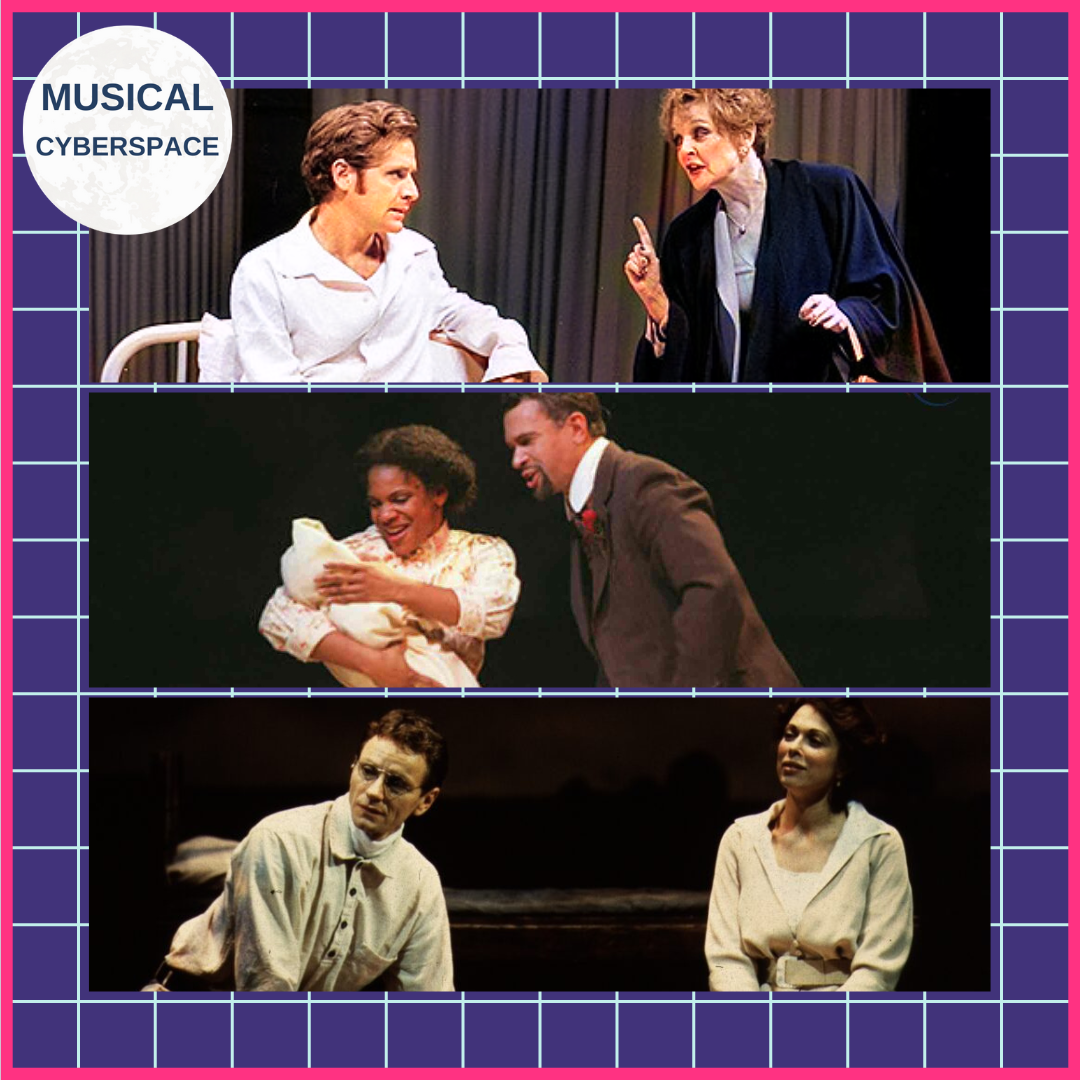
The Saturday List: 1998 in Musical Theatre

Scenes from A NEW BRAIN (featuring Malcolm Gets and Penny Fuller), RAGTIME (featuring Audra McDonald and Brian Stokes Mitchell and PARADE (featuring Brent Carver and Carolee Carmello).
Scenes from A New Brain (featuring Malcolm Gets and Penny Fuller), Ragtime (featuring Audra McDonald and Brian Stokes Mitchell and Parade (featuring Brent Carver and Carolee Carmello).

For our second “Saturday List” of 2023, let’s jump back 25 years and see where contemporary musical theatre was back then. 1998 was the International Year of the Ocean. It was the year that United States President Bill Clinton was impeached due to the Clinton–Lewinsky scandal. While The Troubles in Northern Ireland were coming to an end thanks to the Good Friday Agreement, protests erupted in Indonesia following the collapse of President Suharto’s government. In 1998, the Winter Olympics were held in Japan, while the FIFA World Cup was held in France. The only movie musical to have an impact at the box office – the second-highest-grossing family film of the year and the seventh-highest-grossing film of the year overall – was one of the second-tier films of the Disney Animation renaissance, Mulan. Pop music was bop-tastic in 1998, with songs like Brandy and Monica’s “The Boy is Mine,” Janet Jackson’s “Together Again,” and Savage Garden’s “Truly Madly Deeply” featuring in the charts. The prefix “e-” was the most significant contribution in terms of new words of the year, indicating the world’s accelerating shift towards digital literacy. Let’s look at what was happening on musical theatre stages.  

1. The Award Winners for Best Musical

In 1998, a show from 1997, The Lion King, took home Tony Award for Best Musical. This phenomenon isn’t unusual, as theatrical seasons on Broadway do not follow calendar years. The following year, the revue that was the first Broadway show to open in 1999, Fosse, was presented with the award – so none of the new 1998 Broadway musicals, which include Ragtime, The Capeman, High Society, Footloose and Parade, earned the highest recognition for a musical theatre production from the American Theatre Wing. The situation was similarly bleak across the pond at the Olivier Awards, which saw four 1997 West End shows nominated in 1998, with the winner being Beauty and the Beast, which had made its Broadway bow in 1994! In 1999, things looked a little better in London, although the top prize was taken home by Kat and the Kings, a show that had opened on the West End in 1998 but was first produced in South Africa in 1996 and had already had a UK debut in 1997. The other nominees included some bona fide 1998 shows, including Saturday Night Fever (a jukebox musical of the standard typically expected of such fare) and Whistle Down the Wind (which had received a kind of out-of-town tryout in Washington, where it flopped but prompted the kind of rewriting that happens when a musical is being made).

2. Most Overrated

It almost feels sacrilegious to say it, but an overrated musical will rarely be bad; by definition, it will be a beloved one. For me, the most overrated musical of the year was Parade. While there is no question that the show is impressive, with several highlights in Jason Robert Brown’s score, it’s all too – I don’t know – straightforward. Going into Parade, there’s no doubt about how it will end, which keeps everything at an emotional distance. The trajectory of Alfred Uhry’s book tells the audience what it needs to feel when it should be stirring up the audience’s emotions. We should be churning at the end of this show because of the injustices it has the power to interrogate. Instead, we’ve been led to an opportunity to pat ourselves on the back for positioning ourselves on the moral high ground in viewing this telling of the story of Leo Frank. But in a tale that features gender-based violence on the one hand and antisemitism on the other, there are layers and layers of potential narrative complexity that the show just cuts through. There’s no question that the show has been improved over time, with several revisions made for the Donmar Warehouse production in 2007, which were retained in the recent New York City Center concert presentation of the show, which will transfer to Broadway next month. Perhaps Michael Arden holds the key to unlocking more of what Parade has to offer; the word from last year’s run is that he has.

3. Most Underrated

Many of Andrew Lloyd Webber’s shows don’t quite get their due. While musicals like Whistle Down the Wind, The Beautiful Game and The Woman in White aren’t among the composer’s best works, each has something to offer. Whistle Down the Wind has some really memorable songs, for which Jim Steinman wrote the lyrics. The show certainly has its flaws, particularly in the way it handles its plot in the book (which is credited to Patricia Knop and Gale Edwards as well as Lloyd Webber himself), but some of the songs in the show are simply fantastic, including the devastating “Unsettled Scores,” the gloriously camp “Tire Tracks and Broken Hearts” and the utterly unpretentious title song. Even when the cheese factor amps up in something like “When Children Rule the World,” Lloyd Webber and Steinman’s work yields a fun, modern Christmas carol. Whistle Down the Wind may not be perfect, but it doesn’t deserve the sheer dismissal and even hatred that some musical theatre critics and fans have sent its way.

4. Hidden Gem 

Wouldn’t it be wonderful if there were more to Paul Simon’s The Capeman than audiences first thought? Unfortunately, there isn’t – despite a couple of musical delights like the song, “Bernadette.” The two most worthy contenders for 1998’s hidden gem come from Off-Broadway in the form of Hedwig and the Angry Inch and A New Brain. Given its subsequent film adaptation, Broadway revival and successful international productions, the former can’t really be said to be hidden. A New Brain, written by William Finn and James Lapine, has popped up here and there, notably in a 2015 Encores! staged concert, but it still hasn’t caught fire in the way that some of Finn’s other shows, like Falsettos and The 25th Annual Putnam County Spelling Bee, have. A New Brain is, in some ways, a tough sell, dealing as it does with a
songwriter who lives through surgery to fix an arteriovenous malformation and rediscovers his
potency as a creative being after walking through the fire of his ordeal. The style of the show is heightened as the cartoonish fever dream of Gordon’s neurosis and illness threaten the unaffected emotional truth of his “Heart and Music.” The two energies’ meeting remains the show’s greatest challenge to both theatremakers and audiences. Still, even if it had nothing else to offer – and it does – “Sailing” would make it all worth it.

5. Show of the Year

The world was a complicated place in 1998. If theatre is a response to the world around it, no show embodied the spirit of 1998 more than Ragtime, Stephen Flaherty, Lynn Ahrens and Terrence McNally’s musical about America in the early 20th century. Dealing with racial tension, xenophobia and privilege, the show is as relevant now as it was a quarter century ago. Given that it dramatises a milieu from which time only a very few individuals survive today – the oldest people in our world – Ragtime reminds us that the more things change, the more they stay the same. A society that offers equality and parity is somehow as evasive now as it was in the world of Ragtime; even though significant advances have been made, the road to be travelled remains long. In the opening number of Frank Galati and Graciela Daniele’s original Broadway production, there was a glorious moment of staging as the three social castes move around the stage like the gears of a clock, the clockwork jamming each time they face off. The image explodes, the groups mix, and no one knows where they’ve landed. That’s what Ragtime is. That’s the world Ragtime is in.

1998 was a somewhat quiet year for new, high-profile musical theatre. It was perhaps a time of transition with shows that looked to the past in terms of how they told their stories, some that captured the moment as it was, and others that looked towards the future of storytelling in his genre. What a perfect reminder that musical theatre is a living art form, ever adapting to the shifting sands of human existence.

Posted in The Saturday List | Tagged , , , , , , , , , , , , , , , , , , , , , , , , , , , , , , , , , , , , , , , , , , , , , , , , , , , | Leave a comment