Hot takes are all over the Internet these days – and hot takes on musicals are no exception. Often, they’re pretty tame. In the Heights is a better musical than Hamilton? That’s pretty low-hanging fruit. Much better are Sweaty Oracle-level hot takes, which are often interspersed in his scalding Broadway tea posts. A lot of the time, I think, “Facts.” All in all, my hot takes aren’t likely to be as earth-shattering – but then again, I suppose that musical theatre hot takes aren’t hot currency in the bigger scheme of things. Nonetheless, here’s my attempt at a few.
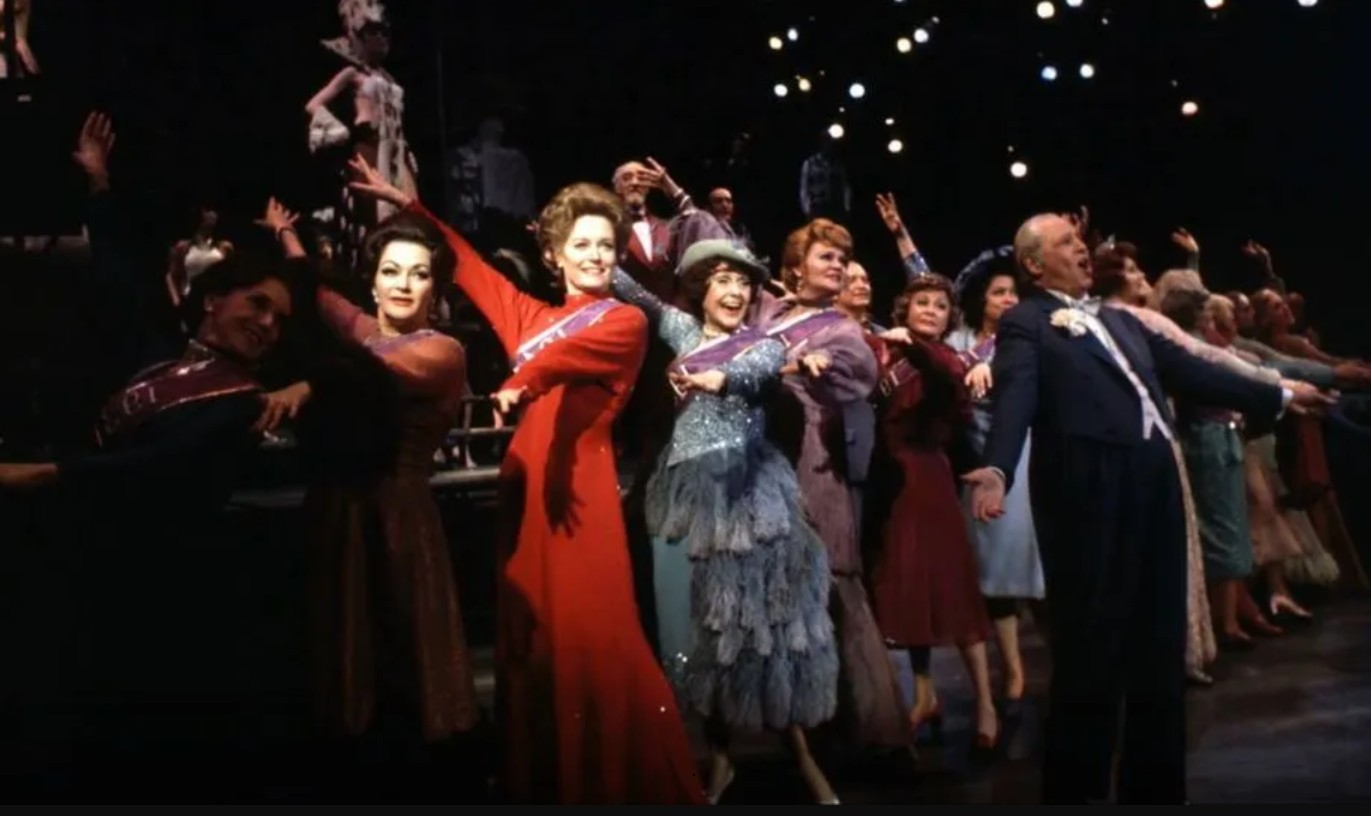
The original cast of Follies (Photo credit: Martha Swope)
The remixed Kritzerland reissue of the original Broadway cast recording of Follies makes it the best recording of the show; although it’s not as complete as other recordings, there’s no beating that original cast.
Legally Blonde deserved a nomination in the Best Musical category at the 61st Tony Awards.
David Yazbek is underappreciated as a contemporary musical theatre composer-lyricist.
Michael John LaChiusa is underrated as a contemporary musical theatre composer-lyricist.
Individual moments in The Colour Purple outshine the musical as a whole.
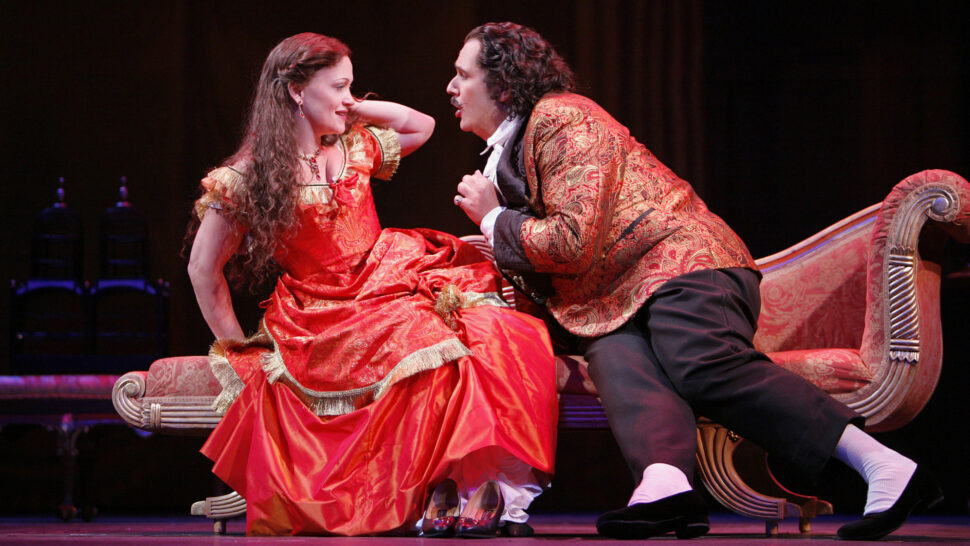
Maria Friedman and Michael Ball in The Woman in White (Photo credit: Paul Kolnik)
The Woman in White makes complete sense as a musical when you realise that it’s Andrew Lloyd Webber channelling Benjamin Britten.
Aida would have made a great rock opera, but it’s a mediocre book musical.
Cats has the same plot as A Chorus Line; criticising one but not the other is just, as the hip folk say, basic. (A Chorus Line will always be the greater of the two, but even so….)
My Fair Lady lost its social impact when it became a musical theatre piece. Lerner and Loewe transformed it into a love story, and that’s all the better for My Fair Lady.
The original Merrily We Roll Along didn’t fail because it was misunderstood by the audience; it failed because it was misunderstood by Harold Prince.
The Wild Party deserved to win Best Musical at the 54th Tony Awards, and one of the other three nomination spots in the category should have gone to Marie Christine.
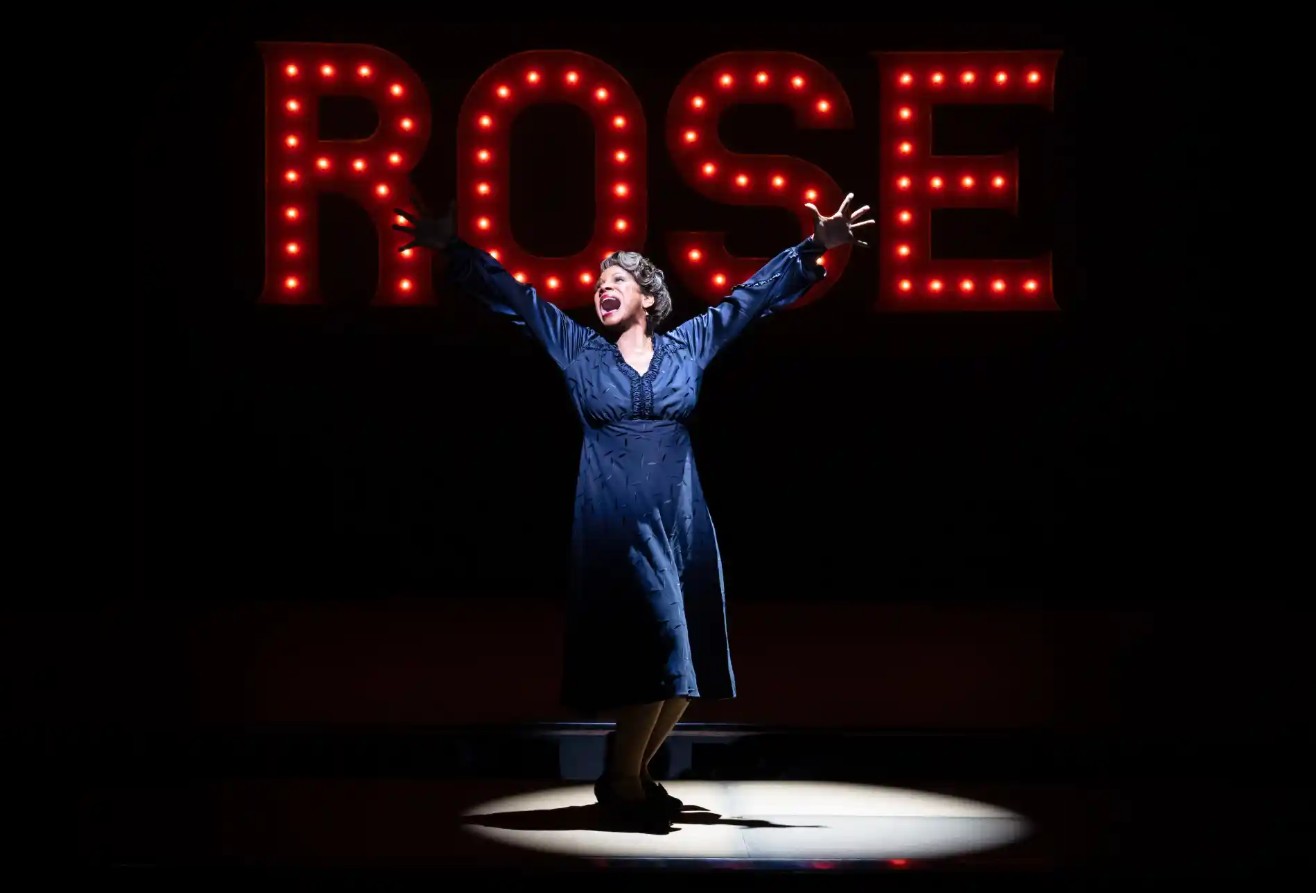
Audra McDonald as Rose in Gypsy (Photo credit: Julieta Cervantes)
Jamie Lloyd’s re-interpretation of Sunset Boulevard won Nicole Scherzinger her Tony Award; Audra McDonald’s re-interpretation of Rose should have won her the Tony Award.
If we treat the Golden Age like a museum, it will soon become a morgue.
Rigorous craft matters more than conceptual novelty, but first-class theatricality can make a musical work in spite of itself.
Musicals should challenge audiences, but not punish them; opacity presented as rigorous craft is just as bad as something that has the depth of a teaspoon.
None of these are hills I’ll die on. All right, all right, some of them are. But generally they’re more like things I’d happily argue over a cocktail, halfway through an interval or three posts deep in a group chat that’s gone off the rails. Sure, some of them kind of contradict each other, and some of them probably contradict things I’ve written elsewhere too. Sounds about right….
At any rate, if there’s a throughline to be found here, it’s not contrarianism for its own sake. It’s a belief that musical theatre is worth thinking about. Hot takes are fun, but the most fun thing about them is that they often can make you think about something more interesting than the heat itself.
Feel free to disagree with anything I’ve said here today. In fact, I hope you do – and I hope you feel free to share your hot takes too. Musical theatre is far healthier when we keep it real, preferably with specificity, curiosity and a show tune blasting in the background.
In the four decades since Merrily We Roll Along flopped on Broadway, effectively bringing Stephen Sondheim’s prolific collaboration with director-producer Harold Prince to a painful end, Sondheim wrote only six new musicals for the stage: Sunday in the Park with George, Into the Woods, Assassins, Passion, Road Show and Here We Are, the last of which premiered posthumously. Prince did, of course, collaborate with Sondheim on an earlier version of Road Show, then titled Bounce, but that project never quite found its footing. With a high-profile revival of Sunday in the Park with George starring Jonathan Bailey and Ariana Grande announced for 2027, this feels like a great moment to revisit and rank Sondheim’s post-Prince works. Each of these shows has something valuable to offer, even if they are not equally loved, equally understood or equally easy to embrace.
6. Road Show (2008)
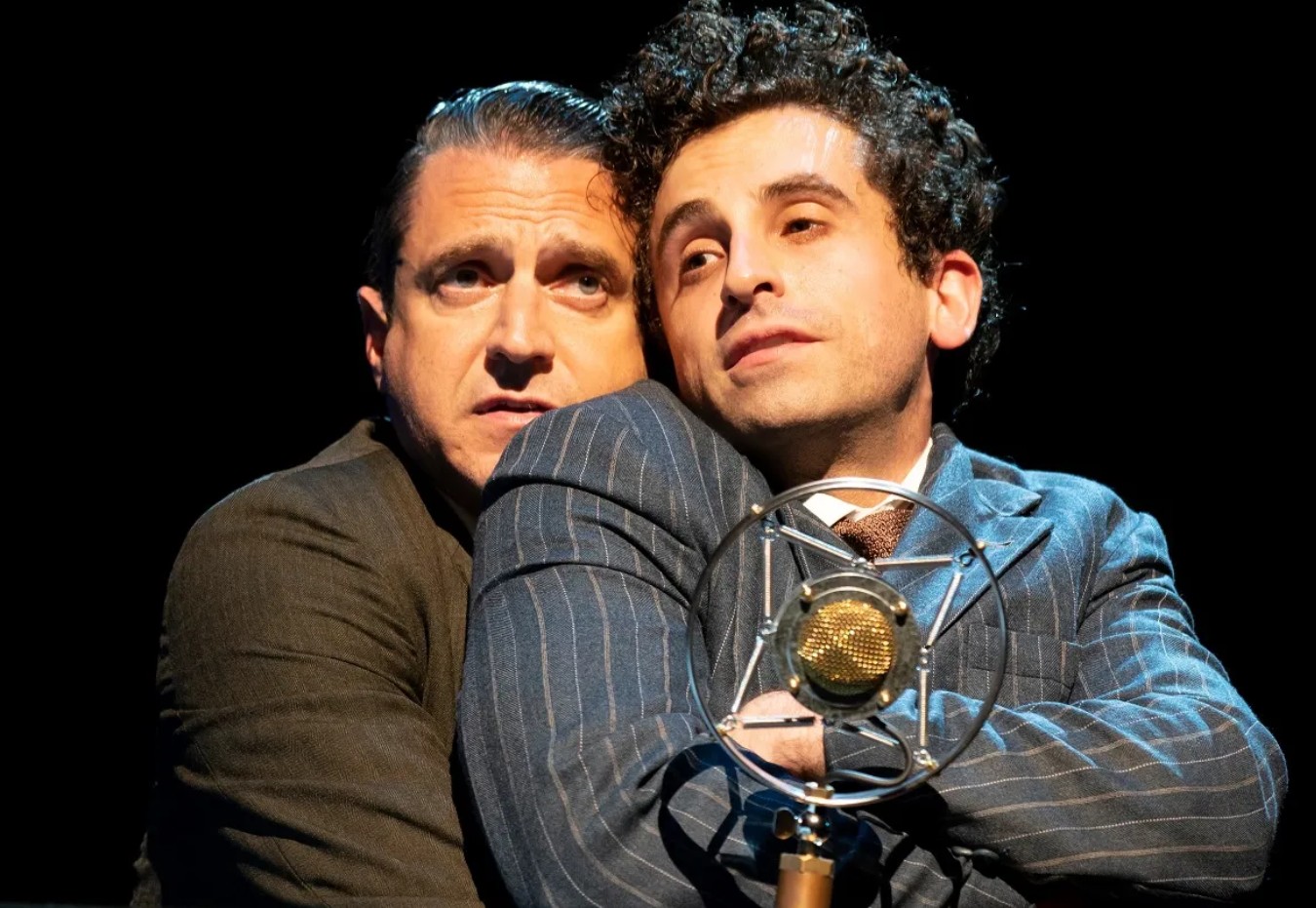
A decade in the making, Road Show finally arrived in 2008 after a long and complicated gestation, having been seen earlier as a workshop in 1999 and as Bounce in 2003. Created in collaboration with John Weidman, Road Show was inspired by the lives of brothers Addison Mizner and Wilson Mizner, a kind of modern American fable that took audiences from the Klondike gold rush of the 1890s to the Florida real estate boom of the 1920s. Expectations were high. Audiences hoped for another Company or Follies; what they got was something smaller, stranger, and far more elusive. For many, that was reason enough to write the show off entirely – myself included, for a time. But revisiting Road Show once the hype had faded revealed more than memory suggested. There is strong material here, including “Addison’s Trip,” “Talent” and the universally loved “The Best Thing That Ever Has Happened.” Its greatest weakness may be that it feels as though it has less to say than Sondheim’s towering achievements. Still, I wonder what a genuinely fresh production, one unburdened by expectation, might uncover. It is unlikely to climb much higher on this list, but it remains more intriguing than its reputation suggests. Its 2019 outing at New York City Centre seems to be evidence of just that.
Raúl Esparza and Brandon Uranowitz in Road Show. (Photo credit: Joan Marcus)
5. Here We Are (2023)
Here We Are, Stephen Sondheim’s final musical, with a book by David Ives based on the films The Discreet Charm of the Bourgeoisie and The Exterminating Angel by Luis Buñuel, arrived posthumously. It follows a group of wealthy, self-absorbed characters attempting to have brunch while society quietly collapses around them. Encountering the cast album made one thing immediately clear for me: despite early speculation, the score does not feel unfinished. As Ives and Joe Mantello, the director of the premiere production, explained, Sondheim stopped writing when the characters had nothing left to sing. Content dictated form. Musically, Here We Are belongs firmly to Sondheim’s later approach to integration, closer in structure to Passion and Sunday in the Park with George than to his earlier works. Its pleasures lie in its momentum and texture, and in exquisite lyrical detail rather than obvious set pieces. Numbers like “Waiter’s Song,” “It Is What It Is” and “Shine” balance wit with unease in the best tradition of Sondheim’s works. Considered alongside his other musicals, Here We Are can feel like a piece that is still finding its place. Time may yet reshape how we understand it, but even now it stands as a thoughtful, unsettling and unmistakably Sondheimian show.
The cast of the UK production of Here We Are in action (Photo credit: Marc Brenner)
4. Into the Woods (1987)
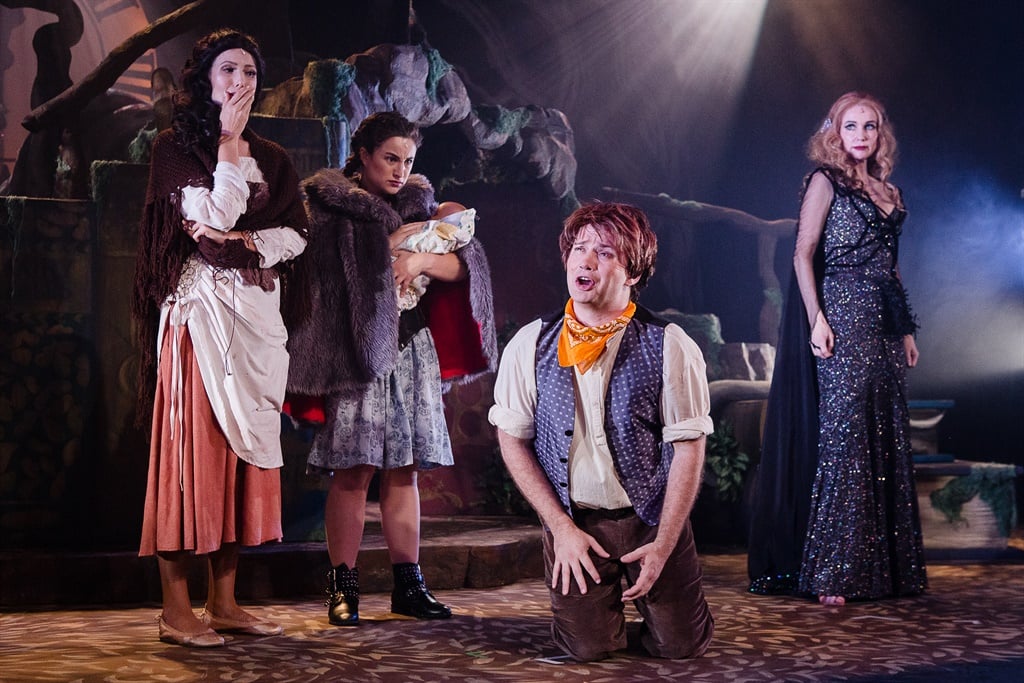
Into the Woods, the fairy tale mashup Sondheim created with James Lapine, has become increasingly difficult for me to appreciate simply because of its ubiquity. Telling the story of a Baker and his wife, who cross paths with Cinderella, Jack and his beanstalk, Little Red Riding Hood, Rapunzel and – of course – a wickedly glamorous witch, the show asks us to consider the importance of community and how we connect with one another. From the turn of the century onwards, it feels like this show has been everywhere, endlessly produced, reimagined, reinterpreted and reinvented. Child narrators, radical design concepts and revisionist framings abound. While it’s actually amazing to see the piece tackled with such love, diversity and vitality, it does make it a little more challenging to return to the show on your own terms. Nonetheless, I was certainly able to discover its pleasures again when I directed it for a local high school. My advice now is the same advice I gave myself back then: clear your mind, return to what was there at the beginning and let your imagination do the rest. The show’s popularity may sometimes obscure its precision, but its rewards remain intact for those willing to listen closely. “Children Will Listen,” indeed.
Haylea Hayns, Megan Rigby, Graeme Wicks and Kate Normington in a South African production of Into the Woods
3. Passion (1994)
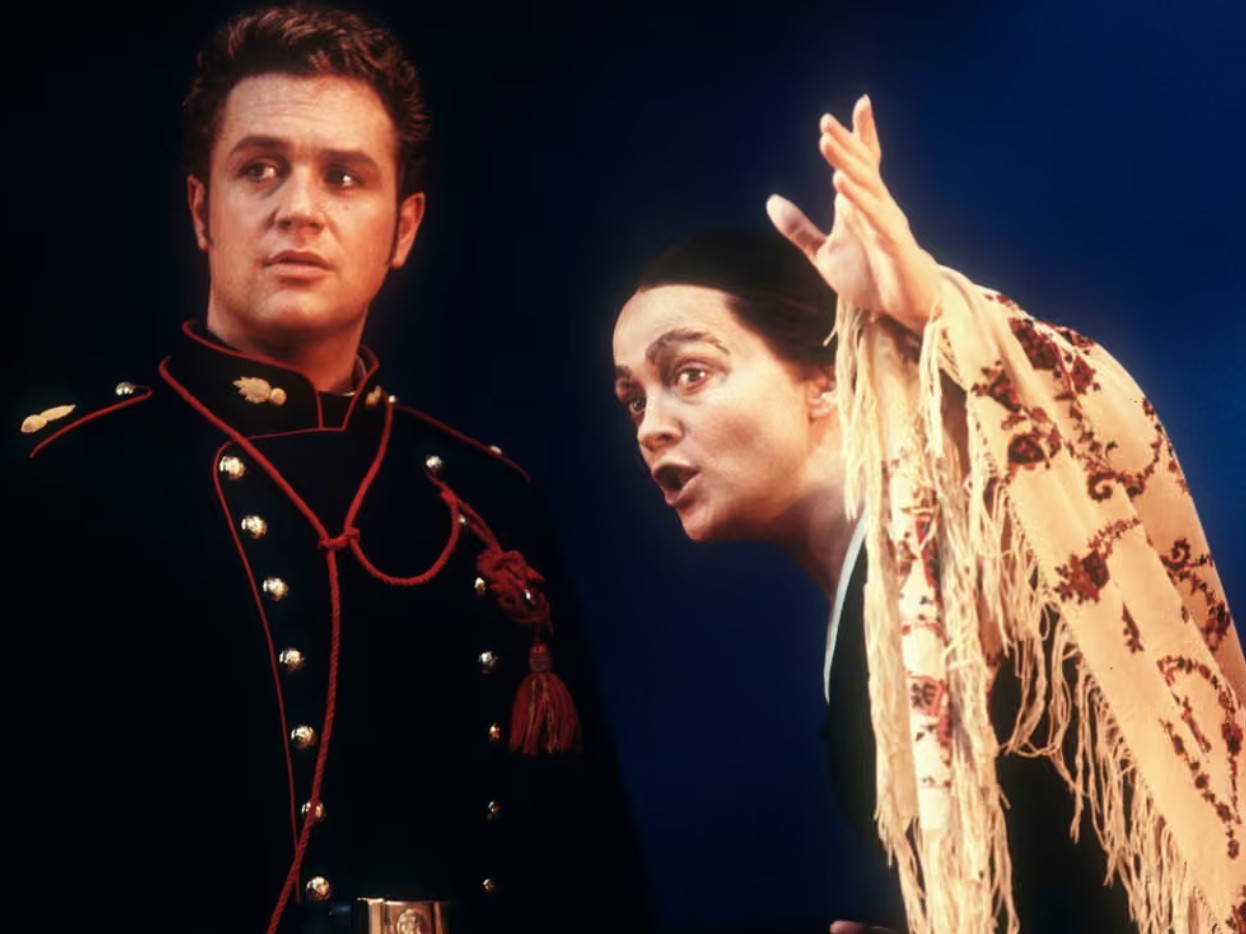
Many people hate Passion with an intensity that borders on the visceral. Some even claim it is a bad show. It isn’t. Based on Ettore Scola’s film Passione d’Amore, Passion was the last of Sondheim’s three collaborations with James Lapine and holds the distinction of being the shortest-running Tony Award-winner for Best Musical ever. Set in nineteenth-century Italy, the show examines the obsessive love of Fosca for a young soldier, Giorgio, and the transformation this obsession affects in him. It is a work that demands emotional maturity, not in terms of age, but in terms of experience. What you bring to this show profoundly shapes what you take from it. Passion is intimate, uncomfortable and deeply personal. It cuts close to truths many people would rather not confront. In my opinion, this discomfort is precisely why some audiences struggle with it. As such, people need to approach Passion with openness and curiosity. If you still reject what it has to say, that’s fine, but recognise that dislike does not equate to poor craftsmanship. This is one of Sondheim’s most rigorously constructed and emotionally challenging scores – with some especially memorable highlights in songs like “I Read,” “I Wish I Could Forget You” and “Loving You.”
Michael Ball and Maria Friedman in Passion (Photo credit: Tristram Kenton)
2. Assassins (1990)
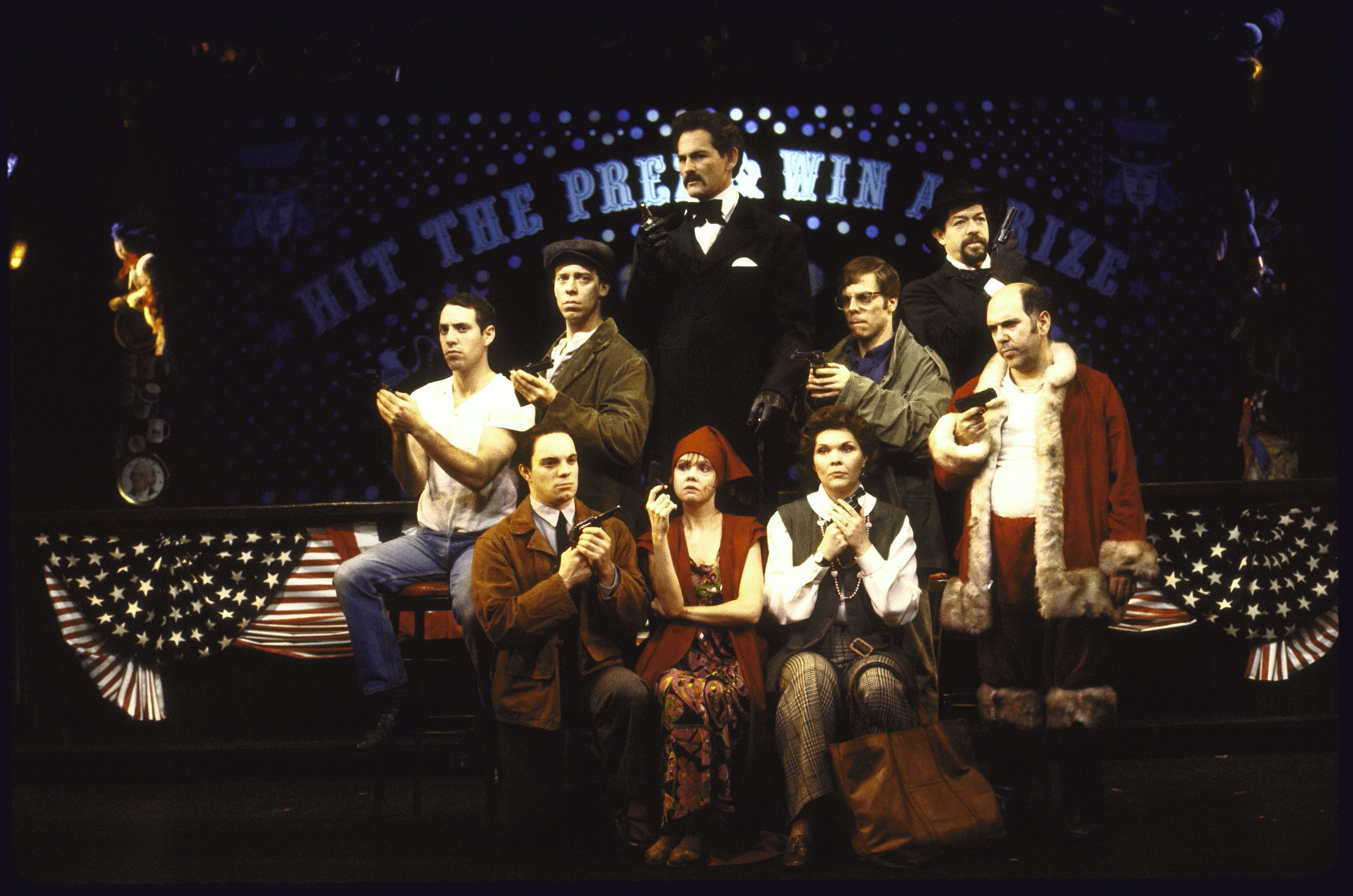
I love Assassins. It is a brilliant show, though I will admit I preferred it before “Something Just Broke” was added to the score. To be honest, I’ve softened on that song over time, but my ambivalence remains. Using the macabre framing device of an all-American carnival game, Assassins, which Sondheim wrote with John Weidman, examines one of the darkest threads in American history: people who murdered, or attempted to murder, American presidents, and the distorted ideals that fuelled their actions. Many fans of the show recommend that newbies start off by listening to the Broadway cast recording. I’d argue instead for the earlier Off-Broadway album, which preserves a crucial scene from the show that wasn’t recorded for the revival. Both casts are excellent, but the earlier recording captures the piece in its most uncompromising form. With songs like “Everybody’s Got The Right” and “Another National Anthem,” Assassins remains provocative and incredibly unsettling. It is frighteningly relevant, perhaps more so now than when it first appeared.
The original Off-Broadway company of Assassins (Photo credit: Martha Swope)
1. Sunday in the Park with George (1984)
The top four shows on this list are, in many ways, interchangeable. But Sunday in the Park with George feels like the most ambitious and arguably, the most fully realised. Created with James Lapine, the musical offers a fictionalised account of Georges Seurat painting A Sunday Afternoon on the Island of La Grande Jatte, using the act of creation itself as its central subject. All the while, the show tracks his rocky relationship with Dot, whose image he preserves for all time through his painting. The second act shifts time and perspective, examining those same questions through the artist’s fictional great-grandson as he faces the gruelling task of “Putting It Together.” Few moments in musical theatre move me as profoundly as “Sunday,” the song that closes both Act I and the show itself. Seeing a preparatory study for La Grande Jatte at the Met last year – capturing Seurat in the middle of his process – with Sondheim’s music in my mind was quietly overwhelming. Art in conversation with art. Process illuminating process. It reminded me that Sunday in the Park with George is Sondheim at his most expansive, humane and searching.
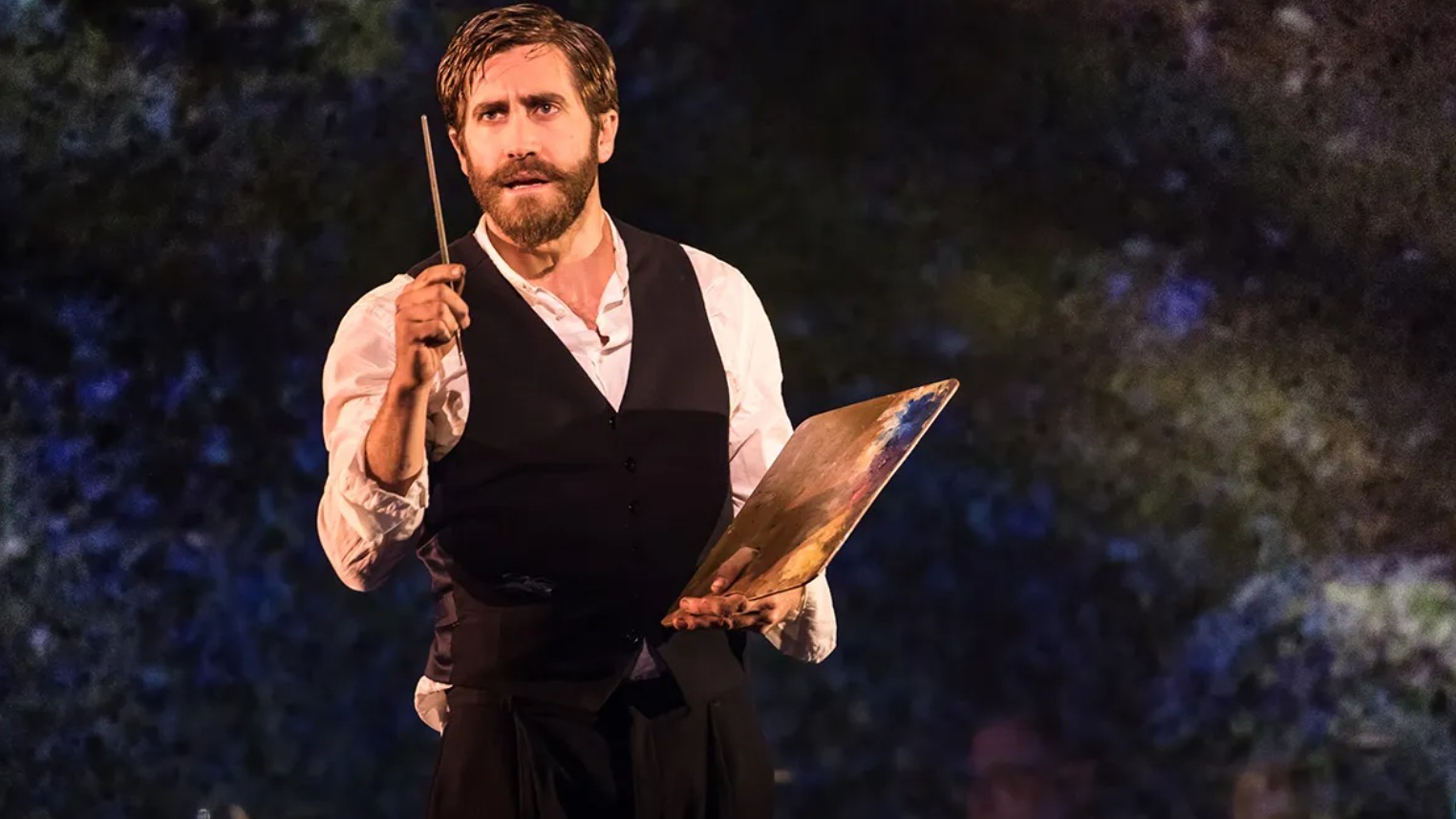
Jake Gyllenhaal in Sunday in the Park with George (Photo credit: Matthew Murphy)
Passing Through Our Perfect Park
Even when you seem to have everything, you cannot always find what you want, a truth borne out repeatedly in Here We Are and across Sondheim’s canon. As his final musical suggests, we are often caught between forward motion and reflection, between certainty and doubt. Looking back across his post-Prince works, what emerges is not decline, but refinement, a lifelong pursuit of clarity, detail and truth in storytelling through song. As always, Sondheim leaves us not with the answer to life but with the tools to navigate it: passion, intellect and heart. Through what he has given us, we can find comfort and joy in the fact that everyone needs to face a blank page at some point in their life – and then try to finish a hat.
Some musicals are “forgotten” in the loosest sense of the word, not because they vanished entirely, but because we remember them for one thing and quietly overlook the rest. Animal Crackers is one such show. More often thought of as one of the Marx Brothers’ early screen comedies, it’s easy to forget that it began life as a Broadway musical comedy, one that helped to bookend their theatrical legacy.
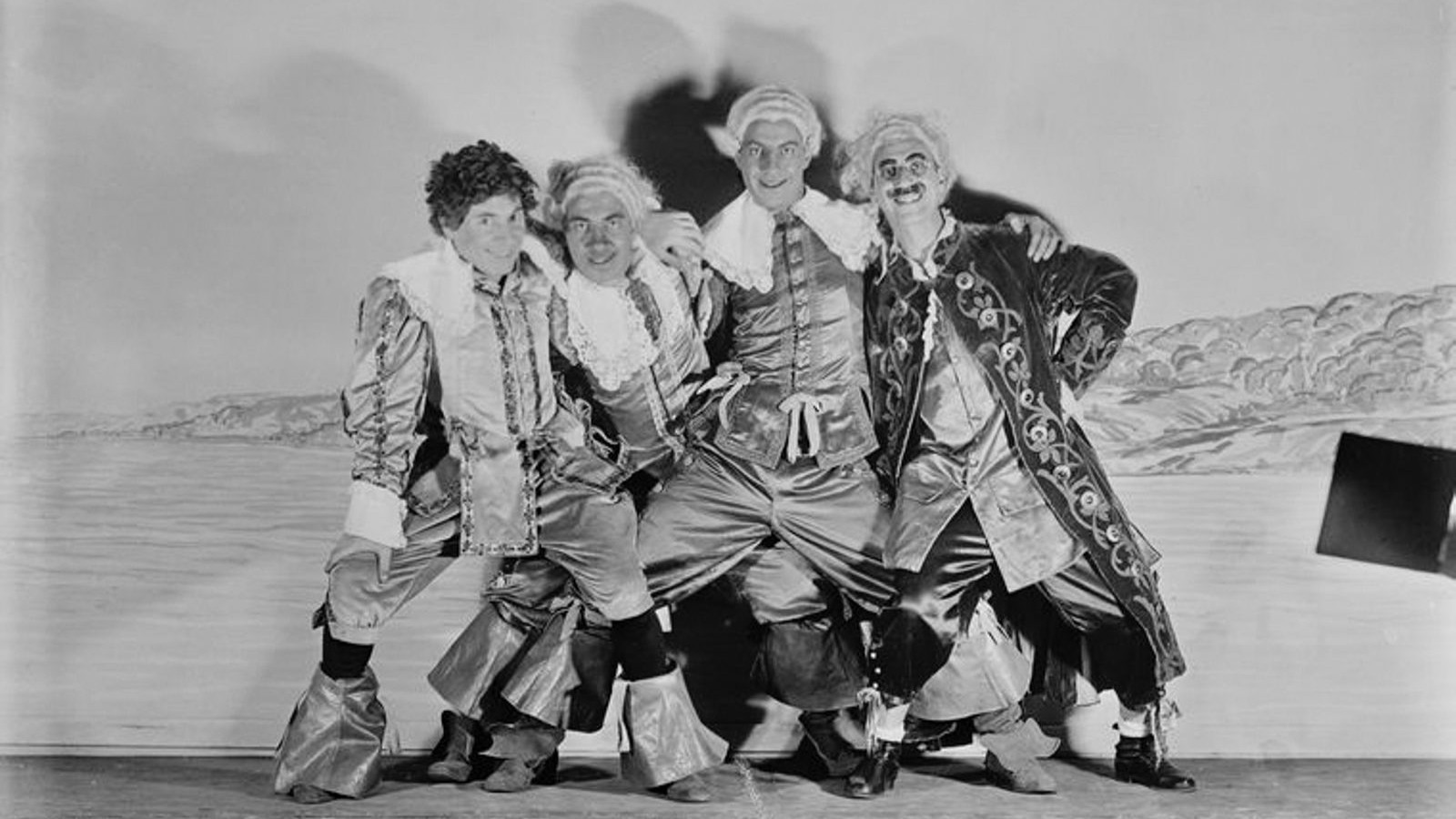
The Marx Brothers in Animal Crackers
With a book by George S. Kaufman and Morrie Ryskind and a score by Bert Kalmar and Harry Ruby, Animal Crackers premiered on Broadway in 1928. Designed as a vehicle for Chico, Groucho, Harpo and Zeppo, it followed hot on the heels of I’ll Say She Is and The Cocoanuts, marking their third – and ultimately final – Broadway outing.
Like many musical comedies of the late 1920s, the plot of Animal Crackers exists largely to facilitate mayhem. Set at the estate of the wealthy Mrs Rittenhouse, the action unfolds during a society party held in honour of the celebrated African explorer Captain Spaulding. When a priceless sculpture goes missing, the evening descends into a series of misunderstandings, wordplay, disguises and gleeful non-sequiturs. Narrative coherence is very much secondary to comic momentum, which is, of course, precisely the point.
What distinguishes Animal Crackers from other musicals of the period is the unmistakable comic language of the Marx Brothers. Their humour is quick and crazy, and defiantly disrespectful of authority, sentiment and social decorum. It’s a style that comes across vividly in the film’s soundtrack, where dialogue and song blur into a single comedic assault. The Broadway production would have relied heavily on that same kinetic energy, demanding the Marx Brothers’ impeccable timing and instinct for controlled chaos.
Musically, one song from the score has enjoyed an afterlife independent of the show itself. “Hooray for Captain Spaulding” is undoubtedly the best-known number, later repurposed as the theme song for Groucho Marx’s television quiz show, You Bet Your Life, becoming his signature musical calling card. Structurally, it’s less a traditional musical theatre song than a series of escalating gags, building towards a raucous chorus that repeatedly drowns out Spaulding’s attempts to speak, a joke that wears its audience down through sheer persistence. When we last revisited the soundtrack, my patient husband begged me to skip to the next track after a couple of verses. I responded by playing the rest of the song at full volume. It almost demands it!
My own favourite song from Animal Crackers, however, wasn’t part of the original stage production at all. Written for the film version, “Why Am I So Romantic?” is a charming slice of period musical comedy. It’s irresistibly tuneful and captures the kind of effortless delight that the best musicals of the era delivered without strain or self-importance.
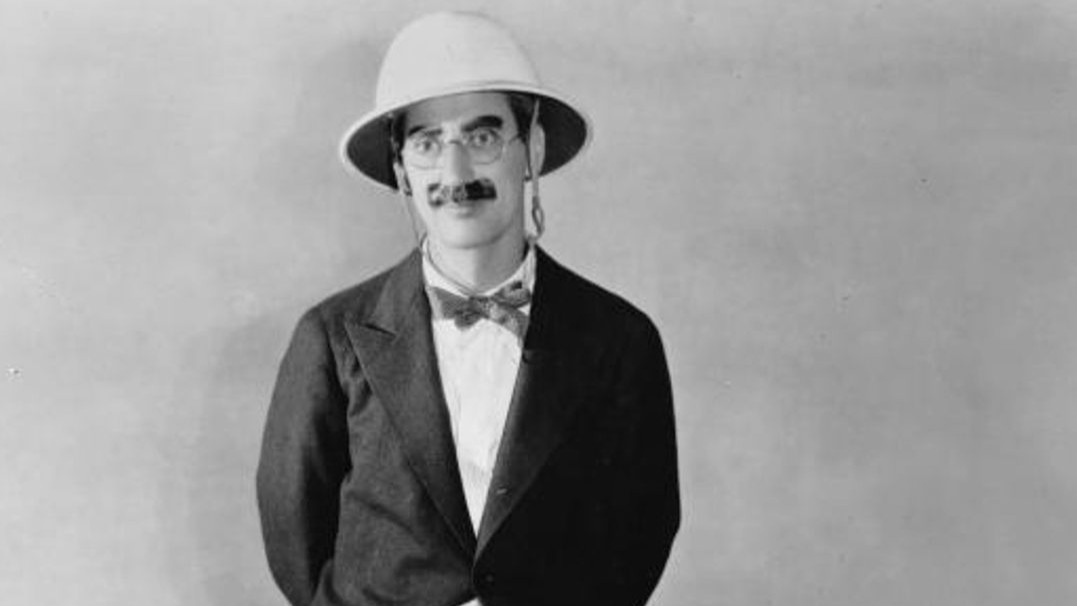
Groucho Marx as Captain Spaulding in Animal Crackers
Animal Crackers has never truly disappeared and has resurfaced roughly once a decade in revivals since the 1980s, often augmented with interpolated songs, such as the always popular “I Wanna Be Loved by You.” Even so, its identity as a stage musical remains overshadowed by its cinematic incarnation. Seen through a contemporary lens, the show stands as a reminder of a Broadway era when musical comedy ruled the roost: when plots were optional, stars were paramount and laughs were the primary currency.
That said, recent developments invite a fresh look. The show’s songs entered the public domain in 2024, followed by the full script in 2025. For theatre-makers with imagination (and a tolerance for comic anarchy), the show is now open for reinvention. Perhaps this makes Animal Crackers overdue for reconsideration as a theatrical playground rather than a museum piece. And perhaps that’s the real invitation of this particular Forgotten Musicals Friday column: not simply to look back, but to ask what we might still do with shows like these now that they truly belong to everyone.
Towards the end of my time as a student, I sat in a lecture on theatre-making that has stayed with me ever since. One of our lecturers, Professor Mark Fleishman, offered a deceptively simple breakdown of how theatre works. A play, he explained, is divided into acts, acts into scenes, scenes into beats and beats into moments. And it is those singular moments that an audience remembers. At the time, this felt like a neat structural observation. With the benefit of distance, teaching and two decades of making and watching theatre, I’ve come to realise that it goes much deeper than that. It speaks directly to the heart of what makes musical theatre magical, why so many of us fall in love with it so young and stay in love with it for life.
Susan Stroman breaks down how the many magical moments of Crazy for You were created.
A truly magical musical moment is never accidental. It emerges from a kind of collective intuition: music, movement, text, design, performance and timing all aligning so precisely that the audience stops analysing and simply feels. When it works, you don’t notice where one department’s contribution ends and another’s begins. You just know that something has landed. When I reflect on my own love of musical theatre, some of these moments have absolutely lodged themselves in my memory.
Some of my first magical moments were given to me by my grandmother. When I was a toddler, she would play cast albums while I was put down for naps, gently feeding my imagination with The Sound of Music, South Pacific and My Fair Lady. I was so young that the music simply offered a comforting presence and an endless source of wonder. There is even an old cassette recording of me earnestly singing “Sixteen Going on Seventeen,” proof, if any were needed, of how impressionable young minds can be.
Ask most people about the magic of The Sound of Music and they will point, quite rightly, to Julie Andrews spinning through the Alps at the start of the film. When I later directed the show myself, it became abundantly clear that the musical’s true emotional core lies elsewhere for me. The key moment, to my mind, is when the children sing “The Sound of Music” and Captain von Trapp joins in. In that instant, music restores something that was broken and a family begins to heal. That is the moment I always carry with me.
South Pacific offers a quieter moment of magic that is no less emotional. As the final curtain falls, Nellie and Emile clasp hands, a small gesture freighted with all the cost of what they have been through and the hope of what they might achieve as a new family, along with Ngana and Jerome. And in My Fair Lady, the sequence that builds towards “The Rain in Spain” is not just about phonetics or Eliza’s triumph: it’s the precise moment where effort, frustration and joy tip into transformation.
More recently, I watched Maybe Happy Ending, which delivered an instantly recognisable magical moment. Oliver and Claire, two obsolete Helperbots living in near-future Seoul, travel to Jeju Island so that Claire can see the fireflies before her imminent deactivation. As they walk into the forest, pinpricks of light begin to appear. Slowly, the stage fills with glowing fireflies in a final build and some of the production’s musicians are revealed as part of the landscape. Light, sound and movement coalesce into a sequence of breathtaking simplicity and beauty. It’s pure theatrical alchemy, the kind of thing that makes you hold your breath without realising it.
Helen J. Shen as Claire and Darren Criss as Oliver in Maybe Happy Ending (Photo credit: Evan Zimmerman)
I have been lucky enough to encounter many such moments over the years. When I was about ten, Peter and the Darlings soared through the air in Peter Pan and the boundary between the stage and my imagination dissolved entirely. Audra McDonald delivered several when I saw her in Gypsy last June. None of these is an isolated flourish that happens without a great deal of effort from everyone who plays a part in bringing it into being. Each is the product of meticulous collaboration and shared intention, moments where everything converges on stage.
Perhaps this is the miracle of musical theatre. It gives us a language for feeling before we have words for it. It can shape us long before we know we are being shaped. Our families, our teachers, directors, performers and collaborators help guide us, whether we know it or not, toward moments that stay with us.
Acts fade. Scenes blur. But moments endure. If we believe that this is true, then maybe the real measure of a musical’s impact is not how often it is revived or how lavishly it is produced, but how many moments it gives us to carry forward.
I’ll leave you with a question, one I keep returning to myself. What are your magical musical theatre moments? Head down to the comments and share them with us.
Musicals from the 1990s have enjoyed something of a reappraisal in recent years. Major revivals have returned shows like Ragtime to the Broadway stage, while the 2017 revival of Once on This Island reminded audiences just how emotionally potent some of the decade’s work could be. Even the more uneven but much-lauded Parade staged a triumphant comeback, earning a fresh wave of admiration a generation after its debut. That said, the 1990s were a complicated time on Broadway. It was the tail end of the British invasion, and there was a growing sense that the creative well was beginning to run dry. Musical comedy, in particular, hit a low point, increasingly relying on stage adaptations of popular films – State Fair (which could really be an honourable mention in today’s list) and High Society among them – a trend that had already taken hold in the 1980s. Crazy for You, based on an older musical comedy rather than a film, proved a rare exception. Then, of course, Rent arrived and jolted the genre back to life. But in between the mega-hits, adaptations and popular revivals like The King and I, some genuinely adventurous, entertaining and artistically rich shows slipped through the cracks. Today’s Saturday List celebrates five underrated musicals from the 1990s that deserve to be talked about far more than they are.
5. Assassins (1990)
Politically daring and still deeply uncomfortable to experience, Assassins is often respected more than it is enjoyed, which makes it perfect for this “people don’t talk about it enough” list. With music and lyrics by Stephen Sondheim and a book by John Weidman, the show explores the lives of people who attempted to assassinate some of the Presidents of the United States. History tells us that some of them succeeded, and the show explores the inherent flaws of the American Dream through their stories. The score draws on popular music styles from different eras, giving us unforgettable numbers like “Everybody’s Got the Right,” “Unworthy of Your Love,” “The Ballad of Czolgosz” and “How I Saved Roosevelt.” When it opened Off-Broadway in 1990, the response was mixed and often hostile. A 2004 Broadway revival was far more warmly received, winning five Tony Awards, including Best Revival of a Musical, a rare redemption arc for a musical like this. Still, Assassins remains a show that fuels discontent rather than comfort. In a fractured world, it feels more relevant than ever. Wouldn’t it be instructive than ever to revisit moments in time when “Something Just Broke”?
The original Off-Broadway company of Assassins (Photo credit: Martha Swope)
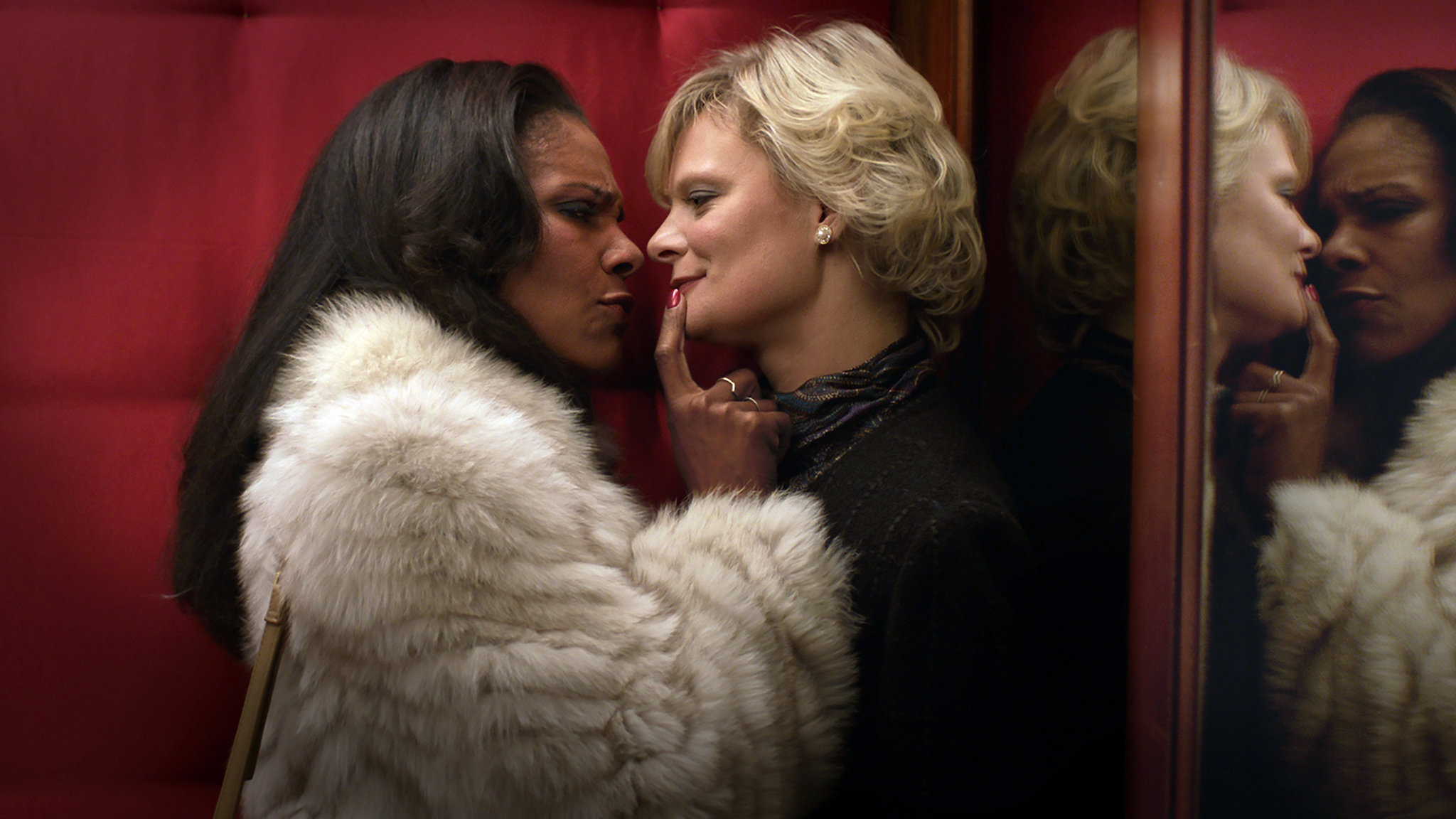
4. Marie Christine (1999)
Sneaking in at the very end of the decade, Marie Christine ran for a limited run of just 42 performances, but its ambition far exceeded its lifespan. With music, lyrics and book by Michael John LaChiusa, the show transplants the Greek myth of Medea to the nineteenth century, creating a work that sits boldly on the edge of opera and musical theatre. Written for Audra McDonald and her glorious soprano, Marie Christine boasts an exquisitely sophisticated score that makes it a tough sell today. There are no obvious “boppy” numbers here, but it is beautifully composed and narratively compelling. Songs like Marie’s manifesto, “Way Back to Paradise,” and the lush, aching “I Don’t Hear the Ocean” reward repeated listening. Any hope that a longer Broadway run for the original production might follow was quashed when the Lincoln Center Theatre producers opted to run with the more commercially appealing Contact, effectively leaving Marie Christine stranded at the end of the 1990s. Sure, it was the smarter business move, but even so, Marie Christine remains one of the decade’s most fascinating near-misses, one that richly deserves another outing.
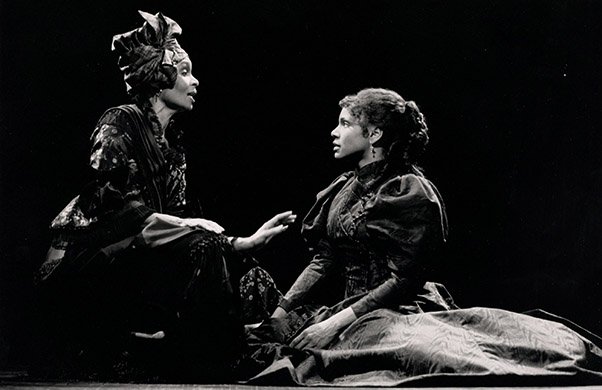
Vivian Reed as Marie Christine’s Mother and Audra McDonald as Marie Christine in Marie Christine (Photo credit: Joan Marcus)
3. Hello Again (1993)
Based on Arthur Schnitzler’s 1897 play La Ronde, Hello Again (with music, lyrics and book by Michael John LaChiusa) premiered Off-Broadway in 1993 and has since accrued cult status. It even has a film version. And yet, it remains strangely under-recognised. Structured as a chain of romantic and sexual encounters between ten characters across ten scenes, moving fluidly through time and space, the show feels increasingly modern in its frankness. Its explorations of sexuality, gender, intimacy and power resonate more strongly now than they did three decades ago. “Tom” became the show’s breakout number, enjoying a life on several musical theatre performers’ solo albums, but other delights, including the wickedly sharp “Mistress of the Senator,” deserve equal attention. More accessible than Marie Christine, Hello Again has travelled widely, but it still awaits a revival that firmly places it where it belongs at the forefront of late twentieth-century musical theatre.
Audra McDonald as Sally (The Actress) and Martha Plimpton as Ruth (The Senator) in the film adaptation of Hello Again
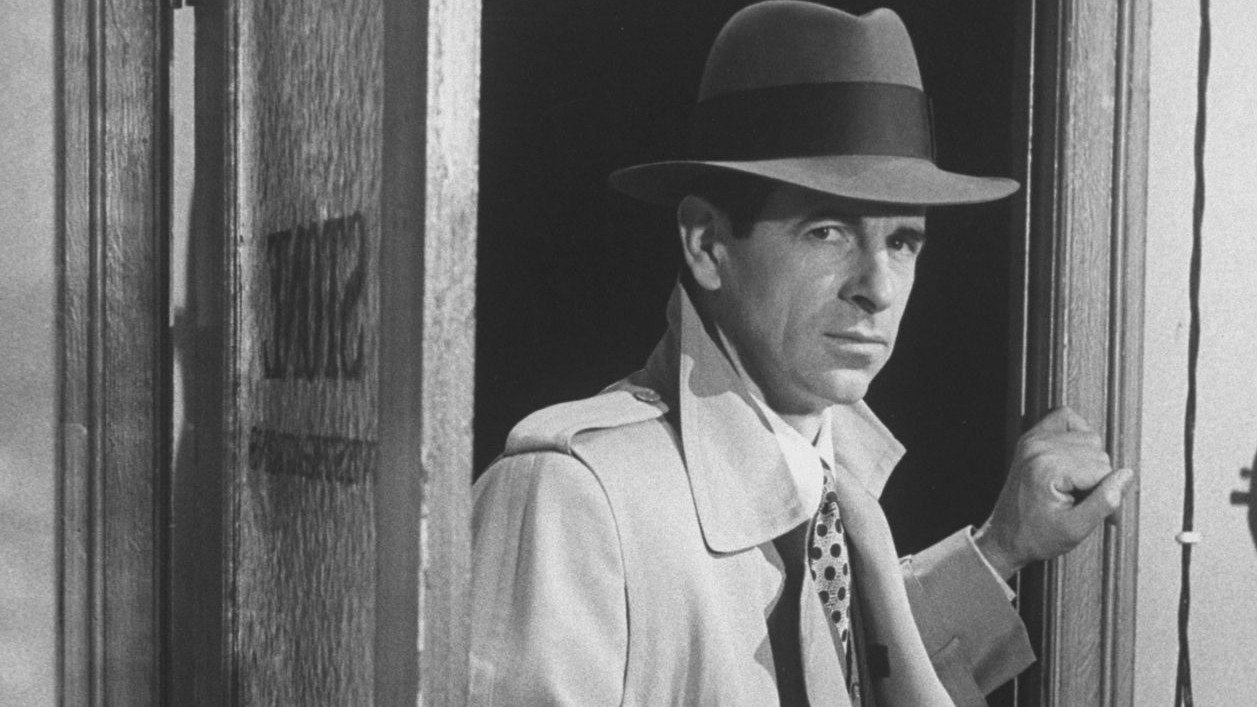
2. City of Angels (1990)
Probably Cy Coleman’s last great score, with some of the finest lyrics David Zippel ever wrote and a razor-sharp book by Larry Gelbart, City of Angels is an affectionate and incisive homage to classic film noir. It ran for an impressive 879 performances on Broadway and then pretty much vanished from everything but the musical theatre history books. City of Angels unfolds along two parallel storylines: one following Stine, a novelist struggling to adapt his latest book for Hollywood, and the other set within the hard-boiled world of that novel, where private eye Stone navigates a shadowy Los Angeles of betrayal and desire. Coleman’s score is a fabulous mix of jazz, pop and traditional Broadway sounds, delivering gems like “Lost and Found” and “With Every Breath I Take.” When conversations turn to shows that should be revived, City of Angels is frequently cited near the top of the list. The only question is: when will Broadway finally listen?
James Naughton in City of Angels (Photo credit: Martha Swope)
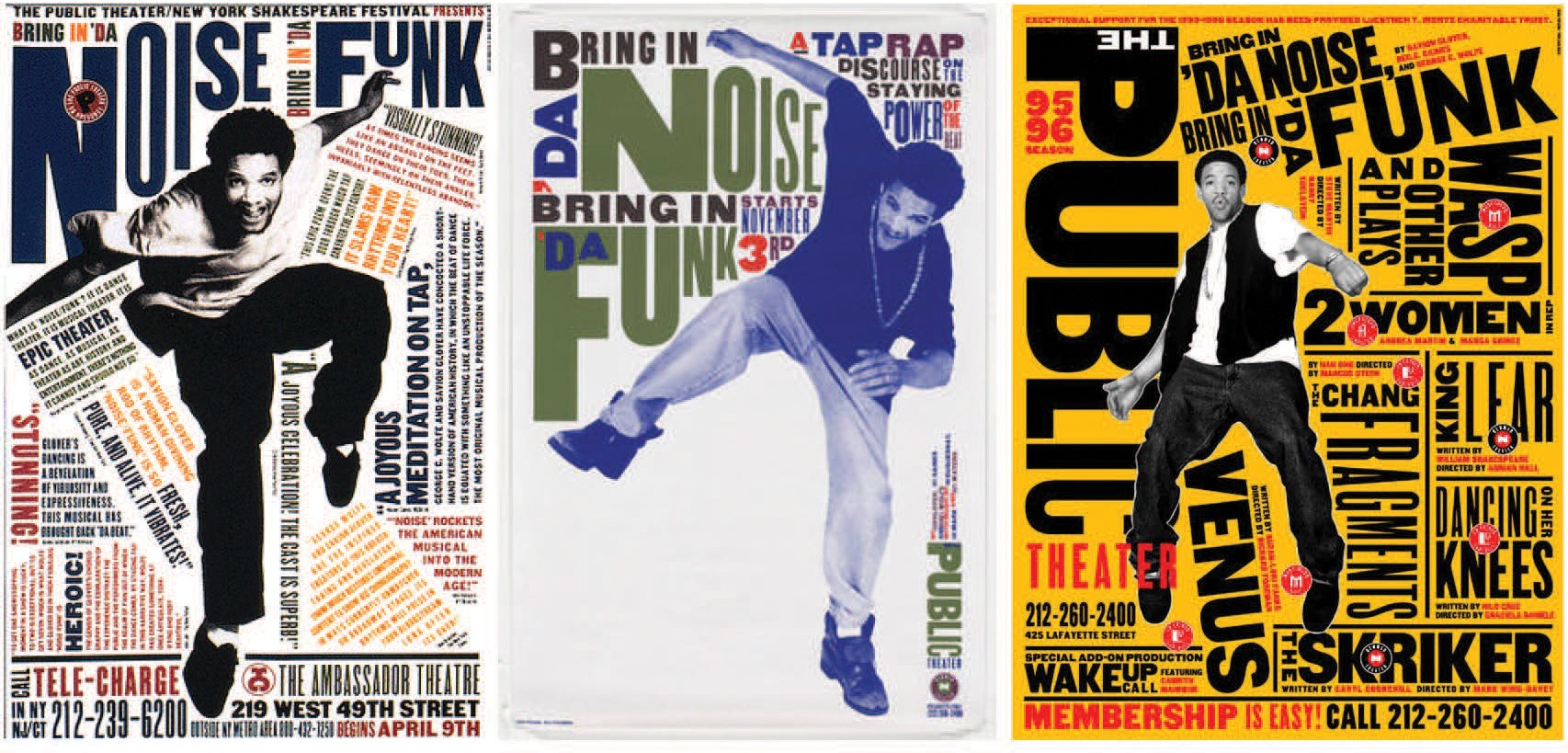
1. Bring in ’da Noise, Bring in ’da Funk (1996)
Debuting Off-Broadway at the Public Theater in 1995 before transferring to Broadway in 1996, Bring in ’da Noise, Bring in ’da Funk remains one of the most singular works of musical theatre the decade produced. Conceived and directed by George C. Wolfe, with choreography by Savion Glover, the show tells the story of Black American history, from slavery through to the present, through tap, rap, music, movement and commentary. With music by Daryl Waters, Zane Mark and Ann Duquesnay, lyrics by Reg E. Gaines, George C. Wolfe and Ann Duquesnay, and a book by Gaines, its impact far outstripped its only run on Broadway to date. Presented with projected images and relentless theatrical momentum, it was overstimulating in the best possible way, all the while taking a satirical, cutting and unapologetically confrontational approach. Essentially one of a kind, Bring in ’da Noise, Bring in ’da Funk deserves a prominent place in our musical theatre consciousness. It has never been more necessary.
Paula Scher’s posters for Bring in ’da Noise, Bring in ’da Funk
Which Ones Would You Revive?
Honourable mentions on this list could easily include The Secret Garden, When Pigs Fly and even Sondheim’s most divisive work, Passion, a Tony winner that remains, paradoxically, underrated. The decade closed with a creative upswing that carried Broadway into the 2000s with shows like The Lion King and Titanic as well as those mentioned at the beginning of this article . Perhaps we’re in a similar lull now, this season’s original musicals burning low and slow. Even so, one of today’s overlooked works may yet become tomorrow’s rediscovery. Which 1990s musicals do you think were egregiously overlooked? (Yes, Victor/Victoria, that’s a nod to you!) What do you think deserves a comeback? Head to the comments and join the conversation.
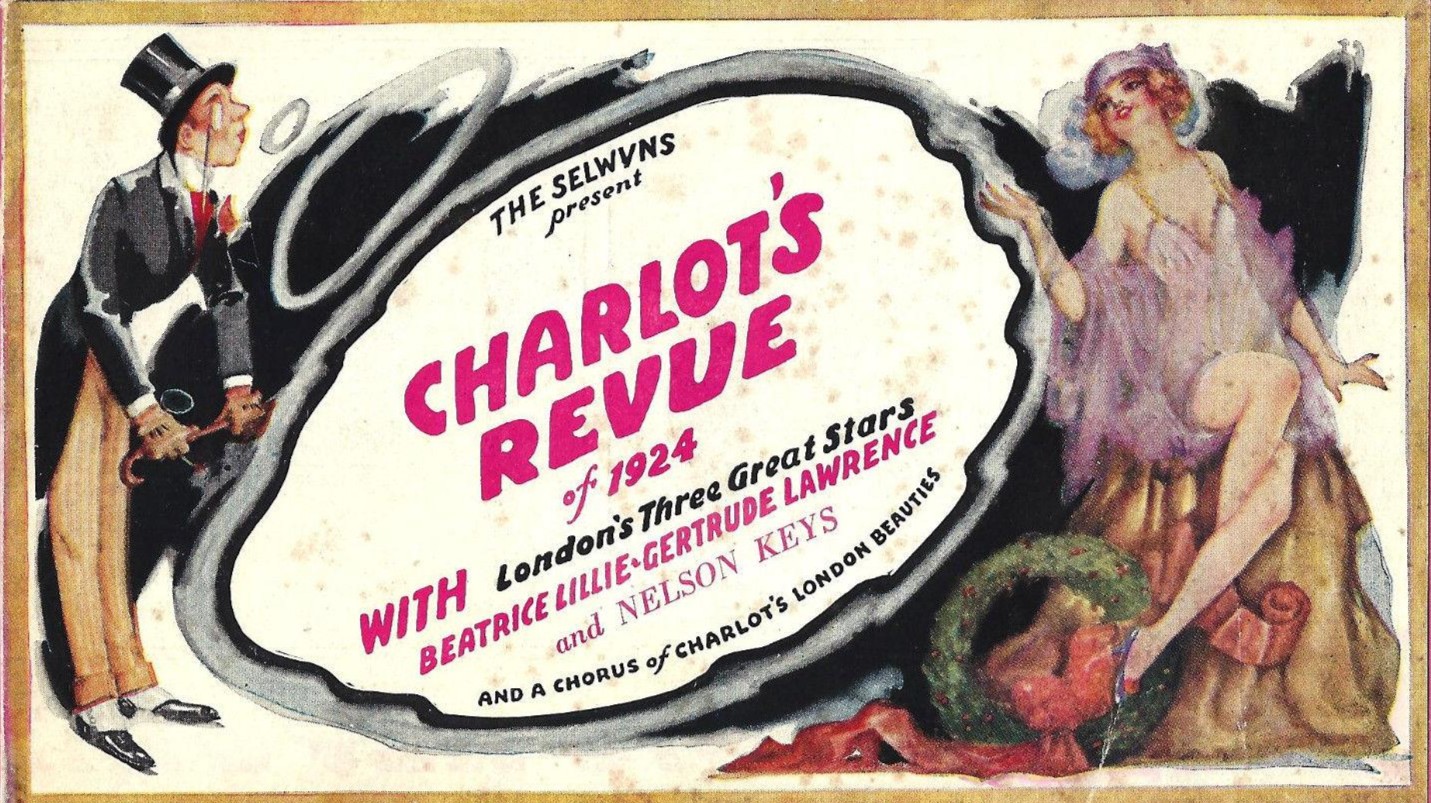
Broadway has often looked across the Atlantic for creative renewal, and just over a century ago, it found something of the kind in André Charlot’s Revue of 1924, a sophisticated import refreshingly unlike anything American audiences were used to seeing. The revue was a compilation of newly written material alongside audience favourites from Charlot’s London productions, offering Broadway a distinctly British brand of theatrical wit at a moment when American revues were becoming ever bigger, brasher and more extravagant.
An advertisement for André Charlot’s Revue of 1924, with Nelson Keys (who replaced Jack Buchanan after his return to London) on the bill
In scale, Charlot’s revue was noticeably smaller than its American counterparts. Notably absent were the sprawling staircases and mass choruses and in their place was something leaner and more intimate, essentially a drop that could be atmospherically lit to suggest mood rather than spectacle. What the production lacked in size, however, it made up for in polish, personality and a sharply observed sense of humour that felt unmistakably British.
Central to the revue’s success were its three leading performers: Beatrice Lillie, Gertrude Lawrence and Jack Buchanan, all of whom were greeted with enormous enthusiasm by New York audiences. Lillie’s formidable comic gifts were fully on display. She skewered theatrical pretension as a concert diva whose self-belief vastly outstripped her vocal ability, delivered dryly savage comedy as a tea-shop waitress and mined unexpected laughs from the persona of a faded ingénue clinging to past glamour.
Lawrence offered the kind of theatrical alchemy that would become her trademark: pathos gently entwined with sentiment. She also revealed her comic range in a skit as a razor-sharp Mayfair wife. Less comfortably, from a contemporary perspective, she also appeared in material portraying a Limehouse Chinese girl, a reminder that even the most elegant revues of the period were shaped by attitudes that now sit uneasily with modern audiences.
Buchanan completed the trio with suave assurance. A stylish song-and-dance man, he partnered both women with ease, proving himself an adaptable and charismatic presence. His ability to glide between charm, comedy and romance made him an ideal anchor for a revue that relied on personality rather than spectacle.
Mary Martin in “Limehouse Blues” from André Charlot’s Revue of 1924
Musically, André Charlot’s Revue of 1924 was a rich showcase of London songwriting talent, with a particularly strong showing from Noël Coward, for whom the revue marked a significant breakthrough in the States. Songs such as “There’s Life in the Old Girl Yet” and “Parisian Pierrot” announced Coward as a writer with a witty, urbane and emotionally astute voice. Alongside Coward’s contributions were songs by Ivor Novello, including “March with Me” and “Night May Have Its Sadness”, as well as work by Philip Braham, Ronald Jeans and Douglas Furber. The revue also included material by the American team of Noble Sissle and Eubie Blake, notably “I Was Meant for You”, creating a genuinely transatlantic musical conversation.
The result was a critical and popular triumph. André Charlot’s Revue of 1924 ran for 298 performances, an impressive achievement for a production so understated in its physical trappings. More importantly, it established a template for a new kind of revue: intimate, performer-driven, witty rather than bombastic and rooted in sharp observation. Its success led to a second edition of the revue and opened the door to American careers for both Lillie and Lawrence, who would go on to become enduring figures on the Broadway stage.
Seen from today’s vantage point, André Charlot’s Revue of 1924 feels less like a curiosity and more like a reminder of what revues once did so well. They were incubators: places where writers, performers and styles could be tested, refined and celebrated in front of an audience without the weight of a fully fledged book musical.
It’s hard not to wonder whether there’s room again for this kind of show. In an era dominated by large-scale commercial spectacles, it could be glorious to see a revival of the intimate, intelligent revue, a space where emerging writers and performers can sharpen their craft, take risks and let personality, wit and musicality do the heavy lifting.
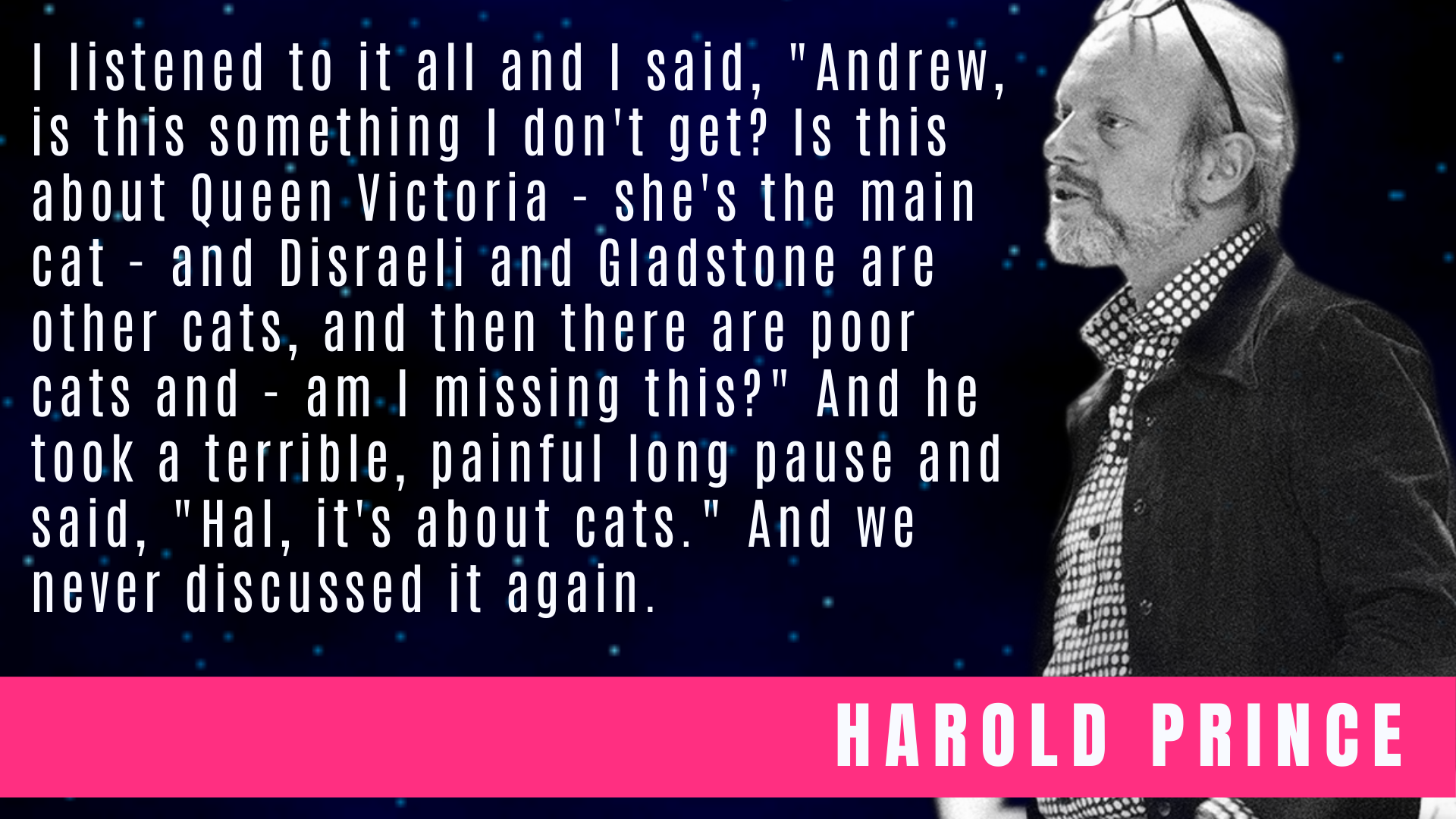
Towards the end of last year, I dipped into What Would Barbra Do? by Emma Brockes, a novelty book that proposes that few situations in life aren’t made better by showtunes. At the end of the introduction, Brockes references a conversation between famed Broadway producer and director Harold Prince and Andrew Lloyd Webber about Cats, which was Lloyd Webber’s next big project. Prince, who had directed Lloyd Webber’s political rock opera Evita, asked the composer whether the show was a metaphor for life in the United Kingdom, with some cats representing figures like Queen Victoria and Benjamin Disraeli and others the general populace. Lloyd Webber replied, “Hal, it’s about cats.” In the end, Prince passed on Cats, and Trevor Nunn would direct what would go on to be one of the longest-running shows both on Broadway and in the West End.
Although Brockes misattributes Lloyd Webber’s words to Cameron Mackintosh, who produced the show, recalling the anecdote reminded me once again of questions we keep on revisiting at a time when revivals of classic shows are more popular than ever – and in fact, when choices made in current productions even end up debated ad nauseam on social media. Who holds the final say when it comes to making meaning in musicals? Do audiences have to believe what the writers say the show is about? Where does the director fit in? What does it actually mean to honour the vision of the creators? And do we actually have to agree about this?
Harold Prince on Cats
When I – like Princeton from Avenue Q – was studying a BA in English, at one point, I announced to a friend of mine that I thought I was a structuralist. The memory of this somewhat precocious outburst resurfaced as I was considering whether it mattered that Lloyd Webber is on record as saying the show is simply about cats. Such a readerly take on the material seems ironic, given the writerly fandom that has sprung up around Cats, which has layers and layers of sometimes impenetrable interpretation.
That said, if I’m honest, I had to go back and see what structuralism was all about. I unshelved my copy of A Glossary of Literary Terms, the indispensable M. H. Abrams handbook on literary theory, to refresh my memory. Am I, after all these years, a structuralist after all? I’ve certainly dallied with other literary movements over the years. And if I am, how does such an approach help or hinder my reading of musicals? Crisis. Either way, revisiting the theory of structuralist criticism revealed that there are certainly aspects of this movement that resonate with me.
The sense of objectivity it pursues is certainly something that I’ve always espoused. I fully appreciate the idea that, as Stephen Sondheim put it in Into The Woods, ‘nice is different than good.’ I like its focus on semiotics in this pursuit; consequently, I love the idea that for musical theatre lovers, there are underlying signs and symbols that help us make sense of musicals, principles established and refined by all the great musical theatre practitioners from John Gay onwards. I’m excited by the language this gives us to discuss the form, and the power this language affords us to grapple with the idea of why musicals are significant, when so many people write them off as trivial cultural expressions. And I’m excited that there is something relational about all of this, even if it is just to dispel the contemporary misperception that objectivity is purely factual.
If we accept that musicals are an expression of a set of underlying conventions, something that I find very exciting about the performative nature of the genre over time, is how we, as contemporary audiences, sometimes have to negotiate several sets of underlying conventions at once, especially given the rising prominence of revivals over the last half-century. Part and parcel of this is the fact that a musical, like all theatre, is at once multiple things: there is the text itself, and then there are performances of the text. All too often, these are assumed to be the same thing, which is why many “purists” struggle with revivals that treat text like raw material and take things from there, sometimes arriving at a very different expression of the musical’s meaning than what was seen in the original production. This is not to say that every new iteration of a musical is successful in interrogating what it sets out to explore. Consider the 2018-2019 Broadway season as an example: for every Oklahoma!, there’s a Kiss Me, Kate.
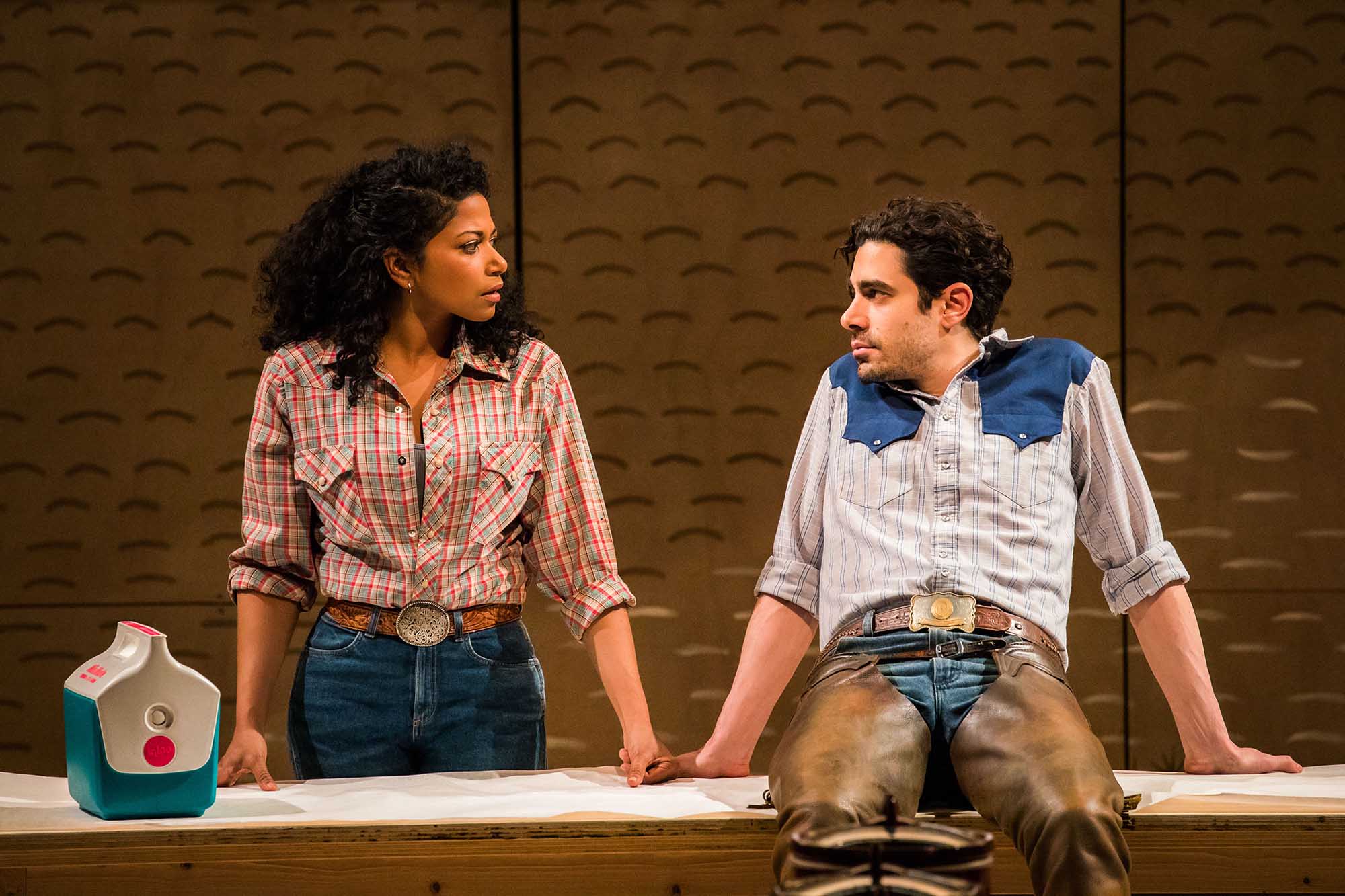
Rebecca Naomi Jones and Damon Daunno in Oklahoma! Photo credit: Little Fang
Even before I finished typing up that last sentence, I could hear the gasps from people who thought that Daniel Fish’s revival of Oklahoma! was an atrocity or those who prized the noble propositions of that same season’s Kiss Me, Kate over the way were executed. This brings us to one of the clinchers of the deal. You see, dear reader, it’s all right. We don’t have to agree, because we can all thrash out what we think makes these shows and their productions work or not from our positions as interpreters of these texts. We can all consciously and purposefully engage ourselves with scripts, songs, choreography, direction and performance in a way that is at once emotional and impersonal. The designs of the creators don’t need to intrude on those of the theatre-makers, and those of the theatre-makers don’t need to intrude on ours. Maybe Oscar Hammerstein II would have enjoyed debating whether Jud Fry is an incel over chili and cornbread. Maybe he wouldn’t have – but maybe that’s all right. Maybe it doesn’t even matter.
I’m really enthusiastic about the opportunities 2026 will offer to revisit musical theatre classics and experience new shows. I’m also pleased to have clarified some of the things that matter to me when I make meaning out of what I’m consuming in this age of consumable content. In that light, I’d like to think that a production of Cats that finds a way to delve deeply into T.S. Eliot’s yearning for cultural and spiritual renewal has the right to exist in the same world as one that is, as Lloyd Webber proclaims it to be, just about cats.
Although the Tony Awards represent the pinnacle of each Broadway season’s theatrical presentations, some recipients of the award for Best Musical haven’t stood the test of time. Sometimes, an undeserving musical edges out a show that is otherwise recognised as being absolutely brilliant; at other times, an older show is out of step with the way we see the world today. There are even cases where the craft of creating musical theatre has just developed so much that a past winner seems to lack the nuance of one of its contemporaries. In today’s Saturday List, we’re taking a look at a selection of musicals that may have been representative of their time, but which perhaps aren’t classics for all time.
5. Kismet (1953)
There was an audience for Kismet in the 1950s, but it is virtually unrevivable now. A Middle Eastern fantasy set in the time of The Arabian Nights, the show tells a tale of stereotypical characters in caricatured settings, an approach that clashes sharply with our modern sensibilities about representation. Kismet follows the exploits of a clever poet, Hajj, and his beautiful daughter, Marsinah, who become caught up in a series of palace intrigues involving mistaken identities and arranged marriages, all under the guiding hand of fate. The show opened to no reviews due to a newspaper strike and received mixed reviews a week into its run once the strike ended. Still, its pseudo-classical score adapted from the works of Alexander Borodin by Robert Wright and George Forrest, the glorious pageantry of Lemuel Ayers’s designs and a distinguished central performance by Alfred Drake as Hajj won over both audiences and members of The American Theatre Wing. The only other show that might have given Kismet a run for its money was the second biggest winner of that season, Can-Can, which also drew lukewarm reviews from critics, although it was popular enough with audiences to sustain a run of 892 performances.
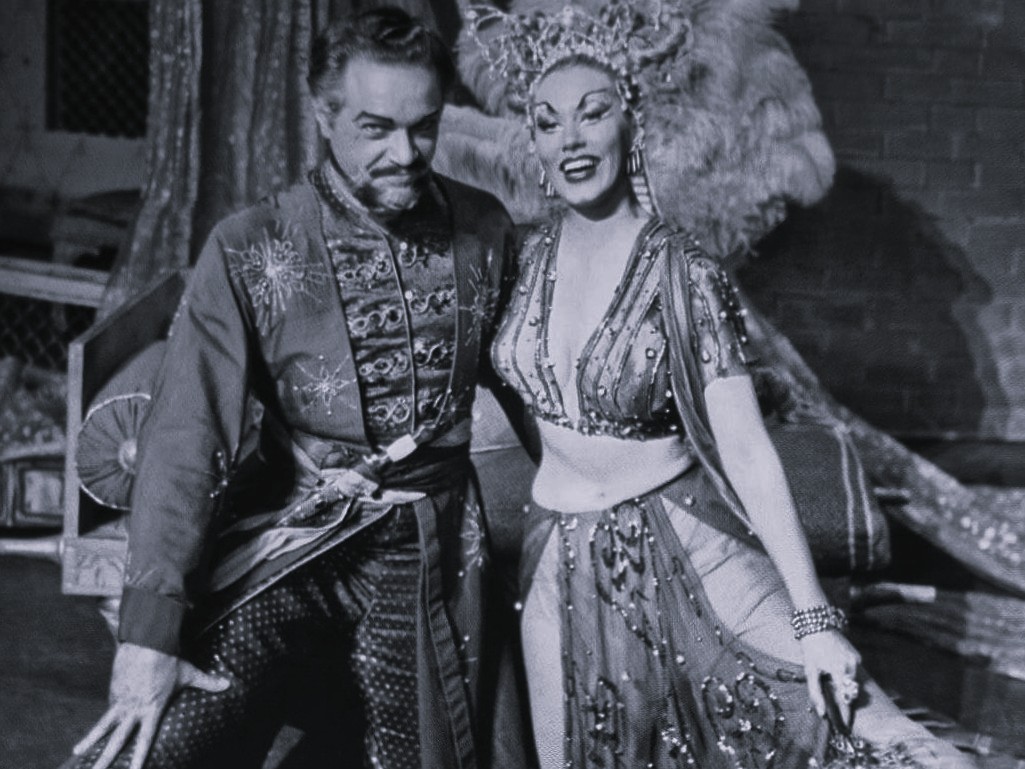
Alfred Drake as Hajj and Joan Diener sa Lalume in Kismet
4. Hallelujah, Baby! (1967)
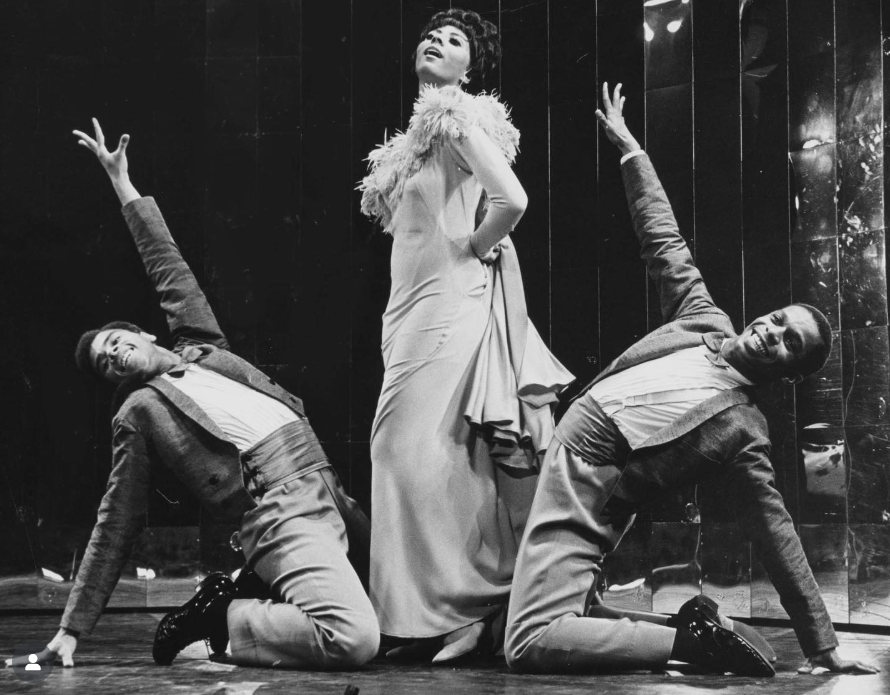
“The show was a turkey,” Arthur Laurents said about Hallelujah, Baby! “I don’t think it had much to say.” Following the life of Georgina, an African American woman, across several decades, in an attempt to explore the dynamics of race and racism in the twentieth century, some might argue that this kind of show actually has a lot to say. Despite its admirable intent, the more likely problem faced by Hallelujah, Baby! was the white lens through which the show’s narrative was filtered. All of its creators, including Laurents himself as well as Jule Styne, Betty Comden and Adolph Green, have several undisputed hits on their respective résumés, but what is conspicuously absent from this creative team is an authentic Black voice. Through its simplification of structural oppression into a sequence of personal triumphs for Georgina, Hallelujah, Baby! ends up embodying a worldview that reads as naïve at best and patronising at worst. Hallelujah, Baby! is rarely revived, and its obscurity limits its impact today. Laurents revised the show in 2004, helming a production that had its eye on Broadway. The show still lacked the bite it needed, confirming that what held it back all along was ideological, not just aesthetic. As such, it remains a fascinating failure rather than a timeless triumph.
Alan Weeks as Tap, Leslie Uggams as Georgina and Winston DeWitt Hemsley as Tip in Hallelujah, Baby!
3. Two Gentlemen of Verona (1971)
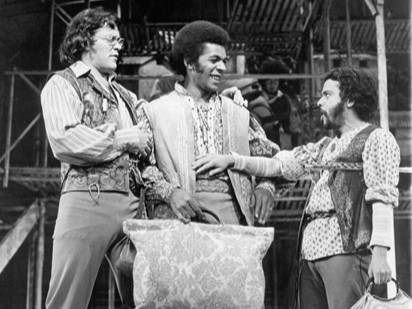
Is Two Gentlemen of Verona the Tony Awards’ most infamous misjudgement? This rock adaptation of Shakespeare’s early comedy somehow beat Follies and Grease to the Best Musical prize. Did its chaotic, countercultural energy simply overwhelm all of the voters? There’s very little in John Guare and Mel Shapiro’s book, in which young Proteus and Valentine put their friendship to the test as they journey through romance, betrayal and reconciliation, that can be played today without any sense of irony. And while I’m sure that the audiences of 1971 thought that numbers like “Thurio’s Samba,” “What Does a Lover Pack?” and “Don’t Have the Baby” were a bop, nothing from the score (with Guare’s lyrics set to music by Galt MacDermot) had a significant impact on the canon. With no traction for modern productions – The New York Times critic Ben Brantley called a 2005 revival ‘festive,’ while noting that it opted for ‘nonsense over sensibility’ and that the songs were ‘clunky’ – it’s little more than a relic of its time. With its amateurish exuberance laid bare, it’s little wonder that Two Gentlemen of Verona is often cited as one of the baffling Best Musical wins.
Raul Julia as Proteus, Clifton Davis as Valentine and Jose Parez as Speed in Two Gentlemen of Verona
2. Contact (2000)
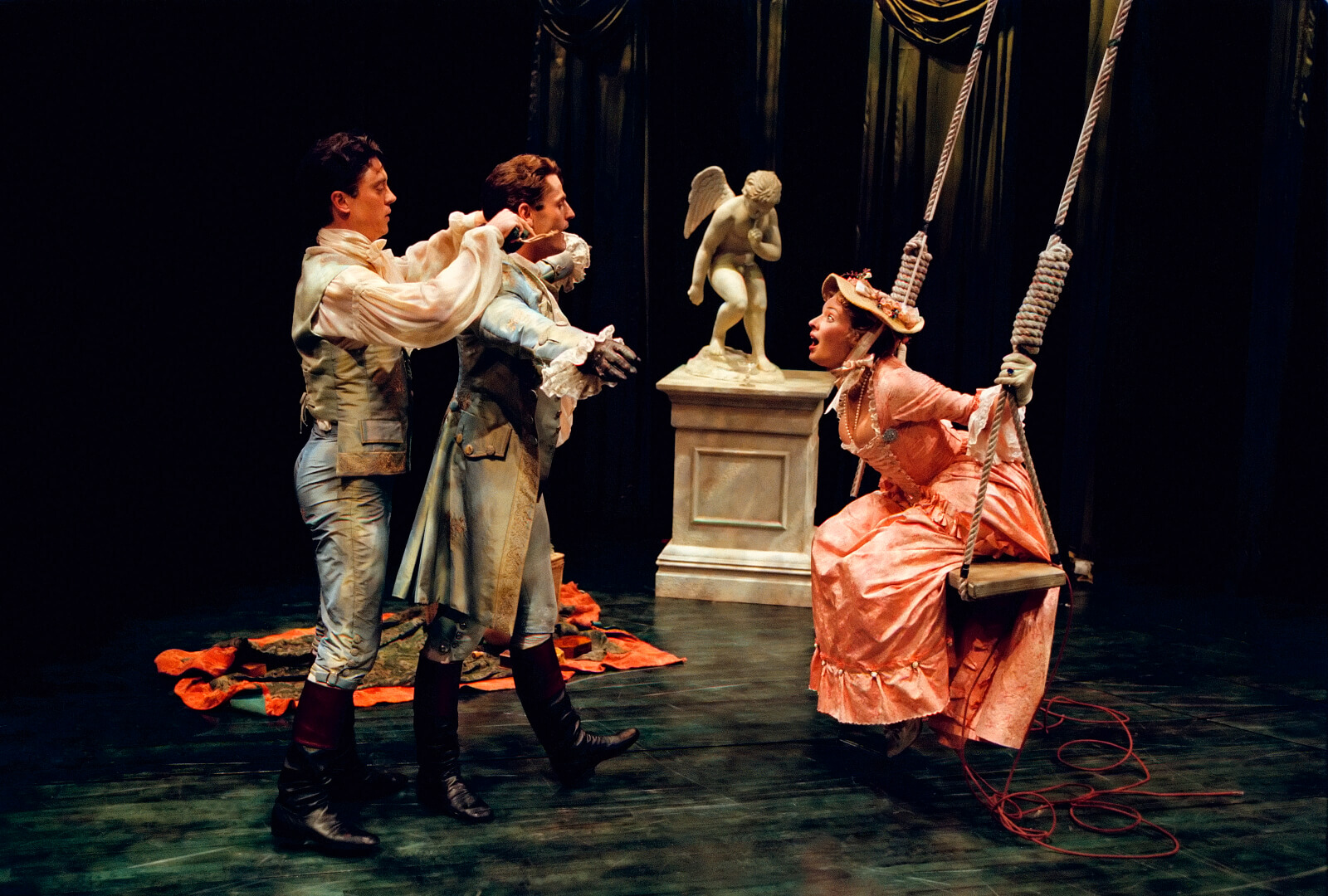
There was one big problem with Contact being named the first “Best Musical” of the twenty-first century – it’s not a musical. With no live singing, this was a modern ballet, and it had no business being nominated in the category, let alone winning it. Is there anything wrong with the show itself? Not at all. In fact, it’s quite a good dance production, and it was certainly worthy of all the praise it received and its triumphant 1 010-performance run. So why complain? For one thing, it stripped the true best musical of the season – The Wild Party – of a title it deserved and a legacy to which it was entitled. Written by George C. Wolfe and Michael John LaChiusa, The Wild Party was a dark and complex musical that managed to simultaneously capture the neurosis of the world’s Y2K shift as well as the spirit of its 1920s setting and its source material, Joseph Moncure March’s eponymous poem. Contact’s win signalled something troubling, albeit not something we haven’t seen before or since: a moment when Tony voters appeared uncertain about what, exactly, the awards were recognising. In that sense, Contact stands less as a triumph of innovation than as an early warning sign of an awards culture increasingly willing to blur its own definitions in pursuit of marketing potential.
Scott Taylor, Seán Martin Hingston and Stephanie Michels in Contact (Photo credit: Paul Kolnik)
1. Memphis (2009)
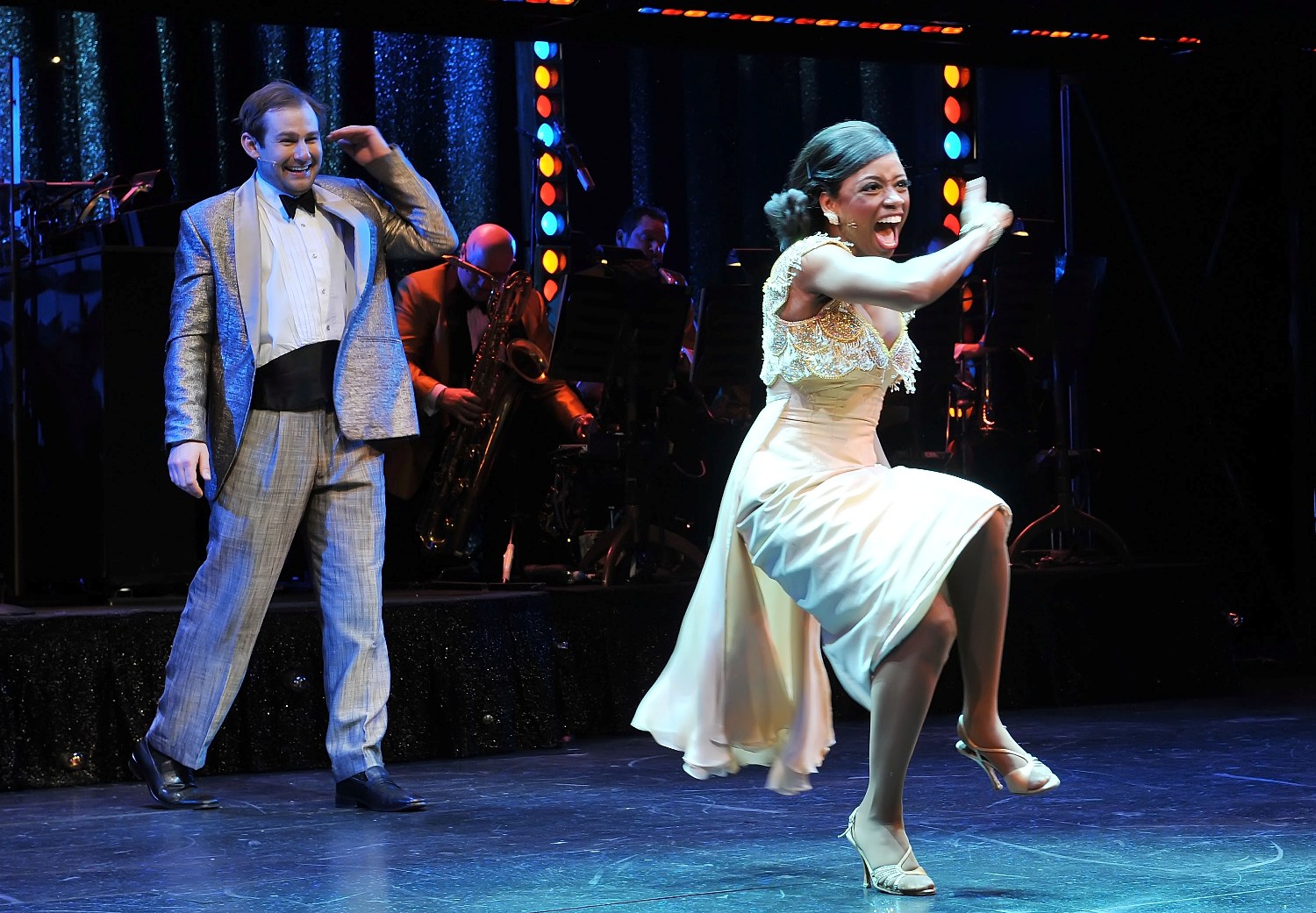
Despite two undeniably committed central performances from Chad Kimball and Montego Glover, Memphis is a curiously dull show. David Bryan and Joe DiPietro crafted an oversimplified take on race, music and rebellion that already feels dated less than two decades after its Tony win. Framing the birth of rock ’n’ roll through the familiar lens of a white male liberator makes it feel like the show exists in a world where Willie Mae “Big Mama” Thornton was never overshadowed by Elvis Presley in the 1950s. The racial politics of Memphis are blunt rather than interrogative, offering reassurance instead of challenge, while its derivative score and glossy staging prioritise momentum over depth. What stings more is the context of its victory: the following season saw the arrival of The Scottsboro Boys, a daring and politically urgent work that grappled directly with American racial injustice, only for it to be largely sidelined while Broadway’s attention shifted to the juggernaut that was The Book of Mormon. In retrospect, Memphis is less a bold statement about cultural change than an emblem of 2010s Broadway populism, a reductive tale of racism in the music industry that is as tone-deaf as it is inert.
Chad Kimball as Huey Calhoun and Montego Glover as Felicia Farrell in Memphis
Looking Back to Find the Way Forward
Reflections about which musicals have aged well or not always involve a degree of subjectivity, but it’s not merely a matter of personal taste. Awards like the Tonys are institutional endorsements, reflecting what Broadway chooses to celebrate, legitimise and canonise at a given moment in time. Revisiting these decisions allows us to see how theatrical styles change as well as the way attitudes toward representation, authorship, form and power either evolve or fail to keep pace. To interrogate these winners is not to diminish the artists involved, but to better understand the blind spots of the industry that rewarded them, especially when we view them in the light of our contemporary values and developing theatrical practices. Which Best Musical winners do you feel haven’t aged as well as we’d like to think? Head to the comments section below and let us know!
There are some musicals, often from the late 1960s or early 1970s, whose scores sound so dated today that it’s hard to imagine they were ever en vogue. One such musical is The Fig Leaves Are Falling, which ran for four performances at the Broadhurst Theatre in 1969. With book and lyrics by Allan Sherman and music by Albert Hague (whose Redhead had won the Tony Award for Best Musical a decade earlier), the show was poorly received by critics and audiences alike. Not even the promise of a free chicken – one was raffled by the lead characters at the show’s close – could get tickets moving. Its place as a footnote in the musical theatre history books is thanks to Dorothy Loudon, who snagged a Tony nomination for her performance in the show – a huge stepping stone in her journey as a Broadway legend.
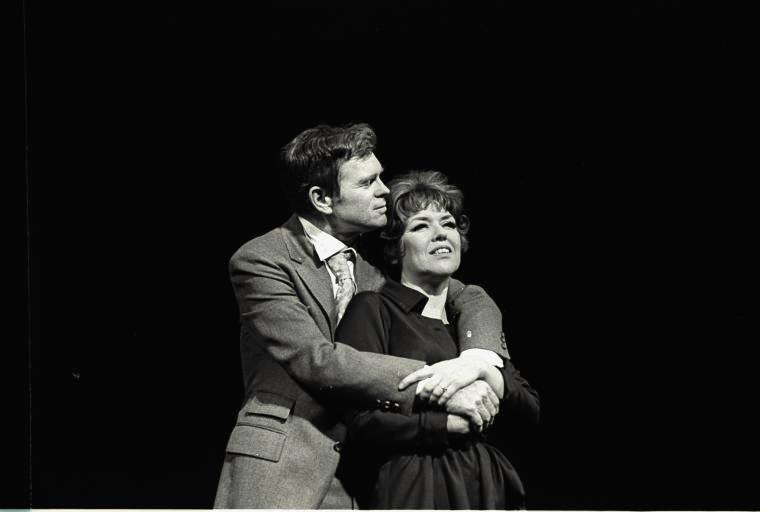
Barry Nelson and Dorothy Loudon in The Fig Leaves are Falling
The Fig Leaves Are Falling tells the story of Harry Stone, whose midlife crisis prompts him to question his life and his marriage to his wife, Lillian. He begins a dalliance with Pookie Chapman of the Sexual Freedom League, before realising that everything he was searching for was – you guessed it – at home all along.
Sherman, who was best known for his novelty song “Hello Muddah, Hello Fadduh”, drew inspiration from his own divorce in writing the show, which attempted to satirise some key moral issues of the time, poking fun at the sexual revolution of the 1960s. By all accounts, it succeeded in delivering very little enlightenment and even less entertainment. Indeed, many found it, if not unpalatable, to be distasteful at the least. A typical example of the way The Fig Leaves Are Falling approached its subject matter is evident in the song, “Give Me a Cause,” which starts off well enough as it lampoons the generic protester, the kind of person who’s happy to hold a placard no matter the cause, and descends into a sort of mid-century “Mambo No. 5.” It’s trying so desperately to be clever and funny that it seems to lose track of what it’s trying to say, and to whom.
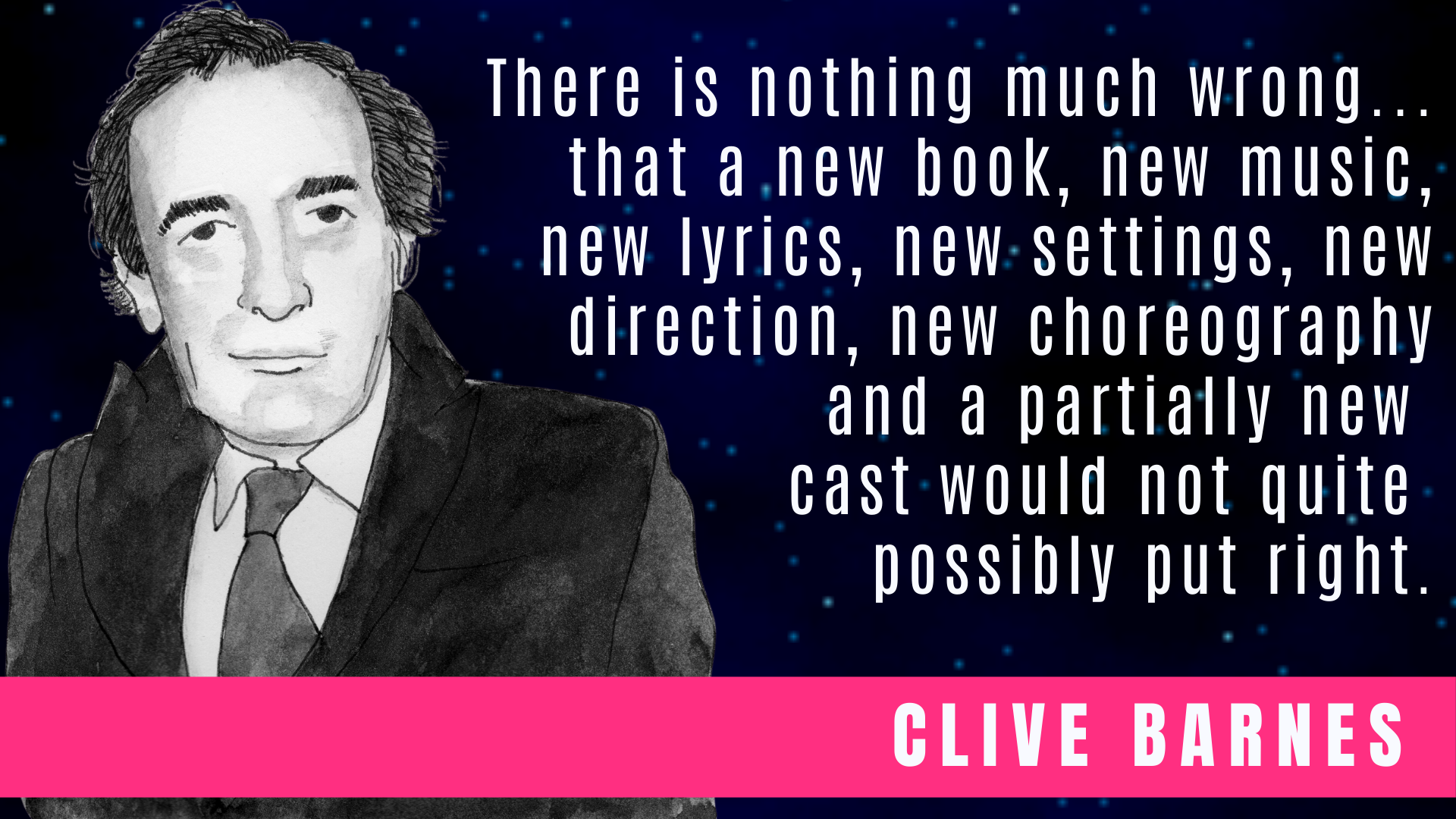
Extract from Clive Barnes’s review of The Fig Leaves Are Falling from The New York Times
The Fig Leaves Are Falling is a show that’s difficult to get a sense of today. There is no cast album, although a compilation of songs performed by Sherman at nightclub and television appearances, augmented by some studio-recorded tracks, is available. This particular album gives little sense of how the score helped craft the show’s story, although when listening to numbers like “We,” “For the Rest of My Life” and “All of My Laughter,” it’s easy to imagine Loudon’s signature style illuminating the material in a way that Sherman isn’t able to. That said, he sells “Today I Saw a Rose,” a key number for Harry, as something that promises more than what the show seems to deliver.
In 2013, Ben West adapted and revised The Fig Leaves Are Falling for an Off-Off-Broadway revival by Unsung Musicals. Today’s critics found as little to love in the show as those did during the show’s original run. It seems that this square-shouldered, faux-mod morality musical is better forgotten than remembered, a relic with creative ambitions that outpaced its cultural intuition.
It’s a tough time in the world right now. When it feels easier to keep your head down, musical theatre reminds us how powerful it can be when we speak up, find each other and take a stand. These five numbers trace a journey through a series of songs sung by young people, first tentatively finding their voices before transfiguring them into a full-throated chorus of change.
5. “The Telephone Hour” from Bye Bye Birdie (1960)
In 1960, the teenagers of Sweet Apple, Ohio, buzz with excitement during a phone call in Bye Bye Birdie. “The Telephone Hour” is all gossip and giggles, but its chattering, overlapping calls also capture the first stirrings of a collective teen identity. This is where people, especially young people, start finding a voice. It’s not yet a movement, by any means, but it’s already a network. It’s also a moment in musical theatre that recognises a connection that exists beyond what we see face-to-face. Here, the teens use the technology of telephones to reach out to one another after school. In this show, it’s humorous and thrilling – and it’s a sign of what’s to come. Did Charles Strouse and Lee Adams have any idea what they started?
4. “Unruly Heart” from The Prom (2018)
Almost 60 years after Kim MacAfee made waves in Ohio, Emma Nolan started a queer revolution in her Indiana bedroom. Her heartfelt ballad about being true to herself becomes a viral online message for other LGBTQIA+ teens. Written by Matthew Sklar and Chad Beguelin, “Unruly Heart” from The Prom shows how one authentic voice can spark a community, transforming isolation into solidarity. By the time the show reaches its finale, “Unruly Heart” is a unifying refrain: the very people who were once divided now sing together, celebrating Emma’s courage and the power of authenticity to draw a whole community into the light.
The original cast of Bye Bye Birdie sings “The Telephone Hour”Caitlin Kinnunen and the cast of The Prom discover what an “Unruly Heart” can do
3. “You Will Be Found'” from Dear Evan Hansen (2016)
Evan’s speech begins as a halting attempt to comfort his classmates at a memorial, but social media carries it far beyond his school’s walls. The stage fills with projections of screens, posts and video replies until Benj Pasek and Justin Paul’s anthem becomes a worldwide chorus of hope. Although Dear Evan Hansen has drawn criticism for how it depicts Evan’s deception and the ethics of his choices, “You Will Be Found” rises above the controversy. In performance and in the lives of many audience members, it has become an anthem of reassurance and solidarity, a reminder that even when you feel invisible, someone is listening, and you’re not alone.
2. “Seize the Day” from Newsies (2012)
In Newsies, Jack Kelly rallies the newsboys of New York to strike for fair pay. The number starts with a single call to action and swells into a full-company march, complete with stamping feet, raised fists and soaring harmonies – the sound of a movement being born. When the original Disney movie came out in 1992, “Seize the Day” became a personal anthem for me as a young musical-theatre fan; its message of youthful courage and collective action felt like permission to dream bigger and stand taller. On stage and screen, Alan Menken and Jack Feldman’s song continues to capture that intoxicating moment when young people realise they can change their world together.
1. “Do You Hear the People Sing” from Les Misérables (1985)
Written by Claude-Michel Schönberg, Alain Boublil and lyricist Herbert Kretzmer, this anthem takes its cue from the real student-led June Rebellion of 1832. In Les Misérables, Enjolras and his friends are idealistic young men in their late teens and early twenties – law students, medical students, apprentices – who transform their convictions into action on the barricades. “Do You Hear the People Sing?” captures that surge of youthful passion but also hints at something larger: that the courage, integrity and solidarity you discover when you’re young can continue to fuel you as you grow older. No wonder this song has become a rallying cry far beyond the theatre, sung by protesters, choirs and communities across the world.
Ben Platt leads the company of Dear Evan Hansen in “You Will Be FoundThe original cast of Newsies sings “Seize the Day”Matt Shingledecker and the cast of Les Misérables lead a revolution in song
Why These Songs Matter Now
Each of these numbers starts with a single spark – a phone call, a confession, a speech, a strike, a rallying cry – and grows into something bigger than itself. Together, they chart a path from speaking up to standing up. For me, this is more than an interesting theatrical device; it’s a model for how theatre can help us respond to our world today. Revisiting these songs and shows, I’ve realised that we need a revolution to save us from the devolution we’re seeing around us right now. We can’t afford to drift into cynicism or silence. Like the young characters in these songs, we have to seize the day, raise our unruly hearts and join the chorus to fight for what’s right. These numbers remind us that change begins when one person dares to sing, and that we can be even stronger when we all sing together.