There are some musicals, often from the late 1960s or early 1970s, whose scores sound so dated today that it’s hard to imagine they were ever en vogue. One such musical is The Fig Leaves Are Falling, which ran for four performances at the Broadhurst Theatre in 1969. With book and lyrics by Allan Sherman and music by Albert Hague (whose Redhead had won the Tony Award for Best Musical a decade earlier), the show was poorly received by critics and audiences alike. Not even the promise of a free chicken – one was raffled by the lead characters at the show’s close – could get tickets moving. Its place as a footnote in the musical theatre history books is thanks to Dorothy Loudon, who snagged a Tony nomination for her performance in the show – a huge stepping stone in her journey as a Broadway legend.
Barry Nelson and Dorothy Loudon in The Fig Leaves are Falling
The Fig Leaves Are Falling tells the story of Harry Stone, whose midlife crisis prompts him to question his life and his marriage to his wife, Lillian. He begins a dalliance with Pookie Chapman of the Sexual Freedom League, before realising that everything he was searching for was – you guessed it – at home all along.
Sherman, who was best known for his novelty song “Hello Muddah, Hello Fadduh”, drew inspiration from his own divorce in writing the show, which attempted to satirise some key moral issues of the time, poking fun at the sexual revolution of the 1960s. By all accounts, it succeeded in delivering very little enlightenment and even less entertainment. Indeed, many found it, if not unpalatable, to be distasteful at the least. A typical example of the way The Fig Leaves Are Falling approached its subject matter is evident in the song, “Give Me a Cause,” which starts off well enough as it lampoons the generic protester, the kind of person who’s happy to hold a placard no matter the cause, and descends into a sort of mid-century “Mambo No. 5.” It’s trying so desperately to be clever and funny that it seems to lose track of what it’s trying to say, and to whom.
Extract from Clive Barnes’s review of The Fig Leaves Are Falling from The New York Times
The Fig Leaves Are Falling is a show that’s difficult to get a sense of today. There is no cast album, although a compilation of songs performed by Sherman at nightclub and television appearances, augmented by some studio-recorded tracks, is available. This particular album gives little sense of how the score helped craft the show’s story, although when listening to numbers like “We,” “For the Rest of My Life” and “All of My Laughter,” it’s easy to imagine Loudon’s signature style illuminating the material in a way that Sherman isn’t able to. That said, he sells “Today I Saw a Rose,” a key number for Harry, as something that promises more than what the show seems to deliver.
In 2013, Ben West adapted and revised The Fig Leaves Are Falling for an Off-Off-Broadway revival by Unsung Musicals. Today’s critics found as little to love in the show as those did during the show’s original run. It seems that this square-shouldered, faux-mod morality musical is better forgotten than remembered, a relic with creative ambitions that outpaced its cultural intuition.
It’s a tough time in the world right now. When it feels easier to keep your head down, musical theatre reminds us how powerful it can be when we speak up, find each other and take a stand. These five numbers trace a journey through a series of songs sung by young people, first tentatively finding their voices before transfiguring them into a full-throated chorus of change.
5. “The Telephone Hour” from Bye Bye Birdie (1960)
In 1960, the teenagers of Sweet Apple, Ohio, buzz with excitement during a phone call in Bye Bye Birdie. “The Telephone Hour” is all gossip and giggles, but its chattering, overlapping calls also capture the first stirrings of a collective teen identity. This is where people, especially young people, start finding a voice. It’s not yet a movement, by any means, but it’s already a network. It’s also a moment in musical theatre that recognises a connection that exists beyond what we see face-to-face. Here, the teens use the technology of telephones to reach out to one another after school. In this show, it’s humorous and thrilling – and it’s a sign of what’s to come. Did Charles Strouse and Lee Adams have any idea what they started?
4. “Unruly Heart” from The Prom (2018)
Almost 60 years after Kim MacAfee made waves in Ohio, Emma Nolan started a queer revolution in her Indiana bedroom. Her heartfelt ballad about being true to herself becomes a viral online message for other LGBTQIA+ teens. Written by Matthew Sklar and Chad Beguelin, “Unruly Heart” from The Prom shows how one authentic voice can spark a community, transforming isolation into solidarity. By the time the show reaches its finale, “Unruly Heart” is a unifying refrain: the very people who were once divided now sing together, celebrating Emma’s courage and the power of authenticity to draw a whole community into the light.
The original cast of Bye Bye Birdie sings “The Telephone Hour”Caitlin Kinnunen and the cast of The Prom discover what an “Unruly Heart” can do
3. “You Will Be Found'” from Dear Evan Hansen (2016)
Evan’s speech begins as a halting attempt to comfort his classmates at a memorial, but social media carries it far beyond his school’s walls. The stage fills with projections of screens, posts and video replies until Benj Pasek and Justin Paul’s anthem becomes a worldwide chorus of hope. Although Dear Evan Hansen has drawn criticism for how it depicts Evan’s deception and the ethics of his choices, “You Will Be Found” rises above the controversy. In performance and in the lives of many audience members, it has become an anthem of reassurance and solidarity, a reminder that even when you feel invisible, someone is listening, and you’re not alone.
2. “Seize the Day” from Newsies (2012)
In Newsies, Jack Kelly rallies the newsboys of New York to strike for fair pay. The number starts with a single call to action and swells into a full-company march, complete with stamping feet, raised fists and soaring harmonies – the sound of a movement being born. When the original Disney movie came out in 1992, “Seize the Day” became a personal anthem for me as a young musical-theatre fan; its message of youthful courage and collective action felt like permission to dream bigger and stand taller. On stage and screen, Alan Menken and Jack Feldman’s song continues to capture that intoxicating moment when young people realise they can change their world together.
1. “Do You Hear the People Sing” from Les Misérables (1985)
Written by Claude-Michel Schönberg, Alain Boublil and lyricist Herbert Kretzmer, this anthem takes its cue from the real student-led June Rebellion of 1832. In Les Misérables, Enjolras and his friends are idealistic young men in their late teens and early twenties – law students, medical students, apprentices – who transform their convictions into action on the barricades. “Do You Hear the People Sing?” captures that surge of youthful passion but also hints at something larger: that the courage, integrity and solidarity you discover when you’re young can continue to fuel you as you grow older. No wonder this song has become a rallying cry far beyond the theatre, sung by protesters, choirs and communities across the world.
Ben Platt leads the company of Dear Evan Hansen in “You Will Be FoundThe original cast of Newsies sings “Seize the Day”Matt Shingledecker and the cast of Les Misérables lead a revolution in song
Why These Songs Matter Now
Each of these numbers starts with a single spark – a phone call, a confession, a speech, a strike, a rallying cry – and grows into something bigger than itself. Together, they chart a path from speaking up to standing up. For me, this is more than an interesting theatrical device; it’s a model for how theatre can help us respond to our world today. Revisiting these songs and shows, I’ve realised that we need a revolution to save us from the devolution we’re seeing around us right now. We can’t afford to drift into cynicism or silence. Like the young characters in these songs, we have to seize the day, raise our unruly hearts and join the chorus to fight for what’s right. These numbers remind us that change begins when one person dares to sing, and that we can be even stronger when we all sing together.
Today, we celebrate the birthday of musical theatre legend Oscar Hammerstein II. Born into a family who were already notable in theatre history, he would become the most renowned of the Hammerstein clan, not only because of his contributions to musical theatre as a lyricist and librettist but also as a practitioner who pushed the boundaries of what musical theatre could accomplish as an art form. Having collaborated with composers like Rudolf Friml and Sigmund Romberg on operettas like Rose-Marie and The Desert Song, he is perhaps better remembered for his work on Show Boat (which he created with Jerome Kern) and the string of musicals he created with Richard Rodgers, which include Oklahoma!, Carousel, South Pacific, The King and I and The Sound of Music. To mark the 130th anniversary of Hammerstein’s birth on July 12, 1895, let’s revisit ten of his greatest lyrics, each of which gives us insight into the man behind the musicals.
1. “Ol’ Man River” from Show Boat (1927)
Let’s start with one of Hammerstein’s most profound and lyrically rich songs. A landmark in musical theatre history, this lyric gave voice to the struggles of the Black American characters in Show Boat through its poetic central metaphor and its haunting simplicity. The contrast in the lyric between the hardships faced by Joe, a dock worker aboard the Cotton Blossom, the showboat referenced in the musical’s title, and the indifferent continuity of nature is both heartbreaking and timeless. We hear of men who ‘sweat an’ strain, body all achin’ an’ racked with pain,’ while the river, that ‘ol’ man river,’ just ‘keeps on rollin’ along.’ Nature moves forward, indifferent to the injustices endured along its banks. Sadly, almost a century after this song was written, many people remain similarly indifferent to what is happening to those around them.
There’s a great theatre legend about the importance of this lyric, and of musical theatre lyrics in general. At a dinner in the late 1940s, Hammerstein reportedly bristled when Show Boat was referred to as a “Jerome Kern show.” When someone called “Ol’ Man River” a Kern song, Hammerstein replied, “I guess when Jerry Kern wrote the songs, they came out like this” — and then hummed the melody without words. Later versions of the tale attribute the sentiment to Hammerstein’s second wife, Dorothy:
Everyone always talks about Jerome Kern’s “Ol’ Man River.” But Jerry only wrote ‘dum dum dum dum.’ My husband wrote the words that fit those notes – “Ol’ Man River.” Nobody stops to remember that.”
Of course, both stories may be true, but either way, the anecdote is a powerful reminder that in musical theatre, a lyricist plays as great a part in giving a song its soul as its composer does.
Paul Robeson in Show Boat
2. “Can’t Help Lovin’ Dat Man” from Show Boat (1927)
If “Ol’ Man River” shows Hammerstein’s lyrical poetry at its most profound, “Can’t Help Lovin’ Dat Man” reveals his dramatic precision. On the surface, the song expresses romantic devotion. But when Julie begins singing it to Magnolia, Queenie interrupts, puzzled: she’s never heard a white woman sing this song. Julie dodges the question, and the number quickly builds into a sweeping ensemble, deflecting Magnolia and Queenie’s attention from the matter, just as Julie intends it to do. Even so, the moment plants a seed of suspicion and foreshadows a deeper truth for the audience. A few scenes later, it is revealed that Julie has Black ancestry and is passing as white in a racially segregated society. When the truth emerges, she and her husband, Steve, are accused of miscegenation, and the song’s early appearance becomes more than characterful and entertaining. It marks a turning point in musical theatre, signalling that the genre could engage with complex social issues like race, instead of simply delivering light entertainment.
Lonette McKee, Rebecca Luker, Michel Bell and Gretha Boston in Show Boat
3. “Oh, What a Beautiful Mornin'” from Oklahoma! (1943)
The opening lines of Oklahoma! changed Broadway. Hammerstein, always writing in service of the story he was telling, shared his unexpected inspiration for the lyric of the first Rodgers and Hammerstein song to be heard on stage by theatre audiences: the opening stage directions from Lynn Riggs’s Green Grow the Lilacs, the source material for Oklahoma! “On first reading those words,’ he recalled, “I thought what a pity it was to waste them on stage directions.” His observational and optimistic lyrics ushered in a new era where musicals could begin quietly and build belief in the dramatic world through setting and character rather than spectacle. With its naturalistic imagery and the authentic ebullience of Curly greeting the day, “Oh, What a Beautiful Mornin'” delivers a moment of perfect harmony that perfectly sets the drama of Oklahoma! in motion. It remains one of musical theatre’s most quietly radical moments.
Alfred Drake in Oklahoma!
4. “If I Loved You” from Carousel (1945)
“If I Loved You” forms part of a wider sequence in Carousel known as the “bench scene,” which set the standard for integration between music and drama in musical theatre for decades to come. Even today, it remains a master class in storytelling. The song itself, inspired by lines of dialogue from Ferenc Molnár’s Liliom, the source material for the show, is a study in emotional repression and yearning, using a conditional “if” to allow Julie and Billy to confess their feelings for one another without admitting their vulnerability. It’s brilliant and heartbreaking, a masterpiece of subtext in dramatic writing. Although the characters sing hypothetically, every line pulses with what they dare not say. It’s the perfect way to set up the dynamic of Julie and Billy’s relationship, and their inability to communicate in this first scene here haunts their relationship as it develops through the course of the show.
Jesslie Mueller and Joshua Henry in Carousel
5. “Soliloquy” from Carousel (1945)
One of the greatest challenges in creating Carousel was to enable the audience to identify with Billy. His behaviour is alienating, and there didn’t seem to be a way within the standard musical theatre conventions of the time to reveal more of his interior life. Never afraid of innovation, Hammerstein crafted a lyric that revealed Billy’s inner passions and fears upon discovering he would become a father and thereby motivate, if not justify, the choices he goes on to make. When Rodgers set the lyric to music, musical theatre fans were given the gift of a brilliant solo that lasted for almost eight minutes. In the song, Hammerstein charted Billy Bigelow’s emotional arc from excitement through anxiety, fear and finally, conviction with honesty, humour and depth. For an actor able to master the piece, it’s a tour de force.
Joshua Henry in Carousel
6. “You’ll Never Walk Alone” from Carousel (1945)
After Billy’s death in Carousel, Nettie comforts the grieving Julie with a simple message of endurance: “You’ll Never Walk Alone.” What began as a moment of intimate reassurance within the plot of a 1940s musical became one of the most beloved anthems ever written for the stage. Hammerstein’s lyric is spiritually resonant, morally grounded and emotionally direct, qualities that allowed it to transcend its theatrical roots and become a cultural touchstone. It has been recorded by artists from Patti LaBelle and Elvis Presley to Aretha Franklin and Marcus Mumford, and has charted multiple times on the Billboard 100. Adopted as the official anthem of Liverpool Football Club, it has echoed through stadiums and rallies, as well as at vigils and funerals. During the COVID-19 pandemic, it resurfaced as a song of solidarity for frontline workers across Europe. Few lyrics have travelled so far or meant so much to so many people, a testament to Hammerstein’s extraordinary ability to speak directly to people’s souls.
Renee Fleming in Carousel
7. “You’ve Got to Be Carefully Taught” from South Pacific (1949)
Few lyrics in musical theatre history are as brave or as succinct as “You’ve Got to Be Carefully Taught.” Sung by Lieutenant Cable in South Pacific, the song exposes the fact that racism is not innate, but passed down to children by parents and society, a startling idea for a Broadway audience in 1949. Rodgers and Hammerstein insisted on keeping “You’ve Got to Be Carefully Taught” in the show, despite fierce backlash. When South Pacific toured the American South, some lawmakers tried to ban the musical altogether, accusing the show’s creators of promoting a Communist agenda. But for Hammerstein, the lyric was the entire point of the show, an indictment of learned hatred that one generation insidiously teaches to the next. His courage paid off. The song remains one of the most socially charged in the musical theatre canon, its message as urgent now as ever: racism must be actively unlearned if any social justice is to be achieved in our time.
John Kerr in South Pacific
8. “This Nearly Was Mine” from South Pacific (1949)
Many people would expect “Some Enchanted Evening” to represent South Pacific on a list of Hammerstein’s greatest lyrics. While its sweeping romanticism has earned the song its iconic status, “This Nearly Was Mine” offers something rarer: a mature and restrained expression of heartbreak. Whereas “Some Enchanted Evening” idealises love at first sight, “This Nearly Was Mine” mourns a love that almost was, with emotional sophistication not always evident in Golden Age Broadway ballads. The lyric is lean, avoiding cliché while evoking longing, loss, dignity and regret. It builds incrementally in its imagery until the emotion peaks, sitting perfectly on a melody that deepens what the words have said. Stephen Sondheim, who criticised the lyrics for “Some Enchanted Evening” for their generalities, often praised Hammerstein’s ability to communicate a sentiment without being sentimental. That quality is on full display here, shifting Emile from being an archetypal romantic hero to a vulnerable man facing irrevocable loss.
Paulo Szot in South Pacific
9. “Climb Ev’ry Mountain” from The Sound of Music (1949)
“Climb Ev’ry Mountain” may seem an unexpected inclusion on a list of Hammerstein’s greatest lyrics. Some might dismiss it as generic, but its impact, both within The Sound of Music and far beyond it, is undeniable. As the show’s moral and emotional spine, the lyric urges Maria, as well as audiences of the show, to pursue their purpose with clarity and courage. Stirring and sincere, the song embodies Hammerstein’s gift for spiritual upliftment without religious dogma, offering a universal message of resilience, aspiration and faith. Over time, it has transcended the musical, becoming a staple at graduations, memorials and moments of personal reckoning. I’m sure that many of us have played it in our cars or on our devices at key moments of our lives. It’s pure Hammerstein optimism, distilling the idealism that runs through all his work into a single call to action: keep going, no matter how hard the climb might be.
Audra McDonald and Carrie Underwood in The Sound of Music
10. Edelweiss from The Sound of Music (1959)
“Edelweiss” was the final song written by Rodgers and Hammerstein, and the last complete lyric Hammerstein completed before he passed away in 1960. Written during the Boston tryouts for the show, “Edelweiss” was conceived as a song that captured Captain von Trapp’s sense of loss as the Austria he knew and loved in the wake of the German annexation of Austria. Much to the frustration of many Austrians, some of whom view the song as kitsch or clichéd, the song has often been mistaken for an Austrian folk song. That said, “Edelweiss” is so effective and all the more profoundly moving because it is so delicate and deceptively simple. A quiet affirmation of homeland and heritage, “Edelweiss” becomes, in context, a protest song disguised as a lullaby. Rodgers was, in fact, so clear in his convictions about the song’s intent that he never granted permission for the use of the “Edelweiss” melody with adjusted lyrics for commercial purposes. The Rodgers and Hammerstein estate remains compliant with these wishes even today, maintaining the integrity of Rodgers and Hammerstein’s intentions in writing the song.
Craig Urbani, Brittany Smith and the children in The Sound of Music
Honourable Mentions…
There are so many great Hammerstein lyrics, that it’s hard to curate a list of only ten. In addition to those discussed above, there is, for example, “All The Things You Are,” from Very Warm for May. Though the melody by Jerome Kern is iconic, Hammerstein’s introspective lyrics are just as exquisite, an ode to idealised love, written with poetic phrasing that has made the song popular as a jazz standard.
A lyric like “I Can’t Say No” from Oklahoma!, in which Hammerstein’s ear for character is evident, also warrants mention. The song characterises Ado Annie in a comic and charming way, while hinting at deeper themes like sexual agency and social expectations.
A further offering from Carousel is the brilliant “What’s the Use of Wond’rin’?” This lyric is quietly provocative, wrestling with what it means to love someone flawed. Its resigned, almost fatalistic tone makes it as troubling as it is tender, perhaps more honest than many a Broadway love song.
In The King and I, “I Have Dreamed” is a dreamy and sensual song that conveys intimacy through imagination, which makes it even more romantic and prepares the audience for the tragedy that awaits Lun Tha and Tuptim. It’s an excellent example of how to set things up for a moving reversal of fortune.
In the same show, “Getting to Know You” offers a psychologically astute observation with childlike simplicity, helping to chart the growing trust between Anna and the King’s wives and children with the kind of grace Hammerstein exemplified in his everyday life.
The list goes on… “So Far” from Allegro, “All at Once You Love Her” from Pipe Dream, “Ten Minutes Ago” from Cinderella, “Love Look Away” from Flower Drum Song – it’s hard to stop listing the lyrical joys of Hammerstein’s body of work.
Final thoughts…
While known for crafting some of the greatest stories and lyrics in musical theatre history, it is not only his own words that speak to Hammerstein’s legacy. He famously mentored another top-tier musical theatre practitioner, Stephen Sondheim, who would go on to be another mover and shaker in the musical theatre genre. That said, perhaps the anecdote that gives us the most insight into who Hammerstein was, is the story Mary Martin told about a lyric he passed to her after it was known he was fatally ill with stomach cancer.
One day I was getting out of the car and going into the theatre when I saw Oscar coming out of the stage door. He didn’t see me. He was walking sort of bent over for him – and he didn’t look at all well. Then he saw me and he straightened up. He had a little piece of paper in his hand, and he said, “Here are the words for the scene between you and Lauri. Dick already has the music. We’re adding a verse to “Sixteen Going on Seventeen”. I would have loved to enlarge it and make it a complete song, but we’ll have to use it this way now. Don’t open it yet. Just look at it when you have time.”
Then later on Dick Rodgers came to my dressing room and he said, “Did you see Oscar?” I said yes, and he said, “Well, Mary, you’re a big girl now, and you’re old enough to take things. I have to tell you that Oscar has cancer and it’s really bad. He didn’t want to tell you himself, so he asked me to tell you. But he’s given you the lyrics?”
I said he had, and Dick said, “Now, we’re not going to be sad about this, Mary. We don’t know how long he will be with us, but he will work to the very end. If you feel badly, stay in here for a while, and then come out and rehearse and forget it. We’re all going to forget it and that’s it.”
I opened the piece of paper Oscar had given me. This is what it said: ‘A bell is no bell till you ring it. A song is no song till you sing it. And love in your heart wasn’t put there to stay. Love isn’t love till you give it away.’
Happy birthday, Mr Hammerstein! Thank you for everything you’ve given us.
This week, I watched Maybe Happy Ending on Broadway and seeing it live confirmed the suspicions I’ve held since I first listened to the cast album back in March: it’s the best new musical of the decade and easily one of the top ten of this century. The experience got me thinking about robots in musical theatre. How many shows have featured them over the years? As it turns out, not many. Perhaps that’s because robots are traditionally seen as emotionless, while musicals are built around emotional expression. However, the tension between machine logic and human feeling is exactly what makes a show like Maybe Happy Ending so compelling. As such, this week’s Saturday List is short, sharp and snappy, with just four entries, each of which finds its own way to explore the heart beneath the hardware when it comes to robots on stage.
4. Starship (2011)
We’ve written about Starship before, featuring it in our list of space musicals to celebrate Yuri’s Night. With music and lyrics by Darren Criss and a book by Matt Lang, Nick Lang, Brian Holden, and Joe Walke, Starship is set on Bug-World, an alien planet teeming with giant insects and follows the journey of Bug, who has big dreams of joining the elite Starship Rangers. The only problem? He’s just a bug, while the Starship Rangers are an intergalactic team of heroic human beings. When a starship lands on Bug-World, Bug impersonates a human to join the crew and finds himself swept up in an adventure involving the Overqueen’s royal dictatorship on his home planet, Dr Pincer’s bug mafia and the corrupt Galactic League of Extraterrestrial Exploration (G.L.E.E)
One of the characters caught up in this crazy mash-up of The Little Mermaid and Aliens is Mega-Girl, an android assigned to assist the Starship Rangers. Initially cold and hyper-logical, she’s a standard-issue military android, loyal to the commands of Junior, a snivelling G.L.E.E. officer who is desperate to climb the ranks and impress his father, the evil Dr Spaceclaw. But when Mega-Girl falls in love with Tootsie Noodles, one of the rangers, she overrides her violent programming and helps save the day.
Mega-Girl fits into several well-known science-fiction robot tropes. As a machine that ultimately develops feelings, she’s a class “robot with a heart,” echoing characters like Data in Star Trek: The Next Generation or the awakened android hosts from Westworld. Her redemption arc makes her a “reprogrammed weapon,” much like Arnold Schwarzenegger’s Terminator in Terminator 2: Judgement Day, and her unlikely romance with Tootsie places her in the tradition of the “interspecies romance,” much like Spock and Uhura in Star Trek‘s Kelvin Timeline or Leeloo and Korben Dallas from The Fifth Element. These references, along with many other nods to sci-fi storytelling throughout the show, make Starship the perfect entry-level musical for sci-fi fans new to the musical theatre scene.
Tootsie Noodles and Mega-Girl in Starship, two halves of an unlikely space-age romanceAriel in Return to the Forbidden Planet, the prototype for the heart beneath the hardware
3. Return to the Forbidden Planet (1983)
Return to the Forbidden Planet is another sci-fi cult musical we featured on Yuri’s Night, one that mashes up Shakespeare with 1950s B-movie sci-fi conventions, all to the beat of a classic rock ’n’ roll song stack. With a book by Bob Carlton, this jukebox musical is based on the 1956 science fiction film Forbidden Planet, which itself draws inspiration from The Tempest.
In the show, Captain Tempest commands a spaceship called the Albatross, which is damaged in a storm of meteor showers. When the ship drifts by the planet D’Illyria, a mad scientist, Doctor Prospero, who has been marooned there since his wife and science partner, Gloria, sent him and their daughter Miranda into space, offers to repair the ship. They bring with them Ariel, a loyal robot who helps steer the Albatross to safety and quotes Shakespeare with perfectly deadpan comic timing.
As a character, Ariel is a loving homage to classic sci-fi robots, equal parts servant, sidekick and scene-stealer. He fits the “robot companion” trope, much like C-3PO and R2-D2 from Star Wars. Though mechanically efficient, Ariel is deeply loyal to the ship’s captain and crew and his robotic exterior masks a surprisingly warm emotional core. The mix of Shakespearean verse, slapstick humour and classic rock anthems makes Return to the Forbidden Planet a wildly entertaining entry for sci-fi fans looking for something delightfully weird, and Ariel is this quirky show’s most endearing takeaways.
2. Metropolis (1989)
Staged in London’s West End in 1989, Metropolis was a visually stunning, musically ambitious adaptation of Fritz Lang’s iconic 1927 silent film of the same name. With music by Joe Brooks, lyrics by Dusty Hughes and a book by both of them, the musical imagines a dystopian future set in a sprawling industrial city divided into two rigid classes: the elite thinkers above and the oppressed workers below. When Steven, the privileged son of the city’s master, John Freeman, discovers the harsh reality of the workers’ world, he joins forces with Maria, a prophetic figure fighting for peace and unity, unaware that a machine double of Maria is being created to destroy everything she stands for.
The robot Maria, known as Futura, is one of the most iconic robot characters in science fiction, and she takes centre stage in the musical’s second act. Engineered by the scientist Warner at John Freeman’s command, Futura is designed to discredit the workers’ movement by inciting violence and chaos in Maria’s name. Sleek, seductive and programmed to deceive, the false Maria is the very image of manipulated femininity and technological menace, a perfect foil to the real Maria’s compassion and humanity.
Futura channels several classic sci-fi robot tropes. She is the quintessential “femme fatale android,” a template that influenced generations of cinematic robots from the replicants of Blade Runner to Ava from Ex Machina. At the same time, she represents the “machine as political weapon,” a robotic tool of surveillance and sabotage, similar to Skynet’s Terminators or The Matrix’s Machines. With its soaring score, expressionist visuals and timely questions about class, identity and automation, Metropolis seems primed for rediscovery, and perhaps even a bold reimagining for the twenty-first century.
1. Maybe Happy Ending (2016/2024)
Maybe Happy Ending, the quietly extraordinary chamber musical by Will Aronson and Hue Park, is set in Seoul in the not-too-distant future, where robots serve as companions and caretakers for lonely humans. Two retired helper-bots, Oliver and Claire, live alone in separate apartments in the same building, occupying their days with routine tasks and distant memories of the lives they led with their respective owners. When Claire’s charger malfunctions and she knocks on Oliver’s door, they begin a tentative companionship that blossoms into something deeper, prompting an exploration of memory, mortality and what it means to truly connect.
While on the surface, Maybe Happy Ending is a tender love story between two androids, it’s also a moving meditation on the human condition. Oliver and Claire, discarded by the society that built them, stand in for the isolated, the outdated and the othered. In some ways, they could even represent the elderly, people who are so often shut away in old-age homes once they’ve outlived their perceived usefulness. The musical gently asks us to reconsider how we treat those we overlook, even as they continue to feel, remember and dream. By presenting two robots with rich inner lives, the show invites us to acknowledge the emotional depth of those we forget too easily.
Both Oliver and Claire subvert the usual robot tropes. They’re not trying to become human; they already are in every way that matters. Their journey is less about achieving emotion than discovering it: finding intimacy, vulnerability and even the fear of loss. In the process, Maybe Happy Ending sidesteps the flashier sci-fi traditions (while still evoking memories of stories like Wall-E) and offers instead a deeply human story, one that earns its title not through spectacle, but through quiet and bittersweet grace.
Maria from Metropolis, the perfect model for the subversive robot, FuturaOliver and Claire in Maybe Happy Ending
At the Heart of the Machine…
So few musicals feature robots, and perhaps that’s because it seems counterintuitive: how can a machine sing? How can something built to suppress emotion express the very thing musical theatre trades in? But in rare and remarkable cases, from the destructive chaos of Futura to the comic loyalty of Ariel, and the surprising heart of Mega-Girl to the quiet yearning of Oliver and Claire, we can see that robots don’t have to strip away emotion. In fact, they can clarify it. These shows remind us that even the coldest exterior can house a spark of longing, that even the most artificial creation can tell us something painfully and beautifully human. It turns out, in the right hands, even a robot can make us feel.
Today marks the anniversary of Memphis Bound!, an often overlooked detour in the diverse highway of musical theatre history. An African-American adaptation of H.M.S. Pinafore that swapped Victorian seamen for jazzmen and choristers, it’s one of several times William Gilbert and Arthur Sullivan’s operettas have been reimagined within a Black cultural framework. While purists might bristle at the idea, these reinventions have often done something that even their original creators might admire: they subvert power with panache and show how satire can swing in all directions. To celebrate the 80th anniversary of Memphis Bound‘s Broadway opening, we’re listing four African-American adaptations that took the topsy-turvy world of G&S and turned it inside out and upside down.
4. The Swing Mikado (1938)
First staged in Chicago as part of the Works Progress Administration’s New York Federal Theatre Project, The Swing Mikado transferred to Broadway after a five-month run for 86 performances. Based on The Mikado, the show switched up the original’s Japanese setting for a tropical island, while following its plot closely. Some of the dialogue was rewritten to approximate a Black dialect, based rather more on an idea of what might be than historical accuracy. Gentry Warden rearranged a handful of the show’s hits in swing style, incorporating dance breaks that could accommodate sequences based on the popular jitterbug, truck and cakewalk styles of the time. The show was significant because of its funding from the New Deal’s Federal Theatre Project, creating work, in this case, for the entirely African-American cast. Was The Swing Mikado a truly decolonial intervention? Arguably not. While it celebrated Black performance, it also leaned into stereotypes that complicate its legacy. At best, The Swing Mikado rattled the cage of operetta’s whiteness, perhaps even unintentionally.
Members of the original cast of The Swing Mikado
3. The Hot Mikado (1939)
Hot on the heels of The Swing Mikado, The Hot Mikado opened on Broadway midway through its predecessor’s run. It would run for 85 performances, and for part of that time, the two shows played across the street from each other. Producer Mike Todd was inspired by The Swing Mikado, but the Works Progress Administration turned down his offer to manage that production. Todd decided to channel his inspiration into an all-new production, adapting the book himself and hiring Charles L. Cooke to complete the musical arrangements. Part of Todd’s revenge was making everything The Swing Mikado did bigger and better, transforming a cultural artefact into a showbiz phenomenon. The Hot Mikado was glamorous, and the new big-band arrangements for the score, complete with gospel interludes, made for some sizzling dance sequences in the hands of the show’s choreographer, Truly McGee. The cast included Bill “Bojangles” Robinson as The Mikado, and there was plenty of spectacle on stage thanks to Nat Karson’s scenic and costume designs. All in all, this show was more about style than subversion; that said, the mere act of centralising Black artistry at the centre of a Gilbert and Sullivan classic was still radical in a segregated America.
Bill “Bojangles” Robinson and the company of The Hot Mikado
2. Memphis Bound! (1945)
Broadway took a break from The Mikado and the next musical in our list – the reason for the season, one might say – was based on H.M.S. Pinafore. Memphis Bound! would also play a little more freely with the original’s plot and structure, with book writers Albert Barker and Sally Benson using the framing story of performers on a showboat, the Calliboga Queen, performing H.M.S. Pinafore to raise funds when the Calliboga Queen runs aground and they cannot afford to refloat it. When the company is arrested for performing without a license, the frame story interpolated additional Gilbert and Sullivan material from Trial by Jury. Four original songs – “Big Old River,” “Stand Around the Bend,” “Old Love and Brand New Love” and “Growing Pains” – were also written for the show by Don Walker and Clay Warnick, who tied everything together with ragtime, boogie-woogie and swing orchestrations. Like The Hot Mikado before it, Memphis Bound! was another vehicle for Bill Robinson. Sadly, it shuttered after only 36 performances, following a mixed critical reception. For its time, it was the most ambitious attempt at restaging Gilbert and Sullivan’s comic operas from a distinctly African American perspective.
An image from the original Broadway production of Memphis Bound!
1. The Black Mikado (1975)
It would take another three decades for a more deliberately decolonialised Gilbert and Sullivan adaptation, another version of The Mikado, to appear on stage. It would also be conceived away from the United States, in the United Kingdom, where it would run on the West End for 475 performances. In an odd footnote, the production would also be performed at the height of apartheid in South Africa. This latter staging was produced by Des and Dawn Lindberg, the first mainstream West End musical production ever to play in Soweto, where it ran at the Diepkloof Hall in May 1976. Adapted by Janos Bajtala, George Larnyoh and Eddie Quansah, The Black Mikado featured a significantly retooled score, incorporating reggae, calypso, funk and soul arrangements. The plot reframed things with a deliberate critique of the British Empire’s territories, dominions, colonies, protectorate and dependencies, casting a white Mikado – the only white character in the piece – in the role of an uptight English colonial official who represents the Empire’s interests on a Caribbean island. The original satire of The Mikado – already recognised as problematic by this time – was refreshed using the era’s growing postcolonial consciousness. The Black Mikado was witty, sharp and musically vibrant, offering an actual re-theorising of what a Gilbert and Sullivan show could be.
The South African Company of The Black Mikado
From swing to soul, these four reimaginings of Gilbert and Sullivan form part of a movement that doesn’t simply recast musicals with African-American performers, but also increasingly reclaim and rebuild the stories from the ground up. Some lean into spectacle, others into satire. The current Broadway production of Gypsy is a part of this tradition and it is sadly surprising how much resistance productions like these still encounter. With Audra McDonald in the title role and a directorial vision from George C. Wolfe that positions Rose as both a legacy and a disruption, it reminds us how even classics can be revoiced with fresh urgency. Nonetheless, each opens space for Black artistry in a canon long dominated by white voices. Productions like these remind us that even the stuffiest corners of the repertory can and should be upended. After all, isn’t that what Gilbert and Sullivan were doing all along?
With Pieter Toerien Productions and LAMTA presenting a South African revival of Joseph and the Amazing Technicolor Dreamcoat, and that revival having opened in Cape Town this week (where it will run through mid-July before transferring to Johannesburg), I thought it might be fun to run through the famous list of colours that Tim Rice set to Andrew Lloyd Webber’s music to create this week’s Saturday List.
The creative team of this fresh, fun and vibey production is headed by Anton Luitingh and Duane Alexander, who direct, with musical supervision by Charl-Johan Lingenfelder and musical direction by Amy Campbell. Choreography is by Duane Alexander and Jared Schaedler. Appealing young actor Dylan Janse van Rensburg stars as Joseph, with a sizzling Lelo Ramasimang as the Narrator.
Dylan Janse van Rensburg in Joseph and the Amazing Technicolor Dreamcoat
Last time the musical was revived in South Africa, I wrote a similar column using colourful references in show tunes, ending up with a column that has been a firm favourite with Musical Cyberspacers ever since. This time, I’m going for musicals that have names featuring the colours in Joseph’s famous coat. And in cases where no shows exist, I’ll pitch a few that really should! So without further ado, let’s get into today’s technicolor list!
Red
With music and lyrics by Cole Porter and a book by Howard Lindsay and Russel Crouse, Red Hot and Blue (1936) sees a socialite, a gangster and a publicity stunt collide in a zany political romance. Packed with Porter’s trademark wit and flair, it’s a high-octane romp with toe-tapping songs, including the wonderful standard, “It’s De-Lovely.”
Yellow
The Highest Yellow (2004) is likely to be one of the lesser known musicals on this list. Michael John LaChiusa and John Strand’s chamber musical explores Vincent van Gogh’s mental illness and artistic brilliance during his time in an asylum. It is haunting, evocative and piercingly human – and it deserves to be known much more widely.
Green
Lesser Samuels and Frank Loesser’s Greenwillow (1960) is set in a mythical village where men are destined to answer a mythical call to wander, leaving their families behind them. One man, Gideon, defies fate for the love of his girlfriend, Dorrie. Greenwillow is a gentle folk fantasy with soaring melodies and rustic charm. I wonder how today’s audiences would receive it.
Brown
In You’re a Good Man, Charlie Brown (1967), Charles Schulz’s Peanuts gang navigates school, crushes, and existential questions in a series of whimsical vignettes. Clark Gesner and John Gordon created a beloved musical that captures both childlike joy and the deep truths we come to learn as adults. An Off-Broadway smash, a revised version was produced on Broadway in 1999, with new songs by Andrew Lippa – probably the best he has written for the theatre.
Roger Bart and Kristin Chenoweth in You’re a Good Man, Charlie Brown
Scarlet
With music by Frank Wildhorn and a libretto by Nan Knighton, The Scarlet Pimpernel (1997) retells Baroness Orczy’s classic tale of an English nobleman who moonlights as a hero rescuing innocents from the French Revolution. This lavishly staged and romantic swashbuckler managed to spawn a group of fans known as “The League,” which kept it open longer than it otherwise might have run, even when performances were paused so the production could be reworked. In fact, this show was revised so many times that three distinct versions of the production were seen on Broadway!
Black
The Black Crook (1866) is often called the first American musical, although some historians will cite The Beggar’s Opera as a more significant precursor in the development of musical theatre. Charles M. Barras’s book tells the tale of an artist who makes a Faustian pact, making for a legendary blend of spectacle and melodrama. The score was written by Giuseppe Operti, George Bickwell and Theodore Kennick.
Ochre
It seems that ochre is not a colour that pops up in the titles of musicals. So let’s imagine Ochre Sketches, a musical dramatising Michelangelo’s early struggles, his artistic revelations and divine obsessions. This one could be rich in painterly metaphors – Sunday in the Sistine Chapel with George – and filled with Renaissance atmosphere.
Peach
In James and the Giant Peach (2010), the eponymous orphan travels across the ocean in a giant peach with a cast of quirky insect friends. A heartwarming and whimsical adventure, this show sees Benj Pasek and Justin Paul embracing the special subgenre of the family musical. The book is by Timothy Allen McDonald, based on Roald Dahl’s sophomore children’s book.
Ruby
On the topic of shows for families, Max and Ruby (2007), with music and lyrics by Carol Hall and a book by Glen Berger, follows bossy Ruby and her brother Max on sibling misadventures. It’s sweet, simple and perfect for younger theatregoers, especially those who know the beloved books on which it is based.
Olive
Here’s one from the depths of musical theatre trivia. Don’t Step on My Olive Branch (1976), with music by Ron Eliran, who collaborated with Harvey Jacobs on the show’s book, was a musical revue about global conflict from an Israeli perspective, blending satire and slapstick. It’s said to have been a bold and politically charged show; however, it only ran for 16 performances and likely has no artistic currency in today’s world.
Violet
In Violet (1997), a disfigured young woman travels across the American South seeking a televangelist’s healing touch. A lush, heartfelt and ultimately redemptive story, Brian Crawley adapted his book for the show from “The Ugliest Pilgrim,” a short story by Doris Betts, and his lyrics are set to the glorious music of Jeanine Tesori, the composer of modern classics like Caroline, or Change and Fun Home.
Fawn
Let’s jump back in time to look at an original burlesque musical spectacle, The White Fawn (1868), a bona fide nineteenth-century Broadway hit. With music by Edward E. Rice and a book and lyrics by J. Cheever Goodwin, it was a magical romp through fairy-tale realms involving disguises, mistaken identities and romance with a princess who was transformed into the titular animal. An early musical comedy with charm to spare, this was a respectable follow-up to The Black Crook.
A photograph from the original The White Fawn on Broadway
Lilac
The Lilac Domino (1918) sees a secret romance bloom at a masked ball. A wealthy old merchant, Gaston loves Leonie, but Leonie loves Paul, who has been promised in marriage to Georgine, Gaston’s daughter, who is courted by André, a gambler who is seeking a wealthy bride to repay his debts. Charles Cuvillier wrote the score, while the original German libretto by Emmerich von Gatti and Bela Jenbach was retooled by Harry B. Smith and Robert B. Smith on Broadway.
Gold
With music by Charles Strouse, lyrics by Lee Adams and a book by Clifford Odets and William Gibson, Golden Boy (1964) told the story about a young African-American boxer who grapples with fame, love and his cultural identity. It was electrifying and cited as being ahead of its time when compared with contemporary shows like Hello, Dolly! and Funny Girl. Originally written specifically for Sammy Davis Jr, it’s perhaps waiting in the wings to be rediscovered.
Chocolate
Charlie and the Chocolate Factory (2013) is the second musical on this list with source material by Roald Dahl. With a score by Marc Shaiman and Scott Wittman and a book by David Greig, this well-known candy-coated cautionary tale with its golden tickets, bratty kids and fantastical factory wasn’t as good or received as well as everyone hoped it would be, and this modest hit was retooled for its run on Broadway, where it flopped.
Mauve
Which musical theatre team could give us a mauve musical? Specifically, who would you like to see craft a story set against Thomas Beer’s study of American manners in the 1890s, The Mauve Decade? How about Jason Howland, Nathan Tysen and Kait Kerrigan, the team behind The Great Gatsby? They seem well suited to create a tale filled with champagne waltzes and social satire, along with a mix of elegance, wit and pastel disillusionment.
Cream
Lynn Riggs wrote the play that become Oklahoma!, so it’s strange that his other plays haven’t been mined for the musical treatment. You’ve heard of Flowers in the Attic and The White Lotus? Well, allow me to introduce you to Cream in the Well. This haunting play is about two siblings in rural America who are bound by secrets, shadows – and an unspoken longing. It’s a dark classic that’s just waiting to sing.
Burt Lancaster and Nick Cravat in The Crimson Pirate
Crimson
Who want a little fun, full of pirates, passion, swordplay and stolen kisses? That’s exactly what musical based on the 1952 Burt Lancaster film, The Crimson Pirate, would be. The tale of a pirate, Captain Vallo, teaming up with a King’s envoy, Baron Gruda, who is on route to crush a rebellion led by a man known only as El Libre, seems primed to be a super musical comedy. A mashup of Pirates of the Caribbean with Something Rotten would be sure to find an audience.
Silver
Owen Hall, Leslie Stuart and W.H. Risque’s The Silver Slipper (1901) was a typical modern extravaganza of its era. Stella, a Venusian maiden, drops her slipper down to Earth and has to go down to retrieve it, which leads to comedy and chaos as she discovers the charms and follies of mankind. Its glittering Edwardian charm is too much a thing of the past, but it’s the kind of show that Jerry Herman could send up in “The Man in the Moon” – and what’s so wrong with that?
Rose
Rose-Marie (1924) was a huge hit for Rudolf Friml, Herbert Stothart, Otto Harbach and Oscar Hammerstein II. Like many of the most successful operettas of the 1920s, it tells a tale of love found, lost and rediscovered in a foreign setting, in this case, the Canadian Rocky Mountains. Rose-Marie is a young woman in love with a miner, Jim Kenyon. Her brother, Emile, would rather marry her off to Edward Hawley, a city man who will offer their family financial security. When Jim is accused of murder… well, the stage is set for solid-gold operetta-style drama.
Azure
Perhaps we need something abstract to mix things up – and as there are no “azure” musicals, this is the perfect spot on this list. How about a dance-driven piece, like Illinoise, but one where the characters sing and dance? L’Azur, Stéphane Mallarmé’s 1864 Symbolist poem, would be an interesting starting point. Its theme? The creative struggle with ennui and artistic impotence. Being a poem, there’s more atmosphere than plot to work with – but if Cats and The Wild Party can work on stage, so could this.
Lemon
If life gives you “lemon,” you make Lemon Tree, a jukebox musical using the songs of Fool’s Garden. Their biggest hit would give the show a great title song, and the story could be about a hapless romantic who waits for a call that never comes. I imagine something a little bitter, quite bright and surprisingly moving, a citrus-sweet Sweet Charity spin that forms the basis of the penultimate fantasy musical on our list.
Russet
Musical theatre characters love dreaming about going to Santa Fe, especially when they live in New York City. How about a musical that actually takes us there? That’s just what a musical based on Russet Mantle, another Lynn Riggs play, would give us. Horace Kincaid and his wife live on a ranch, having made their money back East. Their idyllic life is disrupted by their spirited niece and a job-seeking jack-of-all-trades who not only turns out to be a poet, but also a realist. Falling in love under autumn skies has never been this much fun.
Grey
Scott Frankel, Michael Korie and Doug Wright’s Grey Gardens (2006) is part fantasy and part documentary-turned-musical. Based on the cult classic about the devastating circumstances in which two reclusive women who just happened to be the aunt and first cousin of former US First Lady Jacqueline Kennedy Onassis, find themselves. Big Edie and Little Edie Beale spiral from society darlings to eccentric isolation in a musical that is, by turns, glamorous, eerie, hilarious and strangely tender.
Purple
In The Color Purple (2005), Celie’s journey from oppression to empowerment is sung in gospel, jazz, and soul. With music and lyrics by Brenda Russell, Allee Willis and Stephen Bray and a book by Marsha Norman, this show earned Tony Awards for both Broadway’s original Celie, LaChanze, as well as the actor who played the role in its more recent revival, Cynthia Erivo. Celie’s anthem at the end of the show, “I’m Here,” has become something of a modern musical theatre standard.
Meredith Patterson and Jeffry Denman in Irving Berlin’s White Christmas
White
With music and lyrics by Irving Berlin punctuating David Ives and Paul Blake’s book, Irving Berlin’s White Christmas (2008) tells the tale of Bob Wallace and Phil Davis, two veterans who follow Betty and Jude, a duo of singing sisters, en route to their Christmas show at a lodge in Vermont, which just happens to be owned by the men’s former army commander. Nostalgic and tuneful, this show was not popular with the critics, but hits like “Sisters,” “I Love a Piano,” “Blue Skies” and “White Christmas” made audiences think it was wrapped in tinsel.
Pink
The Girl in Pink Tights (1954), with music by Sigmund Romberg, lyrics by Leo Robin and a book by Jerome Chodorov and Joseph Fields, references another musical on this list. A backstage comedy of errors, perhaps even the Smash of its time, it tells the tale of a ballet troupe that loses its theatre and ends up being a part of musical theatre history as they take the stage in The Black Crook. Unlike the show it was about, which was a huge success, The Girl in Pink Tights was a 115-performance flop.
Orange
Victor Herbert, Buddy DeSylva and Fred de Gresac’s Orange Blossoms (1922) is a musical about a man, Baron Roger Belmont, who will come into a sizeable inheritance if he marries within a year of his aunt’s death. The only complication? He is in love with Helene de Vasquez, a divorcee – the only kind of woman the will forbids him to marry. He decides to enter a marriage of convenience with Kitty Savary, so he can receive his inheritance, after which a convenient divorce will let him marry Helene. The only complication? Well, Roger falls in love with Kitty. Ain’t love grand?
Blue
In Black and Blue (1989), the songs of African-American artists like Louis Armstrong, Duke Ellington, Fats Waller and Eubie Blake are showcased in a revue celebrating the black culture of dance and music in Paris between World War I and World War II. Although Jerome Robbins’ Broadway snatched the Tony Award for Best Musical that season, this show celebrated the history of jazz and blues through powerful choreography and soulful performances from performers like Ruth Brown, Linda Hopkins, Bunny Briggs and Savion Glover. It’s great to have such a vivid and vital musical to round out our list.
Joseph and the Amazing Technicolor Dreamcoat runs in Cape Town at Theatre on the Bay until 13 July, before heading to Johannesburg for a highly anticipated run at Pieter Toerien’s Montecasino Theatre starting on 18 July.Tickets cost from R175 through Webtickets.
On this day in 1960, The Fantasticks, a musical adaptation of Edmond Rostand’s Les Romanesques, by Tom Jones and Harvey Schmidt, opened Off-Broadway at the Sullivan Street Playhouse. No one could have predicted that this modest little show would become the longest-running musical in the world, playing for a remarkable 42 years in its original run and capturing hearts across generations.
Rita Gardner and Jerry Orbach in the original production of The Fantasticks
It certainly captured mine.
The Fantasticks tells the story of Matt and Luisa, two young lovers whose parents scheme to bring them together by pretending to keep them apart. With the help of a mysterious narrator named El Gallo, the couple learns that real love must survive disillusionment. A poetic fable with minimal staging and a timeless score, the show explores love, loss and the bittersweet path to maturity.
In 2002, while completing my Bachelor of Arts Honours in Drama at the University of Cape Town, I had the chance to work as an assistant director and choreographer of a student production of The Fantasticks. Directed by Geoffrey Hyland and staged at The Little Theatre, it was the debut musical for the Drama Department’s new and soon-to-be-discontinued musical theatre stream. It was a modest production — but a magical one — and it became a turning point in my creative life.
Until that point, my experience of musical theatre had always been big and flashy. I’d grown up watching productions like Les Misérables and The Sound of Music and performing in shows like Evita and Joseph and the Amazing Technicolor Dreamcoat. But The Fantasticks, with its small cast, piano, small raised platform and moon, was different. And it taught me more than I expected — not just about making theatre, but about living life to the full.
Charles Tertiens and Candice van Litsenborgh in UCT Drama’s The Fantasticks
Lesson #1: It’s the Small Things That Count
There is no spectacle in The Fantasticks. There’s no elaborate set or chorus line to hide behind. All you have is a group of performers, a few props and the challenge of making every single moment matter. It was one of the first shows I worked on behind the scenes, and the built-in intimacy of the show made it feel incredibly personal. I remember the thrill of finishing “Never Say No,” one of my first choreographic assignments, and the sheer delight of working on “Plant a Radish” with Candice van Litsenborgh and Charles Tertiens, who played Bellomy and Hucklebee, Matt and Luisa’s scheming parents. Those vaudeville-style numbers were a joy to create, and every time we rehearsed them, they left a big, silly smile on my face. They reminded me that humour and heart don’t need embellishment; they just need to be true. Then there was “Round and Round.” I struggled with the idea that the odd-numbered company would make things asymmetrical, but Geoff gently pushed me to move away from the expected. “Not everything needs to be symmetrical,” he said. That opened something up in me and I found myself thinking about stage pictures, metaphor and movement, in a whole new way – all because of the attention we gave this small show to help it have a big impact. Small shows taught me that you can say something huge in a whisper. That’s probably why the cast albums of shows like Fun Home and Maybe Happy Ending live permanently on my Spotify playlists — and why I’m really excited to have the chance to see the latter next month.
Lesson #2: Every Time You Grow, You Get Growing Pains
When I worked on The Fantasticks, I was right in the middle of the “first act” of my life — full of dreams, vision and possibility. I was chasing my own “I Can See It,” imagining a future full of creative adventures. But as we all know, life doesn’t stick to the script. Like Luisa and Matt, I had to leave my garden. I had to stumble through my own version of “Round and Round.” I’ve lived through years of questioning, redirection, and — yes — pain. Sometimes, I tried to help others realise their dreams while losing touch with my own. Like El Gallo, I learned that even with the best intentions, it’s impossible not to get bruised along the way. And yet, those experiences are what teach you to see clearly. The Fantasticks understands this. It knows that love without loss is fantasy, and maturity means coming to terms with imperfection — in others and in yourself. Now, looking back, I find joy in the simpler things. In writing on my own terms. In carving out a quieter kind of creativity. The show planted those seeds. It’s only now I see how deeply they’ve taken root.
Marie-Louise Honeyman and Adam du Plessis in UCT Drama’s The Fantasticks
Lesson #3: Music Opens the Heart (and Keeps It Open)
The score of The Fantasticks has a way of slipping under your skin. “Try to Remember” is one of those rare songs that feels like a prayer. It haunts you, making you ache for the moments you perhaps didn’t know you were supposed to treasure when they happened. That’s what I love about musical theatre at its best. It doesn’t just offer escape; it offers reflection. Years later, I returned to another great song from the show, “They Were You,” in a revue I curated, A (Sorta) Love Story. Performing it with Amy Trout, I had to trust its simplicity and resist the urge to oversell it. That’s what gives it its magic. It says everything without needing to shout it out loud. Musicals, and the kind of music in them, let you lose yourself in someone else’s story and somehow find your own too. That’s the compass I follow in my writing now. What story will let someone feel seen? What’s the truth that someone else might be waiting to hear? And how can music help us all hear it better?
Lesson #4: Collaboration Is an Act of Faith
One of the greatest gifts of The Fantasticks was being trusted. Geoff allowed me to take creative ownership of the musical numbers I staged. The cast worked with me. We played. We made things together. It was the best kind of collaboration, a form of collective discovery — of growing something none of us could create alone. Indeed, watching Geoff’s vision unfold – one that was not imposed on the production but discovered through it – was its own lesson. You don’t have to go into a piece knowing everything. You’re going to come out of it changed, having learned things you didn’t know you needed to learn. I’ve lost touch with that feeling, at times. Work gets busy. The pandemic drained my energy and focus. But recently, I’ve started to find my way back — carving out time for creativity again and rediscovering the joy of the creative process. Because creativity heals, and collaboration, when built on trust, humility and care, is a sacred act in the church of the theatre.
Brennan Holder and Mandi Manson in UCT Drama’s The Fantasticks
Lesson #5: Theatrical Wisdom Wears a Mask
The Fantasticks is full of artifice: stock characters, allegory, direct address and stylised movement. Like all musicals, within its heightened framework, it reaches for something deeply human. I’ve always been drawn to old stories retold for new times, something The Fantasticks does elegantly. It borrows from commedia and Shakespeare, from poetry and folk tales, and uses those influences to talk about real emotion. That’s the power of stylisation. It doesn’t block the truth, but invites it in. It’s why I love musicals. Like opera, Greek tragedies or Shakespearean dramas, they reveal something essential that you might not recognise if it were steeped in Realism. It’s a lesson that has stayed with me. It certainly shaped Over the Rainbow, the first musical I wrote, collaborating with Jacqui Meskin (then Kowen) to make it happen. A modern, gay spin on The Wizard of Oz, Over the Rainbow was built, like The Fantasticks, on a small scale — a single piano, a handful of actors — but filled with big feelings about identity, disillusionment and human connection. Like The Fantasticks, it wore its sentiments proudly, undercutting anything that might be too sweet with a little comedy, and audiences responded to its unapologetic heart.
The Fantasticks taught me that we all have stories to tell. Though our stories may have happened before — and will almost certainly happen again — our voices make them unique. This little show reminds us how to live: with open hearts (“Try to remember when life was so tender / That dreams were kept beside your pillow”), with good boundaries (“Leave the wall. You must always leave the wall.”), and with a sense of wonder (“Those shining sights inside of me.”)
More than twenty years on, I still try to remember.
Marriage is complicated – and so is Company. When Stephen Sondheim and George Furth’s landmark musical debuted in 1970, it was a definitive moment in Broadway history. Showcasing the messy realities behind wedding vows, it was a startlingly modern show that shone a spotlight on emotional ambivalence and the particular kind of urban loneliness that emerged as the twentieth century sped along towards its final quarter. Over five decades later, Company remains a cornerstone of the musical theatre canon. Even though some of its ideas have aged gracefully, others creak under the weight of changing times. To celebrate the anniversary of its opening on Broadway, we’re proposing five reasons Company still says “I do” to its audiences — and another five that might just see it headed for divorce court.
Dean Jones as Bobby in Company
1. Divorce Court: Marriage as a Default Life Goal Feels Outdated
Once upon a time, people viewed turning 30 without a spouse as a minor tragedy. In 1970, the crisis of Bobby being single at 35 was culturally resonant. At the time, people were, on average, 22 when they got married; a half-century later, the average age is 29. Perhaps this statistic makes things seem like they haven’t changed much — but numbers are one thing and attitudes, another. Today, marriage is an option, not a mandate, with some people delaying it or skipping it entirely. Indeed, Bobby’s words earlier in the show, viewed then as an excuse, now feel more authentic as a reason for not getting married than some of the reasons presented to him in the show as reasons for tying the knot.
JENNY: Do you think, just maybe I mean subconsciously you might be resisting it?
ROBERT: No. Negative. Absolutely not! I have no block, no resistance. I am ready to be married.
JENNY:(Quietly) Then why aren’t you?
(Pause)
ROBERT: I’ve always had things to accomplish. That’s the main reason. First I had to finish school. Then I wanted to get started, to get some kind of security. And, uh-just things I wanted to do before I could even begin to think in terms of marriage. Oh, I know that can sound like rationalization, but it’s not.
From a twenty-first-century perspective, the neuroses running throughout the show about Bobby being unmarried feel more like a period artefact than a universal heartbeat.
2. I Do: Emotional Honesty About Connection Still Hits Home
While marriage may be where it’s been, but not where it’s at. Bobby’s deeper anxieties — his fear of vulnerability, longing for connection and self-protective detachment — are timeless. Everyone wrestles with the messy tension between needing love and fearing it. In Company. Bobby’s friends illustrate various consequences of putting yourself out there, some deeply affirming and others more searing. “The Little Things You Do Together” starts out innocently enough —
It’s the little things you do together, Do together, Do together, That make perfect relationships…
— soon take a cynical, even violent, turn:
It’s people that you hate together, Bait together, Date together, That make marriage a joy. It’s things like using force together, Shouting till you’re hoarse together, Getting a divorce together, That make perfect relationships.
Whether we’re considering our longing for romantic love or deep friendship, or simply to be truly seen by another person, Bobby’s fears and hopes speak to anyone choosing intimacy over isolation.
Susan Browning as April and Dean Jones as Bobby in Company
3. Divorce Court: Some Gender Roles Feel… Terribly 1970s
The depiction of women in Company — the kooky stewardess, the bossy wife, the crazy bride — risks feeling dated today. Truth be told, the cringe is felt in Furth’s book rather than in Sondheim’s songs; as is often the case with comedy, and particularly the sit-com style comic stylings of Company, it reflects (on) the norms of its time very specifically. Take this character-defining speech of April’s, for instance.
APRIL: I didn’t come right to New York. I went to Northwestern University for two years but it was a pitiful mistake. I was on probation the whole two years. I was getting ready to go back to Shaker Heights when I decided where I really wanted to live more than any other place was — Radio City. I thought it was a wonderful little city near New York. So I came here. I’m very dumb.
It’s left to the brilliant performances we often see in Company to renegotiate material that occasionally pigeonholes its female characters into stereotypes that modern audiences, with decades more of feminism under their belts, find harder to swallow without side-eye.
4. I Do: Sondheim’s Lyrics Still Sparkle with Psychological Truth
No matter how the social backdrop changes, Sondheim’s lyrics cut straight to the bone. Take the tough emotional truths so precisely expressed by David to Bobby in “Sorry-Grateful” as an example.
You’re always sorry, You’re always grateful, You hold her, thinking, “I’m not alone.” You’re still alone.
This paves the way for the safe, boundaried yearning Bobby begins to harbour in the once-cut, then re-interpolated “Marry Me a Little.”
Marry me a little, Body, heart and soul, Passionate as hell But always in control.
Contrast this with Joanne’s savage wit of “The Ladies Who Lunch.”
So here’s to the girls on the go — Everybody tries. Look into their eyes And you’ll see what they know: Everybody dies.
A toast to that invincible bunch, The dinosaurs surviving the crunch — Let’s hear it for the ladies who lunch! Everybody rise!
None of these is a quaint period piece. Sondheim’s lyrics are living emotional x-rays, as revealing today as ever.
Elaine Stritch as Joanne in Company
5. Divorce Court: Furth’s Book Locks It to Its Era
Audiences and critics felt that George Furth’s original book for Company was charming, funny and daring in its day. While some parts are just as effective today, other elements sometimes make the show feel like a sociological time capsule, and many people will argue this is the raison d’être for some works of art once they’ve reached a certain age. Focusing the show’s structure on ideas rather than a narrative throughline reflects a moment in musical theatre history. As cutting edge as it was, it may well be the show’s conceptual nature that makes people feel it is dated. If Company had a more traditional narrative that showed its ideas rather than a structure that expressed them, audiences might be able to experience its relevance more keenly, with greater power to make meaning of the show themselves in true post-modern fashion. As things are, without creative reinterpretation, the vignettes can feel a little museum-like.
6. I Do: The Concept Musical Structure Still Feels Radical
Musical theatre has caught up to Company, but hasn’t left it behind. Its fragmented structure, prioritising thematic cohesion over linear storytelling, still feels bold and influential. Shows like Come From Away and A Strange Loop build on foundations laid in Company, which in turn owed something to earlier shows like Lady in the Dark and Allegro. Sondheim himself acknowledged:
‘Somebody said to me once, ‘Your whole life has been fixing Allegro. That’s what I’ve been doing. I’ve been trying to fix Allegro all my life.”
Beth Howland as Amy and Dean Jones as Bobby in Company
7. Divorce Court: Cultural Assumptions Are Frozen in Time
The idea that marriage equals fulfilment and that failing to marry means someone is caught is some kind of existential crisis feels very much like a 1970s anxiety. Modern audiences, accustomed to chosen families, more fluid relationship models and diverse pathways through life, may find Bobby’s existential dread and his friends’ complicity in it a little narrow. In Bobby’s world, the worst possible fate is solitude; in today’s world, we recognise that solitude can be a conscious and fulfilling choice. The show rarely imagines models of life outside traditional coupling, the scene between Robert and Peter in which they skim over the topic of men who love men being one rare case.
PETER: Robert, did you ever have a homosexual experience?
ROBERT: I beg your pardon?
PETER: Oh, I don’t mean as a kid. I mean, since you’ve been adult. Have you ever?
ROBERT: Well, yes, actually, yes, I have.
PETER: You’re not gay, are you?
ROBERT: No, no. Are you?
PETER: No, no, for crissake. But I’ve done it more than once though.
ROBERT: Is that a fact?
PETER: Oh, I think sometimes you meet somebody and you just love the crap out of them. Y’know?
ROBERT: Oh, absolutely, I’m sure that’s true. PETER: And sometimes you just want to manifest that love,that’s all.
ROBERT: Yes, I understand. Absolutely.
PETER: I think that sometimes you can even know someone for, oh, a long, long time and then suddenly, out of nowhere, you just want to have them — I mean, even an old friend. You just, all of a sudden, desire that intimacy. That closeness.
ROBERT: Probably.
PETER: Oh, I’m convinced that two men really would, if it wasn’t for society and all the conventions and all that crap, just go off and ball and be better off for it, closer, deeper, don’t you think?
ROBERT: Well, I — I don’t know.
PETER: I mean like us, for example. Do you think that you and I could ever have anything like that?
ROBERT:(Looks at him for a long and uncomfortable moment. Then a big smile.) Oh, I get it. You’re putting me on. Man, you really had me going there, you son of a gun.
(Laughing, Robert points at Peter and exits. Peter, alone, opens his mouth to call after him but doesn’t. Peter exits. Blackout.)
While moments like this seem to widen the scope of what Company has to say, it is also a reminder of the debate about whether Bobby’s issue with marriage is that the character is actually gay, which Furth and Sondheim refute absolutely. This recalls a perceptive observation made by Adam Feldman in Time Out ahead of the New York Philharmonic’s staged concert of the show.
It’s not a question for me of Bobby, the character, being secretly queer — if his commitment problems with women could be so easily explained, the show would crumble — but rather of the entire show being, in some sense, a product of the closet.
The effect of a scene like the one quoted above is counterintuitive. It reminded us that the show is narrower than the expansive landscape of relationships we recognise today. This narrowing of possibilities heightens Bobby’s paralysis: he is trapped not just by fear of growing close to someone else, but by a limited vision of what love and relationship, whether romantic, platonic or communal, has the potential to look like.
8. I Do: Songs Like “Being Alive” Still Stop the Heart
Some musical theatre songs live beyond the context of the show in which they originate, and “Being Alive” is one of them. Its plea, not just for companionship, but for change, discomfort and growth, remains gut-wrenchingly immediate. Lyrics like these make a song like “Being Alive” feel as fresh today as it did in 1970.
Somebody hold me too close, Somebody hurt me too deep, Somebody sit in my chair and ruin my sleep And make me aware of being alive, being alive.
“Being Alive” doesn’t belong exclusively to a single generation; it belongs to anyone who chooses to share the adventure of being alive with another person. Its urgency changes as we do: I felt its rawness when I was twenty, its heartache at thirty-five, and I imagine its bittersweet quality will feel even greater when I’m seventy. It’s a song that grows alongside the lives we lead. It doesn’t matter whether you’re single, married, divorced or happily complicated: that desperate hope for a bond with someone else never gets old.
Dean Jones and the cast of Company
9. Divorce Court: Urban Alienation Has Mutated
Company captures a world of urban isolation, with crowded parties where you feel alone and empty apartments interrupted by the ringing of late-night phone calls. The specifics of connection and disconnection have changed, and Company sometimes feels like a vintage snapshot, as in these lyrics which are a bit of a mystery for modern day audiences.
Did you get my message, ’cause I looked in vain? Can we see each other Tuesday if it doesn’t rain? Look, I’ll call you in the morning or my service’ll explain…
We get it, I think, even though we don’t recognise it. That said, today’s loneliness looks different. We feel it on dating apps, in response to ghosted text messages and as we doomscroll social media feeds.
10. I Do: Company’s Capacity for Reinvention Proves Its Genius
Despite the passage of time, Company endures. From Dean Jones’s Bobby through Katrina Lenk’s Bobbie, the show has proven over and over again that it can adapt, transform and speak to new audiences. By changing the lens through which it sees the world — shifting the protagonist’s gender, for example, or adjusting the social framing — new productions of Company can show us that it’s not just a product of the 1970s. We still live and love today, so it’s all about finding a way to use the show as a key to unlock reflections on what it means to live and love over time. Twice in the show, we hear a kind of mantra for which the show has become famous:
AMY: It’s just that you have to want to marry somebody, not just somebody.
Which later becomes:
AMY: Blow out your candles, Robert, and make a wish. Want something, Robert, want something.
Together with Bobby’s friends’ other encouragements, these words form a thesis that enables Company to be a vital commentary on connection, risk, and hope.
Stephen Sondheim and George Furth’s Company may carry the trademarks of the era that birthed it on Broadway, but its emotional truths still shine through. Each revival reconsiders these ideas, who we are alone and who we are together, as new generations expand our collective human experience. In that sense, Company evolves with the times. It remains a thrilling, aching, fiercely funny portrait of human need — a musical that celebrates people who, despite the odds, still choose to say “I do” to being alive.
Ten years ago today, Fun Home opened on Broadway. Although it had already hit a home run Off-Broadway, the transfer of this memory-fuelled chamber musical to the Main Stem reminded us of something important: an innovative and intimate musical could hold its own against bigger, flashier and broader shows like Matilda, Kinky Boots and The Book of Mormon. Although it wasn’t the first smaller, more introspective show to have a big impact on Broadway — Once, for example, won the Tony Award for Best Musical just a few years earlier — Fun Home feels like a tipping point in the realm of contemporary musical theatre, paving the way for The Band’s Visit, A Strange Loop, Kimberly Akimbo and Maybe Happy Ending. A decade later, Fun Home hasn’t just held up — it’s still setting the bar. Here are five things worth celebrating in Jeanine Tesori and Lisa Kron’s deeply moving musical.
Sydney Lucas and Michael Cerveris in Fun Home (Photo credit: Joan Marcus)
1. Fun Home Unapologetically Focuses on a Lesbian Protagonist.
Remarkably, Fun Home was the first Broadway musical with a lesbian character, Alison, at the centre of its story. It’s also refreshing that it’s neither framed as a simple coming-out story nor treated as a narrative that uses trauma as a consequence of queerness. That’s not to say those themes aren’t present — Alison’s queer awakening, the inherited culture of silence and emotional repression in the Bechdel family and Bruce’s death by suicide are central aspects of Fun Home — but the show weaves them into the narrative as subtly as the floating thread that makes damask the linen Bruce uncovers in “It All Comes Back (Opening).” This allows Fun Home to help us engage, through Alison’s journey, with the idea of connecting the dots between identity, memory, love and loss, universal ideas that her individual story illuminates. While Alison reflects on queerness as something that can be claimed joyfully, as in “Ring of Keys,” or grappled with generationally, in considering Bruce’s closeted life, it places her at the centre of the story in a way that isn’t aesthetic or superficial, but in a way that imbues the show with a deep sense of emotional complexity.
Beth Malone and Emily Skeggs in Fun Home (Photo credit: Jenny Anderson)
2. Fun Home Shatters Linear Time — With Purpose.
When people talk about musicals that manipulate time, they will likely mention Merrily We Roll Along or The Last Five Years. The spiral structure of Fun Home is often overlooked in these conversations. Its three timelines, each represented by different versions of Alison, shift fluidly as Alison considers her past and what this potentially means for her future. Alison encounters the younger versions of herself in the way we all meet our memories in real life. In the opening number, both she and Bruce sing:
I can’t abide romantic notions of some vague “long ago” I want to know what’s true Dig deep into who And what, and why, and when Until now gives way to then.
After Alison repeats Bruce’s sentiment, it becomes the show’s vision statement. What follows isn’t chronology but collage, with episodes flashing past us like the panels of Bechdel’s graphic novel. We don’t just learn Alison’s story; we map it alongside her.
Beth Malone and Michael Cerveris in Fun Home (Photo credit: Joan Marcus)
3. Fun Home Lets Quiet Moments Speak Volumes.
So much of the power in Fun Home lies in what’s not said. “Telephone Wire,” for example, may be one of the quietest emotional climaxes in the musical theatre canon. It has to be, given that it deals with the heartbreak that a missed moment of connection can cause, and it is all the more devastating as a result. While many climactic moments rely on confrontation, Fun Home depicts the agonising experience and consequences of avoidance. As Bruce and Medium Alison sit in the car, frozen mid-drive, the dramatisation of the emotional distance between them speaks to the show’s restraint, tone and intent. It’s a fantastic counterpoint to “Days and Days,” a moment where Helen finds words to everything she has left unsaid over the course of her marriage to Bruce and her mothering of Alison. It’s the quietest of detonations, representing the roles wives and mothers have played in queer family dynamics. Are the supposed virtues of duty and silence worth the cost of not living truthfully? In an era when many musicals feel the need to spell out subtext, Fun Home trusts its audience to sit in the discomfort of what is unspoken — a rare case of theatrical maturity that rewards attentive viewing and makes return visits to the show all the more rewarding.
Sydney Lucas and Michael Cerveris in Fun Home (Photo crefit: Joan Marcus)
4. Fun Home Resists Neat Closure — and That’s What Makes It Linger.
One of the great joys of Fun Home is that even though it is emotionally fulfilling by the time the curtain ends, there is a sense we’re on a journey that never really ends. While there is resolution, there isn’t finality, leaving the audience in the same space as Alison. With some things worked out, there are journeys that can never come to an end. One of the strongest factors in creating this sense of open-endedness is the story’s focus on Alison’s fundamental psychological drives rather than using Bruce as a stereotypical or oppositional foil for her. Bruce is no simple villain. His internal and human tragedy stops us short of thinking about him as a mere monster. Like the books in his library, like the book Alison is creating, he is filled with subtleties and secrets. Even towards the end of the show, Alison reflects:
Caption. Caption. Caption. Caption. Caption. I’m the only one here. This is what I have of you. You ordering me to sweep and dust the parlor. You steaming off the wallpaper. You in front of a classroom of bored students. Digging up a dogwood tree. You working on the house, smelling like sawdust and sweat and designer cologne. You calling me at college to tell me how I’m supposed to feel about Faulkner or Hemingway. You standing on the shoulder of Route 150 bracing yourself against the pulse of the trucks rushing past. You succumbing to a rare moment of physical contact with me.
Her only conclusion?
Caption: Every so often there was a rare moment of perfect balance when I soared above him.
Because Fun Home resists reducing things into simplistic moral binaries, its exploration of generational trauma and the cost of silence when it comes to working out who we are is all the more effective.
Sydney Lucas in Fun Home (Photo crefit: Joan Marcus)
5. Fun Home makes “Ring of Keys” a Cultural Moment.
When discussing the legacy of Fun Home, “Ring of Keys” deserves its own spotlight. As Small Alison experiences a truly joyful queer awakening, with no shame or fear, her recognition and awe of a delivery woman she feels she somehow knows gives us a queer anthem that rings true.
I thought it was supposed to be wrong But you seem okay with being strong….
Do you feel my heart saying hi? In this whole luncheonette why am I The only one who sees you’re beautiful – No, I mean… handsome….
I know you.
In some ways, it’s a generational awakening that represents the spark of revelation felt by queer people everywhere, no matter how old they might be when it comes. And while we love queer anthems that give us the opportunity to sing out, the way that “Ring of Keys” almost whispers its way into your heart is the perfect way to dramatise a universal memory, that moment of knowing. In many ways, “Ring of Keys” redefines how musicals can frame queer identity.
There is a great deal to celebrate about Fun Home. A chamber musical that feels epic, it delivers emotional weight on a grand scale with a small ensemble of actors and a handful of musicians. Outside of the show, another triumph worth mentioning is the collaboration between Kron and Tesori as a rare female writing team whose work is so symbiotic that their voices feel like one. What they create in Fun Home is a show that ages like all the best literature: we’re still finding pieces of ourselves in its map and discovering the map of our hearts and souls in the show. A decade after its Broadway bow, Fun Home is still a musical gem — quietly radiant and endlessly resonant.
April 12th is the International Day of Human Space Flight, the annual celebration of the first human space flight by Yuri Gagarin established by the United Nations General Assembly in 2011. It’s also Yuri’s Night, also known as the World Space Party, where many people around the world raise a glass to Gagarin’s single orbit around the Earth in his Vostok space capsule. I thought this would be a stellar opportunity to have a bit of fun and launch myself into the universe of space musicals, only to find that they’re as scarce as complex extraterrestrial life. Talk about a “Rare Earth” phenomenon! Nonetheless, today we’re going to get into the spirit of Yuri’s Night and list a veritable solar system of musicals – actually, just five – which take place in space or directly involve space travel. All right, all right – one of these shows has very little to do with space travel other than the mere mention of it. If you can’t guess what they are, you’ll find one of them the number one spot – but for now, let’s begin the countdown!
5. Starmites
There are no divas like space divas in Starmites.
What if Peter Pan went to space? While this is no Neverland tie-in, the answer to that question gives you the bare bones of the Starmites story. At its heart is shy teenager Eleanor, who wants to be a “Superhero Girl” and finds herself in a universe where the Starmites serve as the guardian angels of Innerspace. More than just a musical theatre maker’s fever dream, Starmites is the ultimate underdog story: what might have been a pretty inconsequential Off-Off-Broadway show hustled its way via Off-Broadway to a Broadway stage for the 1988–1989 season. Admittedly, this was hardly Broadway’s golden year. In fact, it’s often cited as one of the weakest seasons ever for new musicals, so much so that the Tony Awards scrapped the categories for Best Score and Best Book altogether that year. In a more robust season, Starmites would never have claimed either prize, but you have to admire the sheer audacity of its journey. The score (with some bops like “Hard to be a Diva” and “Love Duet”) is endearingly sweet, steeped in a 1980s vernacular with a few retro flourishes that add to its charm. It’s true that this is probably more of a comic book musical than a space adventure, which bumps it down to the bottom spot on the list – but there’s enough intergalactic action to warrant a little generosity. Over the years, Starmites has built a modest cult following and it’s a fun choice for school productions too. Barry Keating and Stuart Ross refined the piece on its way to Broadway, and it’s since been polished further in various editions for performance. Overall, it’s cute and sweet, but just a little bit naïve, which, of course, is all part of its charm. It might lean more into comic book fantasy than pure space epic, but for Yuri’s Night, we’re embracing the intergalactic fun of Starmites with open arms.
4. Space Dogs
People meet puppets in Space Dogs.
A rocking tribute to the early days of the space race, this off-Broadway hit tells the extraordinary true story of Laika, the first dog in space, and the Soviet scientists behind her mission. The concept feels instantly engaging – quirky, unexpected and full of potential. The rock score is lively, even if it doesn’t stick in your head long after you’ve given the cast album a spin, but it’s clear that the live show leant into the concept’s eccentricity with gusto, using puppetry and a chorus line of soft toys. Who wouldn’t be tickled pink by the tongue-in-cheek hilarity of “A Russian Canine Beauty Pageant?” There are genuinely sweet moments too, with songs like “Blessed by Two Great Oceans” catching the ear. It’s easy to imagine Space Dogs being a riot to watch live, full of offbeat energy and visual inventiveness. Am I the only one who can imagine this material jumping seamlessly from the stage into a Phineas and Ferb-style cartoon series? Its offbeat humour seems well suited to the medium of animation. At any rate, even if the show still needs time to find longevity beyond its initial blast into the musical theatre universe, it still makes for great entertainment thanks to its playful theatricality. With its roots in the Soviet space programme and the story of Laika, it’s hard to imagine a more fitting musical companion for Yuri’s Night festivities.
3. Starship
It’s a bug’s life in Starship.
Starkid Productions is guilty pleasure territory of the very best kind. Wild, free, and utterly freewheeling, Starkid’s musicals have delivered countless earworms and inside jokes for musical theatre lovers everywhere – and Starship is no exception. Set on Bug-World, an alien planet teeming with giant insects, it follows the journey of one particularly curious bug, aptly named Bug, who dreams of joining the elite Starship Rangers. His chance arrives when a human crew lands on his planet with colonisation in mind, and what unfolds is a high-energy space adventure brimming with heart. With music and lyrics by Darren Criss, and a book by Matt Lang, Nick Lang, Brian Holden, and Joe Walker, Starship feels like a madcap Pixar sci-fi movie, complete with an A Bug’s Life aesthetic and a narrative mash-up of The Little Mermaid and Aliens – a comparison Darren Criss himself once made. What’s always so impressive about Starkid’s productions is their sheer ambition: these are big, bold visions brought to life with passion and ingenuity, fuelled by an infectious love of musical theatre. Starship is a wild ride from start to finish that doesn’t take itself too seriously, which is exactly what makes it such a blast. For a night that celebrates bold dreams of cosmic exploration, Starship keeps the wild ambition and joyful creativity of space exploration alive and well in the universe of the stage.
2. Return to the Forbidden Planet
Shakespeare’s Ariel is a robot in Return to the Forbidden Planet.
Return to the Forbidden Planet is the kind of madcap sci-fi romp that feels like a bespoke celebration of Yuri’s Night – full of zany space adventures and rock ’n’ roll energy. It’s the quintessential cosmic musical. Is it brilliant? Is it terrible? Yes. A West End phenomenon that leaves you half-baffled and half-impressed that it works at all, the show is the textbook example of “what am I watching?” theatre. It’s a mad pastiche of Shakespearean verse, 1950s sci-fi and jukebox rock ‘n’ roll – and somehow, it found an audience and even managed to snag the Laurence Olivier Award for Best New Musical in 1989, beating out Miss Saigon, The Baker’s Wife and Buddy – The Buddy Holly Story. The Shakespearean text-play is arguably the show’s most successful trick, weaving familiar lines into its wild narrative with surprising wit. The musical numbers, while cleverly chosen, tend to fade quickly after their introduction, and you can’t help wondering if an original score might have been more engaging – though, truthfully, the whole concept is so off-the-wall that it’s hard to say. At its best, the show flirts with being the perfect combination of quirky fun and good theatre, and you’re left wishing it consistently reached that higher orbit.
1. The Rocky Horror Show
Dr Frank-N-Furter camps it up in THE ROCKY HORROR SHOW.
The Rocky Horror Show is obviously the musical we hinted at in the introduction! Yes, the alien-from-outer-space angle only reveals itself late in the game (spoiler alert?), but The Rocky Horror Show is such an icon that it absolutely earns the top spot on our list today. With book, music, and lyrics by Richard O’Brien, this cult classic is a hilarious and loving tribute to the B-movies of the 1930s to early 1960s – a gleeful blend of sci-fi, horror, and rock’n’roll rebellion. It follows a newly engaged couple who, caught in a storm, stumble upon the lair of the mad scientist Dr Frank-N-Furter, just in time for the unveiling of his latest creation: Rocky, a Frankenstein-style muscle man brought to life. I’ve found myself enjoying this show more as I’ve grown older. Where once it was the quickness and irreverent energy that drew me in, now I also appreciate the flashes of pathos that lurk beneath the surface and emerge in some of the later songs. The show’s subversiveness guaranteed its legacy, and that irresistibly entertaining score certainly helps keep audiences coming back. From “Science Fiction Double Feature” and “Dammit Janet” all the way through to “I’m Going Home” and “Super Heroes,” the hits just keep on coming. Watching it today, The Rocky Horror Show is still a breezy, high-energy night out, especially when there’s a great Frank at the helm to steer the ship. Or should that be the starship? Anyway, once you add in the audience participation, the props, the call-backs, and the sheer communal joy of the whole Rocky Horror cult, you’ve got a show that’s truly out of this world. With its starry-eyed send-up of sci-fi tropes, this cult classic is the ultimate party piece for Yuri’s Night – and we absolutely encourage you to get your “Time Warp” on and get the party started!
It seems that musicals have explored just about every theme under the sun – and beyond – but space travel remains oddly underrepresented in the musical theatre canon. If the history of human space flight has taught us anything, it’s that even the most improbable journeys can take flight. Space musicals seem to be the realm of camp, fun, pastiche and parody, never really dipping its toes into the philosophical Milky Way we see in, say, Star Trek. So let’s look out for the Yuri’s Night Wishing Star tonight and use that chance to ask for the totally mind-blowing theatrical space opera we’ve yet to see take flight.

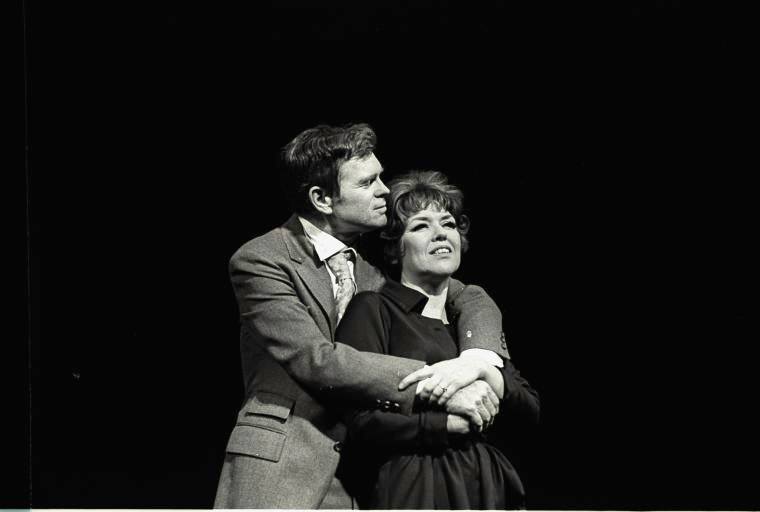
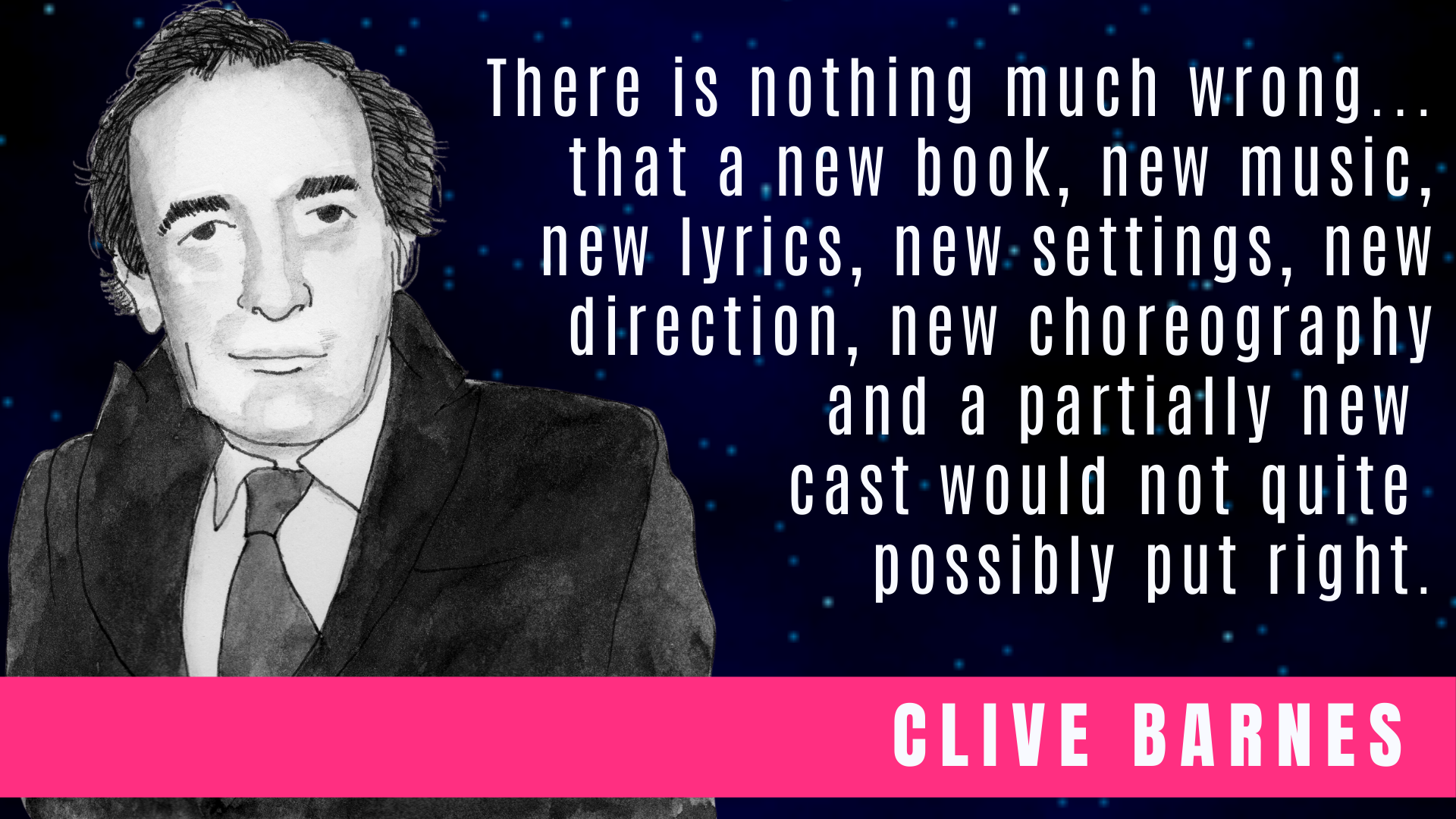





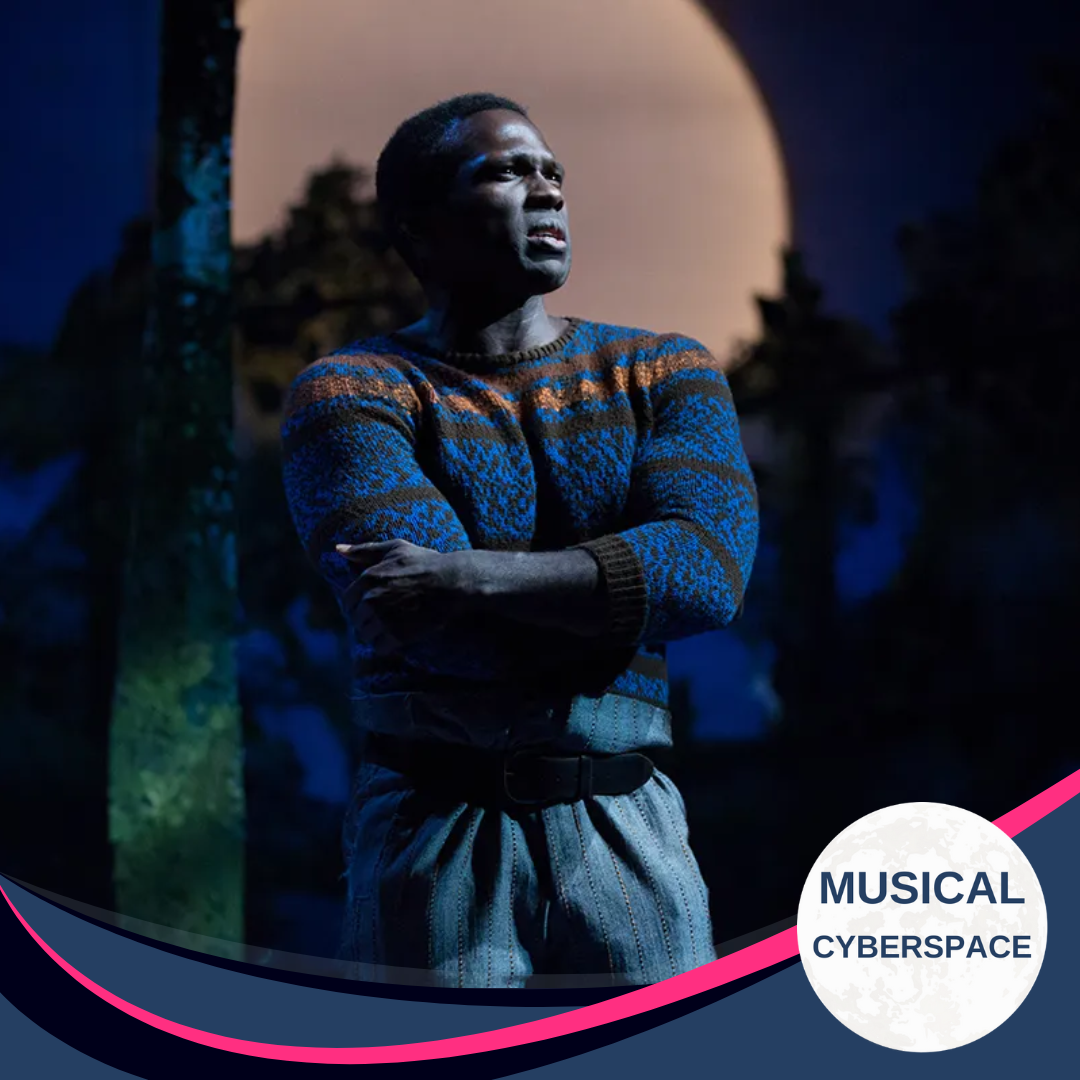


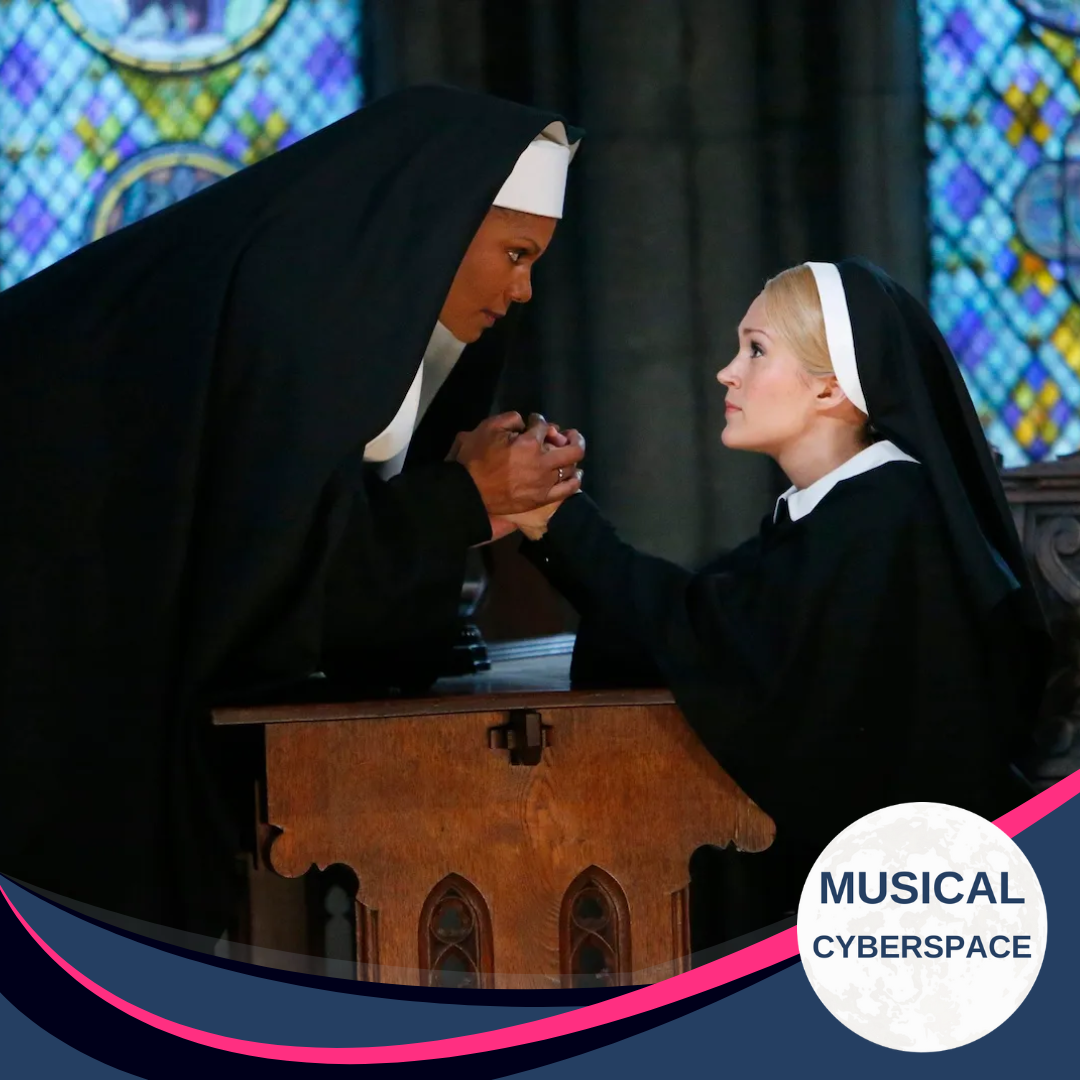

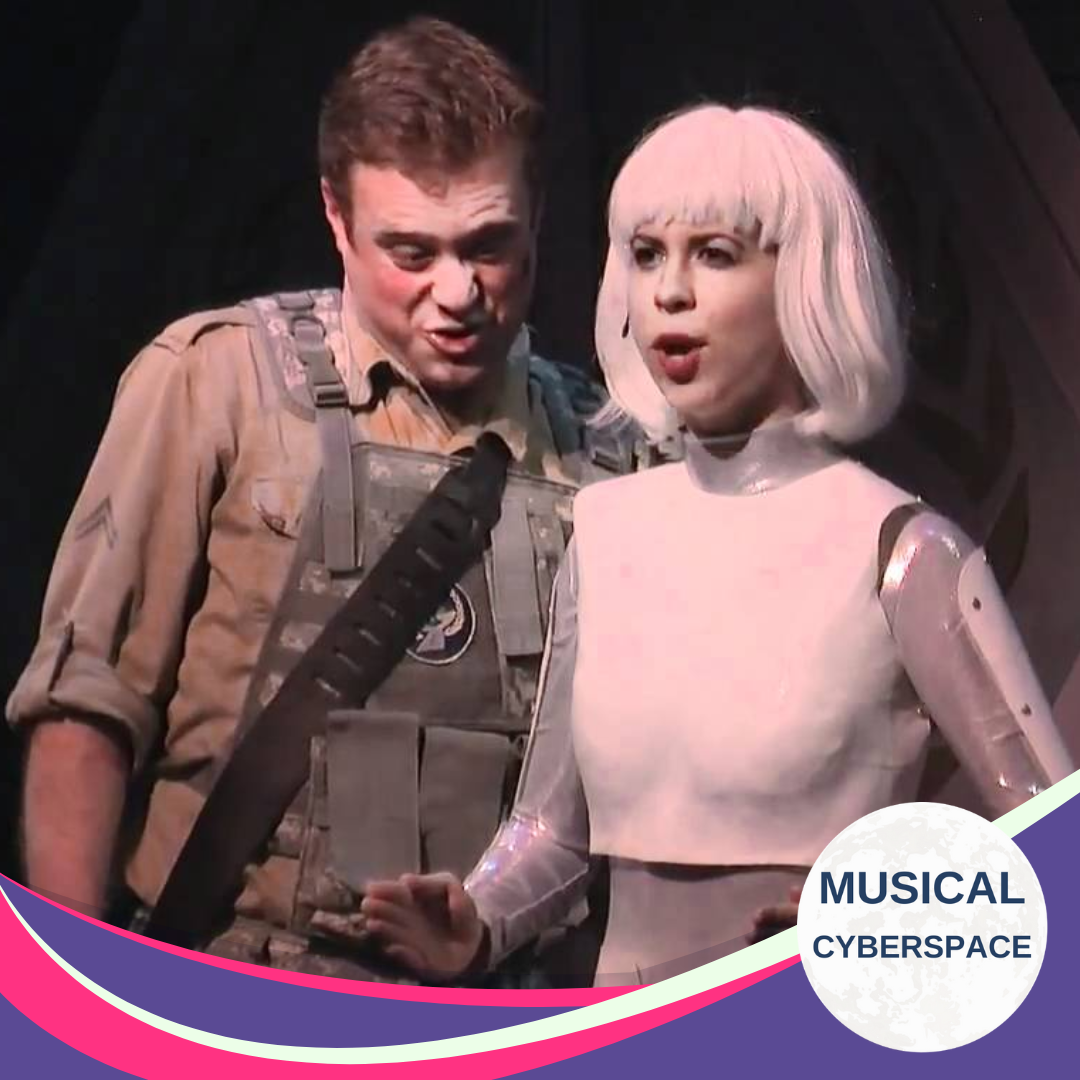

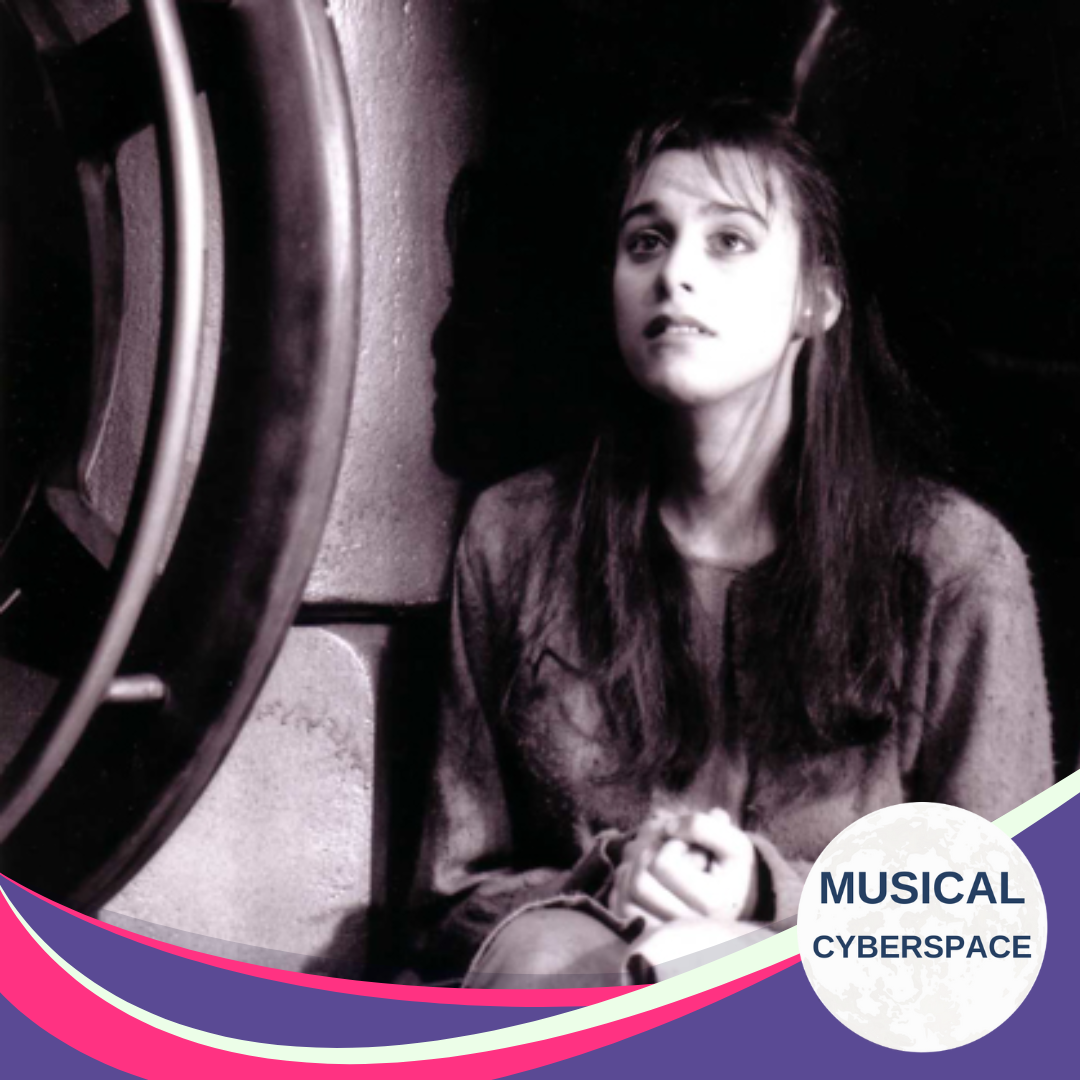

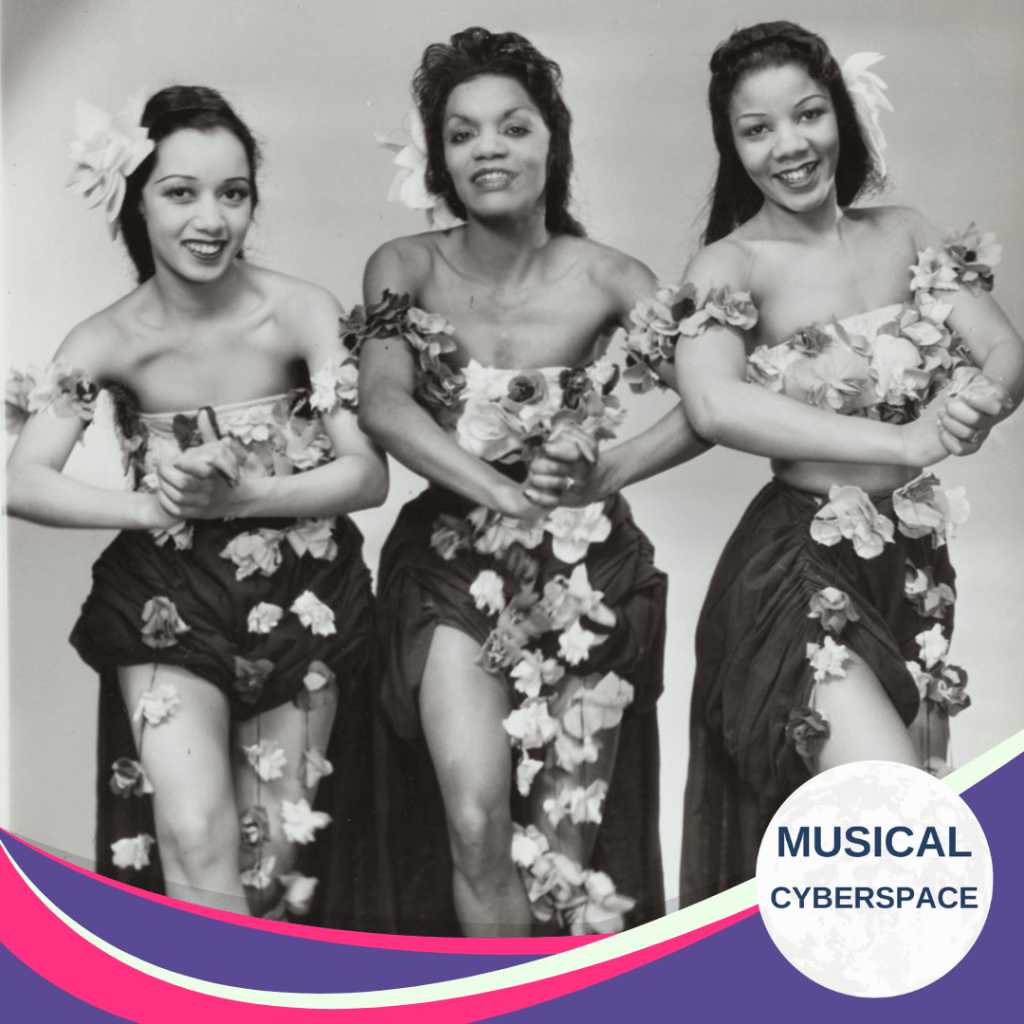
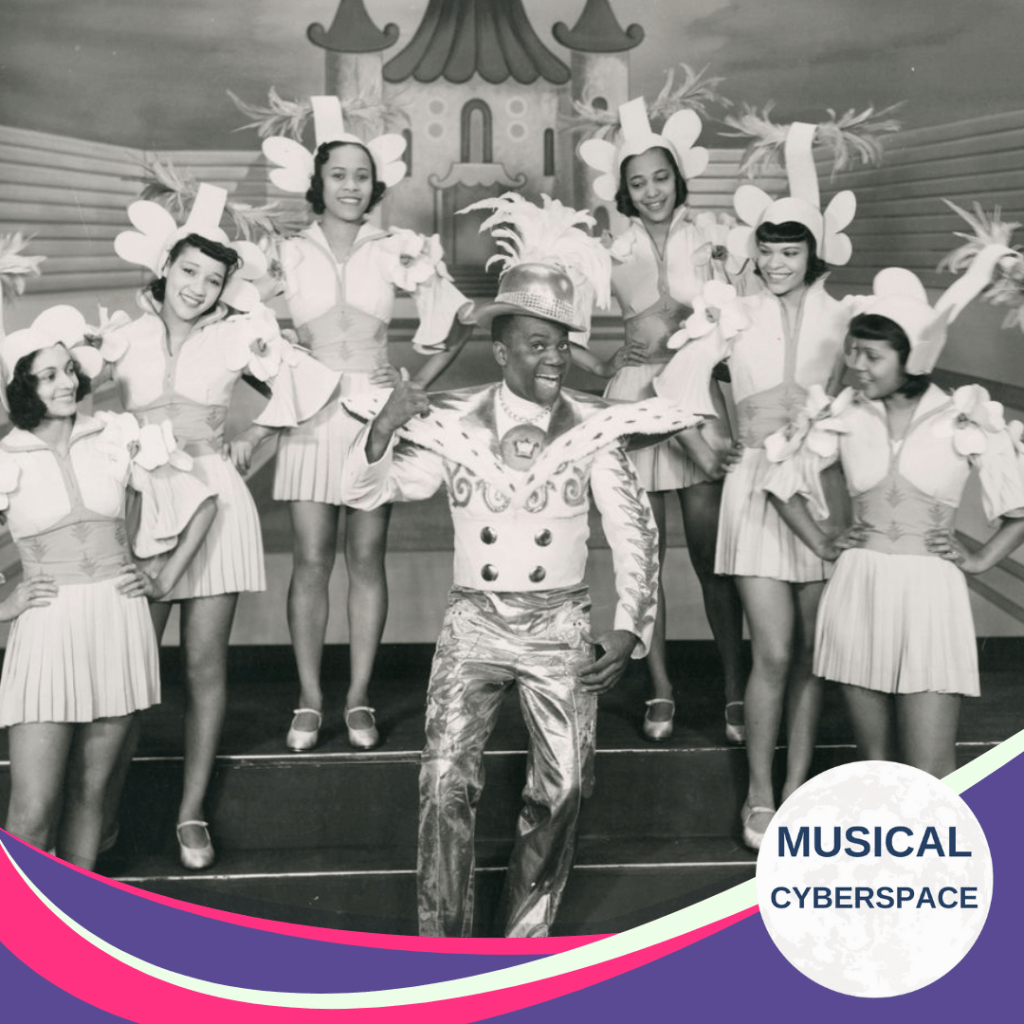
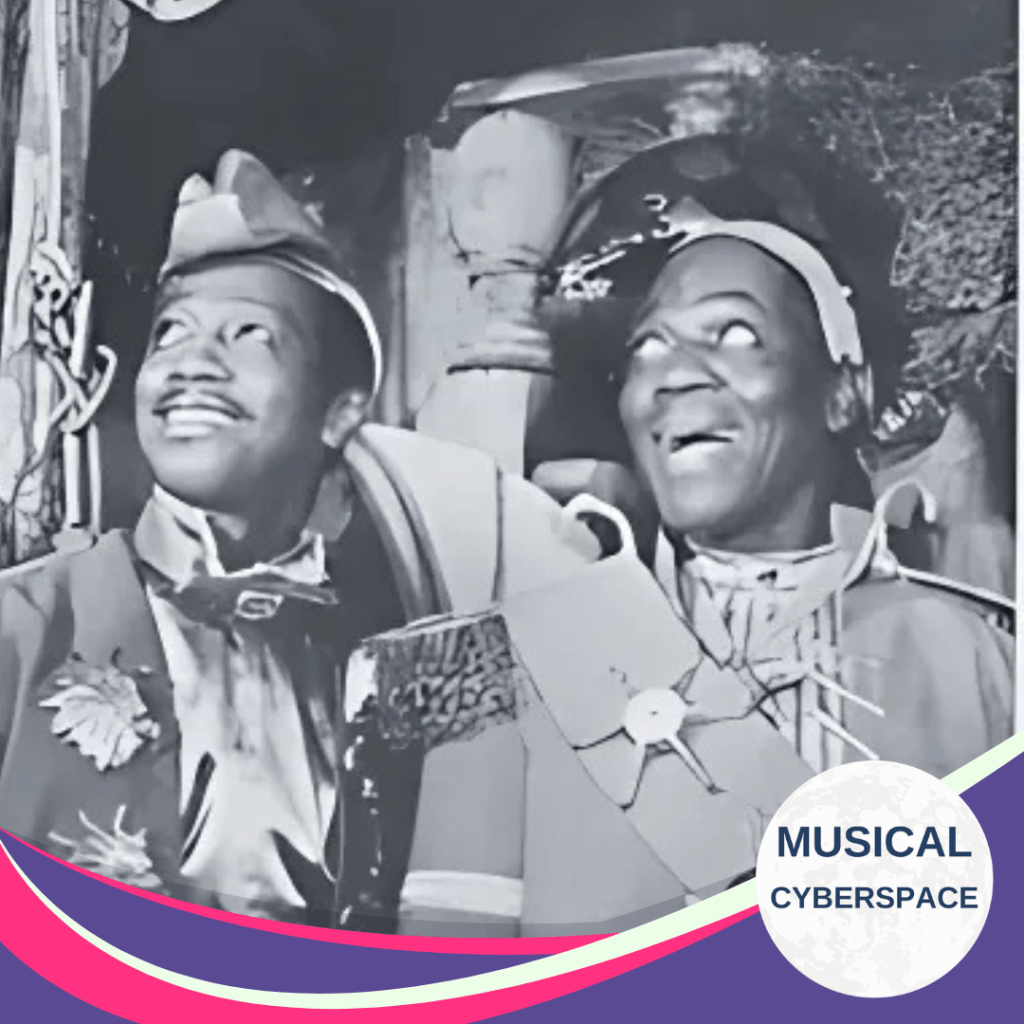

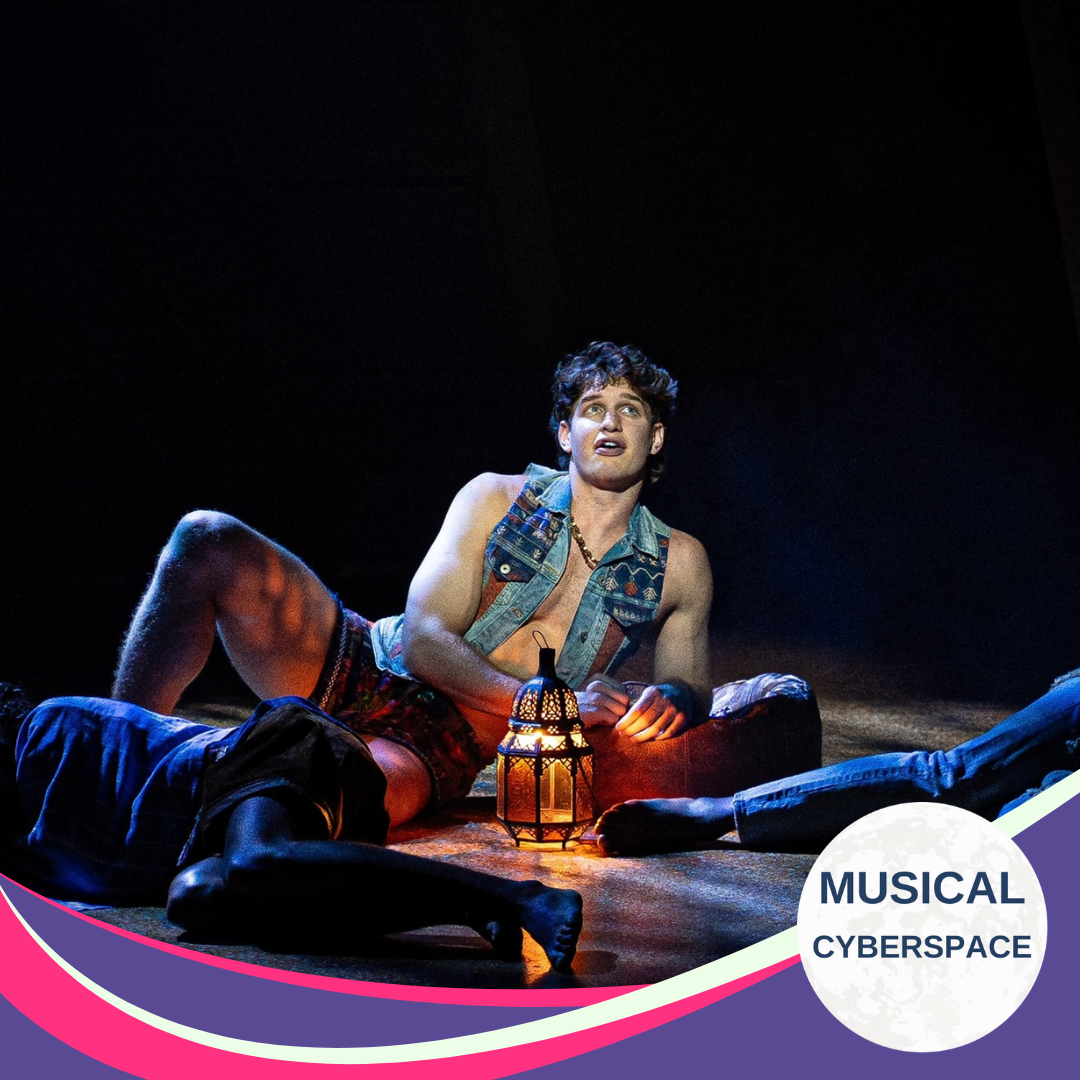
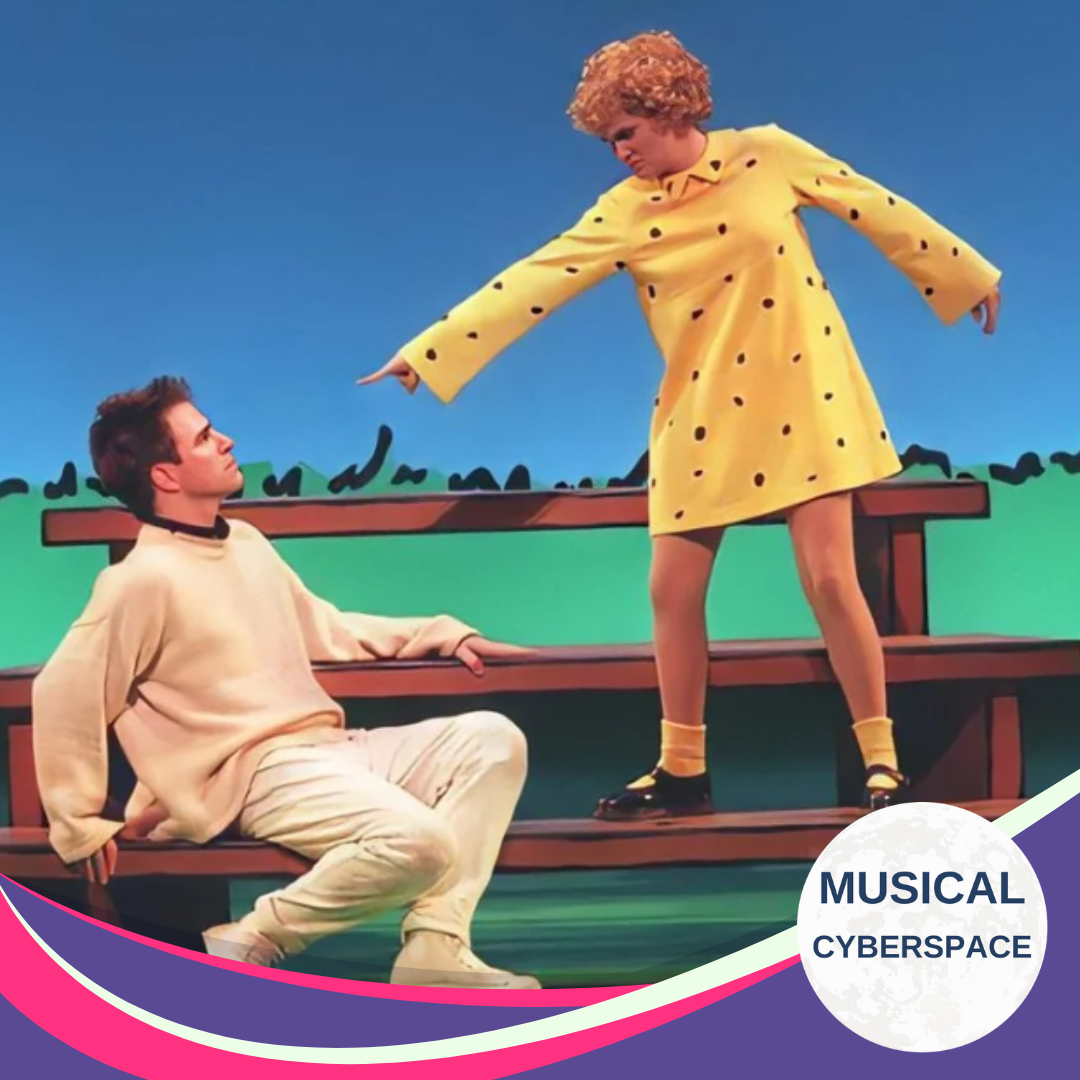


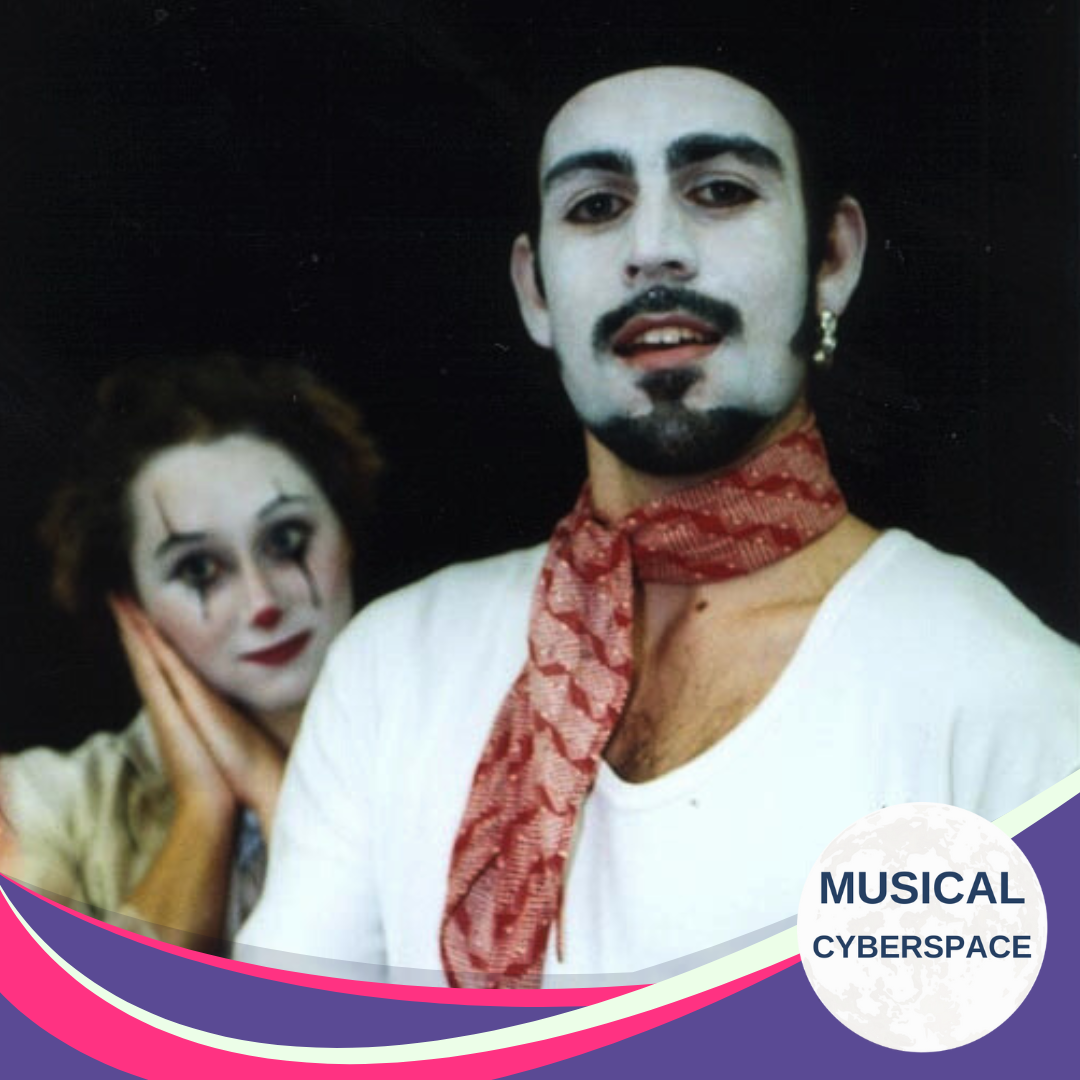


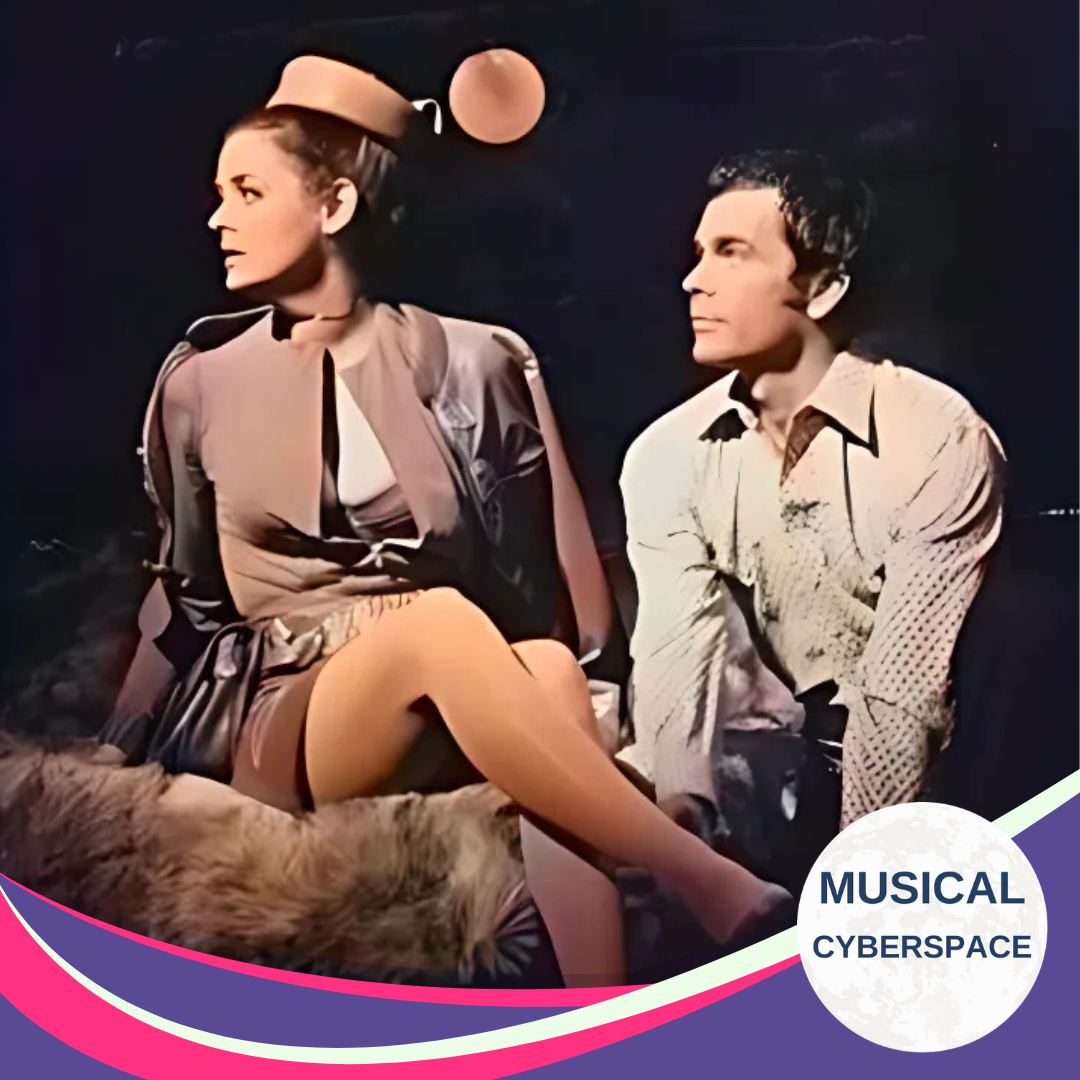


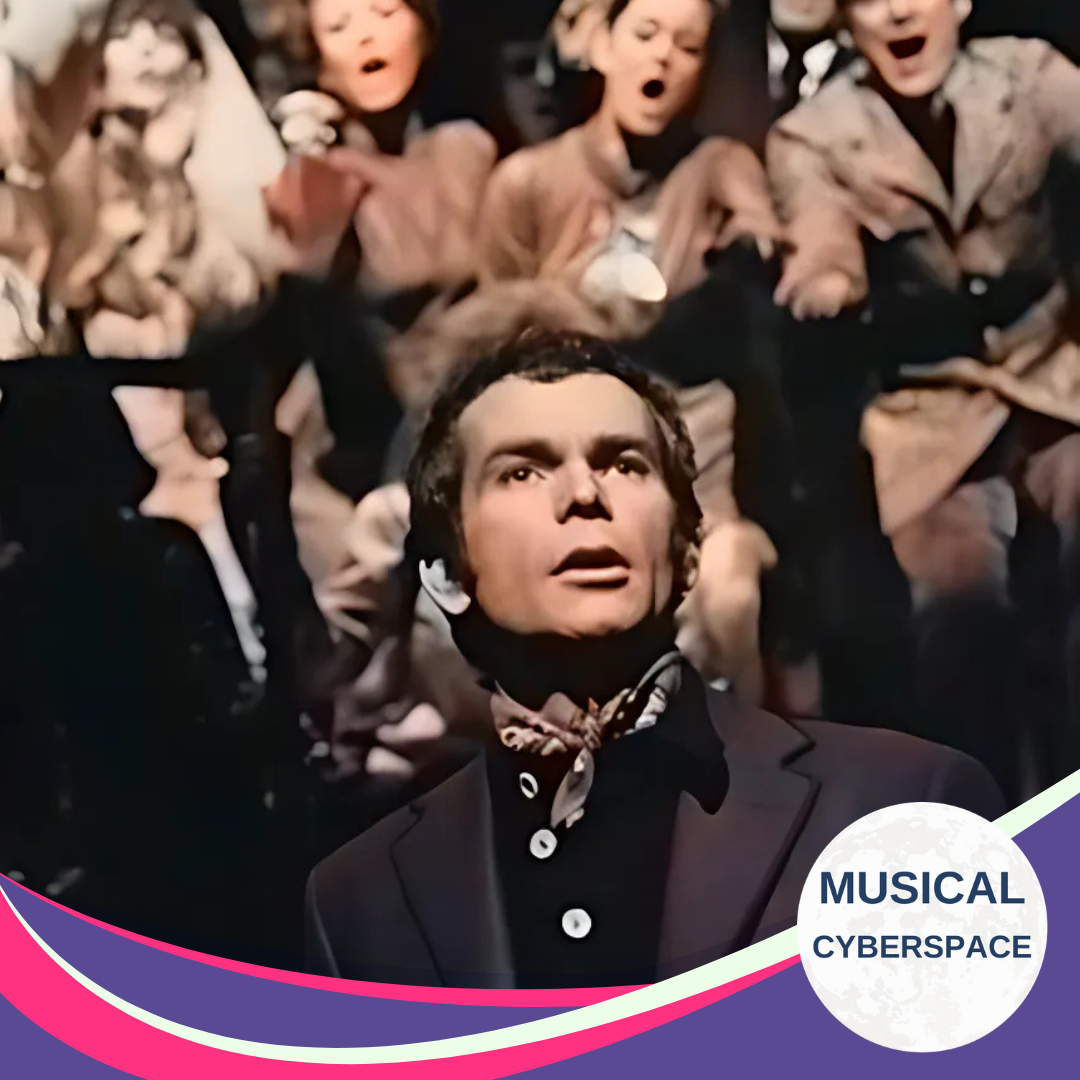

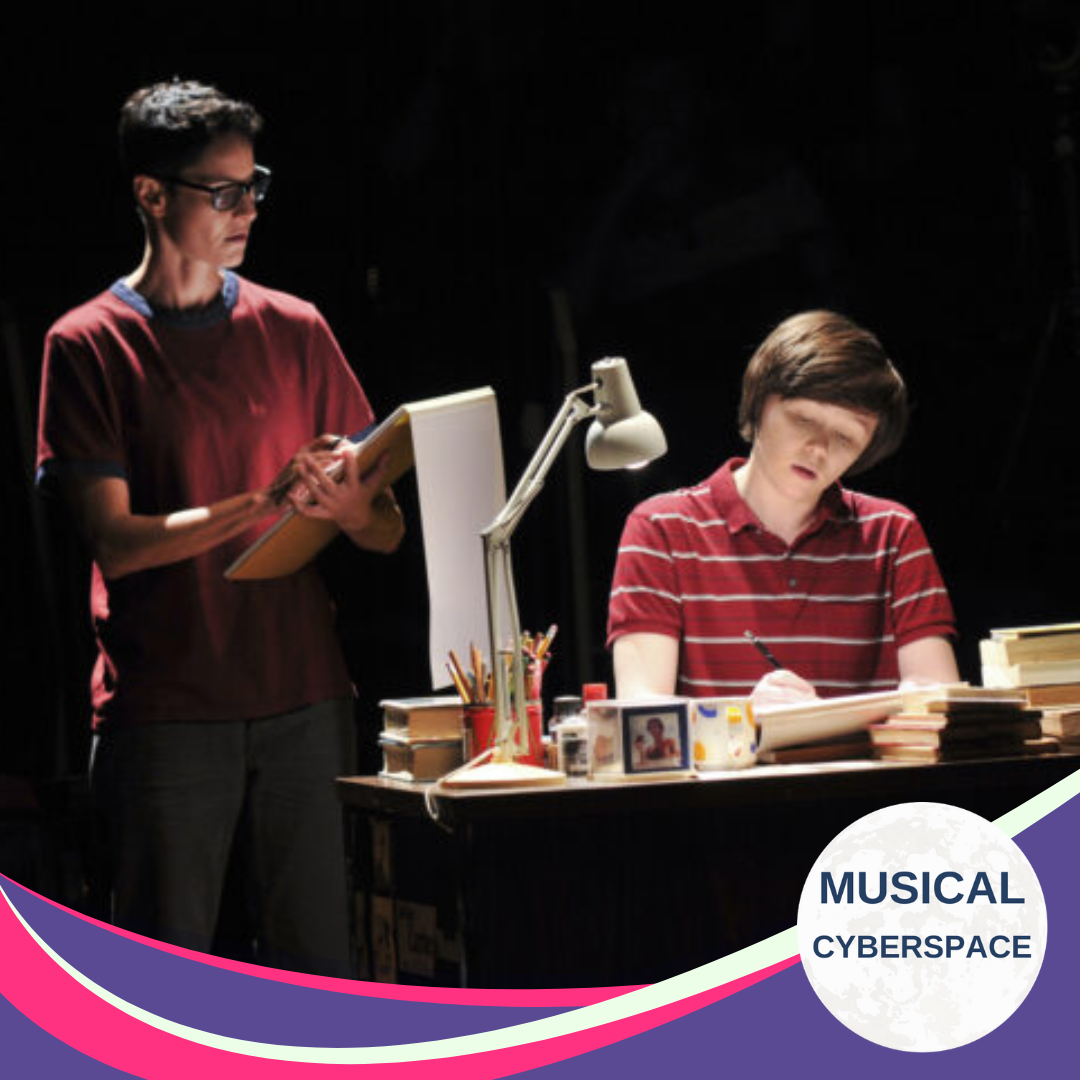

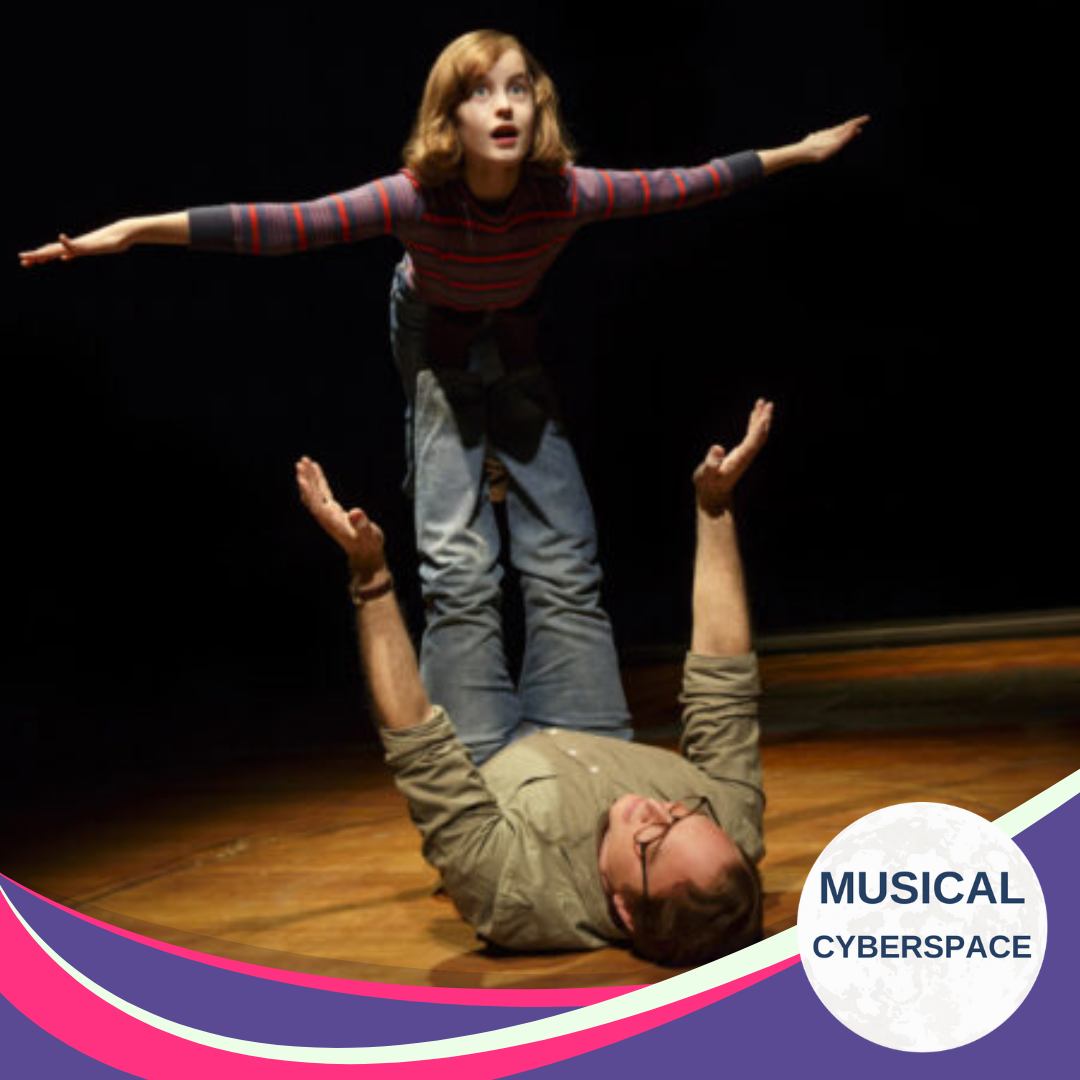



 Musical Cyberspace