
Some musicals fade into history because they failed to capture the imagination of their contemporary audiences. Others can’t make their mark because they’re ahead of their time. Lady in the Dark is neither. It was a huge hit, critically and commercially, and it was absolutely in step with the times. Even so, it is a show that feels strangely distant in today’s musical theatre landscape, even as we remember and celebrate other great successes of the 1940s like Oklahoma!, On the Town and Kiss Me, Kate.
Opening on Broadway in 1941, Lady in the Dark ran for 462 performances, recouping an investment that was considerable for the time. It helped establish the practice of advance sales on Broadway, and it is said to be the first musical to sell standing room only tickets at every performance. Critics hailed it as a major achievement, with Brooks Atkinson declaring in his review for The New York Times that ‘the American stage may as well take a bow this morning.’ By any measure, this was a show that mattered. Even so, it is rarely revived today. It occupies an odd position in the musical theatre canon: it is historically significant and musically rich, yet curiously absent from the mainstream repertoire.
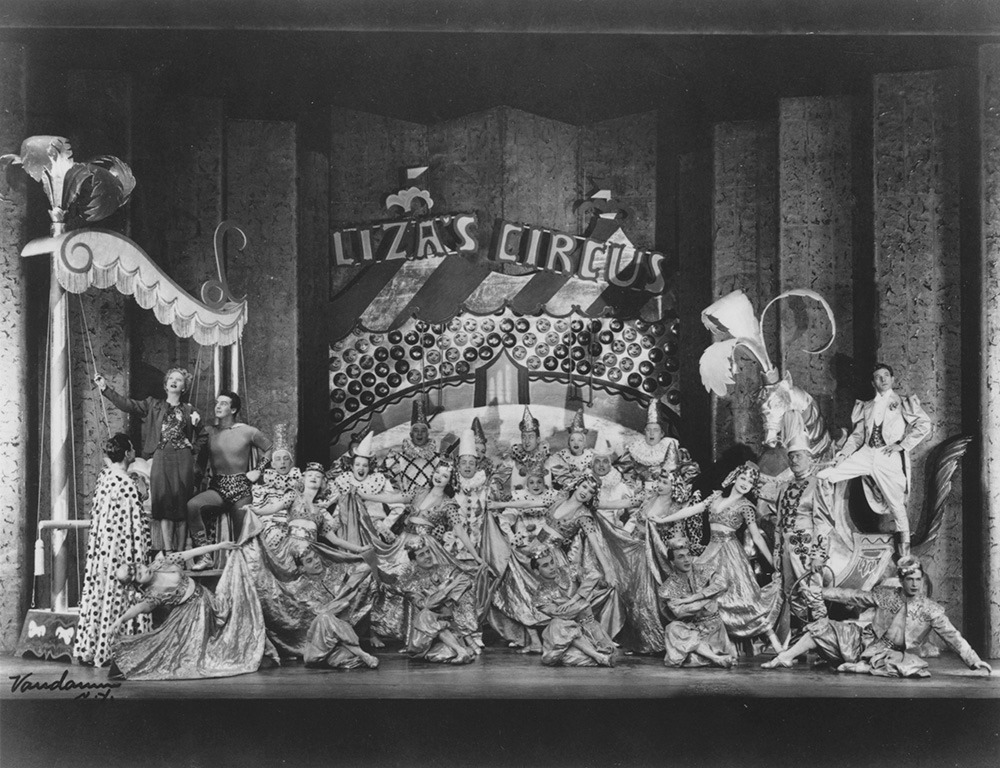
Part of what makes Lady in the Dark so distinctive is that it was never intended to be a traditional musical comedy. Moss Hart, who wrote the book, originally conceived it as a straight play, drawing on his own experiences with psychoanalysis. What changed everything was his decision to incorporate music into the show, not for decoration or mere entertainment, but something essential to its structure. Along with Kurt Weill and Ira Gershwin, Hart set out to create a musical in which the score would contribute to the psychological and dramatic weight of the story. As he himself put it, the songs would not be ‘melodious but useless addenda,’ but key elements of the show’s architecture. The result was what Hart called a musical play.
At its centre is Liza Elliott, a successful but emotionally paralysed fashion magazine editor, portrayed in the original production by Gertrude Lawrence. The narrative unfolded in two distinct modes: the sober, clinical realism of Liza’s sessions with her analyst and the extravagant dream sequences that give voice to her unconscious. In these sequences, Moss’s erudite dramatic scenes gave way to Weill and Gershwin’s glorious score. Rather than scattering songs throughout the narrative, the musical material is concentrated into extended sequences, each with its own musical language, which Weill described as ‘three little one-act operas’. Weill’s music and orchestrations heighten the sense of psychological dislocation that Liza experiences in “The Glamour Dream,” “The Wedding Dream” and “The Circus Dream,” each of which contrasts the surrounding drama as starkly as the shift from sepia into Technicolor in The Wizard of Oz. Unusual choices, such as the use of instruments like the Hammond organ, create an aural world that feels both theatrical and dreamlike. Even the staging reflected the vision of the real world dissolving into a psychological one, with multiple revolving stages allowing scenes to dissolve into one another without interruption, something that gave the production an almost cinematic fluidity.
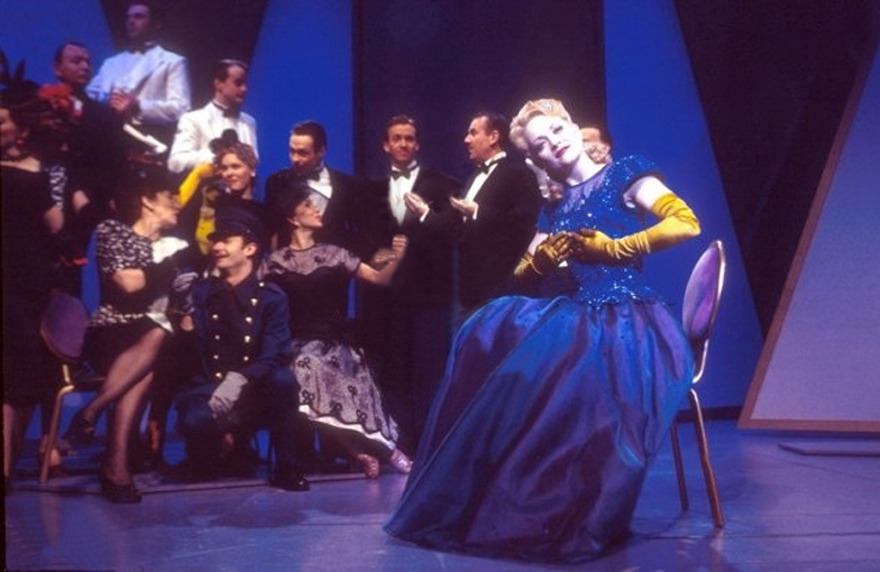
At the heart of the show lies a single musical motif that builds into the stunning ballad, “My Ship.” Introduced as a fragment of a childhood memory, the song functions as the key to Liza’s psychological journey. It shifts and reappears throughout the show, sometimes distorted and always incomplete, until it finally resolves in a fourth “Childhood Dream” as she confronts the emotional root of her anxiety. In this sense, the score doesn’t simply accompany the story; it is the story.
Looking back from today, it is easy to see how Lady in the Dark was a precursor to the concept musical, a work in which every element of the production is unified by a central idea rather than driven by conventional plot mechanics. Long before such terminology existed, Hart, Weill and Gershwin were already exploring what musical theatre might become when freed from the expectations of form.
And yet, for all its innovation, the show has not endured as one might expect.
Part of the challenge lies in its very ambition. Lady in the Dark demands a level of integration between performance, design and musical interpretation that can be difficult to achieve in a way that feels compelling and authentic. Its psychological framework, rooted in mid-century Freudian theory, can also feel distant to contemporary audiences, even as its core themes, such as identity, insecurity and the pressure to conform, remain strikingly relevant.
But perhaps there is another reason.
The show sits in a space that musical theatre has always found difficult to sustain: somewhere between play and musical, between realism and fantasy, between enlightenment and entertainment. It resists easy categorisation, and in doing so, it asks more of its audience than many shows are willing to. Simultaneously, the feminist movement has shifted the way modern-day audiences expect stories like Lady in the Dark to play out. In some ways, Liza Elliot walked so that Miranda Priestly could run.
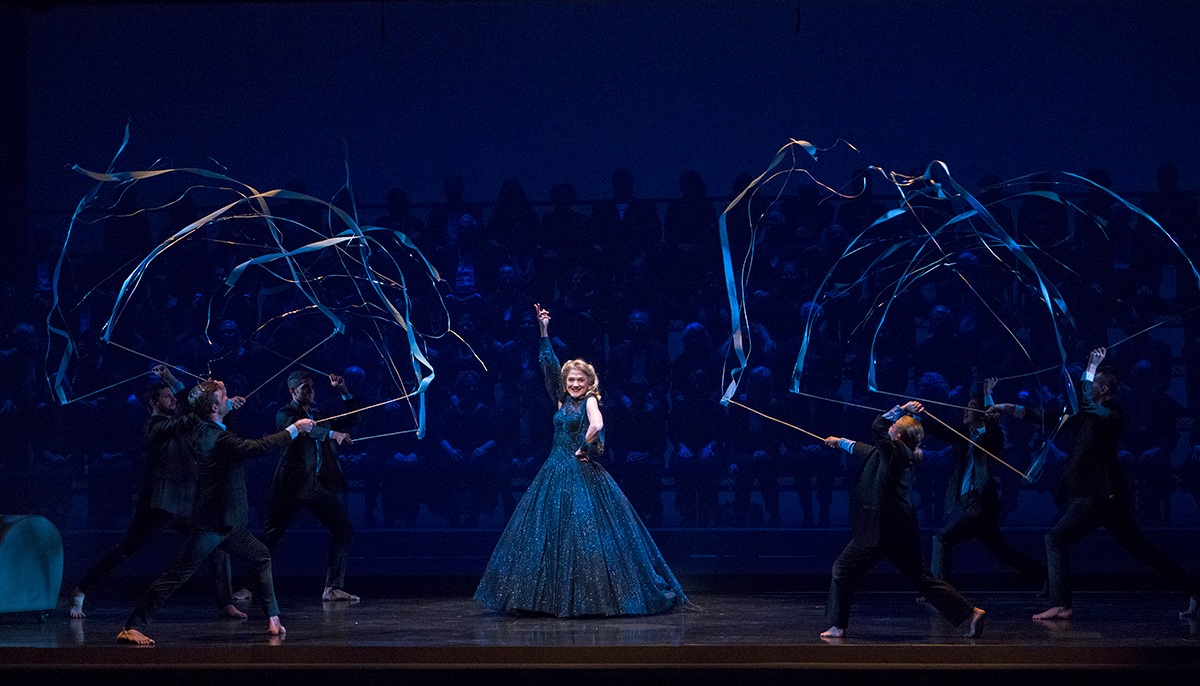
On the anniversary of Kurt Weill’s death in 1950, Lady in the Dark is a reminder of what this formidable musician brought to musical theatre: a refusal to accept its limitations and the determination to expand what it could do. His career was cut short by a heart attack at the age of just fifty, but in works like this, we see the scale of what he was reaching for. Perhaps Lady in the Dark is not so much forgotten as waiting for the right moment, and the right artists, to take up his vision, and Hart’s and Gershwin’s, and find a way to make it speak to us in the 21st century, much as the New York City Centre Encores! and Royal National Theatre presentations did in the 1990s. After all, we had a small taste of what this show can be when Victoria Clark played Liza at New York City Center in 2019 – so why shouldn’t we dream a little more?

 Musical Cyberspace