
Some musicals are forgotten because they failed. Others are forgotten because time quietly moved on without them. Applause falls squarely into the latter category, which makes it one of the more curious entries in our Forgotten Musicals Friday canon. When it opened on Broadway in 1970, Applause was an undeniable success. It ran for 896 performances, won the Tony Award for Best Musical, and picked up three further awards from ten nominations. By any reasonable metric, it should be remembered today alongside other popular shows of its era. And yet, more than fifty years on, Applause has all but disappeared. It’s seldom discussed, largely absent from contemporary musical theatre conversations.
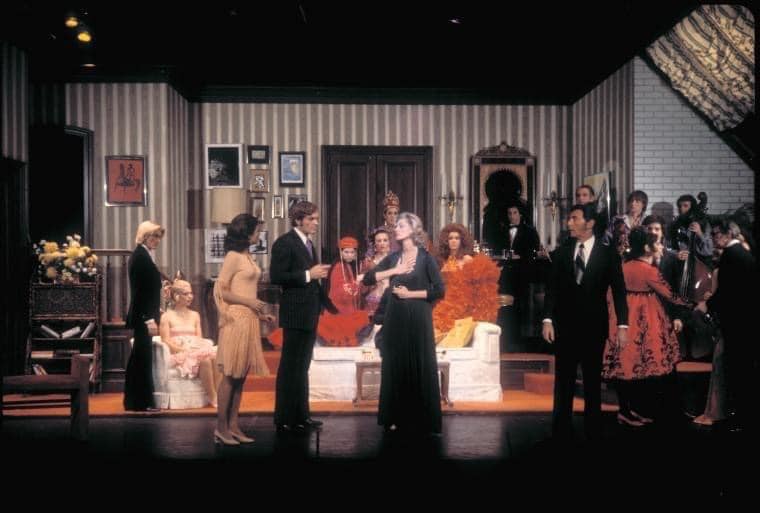
Based on Mary Orr’s 1946 short story, “The Wisdom of Eve,” Applause sits in an unusual adaptation limbo. While most audiences associate the story with the iconic 1950 film All About Eve, the stage rights initially extended only to the original short story. 20th Century Fox was unwilling to grant permission to adapt the movie’s screenplay, and by the time they eventually relented, the musical was already deep in development. The result was a compromise: a show rooted more firmly in the literary source than the cinematic brand, with only one late addition serving as a direct nod to the film in the number “Fasten Your Seat Belts,” which is built around its most famous line.
From a contemporary vantage point, the creative team behind Applause reads like a dream. The book was written by Betty Comden and Adolph Green, the legendary collaborators who helped create On the Town and Wonderful Town. Music and lyrics came from Charles Strouse and Lee Adams, whose Bye Bye Birdie had been heralded as a triumph. In hindsight, though, there may be a clue here as to why Applause never quite became a show for the ages. While Strouse and Adams enjoyed considerable success, their work as a team has not lingered in the repertoire in quite the same way as the creations of their contemporaries.
The musical itself is, in many ways, an entertaining and well-crafted piece of work. At its centre is Margo Channing, a great starring role brought vividly to life by Lauren Bacall in the original Broadway production. When she left the production, she was replaced by Anne Baxter, the actress who had played Eve Harrington in All About Eve, a serendipitous piece of theatrical symmetry. Penny Fuller took on the role of Eve on stage, while Len Cariou played Margo’s lover, Bill Sampson.
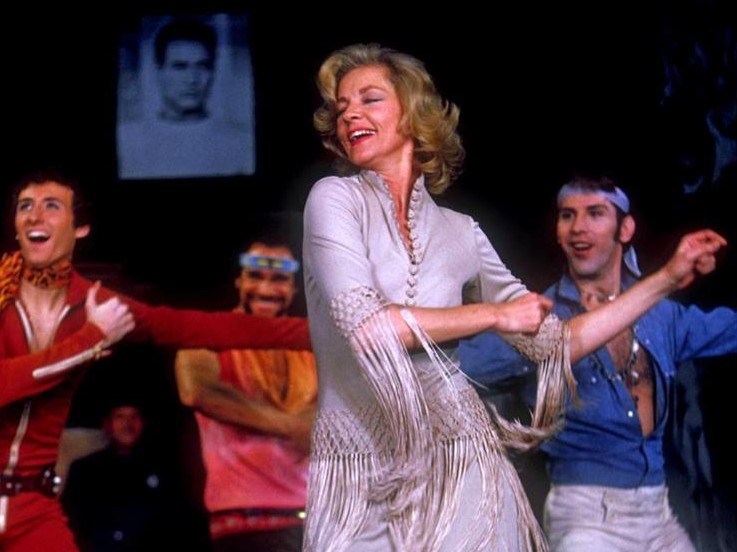
There are genuinely strong numbers in the score. “Welcome to the Theatre” and “But Alive” give Margo ample opportunity to command the stage, while the latter also introduces one of the show’s most historically significant characters: Duane Fox, Margo’s sharp-witted gay hair stylist, played by Lee Roy Reams. Duane takes Margo to a gay club in the first act, and his presence represents a notable moment of gay representation for the time: smart, savvy and unapologetically himself.
Strangely, some of the show’s most famous elements feel oddly underused. “Fasten Your Seat Belts,” despite its iconic lineage, underwhelms as a bitty number punctuating Margo’s drunken breakdown at her party late in Act I. It feels like a throwaway rather than a key musical moment in the show. More curious still is the title song. “Applause,” which went on to become the show’s biggest hit, is sung not by Margo or even Eve, but by a supporting character, Bonnie, played by Bonnie Franklin. The number was so dynamically staged that it became the production’s showcase moment at the Tony Awards, even though Bacall was granted a brief excerpt of “Welcome to the Theatre” to remind audiences who the star of the show was.
So why didn’t Applause endure?
Part of the answer lies in shifting sensibilities. The show’s conclusion hinges on Margo’s decision to step away from her career and embrace domestic fulfilment, articulated in the song “Something Greater.” In today’s terms, the idea that true fulfilment lies in ‘being to your man what a woman should be’ lands uncomfortably. While the show’s narrative exposes the shallowness and cruelty of the theatrical world in which Margo has carved out her career, it doesn’t allow Margo to redefine herself on her own terms. Instead, she simply moves from one externally defined role to another, a resolution that reads less like transcendence and more like defeat.
There’s also the question of tone. Applause is one of the great melodramatic gaslighting stories of the twentieth century, but as a musical, it plays more like a romantic dramedy than a sharply incisive satire. It gestures toward critique without fully committing to it, leaving audiences entertained but perhaps unsure of what the show ultimately wants to say.
After Broadway, Applause remained closely associated with Bacall, whose presence seemed integral to the show’s success. She opened the show in London, where it was less popular, and later starred in a 1973 television adaptation opposite Larry Hagman as Bill Sampson. The musical has never returned to Broadway in a full revival, though New York City Center’s Encores! mounted a staged concert version in 2008, with Christine Ebersole taking on the role of Margo.
Would Applause work today as a major Broadway revival? I’m not convinced it would fly without a substantial rethinking of its ending. And yet, its success, its contradictions and its uneasy place between satire and sentiment make it fascinating to revisit. In the end, Applause isn’t forgotten because it failed, but because it belongs so precisely to its time that we’re not quite sure how to welcome it back today.

 Musical Cyberspace
Great summary. Saw this show in London and thought it was terrific, but agree that it needs some revision for today’s audience.