
This week, I watched Maybe Happy Ending on Broadway and seeing it live confirmed the suspicions I’ve held since I first listened to the cast album back in March: it’s the best new musical of the decade and easily one of the top ten of this century. The experience got me thinking about robots in musical theatre. How many shows have featured them over the years? As it turns out, not many. Perhaps that’s because robots are traditionally seen as emotionless, while musicals are built around emotional expression. However, the tension between machine logic and human feeling is exactly what makes a show like Maybe Happy Ending so compelling. As such, this week’s Saturday List is short, sharp and snappy, with just four entries, each of which finds its own way to explore the heart beneath the hardware when it comes to robots on stage.
4. Starship (2011)
We’ve written about Starship before, featuring it in our list of space musicals to celebrate Yuri’s Night. With music and lyrics by Darren Criss and a book by Matt Lang, Nick Lang, Brian Holden, and Joe Walke, Starship is set on Bug-World, an alien planet teeming with giant insects and follows the journey of Bug, who has big dreams of joining the elite Starship Rangers. The only problem? He’s just a bug, while the Starship Rangers are an intergalactic team of heroic human beings. When a starship lands on Bug-World, Bug impersonates a human to join the crew and finds himself swept up in an adventure involving the Overqueen’s royal dictatorship on his home planet, Dr Pincer’s bug mafia and the corrupt Galactic League of Extraterrestrial Exploration (G.L.E.E)
One of the characters caught up in this crazy mash-up of The Little Mermaid and Aliens is Mega-Girl, an android assigned to assist the Starship Rangers. Initially cold and hyper-logical, she’s a standard-issue military android, loyal to the commands of Junior, a snivelling G.L.E.E. officer who is desperate to climb the ranks and impress his father, the evil Dr Spaceclaw. But when Mega-Girl falls in love with Tootsie Noodles, one of the rangers, she overrides her violent programming and helps save the day.
Mega-Girl fits into several well-known science-fiction robot tropes. As a machine that ultimately develops feelings, she’s a class “robot with a heart,” echoing characters like Data in Star Trek: The Next Generation or the awakened android hosts from Westworld. Her redemption arc makes her a “reprogrammed weapon,” much like Arnold Schwarzenegger’s Terminator in Terminator 2: Judgement Day, and her unlikely romance with Tootsie places her in the tradition of the “interspecies romance,” much like Spock and Uhura in Star Trek‘s Kelvin Timeline or Leeloo and Korben Dallas from The Fifth Element. These references, along with many other nods to sci-fi storytelling throughout the show, make Starship the perfect entry-level musical for sci-fi fans new to the musical theatre scene.
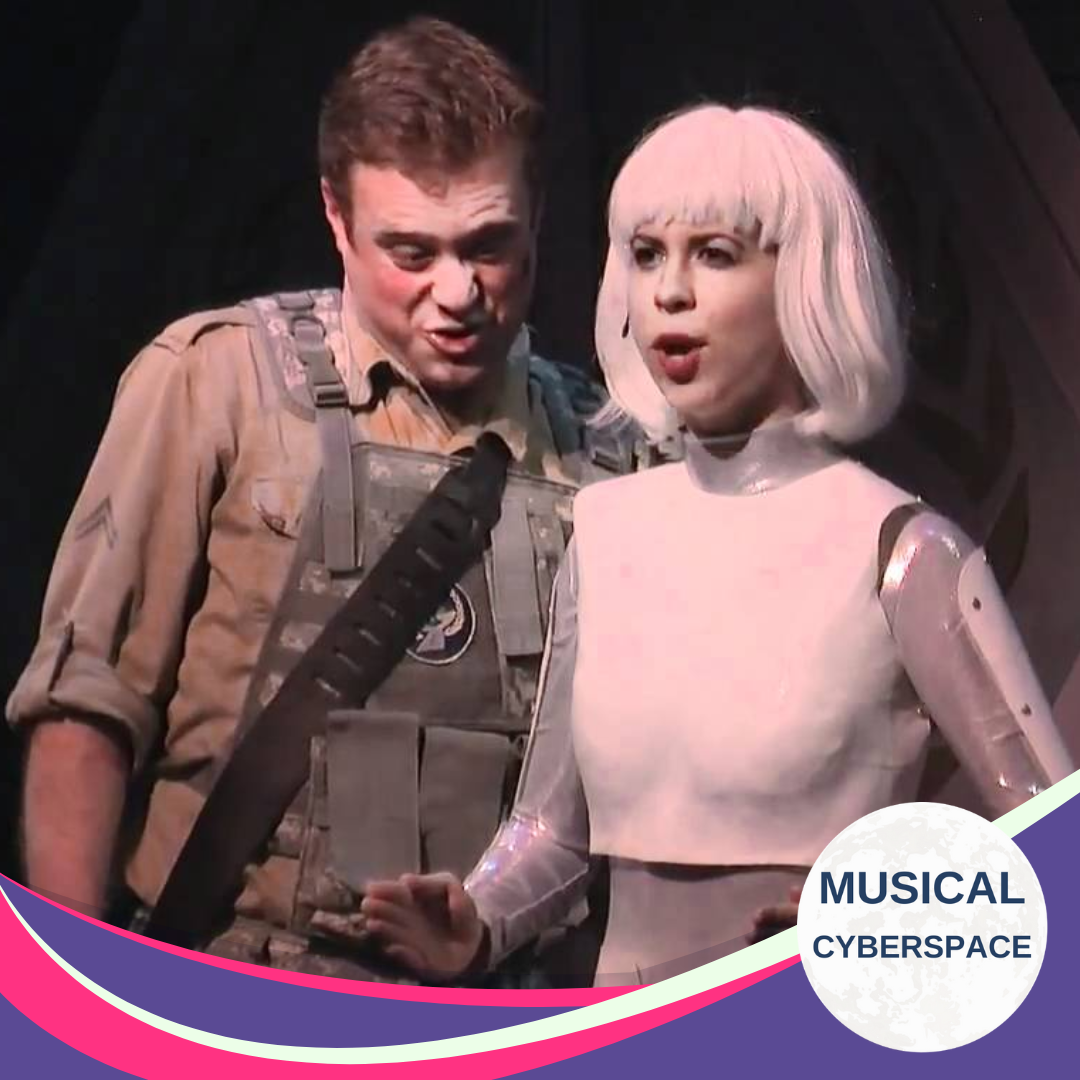

3. Return to the Forbidden Planet (1983)
Return to the Forbidden Planet is another sci-fi cult musical we featured on Yuri’s Night, one that mashes up Shakespeare with 1950s B-movie sci-fi conventions, all to the beat of a classic rock ’n’ roll song stack. With a book by Bob Carlton, this jukebox musical is based on the 1956 science fiction film Forbidden Planet, which itself draws inspiration from The Tempest.
In the show, Captain Tempest commands a spaceship called the Albatross, which is damaged in a storm of meteor showers. When the ship drifts by the planet D’Illyria, a mad scientist, Doctor Prospero, who has been marooned there since his wife and science partner, Gloria, sent him and their daughter Miranda into space, offers to repair the ship. They bring with them Ariel, a loyal robot who helps steer the Albatross to safety and quotes Shakespeare with perfectly deadpan comic timing.
As a character, Ariel is a loving homage to classic sci-fi robots, equal parts servant, sidekick and scene-stealer. He fits the “robot companion” trope, much like C-3PO and R2-D2 from Star Wars. Though mechanically efficient, Ariel is deeply loyal to the ship’s captain and crew and his robotic exterior masks a surprisingly warm emotional core. The mix of Shakespearean verse, slapstick humour and classic rock anthems makes Return to the Forbidden Planet a wildly entertaining entry for sci-fi fans looking for something delightfully weird, and Ariel is this quirky show’s most endearing takeaways.
2. Metropolis (1989)
Staged in London’s West End in 1989, Metropolis was a visually stunning, musically ambitious adaptation of Fritz Lang’s iconic 1927 silent film of the same name. With music by Joe Brooks, lyrics by Dusty Hughes and a book by both of them, the musical imagines a dystopian future set in a sprawling industrial city divided into two rigid classes: the elite thinkers above and the oppressed workers below. When Steven, the privileged son of the city’s master, John Freeman, discovers the harsh reality of the workers’ world, he joins forces with Maria, a prophetic figure fighting for peace and unity, unaware that a machine double of Maria is being created to destroy everything she stands for.
The robot Maria, known as Futura, is one of the most iconic robot characters in science fiction, and she takes centre stage in the musical’s second act. Engineered by the scientist Warner at John Freeman’s command, Futura is designed to discredit the workers’ movement by inciting violence and chaos in Maria’s name. Sleek, seductive and programmed to deceive, the false Maria is the very image of manipulated femininity and technological menace, a perfect foil to the real Maria’s compassion and humanity.
Futura channels several classic sci-fi robot tropes. She is the quintessential “femme fatale android,” a template that influenced generations of cinematic robots from the replicants of Blade Runner to Ava from Ex Machina. At the same time, she represents the “machine as political weapon,” a robotic tool of surveillance and sabotage, similar to Skynet’s Terminators or The Matrix’s Machines. With its soaring score, expressionist visuals and timely questions about class, identity and automation, Metropolis seems primed for rediscovery, and perhaps even a bold reimagining for the twenty-first century.
1. Maybe Happy Ending (2016/2024)
Maybe Happy Ending, the quietly extraordinary chamber musical by Will Aronson and Hue Park, is set in Seoul in the not-too-distant future, where robots serve as companions and caretakers for lonely humans. Two retired helper-bots, Oliver and Claire, live alone in separate apartments in the same building, occupying their days with routine tasks and distant memories of the lives they led with their respective owners. When Claire’s charger malfunctions and she knocks on Oliver’s door, they begin a tentative companionship that blossoms into something deeper, prompting an exploration of memory, mortality and what it means to truly connect.
While on the surface, Maybe Happy Ending is a tender love story between two androids, it’s also a moving meditation on the human condition. Oliver and Claire, discarded by the society that built them, stand in for the isolated, the outdated and the othered. In some ways, they could even represent the elderly, people who are so often shut away in old-age homes once they’ve outlived their perceived usefulness. The musical gently asks us to reconsider how we treat those we overlook, even as they continue to feel, remember and dream. By presenting two robots with rich inner lives, the show invites us to acknowledge the emotional depth of those we forget too easily.
Both Oliver and Claire subvert the usual robot tropes. They’re not trying to become human; they already are in every way that matters. Their journey is less about achieving emotion than discovering it: finding intimacy, vulnerability and even the fear of loss. In the process, Maybe Happy Ending sidesteps the flashier sci-fi traditions (while still evoking memories of stories like Wall-E) and offers instead a deeply human story, one that earns its title not through spectacle, but through quiet and bittersweet grace.
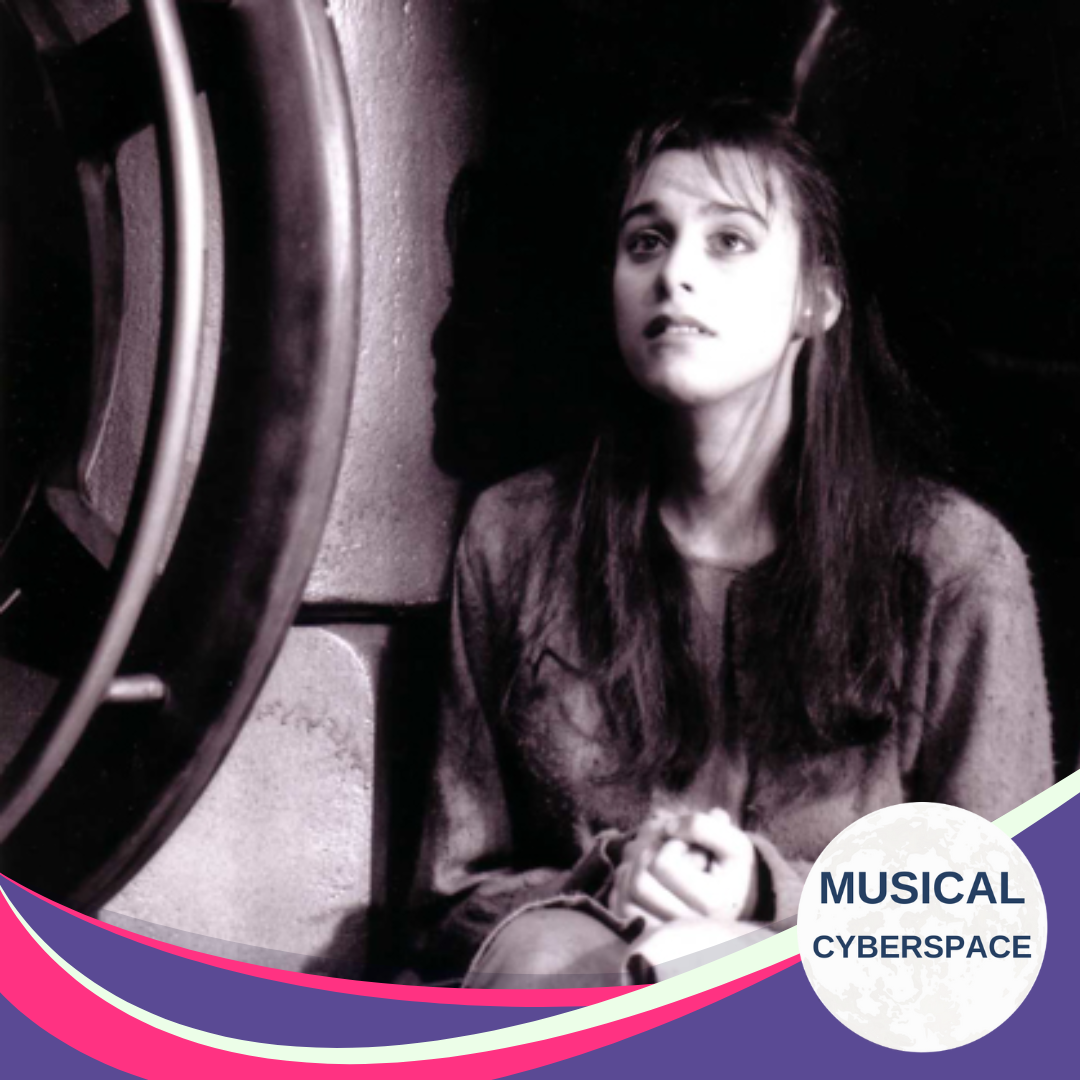

At the Heart of the Machine…
So few musicals feature robots, and perhaps that’s because it seems counterintuitive: how can a machine sing? How can something built to suppress emotion express the very thing musical theatre trades in? But in rare and remarkable cases, from the destructive chaos of Futura to the comic loyalty of Ariel, and the surprising heart of Mega-Girl to the quiet yearning of Oliver and Claire, we can see that robots don’t have to strip away emotion. In fact, they can clarify it. These shows remind us that even the coldest exterior can house a spark of longing, that even the most artificial creation can tell us something painfully and beautifully human. It turns out, in the right hands, even a robot can make us feel.

 Musical Cyberspace
Thank you for this beautifully curated list — your selections and reflections really capture how robot musicals can touch the heart. Your insights make me want to revisit these shows with fresh ears.
Thanks for the feedback. I am especially enjoying going back to Metropolis at the moment!