
With Pieter Toerien Productions and LAMTA presenting a South African revival of Joseph and the Amazing Technicolor Dreamcoat, and that revival having opened in Cape Town this week (where it will run through mid-July before transferring to Johannesburg), I thought it might be fun to run through the famous list of colours that Tim Rice set to Andrew Lloyd Webber’s music to create this week’s Saturday List.
The creative team of this fresh, fun and vibey production is headed by Anton Luitingh and Duane Alexander, who direct, with musical supervision by Charl-Johan Lingenfelder and musical direction by Amy Campbell. Choreography is by Duane Alexander and Jared Schaedler. Appealing young actor Dylan Janse van Rensburg stars as Joseph, with a sizzling Lelo Ramasimang as the Narrator.

Last time the musical was revived in South Africa, I wrote a similar column using colourful references in show tunes, ending up with a column that has been a firm favourite with Musical Cyberspacers ever since. This time, I’m going for musicals that have names featuring the colours in Joseph’s famous coat. And in cases where no shows exist, I’ll pitch a few that really should! So without further ado, let’s get into today’s technicolor list!
Red
With music and lyrics by Cole Porter and a book by Howard Lindsay and Russel Crouse, Red Hot and Blue (1936) sees a socialite, a gangster and a publicity stunt collide in a zany political romance. Packed with Porter’s trademark wit and flair, it’s a high-octane romp with toe-tapping songs, including the wonderful standard, “It’s De-Lovely.”
Yellow
The Highest Yellow (2004) is likely to be one of the lesser known musicals on this list. Michael John LaChiusa and John Strand’s chamber musical explores Vincent van Gogh’s mental illness and artistic brilliance during his time in an asylum. It is haunting, evocative and piercingly human – and it deserves to be known much more widely.
Green
Lesser Samuels and Frank Loesser’s Greenwillow (1960) is set in a mythical village where men are destined to answer a mythical call to wander, leaving their families behind them. One man, Gideon, defies fate for the love of his girlfriend, Dorrie. Greenwillow is a gentle folk fantasy with soaring melodies and rustic charm. I wonder how today’s audiences would receive it.
Brown
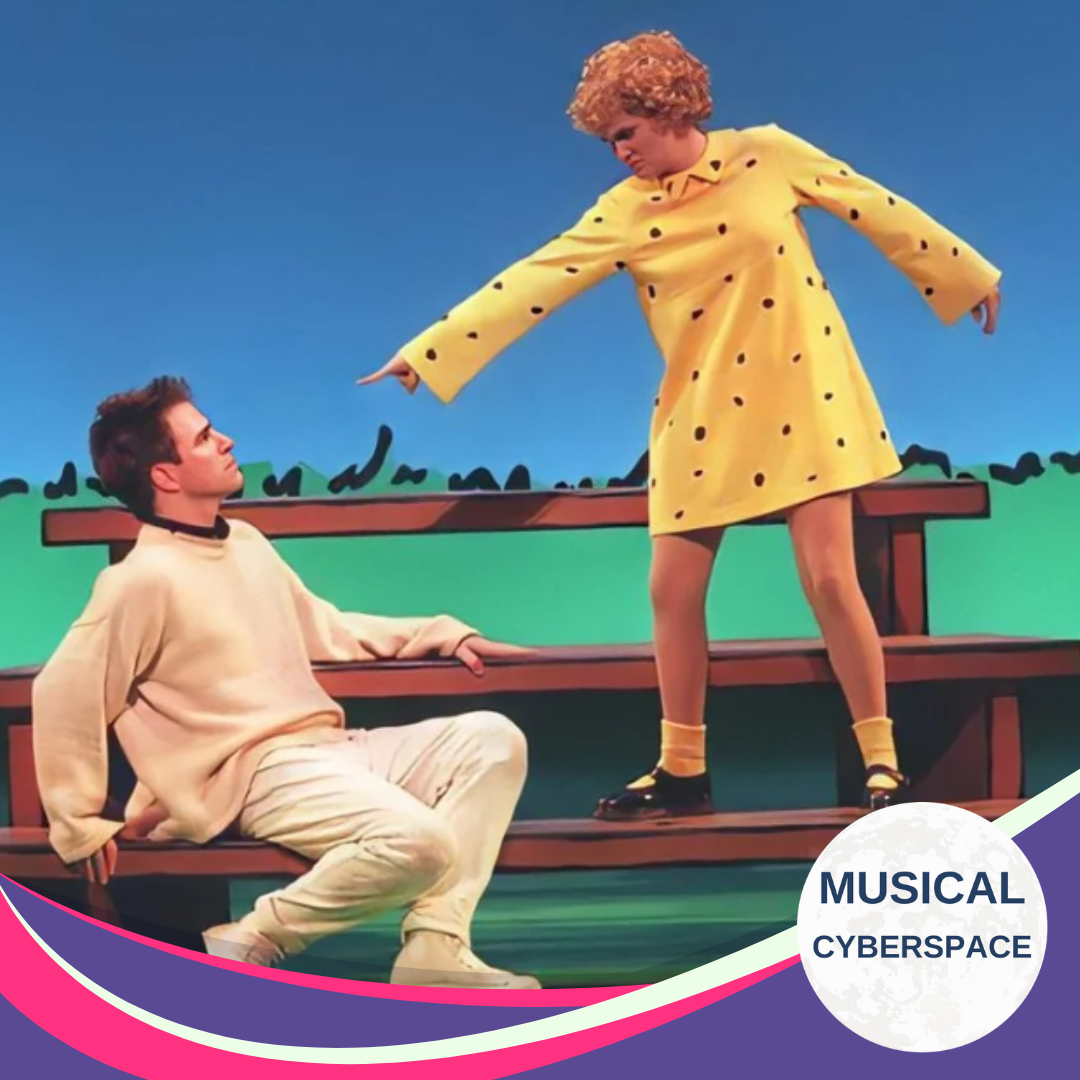
In You’re a Good Man, Charlie Brown (1967), Charles Schulz’s Peanuts gang navigates school, crushes, and existential questions in a series of whimsical vignettes. Clark Gesner and John Gordon created a beloved musical that captures both childlike joy and the deep truths we come to learn as adults. An Off-Broadway smash, a revised version was produced on Broadway in 1999, with new songs by Andrew Lippa – probably the best he has written for the theatre.
Scarlet
With music by Frank Wildhorn and a libretto by Nan Knighton, The Scarlet Pimpernel (1997) retells Baroness Orczy’s classic tale of an English nobleman who moonlights as a hero rescuing innocents from the French Revolution. This lavishly staged and romantic swashbuckler managed to spawn a group of fans known as “The League,” which kept it open longer than it otherwise might have run, even when performances were paused so the production could be reworked. In fact, this show was revised so many times that three distinct versions of the production were seen on Broadway!
Black
The Black Crook (1866) is often called the first American musical, although some historians will cite The Beggar’s Opera as a more significant precursor in the development of musical theatre. Charles M. Barras’s book tells the tale of an artist who makes a Faustian pact, making for a legendary blend of spectacle and melodrama. The score was written by Giuseppe Operti, George Bickwell and Theodore Kennick.
Ochre
It seems that ochre is not a colour that pops up in the titles of musicals. So let’s imagine Ochre Sketches, a musical dramatising Michelangelo’s early struggles, his artistic revelations and divine obsessions. This one could be rich in painterly metaphors – Sunday in the Sistine Chapel with George – and filled with Renaissance atmosphere.
Peach
In James and the Giant Peach (2010), the eponymous orphan travels across the ocean in a giant peach with a cast of quirky insect friends. A heartwarming and whimsical adventure, this show sees Benj Pasek and Justin Paul embracing the special subgenre of the family musical. The book is by Timothy Allen McDonald, based on Roald Dahl’s sophomore children’s book.
Ruby
On the topic of shows for families, Max and Ruby (2007), with music and lyrics by Carol Hall and a book by Glen Berger, follows bossy Ruby and her brother Max on sibling misadventures. It’s sweet, simple and perfect for younger theatregoers, especially those who know the beloved books on which it is based.
Olive
Here’s one from the depths of musical theatre trivia. Don’t Step on My Olive Branch (1976), with music by Ron Eliran, who collaborated with Harvey Jacobs on the show’s book, was a musical revue about global conflict from an Israeli perspective, blending satire and slapstick. It’s said to have been a bold and politically charged show; however, it only ran for 16 performances and likely has no artistic currency in today’s world.
Violet
In Violet (1997), a disfigured young woman travels across the American South seeking a televangelist’s healing touch. A lush, heartfelt and ultimately redemptive story, Brian Crawley adapted his book for the show from “The Ugliest Pilgrim,” a short story by Doris Betts, and his lyrics are set to the glorious music of Jeanine Tesori, the composer of modern classics like Caroline, or Change and Fun Home.
Fawn
Let’s jump back in time to look at an original burlesque musical spectacle, The White Fawn (1868), a bona fide nineteenth-century Broadway hit. With music by Edward E. Rice and a book and lyrics by J. Cheever Goodwin, it was a magical romp through fairy-tale realms involving disguises, mistaken identities and romance with a princess who was transformed into the titular animal. An early musical comedy with charm to spare, this was a respectable follow-up to The Black Crook.

Lilac
The Lilac Domino (1918) sees a secret romance bloom at a masked ball. A wealthy old merchant, Gaston loves Leonie, but Leonie loves Paul, who has been promised in marriage to Georgine, Gaston’s daughter, who is courted by André, a gambler who is seeking a wealthy bride to repay his debts. Charles Cuvillier wrote the score, while the original German libretto by Emmerich von Gatti and Bela Jenbach was retooled by Harry B. Smith and Robert B. Smith on Broadway.
Gold
With music by Charles Strouse, lyrics by Lee Adams and a book by Clifford Odets and William Gibson, Golden Boy (1964) told the story about a young African-American boxer who grapples with fame, love and his cultural identity. It was electrifying and cited as being ahead of its time when compared with contemporary shows like Hello, Dolly! and Funny Girl. Originally written specifically for Sammy Davis Jr, it’s perhaps waiting in the wings to be rediscovered.
Chocolate
Charlie and the Chocolate Factory (2013) is the second musical on this list with source material by Roald Dahl. With a score by Marc Shaiman and Scott Wittman and a book by David Greig, this well-known candy-coated cautionary tale with its golden tickets, bratty kids and fantastical factory wasn’t as good or received as well as everyone hoped it would be, and this modest hit was retooled for its run on Broadway, where it flopped.
Mauve
Which musical theatre team could give us a mauve musical? Specifically, who would you like to see craft a story set against Thomas Beer’s study of American manners in the 1890s, The Mauve Decade? How about Jason Howland, Nathan Tysen and Kait Kerrigan, the team behind The Great Gatsby? They seem well suited to create a tale filled with champagne waltzes and social satire, along with a mix of elegance, wit and pastel disillusionment.
Cream
Lynn Riggs wrote the play that become Oklahoma!, so it’s strange that his other plays haven’t been mined for the musical treatment. You’ve heard of Flowers in the Attic and The White Lotus? Well, allow me to introduce you to Cream in the Well. This haunting play is about two siblings in rural America who are bound by secrets, shadows – and an unspoken longing. It’s a dark classic that’s just waiting to sing.

Crimson
Who want a little fun, full of pirates, passion, swordplay and stolen kisses? That’s exactly what musical based on the 1952 Burt Lancaster film, The Crimson Pirate, would be. The tale of a pirate, Captain Vallo, teaming up with a King’s envoy, Baron Gruda, who is on route to crush a rebellion led by a man known only as El Libre, seems primed to be a super musical comedy. A mashup of Pirates of the Caribbean with Something Rotten would be sure to find an audience.
Silver
Owen Hall, Leslie Stuart and W.H. Risque’s The Silver Slipper (1901) was a typical modern extravaganza of its era. Stella, a Venusian maiden, drops her slipper down to Earth and has to go down to retrieve it, which leads to comedy and chaos as she discovers the charms and follies of mankind. Its glittering Edwardian charm is too much a thing of the past, but it’s the kind of show that Jerry Herman could send up in “The Man in the Moon” – and what’s so wrong with that?
Rose
Rose-Marie (1924) was a huge hit for Rudolf Friml, Herbert Stothart, Otto Harbach and Oscar Hammerstein II. Like many of the most successful operettas of the 1920s, it tells a tale of love found, lost and rediscovered in a foreign setting, in this case, the Canadian Rocky Mountains. Rose-Marie is a young woman in love with a miner, Jim Kenyon. Her brother, Emile, would rather marry her off to Edward Hawley, a city man who will offer their family financial security. When Jim is accused of murder… well, the stage is set for solid-gold operetta-style drama.
Azure
Perhaps we need something abstract to mix things up – and as there are no “azure” musicals, this is the perfect spot on this list. How about a dance-driven piece, like Illinoise, but one where the characters sing and dance? L’Azur, Stéphane Mallarmé’s 1864 Symbolist poem, would be an interesting starting point. Its theme? The creative struggle with ennui and artistic impotence. Being a poem, there’s more atmosphere than plot to work with – but if Cats and The Wild Party can work on stage, so could this.
Lemon
If life gives you “lemon,” you make Lemon Tree, a jukebox musical using the songs of Fool’s Garden. Their biggest hit would give the show a great title song, and the story could be about a hapless romantic who waits for a call that never comes. I imagine something a little bitter, quite bright and surprisingly moving, a citrus-sweet Sweet Charity spin that forms the basis of the penultimate fantasy musical on our list.
Russet
Musical theatre characters love dreaming about going to Santa Fe, especially when they live in New York City. How about a musical that actually takes us there? That’s just what a musical based on Russet Mantle, another Lynn Riggs play, would give us. Horace Kincaid and his wife live on a ranch, having made their money back East. Their idyllic life is disrupted by their spirited niece and a job-seeking jack-of-all-trades who not only turns out to be a poet, but also a realist. Falling in love under autumn skies has never been this much fun.
Grey
Scott Frankel, Michael Korie and Doug Wright’s Grey Gardens (2006) is part fantasy and part documentary-turned-musical. Based on the cult classic about the devastating circumstances in which two reclusive women who just happened to be the aunt and first cousin of former US First Lady Jacqueline Kennedy Onassis, find themselves. Big Edie and Little Edie Beale spiral from society darlings to eccentric isolation in a musical that is, by turns, glamorous, eerie, hilarious and strangely tender.
Purple
In The Color Purple (2005), Celie’s journey from oppression to empowerment is sung in gospel, jazz, and soul. With music and lyrics by Brenda Russell, Allee Willis and Stephen Bray and a book by Marsha Norman, this show earned Tony Awards for both Broadway’s original Celie, LaChanze, as well as the actor who played the role in its more recent revival, Cynthia Erivo. Celie’s anthem at the end of the show, “I’m Here,” has become something of a modern musical theatre standard.

White
With music and lyrics by Irving Berlin punctuating David Ives and Paul Blake’s book, Irving Berlin’s White Christmas (2008) tells the tale of Bob Wallace and Phil Davis, two veterans who follow Betty and Jude, a duo of singing sisters, en route to their Christmas show at a lodge in Vermont, which just happens to be owned by the men’s former army commander. Nostalgic and tuneful, this show was not popular with the critics, but hits like “Sisters,” “I Love a Piano,” “Blue Skies” and “White Christmas” made audiences think it was wrapped in tinsel.
Pink
The Girl in Pink Tights (1954), with music by Sigmund Romberg, lyrics by Leo Robin and a book by Jerome Chodorov and Joseph Fields, references another musical on this list. A backstage comedy of errors, perhaps even the Smash of its time, it tells the tale of a ballet troupe that loses its theatre and ends up being a part of musical theatre history as they take the stage in The Black Crook. Unlike the show it was about, which was a huge success, The Girl in Pink Tights was a 115-performance flop.
Orange
Victor Herbert, Buddy DeSylva and Fred de Gresac’s Orange Blossoms (1922) is a musical about a man, Baron Roger Belmont, who will come into a sizeable inheritance if he marries within a year of his aunt’s death. The only complication? He is in love with Helene de Vasquez, a divorcee – the only kind of woman the will forbids him to marry. He decides to enter a marriage of convenience with Kitty Savary, so he can receive his inheritance, after which a convenient divorce will let him marry Helene. The only complication? Well, Roger falls in love with Kitty. Ain’t love grand?
Blue
In Black and Blue (1989), the songs of African-American artists like Louis Armstrong, Duke Ellington, Fats Waller and Eubie Blake are showcased in a revue celebrating the black culture of dance and music in Paris between World War I and World War II. Although Jerome Robbins’ Broadway snatched the Tony Award for Best Musical that season, this show celebrated the history of jazz and blues through powerful choreography and soulful performances from performers like Ruth Brown, Linda Hopkins, Bunny Briggs and Savion Glover. It’s great to have such a vivid and vital musical to round out our list.
Joseph and the Amazing Technicolor Dreamcoat runs in Cape Town at Theatre on the Bay until 13 July, before heading to Johannesburg for a highly anticipated run at Pieter Toerien’s Montecasino Theatre starting on 18 July.Tickets cost from R175 through Webtickets.

 Musical Cyberspace