
On this day in 1960, The Fantasticks, a musical adaptation of Edmond Rostand’s Les Romanesques, by Tom Jones and Harvey Schmidt, opened Off-Broadway at the Sullivan Street Playhouse. No one could have predicted that this modest little show would become the longest-running musical in the world, playing for a remarkable 42 years in its original run and capturing hearts across generations.

It certainly captured mine.
The Fantasticks tells the story of Matt and Luisa, two young lovers whose parents scheme to bring them together by pretending to keep them apart. With the help of a mysterious narrator named El Gallo, the couple learns that real love must survive disillusionment. A poetic fable with minimal staging and a timeless score, the show explores love, loss and the bittersweet path to maturity.
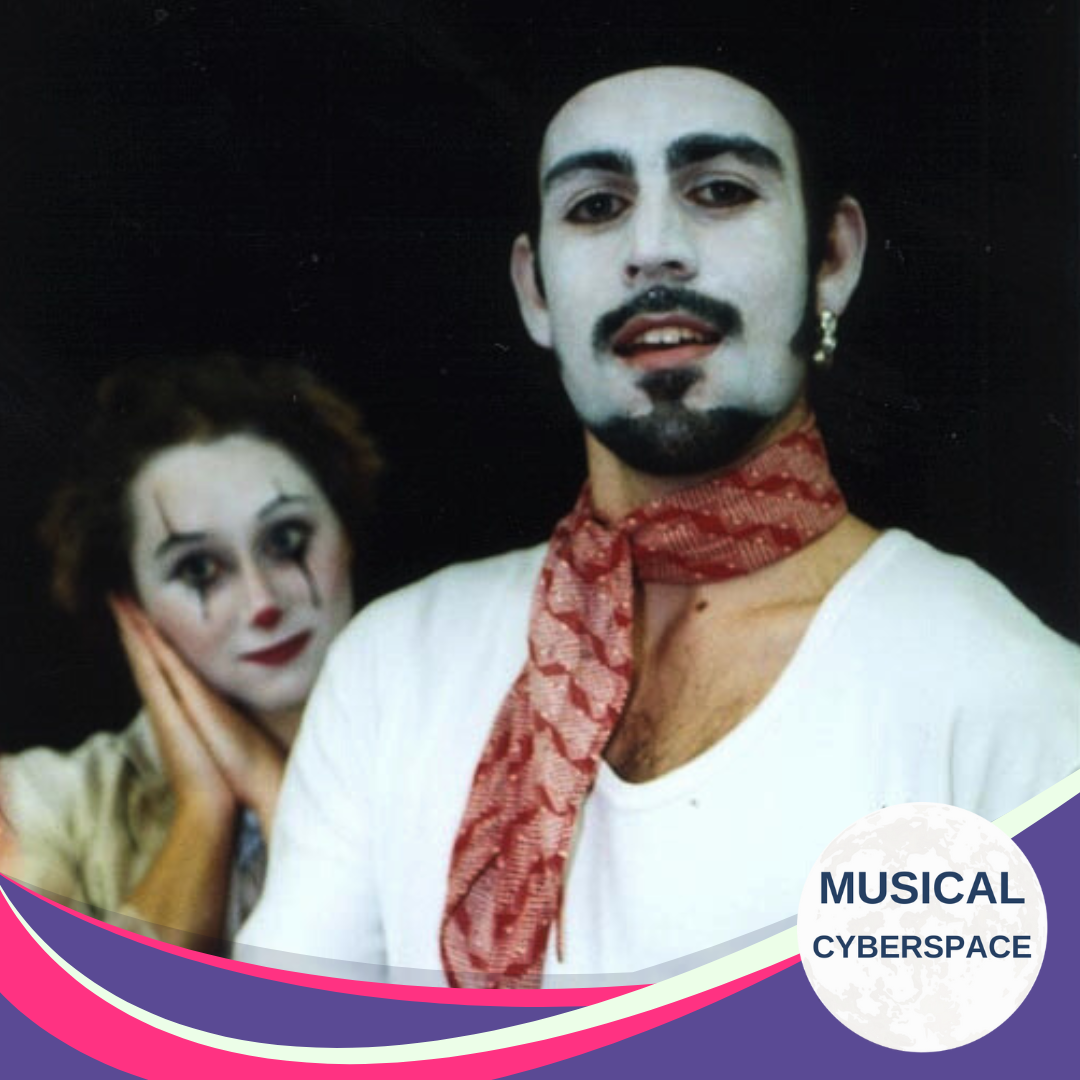
In 2002, while completing my Bachelor of Arts Honours in Drama at the University of Cape Town, I had the chance to work as an assistant director and choreographer of a student production of The Fantasticks. Directed by Geoffrey Hyland and staged at The Little Theatre, it was the debut musical for the Drama Department’s new and soon-to-be-discontinued musical theatre stream. It was a modest production — but a magical one — and it became a turning point in my creative life.
Until that point, my experience of musical theatre had always been big and flashy. I’d grown up watching productions like Les Misérables and The Sound of Music and performing in shows like Evita and Joseph and the Amazing Technicolor Dreamcoat. But The Fantasticks, with its small cast, piano, small raised platform and moon, was different. And it taught me more than I expected — not just about making theatre, but about living life to the full.

Lesson #1: It’s the Small Things That Count
There is no spectacle in The Fantasticks. There’s no elaborate set or chorus line to hide behind. All you have is a group of performers, a few props and the challenge of making every single moment matter. It was one of the first shows I worked on behind the scenes, and the built-in intimacy of the show made it feel incredibly personal. I remember the thrill of finishing “Never Say No,” one of my first choreographic assignments, and the sheer delight of working on “Plant a Radish” with Candice van Litsenborgh and Charles Tertiens, who played Bellomy and Hucklebee, Matt and Luisa’s scheming parents. Those vaudeville-style numbers were a joy to create, and every time we rehearsed them, they left a big, silly smile on my face. They reminded me that humour and heart don’t need embellishment; they just need to be true. Then there was “Round and Round.” I struggled with the idea that the odd-numbered company would make things asymmetrical, but Geoff gently pushed me to move away from the expected. “Not everything needs to be symmetrical,” he said. That opened something up in me and I found myself thinking about stage pictures, metaphor and movement, in a whole new way – all because of the attention we gave this small show to help it have a big impact. Small shows taught me that you can say something huge in a whisper. That’s probably why the cast albums of shows like Fun Home and Maybe Happy Ending live permanently on my Spotify playlists — and why I’m really excited to have the chance to see the latter next month.
Lesson #2: Every Time You Grow, You Get Growing Pains
When I worked on The Fantasticks, I was right in the middle of the “first act” of my life — full of dreams, vision and possibility. I was chasing my own “I Can See It,” imagining a future full of creative adventures. But as we all know, life doesn’t stick to the script. Like Luisa and Matt, I had to leave my garden. I had to stumble through my own version of “Round and Round.” I’ve lived through years of questioning, redirection, and — yes — pain. Sometimes, I tried to help others realise their dreams while losing touch with my own. Like El Gallo, I learned that even with the best intentions, it’s impossible not to get bruised along the way. And yet, those experiences are what teach you to see clearly. The Fantasticks understands this. It knows that love without loss is fantasy, and maturity means coming to terms with imperfection — in others and in yourself. Now, looking back, I find joy in the simpler things. In writing on my own terms. In carving out a quieter kind of creativity. The show planted those seeds. It’s only now I see how deeply they’ve taken root.
Lesson #3: Music Opens the Heart (and Keeps It Open)
The score of The Fantasticks has a way of slipping under your skin. “Try to Remember” is one of those rare songs that feels like a prayer. It haunts you, making you ache for the moments you perhaps didn’t know you were supposed to treasure when they happened. That’s what I love about musical theatre at its best. It doesn’t just offer escape; it offers reflection. Years later, I returned to another great song from the show, “They Were You,” in a revue I curated, A (Sorta) Love Story. Performing it with Amy Trout, I had to trust its simplicity and resist the urge to oversell it. That’s what gives it its magic. It says everything without needing to shout it out loud. Musicals, and the kind of music in them, let you lose yourself in someone else’s story and somehow find your own too. That’s the compass I follow in my writing now. What story will let someone feel seen? What’s the truth that someone else might be waiting to hear? And how can music help us all hear it better?
Lesson #4: Collaboration Is an Act of Faith
One of the greatest gifts of The Fantasticks was being trusted. Geoff allowed me to take creative ownership of the musical numbers I staged. The cast worked with me. We played. We made things together. It was the best kind of collaboration, a form of collective discovery — of growing something none of us could create alone. Indeed, watching Geoff’s vision unfold – one that was not imposed on the production but discovered through it – was its own lesson. You don’t have to go into a piece knowing everything. You’re going to come out of it changed, having learned things you didn’t know you needed to learn. I’ve lost touch with that feeling, at times. Work gets busy. The pandemic drained my energy and focus. But recently, I’ve started to find my way back — carving out time for creativity again and rediscovering the joy of the creative process. Because creativity heals, and collaboration, when built on trust, humility and care, is a sacred act in the church of the theatre.

Lesson #5: Theatrical Wisdom Wears a Mask
The Fantasticks is full of artifice: stock characters, allegory, direct address and stylised movement. Like all musicals, within its heightened framework, it reaches for something deeply human. I’ve always been drawn to old stories retold for new times, something The Fantasticks does elegantly. It borrows from commedia and Shakespeare, from poetry and folk tales, and uses those influences to talk about real emotion. That’s the power of stylisation. It doesn’t block the truth, but invites it in. It’s why I love musicals. Like opera, Greek tragedies or Shakespearean dramas, they reveal something essential that you might not recognise if it were steeped in Realism. It’s a lesson that has stayed with me. It certainly shaped Over the Rainbow, the first musical I wrote, collaborating with Jacqui Meskin (then Kowen) to make it happen. A modern, gay spin on The Wizard of Oz, Over the Rainbow was built, like The Fantasticks, on a small scale — a single piano, a handful of actors — but filled with big feelings about identity, disillusionment and human connection. Like The Fantasticks, it wore its sentiments proudly, undercutting anything that might be too sweet with a little comedy, and audiences responded to its unapologetic heart.
The Fantasticks taught me that we all have stories to tell. Though our stories may have happened before — and will almost certainly happen again — our voices make them unique. This little show reminds us how to live: with open hearts (“Try to remember when life was so tender / That dreams were kept beside your pillow”), with good boundaries (“Leave the wall. You must always leave the wall.”), and with a sense of wonder (“Those shining sights inside of me.”)
More than twenty years on, I still try to remember.

 Musical Cyberspace