
Welcome back to another edition of Forgotten Musicals Friday, where we dive into the quirky, overlooked or downright bizarre shows that have graced (and sometimes swiftly exited) Broadway stages. This week, we’re turning our spotlight onto a more recent and unusual entry in the annals of musical theatre history: Head Over Heels. Yes, it’s a bit of a stretch to call something that opened and closed only a few years ago “forgotten,” but with a mere 164 performances, this musical barely had time to etch itself into Broadway’s collective memory to earn itself the title.
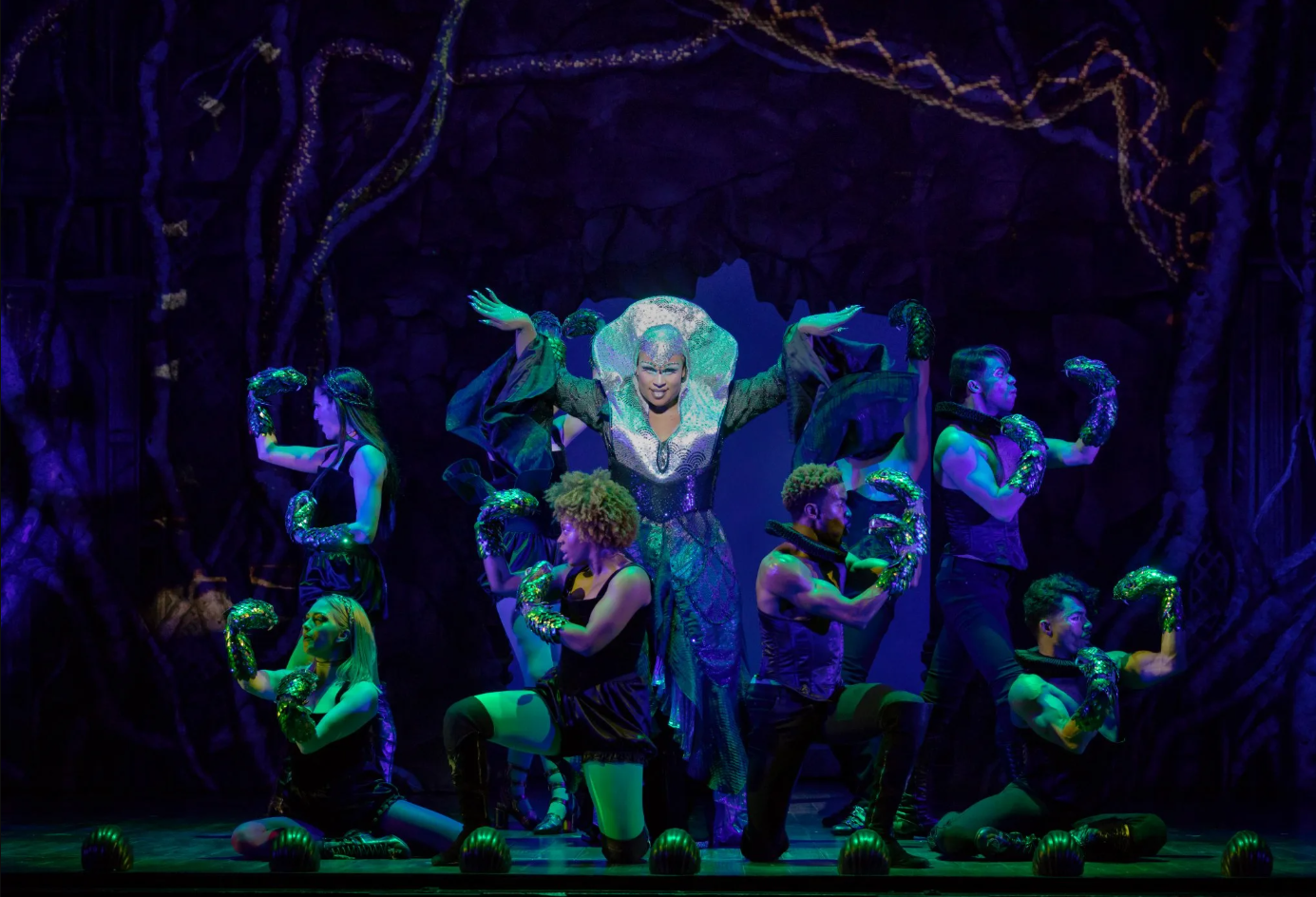
Head Over Heels was a daring blend of elements that at least a few people thought was a surefire recipe for success. Picture it: a jukebox musical featuring the punky-pop hits of The Go-Go’s meshed with a 16th-century pastoral romance based on Sir Philip Sidney’s The Countess of Pembroke’s Arcadia. By including a non-binary oracle played by the first transgender woman to originate a principal role on Broadway, the fabulous Peppermint as Pythio, the producers of this show had something on their hands that was sure to be anything but conventional – and perhaps even something very special.
The plot of Head Over Heels, first conceived and adapted by Jeff Whitty before James Magruder took over the process after creative conflicts in the production team, follows the royal family of Arcadia as they attempt to keep their kingdom’s famous “Beat” alive. Following the communication of a set of riddle-fueled prophecies that King Basilius wishes to avoid, the royal court embarks on a journey filled with disguises, intrigues, mistaken identity and all of the typical foibles traditionally seen in the comic romances of the Elizabethan era. By the final curtain, Basilius gives up his crown to his wife, Gynecia, while his daughters, Pamela and Philoclea, resolve all the romantic dilemmas they had faced at the top of the show. All of this takes place while the characters rock out to tunes like “We Got the Beat,” “Our Lips Are Sealed,” “Head Over Heels” and “Turn to You.” Even a couple of solo hits from Go-Gos member Belinda Carlisle, “Heaven is a Place on Earth and “Mad About You,” were thrown in for fun.

Despite an entertaining story and toe-tapping numbers, Head Over Heels never seemed to find its footing. Maybe the show was too full of ideas. Great concepts can only take you so far; the real magic happens when those ideas are distilled into something an audience can engage with emotionally. This show tried to juggle too many mismatched elements, and the connection between The Go-Go’s vibrant songs and the 16th-century story felt tenuous at best. It’s like trying to mix oil and water; no matter how much you shake the jar, they just don’t blend.
One thing that resonated strongly with audiences was the show’s theme of love and acceptance. Created in an era when society strives for more inclusivity, casting Peppermint was a significant milestone. However, this uncontestable highlight of the show – a legacy moment in theatre-making – underscores a critical issue with Head Over Heels: when the most memorable aspect of your show is a casting decision rather than the content itself, it speaks volumes about how the material plays.
Adding to the show’s rocky journey were the controversies surrounding its creation. Original librettist Whitty’s departure from the project under contentious circumstances cast a shadow over its development. It’s hard to accept a message about love and acceptance when the backstage stories hint at anything but those ideas.

Head Over Heels is the kind of show you want to love. It’s bold and different, and it has moments of brilliance. Some people really connected with it, finding charm in its abstract weirdness and the sheer audacity of its concept. But for most, it was just too scattered to engage with on a deeper level. Blending Go-Go’s hits with a centuries-old story was an intriguing idea, but ultimately, it feels like a mismatched patchwork rather than a cohesive tapestry.
So, does Head Over Heels deserve to be remembered? Absolutely – if only as a fascinating experiment that dared to step outside the box. Its brief run on Broadway is a testament to the unpredictable nature of theatre: sometimes, great ideas don’t pan out, and even the best intentions can lead to a flop. But in its failure, Head Over Heels gives us something worth discussing, which is, in itself, a kind of success. It may have paved a small part of the way for other ground-breaking moments in the discourse around inclusivity and casting on Broadway too.
Join us next week as we delve into another forgotten gem (or disaster) from the musical theatre history books. Until then, keep those obscure cast recordings spinning and those forgotten stories alive!

 Musical Cyberspace