
TGIF, theatre buffs – it’s time for Forgotten Musicals Friday! This week, we’re diving into a more recent, truly unique gem that pulsates with rhythms and rebellion – Fela! A musical that is as audacious as its namesake, Fela Kuti, this show brought an authentically African sensibility to the stage in its runs on Broadway and in the West End, breaking away from typical musical theatre fare. Let’s explore why Fela! deserves to be remembered and celebrated – and consider why it could be considered a forgotten musical, even so soon after its original theatrical run only 15 years ago.

Fela! is a biographical jukebox musical with a book by Bill T. Jones and Jim Lewis, featuring the powerful and politically charged music of Nigerian legend Fela Kuti. Known for pioneering the Afrobeat genre, Kuti was not just a musical icon but a fearless activist too. The musical is set during the peak of his influence in the late 1970s, a time when Nigeria was experiencing extreme political turmoil.
Imagine being in the legendary Lagos nightclub, The Shrine, where Kuti’s electrifying performances were a beacon of resistance against oppression. Fela! captures this atmosphere vividly, which is exhilarating, but it also focuses on the darker periods of Kuti’s life. Jones and Lewis built the show around the government-ordered army raid of Kuti’s compound, the Kalakuta Republic. In this targeted attack, a thousand soldiers were sent to shut him down, burning the compound to the ground after torturing Kuti and many other people who lived there, including his mother, Funmilayo Ransome-Kuti, who was thrown from a window of the second floor of the compound and died eight weeks later as a result of her injuries.
The complicated relationship between Fela and his mother is a key element of the show, intertwining Kuti’s revolutionary music with his personal battles. Ransome-Kuti was a staunch civil rights activist and while the show makes it clear that Funmilayo and Fela are on the same page when it comes to opposing social injustice, the manifestations of their unyielding opposition to Nigeria’s military dictatorship were a source of conflict between them.
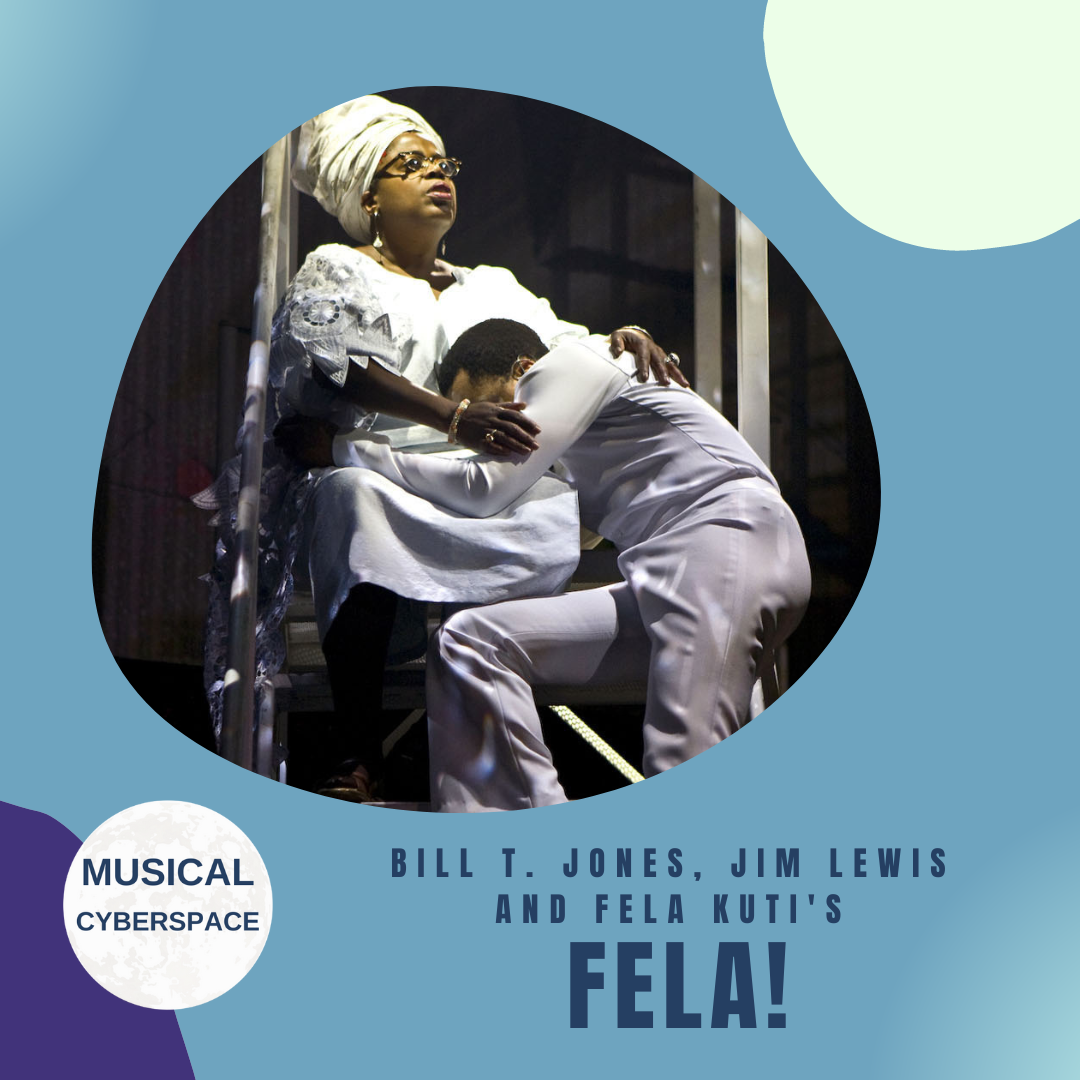
While the show and its songs are strong on storytelling, its structure is unconventional. In some ways, Fela! is like a gloriously enveloping fever dream, one idea inspiring another rather than following the typical cause-and-effect structure of most musicals. In addition to dramatising key moments and conflicts in Fela’s life, it takes time, for instance, to delve into the mechanics of the Afrobeat sound, exploring how it blends West African rhythms with funk and jazz influences. This approach to the musical inspires rich and vivid imagery, both in the show’s design and its choreography, with powerful visual symbolism built into the book of the show. Without crossing the line into spoiler territory, it’s worth mentioning that Kuti’s presentation of his mother’s symbolic coffin to the Nigerian military a year after her death inspires one of the most gripping moments of the show. It’s moments like this, where history, legend and art come together, using songs like “Coffin for Head of State” that this show is at its most powerful.
Fela! had a brief but impactful run Off-Broadway in 2008 before opening at Broadway’s Eugene O’Neill Theatre in 2009. Audiences went wild for the show’s boldness and brilliance, with celebrities like Alicia Keys, Jay-Z, Beyoncé, Charlize Theron and David Byrne all endorsing the show, much in the way celebrities would come to bat for Hamilton when it was first performed. It garnered an impressive eleven Tony nominations, winning three for Best Choreography, Best Costume Design and Best Sound Design. Despite the show’s energy and authenticity, it lost the Best Musical prize to one of the most lacklustre Tony-Award-winning Best Musicals of all time, Memphis. It had previously lost the equivalent Drama Desk award to Billy Elliot and would go on to lose the Laurence Olivier Award to Legally Blonde.
Perhaps one of the reasons that Fela! remains somewhat under the radar is its lack of achievement at that topmost level of the musical theatre awards industry. However, many musicals that don’t take home Best Musical awards endure, so this can’t be the totality of it.

Is it some kind of controversy that keeps the show bubbling under instead of breaking through? Fela! could fit the bill in a couple of cases here. Two legal suits were raised against the show, one by Marilyn Nance, a photographer who claimed the show used one of her images without permission and the other by Carlos Moore, who sued for copyright infringement because of the use of his biography, Fela, Fela! This Bitch of a Life!, as source material for the show. In the former case, the photograph in question was replaced, with the producers claiming that they did not know the fragment of the photograph being used was Nance’s, while the latter was settled out of court, with credit given to Moore in the show’s credits and all subsequently published show materials. I’m also not convinced by this, as although these cases are well documented online, they rarely seem to be cited as a reason for anyone’s dissatisfaction with the show.
Perhaps a bit more convincing, even more so in a post #MeToo world, are the objections to the show’s bias towards Kuti and the way it skirts around his treatment of women, one of the points of conflict between him and his mother, who was a suffragist and women’s rights activist. The glossing over of Kuti’s polygamous lifestyle, reports of the domestic abuse of his 27 wives and his HIV/AIDS-denialism point toward a significant conflict that the show fails to address adequately, raising questions about the portrayal of male icons and their unchecked behaviour towards women.
Most of all though, I think Fela slides into the realm of the forgotten musical because it doesn’t fit the typical Broadway musical mould. It’s raw, unfiltered and unapologetically African in its approach, as it has to be given its used of Kuti’s songs as the key medium of its storytelling. This makes it a tough sell in arenas where musicals catch fire outside of top-tier professional productions, such as community theatre productions and in schools, where its edgy subject matter also counts against it. Indeed, it has even been an anomaly on professional stages since its debut, with the first new production only making its bow only last year.
Even so, Fela! matters. Fela! is not just a musical; it represents a movement. It’s a celebration of the power of music as a tool for social change. Its infectious energy, defiant spirit and unforgettable music make it a standout piece in the world of musical theatre. Fela! challenges our expectations of what a musical should be. It’s not just entertainment; it’s an experience that shakes you to your core, just like Kuti’s music did. The next time you’re looking to explore a show that is provocative and profoundly moving, give the cast album a listen and just for a moment, restore this revolutionary jukebox musical back into the spotlight where it belongs.

 Musical Cyberspace