
Welcome back, theatre aficionados, to the thrilling reboot edition of Forgotten Musicals Friday! Having focused on improving the regularity of our engagement on the site for the last six months, we ran a poll on our Instagram account last week to find out what we could add as a second weekly feature on the site – and the return of Forgotten Musicals Friday came out tops! This week, we’re diving into a wartime classic that certainly boosted military morale during World War II, while simultaneously breaking new ground in the arts and placing itself, in some ways, on the wrong side of the cultural conversations of the time. So let’s dust off our military fatigues and march into the world of This Is The Army!

Picture it: July 4, 1942. The Broadway Theatre is abuzz with excitement as the military revue, This Is The Army, premieres to an enthusiastic audience. With music and lyrics by the legendary Irving Berlin and a book by James McColl, with dialogue for the minstrel show (more on that later!) by Private Jack Mendelsohn, Private First Class Richard Burdick and Private Tom McDonnell, this revue was no ordinary show. It was a patriotic spectacle designed to lift the spirits of a nation at war, produced by none other than the United States Army – whimsically credited as Uncle Sam in the production credits – itself. And boy, did it deliver! The show ran for 113 performances on Broadway before embarking on a national tour, hitting major cities across the USA from Washington to San Francisco, D.C. to Los Angeles, raising a staggering $2 million for the Army Emergency Relief Fund. This wasn’t just a show; it was a nationwide phenomenon that brought joy and unity during dark times.
The concept of unity is an interesting and complex part of the history of This is the Army, which was a follow-up to Berlin’s World War I wartime revue, Yip Yip Yaphank. In the earlier show, there was no racial integration in the cast. This time around, Berlin insisted on racial integration – or at least a version of it. In 1942, when the show was written and staged, there were no racially integrated units in the United States Army. Because the show was to be performed by a specially formed unit, the company created for This is the Army would be the first to be racially integrated. As such, the soldiers lived and worked together at Camp Upton where the show was rehearsed; ironically, they did not appear on stage simultaneously. Berlin wrote a special number titled “What the Well-Dressed Man in Harlem Will Wear” for the African American performers and sharp ears might note its rhymic similarity to another Berlin song, “Puttin’ On the Ritz,” itself an ode to the 1920s-based social observation of fashionable African American people strutting their stuff in Lenox Avenue. Berlin simply played the song over and over until it took on its new form.
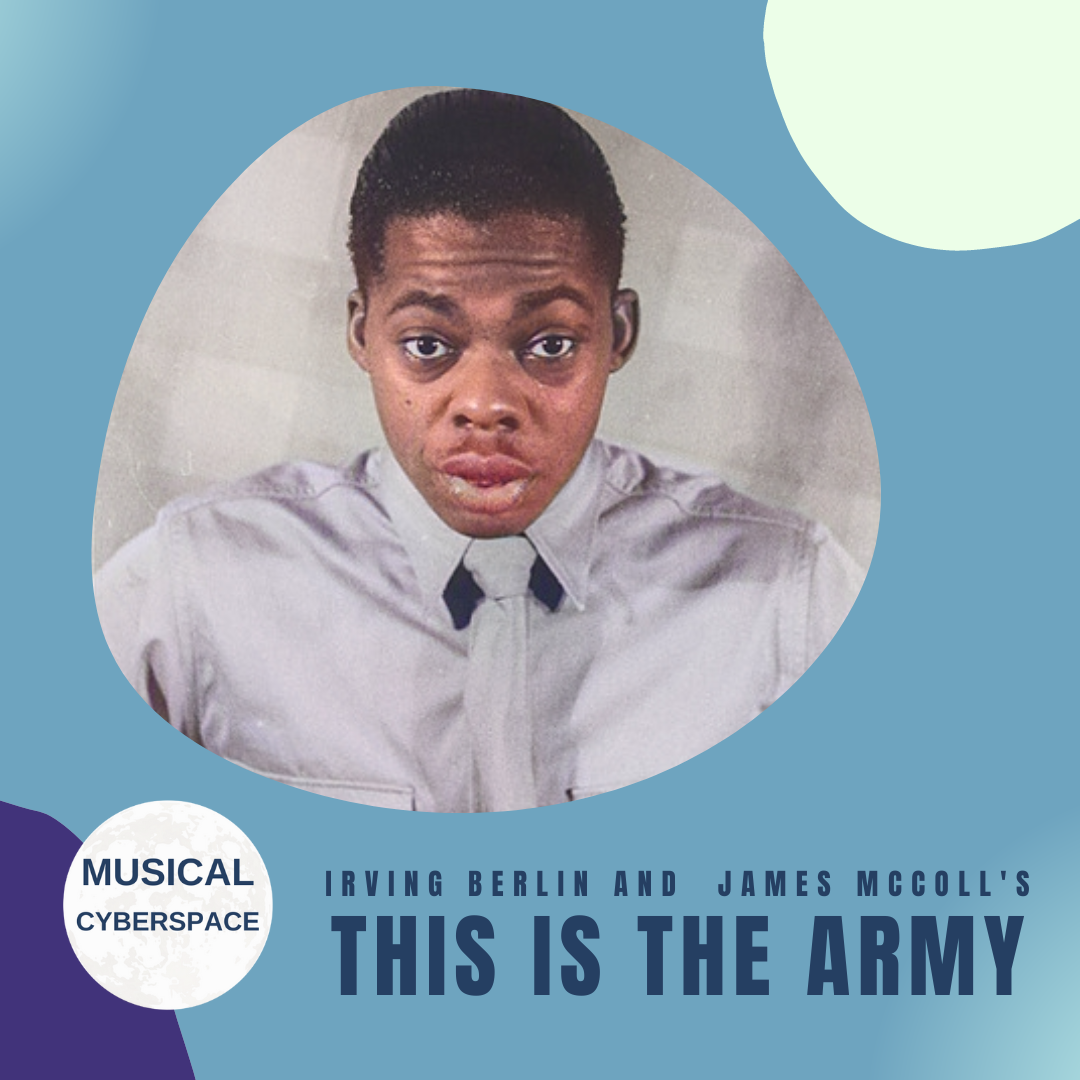
At the heart of the evolution from “Puttin’ On the Ritz” to “What the Well-Dressed Man in Harlem Will Wear,” there is a transaction founded Berlin’s stereotypical views of African American people and his perception of African American music. It’s a very short road from this kind of discernment to Berlin’s view on minstrel shows and blackface. It is well documented that Berlin had hoped to reproduce the minstrel show sequence from Yip Yip Yaphank, which featured more than 100 soldiers sitting on bleachers in blackface, in This is the Army. Ezra Stone, the director of This is the Army, had an unambiguous response to this idea:
I know the heritage of the minstrel show. Those days are gone. People don’t do that anymore.
Berlin disagreed with him, writing off Stone’s views as progressive nonsense. Eventually, Stone talked Berlin around the idea of having the entire company in blackface, convincing him of its impracticality. Even so, the opening sequence was still sub-titled “A Military Minstrel Show” and it still included the reproduction of the song “Mandy” from Yip Yip Yaphank, in which blackface was still used. It’s a most perplexing muddle of racism and an attempt to move away from it.
Another blight on the vision of unity that This is the Army was Berlin’s later diatribe about the number of Jewish performers in the show. In his opinion, there were ‘too many’ and he wanted to rationalise the inclusion of ethnicities in the show. Given that Berlin himself was Jewish, the son of a cantor, this hits hard. Given the wider context of World War II and the Holocaust, it’s pretty much unforgivable.
Berlin’s personal politics aside, This is the Army played a significant role in building the military’s esprit de corps, humanising the soldiers’ experiences for civilians who saw the show and raising money for the relief fund. By contemporary standards, it’s perhaps easy to dismiss the score, which is full of catchy ditties about army life (like “This Is the Army” and “The Army’s Made a Man Out of Me”), sentimental ballads about the things soldiers leave behind (such as “I’m Getting Tired So I Can Sleep”) and patriotic anthems (including “American Eagles” and “This Time”). But this doesn’t take into account how it landed in the 1940s. One can imagine just how stirring this production must have been back then, when the life of a loved one – or even your own – was hanging in the balance. Suddenly, something straightforward and perhaps even ostensibly trite, takes on another dimension and becomes something extraordinary.
Indeed, the show was so impactful that Warner Brothers paid $250 000 for the film rights, which Berlin granted on condition that the rights and profits from the motion picture were donated to the army. The film version of This is the Army combined elements from both Yip Yip Yaphank and This is the Army, structuring everything around a fictional backstage story about the making of the two shows. It became the highest-grossing musical film of all time for a little more than a decade and was nominated for three Academy Awards, winning one for Best Scoring of a Musical Picture.
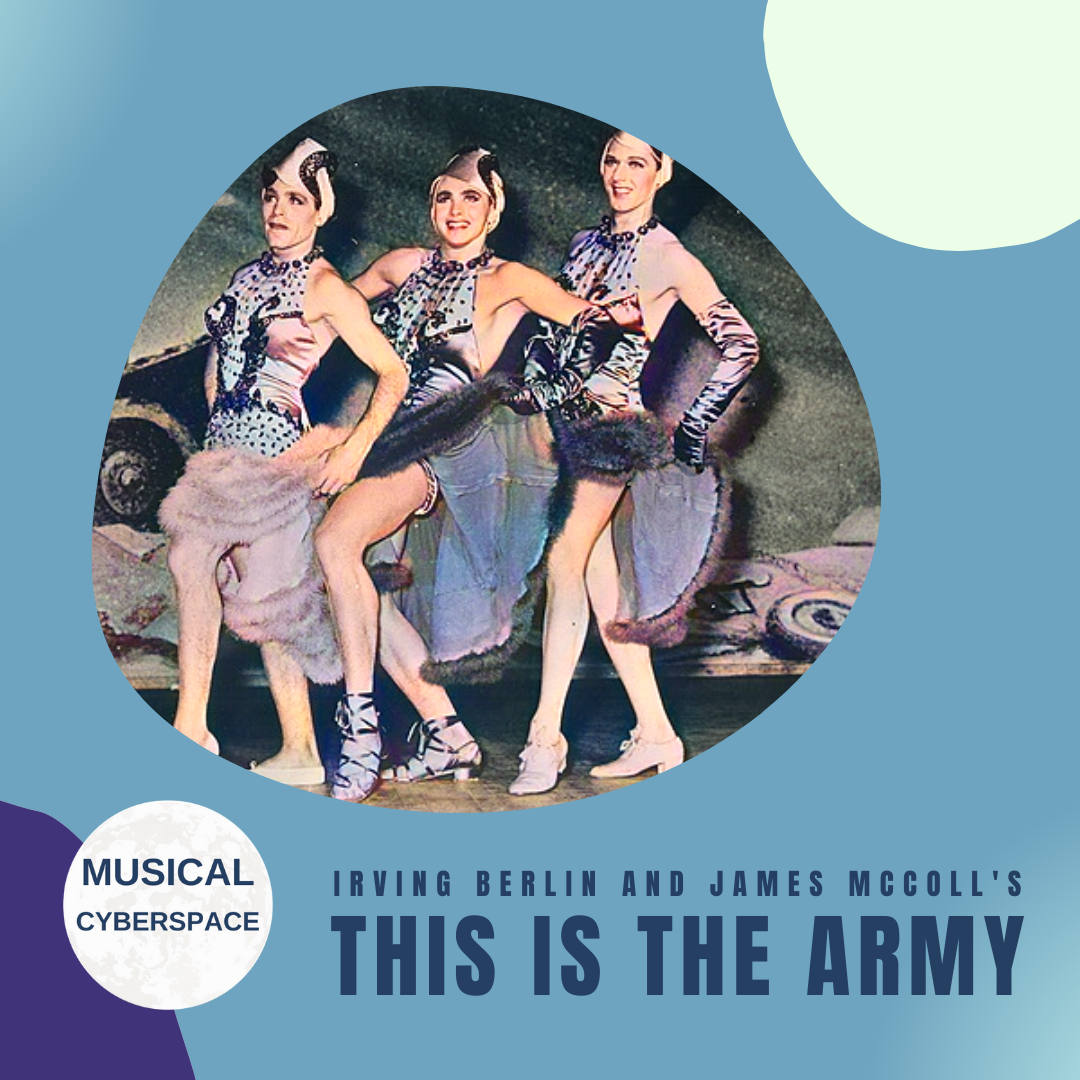
The success didn’t stop in the United States. In 1943, the stage version of This Is The Army crossed the Atlantic, performing in London, Glasgow, Naples and Rome, and then leapt into North Africa for some time in Cairo before heading east to perform in Iran and even further afield in New Guinea, Guam, Leyte, Okinawa and Iwo Jima before wrapping things in Honolulu and on Maui in 1945. Berlin joined the tour to sing his signature wartime tune, “Oh! How I Hate to Get Up in the Morning,” and made local adaptations for the show, including “My British Buddy,” as it made its way around the world.
Considering this show’s legacy is not easy. As a topical revue, it’s obviously not the kind of show that can be revived. It also has problematic elements, not only from our modern-day view but from a contemporary perspective too. Perhaps, like the 2016 revival-adaptation of Shuffle Along, retitled A 2016 adaptation, Shuffle Along, or, the Making of the Musical Sensation of 1921 and All That Followed, revisiting this show needs to recognise its social context. This was the approach taken when This is the Army received a tribute in a performance at 54 Below to mark its 75th anniversary. Directed and produced by Jason Ferguson, the concert sported a revised book (also by Ferguson) based on Alan Anderson’s memoir The Songwriter Goes to War and included the expected story of how the first racially integrated army unit came to be alongside tales of openly gay soldiers in the unit who risked military prison and how the company avoided brushes with death during their trips in combat zones. Anderson was the stage manager of This is the Army and his book is one to add to your reading list if you haven’t already read it.
So there you have it – a forgotten gem that not only entertained audiences in the 1940s, but also gives us a snapshot into that place and time, when social and cultural politics were shifting in ways that are, perhaps, not all that dissimilar to the shifts we navigate today. Until next time, dear readers, keep those jazz hands ready and your spirits high!

 Musical Cyberspace