
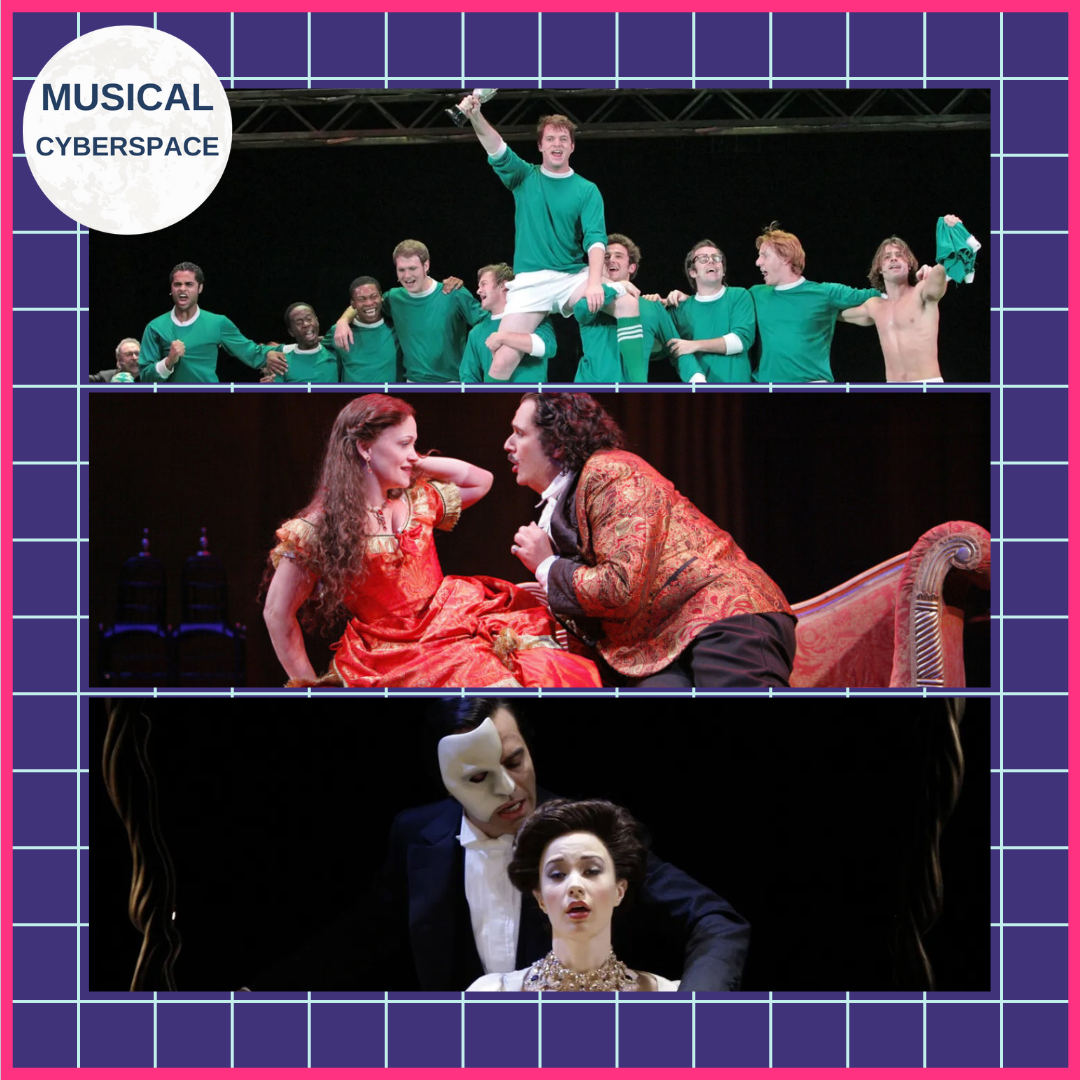
Hold onto your top hats and chandeliers, musical theatre enthusiasts, because we’re about to embark on a musical journey through the second act of Andrew Lloyd Webber’s illustrious career. This column coincides with the anniversary of the 2019 closing of School of Rock on Broadway and is a “readers’ choice” piece, with the topic having been selected by our followers on Instagram.
As one of musical theatre’s most enigmatic composers, Lord Lloyd Webber has led us through the mystical realms of the Phantom’s opera house, the feline-filled alleys of Cats, and the emotional politics in Evita. How do the shows he has created since the turn of the century measure up to these? Lloyd Webber’s juggling of what he hopes to be commercially savvy choices with artistically daring endeavours offer his audiences a rollercoaster of creative ambition and exploration. So, buckle up as we speed up, down and around a track of musicals that include Love Never Dies, Stephen Ward and Bad Cinderella, each of which provides the theatrically charged moments that define this chapter of Lloyd Webber’s career. Perhaps we may bring to life the ghosts of the past quarter century with a little illumination, dear readers? Let the overture begin!
7. (Bad) Cinderella
Bad Cinderella, as this show was titled on Broadway following its 2021 West End debut as just plain Cinderella, is a muddled concoction of ideas. It stumbles through its attempt to modernise the classic Cinderella tale into a feminist fable about the perils of image and beauty and Emerald Fennell’s book struggles to style the scattered ideas swirling within the production into any kind of sensible aesthetic. The show feels like it is desperately seeking a fairy godmother who can help transform the ideas it grapples with into a cohesive narrative. Despite Lloyd Webber’s efforts to inject some musical flair into the proceedings, including a title song that has a clever nod to Rodgers and Hammerstein’s “In My Own Little Corner” from their beloved version of Cinderella and a series of lovely melodies and instrumental items, the show remains a haphazard mess. David Zippel’s lyrics, although somewhat sophisticated and carefully crafted, lack substance, meandering through a series of ideas without ever coming to a meaningful point. His work on the ballads overloads Cinderella herself with self-pity, which dilutes the character’s spirit and distances her from the audience to no good end. While some of the ideas in Bad Cinderella have potential, the show flounders in its attempt to mimic the post-modern approach of contemporary musicals like Six, lacking the clarity of intent and approach that makes, say, that particular show shine. The rush to capitalise on a trend and to get some life into the theatre following the COVID-19 pandemic leaves Bad Cinderella feeling unfinished, a hastily assembled jumble of disjointed concepts. In the end, this poorly written and campy musical fails to rise above its rushed inception, resulting in an unsatisfying experience that leaves one wondering what could have been if more time and care were dedicated to refining its own take on an already overly adapted fairy tale.
6. Stephen Ward
In the diverse output of Lloyd Webber’s post-2000 musicals, Stephen Ward delivers something that echoes the maestro’s venture into the world of Aspects of Love, where the politics of sex entangle with the sex of politics. This dark, sexy and tragic tale delves into the scandalous 1963 Profumo affair, revolving around the eponymous English osteopath and artist. The canvas for social satire and commentary is vast in a show like this. Christopher Hampton and Don Black’s book and lyrics make the proceedings feel like a play (with a proclivity for slipping into cliche, even though it is fairly historically accurate) that is set to music rather than a traditional musical. Everything has a rather literary feel to it and never quite jumps off of the page. Running for a short stint from late 2013 to March 2014 and opening to mixed reviews, Stephen Ward never quite captured the public’s imagination. While Lloyd Webber offers a romantic score with some delightful period accents and is quite adept at sustaining tension and getting the show to simmer with intrigue, it falls short of erupting into the kind of show that could be a smash. Nevertheless, Stephen Ward boasts some enjoyable moments, with high points in the score like the tender “This Side Of The Sky,” the catchy “1963,” and the camp “You’ve Never Had It So Good.” The bid for a hit single in “I’m Hopeless When It Comes To You” got lost in the show’s brief run, rendering both it and the show somewhat forgotten today. In the grand tapestry of Lloyd Webber’s later works, Stephen Ward aims to be a fascinating exploration of scandal and society but teeters on the brink of success without quite achieving it.
5. The Beautiful Game / The Boys in the Photograph
The Beautiful Game, Lloyd Webber’s 2000 musical was rewritten into a later incarnation as The Boys in the Photograph. Despite productions around the world in Canada, South Africa and Australia, the show was not a huge hit in its original West End production and has never played Broadway. In the final analysis, it seems destined to be sandwiched in the middle of Lloyd Webber’s repertoire from this century. The overarching narrative demonstrates some noble intentions on the creators’ part. Set against the sensitive backdrop of The Troubles in Northern Ireland, The Beautiful Game uses the device of a teenage soccer team to delve into the profound impact of sectarian conflict on young people. Protagonist John’s transformation from political ambivalence to activism, which develops in tandem with an “enemies to lovers” narrative, adds depth to the production. Possibly the weakest link in the show is Ben Elton’s lyrics. While ambitious in their attempt at creating a realistic vernacular style, they lack the finesse and precision expected in musical theatre, hitting a low point in “The First Time.” Nonetheless, the musical boasts some highlights with standout moments like “Our Kind of Love” (the best incarnation of this song, which found a final version as “Love Never Dies,” having always been intended as a melody for a sequel to The Phantom of the Opera) and the striking “If This is What We’re Fighting For.” In fact, there is some really interesting compositional work from Lloyd Webber in this score and revisiting the cast recording for this column was actually quite enjoyable. Despite its hitting the post rather than scoring a goal, The Beautiful Game is noteworthy for continuing the tradition of addressing serious issues within the realm of musical theatre and for showcasing Lloyd Webber’s ability to craft a highly listenable score even when his work is paired with less-than-perfect lyrics.

4. Love Never Dies
Love Never Dies, the much-debated sequel to Lloyd Webber’s iconic 1986 hit The Phantom of the Opera, has been a frequent subject of analysis (at least on this site) and revision by its creators. Transporting us back into the Phantom’s lair, now situated at Coney Island rather than in the Palais Garnier, the show reshuffles the narrative roles of the original characters into a new story, with Christine, Raoul, Mme Giry and Meg all along for the ride. While it received its fair share of poor reviews, Love Never Dies is undeniably fascinating, presenting a new twist on the familiar Phantom tale. The score features some standout moments like the incredible “‘Til I Hear You Sing,” which blows the much-touted and repurposed “Love Never Dies,” which had been linked with this piece as early as Lloyd Webber’s 50th birthday celebration at the Royal Albert Hall, out of the water. The show’s ability to realise its potential has been hampered by cosmetic changes rather than a deep restructuring of its narrative intricacies. For Love Never Dies to be the best it can be, Lloyd Webber, along with the rest of the writing team of Ben Elton, Frederick Forsyth and Glenn Slater, would need to meticulously refine the storytelling traditions at play, namely melodrama, operetta, and the conventions of sequels. Slater, particularly in the lyrics department, would need to elevate some of his contributions. Only through this kind of process could Love Never Dies achieve the grandeur it inherently harbours. As it is, it is a complex and imperfect gem, yearning for the right touch to unlock its true potential.
3. School of Rock
I can feel the shockwaves of dissent that may ripple through the ranks when, dear readers, you see that School of Rock did not seize the top spot on this list. This joy-fuelled musical, based on a film that everyone adores, rocked Broadway for an impressive 1 309 performances and spent a little more than three years in the West End, also earning international acclaim in productions around the world. It’s undeniably fun and a textbook example of transforming a film into a well-crafted musical. Perhaps the secret to its success lies in Julian Fellowes’s adept hand in crafting the show’s book, ensuring an excellent coherence of all the show’s different elements. Even Glenn Slater, often a wild card when it comes to delivering quality musical theatre lyrics, rises to the occasion with a job that doesn’t strain his talents. The tuneful score from Lloyd Webber, complete with earworms aplenty, adds to the musical’s undeniable charm. It’s a testament to the power of great theatre, designed for a night of pure enjoyment. Yet, with the dust settled, one can’t help but wonder if School of Rock has really etched itself into the annals of timeless masterpieces. It sits at the crossroads of entertainment and greatness, leaving one to ponder whether this high-energy, crowd-pleasing spectacle is a fleeting sensation or a lasting force in the musical theatre pantheon.
2. The Woman in White
The Woman in White is a musical that some critics would have you believe is better left in the shadows, but there’s more than meets the eye to this atmospheric musical theatre creation. Picture Andrew Lloyd Webber donning the musical mantle of Benjamin Britten and weaving a mysterious tale that lingers in the air like a haunting melody and you’ll find The Woman in White has much to offer. The story kicks off when Walter Hartright sees a strange woman dressed entirely in white on his way to meet his new students, Marian Halcombe and Laura Fairlie, at their home, Limmeridge House. The mystery of the woman in white’s identity unravels from there. Thanks to Charlotte Jones’s swift-moving book, The Woman in White sustains the tension that Lloyd Webber’s score masterfully constructs. Indeed, the show thrives in its musicality, providing an enduring allure that draws one back despite David Zippel’s faltering lyrics. Despite those missteps, memorable tunes emerge, including the haunting “Evermore Without You,” the touching “I Believe My Heart,” and the mischievous “You Can Get Away With Anything.” Inevitably, the spotlight shines on the actor portraying Marian, whether it be Laura Michelle Kelly at the Sydmonton Workshop, almost incomparable Maria Friedman in both the West End and Broadway productions, and even her formidable West End replacement, Ruthie Henshall. The Woman in White is a journey, an immersive experience where story and score entwine, beckoning the imagination to ponder how much more captivating it could be in an immersive production. Sure, it’s no Sweeney Todd – but then again, what is?
1. The Wizard of Oz
In The Wizard of Oz, Lloyd Webber gracefully steps into the realm of a timeless classic, the tale of Dorothy Gale, who discovers the meaning of home when she is magically transported from Kansas to the magical land of Oz. With this production, Lloyd Webber added two incomparable co-creators to his colleagues, E.Y. “Yip” Harburg and Harold Arlen. Both had, of course, been resting in peace for some time when this 2011 adaptation of the 1939 film came along. This project also offered Lloyd Webber a chance to reunite with possibly the best of his living collaborators, Tim Rice. Did The Wizard of Oz genuinely require new songs such as “Nobody Understands Me,” “The Wonders of the World,” “Already Home” or “Red Shoes Blues?” Probably not, but “Already Home” provides a sweet serenade to the meaning that Dorothy finds on her journey (though it’s no match for “Home” from The Wiz), and “Red Shoes Blues” has found its niche, perhaps owing to Hannah Waddingham’s spirited rendition of the song. All things told, there’s an air of hubris in Lloyd Webber’s decision to make his own mark on The Wizard of Oz, but in doing so, he created the standout among his post-2000 creations. Regardless of the new additions, who can resist the allure of Oz? The core material, already the best of all modern fairy tales, is a mesmerising yarn, with classic songs paving a yellow brick road straight to your heart.
And there you have it, fellow theatre enthusiasts! Our grand tour of Andrew Lloyd Webber’s post-2000 shows is done. Ambitious highs and lows, experimental twists and artistic audacity live alongside his commercial prowess in the haunting melodies of The Woman in White, the rebellious spirit of School of Rock, and the musical athleticism of The Beautiful Game — all a part of Lloyd Webber’s enduring legacy. As the final curtain descends on this grand retrospective of Lloyd Webber’s later works, one might consider whether they measure up to his work from the 1970s through the 1990s. Ultimately, that’s a no: there’s nothing as good as Jesus Christ Superstar, Evita, The Phantom of the Opera or even Cats. But while Lloyd Webber’s newer shows may not have reached the iconic status of their predecessors, they carry the torch of a composer unwilling to rest on his laurels. So, whether you’re singing along to Love Never Dies or pondering the provocative tale of Stephen Ward, remember that each show represents a lingering echo of Lloyd Webber’s continued love affair with the enchanting world of musical theatre. Bravo, Lord Lloyd Webber, bravo!

 Musical Cyberspace