
With Pieter Toerien Productions and the Really Useful Group presenting a South African revival of Joseph and the Amazing Technicolor Dreamcoat and that revival having had its first performance yesterday in Johannesburg, where it will run until August before transferring to Cape Town, I thought it might be appropriate to run through the famous list of colours that Tim Rice set to Andrew Lloyd Webber’s music to create the first of three Saturday Lists, the following two of which will appear in the next two weeks.
The creative team of this production is headed by Paul Warwick Griffin, who will direct, with musical supervision by Charl-Johan Lingenfelder and musical direction by Louis Zurnamer. Choreography will be by Duane Alexander. Earl Gregory stars as Joseph, with Bianca le Grange as the Narrator and Jonathan Roxmouth as the Pharaoh.

Here’s a list of songs from musicals featuring the colours of “Joseph’s Coat” as per the song’s lyrics. Sometimes, the reference is to the colour itself, but at other times it’s a name or a fruit – or something else completely!
Red
Our first song is “Red and Black” from Les Misérables. This song, with music by Claude-Michel Schönberg and lyrics by Alain Boublil (French) and Herbert Kretzmer (English), is sung at the ABC Café during a political meeting between a group of students preparing for the revolution they are sure will follow once General Lamarque is dead. Red symbolises both ‘the blood of angry men’ and ‘a world about to dawn’ in this song.
Yellow
Next up is “Follow the Yellow Brick Road” from The Wizard of Oz. Harold Arlen and E.Y. “Yip” Harburg’s short number is a prelude to “You’re Off to See the Wizard” and is heard when the Munchkins send Dorothy off to the Emerald City. There are several real-life yellow brick roads, two of which may have inspired Oz author L. Frank Baum. One is at a military academy in New York, and the other is near Holland, Michigan.
Green
“Green Finch and Linnet Bird”, by Stephen Sondheim, comes from Sweeney Todd: The Demon Barber of Fleet Street. This song introduces the character of Johanna, who is kept in seeming captivity by Judge Turpin. “If I cannot fly,” the girl wishes, “let me sing.” European greenfinches are beloved songbirds, commonly bred as pets in Malta, while the common linnet is declining in numbers and is protected as a priority species in the UK.
Brown
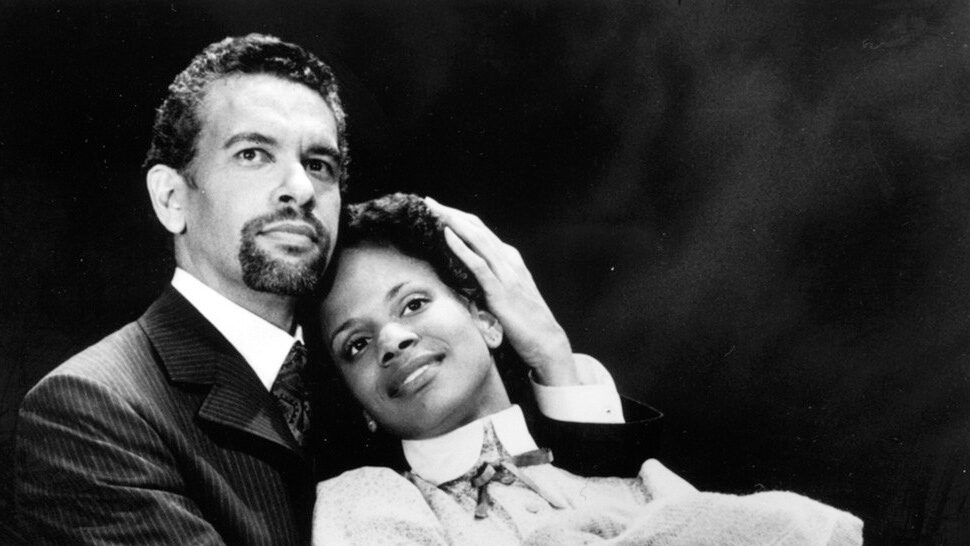
Lynn Ahrens and Stephen Flaherty’s “Sarah Brown Eyes” from Ragtime gives the character mentioned in the song’s title an unexpected appearance in the second act of the show. With Sarah having died at the end of the first act, her beloved, Coalhouse Walker Jr, recalls their first meeting. It’s a tender moment before the musical kicks back into high gear, with Coalhouse planning to blow up J.P. Morgan’s library.
Scarlet
Frank Wildhorn and Nan Knighton wrote a title number for The Scarlet Pimpernel, a patter song for Percy Blakeney, Marguerite St Just, Marie, Armand St Just, Lady Digby, Lady Llewellyn and the servants. In the song, they all debate the identity of this eighteenth-century superhero who saved innocents from facing the guillotine during the French Revolution.
Black
In, Hair, James Rado, Gerome Ragni and Galt MacDermot wrote a song for three white women of the tribe to express their love for “Black Boys”. The response? Three African-American women of the tribe explain their love for “White Boys.” While this was an exuberant deconstruction of miscegenation, which had been legally dismantled in the year of the show’s premiere, Hair tackled other issues about race with a more serious intent.
Ochre
Ochre has me stumped. I can’t think of a musical theatre song that mentions this colour in its title.
Peach
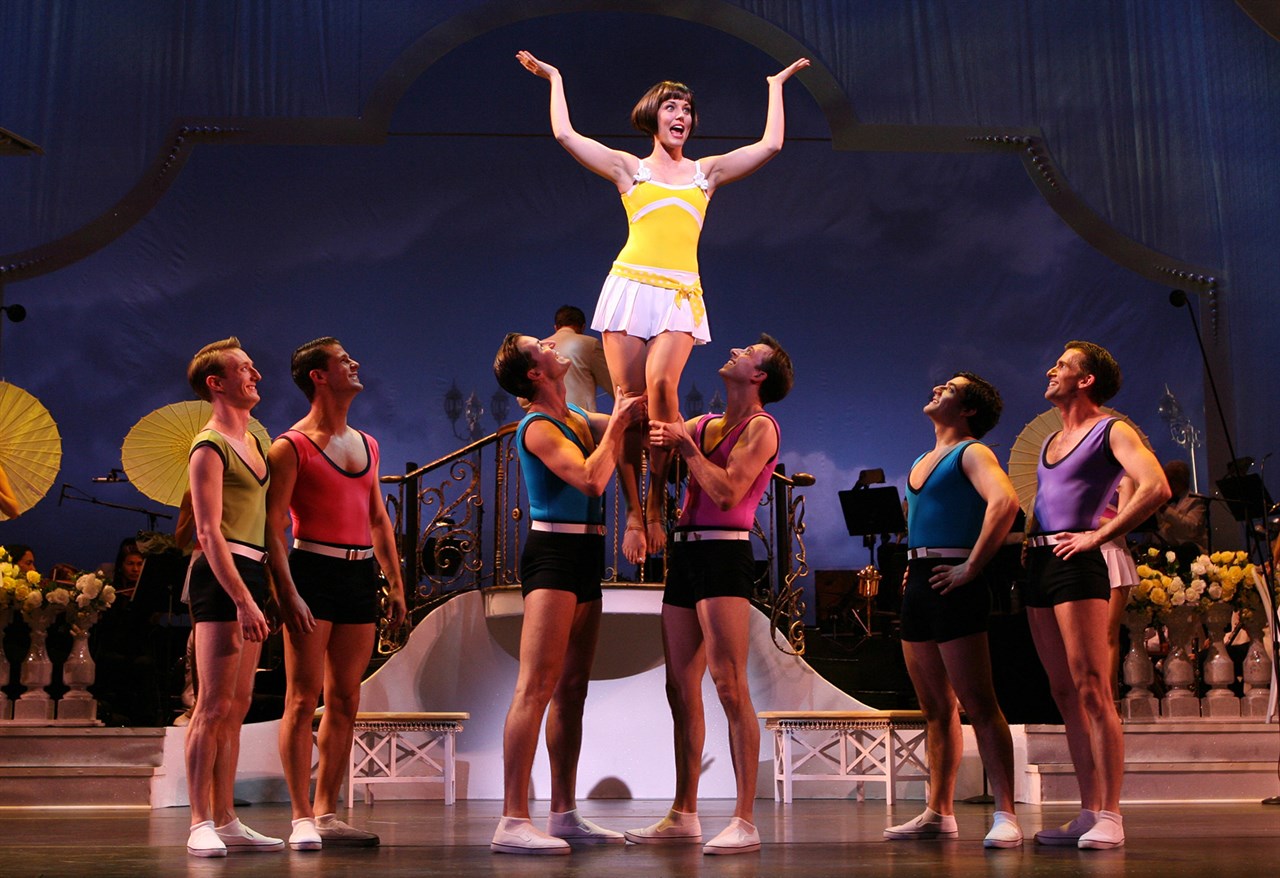
No, No Nanette first hit stages in 1924, opening on Broadway and in the West End the year later. Three film adaptations followed, but it was a revival in 1971 that set in stone the legacy of this show and its score, which was penned by Irving Caesar, Otto Harbach and Vincent Youmans. At the top of the second act, Nanette goes to Atlantic City and quickly becomes the most popular girl in town, the “Peach on the Beach.”
Ruby
Some people might consider listing Jerry Leiber and Mike Stoller’s “Ruby Baby” a cheat. But this song comes from one of my favourite revues, Smokey Joe’s Café, and I prefer it to any of the other options. (There aren’t that many.) This song about a girl called Ruby who doesn’t return the singer’s affections has been recorded by, amongst others, The Drifters, The Beach Boys, Bobby Darin, and Michael Park with the original Broadway cast.
Olive
In Kismet‘s “The Olive Tree,” Robert Wright and George Forrest asked, using the music of Alexander Borodin, ‘Why be content with an olive when you could have the tree? / Why be content to be nothing, when there’s nothing you couldn’t be?’ Who would have thought that such profound thoughts could be set to the third-act trio from Prince Igor? They also told us, ‘If you have heard and do not heed / There is a word for what you are / … Fool!’
Violet
I’m glad to include a song by Jeanine Tesori on this list. This one is called “Promise Me Violet” and it has lyrics by Brian Crawley. The situation is this: Monty asks Violet, who is on her way to Tulsa, to meet him when she returns to Fort Smith, where he says he’ll be waiting for her. It’s so seductive. I’d probably succumb. On the other hand, Violet promises no such thing before the bus pulls away. Rats…
Fawn
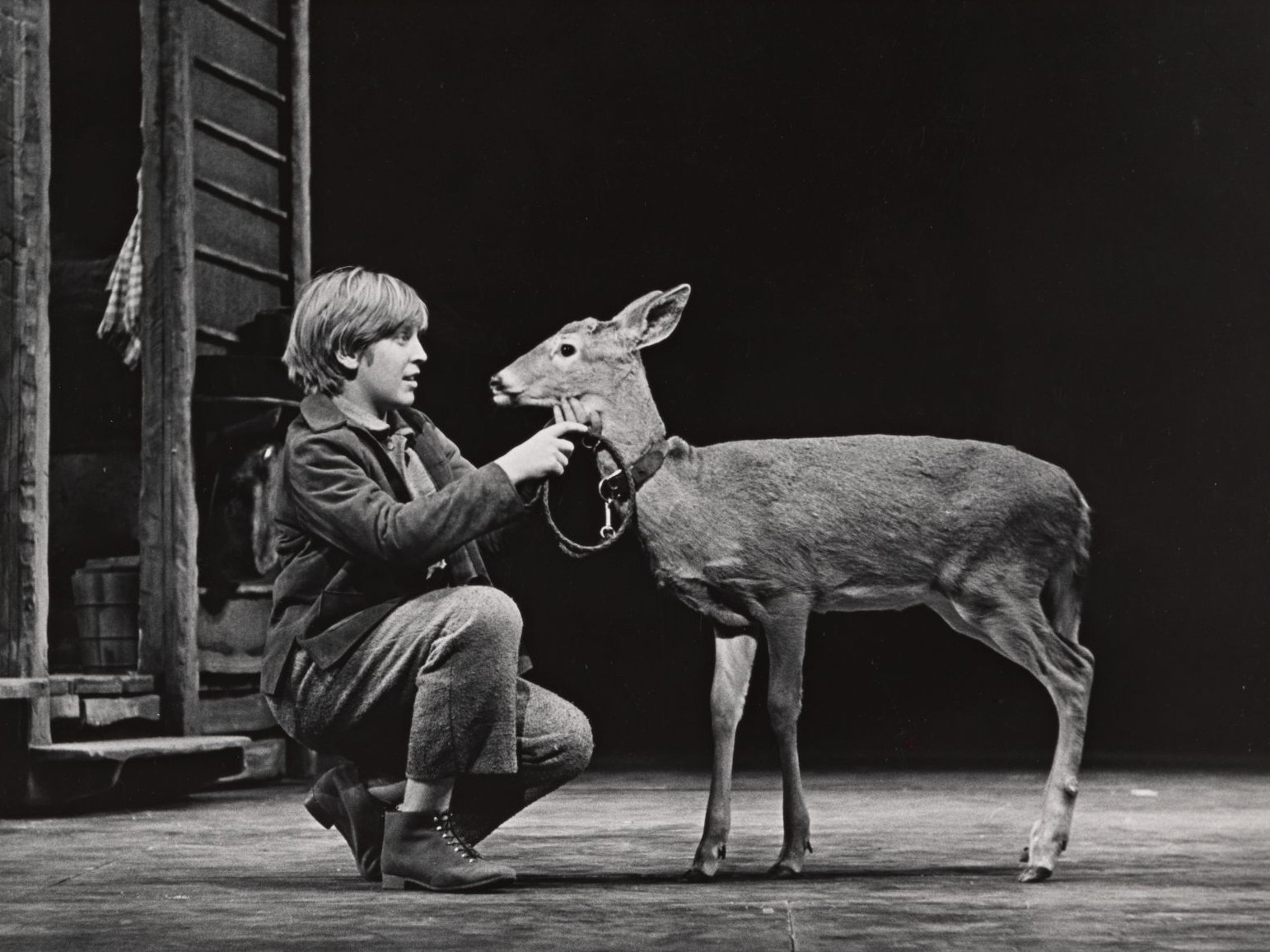
Fawn is another colour that has me stumped. I thought I might find something in The Yearling, but it was not to be…
Lilac
Lilac and nostalgia go hand in hand when it comes to musical theatre, it seems. Whether you listen to Lilac Time or Nunsense, chances are that things are going to turn sentimental. That said, my choice of song is Ivor Novello’s parlour duet from Perchance to Dream, “We’ll Gather Lilacs.” Of course, the best reference to lilac comes from Bea Arthur, quoting Tallulah Bankhead: ‘There’s a touch of homosexual in all of us. It’s not the cock. And it’s not the twat. It’s the eyes, don’t you know, and sometimes, the smell of lilac.’
Gold
“Gold” from Once is soul music. One of the couple of songs not written by Glen Hansard and Markéta Irglová for the show’s score, “Gold” was composed by Fergus O’Farrell. In this song, which closes the first act of the show and is reprised later in a stunning a cappella arrangement, Guy sings about loving a woman and, for the first time, it’s a song all about Girl and not the ex-girlfriend for whom he has been pining throughout the show until that point.
Chocolate
“Chocolate Soldier”, from The Chocolate Soldier, an operetta by Oscar Straus, Rudolf Bernauer and Leopold Jacobson, takes us back to yesteryear. This little charm song plays on the joke that Bumerli, who has arrived in Nadina’s bedroom, uses his ammunition pouch to carry chocolates, which renders his revolver useless. The operetta was based on Arms and the Man by George Bernard Shaw, who famously despised this adaptation of his play.
Mauve
When I read through the list of colours I would tackle, I thought mauve would stump me. It has. Anyone know a show tune with “mauve” in the title?
Cream
There’s only one defendable choice here: “Ice Cream” from Joe Masteroff, Sheldon Harnick and Jerry Bock’s She Loves Me, which is currently enjoying a revival on Broadway and racked up eight Tony Award nominations this past week. At this point in the story, Georg has just visited Amalia, who is ill, and given her a gift of vanilla ice cream. Amalia tries to write a letter to a pen pal with whom she trades romantic letters, who is – unbeknownst to her – also Georg. Instead, she finds herself thinking of Georg, whose kindness towards her represents a clear shift in their real-life relationship.
Crimson
Get ready for your third dose of operetta. Blame crimson, which offers only one option: “The Colonel of the Crimson Hussars” from Sybill by Victor Jacobi, Ferenc Martos and Miksa Bródy. The English-language version, in which the titular singer lost an ‘l’, featured lyrics by Harry Graham. The number is performed by Sybil, the object of Russian officer Petrov’s affections, and a chorus of officers that she, at this point, likes better. Guess what’s different by the time the curtain falls.
Silver
“Look for the Silver Lining” by Jerome Kern and B.G. DeSylva was written for the Zip, Goes a Million, which flopped, and reused in Sally, which didn’t. In the show, the song is sung by Blair Farquar, the son of a millionaire to ‘Sally of the Alley’, a dishwasher in need of some cheering. She cheers up considerably, becoming a star of the Ziegfeld Follies and the wife of an heir to a fortune.
Rose
There is a story told by Stephen Sondheim that Jerome Robbins’s first reaction to “Everything’s Coming Up Roses” was to wonder whether the audiences of Gypsy would be left wondering, “Everything’s coming up Rose’s what?” That story alone is worth the inclusion of the Rose to end all Roses in this list and might leave you rosy-cheeked as you think about the song that Jule Styne wrote with Sondheim to close the first act of the show. Look, I know that this pick is something of a cheat, but did you really want me to pick something dreadful like “Spanish Rose” from Bye Bye Birdie?

Azure
I can think of plenty of “blue” songs – but nothing that references azure. But why?!!
Lemon
Lemon, it seems, is another colour the musical theatre songbook politely sidesteps. For a form that happily sings about ice cream, ribbons and dreams about angels, it’s odd that citrus never quite makes the cut.
Russet
Russet, like several of the more autumnal shades in Joseph’s coat, never quite makes the leap from fabric swatch to show tune. I wonder why.
Grey
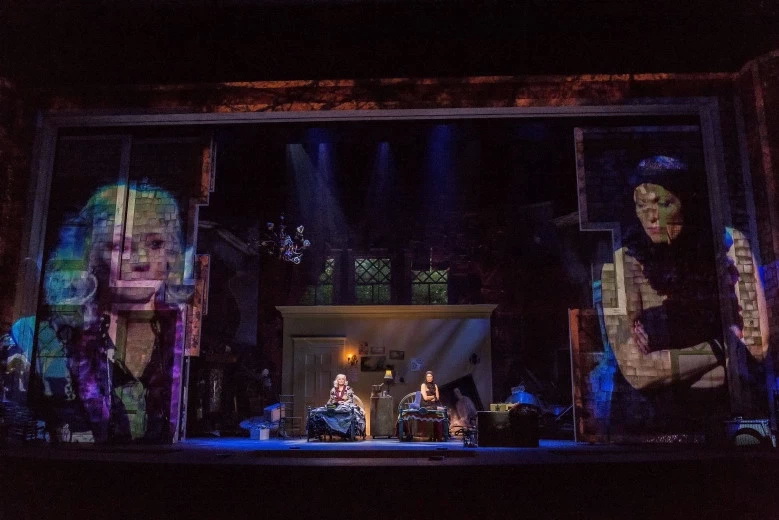
“Entering Grey Gardens” is not a typically jolly showtune, but it captures the atmosphere of the Grey Gardens estate perfectly. Juxtaposing sung lyrics by the ensemble, who comment on ‘the musty smell of feline fur’ and ‘the vermin in the furniture,’ as Big Edie and Little Edie go about their daily rituals and routines, it’s both creepy and incredibly sad. Grey Gardens is such an underrated musical, so it’s great to have an excuse to reference it!
Purple
There’s an obvious choice here, and that is the title song from The Colour Purple. In this song, purple becomes a symbol of divine attention, representing the idea that noticing beauty is, in itself, a spiritual act. To ignore the colour purple in a field, the song suggests, is to overlook God’s presence in our everyday lives. Colour here is not about status or excess, but about seeing and receiving grace.
White
“White Christmas,” from the stage adaptation of the eponymous 1954 musical film of the same name, is more than just a seasonal standard. This song represents a shared wish for home comforts and uncomplicated joy. When you really tune into the song’s spirit, it feels less like nostalgia and more like a ritual, an annual pause in which we willingly step into a world filled with hope, harmony and a very particular kind of festive magic.
Pink
“Think Pink!” (from the film musical adaptation of Funny Face) is pure and unapologetic fabulousness. The song treats colour as attitude, turning a simple shade into a manifesto of confidence, excess and high-fashion fantasy. Amid this list dominated by showtunes from the stage, this glamorous detour into movie-musical territory feels worthwhile, reminding us that sometimes colour exists purely to dazzle, delight and be fabulous for its own sake.
Orange
“An Orange Grove in California,” by Irving Berlin, treats colour as atmosphere rather than a punchline. Appearing in the third edition of Irving Berlin’s Music Box Revue during the 1920s, the song conjures a sunlit California as a place of ease and possibility. Its gentle imagery proved influential beyond the stage, inspiring Arthur Dove’s 1927 painting Orange Grove in California. Here, orange becomes not spectacle but mood, a soft wash of warmth and promise.
Blue
Last, but not least, “Blue Skies,” composed by Irving Berlin in 1926 as a last-minute addition to the musical Betsy by Richard Rodgers and Lorenz Hart, quickly outshone the show that introduced it. Though Betsy ran for just 39 performances, audiences on opening night famously demanded 24 encores of the song from Belle Baker. Set in a minor key that gently shades its optimism, “Blue Skies” captures the musical theatre’s enduring ability to find hope even when certainty wavers. Its final impression is unmistakably affirmative: a promise that brightness can emerge, almost defiantly, from within the blue.
So… what do you think of the list? Which songs would you have picked for these colours? Any suggestions for the ones that stumped us? Head on to the comments section below and let us know!
Tickets for Joseph and the Amazing Technicolor Dreamcoat can be booked through Computicket.

 Musical Cyberspace